
Diplomacy
SpaceX IPO raises concerns over European capital outflows and telecom competition


SpaceX’s planned initial public offering could pose significant challenges for the German and broader European economies, with concerns mounting over potential capital outflows and growing competitive pressure on Europe’s telecommunications sector.
The record-breaking IPO, scheduled for June 12, is expected to raise $75 billion and value the company at $1.75 trillion.
Unlike most previous US listings, the offering has been structured to give German and European retail investors particularly attractive access, raising concerns about a potential drain of capital from Europe.
At the same time, SpaceX subsidiary Starlink is emerging as a potential threat to the traditional terrestrial mobile communications market due to its low-latency satellite network.
That development could affect companies such as Deutsche Telekom and its subsidiary T-Mobile.
Fears of an “inflated valuation”
The financial data underpinning the record valuation, however, provide numerous reasons for skepticism.
Of SpaceX’s three current business segments — its rocket division, the Starlink satellite business and artificial intelligence company xAI, which also includes social media platform X — only the satellite business is profitable.
While SpaceX’s revenues are rising, so are its losses. In 2025, the company generated approximately $18.7 billion in revenue, up by one-third from the previous year, but also recorded losses approaching $5 billion.
In the first quarter of 2026 alone, the company posted roughly $4.7 billion in revenue while losses reached approximately $4.3 billion.
xAI created a significant drag on results, recording an operating loss of $2.47 billion.
As a result, a Danish pension fund blacklisted SpaceX, arguing that the company’s valuation was “generously inflated” and that pricing was being driven more by “Musk’s narratives than economic realities.”
SpaceX is tying much of its growth outlook to artificial intelligence, and its revenue projections depend heavily on technologies that have yet to be developed, including solar-powered data centres in space.
According to Reuters, the company is targeting a potential $28.5 trillion market in artificial intelligence.
Berenberg warns of capital flowing to the US
In a departure from the norm for US public offerings, participation by retail investors from Germany and across Europe has been made easier.
Berlin-based fintech company Trade Republic announced that European customers would be able to subscribe directly to SpaceX shares through its app.
That development threatens to create challenges for the European economy. Holger Schmieding, chief economist at Berenberg Bank, warned that capital is increasingly being drawn toward the United States.
“These enormous IPOs absorb capital through valuations heavily influenced by speculation. That makes it more difficult to finance investments in Europe,” Schmieding said.
At the same time, investors from China, including Hong Kong, have reportedly been barred from participating in the IPO for security-related reasons.
Because the United States applies regulatory and compliance restrictions to the export of critical technologies, lead underwriters were instructed not to accept orders from Chinese investors.
Starlink puts pressure on German telecom giants
Meanwhile, SpaceX’s recent global expansion, particularly in Europe, is creating uncertainty within the traditional communications industry, especially at Deutsche Telekom.
Satellite communications existed long before SpaceX and Starlink, but they faced a fundamental limitation: satellites typically orbited Earth at altitudes of around 35,000 kilometres.
At those distances, signals took relatively long to return to Earth. Latency could reach half a second or more, making video streaming and seamless internet browsing impractical.
Starlink fundamentally changed that model by deploying more than 10,000 satellites into low Earth orbit at altitudes of between 340 and 550 kilometres, reducing signal transmission times to around 20 milliseconds.
By comparison, modern 5G networks in Germany operated by Deutsche Telekom, Vodafone and Telefónica typically achieve latency of between 15 and 25 milliseconds.
Starlink has also received approval from the US Federal Communications Commission (FCC) to deploy an additional 15,000 satellites.
That has led many observers to believe SpaceX ultimately intends to become a mobile network operator itself and displace established providers.
German telecom companies see cooperation as the only option
Deutsche Telekom Chief Executive Timotheus Höttges said he views the development as a challenge for his company.
“I can certainly confirm that Starlink is a first-class technology company. If you cannot fight the dragon, ride the dragon,” he said.
Höttges intends to continue Telekom’s existing cooperation with Starlink as a network operator. The partnership is one of 35 Starlink collaborations currently spanning six continents.
The Deutsche Telekom chief executive hopes Starlink will never be able to replace terrestrial networks. However, market figures suggest SpaceX may ultimately be capable of much more than its leading European rival.
SpaceX is valued at $1.75 trillion, compared with an estimated $150 billion valuation for Deutsche Telekom and $209 billion for T-Mobile.
T-Mobile shares have already fallen by around 10%, with the stock declining from approximately $210 per share a year ago to around $190 today.
Starlink has meanwhile already submitted a bid for mobile spectrum in the United States. If the company secures a lasting position in the sector, T-Mobile’s growth prospects in the US could come under pressure.
That would directly increase risks for Deutsche Telekom, which derives roughly three-quarters of its market value from US operations.
Momentum builds behind a German Starlink rival
Efforts to establish a European competitor to Starlink are gathering pace.
As SpaceX prepares for its IPO, Germany’s Federal Cartel Office approved a planned satellite joint venture between defence and technology companies Rheinmetall and OHB.
The two companies intend to bid for a multibillion-euro Bundeswehr contract to build a military communications satellite network comparable to Starlink.
OHB will be responsible for satellite manufacturing and ground station deployment, while Rheinmetall will build the networks and produce end-user devices.
The Franco-German Airbus Group, which had initially competed against the Rheinmetall-OHB venture, will also be included in the project.
Although the new three-way alliance effectively removes competition and creates a monopoly structure, it allows the Bundeswehr project to move forward quickly and helps avoid potential legal disputes that could arise if the contract were awarded to a single bidder.
Musk says orbital data centres are not a difficult challenge
As SpaceX prepared for its major IPO this week, Chief Executive Elon Musk said on Monday that building artificial intelligence data centres in orbit was not a particularly difficult engineering challenge.
The billionaire entrepreneur said much of the required technology already exists within the current Starlink network.
“One of the things we want to convey here is that there is no kind of magic required that does not actually exist,” Musk said in a video interview released by the company.
“Most of this consists of technologies we have already developed for Starlink V3 satellites. We do not think this is a very difficult problem compared with what we are already doing.”
The remarks came as investors scrutinised SpaceX’s plans for orbital AI data centres.
Those plans form a key component of the company’s long-term growth strategy ahead of an IPO expected to value the company at approximately $1.75 trillion.
Plans unveiled for AI satellites
Musk and SpaceX engineer Ian Dahl outlined plans for solar-powered AI satellites designed to function as computing nodes in orbit and cooled through the dissipation of heat into space.
The company argues that moving computing infrastructure into orbit could help overcome some of the power constraints increasingly faced by terrestrial AI data centres.
According to the presentation, the first proposed AI satellite would generate roughly 150 kilowatts of peak power and provide 120 kilowatts of continuous computing capacity.
Musk said that was broadly comparable to a single Nvidia GB300 AI server rack, which typically consumes around 140 kilowatts at peak load.
SpaceX said the satellites would rely heavily on technologies already being introduced with next-generation Starlink V3 satellites, including solar panels and thermal management systems.
Musk said he expects SpaceX’s AI satellite factory in Bastrop, Texas, to achieve meaningful production volumes by the end of next year.
The orbital computing initiative forms part of a broader strategy aimed at positioning SpaceX not only as a launch and satellite communications company, but also as a major provider of artificial intelligence infrastructure as it enters the public markets.






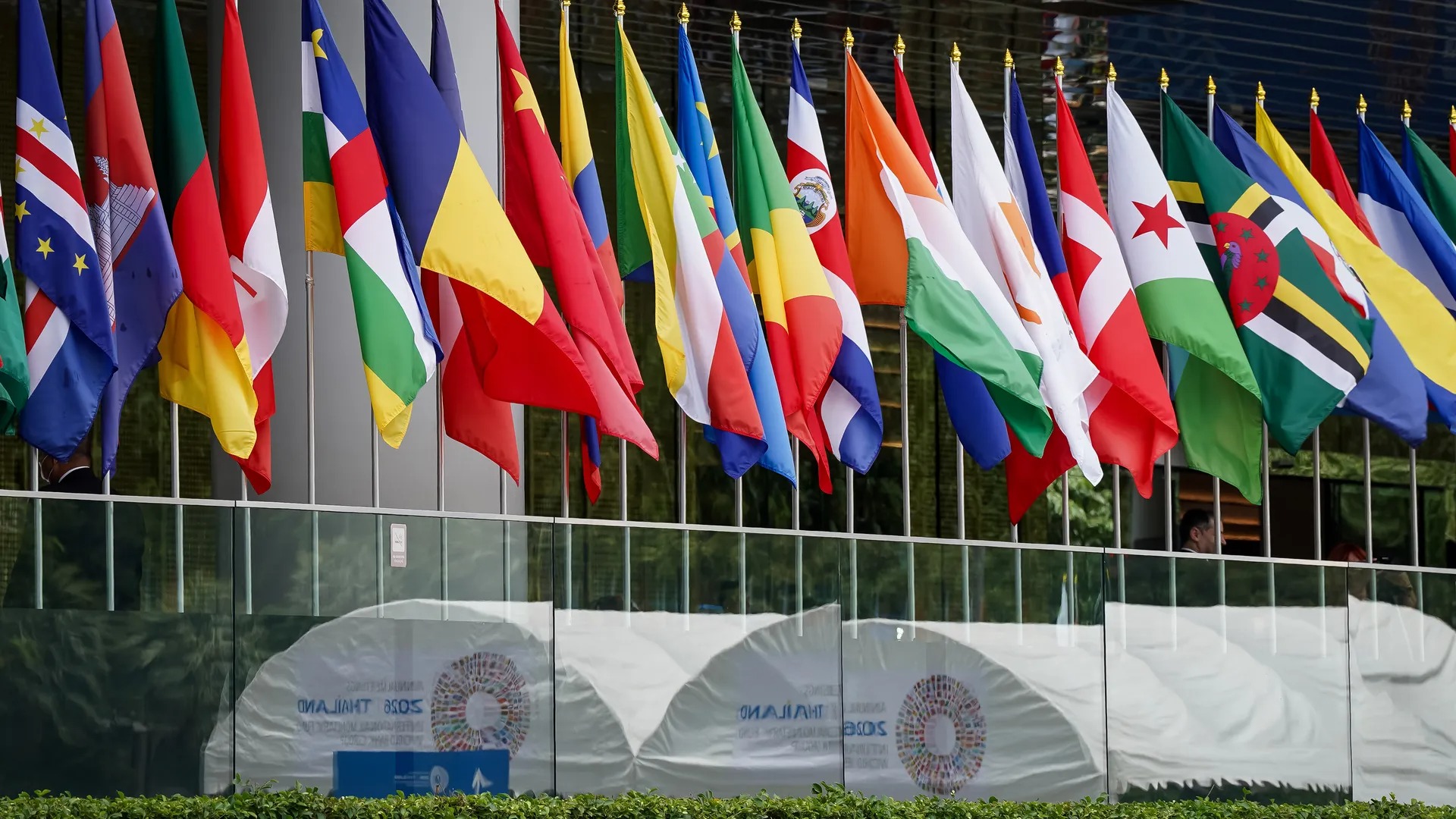
The International Monetary Fund (IMF) has warned that the global economy’s capacity to withstand fresh shocks is coming under strain.
Worldwide growth has exceeded expectations and maintained stability despite the war in the Middle East and surging oil prices.
However, some policymakers worry that dwindling energy reserves, rising debt burdens, and a growing reliance on the artificial intelligence boom will leave the world increasingly vulnerable.
In a blog post, IMF economic counsellor Silvana Tenreyro wrote: “Without strengthening supply capacity and rebuilding policy buffers, the global economy may soon test the limits of its resilience.”
Tenreyro added:
“While tech-related investments are an important advantage against the energy shock, they concentrate risks, making global growth excessively dependent on a small number of companies, sectors, and economies.”
The artificial intelligence (AI) boom has helped offset the economic fallout of the war.
Yet a sharp reversal could leave global GDP 1.1% below the IMF’s baseline forecast by 2028.
US GDP could take an even larger hit of 1.8%.
This scenario assumes that the productivity gains promised by AI fail to materialise, triggering a pullback in investment and a correction in financial markets.
Continued investment in artificial intelligence could also fuel inflation, leading to renewed interest rate increases.
Conversely, a stronger AI investment boom coupled with faster productivity gains could lift global GDP 0.6% above the baseline forecast by 2029.
The IMF largely maintained its global growth projections despite prolonged energy disruptions stemming from the Middle East war.
However, it now expects higher inflation both this year and next year.
The IMF projects global growth of 3.1% in 2026, unchanged from its April forecast, and anticipates 3.4% in 2027, representing a 0.2 percentage point upward revision.
The fund projects that the US economy will expand by 2.3% in both years, marking the fastest growth among G7 economies. The 2027 forecast was revised upwards by 0.2 percentage points.
Global inflation is expected to reach 4.7% in 2026 before easing to 4.1% in 2027.
Driven by the adverse impact of surging energy and food prices, both inflation projections were revised upwards compared with April.
The world had managed the energy shock partly by drawing down oil reserves and rerouting supply sources.
According to the IMF, global oil inventories are declining by approximately 2.7 million barrels per day, elevating the risk of a sharp price spike.
These projections provide the backdrop for global finance officials and central bankers gathering in Bangkok this week for the annual meetings of the IMF and the World Bank.
The IMF underestimated global growth projections for three consecutive years, raising questions over whether economies have become better at weathering shocks.
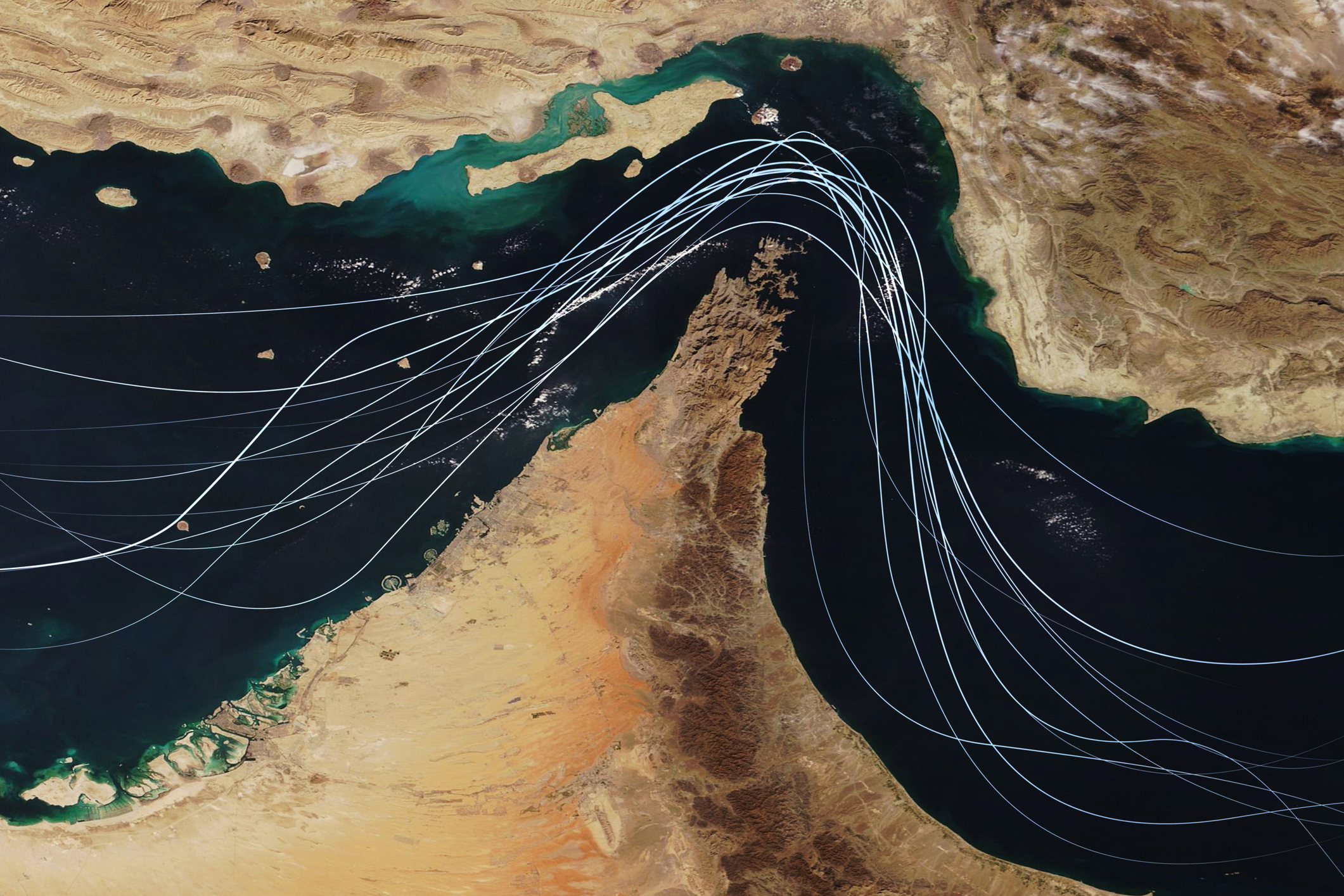
The German Institute for International and Security Affairs (SWP) in Berlin recommends paying closer attention to new transport corridors running from Persian Gulf countries to Europe.
According to a recent analysis by one of Germany’s most influential foreign policy think tanks, the de facto blockade of the Strait of Hormuz and the wars in the Middle East, along with the growing risks surrounding transit through the entrance to the Red Sea at Bab el-Mandeb, are currently prompting Gulf states to strongly back alternative route plans to Europe.
On the one hand, these plans include pipelines designed primarily to bypass the Strait of Hormuz or extend from the Middle East to Mediterranean ports in Syria and Türkiye.
On the other hand, the initiatives involve building transport corridors designed to facilitate the shipment of goods between the Arabian Peninsula and Europe via alternative routes such as Egypt, Syria, or Türkiye.
The author of the analysis, former SWP director and prominent Middle East expert Volker Perthes, argues that these projects should be supported because they would link the Middle East to Europe through infrastructure.
War-induced disruptions
Disruptions caused by war along the maritime routes off the Arabian Peninsula form the backdrop to the latest analysis on major geo-economic projects in the Near and Middle East, published on Monday by the Berlin-based SWP, which is funded by the Federal Chancellery.
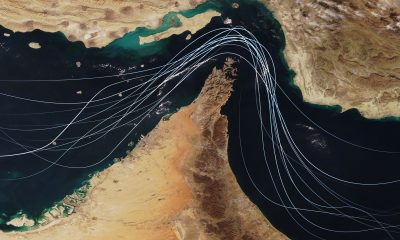
The Strait of Hormuz, through which the vast majority of Arab states’ oil and natural gas exports reached world markets before the Iranian war began, is currently impassable in practice because of blockades imposed by both Iran and the US.
The Bab el-Mandeb Strait between Yemen and the Horn of Africa, through which much of the trade between Europe and Asia flows, is also currently at risk due to the war between Ansar Allah, Saudi Arabia, and its proxies in Yemen.
There is currently no sign that these disruptions will end. Furthermore, both straits will remain structurally highly vulnerable in the future, as ships passing through them can very easily be attacked by neighbouring states.
Pipeline plans to bypass Hormuz
As noted in the SWP’s latest analysis, a series of pipeline projects aimed at offering alternatives for oil exports via the Strait of Hormuz are currently under discussion or even under construction.
Iraq, for instance, is working to repair and recommission an old pipeline built in the early 1950s but destroyed during the 2003 invasion, which runs from the Kirkuk oilfields to the Syrian port city of Baniyas.
In addition, a pipeline is planned to run northwards from the oilfields near Basra in southern Iraq.
This line is also intended to extend as far as Baniyas, or alternatively to Ceyhan.
Saudi Arabia is considering expanding the East-West Pipeline from its production regions in the east to the Red Sea port city of Yanbu.
The United Arab Emirates is building a second oil pipeline in Fujairah, situated outside the Persian Gulf and thus beyond the Strait of Hormuz.
However, the SWP points out that pipelines and alternative loading ports remain vulnerable to attacks.
For that reason, these lines cannot replace the Strait of Hormuz; they can only generate additional options, or in other words, provide “greater redundancy”.
Special emphasis on IMEC by SWP
The SWP places particular emphasis on the India-Middle East-Europe Economic Corridor (IMEC), a major project launched in 2023 by India, Saudi Arabia, the United Arab Emirates, the EU, three European countries (Germany, France, and Italy), and the US.
The venture envisages the development of a comprehensive transport corridor spanning sea lanes, roads, railways, and pipelines of all kinds, stretching from India across the Arabian Peninsula to the Mediterranean coast of the Middle East, and from there to Europe.
The original plan was to extend the corridor to the port of Haifa. The US viewed this not only as an opportunity to establish an alternative to China’s New Silk Road, but also as a means of providing an “infrastructural foundation” for the Abraham Accords, both those already in effect and those pursued by Washington.
Since the outbreak of the Gaza War, however, including Haifa in the project appears unlikely.
Discussions are currently focused instead on building or expanding transport routes running from Saudi Arabia through Jordan to the Syrian coast, or across the Sinai Peninsula to Egypt’s Mediterranean ports.
The SWP concludes that any “network of infrastructure connections” is “more realistic” than a single mega transport corridor.
Significance of Syria and Türkiye for German think tank
As the SWP points out, other major geo-economic projects traverse Türkiye.
For instance, a transport corridor running north from the Al-Faw container port in southern Iraq and intended to reach Europe through Türkiye has been in the planning stages since 2024.
Known as the Iraq Development Road (IDR), the venture is slated to include railway, motorway, energy, and data connections. It is backed not only by Iraq and Türkiye, but also by the United Arab Emirates and Qatar, which seek to utilize the corridor to diversify their trade with Europe.
The Iraqi regions through which the corridor will pass remain a subject of dispute. Furthermore, the implementation of the project is thought to depend on the “resolution process” in Türkiye.
Alternative or complementary plans envision another corridor running from the Arabian Peninsula through Jordan and Syria to Europe.
This likewise encompasses a comprehensive transport corridor featuring railway, highway, and data connections.
This carries strategic implications: Syria under President Bashar al-Assad, which previously functioned as an east-west transport corridor stretching from Iran to Lebanon, would now be repurposed as a north-south corridor.
Excluding Iran from ‘corridors’ is core objective
According to the SWP, the Arab states’ interest in transport corridors will remain high even after the hoped-for conclusion of the war with Iran.
The Gulf countries’ “mistrust” towards Tehran will persist; moreover, they will not want to “rely” on the US over the long term to provide “naval escorts for oil or natural gas exports”.
Iran is also not expected to connect to the railway, highway, and data networks in question. Infrastructurally, Tehran is already leaning further towards Central Asia, Russia, and China.
Nevertheless, it is clear that all the transport corridors mentioned lead to Europe and are primarily “aimed” at establishing closer links with the European continent, which represents a major advantage for European countries.
On the European side, interest in pipeline plans is lower because “demand for fossil fuels is likely to decline”.
By contrast, railway and motorway networks and data connections are of particular interest for both economic and political reasons.
According to the SWP, these serve Europe’s geopolitical interests in establishing closer and more resilient connections with the Gulf region and the Indian Ocean.
In the view of the German think tank, “alternative… transport routes” created by bypassing Iran will in effect become the “geo-economic equivalent of missile defence”.
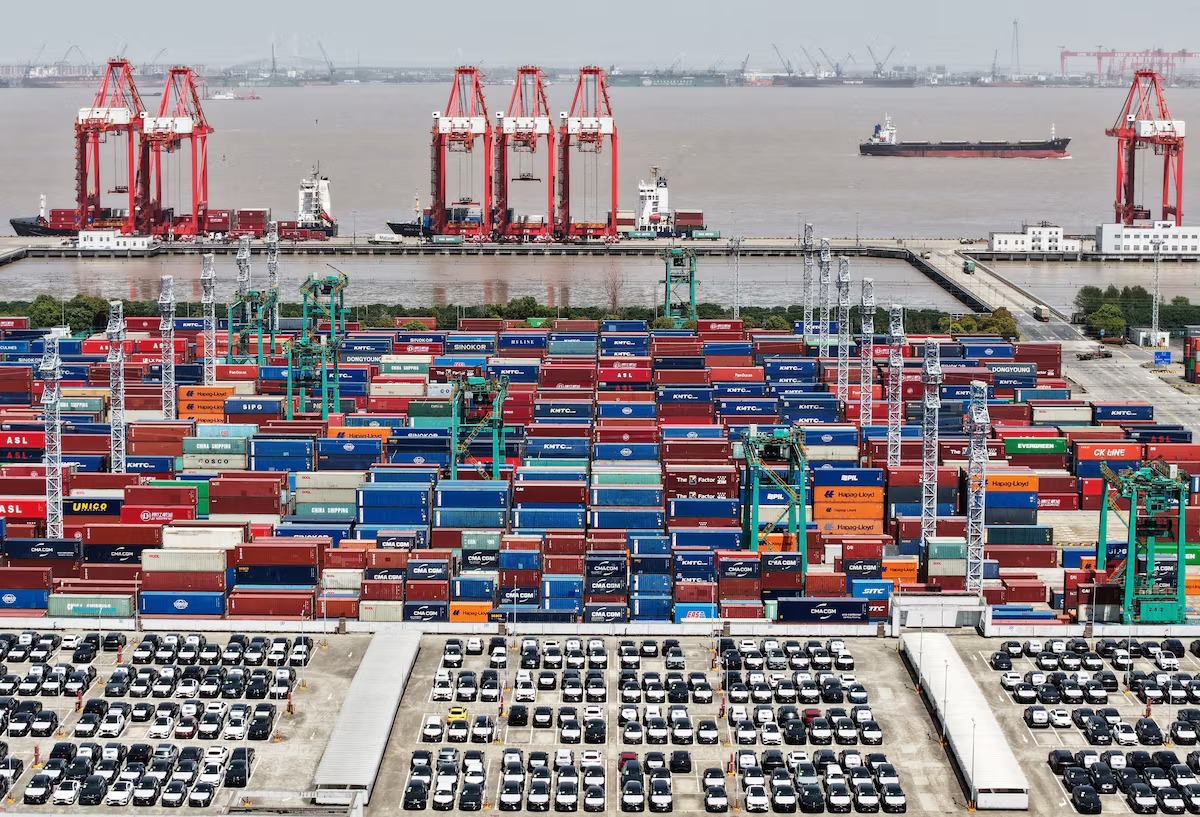
The EU has reached a preliminary agreement with China to significantly reduce hybrid car shipments into the bloc.
The agreement follows an abrupt surge in hybrid car sales by Chinese brands across Europe, led by BYD.
This surge escalated trade tensions and piled pressure on European carmakers.
Following talks between EU Trade Commissioner Maros Šefčovič and his Chinese counterpart, an agreement was reached on Friday to significantly reduce hybrid car shipments to the EU.
European carmakers, under pressure from companies such as Chery, have been losing market share in China, where competitors develop new models more efficiently.
In Europe, appealing line-ups, including BYD’s Dolphin hatchback, offer robust electric vehicle technology at affordable prices.
This shift has forced carmakers such as Volkswagen to downsize workforces under broad cost-cutting drives.
Šefčovič stated that the agreement was the first of its kind and the result of “intense” negotiations conducted with China since June to reduce a daily trade deficit of 1.18 billion euros, which has caused mounting strain between the two economic powers.
Speaking at a press conference in Beijing on Friday, Šefčovič said the agreement “creates the possibility to reduce Chinese [hybrid vehicle] exports by more than half,” adding that this would lead to a reduction of “several million” rechargeable and battery-powered hybrid vehicles over the next four years.
“China agreed to reduce its exports without first entering a trade tension phase; this is happening for the first time,” the Commissioner said, referring to the standard investigations that must precede the introduction of protective measures under WTO trade rules.
Šefčovič said the Chinese recognised the rising political pressure across every member state in Europe, where “literally thousands of job losses” were risked due to an influx of cheap imports from China across multiple sectors, including chemicals and textiles.
Noting that EU leaders “clearly expected very rapid action” from the European Commission, and that the Chinese were aware of this, he stated:
“I am pleased to say that our Chinese partners appreciated this very strong political argument; therefore, we can reach a negotiated solution. This is not the end of the process. This is a very important first step, but only a first step.”
Earlier this week, senior EU officials announced that they would travel to Beijing to develop a pilot programme, which they termed a “proof of concept” with a single sector, hoping it could later be expanded to other areas under pressure from Chinese competition.
Šefčovič noted that he attached “great importance” to the negotiations because once a trade war begins, it is “very hard to stop.”
As part of the 16-point agreement, Beijing and Brussels will continue negotiations on automobiles, export restrictions on rare earth elements, and greater market access for EU food and beverages entering China.
China stated that both sides would adhere to “procedures on company price undertakings” for hybrid cars, implying that one way to cap sales could involve setting higher minimum prices for Chinese-origin cars sold in Europe.
A statement from the Chinese Ministry of Commerce noted that China was “willing to continue facilitating the approval of export licences for rare earth elements and permanent magnets destined for the EU.”
The statement also added that both sides “reaffirmed their commitments to handle differences appropriately within the framework of WTO rules, and to stabilise and balance bilateral trade and economic relations.”
In a statement issued today (12 October), the Chinese Ministry of Commerce stated that following “intensive consultations” between the two sides, the European Union’s new hybrid vehicle arrangement would allow export growth to continue, with an allocation for China that is no smaller than that of any other country.
The ministry added that this consensus “strongly protects the practical interests of Chinese enterprises, prevents an escalation of China-EU trade tensions, and provides a stable, predictable, and sustainable trade and investment environment for both sides.”
According to Chinese customs data, Chinese hybrid vehicle exports to the 27 EU member states tripled in the first half of this year to $7.5 billion, up from $2.5 billion in the same period a year earlier.
This figure is nearly nine times the $845 million in exports recorded across the whole of 2021.
Since the EU began applying additional tariffs on Chinese-origin electric vehicles in 2024, Chinese carmakers have increasingly turned to plug-in hybrid vehicles, which remain exempt from these additional duties.
Inadequate charging infrastructure in parts of Europe has also supported demand for plug-in hybrid vehicles, which are marketed on long range and high fuel efficiency.
According to Jefferies, SAIC, BYD, and Chery account for more than 90% of Chinese-origin hybrid vehicle sales volumes in the EU, with hybrid cars representing over half of these manufacturers’ European sales.
Support for the agreement also came from Renault. CEO Francois Provost argued that the European Union had reached an initial “important milestone” with the deal to slow the influx of hybrid vehicles from China, contributing to shaping the future of the European automotive industry.
“I had urged him to reach an agreement as soon as possible. Without an agreement, we would have faced a trade war with China, which would have been a ‘lose-lose’ situation for everyone,” Provost said.
Provost was among the business leaders who met Šefčovič ahead of this visit, which aimed to address widening EU trade imbalances.
Prior to talks with Chinese Commerce Minister Wang Wentao, France and Germany urged the EU to significantly broaden its retaliatory economic powers and investigate whether subsidised imports were damaging sectors such as chemicals and plastics.
In France, Renault already relies on several Chinese suppliers. Envision AESC assembles electric vehicle batteries for the bestselling R5 city car, as well as the R4 and Alpine A290 models, at a facility near Renault’s car assembly plant in Douai, northern France.
“We need Chinese companies to invest heavily in the European value chain, rather than merely setting up ‘screwdriver factories’,” Provost said.
Provost also called on the EU to move quickly on so-called “Made in Europe” rules, which could establish a local framework for Chinese players:
“If Europe does not take rapid decisions now, the collapse of the European automotive industry risks continuing. At least on the Chinese front, some progress has been made thanks to Commissioner Šefčovič.”

What is scale in foreign policy? How is success measured in foreign policy?

Musk boosts Republican midterm funding despite pledge to curb spending

IMF warns global economy is nearing the limits of its resilience

NATO unveils 32-nation defence strategy to counter adversaries

Germany detains two Turkish suspects over Polish Starlink arson
-

 Europe2 weeks ago
German interior ministers drop unanimity rule to counter AfD veto
-
 Europe2 weeks ago
Key European allies excluded from US-led NATO meeting in Poland
-

 Diplomacy2 weeks ago
US Ambassador Guilfoyle faces backlash in Greece over alleged remarks
-
 Diplomacy2 weeks ago
While the West breeds crises, Eurasia weaves peace and development, says Prof. Zhang Weiwei
-

 Europe2 weeks ago
EU drafts plan to curb national vetoes in radical expansion reform
-

 Middle East2 weeks ago
Netanyahu holds secret UAE talks with Saudi Arabia and Arab officials
-
 America2 weeks ago
Canada diversifies oil and gas exports away from US
-
 Diplomacy2 weeks ago
Likud deepens ties with Austria’s FPO as European right courts Israel
