
Interview
‘Territorial organizational forms that resemble neither nation nor empire will increase’

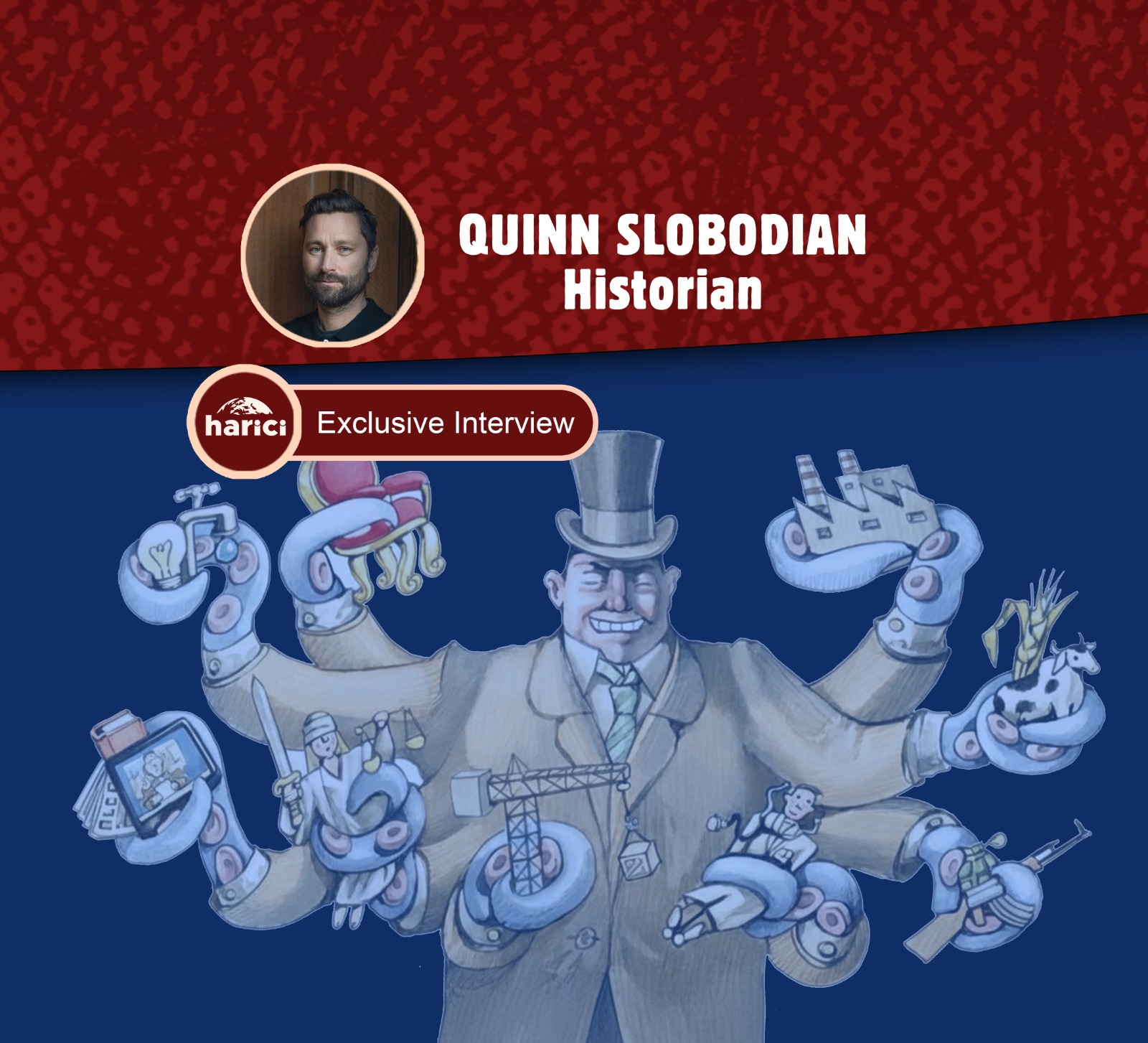
Donald Trump, JD Vance, Peter Thiel, Elon Musk, Charlie Kirk, Stephen Miller… Those who believe these names, which have spearheaded an unprecedented change in American politics since World War II, suddenly parachuted onto the world stage are mistaken. Although they sometimes step on each other’s toes, behind these names lies an alliance whose foundations stretch back to the 1970s, the great crisis of capitalism.
Quinn Slobodian, professor of international history at Boston University’s Frederick S. Pardee School of Global Studies at Boston University, analyzes the ideological pedigree of the new Trump administration and the MAGA and Silicon Valley team gathering around them in his recently published book Hayek’s Bastards and his earlier work Crack-Up Capitalism. Contrary to the narrative that neoliberalism died after the 2008 crisis, he emphasizes that one branch of neoliberalism continues to thrive, even converging in some ways with recent trends in global capitalism. Slobodian also questions the validity of the analysis that “nationalism and the nation-state are opposed to globalism and the established order.”
Slobodian, whose book Globalists has also been translated into Turkish, announces that his new book analyzing Elon Musk and “Muskism” will be published in the coming spring. The main argument of the book, subtitled “A Guide for the Confused,” is that Muskism promises sovereignty through technology, but in reality always turns into greater dependence on Musk.
Arguing that the same can be said for Nvidia, Peter Thiel, and Palantir, Slobodian defines the essence of Silicon Valley ideology as “pretending to give you autonomy while actually creating deeper dependency.”
Let’s first talk about the famous term neoliberalism, because the dominant narrative in both politics and academia, especially after the 2008 crisis, is that neoliberalism has ended or, at best, stumbled, and that we now live in a post-neoliberal world with Brexit and the second Trump administration. In your book Hayek’s Bastards, you point to very different branches and carriers of neoliberalism and, in a sense, reverse the narrative that neoliberalism is dead. What would you like to say about this? What does the term neoliberalism actually tell us? And are we still being governed by neoliberals on both sides of the Atlantic today?
Yes, well, it’s clearly one of those words that are sometimes called “slippery terms,” a word that tends to be used in a number of sometimes contradictory ways. So I always think it’s useful to start by separating the term into at least four different uses. I can summarize them quite quickly.
First, it’s used to define a kind of time period. So people say we entered the neoliberal era, and then they ask whether the neoliberal era is over. This is sometimes dated to the 1970s or the Reagan and Thatcher era. Then the question becomes: Did it end with the big financial crisis? Did it end with Trump and Brexit? And so on.
Another way it is used is to define a kind of policy package. So privatization, liberalization, deregulation; it’s often associated with the Washington Consensus, and people talk about neoliberalism coming to a country, say after socialism or under structural adjustment, and then sometimes neoliberal policies being implemented and then withdrawn. So you can look at the world and say this country is more neoliberal than that country.
Another way the term is used is to describe a kind of relationship people establish with themselves and others. That is, this idea of “being an entrepreneur of oneself,” seeing oneself as a set of assets to be used and evaluated in the market by gaining followers, wealth, prestige, etc. This is a kind of neoliberal mindset or subjectivity.
Fourthly, neoliberalism exists as a fairly distinct intellectual movement. Since the 1930s, there has been a group of people who call themselves neoliberals and seek a political philosophy between socialism on the left and hardline fascism on the right. These debates are associated with figures like Friedrich Hayek and Milton Friedman.
These people have periodically come together and seen themselves as descendants of Hayek and Friedman, so to speak. This fourth way is my approach to the subject. Rather than trying to make grand statements about the global demise of neoliberalism or attempting to understand the effects of this or that policy change, the approach I take in my books, and most recently in my book Hayek’s Bastards, is to approach the subject as a historian of ideas. Just as one might examine conservative thought, anarchist thought, or socialist thought, finding divisions within orthodoxy and changes in doctrine. I have adopted this approach in my own work.
So that’s my starting point. We’ll probably discuss the topic mostly in this way. Otherwise, I’d be happy to make broader statements about neoliberalism in general. And here, to summarize very briefly, I think that after 2008, people expected the idea of a rule-based economic order to come to an end. In fact, it didn’t die.
We saw the rebirth of a certain type of multilateralism, central bank-driven economic governance, a focus on economic freedom rather than equality. In 2016, I think you saw the first cracks in the free trade consensus with Trump, but there was still a fairly libertarian policy domestically. Bidenomics and Biden, I think, were a fairly clear attempt to break away from neoliberal economic organization models, and then Trump accelerated that process, I suppose. So now, Trump’s approach to economic policy, especially on the global stage, has very little to do with neoliberal doctrine; domestically, it’s about deregulation, tax cuts, putting power in the hands of entrepreneurs, and transferring it to private actors away from public authorities.
Perhaps the point we should follow is the alliance formed around the 1970s by Silicon Valley elites, neoconservatives, and libertarians. Because your book also points out that these are different currents, but after the 1970s, they formed an alliance. They don’t even see the collapse of the Soviet Union and world communism as a victory. Because their fundamental concern can be summarized as follows: to bury the 20th century. I think in your book Crack-Up Capitalism, one of the gurus of neoliberal thinkers uses this expression. This century was marked not only by Soviet socialism but also by the Western welfare state model. What does this new alliance, following the tradition of Mises and Hayek, have against the welfare state? In fact, shouldn’t they be considered mainstream neoliberalism rather than marginal?
I think one useful way to understand what the issue is or the fundamental fault lines in neoliberal thought is to ask yourself at different times, “Who are they against?” You know, who do they see as the greatest threat to the market order, capitalist stability, economic freedom? The answer to this question changes from decade to decade.
So in the 1930s, when neoliberals first came together, classical liberalism, that is, liberalism that prioritizes political and economic freedom, was truly at an all-time low. Collectivism was on the rise everywhere in the world. So they saw themselves as being on the defensive, trying to find a version of political philosophy they could use to defend themselves against different types of collectivism. There were communists and fascists, and they were much more willing to form alliances with fascists when necessary to counter communists.
Let’s move to the 1960s, when the world was decolonizing. Post-colonial countries were now becoming the biggest fear. Let’s move to the 1970s… The attempt by countries of the global south to establish a new international economic order is a major source of concern. There is a period of major labor uprisings and strikes.
Therefore, organized labor is again a source of concern for neoliberals. By the 1990s, as you mentioned, with the end of the Cold War, many of those old enemies were defeated. So the Communist Party is no longer a source of concern in the 1990s. Why should you spend your energy worrying about official, party-style communism? They had persisted all over the world, even in places like Italy, until the depths of the 20th century. But by the 1990s, they were no longer a political factor. Essentially, the same is true for France.
So who are you worried about? Who is the enemy? I can say that they start their analysis this way, asking who the enemy is, and the analysis continues from there.
They see the enemy in new social movements. That is, in the civil rights movement that has turned into feminist movements, anti-racism, and demands for affirmative action. This was actually one of the surprises for me. It wasn’t something I set out to find, but it was literally a discovery. Reading the news from the early 1990s, I saw that they were very concerned about the environmental movement and the ecology movement.
This idea was quite widespread. You see it, for example, in a Wall Street Journal article about the first meeting of the Mont Pelerin Society after the collapse of the Soviet Union, which was founded by Hayek and others to be the vehicle for the intellectual movement.
Why were they concerned about environmentalism and the anti-greenhouse effect and global warming movements? The fear there was that the enemy had turned from red to green, and now new forms of opposition and counter-mobilization had to be found to neutralize this enemy. This is part of the main story I tell in Hayek’s Bastards; that is, how neoliberals saw new threats at the end of the Cold War.
Part of this was the new social movements that emerged in the 70s and gained more mass support. Another thing was that, as you mentioned in your reference to the welfare state, they observed that the welfare state continued to exist in the industrialized world despite Margaret Thatcher being in power, Ronald Reagan being in power, and the Washington Consensus being implemented in the global south. So the National Health Service in the UK still exists, Social Security, Medicare, Medicaid still exist in the US.
And the percentage of the state budget, of GDP, spent by the state was not actually decreasing. So they began to see a connection between these things. There was a connection between the social movements of the post-1960s and the continuity of the social state. These are part of the same complex that persisted even after the demise of Soviet-style communism. This is what needs to be uprooted to get to the heart of the problem, to its origins.
I think they saw the welfare state and the civil rights movements as a link between the racialization of the welfare state and the collapse of family values, white family values. They claim that the welfare state undermined white Protestant American family values, and that these values were the essence of capitalism.
Yes, that’s right. They weren’t wrong to see a connection between the social movements of the 1960s and a new type of welfare state.
Lyndon B. Johnson’s Great Society programs in the late 1960s were indeed the economic complement to the expansion of voting rights in the US. In other words, it was said that “if we want equality in the US, it cannot be achieved simply by giving everyone the right to vote, because everyone starts from very unequal positions.” You have to find a way to provide a social safety net for everyone, no matter how minimal.
In the minds of neoconservatives and neoliberals, providing social assistance to single mothers or allowing people to, say, divorce by mutual consent, expanding reproductive rights through access to birth control pills or abortion… They saw these things as both moral and financial dangers. That is, they were undermining the fabric of the male-centered nuclear family and, in their view, creating more pressure on the state budget by forcing the government to finance the free sexual morals of a segment of the population.
Now, their sense of proportion was always very wrong, wasn’t it? It was certainly not true that funds going to single mothers were somehow the core budget problem. In fact, the issue was more about military spending and spending on veterans and things like that.
But they saw this as the essence of the disease, the social disease. So you had to solve that problem, and then you would have solved all the others.
If we trace their intellectual origins, the figures you examine in both Crack-Up Capitalism and Hayek’s Bastards seem to follow a similar intellectual trajectory, an anti-Enlightenment tradition. That is, more or less, a Burke or Herder-style hostility or a Nietzsche-style aristocratic rebellion. Their hostility towards racial, sexual, and class equality and universal ideas is a defining theme in their intellectual trajectory. In contrast, they defend a kind of cultural particularism and biological racism or genetics, or they advocate a return to nature. They defend racial, geographical, and sexual discrimination, as well as a kind of neo-colonialism. They don’t just want to colonize the Earth; they also want to colonize space, such as Mars or the Moon. How do you think these ideas, which were marginalized or believed to be marginalized after World War II, have become fashionable again in the West today?
Yes, I think it’s important to see this: If you use the perspective of looking only at neoliberal intellectuals, say from the 1930s to the 1990s, there was a surprising level of unity among them.
Because there was a common enemy, namely the socialists inside and the socialists outside, there was a desire to form a kind of united front. Everyone knew who the real bad guys were; they were sitting in Moscow, in Havana, they were usually sitting in the sociology and history departments of American universities.
But with the end of the Cold War, there is a moment of “disorientation”; the question “Did we really win?” is almost being asked. If so, with the real end of socialism, what can we expect from the social order?
Or more commonly, what they felt was this: perhaps we didn’t really win, and the enemy just changed form. In response to this, there is a fairly serious split within the neoliberal movement.
The first group was actually willing to work within a rules-based order and accepted the victory as it was. So perhaps you could use, for example, the World Trade Organization, you could use investment law, you could use government control to create a situation that is better for business, worse for the poor, but good for innovation, good for producers, and worse for buyers. Many neoliberals actually saw partnerships with Clinton, saw partnerships with Bush, even saw partnerships with people like Obama.
Now we see the end of this trajectory in things like the “prosperity movement” in the US, where libertarians and neoliberals are actually still extremely concerned about populists and racists. They want to continue neoliberalism as a kind of technocratic lawmaking, regulation, design project; without paying any attention to things like social welfare, not to mention climate change. So that’s one approach…
But this is not the approach I have been writing books about lately. What I have been writing about is the other side, the side that says, “No, we are concerned that those institutions, be it the UN, the WTO, the court system, the Department of Energy, the Department of Education, whatever, the government, will now be taken over by new socialists.” So, those who think progressives will now use the architecture of the system to introduce a new form of globalization as a Trojan horse that will work against the interests of economic freedom.
On the other hand, it must be said that this is not entirely a fantasy. If you look at the UN in the 1990s, what were they talking about? They were talking about human rights, women’s rights, environmentalism. So if you’re someone on the right, a strong neoliberal, you might have reason to worry and think, “The international system has now shifted to the left and will now pursue economic freedom,” especially with things like Kyoto, the Paris Agreements, they have reason to worry that the tide has turned in a way they didn’t expect.
So what are they doing? They’re doing the kind of things you described: They’re saying, okay, what resources are there to stabilize the order and create a new opposition to these forms of intervention? How can we speak at a fundamental level that will appeal to people, to their emotions, to their deep sense of identity, and draw them into resistance projects against this top-down progressive, you know, “woke” globalism?
So, literally, they’re starting to say that people’s attachment to their racial identities, their attachment to their nations (which previous neoliberal generations saw as a problem) is what it is. Previous neoliberals said people were too attached to their nations and races. They thought we needed to educate them to become global market actors.
Now, there is a sense that you can draw on these sources of attachment to land, skin, and family and use them as a new form of resistance against the top-down order. This was the project of the “Paleo” movement in the 1990s. Everyone watching this video has heard of the new conservatism, but probably not Paleo conservatism. Knowing the difference is crucial.
After the Cold War ended, the new conservatives said the Soviet Union was dead, but America’s mission continued. Now it was about promoting democracy. Now it was about securing America’s resources globally. It was about securing human rights. The Balkan wars, Somalia, the First and Second Gulf Wars, Afghanistan and Iraq, and the war on terror. That is the new conservatism.
At the same time, there was a small but significant group of people on the American right who said this was wrong. America fought the Cold War and won. Now America should turn back to its own borders and focus primarily on the enemy within.
There are very, very strong echoes of this paleo-conservative position in current American foreign policy, which I think is significantly different from the new conservatism because it does not pursue universal hegemony.
This view says, “Putin can have his sphere of influence over there,” “Xi Jinping can have his sphere of influence over there, and we should focus on eliminating the dangers within ourselves.” So within the libertarian and neoliberal movement, there were those who thought this was a correct interpretation of the post-war, post-Cold War era, and they also wanted to focus more on securing small-scale conditions for freedom.
Instead of focusing on globalism, the focus was on things like building contract-based communities. For example, gated communities in the American Southwest. Yes, small areas where the economic order is secured. These were based on separating from the banking system, protecting your own family, educating your own children. Things that had long been common for a certain paranoid wing of the American right were now becoming attractive to some segments of the libertarian right.
Yes, it seems that their vision of the future is a kind of pessimistic vision of capitalism and an eschatological view of the world.
Yes, I think the most interesting thing, the most surprising and counterintuitive thing about the end of the Cold War, was this: Instead of assuming that the global order would now be permanently secured, many people who appeared to have won the Cold War said that the global scale was actually something that should now be abandoned and that we could not expect complete, planet-wide universal freedom.
Instead, let’s return to a more pre-modern, feudal geographical order; so that you have islands of economic security and freedom, and these are in trade and connection with other islands of security and freedom. Thus, by leaving a large part of society to its own devices, you sort of solve the problem of the 20th century.
There would be no welfare state anymore. If you say, “We have no responsibility to the poor, we have no responsibility to the countryside”… I think it’s important to see that this has become one of the solutions to the ongoing difficulties of redistributive socialism for the right in sub-world-class geography.
I want to go back to Silicon Valley and quote from your book. “Neoliberals, bewildered by insistent demands to address inequality at the expense of efficiency, stability, and order, turn to nature on issues of race, intelligence, land, and money. They see this as a way to create a bulwark against the growing demands of progressives and to reverse social change, returning to the hierarchy of gender, race, and cultural differences that they imagine is rooted in both tradition and genetics.” It seems to me that Silicon Valley and the so-called “tech bro” crowd are the embodiment of all these “hard” things you mention in your book. So hardware, hard currency, genetics… These are macho types, obsessed with IQ, believing in wealth and capitalism, longing for old hierarchies, aristocratic rebellions, you name it, they have it. In that case, you’re saying that Silicon Valley capital, or the Silicon Valley tech elite—especially libertarians like Elon Musk and Peter Thiel—provide the material power needed by the New Right.
I think there are several ways to answer this question. If you ask how the belief systems in Silicon Valley align with those of someone like Friedrich Hayek, I actually think there is quite a significant conflict or contradiction between the two.
One of the things Hayek was very interested in was arguing that we should have a kind of temporary, non-faith-based relationship with science. So he believed very, very strongly in the scientific process of experimentation and discovery. In fact, I would say that neoliberalism is, in a way, an attempt to extend the relationship that scientists have with each other in a laboratory, in a field of discovery and experimentation.
But he always assumed that none of these discoveries would be permanent, that they should be accepted as temporary and that new ones would always replace them, and he thought you shouldn’t try to design a social order as if it were a laboratory experiment in itself. In other words, while you should approach social problems like a scientist, you should not assume that science will provide the blueprint for social order; for him, things like individualism and freedom were prerequisites for the good life.
You could never prove these in a laboratory. The point where this diverges from the Silicon Valley mindset and the thinking of someone like Elon Musk is that they are true technocrats. They believe that society can and should be designed through engineering. Economic freedom or personal freedom is not actually a primary principle or a value to be defended against intervention for them. In fact, efficiency and productivity are more important than liberty and freedom.
That’s why the book is called Hayek’s Bastards. Because I think that in different ways, whether it’s Murray Rothbard’s racism or Elon Musk’s technocratic engineering mindset, there is a kind of abandonment of that fundamental individualism that is so central to someone like Friedrich Hayek’s thinking.
However, I think it’s quite obvious that the American economy has developed entirely on the basis of Silicon Valley innovations, product and service creation over the last 25 years. Stock market valuations are entirely dependent on a relatively small number of companies in the technology sector. So, materially, the power of the US is completely intertwined with the world of technology.
I think it is extremely important that the richest and most prominent people in the world put their economic and cultural capital behind this mega-project, and there, as you also mentioned, they provided the material basis for a more successful transformative project.
The issue with MAGA (Make America Great Again) is whether there are certain contradictions within this alliance that will make it unsustainable in the long term. I’m not sure; I think it’s an open question, but the point I want to make is that I don’t see the Silicon Valley-Trump alliance primarily as being based on a convergence of a particular philosophy or ideology. I think it’s more of a pragmatic alliance for both sides, and I think ultimately they have different priorities that happen to align for now.
But, you know, if pushed, it could actually start to crack. Even in the last 10 months, you’ve seen many moments where this alliance has been shaken.
I ask this because, reading your books, it seemed to me that these libertarian or neoliberal thinkers weren’t very politically inclined, and perhaps after the Cold War, they started to make some political connections. They started to build a mass base for their ideas or to take a gamble in that direction. It seems that now Trump’s second-term administration has begun to implement this mass-based organization. That is, MAGA and tech libertarians and the like… For example, in the 2022 Ohio elections, the Charlie Kirk movement and Peter Thiel joined forces to support J.D. Vance’s bid for the Senate. So it seems like a productive alliance.
Yes, absolutely. So J.D. Vance was Thiel’s candidate. You know, he worked at his company and is now his vice president.
So it worked to a certain extent. I think the paleoconservative values of social conservatives under the Trump administration and their antipathy towards certain types of regulatory control also align with the vision of greater freedom for entrepreneurs in Silicon Valley’s vision.
But I think it depends on how far you take it. Not just with trade policy, but also with the uncertainty created by, say, gathering all the engineers at a Hyundai factory… It’s a kind of self-destructive behavior, and at some point, it might start to bother tech people.
But coming back to your first question, the issue of neoliberals focusing on a mass base, I think that’s something I definitely tried to point out in Hayek’s Bastards. If you look at it purely doctrinally, if you look at what neoliberals say they want to do, starting in the 1930s, you see a fundamental distrust of mass politics. In the 1930s, 40s, and 50s, you see a belief that “if you give people the right to vote and allow them to express their ideas directly, then they will tend to choose socialism.” People, in a way, whether out of envy or atavistic, collectivist values, are naturally inclined to be communists, according to them. The purpose of politics, as liberals have long thought, is to put in place enough safeguards and narrow the scope of political expression enough so that people cannot express their natural communist tendencies.
Hayek’s stance was definitely this. That’s why he thought you needed many checks and balances, why he thought you needed independent branches of the legislature that could slow down the impulses coming from the people. Like Carl Schmitt, he relied on a distinction between legislation and law. Legislation meant things that came through governments, while law represented the ultimate values that stood above everything else and needed to be protected.
The way this changed, particularly under the influence of American populism, was that by the 1980s and 90s, the American branch of the neoliberal movement began to look for ways to use Americans’ natural anti-authority sentiment and their spirit of working their own land against the modern regulatory state and the modern tax-collecting state.
In the American sense, they thought it was possible to forge an alliance between people who simply wanted to be left alone and people who wanted to give more power to private actors and take it away from regulatory authorities. When I describe it in the book, in the 1990s, this man, Murray Rothbard, took on an advisory role to Pat Buchanan, who was running for president. He was running for the Republican nomination in 1992 and approached things very differently. Instead of saying, “America is a global superpower, we have a responsibility around the world, and we must also respect basic human rights and civil liberties norms” (which was a kind of compromise that emerged within the Republican Party even during the Reagan era), he said, “No, we are being invaded. America is being turned into a third world country. What do we owe the rest of the world? America first. We need to pay attention to the demands of young white men who feel they are constantly being portrayed as the bad guys,” he said.
So he, Buchanan, and Rothbard, hand in hand, helped spread this rhetoric, which is now, of course, the dominant rhetoric in the Republican Party. Paradoxically, this discourse sees white men in particular as the greatest victims of the modern world and argues that they must be defended against anyone who seeks to disempower them. This is certainly not something someone like Hayek would have advocated politically in the 1950s.
Much of neoliberal politics was about designing legal systems, essentially designing ways to tie people’s hands and prevent them from interfering with the market process. The neoliberal populism of someone like Javier Milei or, in certain ways, Bolsonaro, is about using certain types of social issues to draw people into an austerity-focused program that will ultimately make things worse for them financially.
In your book Crack-Up Capitalism, you discuss the concept of the perforation of national sovereignty. Escape from taxes, unions, politics, and elections creates either a multitude of small statelets or enclaves within states that weaken the sovereignty of the state. I would like to ask about Gaza, perhaps the most urgent issue in the world today, because, as you know, the Blair-Kushner plan announced by Donald Trump actually envisions the division of Palestine into economic zones, assuming that these zones will create jobs and that sovereignty will be transferred to international trusteeship. And throughout your book, you analyze how these neoliberals and Silicon Valley elites are fleeing from states and sovereignty. They love Dubai, they love Singapore, they love Hong Kong, they want to create free zones in Honduras or even Somalia. So how is this desire of capital, of Silicon Valley capital and neoliberal libertarian fantasies, to eliminate national sovereignty so intertwined with American geopolitical objectives today in terms of the Gaza plan or the Gaza situation? Moreover, while Gaza is the most recent example, as you examine in your book, it is not the only one. As you point out, there are probably hundreds of economic zones worldwide that have escaped national sovereignty, as you discuss in your book.
I wrote Crack-Up Capitalism partly to intervene in what I consider an unproductive framing of the global order problem since 2016. Since Brexit and Trump, we have constantly heard that there is globalism on one side and nationalism on the other, and that the two are alternatives to each other. It was said that the era of globalization had ended and the pendulum had swung back to nations. Some celebrated this, others criticized it, but my feeling was that it overlooked something very fundamental about the organization of the global political economy since the end of the Cold War.
Since the fall of the Berlin Wall, it hasn’t just been nations and the world; I’m not even counting regions, but actually thousands, not hundreds, of special economic zones have been created. There are currently over 6,000 special economic zones worldwide. These are small zones of influence within nations, with different laws, different taxation policies, and often different labor and environmental regulations. These are not areas of escape from state power or national power. In fact, they are mostly used by nations to attract mobile capital and offer them more attractive conditions.
There is less oversight from authorities, regulations, etc., but since the end of the Cold War, the world has actually been riddled with these different types of economic zones, like a galaxy. If you look at some of the famous right-wing populists of the last decade, Viktor Orban, Matteo Salvini, or Giorgio Meloni, what are they doing to their countries? On the one hand, yes, they are tightening borders and becoming more aggressive against irregular migration, but at the same time, they are creating special economic zones and attracting foreign capital.
Orban created new special economic zones to attract investment from China and Korea. Salvini and Meloni did the same, turning the entire south of Italy into special economic zones. In Poland, the right-wing PiS [Law and Justice] party created special economic zones.
So what I mean is that what is generally defined as a reaction against global capitalism is accelerating zero-sum forms of competition by using some of the tools of high globalization: in some cases giving more rights to mobile investors, while at the same time playing a socially conservative game.
And the persistence of such high neoliberalism tools is, I think, quite evident in a situation like the plans for post-conflict Gaza. If we can even talk about this as a possibility, of course.
But if you look at the proposals, you see that Netanyahu, Trump, Tony Blair, and the Boston Consulting Group basically agree on the same thing: This cannot be a place governed by “one person, one vote” democracy. These principles, dating back to Woodrow Wilson in 1919, the so-called principles of the modern world, are not even up for debate.
This place will be run like an industrial park or a special investment zone. The administration will consist of CEOs and public officials from outside, and conditions will be created to attract as much investment as possible to the area. And the focus will really be on infrastructure, the free movement of goods and capital, with very little emphasis on the so-called world of peace.
Names like the Apollo CEO, an Egyptian billionaire, and some of Trump’s billionaire friends are being suggested. So this is exactly what you said.
Of course, these two things can coexist, and we shouldn’t be surprised. So, there could be a new blood and soil language within the US, which definitely exists, as well as this vision of entrepreneurial adventurism and opening up new lands; these are being reshaped and redefined in ways that don’t fit the idea of national sovereignty or the old idea of empire. Greenland is another good example of this. The idea that it could be annexed informally and then perhaps turned into a place for experiments with satellite landing stations and mining industries. Then perhaps new forms of collectivity, commodified in the style of privileged cities.
I think we should continue to expect not a narrowing of political geography back to a world of nations, but rather a proliferation of these uncertain and heterodox forms of territorial organization, which, as always, tend to disempower the poorest within them the most.
You mentioned Europe just now. Finally, let’s return to Europe because, as you know, it seems connected to this new fusion. Although parties like the AfD in Germany and the PVV in the Netherlands, and figures like Viktor Orban, are seen as illiberal or populist, in your book you point to the economic programs of these movements, and it is clear that they are actually neoliberal. I recently read an article by Angelos Chrysogelos on national conservatism, and he also defines this process as the territorialization of neoliberalism. What do you say about the newspaper headlines on “the rising far right in Europe” in the context of the debates on neoliberals?
My first book, The Globalists, which has also been translated into Turkish, presented a very strong argument that the essence of neoliberalism is an attempt to reestablish a kind of global market order. Since the 1930s, there has been a strong push arguing that we need a rules-based multilateral order that maximally protects free trade and capital movement.
There are now very few defenders of this version of neoliberalism. In other words, you can hardly find anyone whose primary demand is the re-creation of a free-trade global order.
This idea has lost its credibility on both the right and the left. It really has no defenders. The WTO is like a dead duck sitting in Geneva. So the question is: Can you redefine neoliberalism, removing the global part and just providing bilateral links between Chinese investors and local party elites in Hungary? I’m a bit undecided on this.
So, I’m more inclined to argue that the struggle against neoliberalism has always been at the global level. If the global level is now off the table, then I’m not sure how helpful this term is anymore. I think that’s why there’s a degeneration, a mutation.
Alice Weidel from the AfD defines her party as a libertarian conservative party. That’s her own definition. And in a way, I find this a more accurate definition than neoliberal because she admits that the libertarian part is actually anti-welfare, pro-business, pro-austerity, pro-sound money. The conservative part, on the other hand, says they will finance everything else through punitive anti-immigrant policies, I suppose by accelerating extractivism, increasing workers’ productivity through exploitation.
If you follow their own language, you may be closer to the specificity of the present moment than to trying to revive the neoliberal label one last time. I think neoliberalism’s long-standing oppositional quality may be beginning to lose its power. It may be more useful to understand how we got here and then find which terms help us better understand the present moment.
Another thing worth mentioning is this: Europe is not a unified region, frankly. If you ask who is managing the current difficult European economic crisis most effectively, the answer right now is Spain under a socialist government. Why? Partly because they welcome immigration (especially from people of Spanish origin in Latin America), partly because they welcome Chinese investment and take advantage of it where they can, and partly because, you know, they respond to people’s demands through higher levels of corporate accountability, while also aligning the interests of the business world with the social agenda.
I think there is a lot of denial about what they can do in northern Europe. They are caught between Americans, whom they are used to flattering, and the Chinese, whom they find attractive but now feel are not allowed to work. Countries that can create their own ideological space, like the Spanish socialists, are, I think, freer to be pragmatic about the present moment. This is one of those times when terms like neoliberalism may not help us find our way as much as they once did in these complex times.











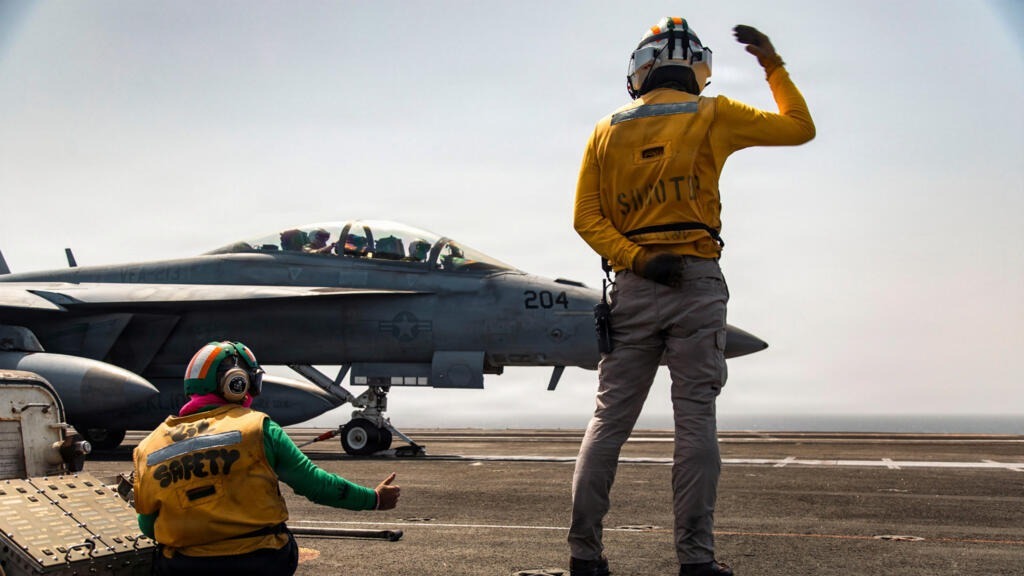
Retired US Army Lieutenant Colonel and military analyst Daniel Davis discussed the US military operation against Iran, decision-making mechanisms in Washington, US-Israel relations, transformations in modern warfare doctrine, and the global balance of power in an interview with Harici Media.
Answering questions of Harici Editor-in-Chief Tunç Akkoç regarding the Iran war, retired Lieutenant Colonel Daniel Davis stated that the US administration lacks an achievable military strategy on the ground. Davis said: “I would say the US has a desire, not a strategy. It wants to subjugate the Iranian side, corner them, seize control of the Strait of Hormuz, prove they pose no threat to anyone in the region, and ensure they never possess nuclear weapons. That is our desire. But there is no strategy to achieve any of these goals.”
Drawing on his past military experience, Davis detailed the geographical and technical challenges on the ground: “As a soldier with direct combat experience, having gained combat experience in some of these mountains between Afghanistan and Pakistan, for example, I know that many of the mountains inside Iran belong to the same mountain category. I knew what a difficult military task it would be to conquer a country as large as most of Western Europe, where such mountain ranges cover the entire western front. Therefore, I knew you could do nothing on the ground. However, I also knew that you could not subjugate a country with this kind of defense capacity and of this nature through air power alone.”
Pointing out that Iran’s defense infrastructure spans many years, Davis continued: “You cannot do this, especially when they have anticipated this for twenty years and made all kinds of preparations by constructing underground caves, production facilities, and storage facilities, and developing production capabilities for their unmanned aerial vehicles and missiles. There is no way you can defeat them. Because such facilities were designed not only to withstand all our strike missiles, such as Tomahawk, Jasmine cruise missiles, PSM, or ATAC, but also to survive. Most are capable of surviving nuclear explosions as well. I have been inside some of these here in the US. I have been in some physically located beneath a mountain. I know they were specifically designed when constructed to withstand the largest nuclear weapons the Soviet Union might possess. The ones there are of the same kind. If you know before embarking on an act of starting a war that the enemy is this large, possesses these types of defenses, and everyone knows these are resistant to our non-nuclear conventional munitions, why would you start a war to force them into something you clearly cannot achieve?”
Addressing the assumptions behind the war decision, Davis said: “I think this is a fantasy stoked by Benjamin Netanyahu. It was said, ‘If we assassinate their leaders, the same thing will happen as happened to Maduro in Venezuela. You went there, captured him, and disabled him; when you did that, you took control of the entire government, they basically handed the country over to you, and the same will happen here.’ Anyone who thinks Venezuela is like Iran has paid attention to nothing. The culture, history, religion, experiences, and everything that has transpired over the last 47 years are radically different from those in Venezuela, and you do not have an insider to facilitate the process as we had in Venezuela. But President Trump appears to have thought this way.”
“When he started the war on February 28, he sealed our fate; we lost this war”
Pointing to inconsistencies in US President Donald Trump’s decisions and the trajectory of the operation, Davis stated: “This situation is proof that he is stuck. Because, in my view, when he started the war on February 28, he sealed our fate. We lost this war. Even if it is ongoing right now, there is no logical way for us to win it. Because we cannot eliminate the trump card held by the Iranian side.”
Stating that military pressure mechanisms are insufficient, Davis explained: “We still have our missiles, aircraft, aircraft carriers, and all such elements. That is why it appears feasible. It is thought, ‘Maybe if we make a good enough deal, or put enough pressure on them, or impose a blockade and leave the public in a dire enough position to change the government’s mind.’ This is a fantasy. This is the only thing President Trump has. Because if he were acting based solely on military reality, strategic reality, and cultural and religious reality, he would know this was an unwise move, but he does not know.”
Describing Trump’s negotiation approach and the breakdown of the reached agreement, Davis used the following expressions: “He is a transactional individual who wants relationships resolved overnight. For example, during the memorandum of understanding period, this duration was to be 60 days. After starting the war, no achievable military objectives remained. Whatever your desires were, you can no longer reach them because you have confronted reality. Now he is trying to find an exit route, but even within this understanding, he cannot arrive at a rational and consistent perspective. Any rational person would think that when the memorandum of understanding was signed on June 17, it provided him with an exit route. You implement the terms of this memorandum, the crisis is resolved, the dual blockade is lifted, and the Strait of Hormuz could reopen.”
Addressing the clauses of the agreement text and subsequent developments, Davis said: “The terms Trump signed stated that Iran had administrative control of the Strait of Hormuz but could not demand any transit fees for 60 days. Iran accepted this, but accepted only one condition: the ‘for 60 days only’ stipulation. Subsequently, they publicly announced that they would collect fees later, but not during these 60 days. The US was not mentioned in the text in any way. We had no say. The authority to decide how operations would run was left to Iran together with Oman. We gave them 30 of the 60 days to prepare their plan for this. But after four or five days passed, the US suddenly declared a new southern corridor together with Oman.”
Detailing the process of reversing the decision, Davis noted: “While a step to reopen the strait had been agreed upon, traffic had risen to approximately one-third of pre-war levels, and many shipments had passed directly on the first day, Trump personally turned back this development toward finding a reasonable exit route from the unfolding disaster. According to reports from some sources in Washington, he came under intense pressure from pro-war figures in his inner circle and those on the Israeli side. He backed down under this pressure and modified the terms by inserting himself into the fifth paragraph. He never made Israel implement the first paragraph, which covered Lebanon and envisioned a ceasefire on all fronts. We did not even give them 30 days; we intervened before five days had passed. Trump has a goal, fails to reach it, puts forward another condition, and then withdraws that as well. He is very easily manipulated; he reaches a decision, then someone speaks with him, and he changes his mind.”
Recalling that a similar situation occurred in relations with Saudi Arabia, Davis said: “He said he made a great deal with Saudi Arabia, and the next day he changed the condition by saying, ‘as long as they sign the Abraham Accords.’ Saudi Arabia, on the other hand, announced that this was not part of the agreement and had never been discussed. This situation shows that President Trump constantly makes concessions when pressured. On this basis, how can any agreement be reached with the US? This situation means that no military or diplomatic exit point remains because he does not permit it.”
“Control is no longer an economic matter; it is a national security imperative”
In response to a question about whether a mutual exit opportunity remains from the current impasse, Davis said: “We had the memorandum of understanding; we had secured this agreement. However, President Trump and his Secretary, Scott Bessent, said, ‘as long as it is a deal we like, we want a new deal.’ You already had a deal; what deal are you talking about now? Why would the Iranian side negotiate a new deal that differs from an agreement made two months ago? This is completely illogical. The Iranian side holds military superiority through its missile cities and half a dozen alternative methods to control the strait. As their official authorities stated on social media, control of the strait is no longer merely an economic matter; it is a national security imperative because it is the only tool with which they can balance their American adversary, who is far stronger militarily.”
Evaluating the impact of the oil crisis, Davis stated: “Strategic Petroleum Reserves are declining. This situation has prevented a crisis so far, but it cannot cover products like jet fuel, diesel, and fertilizer. If it continues this way and the problem is postponed, the reserves will be depleted one day, and economic activity cannot be sustained without oil. Pressure is on President Trump, and the Iranian side is aware of this. They know the blockade will harm them, but they have calculated that they can endure much longer and deeper pain than our side. This is an existential matter; they know that if they surrender their only trump card to an unpredictable president, they will be attacked again later.”
“Reflexive support for Israel in society has been broken”
Touching upon relations between the US and Israel, Davis said a clear divergence has begun in American society. Davis noted: “In the past, across all segments of society and all generations, it was reflexively said, ‘Of course we are pro-Israel, they are our democratic ally.’ This situation continued until the Gaza process following October 7. Israel was attacked on October 7, and no one found it strange that it responded. However, what happened afterward created problems. Israel used this opportunity to destroy the Gaza Strip, increase pressure in the West Bank, bring in new settlers, and discuss annexation.”
Describing the rift between political elites and the public, Davis explained: “There is a major divide in America. Elites are unaffected by genocide or the killing of women and children in the West Bank and Gaza; they close their eyes, arguing that Israel is an ally. However, the eyes of the American public are not closed. They see human suffering on social media and do not carry the memorized assumptions of the past. These elites are not merely bought with money; for decades, they genuinely believed that our interests and Israel’s interests were one and the same. In their minds, saying something negative about Israel is equivalent to saying something negative about the US. Younger generations in particular, and a growing portion of all generations, recognize that our interests are not the same.”
Drawing attention to the cost of the war to the US, Davis noted: “We elected President Trump to apply the America First principle, not Israel first, Britain first, or Germany first. There is anger against those who sacrificed America’s needs by entering the war. According to figures reflected in the public domain, at least 600 Americans were injured; according to what I have heard, this number is over a thousand. Money has been spent, our facilities have been damaged, and our aircraft destroyed; around 40 to 50 of our aircraft were damaged or destroyed. Our bases were ruined and will likely never be rebuilt. We have also lost our geopolitical influence in the region. I doubt that relations with Saudi Arabia, Qatar, the United Arab Emirates, and Kuwait can return to their former state. Because the foundational assumption of this entire structure was that we could protect them; we could not even protect ourselves.”
“We are still living as if it were 1992”
Evaluating the shift in military technology, Davis stated that the US has lost its traditional military superiority. Davis said: “A large number of people in America are still living as if it were 1992. The Soviet Union had just collapsed, China was a peasant army developing militarily and economically, and we held absolute dominance following Operation Desert Storm. We are no longer in 1992. The Russians corrected their mistakes after the initial phase of the Ukraine war in 2022; they became a much stronger land force, missile, and drone force. China, meanwhile, reached immense technological and industrial capacity.”
Explaining the current situation through the example of Iran, Davis said: “We thought we could crush Iran like a fly, but we could not do so due to their missile cities and technologies. If we cannot eliminate Iran, what can we do against China or Russia, which possess power far beyond that? We have fallen behind in categories such as hypersonic missiles and the new Oreshnik missile. When I saw the Bayraktar TB2 vehicles used by the Turks in the 2020 Armenia-Azerbaijan war, as someone with an armored unit background, I understood that the nature of war had changed. The US, meanwhile, talks about producing 300,000 drones by 2030. In an environment where tactics change every six weeks on the Ukrainian and Russian battlefield, our systems remain extremely slow. Ukrainian soldiers mocked the tank platoon manual published last year, saying that with these methods, one could not survive on the battlefield for even ten minutes.”
“The idea of containing China is a fantasy”
Criticizing the US military approach toward China, Davis evaluated: “There is talk of a strategy to militarily contain China. Will you prevent their activities within their own borders, their technological developments, or the expansion of their military? You cannot stop a country with a strong economy and a massive population. We can achieve no result other than entering a war with China in the Asia-Pacific region and losing it. China’s shipbuilding capacity is approximately 200 times ours; they are vastly superior to us in artillery ammunition, aircraft, and missile production. Our methods left over from the Cold War no longer work. What we need to do is keep our own defense strong and ensure deterrence, not spend billions of dollars in the region to establish forward bases that will be hit.”
Touching upon the potential for diplomatic relations between the two countries, Davis said: “I think President Trump personally knows that going to war with China is unwise. However, the Pentagon and the military-industrial complex view China as a constant enemy, demanding more budget, more bases, and more missiles every year. No one considers diplomacy. Yet we can develop peaceful, stable relations with China based on mutual benefit, even if not friendly. Regarding Taiwan as well, I think leaders realize after seeing what occurred in the Middle East and Ukraine that help will not come, and they will adopt a more cooperative stance by withdrawing independence rhetoric. China does not want to start a war; it desires a model similar to Hong Kong. Even if a conflict breaks out in the worst-case scenario, it is between China and Taiwan; the US should not choose to join the war and lose.”
Emphasizing that the arms lobby inside the US maintains its power, Davis stated: “The military-industrial complex remains extremely powerful and holds all levers of power. They maintain control through members of Congress, the media, and public relations networks; I see no sign that this structure is weakening.”
“They did not want someone who would tell the truth about Israel”
Providing information about the process surrounding the cancellation of his appointment within the Office of the Director of National Intelligence, Davis recounted the issue in these words: “When Tulsi Gabbard came to me and asked me to become the number three executive in the Office of the Director of National Intelligence, I said I would be honored to serve my country. However, I stated that I had openly opposed the policies pursued by Israel since October 7 and the war in Gaza and Lebanon, and that these views might not be welcomed within the administration. She thought my accurate past analyses would compensate for this situation. One of my duties was to present the daily intelligence briefing to the president.”
Describing the stage at which his candidacy was withdrawn, Davis said: “Articles against me appeared in the Israeli press and American media. I never hid my views; I said Benjamin Netanyahu’s policies were harming Israel and dragging us down as well. I advocate the ‘America First’ principle, but there are many people within the administration who say ‘Israel First’ and have zero tolerance for any criticism directed at Netanyahu. They did not want someone who would tell the truth regarding Israel. The process expanded following posts by figures like Laura Loomer. On the day I passed the CIA polygraph test and was set to begin duty, Susie Wiles was informed that I had put the president in a difficult position regarding the Russia-Ukraine war. While Trump was saying there would be a ceasefire, I stated on my program that Vladimir Putin would not agree to a ceasefire given his current advantage. Although I stated that I supported a ceasefire, this was made a pretext, and my appointment offer was withdrawn,” completing the interview.


In an interview with Harici Media, Trita Parsi, Executive Vice President of the Quincy Institute for Responsible Statecraft, stated that global unipolarity is coming to an end, transitioning into an increasingly multipolar order.
Parsi addressed shifting global power dynamics, US foreign policy toward China, structural domestic pressures in Washington, and the strategic miscalculations surrounding the ongoing US conflict with Iran.
Parsi noted that while many analysts declare the arrival of a post-American world, the transition will not be an abrupt moment. Instead, he described a phased emergence where it becomes clear that no single superpower possesses deterministic influence over global affairs.
Parsi observed that many governments have been slow to internalize this reality or adjust their policies accordingly, creating the superficial illusion that a unipolar system remains intact. “Whether it’s fully multipolar or other configurations, we can be debated. What I think is clear is that the unipolarity is coming to an end,” Parsi said.
“Unipolarity is an aberration, an abnormality”
Regarding Washington’s readiness for a multipolar world, Parsi asserted that the US political establishment remains unprepared and has historically denied the shift. He recalled that during the first two years of the Biden administration, describing the world as multipolar was dismissed as a Russian propaganda narrative.
However, Parsi highlighted a shift under US Secretary of State Marco Rubio, who stated in a February 2025 interview that unipolarity was an anomaly. Parsi explained, “He actually went further. He said that unipolarity is an aberration, an abnormality, a historical accident. If you believe that it’s a historical accident, if you believe that it’s an abnormality, then I think it comes from that, that any effort to try to restore unipolarity should be rejected.”
Addressing US policy toward China, Parsi noted that despite the summit between US President Donald Trump and Chinese President Xi Jinping in Beijing, there is no structural indication that Washington views Beijing as a potential partner rather than a rival.
He contrasted the Biden administration’s aggressive posture—which assumed an existential struggle for dominance—with the Trump administration’s softer but poorly planned approach.
Parsi argued that neither power can decisively defeat the other, making mutual coexistence and co-governance essential to avoid a catastrophic zero-sum confrontation.
“An effort to indefinitely contain China is a recipe for disaster”
Parsi rejected the feasibility of military containment against Beijing, warning of severe consequences. “I think an effort to indefinitely contain China is a recipe that will bring about great power competition and a confrontation between the US and China that is going to be completely disastrous,” Parsi stated.
He observed that despite significant US strategic errors, such as the conflict with Iran, China has exercised restraint rather than exploiting American vulnerabilities. Parsi argued that if Beijing were dead-set on aggressive power competition, it would have acted differently.
Economically, Parsi argued that containing China through tariffs or Soviet-era containment models is a losing proposition.
Unlike the Soviet Union, which maintained an isolated economic model, China is deeply integrated into global trade and serves as the primary trading partner for most nations, including those in Latin America such as Brazil. Parsi emphasized that economic containment is unviable against a state with such vast global integration.
“This confrontation will be the deadliest conflict in human history”
Evaluating the risk of the “Thucydides Trap,” Parsi criticized the Washington foreign policy establishment for its structural inability to envision peaceful coexistence.
He noted that the political culture in Washington is built around zero-sum competition and conflict rather than diplomatic management.
Parsi emphasized that while historical precedents exist, humanity is not bound to repeat them, particularly when the stakes involve existential risks. Parsi warned that an unmanaged confrontation between the US and China “would be the deadliest conflict in human history if it is allowed to happen,” threatening human survival itself.
Parsi attributed this narrow strategic focus to structural domestic forces, particularly the US military-industrial complex and influential lobbying groups. Working alongside the grand strategy of liberal hegemony, these forces require US military dominance worldwide, especially in Asia.
Parsi explained that institutional inertia makes it extraordinarily difficult for Washington to alter its strategic trajectory.
“The US had an unrealistic plan A and no plan B”
Turning to the conflict with Iran, Parsi asserted that Washington lacks a coherent strategy, having relied on an unrealistic plan that failed within the first three days.
He stated that the US expected a swift regime collapse or surrender within four days, but faced horizontal escalation from Iran, including threats to the Strait of Hormuz and regional strikes.
“The United States had a very unrealistic plan A and no plan B, and it’s been stuck in that situation ever since,” Parsi said, adding that Washington has been improvising and executing tactical operations without strategic success.
Parsi attributed President Trump’s shifting decisions on Iran to this absence of strategy and his personal demand for immediate results. When military action failed to yield swift progress, Trump turned to diplomacy, only to lose patience within three weeks and resume military strikes. Parsi questioned whether the global community could afford a superpower acting in such an erratic manner.
“Without Israel’s push, there would not have been a war with Iran”
Addressing Israel’s role, Parsi stated that Israeli pressure was a decisive factor in driving US policy toward confrontation with Iran.
“Without Israel’s push, there would not have been a war with Iran. Without Trump agreeing to the Israelis, there would not have been a war with Iran. Both of them were needed,” Parsi remarked, noting that Israeli efforts since 1995 elevated Iran into a primary US national security concern disproportionate to actual US interests in the region.
Parsi identified a growing divergence between US and Israeli interests in the Middle East. While the US benefits from reducing its regional military footprint of 50,000 troops, Israel requires continuous US military presence and intervention to maintain a favorable regional balance of power.
Parsi noted that this divergence has created a visible rift between Washington and Tel Aviv following the poor execution of the war and subsequent diplomatic maneuvers.
“Israel’s standing amongst the American public has plummeted”
Parsi highlighted a major shift in American public opinion regarding Israel, noting that sympathy for Palestinians has surpassed sympathy for Israel across almost every demographic category, except Republicans over the age of 65.
He attributed this decline directly to Israel’s military actions in Gaza and its perceived role in drawing the US into a disastrous war with Iran, which mirrored earlier public grievances over the Iraq War.
Regarding a resolution to the conflict, Parsi stated that a dignified exit for both the US and Iran remains possible, though the window is narrowing due to personal hostility and political miscalculations.
Finally, addressing Trump’s political image, Parsi clarified that Trump was never strictly anti-war, but rather anti-risk.
He explained that Trump entered the conflict because Israeli officials convinced him that war with Iran posed little risk and would be concluded within 100 hours. Parsi concluded that had Trump not been misled into believing the operation would be a swift success, he would not have initiated it.
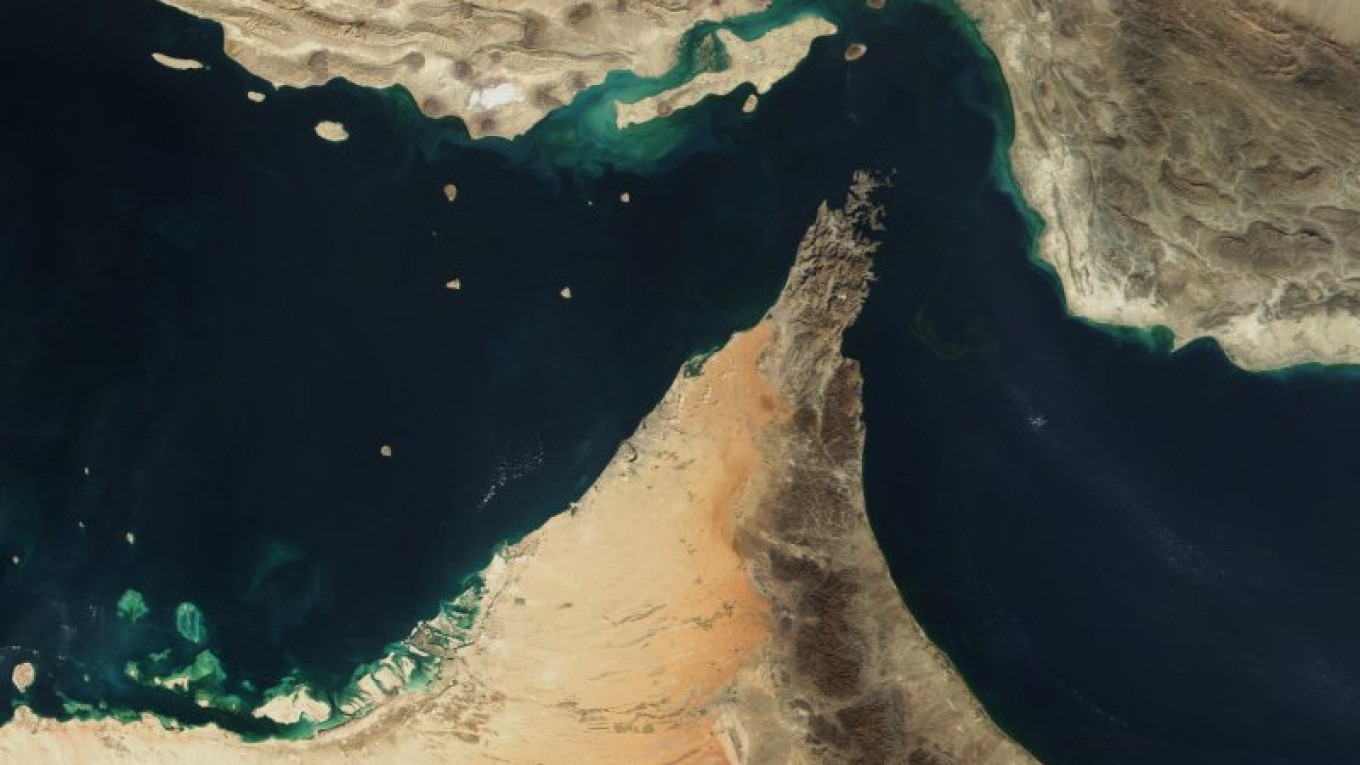
Conflicting statements from the US and Iran regarding the potential resumption of diplomatic negotiations have emerged, while ongoing tensions in the Strait of Hormuz have once again brought global energy concerns to the fore.
Addressing these developments on the Harici live broadcast of Strategic Compass, international relations scholar Prof. Dr. Hasan Unal and Alptekin Dursunoglu, journalist, author, and Editor-in-Chief of Yakin Dogu Haber (YDH), evaluated the internal, regional, and strategic dimensions of the conflict. The discussion focused on the shift in Iran’s military doctrine, the political strain within the US administration, the economic vulnerability of Gulf monarchies, and the broader realignments reshaping Middle Eastern geopolitics.
Why did Trump step back from a decision to launch a new attack on Iran?
Opening the discussion, Prof. Dr. Hasan Unal offered a sharp critique of the political rhetoric originating from Washington, contrasting executive declarations with the tactical outcomes on the ground. Unal argued that public statements made by former US President Donald Trump increasingly lack analytical consistency, complicating efforts to decipher official US strategy.
“He has reached a point where he tells more lies than the daily meowing of stray cats,” Unal remarked during the broadcast. “I do not know which part of his statements we ought to analyze, but if we evaluate him within a broader framework, it becomes possible to reach certain conclusions.”
Unal described the military confrontation between Washington and Tehran as an uneven cycle of escalation, noting that US forces continue to suffer casualties and incur immense financial costs without altering the strategic baseline. “The situation has effectively transformed into something like a defeated wrestler who never grows tired of wrestling; America repeatedly approaches and confronts Iran, yet the outcome is obvious from the outset,” Unal stated. He added that American military personnel are being deployed into conflict zones where national interests remain obscure: “I am certain that American soldiers there largely believe they have no personal interests at stake… and that it serves at most the interests of Israel.”
Dursunoglu contextualised the current phase of hostilities as part of an extended campaign, comparing the recent clashes to a second round of a broader regional conflict following earlier engagements in 2025. He noted that despite assertive claims from Washington regarding the destruction of Iranian military infrastructure, operational continuity on the Iranian side forced a shift in US messaging.
Reflecting on official declarations from US Central Command (CENTCOM) and executive statements following intensive strikes, Unal highlighted the internal contradictions in Washington’s narrative: “Trump claimed Iranian naval forces were sent to the bottom of the sea, the air force beyond the atmosphere, and the ground forces deep into the magma. Yet suddenly he declared, ‘I have forgiven Iran,’ while CENTCOM figures suggested they had reached ‘target saturation’—as if there was simply nothing left to hit.”
Is Iran insisting on its conditions regarding the Strait of Hormuz?
A central focus of the analysis was Iran’s response mechanism following the breakdown of initial ceasefire frameworks. Dursunoglu highlighted a significant structural transition in Tehran’s military posture, moving from traditional reactive containment to proactive deterrence across multiple theatres.
Dursunoglu pointed out that during the escalation, Iran did not restrict its target matrix to immediate points of contact. Instead, Iranian forces conducted strikes against US installations and logistical networks across the region, including facilities in Bahrain, Kuwait, Jordan, and Oman.
“Iran’s traditional defence doctrine was defensive and based on proportional retaliation,” Dursunoglu explained. “However, after the US halted strikes, Iran proceeded to target assets in Jordan and Kuwait without immediate prior attacks on those specific vectors. This indicates that Iran has begun executing preemptive strikes, effectively adapting its strategic posture.”
Unal underscored the severity of these strikes on regional logistics, noting that Iranian counter-strikes targeted the port of Aqaba and airport infrastructure in Jordan, alongside American operational facilities in the Gulf. “According to the accounts, Iranian forces began hitting American installations in Gulf states and Jordan within minutes of initial strikes, effectively neutralizing the operational depth the US relied upon,” Unal noted.
The operational status of the Strait of Hormuz remains a decisive point of leverage. Under previous draft frameworks negotiated through Omani mediation, administrative oversight of maritime traffic through the Strait was slated to transition to Iran in coordination with regional littoral states. However, subsequent US efforts to establish an independent naval corridor along the Omani coast triggered a fresh wave of Iranian interdictions.
Dursunoglu outlined the ongoing negotiations surrounding the maritime passage, noting that attempts to bypass Iranian oversight proved unviable for commercial shipping. Under the latest proposals under discussion via Omani channels, incoming maritime traffic into the Gulf would pass through Iranian-designated corridors under Iranian authorization, while outgoing traffic would proceed along Omani coastal waters following notification and approval.
“If an agreement is finalized on these terms, it represents an explicit recognition of Iran’s control over the Strait of Hormuz by the US regime,” Dursunoglu said. He noted that while initial terms provided free passage during a temporary 60-day window, long-term frameworks anticipate structured administrative mechanisms for commercial vessels. Unal added: “Whether designated as transit fees, environmental charges, or security provisions, formalizing maritime oversight secures a permanent structural advantage for Tehran.”
Under what conditions will negotiations begin?
The economic ramifications of maritime disruption have also altered the calculations of Gulf export nations. Following attempts by Saudi Arabia to engage Ansar Allah (Houthi) forces in Yemen, retaliatory actions against critical infrastructure—including the Yanbu crude oil pipeline on the Red Sea—severely constrained alternative export routes.
“By drawing Yemeni forces back into active conflict, Saudi Arabia inadvertently placed its secondary export avenues under direct fire,” Unal observed. “The vulnerability of the Yanbu pipeline demonstrates that reliance on the Gulf cannot be bypassed easily, effectively increasing regional dependence on stability within the Strait.”
Beyond the maritime domain, the broadcast addressed heavy Iranian military engagements in northern Iraq, targeting opposition groups including the Kurdistan Democratic Party of Iran (KDPI), Komala, Pak, and Free Life Party of Kurdistan (PJAK) along the Erbil-Suleimaniyeh axis.
Dursunoglu and Unal noted that cross-border strikes destroyed substantial ammunition depots established near border regions, followed by reported ground operations conducted by specialized Iranian units.
“Iranian special forces executed targeted ground operations across the border,” Dursunoglu stated, pointing to secondary explosions captured in operational footage as evidence of extensive pre-positioned armaments.
Unal noted that these operations underscored the strategic limitations of non-state actors aligned with Washington: “The expectations placed on armed factions in northern Iraq collapsed when confronted with direct military pressure. The narrative that these groups could serve as an internal wedge against Tehran proved to be a costly miscalculation for US planners.”
Reports indicating the start of a repositioning of US personnel and heavy military equipment from bases in Iraq and the Gulf toward Jordan and Israel were identified as a direct consequence of this vulnerability. “US forces are consolidating toward Jordan and Israel because their facilities in Bahrain and Kuwait sustained structural operational damage,” Dursunoglu observed. “When a state can no longer defend its forward command centers—such as the 5th Fleet infrastructure in Bahrain—it is forced to retreat to secondary defensive perimeters.”
How effective is the pressure from Gulf countries for negotiations?
Concluding the evaluation, Unal and Dursunoglu examined the broader diplomatic landscape, focusing on security dialogues among regional powers, including Turkey, Egypt, Saudi Arabia, and Pakistan. Both analysts agreed that any sustainable security architecture in the Middle East must incorporate Iran rather than seek its exclusion.
“How can you construct a new regional order by excluding the very nation that demonstrated the capacity to neutralize external military dominance?” Dursunoglu questioned. “An architecture that relies on Western guarantees or Israeli alignment fails to address the underlying security dynamics of the region.”
Unal reflected on the historical trajectories of Turkish foreign policy, criticizing past ideological approaches that fuelled regional fragmentation and sect-based antagonisms. He noted that realpolitik dictates close functional coordination between Ankara and Tehran despite historical differences.
“Iran’s resistance ultimately prevented the imposition of a security framework dictated entirely by external actors,” Unal concluded. “Responsible analysis requires recognizing that stability in the Middle East cannot be achieved through foreign intervention or regional fragmentation, but through direct, autonomous security coordination among the region’s core nations.”

South Korea pulls part of embassy staff from Ukraine amid POW dispute

Netanyahu unveils security doctrine and regional alliance map

At least 47 major US data centre projects halted or cancelled

EU rejects US proposal to resume Russian gas flows through Ukraine

Serbian prosecutor in Trump Tower inquiry targeted by Israeli spyware
-
 Europe2 weeks ago
France and Germany urge EU market kill switch against trade threats
-
 Europe2 weeks ago
Bill to drop NATO membership goal submitted to Ukrainian parliament
-

 Europe2 weeks ago
Marine Le Pen unveils fiscal programme pledging French budget cuts
-
 America2 weeks ago
How will Brazil’s presidential runoff work?
-

 Middle East2 weeks ago
CIA report warns Israel faces growing risk of civil conflict
-

 Europe2 weeks ago
Berlin Left Party backs Israel’s right to exist for coalition pact
-
 Diplomacy2 weeks ago
The West is preparing for war not with Russia, but with its own people, French analyst Georges Kuzmanovic insists
-
 Europe2 weeks ago
EU seeks Chinese trade signal in Beijing as surplus widens
