
Diplomacy
UK lawmakers warn Georgia risks becoming Russian-aligned autocracy modeled on Belarus


The UK House of Commons Foreign Affairs Committee has warned of a marked democratic backslide in Georgia, asserting that the nation’s leadership risks transforming the country into an “autocracy firmly within Russia’s sphere of influence,” mirroring the trajectory of Belarus.
According to the committee’s report, “The Committee is deeply concerned by the ongoing deterioration of democracy in Georgia; under current trends, this will lead to an autocracy firmly established within Russia’s sphere of influence, similar to Belarus.”
The authors of the report noted that while the European Union and the United Kingdom support Tbilisi’s trajectory toward Western integration—including prospects for NATO and EU membership—Russia has actively sought to obstruct this path.
The document states that these tensions formed the bedrock of the political crisis that erupted following the 2024 elections. While official results credited the ruling Georgian Dream party with 54% of the vote, the refusal of the opposition and then-President Salome Zourabichvili to recognize the outcome triggered mass protests.
The committee’s report alleges that the Georgian Dream party has consolidated power since 2012, stifling the opposition, suspending EU accession negotiations, and promoting anti-European rhetoric.
Among these measures, the report cites regulations that restrict the activities of civil society organizations and the media, including the “foreign agent” law. It also highlighted that Bidzina Ivanishvili, the party’s founder, had previously faced US sanctions on the grounds that he was undermining Georgia’s democratic and Euro-Atlantic future in alignment with Russian interests.
Citing assessments from the OSCE, the report further emphasized that since the spring of 2024, the country has experienced a “significant deterioration in democratic standards,” including restrictions on the freedoms of expression and assembly.
The committee called on the British government to expand sanctions against representatives of Georgian Dream, business elites, and media outlets “spreading disinformation.”
The report stated that such a move would “significantly increase the costs for those seeking to undermine the Georgian people’s desire for European integration” and would signal that Britain supports Georgian democracy rather than autocracy.
In February 2025, Members of the European Parliament adopted a resolution calling for the non-recognition of Georgia’s new administration and continued to view Salome Zourabichvili as the country’s legal president. Zourabichvili announced that she would continue her duties as head of state, albeit from a different office.
In contrast, Georgian President Mikhail Kavelashvili argued that European politicians had pushed Tbilisi toward war with Russia following the start of military operations in Ukraine.
Kavelashvili stated that the Georgian people supported the administration in defending the country’s national interests. Furthermore, Kavelashvili criticized Zourabichvili’s stance, noting she “stood behind Moldova and Ukraine.”
“Nominal” candidate status for European Union membership
In the Georgia report presented at the EU enlargement summit in late autumn of the same year, the European Commission stated that it now considers the country only a “nominal” candidate due to “democratic backsliding.”
Kaja Kallas, the European Union High Representative for Foreign Affairs and Security Policy, stated at the event that unless “conditions change fundamentally,” Georgia currently has no viable path toward the European Union.
According to Marta Kos, the European Commissioner for Enlargement, the European Union plans to activate visa mechanisms for Georgia in an effort to ensure the country’s leadership returns to the issue of EU integration.


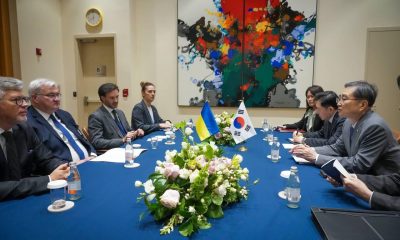







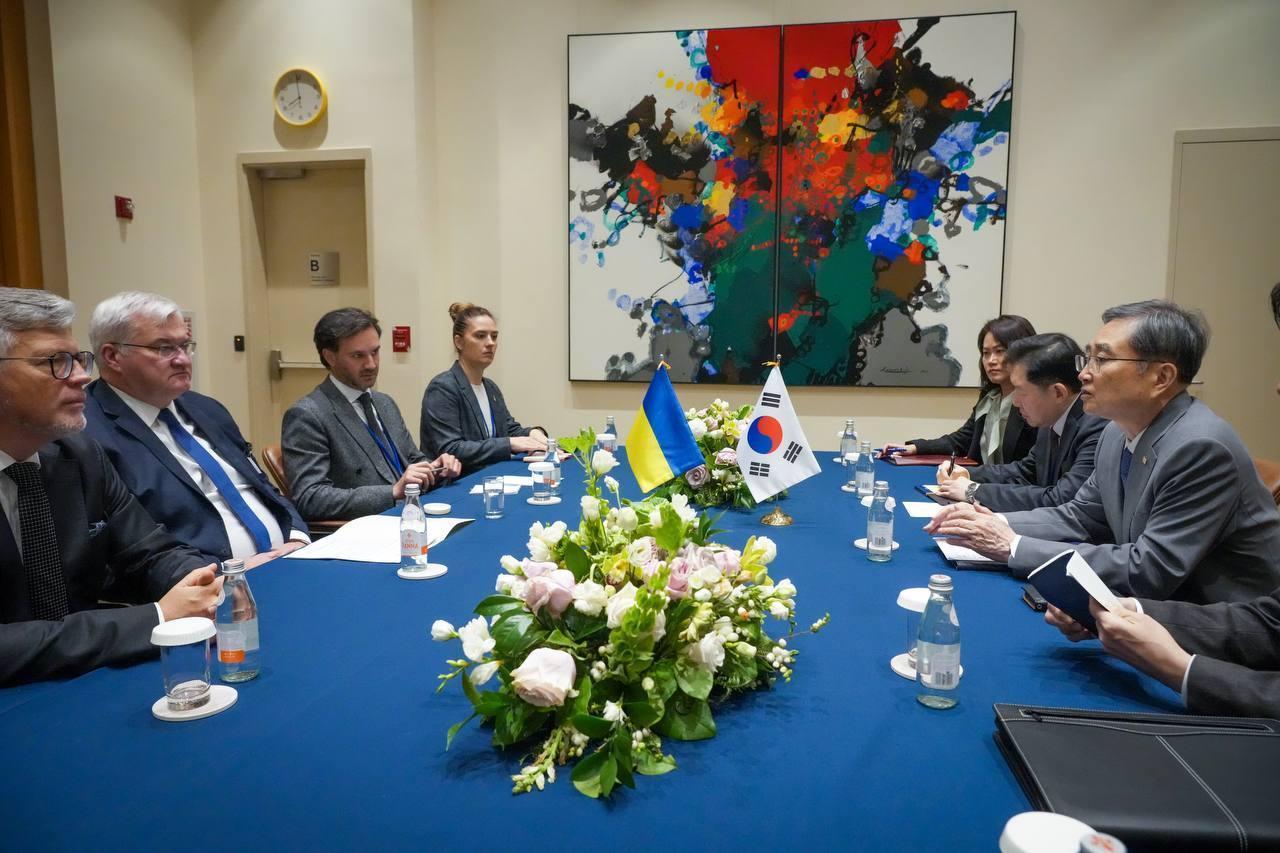
The South Korean government has decided to withdraw part of its embassy staff from Ukraine.
According to the Yonhap news agency, Foreign Ministry spokesman Park Doo-sun cited the Kyiv administration’s failure to take “positive steps” in the dispute that began with the leak of information concerning the handover of North Korean prisoners of war as the justification for the move.
The spokesman also listed the ongoing threat of air strikes, which complicates the safety of diplomats, among the reasons.
Following the withdrawal of part of the personnel, essential diplomatic contacts will continue under the leadership of the charge d’affaires ad interim to Ukraine. All consular staff tasked with protecting South Korean citizens will remain in Ukraine.
Prior to this move, the Seoul administration decided on 8 October to withdraw its ambassador. The Foreign Ministry stated at the time that it was ready to continue consultations with Kyiv to resolve the emerging issues constructively.
Tensions between the two countries began with a speech delivered by Ukrainian President Volodymyr Zelenskyy at the United Nations General Assembly in September.
Zelenskyy announced that two captured soldiers from the North Korean army had been handed over to South Korea.
South Korean President Lee Jae-myung, meanwhile, accused Kyiv of breaching a confidentiality agreement.
Lee said the disclosure of this information endangered the prisoners’ families and stability on the Korean Peninsula.
Seoul expects a public apology
Dmytro Lytvyn, an adviser to the Ukrainian president, denied the existence of a confidentiality agreement.
The South Korean Foreign Ministry summoned Ukrainian Charge d’Affaires Andriy Veshkin on 28 September and issued a note of protest against Lytvyn’s remarks.
President Lee Jae-myung warned in a statement on 2 October that they would take additional measures against Kyiv if Ukrainian authorities did not acknowledge the agreement and make a public apology. Lee stated that Ukraine itself had initially requested that the transfer of the prisoners be kept confidential.
Ukrainian Foreign Ministry spokesman Heorhii Tykhyi said the dispute stemmed from differing interpretations of the confidentiality regime.
Tykhyi noted that Seoul, based on its constitution which recognises the entire Korean Peninsula as its own territory, requested that the prisoners be handed over “like its own citizens”.
Describing the handover as a “gesture of goodwill”, Tykhyi stated that they were conducting closed-door negotiations to resolve differences of opinion.
Ambassador Park Ki-chang returned to Seoul on 10 October. According to a report by The Korea Times newspaper citing the ministry, recalling the ambassador served as a diplomatic protest against the leak of information regarding the prisoners.
The newspaper wrote that South Korea had last taken a similar step in 2008 by withdrawing its ambassador to Japan.
Moscow warned foreign diplomats
On 3 October, the Russian Foreign Ministry reiterated its warning to foreign nationals, including diplomatic mission staff, against remaining in Ukraine.
The ministry recalled its advice to leave Kyiv, citing ongoing strikes against military targets.
The ministry noted that those who failed to heed the warnings would bear responsibility for the potential consequences.
Kremlin spokesman Dmitry Peskov said in a statement on 24 September that they had no information regarding Kyiv handing over two North Korean prisoners of war to Seoul.
Peskov, noting that prisoner matters fall under the authority of the Defence Ministry and intelligence services, said, “Contacts through the special services are continuing.”
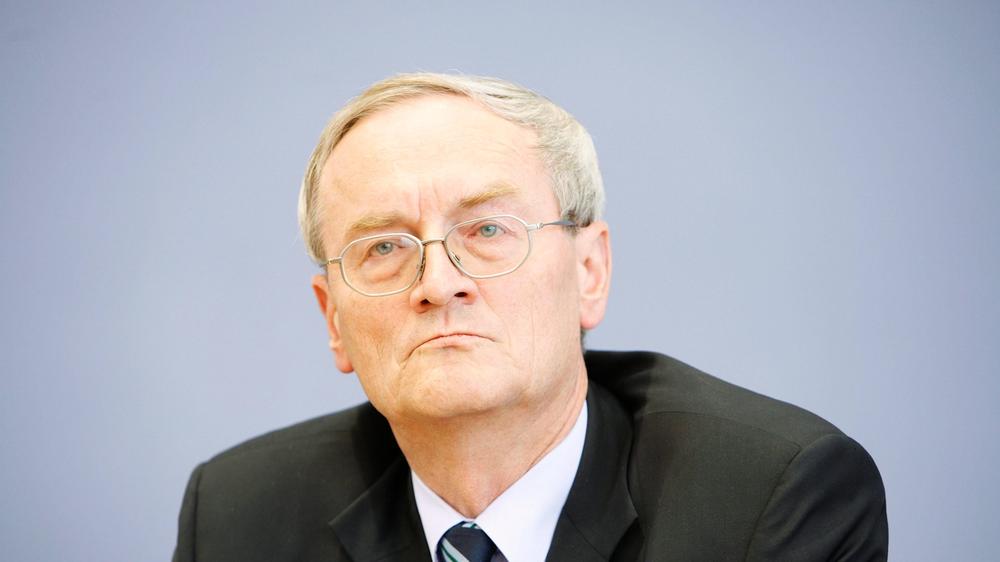
August Hanning, who led Germany’s Federal Intelligence Service (BND) between 1998 and 2005, was arrested on 6 October on allegations that he obtained roughly 2,000 classified agency documents and used them during contacts with intelligence officers from a foreign state.
Accused of high treason and espionage on behalf of a foreign intelligence agency, the former spy chief is alleged to have procured the documents from former BND employee Manfred D.
Prosecutors stated that the leaked records included internal briefing notes presented to senior German officials, though the Berlin government has not yet publicly disclosed which country received the classified data.
According to an exclusive report by Jake Green for The Cradle, seized email exchanges revealed extensive ties between the arrested Hanning and former Mossad director Danny Yatom.
The correspondence shows that the two former intelligence directors built an ongoing network of contacts following their public service, combining commercial ventures, efforts to secure political influence, and intelligence links.
This dynamic has triggered debate that using personal connections and official access for private gain has left Germany’s intelligence apparatus vulnerable.
Intelligence notes for 10,000 euros and campaign proposals
According to the reviewed emails, Hanning told Yatom in a 2018 message that he could prepare an “overall assessment based on information obtained from senior German officials and intelligence agencies” concerning an unidentified candidate.
The former BND head committed to completing the report by 13 July in exchange for 10,000 euros.
Contacts between the two men subsequently expanded to cover domestic political processes in Germany. Ahead of the September 2021 federal election, Yatom asked Hanning to approach leading candidates.
Describing CIY Global as a “political campaign company”, the former Mossad chief noted that he aimed to introduce its capabilities to German politicians, and he mentioned his intention in the same exchange to transfer documents concerning a cybersecurity firm.
Cybersecurity partnership and surveillance operations across Europe
The partnership between Yatom and Hanning reached beyond political lobbying initiatives into the cybersecurity sector.
Hanning reportedly served as a consultant for World Health Energy Holdings, a cybersecurity company linked to Yatom.
Firms of this type, established or managed by former intelligence personnel, provide commercial platforms on the international market for Israeli-origin surveillance, cyber intelligence, and political influence capabilities.
The operational presence of private Israeli-based surveillance technologies across Europe has recently entered judicial records through scandals in Poland, Spain, and Greece.
Polish prosecutors announced on 12 October that data collected under the previous government via Pegasus spyware against political opponents had been transferred out of the country, adding that manufacturer NSO Group maintained access to the technical infrastructure.
In Spain, the 2022 CatalanGate investigation established that at least 65 people, including politicians, lawyers, and civil society representatives, were targeted using Pegasus or Candiru software, with Citizen Lab researchers publishing strong evidence linking the operation to Spanish authorities.
In Greece, the surveillance operation targeting journalist Thanasis Koukakis and Member of the European Parliament Nikos Androulakis was determined to have used Predator software, linked to Intellexa, a company founded by former Israeli intelligence officer Tal Dilian.
In the German espionage investigation, the traffic between Hanning and Yatom involving paid reporting, contacts with electoral candidates, and commercial partnerships does not yet provide conclusive legal evidence regarding the final destination of the roughly 2,000 classified documents.
Nevertheless, the disclosed correspondence gives German investigators a concrete line of inquiry to assess whether classified state secrets reached commercial networks tied to Israeli intelligence.

US President Donald Trump has dismissed Kimberly Guilfoyle, the US ambassador in Athens, following serious press reports concerning her conduct.
White House Press Secretary Katie Zacharia told reporters during her first briefing that Guilfoyle had been asked to resign.
“She was doing a good job, but we didn’t like what we read in the press,” Trump said. “She was not a member of my family. I think she dated my son a long time ago.”
In a social media post, Guilfoyle stated: “These claims are unfounded, and I will resolutely defend my name, reputation, and integrity.” She added that she was particularly proud of the embassy’s work.
According to Kathimerini, her removal came as no surprise in Washington. Days of successive disclosures and vigorous exploitation of the matter by Democrats had been inflicting political damage on the White House ahead of the sensitive midterm elections.
The US State Department was instructed not to comment, with crisis management transferred entirely to the White House.
Reports indicate that most of the president’s team swiftly favoured Guilfoyle’s dismissal, while Secretary of State Marco Rubio was reportedly uneasy with the demonstratively warm public welcome she had staged for him.
Democrats on the House Foreign Affairs Committee have called for an investigation.
“Her resignation does not absolve her of responsibility,” the lawmakers wrote, adding: “While American families struggled to make ends meet, she used her position as a Trump administration official to enrich herself.”
Chargé d’Affaires Josh Huck will assume ambassadorial duties until a successor is chosen.
Meanwhile, Guilfoyle’s departure is expected to cause delays in agreements between Greece and the US.
These include the so-called “Rubio package”, comprising approximately $4 billion in arms deals finalised only days before the secretary of state’s arrival.
Several procedural steps still remain before the contracts can be signed.
In Athens, opposition parties are demanding answers. Dimitris Mantzos of PASOK called for a detailed briefing on the agreements reached during Rubio’s visit.

German officials urge fighter jet alliance with Sweden and Spain

US wealthy demolish multimillion-dollar mansions for land

US and Israel weigh Iran strikes after midterm vote, reports say

Pentagon plans covert spy ring for economic war on China, report says

EU reopens debate on naming envoy for Ukraine talks with Putin
-

 Europe2 weeks ago
Berlin Left Party backs Israel’s right to exist for coalition pact
-
 America2 weeks ago
How will Brazil’s presidential runoff work?
-
 Diplomacy2 weeks ago
The West is preparing for war not with Russia, but with its own people, French analyst Georges Kuzmanovic insists
-

 Russia2 weeks ago
71 EU lawmakers demand closure of Russian Houses in 15 member states
-

 Russia2 weeks ago
US and Russian figures discuss American stake in Nord Stream lines
-
 Europe2 weeks ago
MI6 investigates potential leaks after former BND chief is detained
-
 Russia2 weeks ago
Drone strike shuts down Yandex data centre in Russia’s Ryazan region
-

 America2 weeks ago
Trump weighs presidential memorandum to cut surging US diesel prices
