
Europe
Vatican under Pope Leo XIV warns against AI ‘playing God,’ urges ethical development

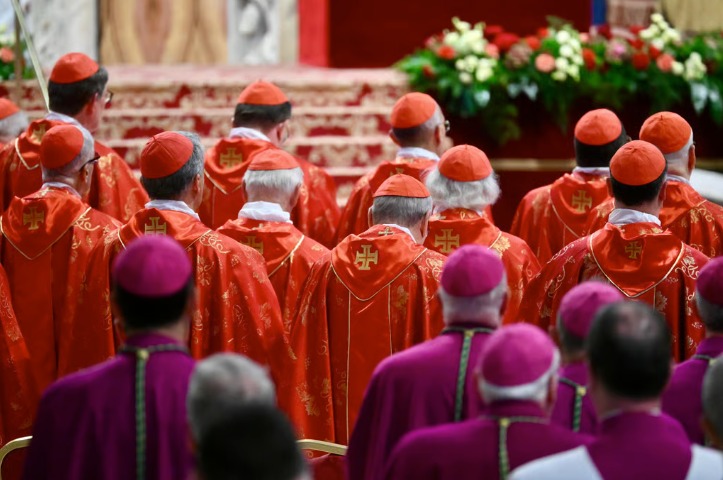
The new leader of the Catholic world, Pope Leo XIV, has made reducing the risks of “uncontrolled artificial intelligence” the defining mission of his papacy.
In his first official address to the cardinals, the new Pope warned against the dangers artificial intelligence poses to “human dignity, justice, and labor.” Two days later, speaking to journalists, he praised the technology’s “immense potential” while also emphasizing the responsibility to “ensure it is used for the benefit of all people.”
Like Pope Leo XIII, whose name he took and who called for “restructuring” relations between workers and capital during the industrial revolution in the last quarter of the 19th century, Leo XIV positions himself as a “guardian of the social fabric” against uncontrolled modern technologies.
Indeed, the new Pope had said he took this name pointing to the role of his predecessor, who published the famous papal encyclical Rerum Novarum, in “social matters.”
Franciscan friar Paolo Benanti, a Vatican advisor on artificial intelligence ethics, told POLITICO, “The Church asks us to look to the heavens, but also to walk on earth as the times require,” adding that it is not unusual for the church to offer expertise in such a futuristic field.
Maria Savona, an AI expert and professor of innovation economics at Luiss University in Rome and the University of Sussex, stated, “The Vatican wants to avoid certain AI developments that could harm human rights and dignity and disproportionately affect low-skilled workers.”
The Vatican’s efforts to secure a place for itself in artificial intelligence regulation began with Leo’s predecessor. In 2020, Pope Francis brought together technology companies like IBM and Cisco, as well as religious and political leaders, to sign the Rome Call for AI Ethics, a commitment to developing artificial intelligence technologies that are “accountable and benefit society.”
In January, the Vatican issued an official statement warning that artificial intelligence could lead humanity to become a “slave to its own work.”
Leo, the first pope from the US—the homeland of Silicon Valley and the tech revolution—and a mathematics graduate, is in a “unique position” to carry this banner, according to POLITICO.
Meanwhile, Washington is spearheading a deregulation move in the AI field. President Donald Trump rolled back the security rules set by his predecessor, Joe Biden, and announced a half-trillion-dollar AI plan with leading company OpenAI.
According to Benanti, the church’s role as an “expert in humanity” can encourage leaders, especially in Catholic countries, to “create AI that values people and aligns with social justice.”
In Leo’s first meeting with Italian leader Giorgia Meloni, the two pledged to continue working for “ethical and human-centered artificial intelligence development.” Last year, at Meloni’s invitation, Francis had addressed G7 leaders on artificial intelligence ethics.
Savona commented, “The Vatican’s interest in artificial intelligence is not strange. Francis also showed great interest in climate change, one of today’s significant problems. The Church’s mission is to adapt to the world while remaining true to its fundamental principles.”
Savona argued that as power concentrates in the hands of tech giants and wealthy nations, the Vatican could use its network in the “Global South” to ensure “more democratic access” to artificial intelligence and push for European-dominated regulations to be adapted to global standards.
On the other hand, Leo himself has fallen victim to AI-generated content. In the first week of his papacy, a YouTube video was published allegedly showing Leo praising Burkina Faso’s President Ibrahim Traoré for contrasting the Vatican’s wealth with poverty in Africa.
The Vatican stated that the video was a “deepfake” and part of a recent wave of AI-generated content on African platforms glorifying Traoré as an example of pan-African leadership.







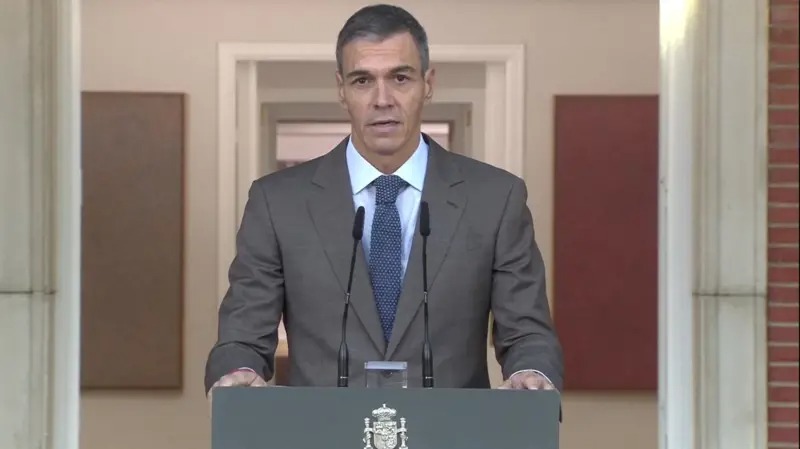
Spanish Prime Minister Pedro Sánchez has called a snap general election for 29 November amid an ongoing housing crisis.
The election will take place on Sunday, 29 November, the earliest possible date under procedural rules.
In a hard-hitting speech, Sánchez framed the contest as a choice between “regression” under a “far-right coalition” and “continuing to move forward” under his progressive administration.
Sánchez said that in an environment of high political tensions, global instability, the climate crisis, and uncertainty created by the rise of artificial intelligence, the election would centre on who should govern Spain during this turbulent period.
Right-wing parties in parliament had blocked the minority government’s emergency measures on housing amid widespread protests.
The government’s efforts to address the housing crisis had been set out in two royal decrees.
These decrees contained a series of measures aimed at improving access to housing, ranging from an eviction ban until 2030 to the regulation of temporary rentals and room-by-room leases.
However, the decrees were rejected in the Congress on Friday by the conservative People’s Party (PP), the right-wing Vox, and the right-wing Catalan pro-independence party Junts.
The PP, which leads in the polls but may require the support of Vox to form a government, said it rejected the government’s plans because it believes the best way to resolve the crisis is construction, not regulation.
The rejection of the decrees triggered furious reactions from the crowd gathered outside the Congress building.
Long-simmering anger over high rental costs and the precarious nature of many tenancy agreements erupted late last month following the eviction of Maricarmen Abascal.
Abascal, 87, was evicted from the home in Madrid where she had lived for 70 years. She said she could under no circumstances afford the 230% rent increase demanded by the investment fund that acquired her flat.
Her plight prompted tens of thousands of people to take to the streets in protest, and a massive tent encampment reminiscent of the 2011 indignados movement was erected in Madrid’s central Puerta del Sol square.
Throughout the weekend, major demonstrations were held across the country, with protesters stepping up their demands for urgent action on the housing crisis.
Authorities stated that 70,000 people attended Saturday’s protest in Madrid, while organizers put the figure at 500,000.
Although opinion polls show the PP running comfortably ahead of Sánchez’s Spanish Socialist Workers’ Party and indicate rising support for Vox, the prime minister may be hoping that the focus on the housing issue, together with the right’s rejection of the government’s plans to tackle the crisis, will mobilize left-wing voters.
The housing issue has also served to divert attention from the government’s widely criticized handling of the ongoing crisis in Spain’s North African enclave of Ceuta.
That crisis escalated after approximately 70,000 people crossed into the enclave from neighbouring Morocco within a 48-hour period.
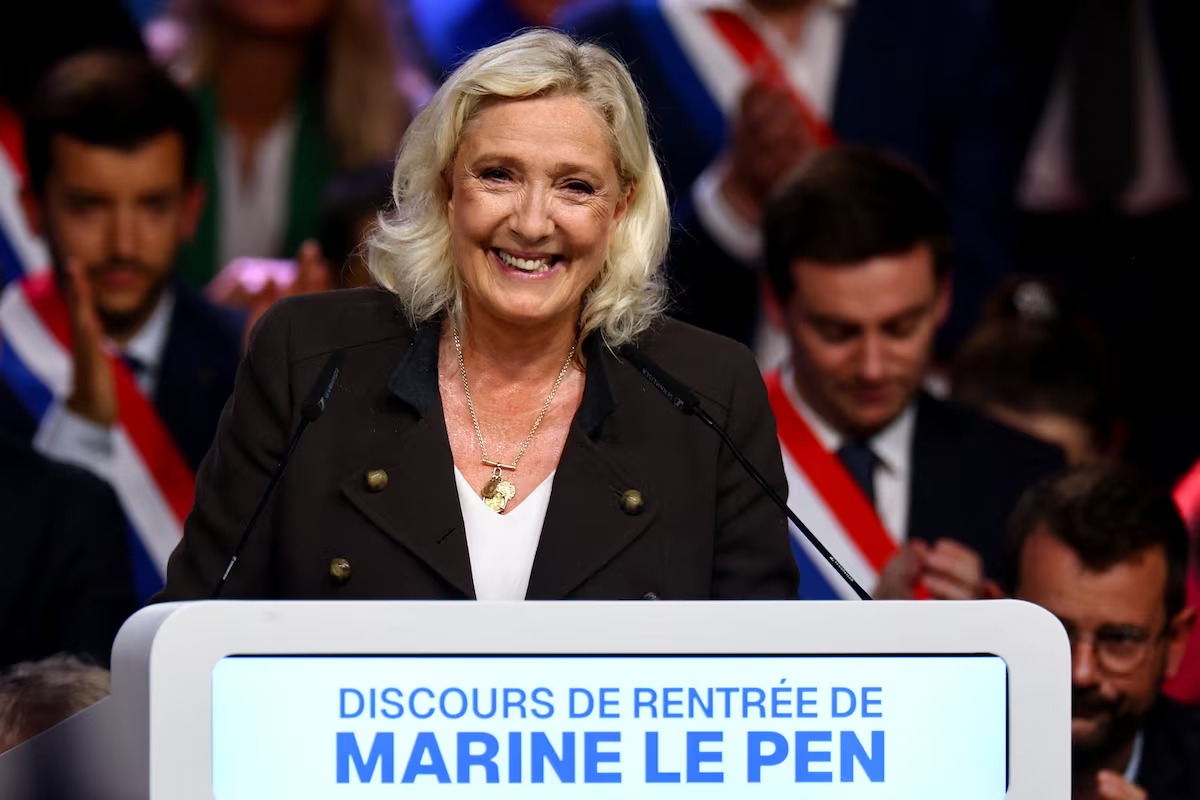
Marine Le Pen has unveiled plans for a budgetary rule that she said would put France’s public finances back on track.
According to Reuters, Le Pen aims with this step to ease investor concerns regarding her fiscal credibility.
The historic leader of the National Rally (RN) is leading in the polls for both rounds of the election scheduled to take place between 18 April and 2 May.
However, investors have scaled back their positions in French assets because they doubt that whoever wins the presidency next year will be able to bring the fiscal deficit under control.
The premium demanded by investors to hold 10-year French bonds over their German counterparts rose above 150 basis points on Friday to reach its highest level since late 2011, after the government’s 2027 draft budget provided little relief.
Writing in the French newspaper L’Opinion, Le Pen stated that her proposed “golden rule” would be submitted to a referendum and that, similar to Germany’s debt brake mechanism, it would bind lawmakers in annual budget legislation, with very limited exceptions.
The rule would require the fiscal deficit to narrow each year by at least half a percentage point of gross domestic product.
Le Pen argued that, through this mechanism, the budget deficit would fall from this year’s 5.4% to 2.9% in 2032, when the next presidential term concludes.
The debt ratio, which currently stands at 119% of GDP, would continue to decline until it reaches 60%, and would remain close to a balanced level.
Le Pen did not enter into details regarding when the referendum might be held or how the government would deliver spending cuts of this scale.
However, the French politician described the figures she outlined as a “minimum”, stating that her fiscal programme, to be unveiled on Tuesday (6 October), would reduce spending even more rapidly.
She reiterated her commitment to achieve 125 billion euros in savings over five years, noting that this figure would be net of tax cuts.
Le Pen argued that neither economic growth nor tax increases could repair the fiscal position.
Stating that lawmakers could permit a larger budget deficit only by a three-fifths majority, Le Pen added that a second consecutive exception would require a referendum.
She added that the High Council of Public Finance would approve the assumptions underpinning the annual deficit ceiling, and that the Constitutional Council would reject “insincere” budgets.
The French government presented its 2027 draft budget last Thursday.
The bill seeks to enact unpopular austerity measures that could narrow the deficit and reassure bond investors who have grown increasingly jittery ahead of next year’s presidential election.
Budgetary tightening would be carried out through freezes on public sector pay and on all pensions except the lowest, restrictions on local authority budgets, curbs on healthcare expenditure, and cuts to tax relief on employers’ payroll contributions.
While these measures avoid broad-based tax increases on households and businesses, the extraordinary surcharge imposed over the past two years on France’s largest corporations would be reduced by 30%.
“This budget puts us back on the path of fiscal consolidation through a substantial effort,” Finance Minister Roland Lescure told journalists, adding that the savings totalled 54 billion euros, of which 43 billion euros would represent fresh savings in 2027.
France’s benchmark 10-year borrowing costs rose to 4.96% on Thursday.
This stands close to 5% and represents the highest level recorded since July 2002.
Investors remain worried by political uncertainty ahead of the elections as they question the government’s ability to keep the deficit under control.
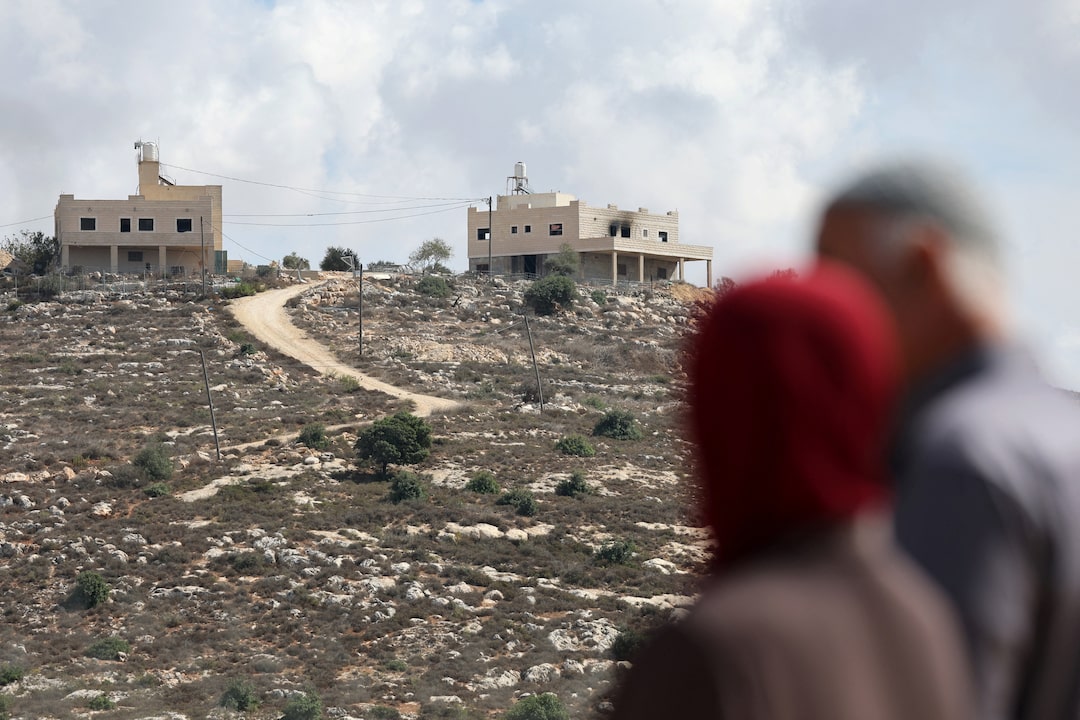
More than 500 former European ministers and diplomats, including four former prime ministers, have called on the European Union to urgently impose sanctions against Israeli settlement policies. Warning that the E1 project would extinguish a two-state solution, the signatories demanded a ban on trade with illegal settlements and binding steps at the EU Foreign Affairs Council meeting on 12 October.
More than 500 former European ministers, ambassadors, and senior officials, including four former prime ministers, have called on the European Union (EU) to take urgent measures against the expansion of Israeli settlements in Palestinian territories.
The signatories warned that it is merely a matter of time before the Israeli government announces construction tenders for the first phase of the E1 settlement project, which would bisect the West Bank and eliminate the possibility of a two-state solution.
Sanctions on financial bodies and trade ban demand
Addressing the European Commission, the senior diplomats and politicians demanded that sanctions be proposed without delay against all financial institutions and service providers supporting illegal settlements, above all E1.
The initiative text called for the presentation of legislative proposals that would prevent trade between the EU and these settlements. The signatories also requested the progression of long-stalled drafts stipulating the suspension of trade provisions in the EU-Israel Association Agreement. The initiative stressed that decisions must be taken at the EU Foreign Affairs Council meeting on 12 October.
“Time for the EU and member states to act”
Attention was drawn to the requirement that EU bodies and member state governments act in accordance with their clear obligations under the founding treaties of the EU and international law.
The statement noted that internal EU divisions resulting from the stances of Germany, Italy, and other countries blocking the adoption of joint measures must be overcome.
The call for urgent action pointed to ongoing civilian casualties and severe humanitarian conditions in Gaza, accompanied by inadequate aid deliveries and reconstruction activities that have ground to a halt, as well as escalating settler violence, land seizures, and the relentless displacement of Palestinians in the West Bank.
The statement concluded: “The time for the EU and its member states to act is definitely now.”

Spain’s Sánchez calls snap election for 29 November over housing

US AI spending needs 9% of GDP by 2032 to justify capital boom

Arctic shipping traffic surges 46% in a month to reach record high

Le Pen proposes German-style debt rule to soothe French bond market

Flavio Bolsonaro leads Lula as Brazil election heads to run-off
-

 Diplomacy1 week ago
East-West Forum in Istanbul highlights irreversible shift to multipolarity
-

 Europe7 days ago
European unions urge governments to scrap all Palantir deals
-

 Europe1 week ago
Emmanuel Todd says West faces collapse amid Ukraine and Iran crises
-

 Diplomacy2 weeks ago
East-West Forum in Istanbul to debate multipolarity and global order
-

 Europe2 weeks ago
European intelligence chiefs divide over risk of Russian attack
-
 Middle East2 weeks ago
Sharaa says 7 October must not shape Israel policy on Syria
-
 America2 weeks ago
Republican support for Trump’s war with Iran drops sharply in polls
-
 Europe7 days ago
Rome protests AfD poster depicting South Tyrol as independent state
