
Europe
Vučić scrapped plan to hold power after phone warnings, report says

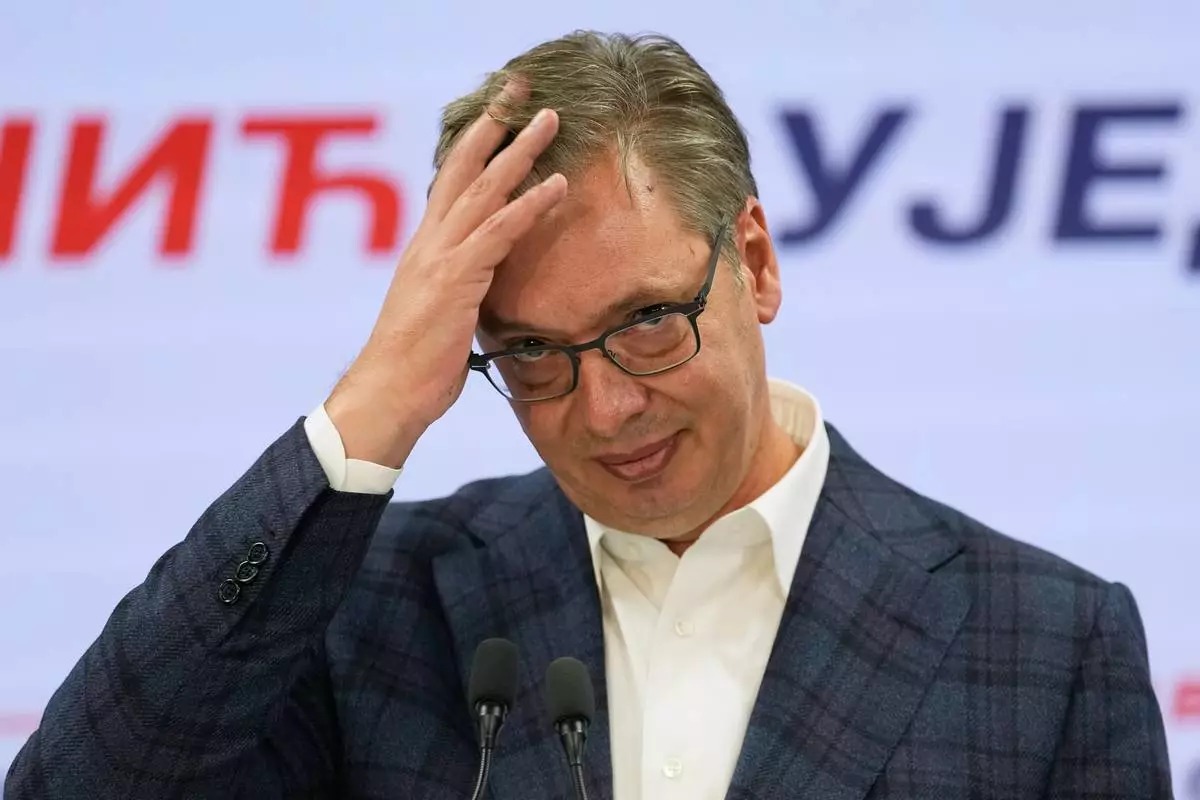
Former Serbian President Aleksandar Vučić was preparing to retain power by force following the country’s parliamentary elections, according to a report by the British newspaper The Times, citing politicians and a former commander of a specialised police unit.
However, he abandoned this scenario after receiving phone calls urging him to back down.
Spasoje Vulević, the former head of the Serbian police counter-terrorism unit, told the newspaper that 4,000 police officers and 3,000 people whom he described as “thugs” were deployed to central Belgrade on voting day, 25 October.
According to Vulević’s assessment, Vučić was preparing to reject the election results.
Vučić’s spokeswoman denied the claim. Speaking to The Times, she said the police presence in Belgrade was a response to threats of violence from protesters and was unrelated to any attempt to seize power.
Member of the European Parliament Sandro Gozi also said he received alarming messages from diplomatic sources on election day indicating that Vučić was preparing for a scenario involving the use of force.
According to the newspaper, Gozi’s political group issued a statement around 21:00 local time, as initial projections were being released, warning that supporters of Vučić’s party could be mobilized to provoke clashes.
Where did the calls forcing Vučić to back down come from?
Radomir Saičić, a leading candidate from the winning Student List, also argued that plans had been made to alter the results by force if the vote margin between the sides was narrow.
“If the results were close, there were plans to overturn the outcome of the vote by brute force,” Saičić said. “However, according to the information I obtained, numerous calls to him from the police and other figures prompted him to change his mind. They convinced him that executing this plan would end very badly for him.”
Former commander Vulević, on the other hand, was sceptical that police officers could have played a decisive role.
Noting that Vučić personally selected the unit commanders in Belgrade and that these figures were unlikely to oppose him, Vulević said: “I suspect that representatives of European governments called Vučić; these were talks conducted at the highest level.”
European Parliament member Gozi did not confirm the claim that the telephone calls had a decisive effect.
“I cannot rule out the possibility that phone calls took place, but in any case, the vote margin against him was far too large,” Gozi said. “Vučić was stunned.”
According to The Times, roads were closed in Belgrade during the evening, gendarmerie personnel appeared on the streets, and groups of men dressed in black headed toward the city’s Pioneers Park (Pionirski Park).
Vulević claimed these individuals arrived in groups of 20 to 30. However, the newspaper reported that at 21:30, an hour and a half after polls closed, Vučić backed down and his assembled supporters dispersed.
From the Novi Sad collapse to early election defeat
Early parliamentary elections were held in Serbia on 25 October.
According to Election Commission data, after processing results from 8,139 ballot boxes, the Student List secured 52.65% of the vote, while Vučić’s United Serbia coalition remained at 39.22%.
Vučić conceded defeat without waiting for the final results.
“It is obvious that we have lost these elections. The Student List has won,” the politician said, attributing the opposition’s success to support from European countries and the US “deep state”.
Prior to the election, the country was the scene of prolonged mass protests that began after the collapse of a railway station canopy in the city of Novi Sad in November 2024.
Protesters initially demanded accountability for those responsible and an investigation into corruption allegations, before subsequently calling for the government’s resignation.
Having dissolved parliament in September 2026 and announced his resignation from the presidency, Vučić was subsequently nominated as the candidate for prime minister by his party.








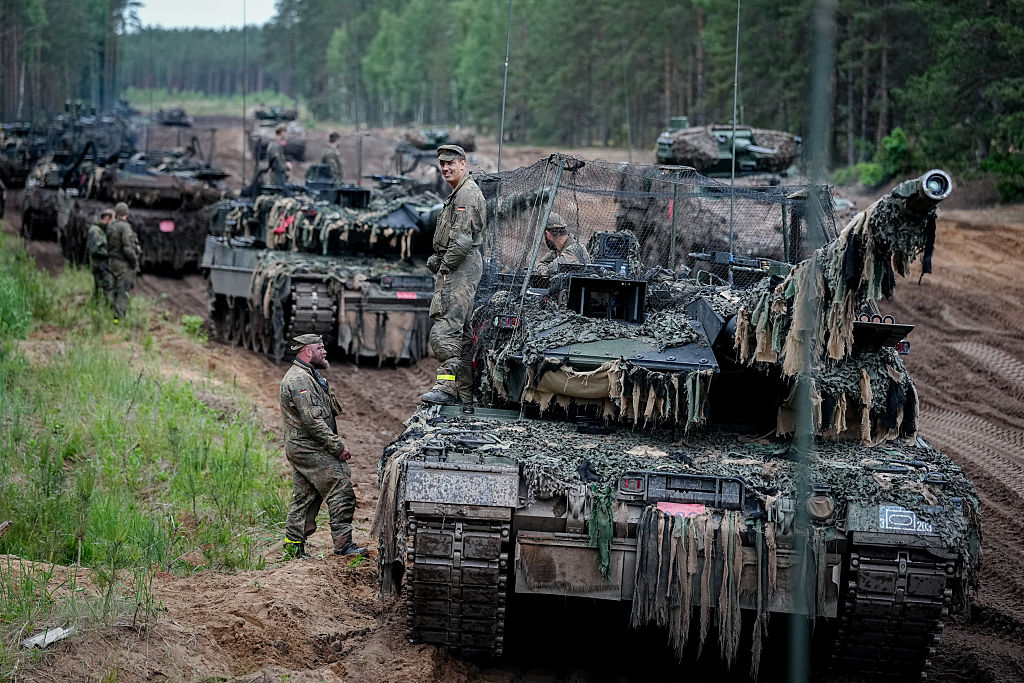
The European Commission has until the end of the year to convince EU member states to take up around €21 billion in unused defence loans and support Ukraine’s defence.
The worsening security situation in the Black Sea could encourage Romania to seek additional loans. Bucharest has already secured €16.7 billion under SAFE.
The remaining figure became final after Hungary and Italy significantly scaled back their requests under the EU’s €150 billion Security Action for Europe (SAFE) programme.
On Wednesday, after approving Hungary’s spending plan, the final pending application, the Commission announced that it would soon launch a second call for applications.
The situation is very different from August 2025, when Brussels was confident that demand would far exceed the available €150 billion.
Applications from 19 EU countries eventually exceeded that sum by around €40 billion.
Now, national elections and pressure on public finances may make governments reluctant to take on additional debt.
Some EU diplomats told Rapporteur that the conditions for the second round remain unclear, making it difficult to say whether their countries would apply.
The Commission must publish the second call by the end of December. Unlike the first round, where countries could use the loans for national procurement contracts until May 2026, the remaining money must be spent on joint procurement.
Poland benefited from the previous flexibility, securing €43.7 billion, the largest national allocation, and moved quickly to sign contracts.
Warsaw announced that 90% of the money would go to Polish companies.
Brussels also hopes the remaining money will be used to bolster Ukraine’s defence.
In July, during an official visit to the country, Commission President Ursula von der Leyen suggested that around €10 billion in unused SAFE loans could be directed to Kyiv.
Defence Commissioner Andrius Kubilius mentioned the Freyja anti-ballistic missile project among the initiatives under consideration while discussing the second SAFE call at an E5 meeting in Paris this week.
Military sources told Rapporteur that participation in the second round had been considered under Romania’s previous government, but the proposal would now require a fresh political assessment.
Diplomatic sources in Athens told Rapporteur that Greece has also shown interest. The country had previously made an unsuccessful push to increase its allocation by several billion euros.
Polish Deputy Defence Minister Magdalena Sobkowiak-Czarnecka told Polish media this week that Poland was also discussing the conditions for another possible application, while Ireland has shown interest in the remaining funds.
Italy, having already reduced its initial request, is considered unlikely to participate in the second round.
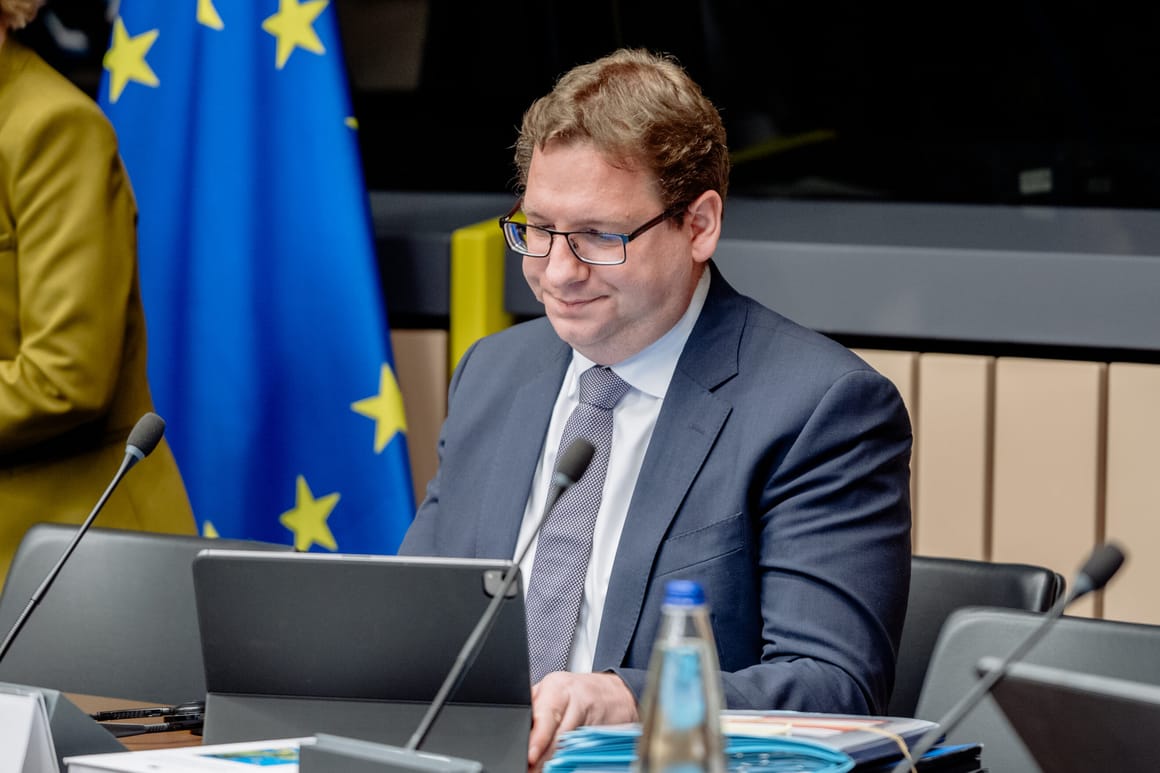
The European Union is preparing to take a direct role in the diplomatic negotiations surrounding the war in Ukraine.
According to a report by Euronews television, the European Commission and the European Council are establishing a joint delegation of high-ranking officials to attend an upcoming round of talks between the parties. Björn Seibert, the head of cabinet to European Commission President Ursula von der Leyen, will lead the delegation.
The German diplomat, described in the report as an influential bureaucrat, is expected to head the team attending the talks scheduled to take place in Abu Dhabi in early November.
“We are strongly committed not only to ending the war, but also to achieving a just and lasting peace. This is our goal, and this is precisely the position we defend in the current talks,” a European Commission representative said in a statement on the matter.
Brussels’s key figure behind the scenes
A European bureaucrat of German descent, Björn Seibert has long been recognized as von der Leyen’s closest aide.
Seibert first joined von der Leyen’s team in 2013 during her tenure as Germany’s defence minister, later moving with her to the European Commission.
According to reporting by Politico magazine, Seibert gradually developed into one of the most powerful figures behind the scenes of European politics.
The magazine noted that Seibert has been directly involved in clearing senior appointments and has played an influential role in managing relations with both the European Parliament and the US.
This setup has also sparked controversy within the institution. Critics claim that concentrating power in the hands of the cabinet chief and von der Leyen leads to excessive centralization in administration, whereas supporters argue the model ensures rapid, efficient decision-making.
If these multilateral contacts materialize to bring together delegates from Europe, Ukraine, the US, and Russia under one roof, they will mark the first talks held in this specific format during the peace process.
Diplomatic engagements so far have been conducted either bilaterally between Russia and the US or as trilateral meetings that included Ukraine.
However, the EU delegation’s participation at the negotiating table is not yet finalized, as the issue remains under consultation.
European capitals have actually spent months searching for a similar diplomatic channel. Politico reported in January that EU member states had discussed appointing a special envoy to lead talks with Moscow over Ukraine, an effort backed by French President Emmanuel Macron and Italian Prime Minister Giorgia Meloni.
The Telegraph newspaper reported in October that, alongside Meloni, Finnish President Alexander Stubb, Czech President Petr Pavel, Norwegian Prime Minister Jonas Gahr Støre, and Danish Prime Minister Mette Frederiksen were being mentioned for the European representative role.
The newspaper noted that officials were also weighing the option of creating a joint delegation of representatives instead of choosing a single figure.
Reservations from Moscow over European intentions
Moscow, for its part, views Europe’s position as potentially decisive in resolving the conflict. “It is not enough to talk only with Kyiv; it is necessary to talk with the whole of Europe, which fully backs Kyiv in its desire to prolong the conflict. Perhaps Europe’s stance is of key importance here,” Russian Presidential Aide Yuriy Ushakov said.
Kremlin spokesman Dmitriy Peskov also stated that Moscow would support the emergence of an EU negotiator. “Having a negotiator is good. If that negotiator genuinely seeks to contribute to a peaceful settlement, it would be much better,” Peskov said.
Conversely, Russian Foreign Minister Sergey Lavrov struck a cautious tone on 27 October regarding European countries’ interest in joining the talks. Lavrov stated that Europe wants a seat at the table without altering its outlook toward Moscow.
Arguing that Europe disregards Russia’s position on the root causes of the conflict, Lavrov emphasized that European nations do nothing beyond levelling accusations and demanding a halt to hostilities.
“This merely demonstrates the Europeans’ desire to join the negotiation process. However, the positions with which they would enter the process remain a major question mark,” the Russian minister said.
Despite these conflicting signals, Russian President Vladimir Putin previously noted that Moscow has not closed the door to dialogue with European nations.
As a preferred European negotiator, Putin previously named former German Chancellor Gerhard Schröder.
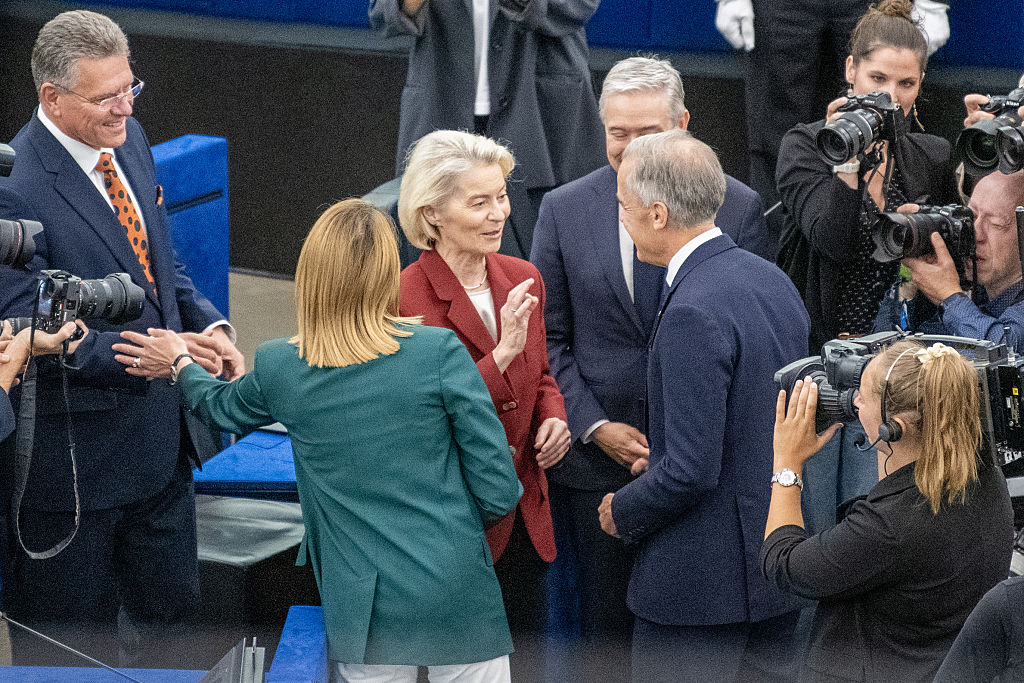
The EU and Canada will strengthen their partnership to address shared security challenges by deepening defence cooperation stretching “from the Arctic to the Black Sea”.
A draft joint statement prepared for a summit to be held in Montreal on 29-30 October addresses all of these matters comprehensively.
“Canada and the EU are strategic partners in taking more responsibility for our common security and defence,” reads the draft EU-Canada Joint Summit Statement obtained by Rapporteur.
The two sides will “accelerate the implementation” of the Security and Defence Partnership and broaden cooperation across international peace and crisis management, sanctions, defence industry, maritime and space security, hybrid threats, and resilience.
The summit follows a significant political push aimed at bolstering EU-Canada ties.
On 16 September, Canadian Prime Minister Mark Carney attended European Commission President Ursula von der Leyen’s State of the European Union address in Strasbourg.
In that speech, von der Leyen suggested making Canada the bloc’s first “associate member”.
The document welcomes Canada’s interest in reinforcing its participation in EU Common Security and Defence Policy (CSDP) missions and operations, as well as Ottawa’s ongoing commitment to European security, “notably on the Eastern Flank from the Arctic region to the Black Sea”.
In the Arctic, both sides plan to reinforce cooperation on “peace, security and resilience”.
The summit statement will also launch “a new, dedicated dialogue on the Arctic, foreign information manipulation and interference, climate security and transport”.
The draft also reaffirms EU and Canadian support for Ukraine’s sovereignty and territorial integrity, pledging continuous military and other assistance to Kyiv alongside increased pressure on Moscow.
According to Article 10, the partnership also turns toward the Middle East. There, the EU and Canada aim to work more closely “to support de-escalation, address humanitarian needs”, and contribute to conditions necessary for lasting peace in Palestine based on a two-state solution.
Defence industry cooperation is another priority. The draft highlights existing cooperation pursued through the EU’s Permanent Structured Cooperation (PESCO), Canada’s participation in capability coalitions, and its inclusion in the Security Action for Europe (SAFE) mechanism.

Global dockers strike against war and arms transit to Palestine

Putin proposes Arctic energy cooperation to US to ease gas sanctions

Vučić scrapped plan to hold power after phone warnings, report says

EU scrambles for takers for remaining €21B in SAFE defence loans

Bolsonaro reportedly leaves Brazil on jet linked to scandal-hit firm
-
 America2 weeks ago
How Elon Musk fuses private empire with state power, Ben Tarnoff explains
-
 Middle East2 weeks ago
Egypt delays parliamentary vote on deploying troops to Saudi Arabia
-
 Europe2 weeks ago
AfD leader Weidel calls funding lost Ukraine war a grave mistake
-

 America1 week ago
US wealthy demolish multimillion-dollar mansions for land
-

 Europe1 week ago
EU rejects US proposal to resume Russian gas flows through Ukraine
-

 America1 week ago
At least 47 major US data centre projects halted or cancelled
-
 Middle East1 week ago
Netanyahu unveils security doctrine and regional alliance map
-
 Middle East1 week ago
Netanyahu trails Eisenkot in Israeli polls despite Trump backing
