
Europe
Denmark to deploy conscripts to Greenland for first time amid Arctic security risks

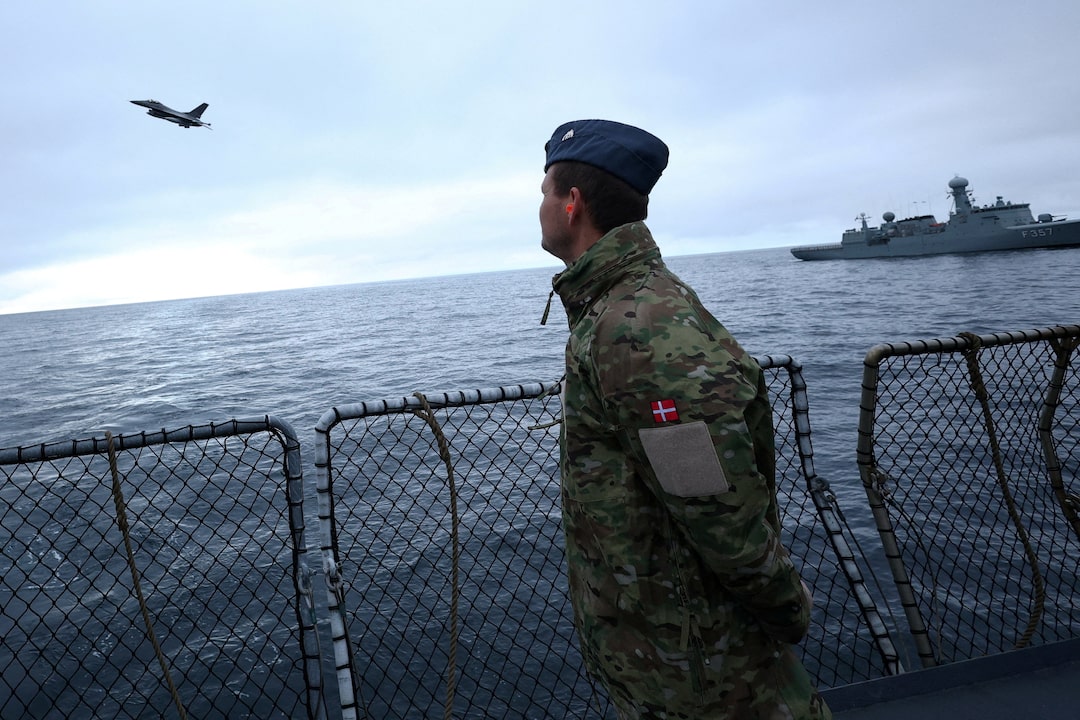
Denmark has accelerated steps to bolster its military capacity, citing security risks in the Arctic region stemming from the US and Russia, alongside the environment created by the war in Ukraine.
According to Reuters, the country has conscripted approximately 1,600 new recruits for an 11-month term of service under its updated conscription regulations.
The new service term coincides with preparations to deploy conscripted soldiers to Greenland for the first time in Danish history.
Under the plan, more than 100 conscripts will assume operational duties from professional military personnel stationed in Greenland.
The newly conscripted soldiers will undergo five months of basic training, followed by six months of operational service.
Conscription in Denmark is conducted through a lottery system involving all 18-year-old men who meet medical fitness criteria.
However, the Danish armed forces rely primarily on volunteers for their military personnel.
Under a policy decision adopted in 2024, the Danish government extended the military service period from four months to 11 months and expanded mandatory conscription to include women for the first time.
According to Reuters, Copenhagen aims to increase its annual intake of recruits from 5,000 to 7,500 by 2033.
In addition to Denmark, mandatory military service is enforced in regional neighbors Sweden, Finland, and Norway, as well as the Baltic states of Estonia, Latvia, and Lithuania.
Military planning regarding Greenland took shape following statements by US President Donald Trump concerning the island. Trump’s remarks advocating the annexation of the island were rejected by the governments in Copenhagen and Nuuk.
Speaking at the NATO summit in Ankara, Danish Prime Minister Mette Frederiksen declared that her country was prepared to defend every inch of the alliance, “including its own territory.”
Trump’s rhetoric regarding Greenland intensified once again during the winter months of this year.
Arguing that Denmark was unable to secure Greenland—an autonomous territory within the Kingdom of Denmark—Trump asserted that the island was essential to US national defense.
Trump further claimed that the island was surrounded by Russian and Chinese vessels.
In statements made in May, US Ambassador to Copenhagen Kenneth Howery reported that the US president had abandoned the concept of seizing the island through military force.
However, Trump reiterated his demand for the island in July, stating that Washington required Greenland.
Trump later claimed that Greenland could come under US control by January 2029, marking the end of his second presidential term.
Meanwhile, Commander of Denmark’s Joint Arctic Command in Greenland Søren Andersen stated in January that the Danish military presence on the island was focused not on a potential military threat from the US, but on possible Russian activities.
Andersen added that the long-term objective of the mission carried out by European NATO allies in Greenland was to “keep Russia at bay.”
The NATO mission referenced by Andersen, named “Arctic Sentinel,” aims to reinforce the alliance’s military presence in the Arctic region, expand maritime patrols, and counter Russian and Chinese activities in the area. The permanent operation was officially announced on February 11, 2026, when it was initiated.











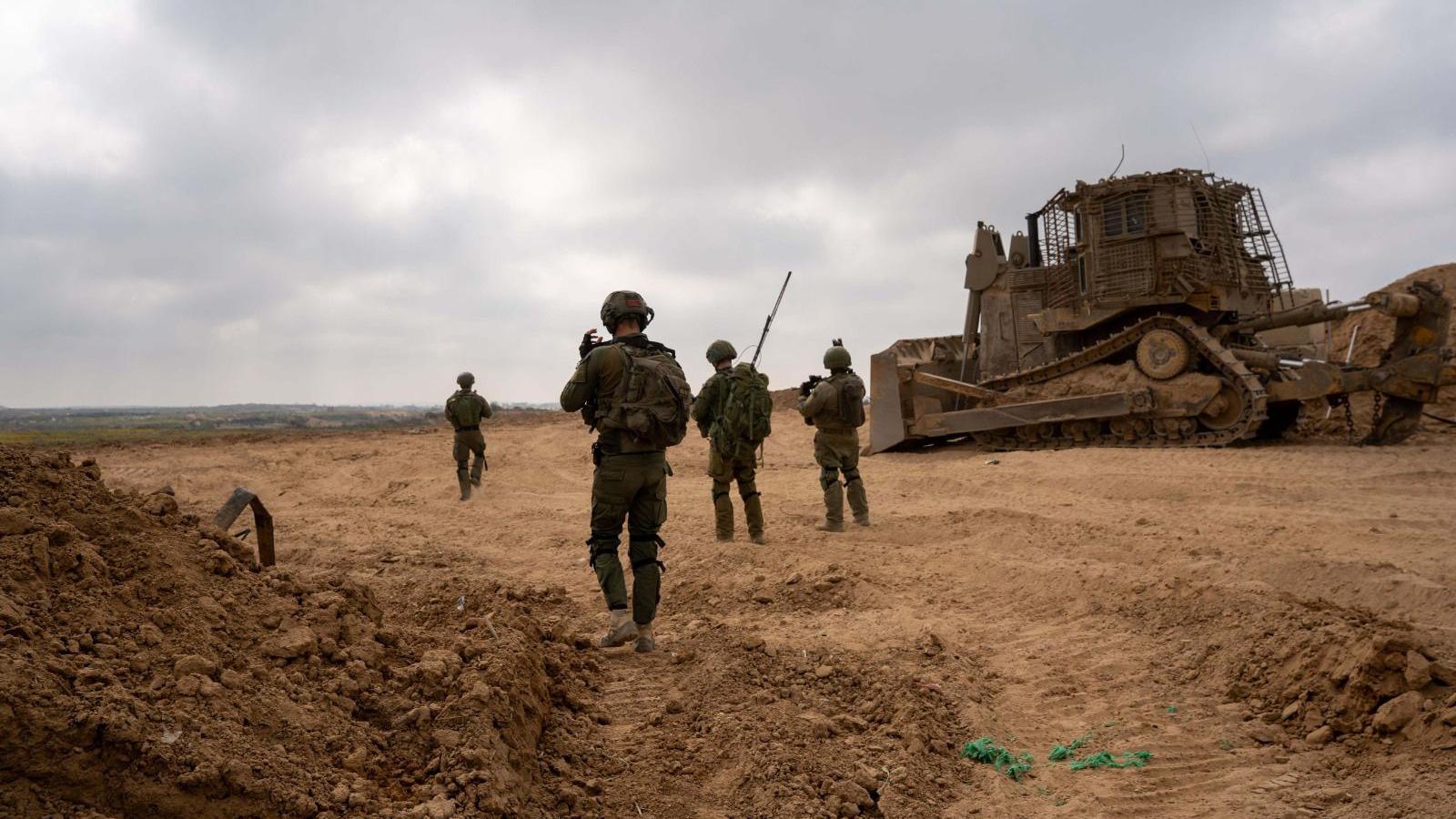
The Israeli military is nearing completion of a vast trench and earthen barrier project designed to divide the Gaza Strip effectively in two. According to a report by the Israel-based newspaper Yedioth Ahronoth, fortification works are concentrated in the eastern sector of the Yellow Line, which separates Israeli-occupied zones from areas under Hamas control.
Alongside the deep trench excavated to block vehicular passage, an elevated earthen berm is being erected using excavated soil. Israeli units are also conducting ground drilling at regular intervals along the route to detect cross-border tunnels extending into Israeli territory.
Controlling approximately 70% of Gaza’s territory, Israeli forces are consolidating their occupation area through this fortification line.
Excavations exceed designated boundary line
The plan to partition Gaza was first detected via satellite imagery in July of this year, revealing that construction extended hundreds of metres beyond the Yellow Line.
According to data cited by the Haaretz newspaper, the trench advances more than one kilometre beyond that designated line at certain critical points in southern Gaza.
Exceeding the line by roughly 400 metres in the Khan Younis area, the line extends along Salah al-Din Road, the primary transit artery between northern and southern Gaza.
In the Rafah sector, excavations reportedly reach approximately 1,300 metres beyond the Yellow Line. Through these works, which have continued without interruption for months, the Israeli military is expanding its de facto presence on the ground.
Permanent military bases built beyond ceasefire boundary
The Yellow Line was defined under the ceasefire agreement signed last year as the withdrawal boundary to which Israeli troops would pull back in the initial phase.
However, despite the plan announced by the US in October 2025 and the ceasefire process, Israeli forces advanced beyond the boundary and constructed permanent military positions along the line.
The Israeli administration conditions subsequent withdrawal phases on the disarmament of Hamas. Palestinian factions, conversely, stress that they will not surrender weapons unless an independent Palestinian state is established.
Yedioth Ahronoth pointed out that, despite the war, Hamas maintains administrative control across certain sectors of Gaza. The newspaper carried the headline: “Three years after October 7, Hamas still governs Gaza.”
Israeli officials speaking to the newspaper noted that they would continue targeting Hamas members, stating: “We will act against them and kill them one by one.” The officials claimed they were awaiting suitable operational conditions to limit civilian casualties.
The Gaza Ministry of Health stated that more than 1,450 Palestinians have been killed in Israeli strikes since the October 2025 ceasefire plan.
While the flow of humanitarian aid into the besieged enclave remains restricted to low levels, the transit of emergency medical equipment, such as wheelchairs, is being curtailed.
According to data from the Gaza Civil Defence, three people, including a woman and a child, were injured on Monday, 5 October, in an attack on a tent encampment near Khan Younis.
In an Israeli military strike on a vehicle in Deir al-Balah on 4 October, a Palestinian director of a Turkish aid organisation was killed.

Investigators in Germany have detained the former president of the Federal Intelligence Service (BND), August Hanning.
According to reporting by WDR, NDR, and Süddeutsche Zeitung, an informant allegedly provided him with classified BND documents. Authorities are investigating whether this information reached foreign actors.
The Federal Public Prosecutor’s Office is investigating the former BND chief on suspicion of espionage against the state, disclosing state secrets, attempted high treason, and acting as an intelligence agent.
Another long-serving employee of the agency faces allegations of aiding and abetting attempted high treason as well as aiding and abetting espionage against the state.
According to findings by WDR, NDR, and SZ, investigators from the Federal Criminal Police Office (BKA) detained Hanning early in the morning at his home in Nordwalde, near Münster.
In Bavaria, authorities also detained another former senior BND employee: Manfred D., who was reportedly Hanning’s former head of office and worked at the BND until spring 2026.
D. allegedly supplied Hanning with top-secret information from the agency in exchange for money until at least 2022.
Investigators are examining suspicions that the 80-year-old former BND chief used this information in at least one instance to draft a security analysis for a foreign intelligence service.
According to information obtained by WDR, NDR, and SZ, however, this case does not involve Russia.
In another instance, Hanning allegedly used information obtained from internal BND documents in correspondence with a foreign agent.
According to sources in security circles, Hanning came under investigation following searches conducted at his home and offices in September last year.
At that time, the Hamburg State Criminal Police Office (LKA) was seeking evidence linked to the Block abduction case.
The Hamburg Public Prosecutor’s Office accuses steakhouse heiress Christina Block of ordering the abduction of her two youngest children in late 2023 amid a custody dispute.
According to investigators, August Hanning allegedly played a role in an earlier attempt to abduct the children, an accusation he denies.
According to reports by WDR, NDR, and SZ, LKA officers reviewing material seized from Hanning last year came across an electronic storage device containing critical information.
These reports indicate that the former official had access to top-secret BND documents of recent origin that he should not have been permitted to possess under any circumstances.
Hanning’s tenure at the BND ended in November 2005.
In total, approximately 2,000 documents were allegedly transferred from D. to Hanning. According to the investigation, most of these were briefing materials prepared for the “ND Situation” meeting at the Chancellery, where heads of security agencies exchange information on a weekly basis.
According to the reporting, the documents in question contained highly sensitive material, including reports on the Iranian nuclear programme and the Russian military.
Sources in security circles state that the records also included intelligence received from allied foreign intelligence services.
The leak of such material is considered a worst-case scenario among intelligence services.
Allied intelligence services could lose confidence in the BND and withhold vital intelligence from the agency.
Following an examination of the records, the Hamburg State Criminal Police Office (LKA) handed the seized documents over to federal authorities.
In May 2026, the Federal Public Prosecutor’s Office ultimately launched a classified investigation into Hanning and his alleged informant inside the BND.
The exact period over which classified internal documents were allegedly supplied to Hanning remains unclear. Security sources report that the latest documents found were dated June 2022.
It also remains unclear how the suspected mole inside the BND smuggled this material out of the secure agency. An urgent statement was requested from the BND regarding the matter.
Lawyers representing August Hanning have not responded to a late inquiry concerning the allegations.
For the BND, this marks the second severe incident in only a few years. A former BND department head is currently on trial before the Berlin Court of Appeal, alongside another defendant, on charges of spying for Russia in 2022.
That case involved top-secret information concerning the BND’s cyber operations that had been leaked from the agency.
If the suspicions against Hanning and the second suspect are substantiated, it would represent an intelligence scandal of historic proportions.
Never before in the history of the Federal Republic of Germany has an allegation of high treason involved an official of such seniority.
Throughout his career, August Hanning occupied key positions within Germany’s security architecture for decades.
Prior to serving as BND president, Hanning worked as a security officer at West Germany’s diplomatic mission in East Germany.
Following several postings in the Federal Chancellery, including as coordinator of the federal intelligence services, Hanning, who holds a doctorate in law, assumed leadership of the BND in 1998.
Following his tenure at the intelligence service, Hanning was appointed state secretary at the Federal Ministry of the Interior in late 2005. Four years later, he entered temporary retirement.
In subsequent years, Hanning established himself as an entrepreneur and security consultant.
Until last May, he served on the management team of a controversial security company based in Switzerland.
The firm’s German subsidiary had been temporarily retained in the custody dispute between Christina Block and her former husband.
During this period, Hanning and a business partner, a former LKA officer, apparently resorted to questionable methods: according to the public prosecutor’s office, the two allegedly planned in 2023 to discredit Block’s former husband through unfounded allegations of paedophilia.
Hanning and his alleged accomplice reportedly attempted to plant a hard drive containing images and videos of child sexual abuse material on the father of Block’s children.
The investigation remains ongoing. Hanning had previously denied all allegations in the Block case.
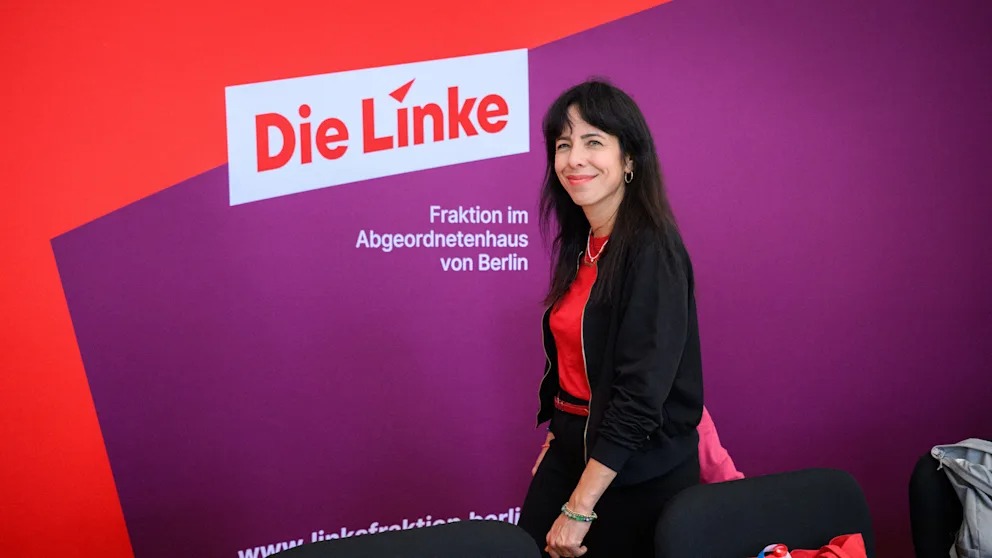
Germany’s Federal Office for the Protection of the Constitution (BfV) plans to examine the ties of the Left Party (Die Linke) and Elif Eralp to “extremist” groups.
The party’s lead candidate in Berlin, Elif Eralp, stands accused of “meeting with members of a PKK front organisation” while the election campaign was ongoing.
According to a report in WELT, Eralp has come under scrutiny by the BfV. During a Bundestag hearing with the heads of Germany’s security agencies, BfV Vice-President Sinan Selen also addressed the Left Party in the capital and its links to “extremist and terrorist” groups.
“We need to examine certain local situations very closely,” Selen said.
The domestic intelligence agency plans to investigate the extent to which Eralp and other Left Party politicians, such as Bundestag member Ferat Kocak, have established connections with “terrorist groups” and other organisations.
On election night, for instance, clan figurehead Issa Remmo, who is alleged to have ties to organised crime, and Ibrahim Ibrahim, alleged to be a supporter of the PFLP, attended the Left Party’s celebration.
Most recently, Eralp also faced criticism over her past membership in the left-wing organisation “Rote Hilfe” (Red Aid).
It is highlighted that this organisation, among other activities, collected donations for Daniela Klette, who is on trial over allegations of being a member of the RAF.
According to reporting by Bild newspaper, Eralp met during the election campaign with a delegation comprising several Kurdish organisations. Members of NAV Berlin were also present at the meeting.
Security agencies consider this group to be a front organisation for the PKK, which is banned in Germany.
During the election campaign, Eralp said that she wanted to abolish the Berlin State Office for the Protection of the Constitution.
When questioned by Bild, Eralp refrained from commenting on her stance regarding the PKK.
The domestic intelligence agency, meanwhile, issued the following statement:
“The PKK continues to be the organisation with the largest membership and the greatest influence in the field of foreign-linked extremism and terrorism in Germany.”

Israel nears completion of vast trench dividing Gaza Strip

Ex-BND chief August Hanning detained in German espionage inquiry

CIA report warns Israel faces growing risk of civil conflict

German domestic intelligence to probe Left Party and candidate Eralp

Türkiye delivers Korkut air defence systems to Ukraine, report says
-

 Diplomacy1 week ago
East-West Forum in Istanbul highlights irreversible shift to multipolarity
-

 Europe1 week ago
European unions urge governments to scrap all Palantir deals
-

 Europe2 weeks ago
Emmanuel Todd says West faces collapse amid Ukraine and Iran crises
-

 Diplomacy2 weeks ago
East-West Forum in Istanbul to debate multipolarity and global order
-
 Europe2 weeks ago
European intelligence chiefs divide over risk of Russian attack
-
 Middle East2 weeks ago
Sharaa says 7 October must not shape Israel policy on Syria
-

 America2 weeks ago
Republican support for Trump’s war with Iran drops sharply in polls
-

 Europe1 week ago
Rome protests AfD poster depicting South Tyrol as independent state
