
Europe
Raphaël Glucksmann wins French centre-left presidential primary

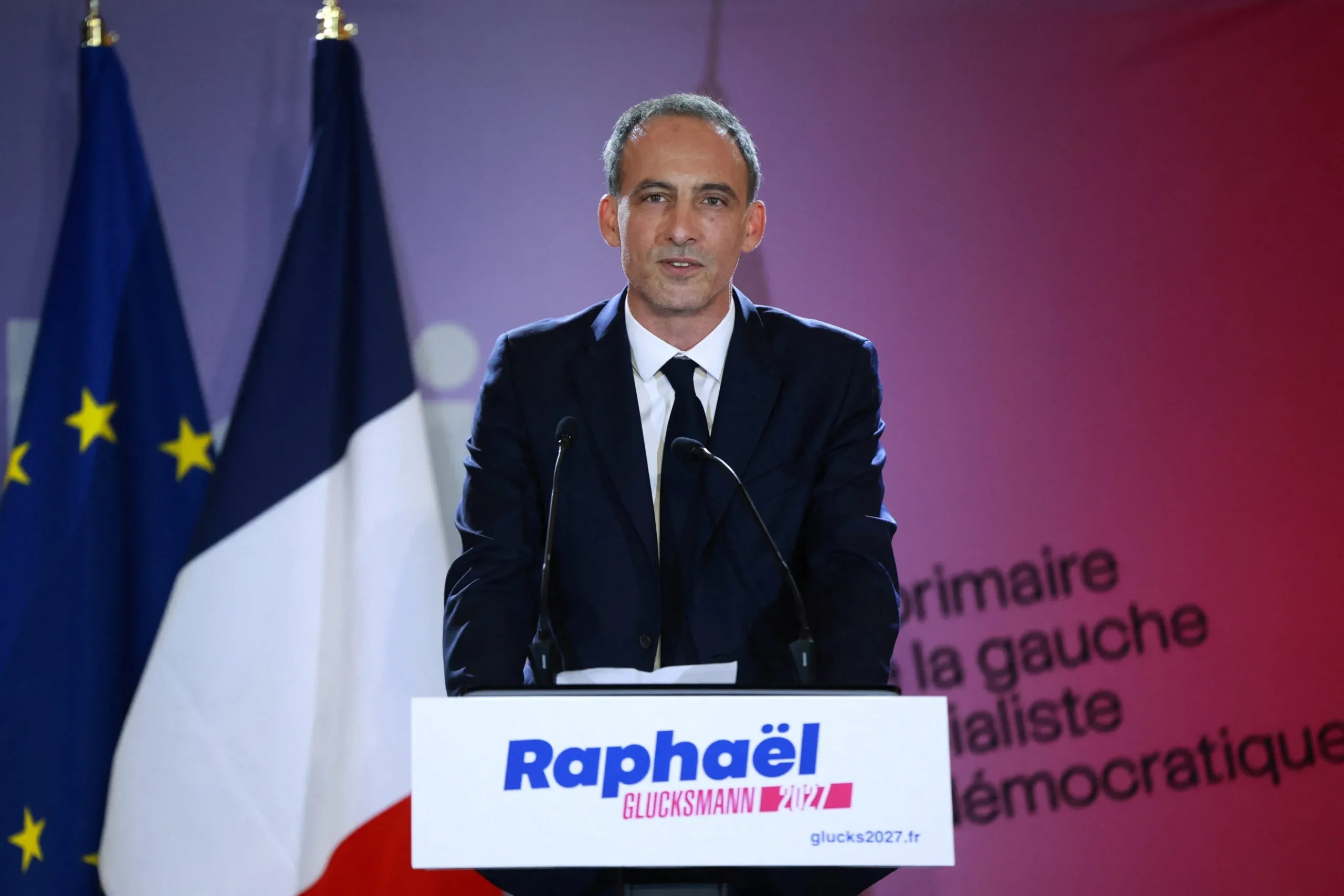
Raphaël Glucksmann has won France’s “centre-left” primary, securing the backing of the Socialist Party and its allies for next year’s presidential election.
The member of the European Parliament emerged victorious from the contest in a single round, capturing more than 66% of the vote to defeat Socialist Party leader Olivier Faure and three other candidates in the first round.
More than 120,000 people cast ballots across Friday, Saturday, and Sunday.
The leader of the small centre-left party Place Publique entered the race as one of the favourites.
Glucksmann emerged from the primary strengthened. He now possesses access to the resources of the Socialist Party and has built a broader base for his candidacy.
The French politician said:
“This result sends a strong message: a left faithful to its values can unite, govern, and win. We are here to win the presidential election: to put an end to Macronism, stop the far right, and change our lives.”
A staunch supporter of Ukraine and a critic of China, Glucksmann now faces a far greater challenge in Jean-Luc Mélenchon, leader of France Unbowed (LFI).
Mélenchon is rising in opinion polls: according to a recent Ifop poll, he commands between 14% and 17% support, compared with 11% for Glucksmann.
In recent weeks, Glucksmann campaigned against entering into an alliance with Mélenchon.
Three other candidates competed in the primary, including former minister Ségolène Royal alongside lawmakers Jérôme Guedj and Emmanuel Maurel.
Approximately 140,000 people registered to vote in the primary. Around 80,000 of them were not members of any of the competing parties but paid 15 euros to participate, heightening uncertainty over the outcome.
Organisers said on Friday that the online voting platform had been subjected to a cyberattack shortly after opening, but affirmed that the platform was “never interrupted” and that “the integrity of the recorded votes was not compromised.”






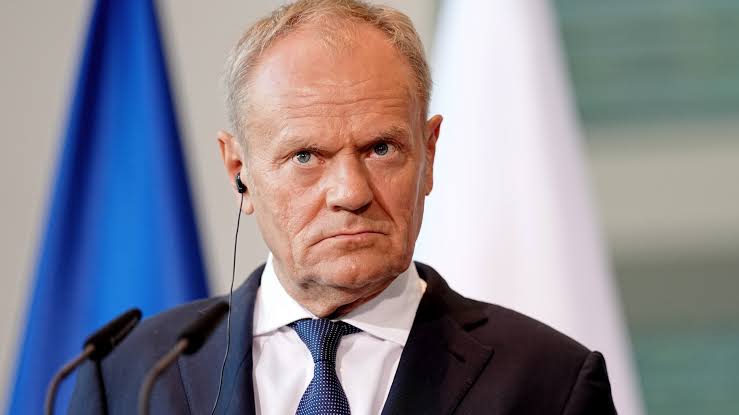
The Polish government’s announcement regarding an reported assassination plot targeting Prime Minister Donald Tusk alongside Deputy Prime Minister and Minister of National Defence Władysław Kosiniak-Kamysz has triggered a sharp backlash across opposition ranks.
Politicians affiliated with Law and Justice (PiS), Confederation (Konfederacja), and Rozwój Plus accused the administration of stoking panic over a security issue, staging a political spectacle, and deliberately seeking to divert attention from troublesome matters facing the cabinet.
According to reporting by journalists, the notification concerning the assassination threat was sent via email, arriving initially in the inbox of the State Protection Service (SOP).
Following receipt of the alert, authorities convened an assessment meeting, where government representatives decided to disclose the development to the public.
Jacek Dobrzyński, spokesperson for the Minister-Coordinator of Special Services operating within the Prime Minister’s Office, announced the alleged assassination preparations against Tusk and Kosiniak-Kamysz during a morning briefing on 11 October.
Noting that the threat directed at Tusk was “deadly serious”, Dobrzyński stated: “I know that today, across many channels, so-called experts are speaking with distrust and asking why we made this matter public. We announced it because, I stress, the matter is deadly serious. We are speaking about a high probability of these threats being carried out.”
Suspect detained shortly afterwards
The male individual alleged to have issued the threats targeting the prime minister and the defence minister was apprehended by security forces shortly after the developments unfolded.
Posting on his social media account, Prime Minister Donald Tusk said: “I thank the police officers for their swift and decisive intervention.”
Minister of the Interior Marcin Kierwiński stated that the suspect had been identified through the analysis of online data. Polish authorities did not disclose extensive details regarding operational aspects of the investigation.
The press conference held by the government concerning the threat alert and the subsequent public statements were nonetheless subjected to fierce criticism by opposition figures.
Opposition parties allege political manoeuvring
Addressing the method of the threat alert and the manner of its presentation to the public, Confederation leader Sławomir Mentzen observed: “If Prime Minister Tusk received death threats by email, unfortunately nothing can be done about it. I too have repeatedly received death threats via email. Because the sender could not be traced, the police discontinued the investigation every single time.”
Mentzen added: “Even so, I hope Donald Tusk gets lucky and that the intelligence services manage to succeed specifically in his case.”
PiS lawmaker Radosław Fogiel criticised the development using sarcastic language: “Immediately in the first sitting of the Sejm, a bill banning the use of email will arrive. If the president refuses to sign it, they will be left with spam on their hands.”
PiS Senator Stanisław Karczewski contended that the government was generating panic: “They are playing big; they are pursuing a tactic of spreading panic. They will feed more and more matters of this sort until, by 2027, they declare that holding parliamentary elections is impossible on security grounds.”
Confederation Member of the European Parliament Stanisław Tyszka posted: “It has been announced that an assassination of Donald Tusk and Władysław Kosiniak-Kamysz was planned. The photograph is unrelated”, attaching an image featuring Prime Minister Tusk alongside Deputy Minister of Agriculture Michał Kołodziejczak, who faces allegations of mistreating colleagues.
PiS lawmaker Andrzej Śliwka stressed that he never downplays attempted attacks against politicians and that every comparable case must be examined rigorously, while noting: “However, these gentlemen have State Protection Service protection precisely to prevent such occurrences.
The public notification by Jacek Dobrzyński, spokesperson for the Minister-Coordinator of Special Services, looks like a cry of helplessness and a symptom of panic.”
Pointing to the timing of the announcement, Śliwka argued that the notification coincided with the second round of local mayoral elections in Krakow, public anxiety among parents over sending children to school due to government policies, and the public exposure of scandalous and criminal conduct surrounding Michał Kołodziejczak, who operates under Tusk’s political patronage.
Śliwka said: “Donald Tusk is a pragmatic and cynical politician; today he will try to depict himself as a victim. Yet this situation exempts him neither from responsibility for his own government’s actions and omissions nor from the individuals he brought into politics.”
Confederation representative Marcin Możdżonek criticised the government’s institutional reactions: “An email arrived stating that an assassination of the prime minister and the deputy prime minister was planned. They decided that informing the public was imperative. No person of common sense can understand the concrete and professional justification for this notification, yet everyone knows its demagogic motive very well. Unless it was a coincidence, only the supervisors handling the file know the justification for publicly disclosing the meeting venue, participants, and timing for officials serving in critical roles. If this information was disseminated without understanding what was being done, there is no justification, only one explanation: a government composed of populist, incompetent, and token figures.”
Underlining the gravity of the topic, PiS lawmaker Bartłomiej Wróblewski posted: “The matter is serious; I am not taking it lightly. I will deliver my assessment on Monday. For now, I ask about the Michał Kołodziejczak issue. Will Donald Tusk apologise?”, making reference to statements by the Civic Coalition leader concerning past audio-recording controversies.
Rozwój Plus lawmaker Monika Pawłowska argued that the authorities were using threat alerts to cover up political crises, stating: “Donald Tusk and the people under his command are turning the Polish state into a circus. These media games and public relations chatter cannot conceal the incompetence of these people. They must resign.”
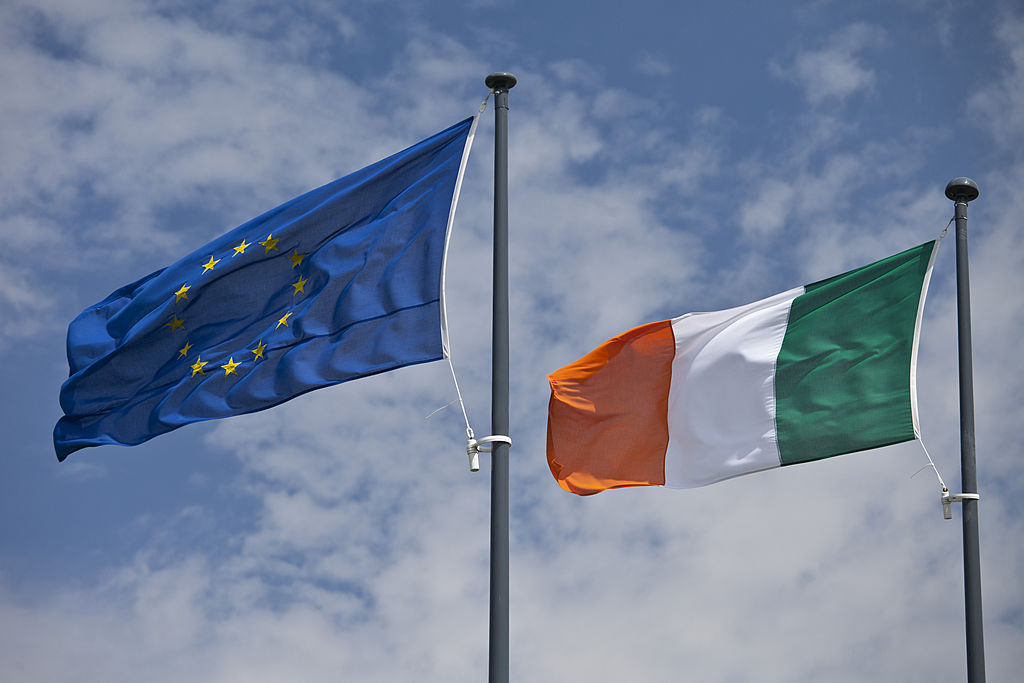
Ireland proposed cutting as much as 159 billion euros from the European Commission’s draft budget of approximately 2 trillion euros, but Germany found the reduction insufficient.
Thomas Byrne, Ireland’s Minister of State for European Affairs, described the proposed cut as a “significant step” while presenting the “negotiating box”, which outlines billions in budget items in detail for the talks.
Yet, facing mounting pushback from traditionally “frugal” member states, including Germany and the Netherlands, which want an even smaller budget, Minister Byrne acknowledged that the work was far from complete.
“The negotiating box we are presenting today is not the final outcome,” the Irish politician told reporters on Saturday, stating instead that the package should serve as a “catalyst” for reaching an agreement by Christmas.
Holding the presidency of the Council of the European Union, Ireland proposed a budget of 1.83 trillion euros in current prices for the 2028-2034 period.
This represents an 8% reduction compared with the proposal put forward by the EU executive.
Industry and research funds suffered the heaviest blow, facing a 75 billion euro cut, or 13%, compared with the proposal from the EU executive.
However, the “frugal” group of nations led by Germany immediately voiced sharp criticism of the new proposal.
German Chancellor Friedrich Merz said in a statement: “The level of the new proposal does not form a basis for an agreement.”
Echoing this view, Dutch Finance Minister Eelco Heinen questioned the objective of securing a compromise by Christmas, saying: “At this rate, an agreement will not be reached before the end of the year.”
Austrian Minister for Europe Claudia Bauer, who described the reductions in administrative lines as a “step in the right direction”, noted that the Irish draft remained “still very far from receiving Austria’s approval”.
By contrast, reactions from the “pro-cohesion” camp were more moderate.
Poland’s Minister for European Union Affairs Ignacy Niemczycki wrote in a social media post that work must continue on the “shape of own resources” and stated that the proposed size of the budget did not match the bloc’s ambitions.
An EU diplomat told Rapporteur: “Now is not the time to praise anything. If you say you like it now, they will take more from you.”
The Irish proposal contains cuts across all budget lines, but these reductions are uneven.
A major reduction targets the competitiveness budget, which faces a cut of approximately 13%, or 75 billion euros.
The proposal envisages allocating 362 billion euros to the European Competitiveness Fund, including the Horizon research programme.
This figure is lower than the 409 billion euros proposed by the Commission.
Funding for “Global Europe”, the bloc’s external action arm, would drop by about 38 billion euros, or more than 17%.
Administrative expenditure would be cut by around 10 billion euros, or 9%.
Funding for national plans (NRPPs), including cohesion and agricultural funds, was left largely untouched, with a proposed reduction of approximately 3%. Ireland proposes reducing the Commission’s proposal by 28 billion euros, bringing it to 837 billion euros.
An earlier proposal by Cyprus had reduced the Commission’s draft by 2%, or roughly 33 billion euros.
That draft had proposed cuts of around 4% in competitiveness and external action, while largely shielding national spending plans covering agriculture and cohesion.
Alongside the overall scale and allocation of the funds, the question of how to finance the budget remains a point of contention.
Several capitals view the proposed new “own resources” critically, including EU levies aimed at easing the burden on strained national treasuries.
The Commission plans to generate roughly 66 billion euros annually through levies on electronic waste, tobacco products, corporations, and carbon emissions. This requires the unanimous support of all member states.
The new “own resources” component is among the most contentious elements of the negotiations.
Although the Irish draft excludes the European Parliament’s proposals and revises the EU executive’s revenue estimate downwards, it still includes all five of the Commission’s proposals.
The text includes revisions regarding own resources based on the carbon border adjustment mechanism, seen as one of the most prominent options, as well as the ETS-based levy, which Poland has sharply criticised.
The issue of own resources is expected to feature prominently in talks among EU leaders next week.
European Council President António Costa, who is tasked with ultimately concluding the agreement, will chair the summit opening on 15 October.
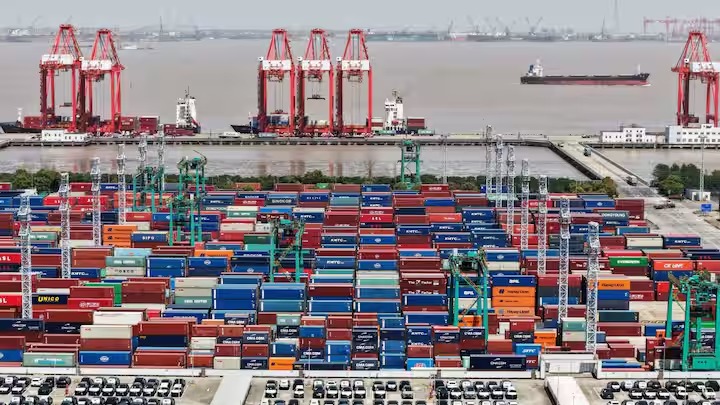
A coalition of 44 European industrial associations has urged the EU to take tougher action against what they describe as “unfair Chinese trade practices”.
The associations, representing sectors such as metals, chemicals, and automotive components, stated that these practices threaten European manufacturing and could trigger further job losses.
The groups demanded that EU member states deploy existing trade defence instruments more effectively and introduce new mechanisms to redress market distortions.
The appeal comes as the EU grapples with a goods trade deficit with China exceeding €1 billion per day. In this context, EU Trade Commissioner Maroš Šefčovič travelled to Beijing to hold talks with his Chinese counterpart.
European leaders are scheduled to debate the bloc’s response at a summit in Brussels next Thursday.
The outcome of the discussions in Beijing appears poised to shape that debate substantially.
In their appeal, the industrial groups urged the European Commission to examine entire value chains when reviewing trade complaints and to recruit additional staff to resolve cases more swiftly.
They also called for new tools to counter state-driven market distortions, whilst warning against measures that could adversely affect close European partners such as the UK, Norway, and Switzerland.
EU Trade Commissioner in Beijing
The purpose of Maroš Šefčovič’s two-day visit to Beijing is to secure concessions from China to help reduce the trade imbalance.
Discussions with Chinese Commerce Minister Wang Wentao focused on vehicle exports that are growing increasingly prevalent across the European market, particularly plug-in hybrid cars.
According to a Politico report published on Thursday, one in eight cars purchased in the EU in August was of Chinese origin, a trend driven primarily by a surge in plug-in hybrid sales.
The EU introduced additional countervailing tariffs on Chinese-origin battery electric vehicles in 2024, but plug-in hybrids were excluded from the scope of those measures.
European negotiators aim to restrict China’s exports in this sector in some manner.
According to Politico’s reporting, if meaningful commitments fail to emerge from the negotiations, the European Commission is considering the imposition of unilateral trade restrictions on cars, including import quotas and tariffs, to protect European carmakers.
The EU is also preparing protective measures for other industrial sectors. European Industrial Commissioner Stéphane Séjourné said the Commission plans to introduce targeted safeguards for plastics and composite materials, depending on demand from EU governments.
Germany urges UK to raise tariffs
According to a source close to Berlin’s stance who spoke to Politico, Germany wants the UK to raise tariffs on Chinese-origin electric vehicles in exchange for an exemption from “Made in Europe” rules.
The source stated that the government of Friedrich Merz believes this move would reflect reciprocity in trade and serve as an answer to accusations from other EU member states that Britain is attempting to “cherry-pick” the benefits of EU membership.
The development follows Prime Minister Andy Burnham’s meeting with the German Chancellor during his first official visit to Germany this week.
Burnham and Merz were set to discuss the prospects of Britain’s future relationship with the EU, as the British prime minister has returned the issue of rejoining the bloc to the UK political agenda for the first time in a decade.
Berlin’s position on electric vehicle tariffs is significant because Germany, unlike countries such as France that have adopted tougher stances, had generally pursued an accommodating policy towards the UK on trade issues since Brexit.
In response to the trade practices of rivals such as China and the US, the EU is preparing new “Made in Europe” rules designed to favour European manufacturers over producers outside the bloc.
The UK fears these measures could harm British business, particularly car manufacturers, and is seeking assurances from Brussels that it will be exempted from the application of these rules.
If Berlin has its way, these assurances could be contingent upon adopting EU trade policy regarding Chinese-origin electric vehicles.

EU and China reach preliminary deal to curb hybrid car imports

Russia relaxes diesel export curbs after talks with Trump

Poland opposition accuses Tusk of using death threat as distraction

Raphaël Glucksmann wins French centre-left presidential primary

Trump weighs presidential memorandum to cut surging US diesel prices
-
 Diplomacy2 weeks ago
East-West Forum in Istanbul highlights irreversible shift to multipolarity
-
 Europe2 weeks ago
European unions urge governments to scrap all Palantir deals
-
 Europe2 weeks ago
Rome protests AfD poster depicting South Tyrol as independent state
-
 Europe2 weeks ago
German interior ministers drop unanimity rule to counter AfD veto
-
 Europe2 weeks ago
German industry stockpiles critical minerals before EU-China talks
-
 Europe2 weeks ago
Key European allies excluded from US-led NATO meeting in Poland
-
 Diplomacy2 weeks ago
US Ambassador Guilfoyle faces backlash in Greece over alleged remarks
-
 Diplomacy2 weeks ago
While the West breeds crises, Eurasia weaves peace and development, says Prof. Zhang Weiwei
