
America
Balances in 2024 and projections to 2025 for Latin America and the Caribbean

Analysing the most important issues that occurred in a region over an entire year, just like making a weather forecast for a trip that has not yet begun or is just beginning, is not only a challenge, it is a risk. We then assume this risky task with the certainty that many important things will be left out of this review. We also warn about the feasibility of the scenarios that may – or may not – materialize during 2025. Our intention is only to offer an approximation to some of the most notable events in the Political, Economic, Social and Security and Defense spheres in a rich and complex region: Latin America.
Political issues
2024 was the year in which the largest number of voters went to the polls in the world, and, indeed, the political agenda of 2024 in Latin America and the Caribbean, in general, and in Venezuela in particular, was marked by the presidential election. In addition to Venezuela (July 28), El Salvador (February 4), Paraná (May 5), Dominican Republic (May 19), Mexico (June 2), Uruguay (October 27 and November 24) celebrated general elections. In October, Brazil and Chile held municipal and regional elections.
Thus, at the end of 2024, the political map in South America has been made up of 6 of the 10 most important countries under the command of different “leftists”: Bolivia, Brazil, Chile, Colombia, Uruguay and Venezuela. While the countries governed by the right and the extreme right are: Argentina, Ecuador, Paraguay and Peru (the latter country began being left-wing, but, after the coup against Pedro Castillo, it turned to the right). It should be noted that we do not include in this list: Guyana, Suriname, Trinidad and Tobago, Aruba, Curacao, Bonaire, or French Guiana, countries and territories strongly subject to European neocolonialism and American imperialism, which is why their political influence is relative, in the region.
In the political sphere, without a doubt the re-election of President Nicolás Maduro is the greatest achievement for Venezuela, since – despite the constant attacks and coup attempts – the continuity of the political project begun at the end of the last century with the victory of President Hugo Chávez in December 1998, and the subsequent establishment of the Bolivarian Revolution, has remained standing, facing threats and emerging politically victorious. Maduro’s leadership has been reaffirmed in the presidential elections of July 28. Chavismo also has a majority in the Legislative Branch.
In Brazil, Lula’s government has shown its fragility both internally, by losing massively in the municipal elections, where the right was left in control of 13 of the 15 most important cities in the country, and externally, by not participating in the meeting of the BRICS, in Kazan, Russia, due to health problems, but above all, by not supporting Venezuela’s entry into the multilateral bloc. With these and other political positions, Lula demonstrated that he is not in a position to be “the older brother” of Venezuela or any country in South America, which is mostly progressive or left-wing, and although they are not totally anti-capitalist, they are anti-imperialist.
On the other hand, in Mexico, the MORENA Party made history again by electing a woman as president for the first time. In the June 2024 elections, Claudia Sheinbaum won with the largest number of votes in the country ‘s democratic history. In these elections, new representatives were also elected to integrate the Senate, the Chamber of Deputies and other federal and local authorities. MORENA, together with allied parties, obtained the majority of positions and seats.
It is worth noting that Mexico plays a very important role in regional politics, given its influence on Central America, where the greatest political tensions occur in El Salvador, Nicaragua, Costa Rica and Panama. Furthermore, Mexico is now a political counterweight to the interests of the United States in South America, as well.
Argentina has played an opposite role for the region in 2024, since the arrival of Javier Milei has provided spaces and air for imperialist pretensions and for the resurgence of fascist, neo-fascist, even Naziist movements in the region, which come to support the idea of white supremacy and Donald Trump’s “Make America Great Again” (MAGA), which Milei transformed into “Make Argentina Great Again.” Domestically, Milei has demonstrated his own political strength and has maintained with positive image and popular support. Proof of this is that, even without a parliamentary majority, the Argentine Congress approved laws and legislative powers, with which Milei has managed to apply his ultra-liberal government program delivered to the superpowers and their allies. The current Argentine president has strengthened, like no other government before, his alliance with the United States and Israel.
Another issue that has divided and challenged, in 2024, the Latin American left is the confrontation between Evo Morales and the current president of Bolivia, Luis Arce. At the end of October, the former president, coca grower leader and until then presidential candidate was attacked by Bolivian police and military, who made an attempt on his life. The Bolivian Justice has disqualified Morales from participating in the presidential elections of August-October 2025. With Evo out of the presidential race and Arce without popular support, the return of the right in Bolivia seems inevitable.
Economic matters
According to the Economic Commission for Latin America and the Caribbean (CEPAL), the economies of our region, during 2024, continue to be trapped in a trap from which they cannot escape: low capacity for growth. Latin America’s GDP growth this year was 2.2%, and 1% when the 2015-2024 decade is considered. This indicates a stagnation of GDP per capita, in some cases as a result of economic recession. Several of the strongest countries have faced different macroeconomic, fiscal and monetary challenges.
Brazil: In 2024 the South American giant suffered one of the largest devaluations of a monetary cone in the world. The Real, the Brazilian currency, lost between 25-30% of its value against the dollar. The trigger was the presentation and distrust of the fiscal adjustment proposed by the Lula administration. Despite Lulista’s economic policy called “National Consumerism” by its detractors, Brazil has one of the highest tax burdens in the world. In addition, the Brazilian government has not significantly increased the minimum wage, which will begin in 2025 at $250. According to several economic analysts, the real enemy of the Brazilian government is “the Brazilian government”, since what continues to rise is the operating expenses of the gigantic Brazilian public apparatus.
Mexico: The second largest economy in Latin America had a 3% devaluation of its currency in 2024, after learning of the victory of Donald Trump in the United States, who will formally assume the White House on January 20, 2025. The Mexican currency went from 16 to 20 pesos per dollar in one year. However, in just a few weeks, the Mexican peso has managed to stabilize. Meaning that, despite this slight devaluation, the Mexican currency remains strong against the dollar compared to other countries in the region. Mexico enjoys one of the lowest inflation rates in Latin America (5%) and one of the highest basic salaries (approximately $450).
Argentina: The first year of Javier Milei’s government has been a truly shock therapy for the Argentine economy. The ultra-liberal (anarcho-capitalist) left all prices of all goods and services to the discretion of the market, causing an increase in poverty levels, which exceeded 50% of the population, during the first half of 2024. The fall in the inflationary indices were mainly due to lower demand, that is, lower consumption capacity. Milei also eliminated protection barriers in favor of the international speculative market and began a process of privatization of state companies favoring international capital, which generated “trust” in the market in its management, and a reduction in the exchange gap between the dollar and the Argentine peso. The peso became “stronger” and Argentina more expensive. Finally, salary wages did not increase at the same rate. In November, an Argentine family needed an income of $1,000 to not be considered poor. The current minimum wage is $280, one of the lowest basic salaries in the region.
Venezuela: The country closes a positive year in economic matters, thanks to the increase in its oil production, which in several months of 2024 exceeded one million barrels per day (BPD). The Venezuelan government also managed to control inflation and sustainably maintain the reactivation of its economic apparatus. The salary issue continues to be a pending issue to be solved, since the announcement made on the 1st. May, (Workers’ Day in Venezuela and other countries in Latin America and the world), did not satisfy the working class that faces a dollarized economy daily. It is worth noting the economic line that Venezuela follows, with the holding in Caracas of the XXV World Forum on Special Economic Zones and the Transition to New Economic Models. This forum is a space specially designed to explore economic and financial investments with China.
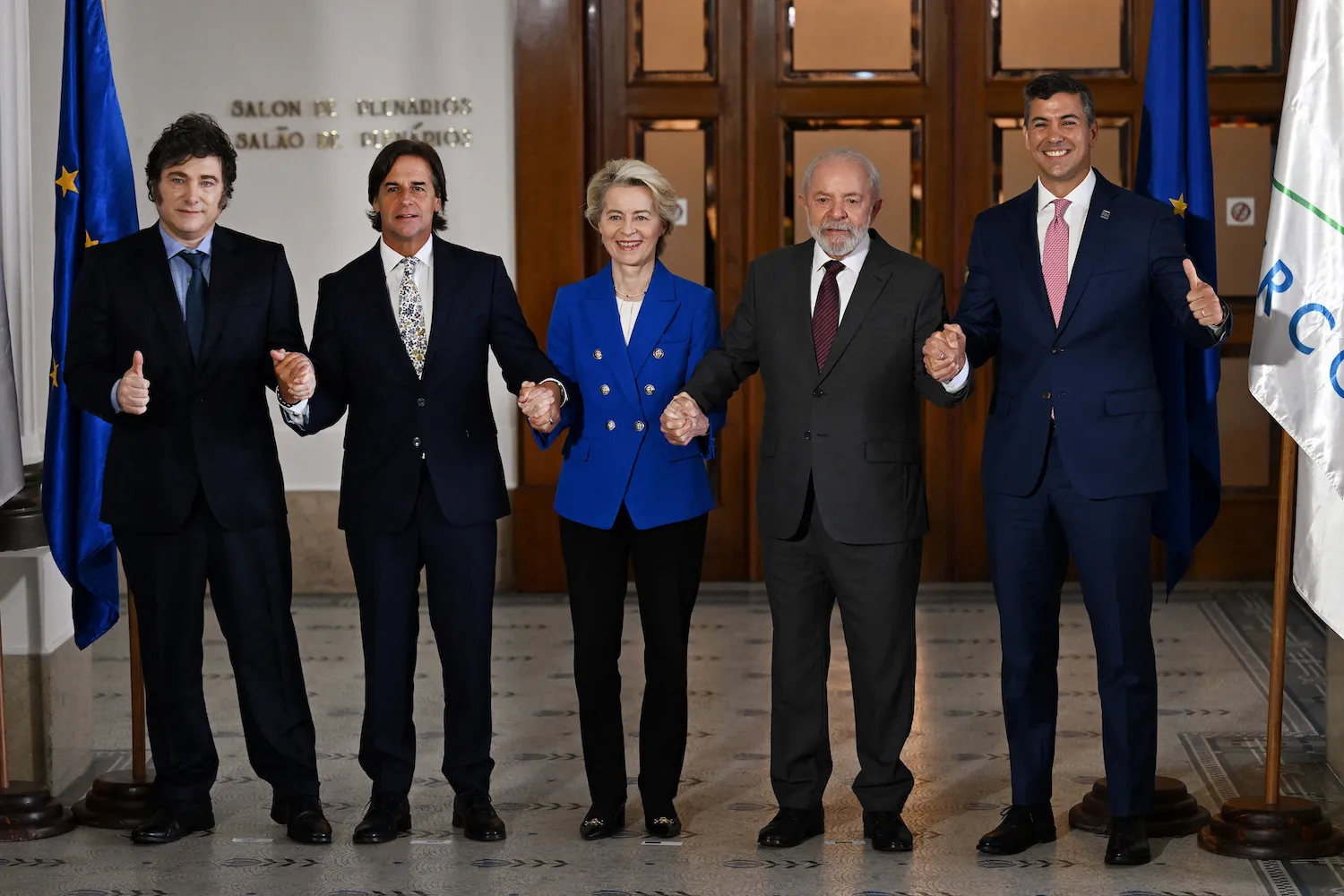
At the multilateral level, this year saw the completion of the MERCOSUR-European Union Agreement. On December 6, in Montevideo, Uruguay, and after 25 years of negotiations, the Southern Common Market (MERCOSUR) and the European Union (EU) signed a Letter of Intent to reach a Free Trade Agreement (FTA), a requirement prior to the Treaty, through which each Member State will establish which products will have their tariffs affected and which will not.
Social issues
Cyclical advances and setbacks have allowed inequality to continue to be a persistent problem in the region. The gap between rich and poor has widened, generating social and political tensions. Extreme poverty had increased with the pandemic to 13% and decreased to 10% in 2023, but is still above 8.5% in 2024. One in three households in the lowest income quintile lacks access to social protection, according to the Economic Commission for Latin America and the Caribbean (CEPAL).
172 million people in Latin America and the Caribbean do not have sufficient income to cover their essential needs and, among them, 66 million cannot purchase a basic food basket, indicates the Social Panorama Report of Latin America and the Caribbean 2024.
In several Latin American countries, political instability is a recurring phenomenon. Internal conflicts, institutional crises and corruption are realities that have affected governability and democratic stability in the region. This phenomenon is increased by the conditions of economic slowdown in the region.
Latin America continues to be a region of origin, transit and destination of migrants and refugees. The economic, political and social crises, as well as economic conditions in countries such as Venezuela, Colombia, Nicaragua and Haiti, Costa Rica, Honduras and El Salvador, have caused a considerable migratory flow, generating tensions and challenges in terms of social inclusion and human rights. .
The increase in intraregional migration is largely driven by Venezuelan emigration. It is estimated that in June 2023 there were more than 6 million Venezuelan migrants and refugees in the region, living mainly in Colombia, Peru, Ecuador, Chile and Brazil. The improvement in Venezuela’s economy has led to a return of Venezuelan immigrants to the country. The Venezuelan government also has strengthened the program “Vuelta a la Patria” (Return to the Homeland) and the care of Venezuelan immigrants abroad. The Bolivarian government also created the Vice Ministry of Comprehensive Care for Migration, which depends on the Venezuelan Foreign Ministry, and reinvigorated the Great Mission Return to the Homeland.
The effects of climate change are having a significant impact in Latin America, exacerbating the vulnerability of populations already affected by poverty and social exclusion. Droughts, floods and extreme weather events are affecting the food security, health and well-being of entire communities in the region.
The effects of the COVID-19 pandemic still persist, which has had a devastating impact on Latin America, both in terms of public health and the economy and social well-being. The health crisis has revealed the deficiencies of public health systems, the fragility of social protection networks and the vulnerability of the most disadvantaged sectors of the population.
National Security and Defense Issues
In 2024, Latin America and the Caribbean did not see open conventional war conflicts. However, certain issues were present on the regional agenda that could have escalated into a war and threatened the security of the region:
Border tensions: Territorial disputes between Nicaragua and Costa Rica in the San Juan River region; the controversy over the delimitation of the maritime border between Chile and Peru; the tensions between Guatemala and Belize due to the territorial dispute over the territory of Belize; tensions between Argentina and Chile regarding the demarcation of the border in the Patagonia region; and the border dispute over the Essequibo between Venezuela and Guyana. They are all part of imperial interests for control of the natural resources of our region.
Internal conflicts: In Colombia, despite the peace processes signed with the FARC and the ELN, armed groups and tensions continue to exist in several Colombian regions; Political tensions in Venezuela have been a focus of conflict in recent years, after the application of unilateral coercive measures imposed by the US and European countries. This year Maduro suffered an attempted coup d’état, following the election results of July 28; the crisis in Haiti that has generated political and social instability, as well as a wave of violence in the country; and the attempted coup d’état in Bolivia, denounced by President Luis Arce.
Imperialist pretensions. Trump has expressed his interest in militarily invading Mexico and Panama. Fact that allows us to appreciate the interest of American dominance towards the region. In addition, he has promised to undertake stabilization actions against the economies of the countries Cuba, Nicaragua and Venezuela through unilateral coercive measures, the so-called “sanctions.” We remember that, respecting the principle of free sovereignty of States, in Public International Law no State is able to sanction another.
The Aragua Train (El Tren de Aragua). This transnational criminal organization has been the subject of regional security concerns, especially in the United States. Although it was created in Venezuela, in the state of Aragua, from which it takes its name, currently its area of criminal activity occurs outside of Venezuela. Trump has blamed the “Aragua Train” for practically all crime in the United States. This has been difficult to prove and even to believe, but it can be presumed that it will be part of the Trump Administration’s Domestic Security Agenda.
Arms race. In 2024, the military policy of the governments of Latin America and the Caribbean, in order to strengthen their National Defense policies, was oriented mainly towards the maritime and air areas. They strengthened their maritime military power, countries such as Chile, Mexico and Nicaragua worked on remodeling their naval fleet, while Guyana received an ocean patrol vessel from England. For their part, Colombia, Peru and Uruguay strengthened their air power with the purchase of CAZA brand aircraft; Honduras with the purchase of 6 Airbus H145 helicopters; and Costa Rica with the acquisition of two drones granted by the US. However, according to Statistica, the statistics portal for macro data from Spain, the countries that generate the greatest military spending in Latin America and the Caribbean are Brazil, Mexico, Colombia , Chile and Argentina.
Likewise, the political relations of the countries in the region in military matters during 2024 reflected agreements on Security and Defense between countries such as Mexico-Brazil, Argentina-El Salvador, Colombia-The United Nations Organization (UN). However, there was also the presence of relations with international actors outside the region with agreements between Trinidad and Tobago-United States, the talks for the Colombia-North Atlantic Treaty Organization (NATO) agreement and Argentina’s interest in joining NATO.
It is striking how there have been negotiations and military operations in countries that share a border with Venezuela, which receive or negotiate with external actors in the region that could encourage an invasion. Colombia negotiates its entry into NATO, which is a threat to the Security of Venezuela; Trinidad and Tobago signed a Security Agreement with the United States; and Guyana received a patrol vessel from England.
In the face of growing competition between the United States, Russia and China, Latin America and the Caribbean has once again become a strategic priority, as can be seen from recent documents from the current US administration, and from Trump’s own public pronouncements.
The greatest foreign military influence in the region is the United States, through its military bases, Joint Operations and the Southern Command. Then, there is Russia, which has supplied weapons and military equipment, as well as technical assistance for the maintenance and modernization of its defense systems to Cuba, Venezuela, Nicaragua and Argentina, among other countries. In third place is China, because its relations with the countries in the region are mainly economic.
In 2024, Latin America experienced a boom in the purchase of weapons. The new arms race, as part of the military industry, drives other competitions, for example, the space race and nuclear development. Regarding this last issue, President Milei announced that Argentina will build its IV Nuclear Power Plant, and that his country wishes to become a regional and world power in the development of nuclear energy.
To close the arms issue, we must keep in mind that the countries of the region sold sovereignty and bought military-technological dependence, by acquiring weapons and military equipment from the United States and Europe; since they have not bought the best and the most modern, but rather planes and weapons that are “left over” or are no longer used by the superpowers. It is also worth remembering that, since World War II, the Americans and Europeans have been historical allies, for Which in the event of any war would have no qualms about acting against Latin America and cutting off vital supplies, spare parts, equipment, etc.
Projections: What’s coming for 2025
In 2025, even with the arrival of reinforcements (Mexico and Uruguay), most left or center-left governments will face the challenge of strengthening themselves internally and externally to face the arrival of Donald Trump to the White House, on January 20.
It is likely that many of Trump’s threats will remain in the discursive or rhetorical order, however, the future is uncertain and the Republican may cause some surprises or scares, both in Latin America and in other regions. For now, the great beneficiary of Trump’s return is clearly Milei, or it should be, since the Argentine president has shown himself, from minute 1, determined to obey and flatter Trump, in alarming and outrageous measures. Let us remember that, while several Latin American leaders and presidents, including Lula, Petro, Boric and Cristina Fernández, expressed their support for the Democratic Party candidate, Kamala Harris; Milei, in the United States, openly supported Trump. This is something that the Republican leader will not easily forget.
In that sense, 2025 will find Latin America waiting for threats from Donald Trump, who has stated that he wants to invade Mexico, with the excuse of fighting drug trafficking, and Panama, to control the strategic canal.
In economic matters, CEPAL projects that in 2025, the region will not be able to escape the trap of low economic growth either. However, the region’s weakness is not only caused by an unfavorable economic context, but also by the persistence of a growing rejection of political parties and the traditional way of doing politics.
Latin American economies depend largely on the stability of their commercial exchange. In that sense, 2025 regional economies will depend on the health of the economy of their main trading partners: China and the United States mainly. China’s Ministry of Commerce, for example, has just launched an investigation into imported beef, especially from Brazil (40%) and Argentina (15%). Any trade measure by China will impact these latin american economies.
MERCOSUR-European Union Agreement. It is still early to know where this bicontinental agreement will lead. It should be considered that, as we previously mentioned, Latin America has been experiencing a process of economic slowdown; many of its countries already have fiscal policies of market opening to encourage foreign investment, but nothing of that has helped. Thus, it seems that the low economic capacity for European investment in MERCOSUR does not ensure the economic growth of the active member countries of the South American bloc.
In short, 2025 is projected as a year in which the correlation of forces in Latin America and the Caribbean will continue to be favorable to the right and the extreme right.
Latin American integration will continue to be an issue to work on, given that the political scenario will be under the strong influence of the United States government. Countries in the region will experience pressure from foreign powers due to the current international dynamics, where there are two power blocs: China, Russia and allies, on the one hand, and the United States, the European Union and allies, on the other.
The open wounds between Venezuela, Brazil and Colombia can begin to heal, if the United States pressures these three countries at the same time. However, the positions of Brazil and Colombia with respect to the United States do not seem to want to confront the North American country.
The developing regional conflicts, for example the Bolivian case, do not seem to be decreasing in intensity. In any case, we must be alert to the continuous imperialist attacks against Cuba, Nicaragua and Venezuela. Trump has already threatened to stop buying Venezuelan oil and to increase unilateral coercive measures.
It is even likely that the North American president, Donal Trump, will serve as a platform to validate a parallel government by recognizing Edmundo González Urrutia as president of Venezuela.
Conclusions
Any analysis of our region must be done with the understanding that, like other regions of the world, Latin America is in the middle or crossed by the fight for global hegemony between the United States and China. The growing presence of the Asian giant in the most precious area of influence for the United States, wrongly called by Americans “backyard,” is undoubtedly an element that adds greater political tension to the region.
At the political level, Cuba, Nicaragua and Venezuela continue to set anti-imperialist guidelines and, for this reason, are the main focus of attacks by the United States and its allies. Specially Venezuela, which as soon as Maduro was re-elected, had to face a coup d’état and questions about the electoral process of Latin American leaders and countries that were supposed to be allies and that when there were doubts about the electoral processes in their countries, they received recognition of Venezuela, immediately and without giving rise to destabilizing attempts.
We can particularly mention the painful role (painful for the left) played by Lula in Brazil; Cristina Fernandez in Argentina; Gustavo Petro in Colombia; Gabriel Boric in Chile; all supposedly consider themselves leftist. It seems that they, and other “left” leaders, have not become aware that only the unity of the people and governments in the face of imperialism will make us strong as a region and as States.
And that joining media trends, or even Fake-News, only makes themselves and their progressive or “left-wing” proposals weaker. Once again we mention Lula as an example of this, since his refusal to approve Venezuela’s entry into the BRICS caused him to be rejected by the majority of the progressive and left-wing sectors of Brazilian society, as well as the largest social movement in Brazil and Latin America: the Movement of Landless Rural Workers (MST).
In another order, although there are political and economic tensions that have represented dangers to the Security and Defense of the region, for example, due to the increase in irregular migration, crime and regional arms race; Without a doubt, the role of the Argentine president, Javier Milei, in opening the doors of the United States, the United Kingdom and even the NATO, represents an unprecedented threat to Latin America.
Finally, the influence and interference that the Trump Administration may cause in and against Latin America is indeed a great uncertainty. In part it will depend on how other world conflicts develop and the role that the United States, China, Russia, Turkey, Israel, and others, want and can play in them. For all this, in the face of the global disorder that prevails in the world today, Venezuela will always call for the solidarity of the people and will insist on Latin American and Caribbean unity.







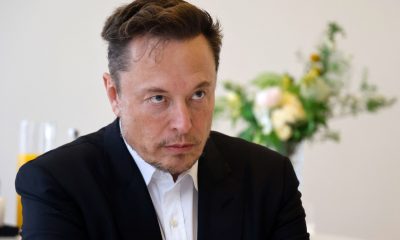



Wealthy buyers in the US are tearing down multimillion-dollar homes shortly after purchasing them for hundreds of millions of dollars.
According to a report by The Wall Street Journal, the trend is driven by a shortage of land in prestigious locations, particularly along coastlines.
For ultra-wealthy buyers, the prime factor has become the land’s location rather than the structure standing on it. After the acquired properties are flattened, newer, more modern homes are built on the cleared lots.
Drawing attention to the shift in the luxury real estate market, the report noted:
“The home itself, formerly the primary driver of an expensive real estate purchase, is now almost beside the point. Buyers are competing first and foremost for well-located land, situated on the ocean or a mountaintop.”
The newspaper cited moves by US billionaire William Lauder as an example. Lauder purchased the oceanfront estate of radio host Rush Limbaugh, who died in March 2023, for $155 million and had it completely demolished in July.
Lauder had previously torn down two homes situated on roughly 1.2 hectares of land along the Palm Beach coast. Having initially planned to construct his own residence on the parcel, Lauder subsequently sold the cleared plot for approximately $200 million.
Jonathan Miller, a real estate appraiser, stated that such transactions are becoming increasingly common as land prices rise.
Amid this momentum, estate agents have also begun marketing luxury homes directly as teardown lots.
Listings use artificial intelligence-generated imagery to showcase how the land would look without the structures on it.
Marketers avoid using the word “demolition” directly, resorting instead to terms such as “adaptive reuse”.
Teardown listings rise across luxury housing market
The trend is not confined to the coast and is spreading to other regions across the US.
Data from property brokerage Redfin reveals that references to demolishing buildings are becoming more frequent in sales listings.
The share of such listings exceeds 15% in the Bunker Hill Village area of Houston, while standing at 6.67% in Pimmit Hills, Virginia.
Dina Goldenteyer, a real estate agent working in Miami, remarked that serial demolitions have become more frequent because buyers no longer appreciate homes older than a decade.
Former retail executives Jamie Dooley and Christine Scott spent $3.7 million in 2020 to demolish a seaside home near Destin, Florida.
Although the couple spent five years building a modern home on the cleared site, they listed the resulting new structure with a demolition condition, citing the fact that no one wanted to buy the property as it stood.
William Paddock, an employee at the environmental consultancy WAP Sustainability, pointed to the environmental damage caused by this construction cycle.
Paddock emphasized that tearing down a home of roughly 1,000 square metres and replacing it with a new building of approximately 2,700 square metres generates a carbon footprint equivalent to the annual emissions of an average 250 American households.
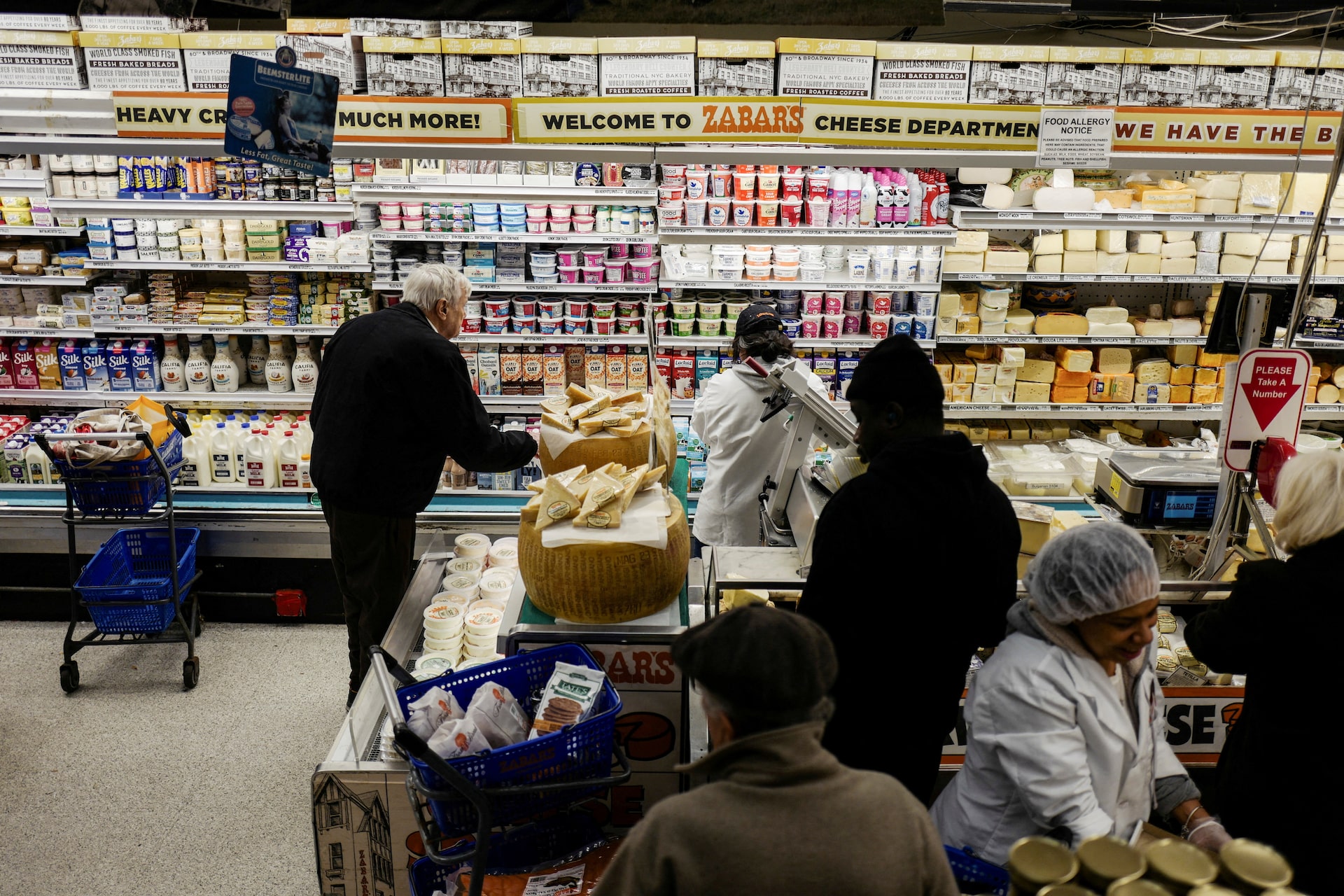
An uptick in September inflation as the US midterm elections approach has pushed the cost-of-living debate back to the centre of the agenda for Democrats seeking to regain control of Congress from Republicans.
Annual inflation stood at 3.7% in September, according to the Consumer Price Index published by the Bureau of Labour Statistics, with energy, petrol, and electricity costs rising on a monthly basis.
Food prices remained flat from August to September, recording a 2.5% increase compared with the same period last year.
Democrats are anchoring their election campaigns to pledges of easing the cost of living, blaming the price increases on President Donald Trump’s tariffs and the war with Iran.
Trump and Republicans, pointing to the numerous left-wing candidates who won primary elections this year, contend that the opposition has become captive to “communists” within the party.
When annual inflation stood at 2.4% in February, the US and Israel launched the Iran war on the final day of that month, and prices continued to climb throughout the conflict.
The recent acceleration has not entirely reversed the retreat from the 40-year peak of 9.1% recorded in June 2022; however, the rate has remained above the Federal Reserve’s 2% target for over five years.
Fed policymakers raised the benchmark interest rate by a quarter of a percentage point last month, citing the battle against stubborn inflation. Officials will convene again next week to consider whether to raise rates or hold them within the 3.75% to 4% target range.
Energy and fuel record sharpest increase since first month of war
In September, energy prices posted their largest monthly jump since March, the first full month of the war with Iran, climbing 20.4% year-on-year. Energy costs had risen 2.1% from July to August, after falling 1.5% from June to July and 5.7% from May to June.
Recent escalations in Iranian attacks on oil tankers in the Strait of Hormuz, alongside more frequent strikes by Ukrainian forces against Russian refineries, have strained global crude oil and refined product markets, driving up US petrol and diesel prices.
Petrol prices also recorded their sharpest monthly increase since the first month of the war, climbing 9.1% from August to September, bringing the annual increase to 35.3%.
American Automobile Association (AAA) data shows the average price of regular petrol across the US stands at $4.26 per gallon; while below the level of roughly $4.48 recorded a month ago, it remains more than $1.20 higher than a year earlier. Average gallon prices exceed $6 in California and $5 in both Washington state and Nevada.
Electricity prices rose 0.2% from August to September, offsetting the 0.2% decline between July and August, and were up 4.4% year-on-year.
Heavy power demand from new data centres is feeding through into local household electricity bills. Trump argued that companies must cover the cost of the electricity required by their data centres themselves.
In a post on Truth Social, Trump claimed that he was requiring large data centres to generate their own power and feed the surplus back into the local grid, suggesting this could bring about “a major drop” in electricity prices.
Used vehicle market posts monthly rise as food costs stabilise
The cost of food at home fell 0.1% month-on-month in September, while dining out increased 0.2%.
Egg prices dropped to $2.27 a dozen, falling roughly 35% compared with September 2025 and remaining well below the 20-year peak of $6.23 recorded in March 2025.
Ground beef prices rose roughly 2.4% compared with September 2025, but at $6.48 a pound, they remained below the 20-year high of $6.98 reached in June.
Chicken held steady at its year-earlier level of $2.06 per pound last month, having fluctuated between $2.01 and $2.09 since November 2024.
Used car and truck prices fell 1.5% compared with September 2025, but rose 0.7% month-on-month in September following 0.4% increases in both July and August.
Heather Long, chief economist at Navy Federal Credit Union, noted that the sector faces severe pressure stemming from a combination of expensive replacement parts and a shortage of skilled labour.
Speaking to The Hill, Long emphasised that every cost pressure across the market is being felt directly at local auto repair shops.

Anthropic, developer of the artificial intelligence model Claude, reported a net loss of $80.7 billion for the first six months of 2026 ending 30 June.
According to a report by The Wall Street Journal citing the company’s draft initial public offering prospectus, this recorded loss nearly doubled the $42 billion loss incurred across the entirety of 2025.
The vast majority of that enormous figure, accounting for $72 billion, stemmed from accounting-driven book-value write-downs.
In contrast, the company saw a sharp surge in revenue, with turnover in the first half of the year climbing to $16.3 billion from $1.1 billion in the same period of the prior year.
During this period, Anthropic spent approximately $9 billion on computing power and infrastructure needs, surpassing in just six months the $7.3 billion spent across the whole of 2025.
The company has commitments to pay roughly $450 billion over the next seven to 10 years under cloud service contracts.
Under these obligations, contracts are planned for $111 billion with Google Cloud, $110 billion with Amazon Web Services, and $31 billion with Microsoft.
Anthropic will also spend up to $86 billion by 2033 and 2034, respectively, to lease Nvidia chips through smaller AI-focused cloud providers Nscale and Lambda.
The company could spend an additional $750 billion in the coming years to expand its computing capacity.
Roughly a third of the draft IPO prospectus was dedicated directly to risk factors.
The document highlighted the possibility that models could cause tangible real-world harm, noting that artificial intelligence could exhibit a “self-preservation” tendency and produce responses resembling “blackmail”.
Anthropic warned that the scale of damage caused by an AI-driven “catastrophic event” could render insuring against such risks impossible.
According to market expectations, Anthropic’s IPO could rank among the largest transactions in history, potentially surpassing SpaceX’s record.
Following the market debut, the company’s market valuation is projected to reach up to $2 trillion.

German officials urge fighter jet alliance with Sweden and Spain

US wealthy demolish multimillion-dollar mansions for land

US and Israel weigh Iran strikes after midterm vote, reports say

Pentagon plans covert spy ring for economic war on China, report says

EU reopens debate on naming envoy for Ukraine talks with Putin
-

 Europe2 weeks ago
Bill to drop NATO membership goal submitted to Ukrainian parliament
-
 America2 weeks ago
How will Brazil’s presidential runoff work?
-

 Europe2 weeks ago
Marine Le Pen unveils fiscal programme pledging French budget cuts
-

 Europe2 weeks ago
Berlin Left Party backs Israel’s right to exist for coalition pact
-

 Diplomacy2 weeks ago
The West is preparing for war not with Russia, but with its own people, French analyst Georges Kuzmanovic insists
-
 Europe2 weeks ago
EU seeks Chinese trade signal in Beijing as surplus widens
-

 Russia2 weeks ago
71 EU lawmakers demand closure of Russian Houses in 15 member states
-

 Europe2 weeks ago
AfD softens EU exit stance to seek reform of bloc and eurozone
