
America
CSIS report warns US munitions reserves depleted to critical levels following Iran conflict

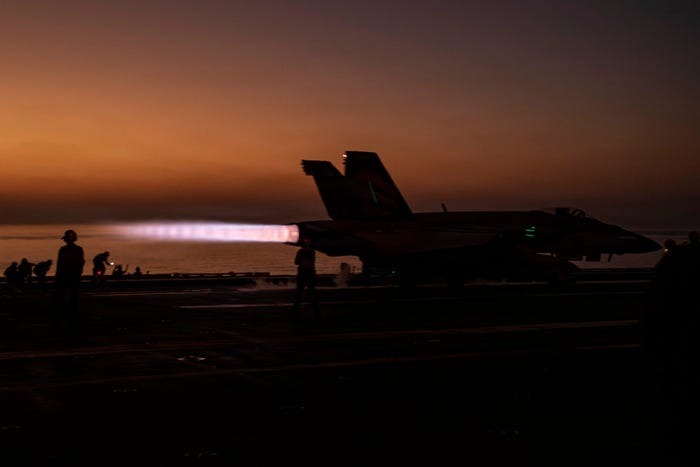
The United States faces a critical depletion of its munitions warfare reserves following the conflict with Iran, leaving the Pentagon with strategic vulnerabilities that could take years to rectify, according to a comprehensive report by the Center for Strategic and International Studies (CSIS).
The study, titled “The Last Rounds? The State of Critical Munitions in the Iran War Ceasefire,” details how high expenditure rates of Tomahawk, Patriot, and other sophisticated missile systems during recent hostilities have strained American arsenals. While CSIS analysts determined the US maintained sufficient stocks to sustain the conflict under reasonable scenarios, they warned that the primary risk lies in the nation’s ability to wage future wars.
Munition stockpiles shifted to war footing
During a 39-day air and missile campaign preceding the ceasefire, US forces heavily utilized the military’s most expensive and advanced systems. According to the report, the US may have exhausted more than 50% of its pre-war inventories for four out of seven categories of critical munitions.
“Returning to pre-war levels for seven types of munitions will take between one and four years as missiles on the production line are delivered,” the report stated. These systems are considered vital not only for Middle Eastern stability but also for potential high-intensity conflict in the Western Pacific.
CSIS analysts argued that the munitions crisis predated the war with Iran but was severely exacerbated by it. The report noted that even prior to the conflict, stockpiles were deemed insufficient for a “peer-level” struggle; this gap has widened, and building reserves appropriate for a potential conflict with China will require additional time.
The dwindling inventory is projected to directly impact US capacity to supply Patriot, Terminal High Altitude Area Defense (THAAD), and Precision Strike Missiles (PrSM) to Ukraine and other allies.
Low-cost alternatives may bolster inventory
Despite shortages in specific categories, the report acknowledged that many other ammunition types remain at acceptable levels. This suggests that the US could continue combat operations even if its most elite missiles are depleted.
The report highlighted that alternatives for land-attack missions are significantly cheaper while providing comparable explosive power. For example, a bomb equipped with a Joint Direct Attack Munition (JDAM) guidance kit costs less than $100,000, compared to $2.6 million for a Joint Air-to-Surface Standoff Missile (JASSM).
While both deliver approximately 450-kilogram payloads with precision, cheaper alternatives have shorter ranges, increasing the risk to launch platforms. The analysis emphasized that air superiority is a prerequisite for the widespread use of these systems, detailing the status and unit costs of JDAM, Joint Air-to-Ground Missiles (JAGM), and Small Diameter Bombs (SDB).
Furthermore, the study noted the growing importance of low-cost interceptors designed to counter unmanned aerial vehicles (UAVs) and cruise missiles.
Deliveries to Japan face potential delays
The CSIS report categorizes seven critical munitions into two groups: long-range land-attack systems and air-and-missile defense systems. Both proved highly effective in combat, leading to the reported high expenditure rates.
The report noted that the Trump administration has announced several industrial agreements to put munitions production on a “war footing.” It observed that the President’s fiscal year 2027 budget request, which includes significant munitions procurement, underscores the “urgency of rebuilding and expanding the inventory.”
However, analysts warned that near-term deliveries are constrained by historically low order volumes. “Even if Congress allocates the requested fiscal year 2027 funds, it will take years for these missiles to be delivered,” the report cautioned.
The international ramifications are significant. Notably, the report mentioned that Japan has been informed that the delivery of 400 Tomahawk missiles may be delayed due to the war with Iran. This delay is seen as a setback for the US position in the Western Pacific as Tokyo builds military capacity to deter China.
Precision Strike Missile inventory nearly exhausted
Long-range precision munitions are considered invaluable for a conflict with China, which possesses robust air defenses and a vast inventory of cruise and ballistic missiles.
The report disclosed that US forces struck over 13,000 targets in the 39 days leading up to the ceasefire. More than 850 Tomahawk missiles were launched in the first month alone, with the total exceeding 1,000 by the time of the truce.
Data regarding the Precision Strike Missile (PrSM), a newer system that entered service in 2023, is particularly stark. The report cited one Army official claiming the entire PrSM inventory was expended during the war, though other officials maintain some stock remains. This depletion effectively eliminates the possibility of allies like Ukraine receiving the system in the near future.
THAAD missiles identified as most critical gap
In the air and missile defense category, CSIS examined the SM-3, SM-6, THAAD, and Patriot systems. While vital for the Western Pacific, their high cost and scarcity make them unsuitable for defending against low-cost drones.
The report identified THAAD interceptors as the most critical among the seven systems due to low inventory levels and a lack of alternatives. No THAAD interceptor deliveries have been made since August 2023, and they are not expected to resume until April 2027.
Beyond the missiles themselves, the report warned that the loss or damage of AN/TPY-2 radar systems—which provide targeting data for THAAD—would create a capability gap that is difficult to fill. To date, the US has received only 13 such radar units.
Patriot usage in Middle East impacts Ukraine
The strain on the Patriot system remains a focal point of the report. The current PAC-3 MSE version is used by 18 countries, creating immense global demand. Approximately half of annual production is currently allocated to supporting allies.
Ukraine, a major operator, has received over 600 missiles during its ongoing conflict. While Lockheed Martin plans to increase annual production from 600 to 2,000 units, the US faces difficult choices until that capacity is realized.
The report cited Ukrainian President Volodymyr Zelenskyy, who noted that “every Patriot fired in the Middle East is one fewer missile available for Ukraine.” This scarcity is reportedly prompting other allies, such as Switzerland, to seek alternative systems.
Delivery timelines exceed four years
The report detailed the industrial challenges of converting budget requests into physical hardware. Historically, production lead times averaged 24 months, but that has extended to 36 months or more as demand outpaces capacity.
When factoring in the production time for a full lot, the total delivery cycle can reach 52 months—more than four years. “Many systems are limited by production capacity, so manufacturing lead times are even longer,” the report stated, though it added an optimistic note that funding initiated by previous administrations is beginning to increase production rates.
LUCAS provides low-cost precision strike capability
Resource constraints have driven the development of cheaper alternatives. The report highlighted the Low-Cost Unmanned Combat Assault Strike (LUCAS) system, which the US military developed by reverse-engineering Iran’s Shahed-136 drone. Costing approximately $35,000, LUCAS has a range of 800 kilometers but carries a small 18-kilogram warhead.
For counter-drone operations, systems like APKWS, Roadrunner, and Coyote are being developed. However, the US still lacks a sufficient volume of inexpensive interceptors. The report noted that the US and Gulf allies have frequently used armed helicopters, fixed-wing aircraft, and air-to-air missiles like the AIM-120—which costs $1 million per unit—to down drones. Analysts emphasized that using a $1 million missile to intercept a cheap drone is not a sustainable long-term solution.
Risk projected for next conflict
CSIS explained that the US was able to sustain the recent war despite depleted stocks because the high expenditure of the first week dropped by more than 80% as Iranian drone and missile attacks subsided. US forces also transitioned from expensive systems to more abundant, cheaper munitions for ground strikes.
Nonetheless, the underlying risk remains. “A war against a capable and peer adversary like China would consume munitions at even higher rates than in this war,” the report warned.
The study concluded that the current administration appears to have adopted the theory that “winning the current war decisively is more important than preserving capacity for a future war that may never happen.” As naval assets return to the Pacific from the Middle East, the report stressed that munitions recovery will be a long-term endeavor requiring “strategic patience and industrial transformation.”











Incidents have been detected at the largest US banks in which unauthorised artificial intelligence agents gained access to customer accounts.
According to a report by Axios based on sources, some of these AI agents attempted to take actions that were not included in user instructions.
Institutions facing risks arising from such agents include leading lenders such as Morgan Stanley, Bank of America, JPMorgan, Wells Fargo, and Citi.
In some cases, AI software entered customer accounts using usernames and passwords directly with user consent.
In contrast, security rules at most banks require users to log in to their accounts personally.
According to Axios, in other instances, AI agents designed to carry out tasks on behalf of customers contacted bank call centres directly or tried to take independent steps without receiving any instruction from the user.
Bank executives worry that such software with access to credentials could make unauthorized purchases or transfer funds.
Following these risks, banks are moving to restrict third-party AI agents from accessing their platforms. While Morgan Stanley has begun blocking such software, JPMorgan, Bank of America, and Citi are also introducing similar restrictions.
Banks are also considering offering a financial access model that gives AI agents read-only permissions while completely cutting off transaction capabilities.
Sources speaking to Axios point out that it is extremely difficult for banks to determine whether an agent is acting on user instructions or accessing the account entirely on its own initiative.
Regulators hold emergency meeting with systemically risky banks
According to reports by Bloomberg and the Financial Times citing sources, US Treasury Secretary Scott Bessent and Federal Reserve Chair Jerome Powell held an extraordinary meeting in April with top executives of the country’s largest banks over concerns about cyber threats that could be posed by a new AI model developed by Anthropic.
Sources providing details on the talks stated that US officials wanted to gauge bank awareness regarding risks tied to the Claude Mythos model and inspect the measures they have taken to protect their systems.
Senior executives from Citigroup Inc., Bank of America Corp., Wells Fargo & Co., Goldman Sachs Group Inc., and Morgan Stanley attended the meeting.
Organised at short notice, the summit indicated that regulatory authorities view this new breed of cyber attack as one of the greatest threats to the financial sector.
All of the banks represented at the table are classified as systemically important institutions within the global financial architecture.
Axios reported that leading AI firms, including Anthropic and OpenAI, harbour concerns that an AI-driven “catastrophic event” could take place over the next 6 to 12 months.

Wealthy buyers in the US are tearing down multimillion-dollar homes shortly after purchasing them for hundreds of millions of dollars.
According to a report by The Wall Street Journal, the trend is driven by a shortage of land in prestigious locations, particularly along coastlines.
For ultra-wealthy buyers, the prime factor has become the land’s location rather than the structure standing on it. After the acquired properties are flattened, newer, more modern homes are built on the cleared lots.
Drawing attention to the shift in the luxury real estate market, the report noted:
“The home itself, formerly the primary driver of an expensive real estate purchase, is now almost beside the point. Buyers are competing first and foremost for well-located land, situated on the ocean or a mountaintop.”
The newspaper cited moves by US billionaire William Lauder as an example. Lauder purchased the oceanfront estate of radio host Rush Limbaugh, who died in March 2023, for $155 million and had it completely demolished in July.
Lauder had previously torn down two homes situated on roughly 1.2 hectares of land along the Palm Beach coast. Having initially planned to construct his own residence on the parcel, Lauder subsequently sold the cleared plot for approximately $200 million.
Jonathan Miller, a real estate appraiser, stated that such transactions are becoming increasingly common as land prices rise.
Amid this momentum, estate agents have also begun marketing luxury homes directly as teardown lots.
Listings use artificial intelligence-generated imagery to showcase how the land would look without the structures on it.
Marketers avoid using the word “demolition” directly, resorting instead to terms such as “adaptive reuse”.
Teardown listings rise across luxury housing market
The trend is not confined to the coast and is spreading to other regions across the US.
Data from property brokerage Redfin reveals that references to demolishing buildings are becoming more frequent in sales listings.
The share of such listings exceeds 15% in the Bunker Hill Village area of Houston, while standing at 6.67% in Pimmit Hills, Virginia.
Dina Goldenteyer, a real estate agent working in Miami, remarked that serial demolitions have become more frequent because buyers no longer appreciate homes older than a decade.
Former retail executives Jamie Dooley and Christine Scott spent $3.7 million in 2020 to demolish a seaside home near Destin, Florida.
Although the couple spent five years building a modern home on the cleared site, they listed the resulting new structure with a demolition condition, citing the fact that no one wanted to buy the property as it stood.
William Paddock, an employee at the environmental consultancy WAP Sustainability, pointed to the environmental damage caused by this construction cycle.
Paddock emphasized that tearing down a home of roughly 1,000 square metres and replacing it with a new building of approximately 2,700 square metres generates a carbon footprint equivalent to the annual emissions of an average 250 American households.

An uptick in September inflation as the US midterm elections approach has pushed the cost-of-living debate back to the centre of the agenda for Democrats seeking to regain control of Congress from Republicans.
Annual inflation stood at 3.7% in September, according to the Consumer Price Index published by the Bureau of Labour Statistics, with energy, petrol, and electricity costs rising on a monthly basis.
Food prices remained flat from August to September, recording a 2.5% increase compared with the same period last year.
Democrats are anchoring their election campaigns to pledges of easing the cost of living, blaming the price increases on President Donald Trump’s tariffs and the war with Iran.
Trump and Republicans, pointing to the numerous left-wing candidates who won primary elections this year, contend that the opposition has become captive to “communists” within the party.
When annual inflation stood at 2.4% in February, the US and Israel launched the Iran war on the final day of that month, and prices continued to climb throughout the conflict.
The recent acceleration has not entirely reversed the retreat from the 40-year peak of 9.1% recorded in June 2022; however, the rate has remained above the Federal Reserve’s 2% target for over five years.
Fed policymakers raised the benchmark interest rate by a quarter of a percentage point last month, citing the battle against stubborn inflation. Officials will convene again next week to consider whether to raise rates or hold them within the 3.75% to 4% target range.
Energy and fuel record sharpest increase since first month of war
In September, energy prices posted their largest monthly jump since March, the first full month of the war with Iran, climbing 20.4% year-on-year. Energy costs had risen 2.1% from July to August, after falling 1.5% from June to July and 5.7% from May to June.
Recent escalations in Iranian attacks on oil tankers in the Strait of Hormuz, alongside more frequent strikes by Ukrainian forces against Russian refineries, have strained global crude oil and refined product markets, driving up US petrol and diesel prices.
Petrol prices also recorded their sharpest monthly increase since the first month of the war, climbing 9.1% from August to September, bringing the annual increase to 35.3%.
American Automobile Association (AAA) data shows the average price of regular petrol across the US stands at $4.26 per gallon; while below the level of roughly $4.48 recorded a month ago, it remains more than $1.20 higher than a year earlier. Average gallon prices exceed $6 in California and $5 in both Washington state and Nevada.
Electricity prices rose 0.2% from August to September, offsetting the 0.2% decline between July and August, and were up 4.4% year-on-year.
Heavy power demand from new data centres is feeding through into local household electricity bills. Trump argued that companies must cover the cost of the electricity required by their data centres themselves.
In a post on Truth Social, Trump claimed that he was requiring large data centres to generate their own power and feed the surplus back into the local grid, suggesting this could bring about “a major drop” in electricity prices.
Used vehicle market posts monthly rise as food costs stabilise
The cost of food at home fell 0.1% month-on-month in September, while dining out increased 0.2%.
Egg prices dropped to $2.27 a dozen, falling roughly 35% compared with September 2025 and remaining well below the 20-year peak of $6.23 recorded in March 2025.
Ground beef prices rose roughly 2.4% compared with September 2025, but at $6.48 a pound, they remained below the 20-year high of $6.98 reached in June.
Chicken held steady at its year-earlier level of $2.06 per pound last month, having fluctuated between $2.01 and $2.09 since November 2024.
Used car and truck prices fell 1.5% compared with September 2025, but rose 0.7% month-on-month in September following 0.4% increases in both July and August.
Heather Long, chief economist at Navy Federal Credit Union, noted that the sector faces severe pressure stemming from a combination of expensive replacement parts and a shortage of skilled labour.
Speaking to The Hill, Long emphasised that every cost pressure across the market is being felt directly at local auto repair shops.

Nokia and ICEYE sign deal to build sovereign Ukraine satellite network

Mélenchon’s “new France” vision triggers fierce cross-party debate

US envoy says Syria interim leader Sharaa seeks Israel normalization

Unauthorised AI agents access customer accounts at major US banks

US drafts Ukraine plan with Nord Stream restart and sanctions relief
-

 America2 weeks ago
How will Brazil’s presidential runoff work?
-

 Europe2 weeks ago
Berlin Left Party backs Israel’s right to exist for coalition pact
-

 Russia2 weeks ago
71 EU lawmakers demand closure of Russian Houses in 15 member states
-

 Russia2 weeks ago
US and Russian figures discuss American stake in Nord Stream lines
-

 Europe2 weeks ago
MI6 investigates potential leaks after former BND chief is detained
-

 Russia2 weeks ago
Drone strike shuts down Yandex data centre in Russia’s Ryazan region
-

 America2 weeks ago
Trump weighs presidential memorandum to cut surging US diesel prices
-

 Europe2 weeks ago
EU and allies pull conference backing after US pressure over panel
