
Europe
German court declares Karl Marx’s teachings unconstitutional

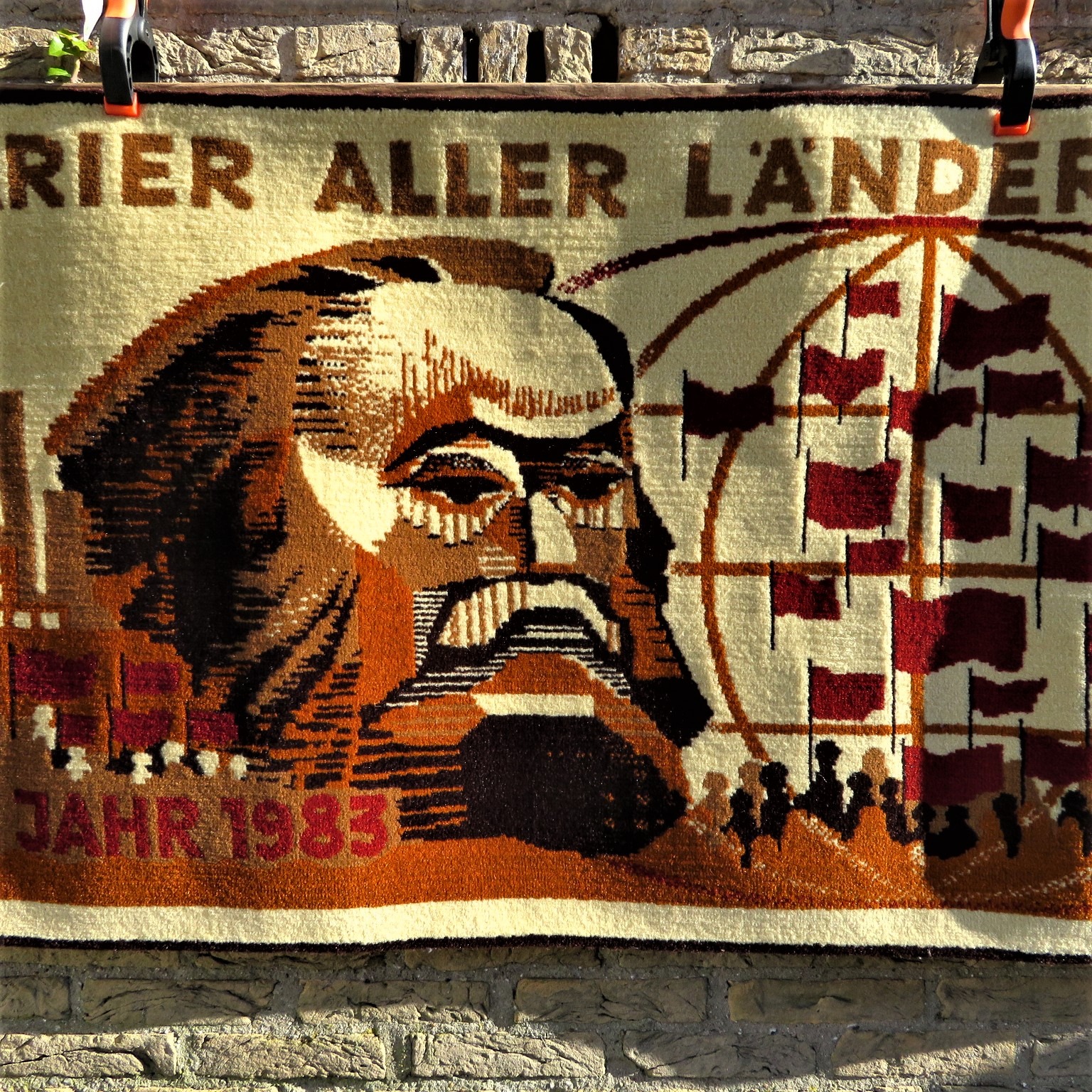
A court in Hamburg, Germany, has stated in the details of a ruling concerning a Karl Marx reading group that Marx’s teachings may be contrary to the “free democratic basic order.”
On April 8, the “Marxist School of Politics and Culture Forum” (Masch) won its case against the State Office for the Protection of the Constitution (LfV) in the Hamburg Administrative Court.
The court ruled that the authorities could no longer classify the Hamburg-based association as “left-wing extremist.” Masch had won its lawsuit against its inclusion in the organization’s 2021 report and the revocation of its non-profit status in the same year.
Lack of ‘active militant attitude’ saved a Marx association, but…
Now, as reported by taz, it has emerged that this legal victory could backfire like a boomerang and pose a danger to all Marx reading circles in Germany.
The reason for this lies in what the Hamburg court wrote in its written decision on July 10. It is a common practice for courts to explain the precise reasons for their decisions in writing only weeks later, but the content of the decision is considered surprising.
The court affirmed its ruling in favor of Masch, declaring its inclusion in the constitutional protection report unlawful. However, it did so because its members lacked the “active militant attitude” to actually harm the constitution.
Court rules Marx is incompatible with the ‘free democratic basic order’
Masch has been active since 1981. It is best known in Hamburg for its annual reading groups on the first volume of Marx’s work Capital, but the group also publishes books and frequently organizes discussion events, often at the University of Hamburg.
It sees itself in the tradition of workers’ educational associations and Marxist workers’ schools and, by its own account, exhibits a “non-dogmatic and critical approach to Marxist theory.”
The association was deemed suspicious by the Office for the Protection of the Constitution because, among other things, it was alleged that Masch was originally founded by the German Communist Party (DKP) and still maintains close ties with it.
The court rejected this accusation in April, noting that only one of the 26 Masch members is currently a member of the DKP.
However, the written justification goes even further. The court discusses the issue of whether engaging with Marxist theory is fundamentally compatible with the constitution of the Federal Republic of Germany.
The court finds that “the plaintiff’s activities, which focus on the theories of Karl Marx, are fundamentally incompatible with the free democratic basic order.”
The court states that the centrality of Marx’s works and teachings to Masch’s activities is evident from its name, “Marxist Evening School.”
According to the court, the reason this is problematic is as follows: “The social theory created by Marx may contain incompatibilities in fundamental points with the principles of the free democratic basic order.”
The court had not yet touched upon this point in its oral ruling in April.
Danger for all Marx reading groups
Ridvan Ciftci, the lawyer who represented Masch in court, finds the court’s statements “irresponsible.”
According to him, this decision implies that predominantly reading Marx is fundamentally unconstitutional. In Masch’s case, the group is not problematic only because it is “sufficiently insignificant” and not “actively militant.”
In Ciftci’s assessment, this poses a threat to all Marx reading circles in Germany. “Any association that primarily refers to Marx could therefore become a subject of surveillance,” the lawyer says.
In this respect, the decision in which Masch successfully defended itself against being classified as unconstitutional potentially appears to be a boomerang and, at the very least, a legal setback.
In fact, other courts have recently taken a much more flexible approach to the theory of Karl Marx. For example, in the case brought by the newspaper Junge Welt against its surveillance by the Office for the Protection of the Constitution, the Berlin Administrative Court stated that a Marxist orientation alone does not constitute an effort to overthrow the free democratic basic order and that revolution could be a “radical, yet still constitutional social transformation.”
The Hamburg court, however, looks at the matter from a different perspective. The court believes that the Marxist theory adopted by Masch aims not just for reforms but for revolution through violence.
The court does not accept Masch’s objection that its discussions are limited to a critique of capitalism. Quoting from the association’s website, the court notes that the association’s goal is to “completely transform the economic system, the state, and society.”
The main problem is the ‘dictatorship of the proletariat’
The court believes that when it comes to Marx, the problem lies in the concept of the “dictatorship of the proletariat.”
The court points out that the meaning of this concept “inevitably excludes other population groups from the political decision-making process and the indirect exercise of state power,” stating, in other words, that the dictatorship of the proletariat is “undemocratic.”
Masch member Michael Hopp argues that “this is a complete misunderstanding.” “The court is acting as if Marx’s texts were written yesterday,” says Hopp, who claims that Marx can “absolutely be understood as a democrat” when one does not solely refer to the Communist Manifesto pamphlet, as the court does, and that the “older Marx” emphasized that the means of change must be adapted to the historical situation.
“Marx would have recommended anything but a crowd of people storming the Bundestag today,” says Hopp.
Hopp also suggests that the court misunderstands the nature of Marx’s theory as an “analytical tool” and of Masch as “an educational institution.” “The oversimplification lies in us being accused of putting words into action. But we look at the words and reflect on them,” he says.
Is capitalism enshrined in the Basic Law?
The decision of the Hamburg Administrative Court also touches on a problem that has been more frequently discussed in recent years following the demand to “expropriate Deutsche Wohnen & Co.”: To what extent does the Basic Law, the source of the free democratic basic order, stipulate that the Federal Republic of Germany should be organized according to capitalist principles?
The Hamburg court did not find Masch’s argument, which referred to political scientist Wolfgang Abendroth, that the Basic Law is neutral in terms of economic policy, to be convincing.
On the other hand, according to taz, many questions still remain unanswered:
“Is every introductory course on Marx in the first semester now suspect? What exactly does ‘actively militant’ mean? Is radical social criticism not unconstitutional? To clarify these and other questions, Masch, which is currently considering appealing the decision, plans to do what it does best: organize a discussion event.”









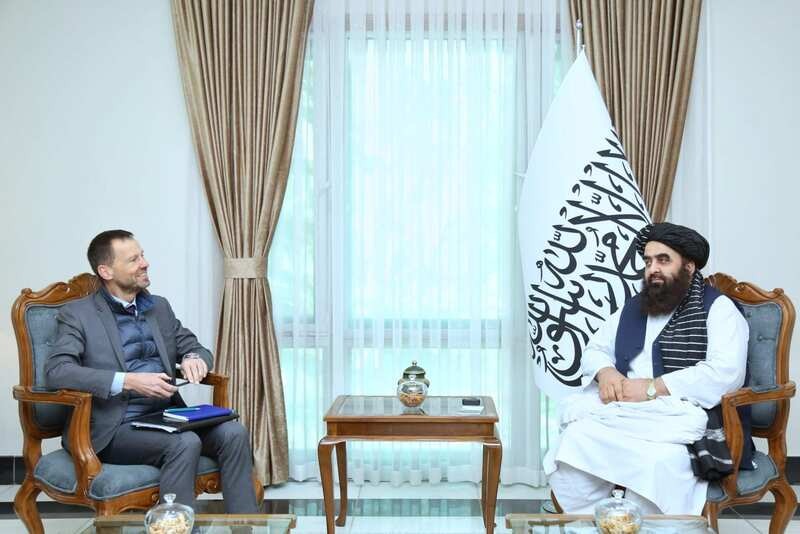
Representatives from 15 European Union member states met with the Taliban in Brussels on June 23 to discuss the return of Afghan nationals to Afghanistan.
A European Commission spokesperson said on Tuesday that the meeting was co-chaired with Sweden. Belgium and the Netherlands also took part.
The Commission stressed that the discussions primarily focused on the return of Afghan citizens with criminal records or those considered security threats.
Talks covered a wide range of issues, including the identification of returnees, the issuance of travel documents and procedures related to their repatriation.
However, Johannes Luchner, a senior European Commission official who travelled to Kabul in January, had previously indicated that the scope could extend beyond convicted individuals.
Addressing European lawmakers at the end of January, he said: “Our primary concern is the return of criminals, but the number of non-criminal Afghans who have received return orders is also increasing.”
Another EU source has now expressed a similar view. Speaking to EUobserver on Tuesday ahead of the meeting, the source said the discussions would also cover the return of asylum seekers whose applications had been rejected.
Earlier in the day, the Commission declined to provide details about the meeting.
As a result, questions remained unanswered regarding who covered the Taliban delegation’s travel expenses, where the meeting would take place, whether women would participate and what the Taliban expected in return for assisting the EU with deportations of Afghan nationals.
The EU and its member states have not recognised the Taliban government since it returned to power five years ago.
Brussels defended its decision to maintain limited contacts with Afghanistan’s “de facto authorities,” arguing that such engagement is necessary to facilitate the deportation of rejected asylum seekers who have committed crimes or are considered dangerous.
A European Commission spokesperson said officials from the Commission and 15 EU member states attended the Brussels meeting, which followed a previous gathering held in Kabul in January.
“The Commission services and Sweden today co-chaired a technical-level meeting in Brussels together with technical-level representatives of Afghanistan’s de facto authorities responsible for return and readmission matters,” the spokesperson said.
A spokesperson for Afghanistan’s Foreign Ministry said the agenda was broader and included the possibility of a future consular presence in the EU, the resumption of consular services for Afghans living there and “the need for confidence-building measures.”
Spokesperson Abdul Qahar Balkhi added that the meeting raised hopes of creating “positive momentum to safeguard the consular rights of Afghans residing abroad.”
According to a European Commission letter addressed to Balkhi and reviewed by Reuters, the discussions would focus on “the return and readmission of Afghan nationals without a right to reside in the EU.”
Europe
EU defence chief calls for integration of Ukraine’s military into European defence architecture
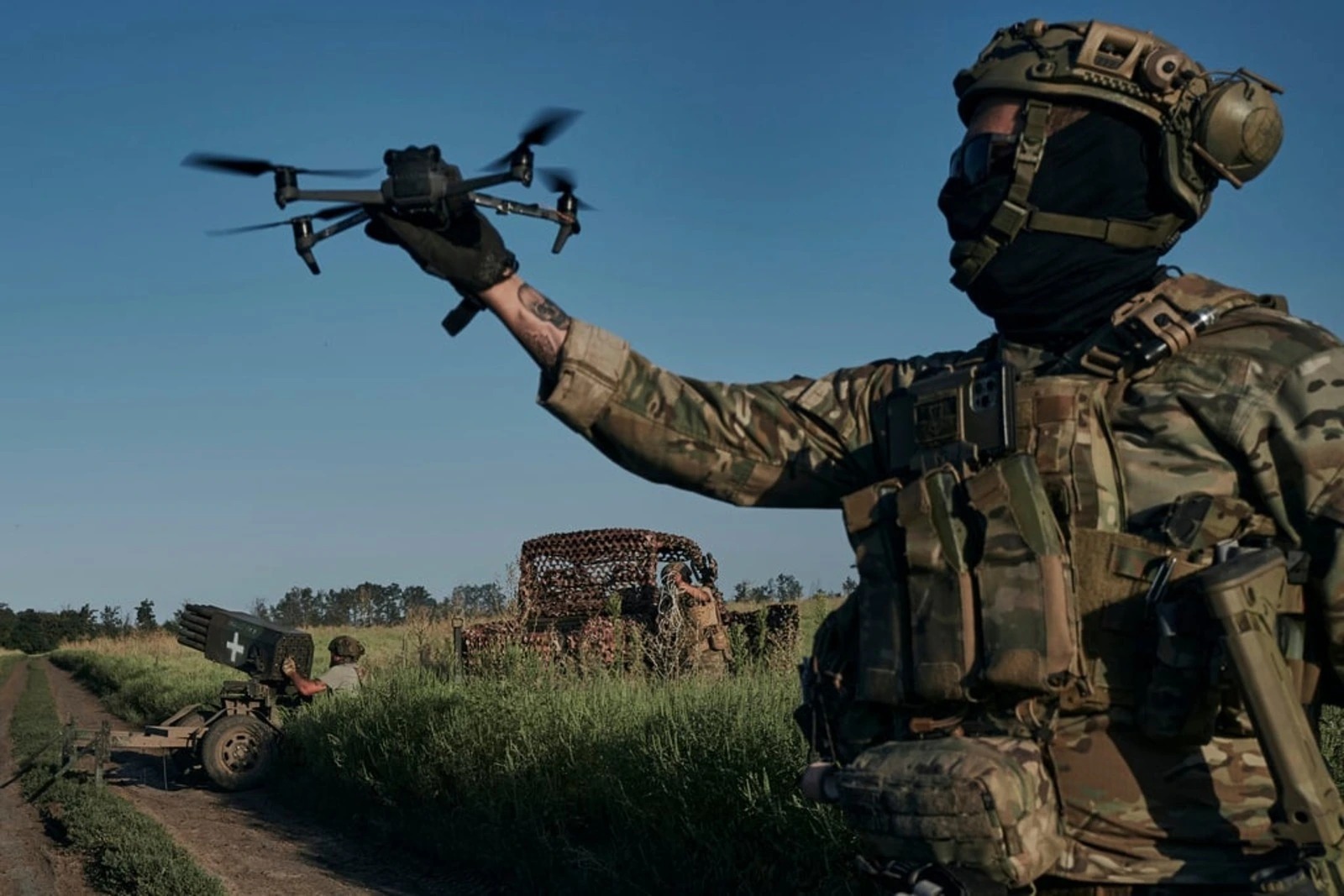
The European Union’s Defence Commissioner, Andrius Kubilius, said the bloc should integrate Ukraine into a future European defence union, speaking at the European Defence and Security Summit in Brussels.
According to remarks reported by Reuters, Kubilius said: “It would be difficult to make sense of things if we did not regard the integration of Ukraine’s armed forces into our defence architecture in Europe as a vital issue.”
Kubilius stressed that Ukraine currently holds a dominant position on the battlefield thanks to the transformation of its military doctrine.
Calling for the integration of Europe’s defence industry and Ukraine’s manufacturing facilities into a single military structure, Kubilius said Ukraine should be fully integrated into the EU’s military market.
He added that the European Commission could present a detailed analysis of the defence market and initial proposals for next steps as early as next week.
At a later stage, the commissioner said, the Commission would propose changes to defence procurement rules and other market regulations.
Kubilius also outlined a strategic objective for the European Union.
He argued that EU member states should spend around €7 trillion on arms production over the next decade in order to surpass Russia in military strength and weapons stockpiles. According to Kubilius, such spending would be consistent with commitments under NATO to raise defence budgets to 5% of gross domestic product.
Urging Europeans to be prepared to bear the cost, Kubilius described it as “the price of peace.”
At the same time, he suggested moving away from the production of highly sophisticated weapons that are difficult to manufacture in large quantities. Instead, citing the example of drones used in Ukraine, he called for a focus on producing “enormous quantities of satisfactory weapons.”
The EU Defence Commissioner also underscored the need to integrate Ukraine’s innovative defence industry into Europe’s broader defence and technological base.
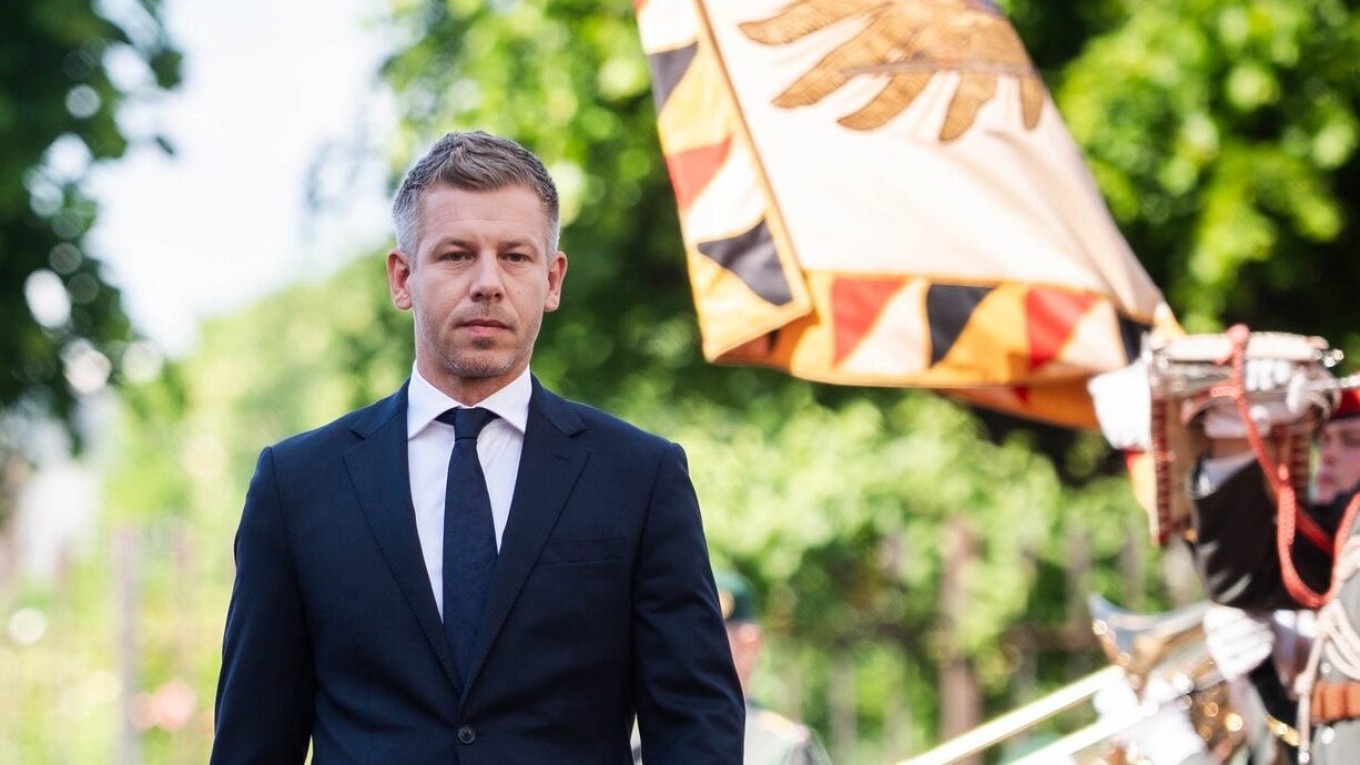
Hungary has refused to endorse a joint letter intended to be sent on behalf of all 27 European Union member states to the European Council and the European Commission in support of Ukraine’s and Moldova’s accession to the bloc.
According to Politico, citing sources familiar with the matter, the letter is required for Kyiv’s and Chisinau’s membership applications to advance to the next stage of the accession process.
The sources said Hungary was the only member state that declined to back the document. Because approval requires the consent of all 27 member states, the issue is expected to be revisited next week.
Hungary, which previously blocked Ukraine’s accession negotiations for an extended period, was led at the time by Prime Minister Viktor Orban. His successor, Prime Minister Peter Magyar, has not opposed the launch of the negotiation process but has insisted on removing the phrase “as soon as possible” from the draft letter’s reference to Ukraine’s accession.
Magyar said Hungary does not support opening all negotiating chapters simultaneously in an effort to accelerate Ukraine’s membership bid.
Explaining the government’s position, he said: “Partly because the ink on the documents relating to the first chapter has barely dried, and partly because this would send the wrong message to Western Balkan countries such as Serbia, Albania, Montenegro and North Macedonia, which have been working for years to become members of the European Union.”
The European Union formally opened the first chapter of accession negotiations with Ukraine and Moldova in June. The process was launched during a ceremony in Luxembourg attended by the foreign ministers of member states and is divided into six thematic clusters covering different areas of legislation and policy.
The opening of the first cluster, which covers core issues including the rule of law, the functioning of democratic institutions and public administration, marks the transition from the preparatory phase to practical work on meeting accession requirements.
The EU’s ambassador to Ukraine, Katarina Mathernova, has said Kyiv could join the bloc by 2030, although the final timeline will depend on how quickly the Ukrainian authorities complete the required legal and institutional reforms.
Mathernova also said she hoped all 33 negotiating chapters could be opened by the end of the summer.

EU states hold talks with Taliban in Brussels on Afghan returns

US Senate approves measure limiting Trump’s authority to use force against Iran

Venezuela prepares record $240 billion sovereign debt restructuring

EU defence chief calls for integration of Ukraine’s military into European defence architecture

Russia’s oil exports hit yearly high despite rising competition in India
-
 Europe2 weeks ago
AfD says Ukraine should compensate Germany over Nord Stream sabotage
-
 Opinion1 week ago
A voice rising from New Delhi: BRICS’s manifesto for a new world order
-

 Europe2 weeks ago
Toyota and JLR warn EU ‘Made in Europe’ rules could threaten jobs and investment
-

 America1 week ago
Data leak exposes Peter Thiel’s secret ‘Dialog’ network of politicians, regulators, and tech elites
-

 Middle East1 week ago
Mine clearing in Strait of Hormuz could delay shipping traffic for up to 50 days
-
 Diplomacy1 week ago
Iran discloses 14-point draft US peace accord detailing sanctions relief, regional security measures
-
 Russia1 week ago
Patrushev urges assertive Russian naval presence to counter NATO encirclement strategy
-

 Diplomacy2 weeks ago
SpaceX IPO raises concerns over European capital outflows and telecom competition
