
Diplomacy
IEA chief Fatih Birol declares the start of the global age of electricity

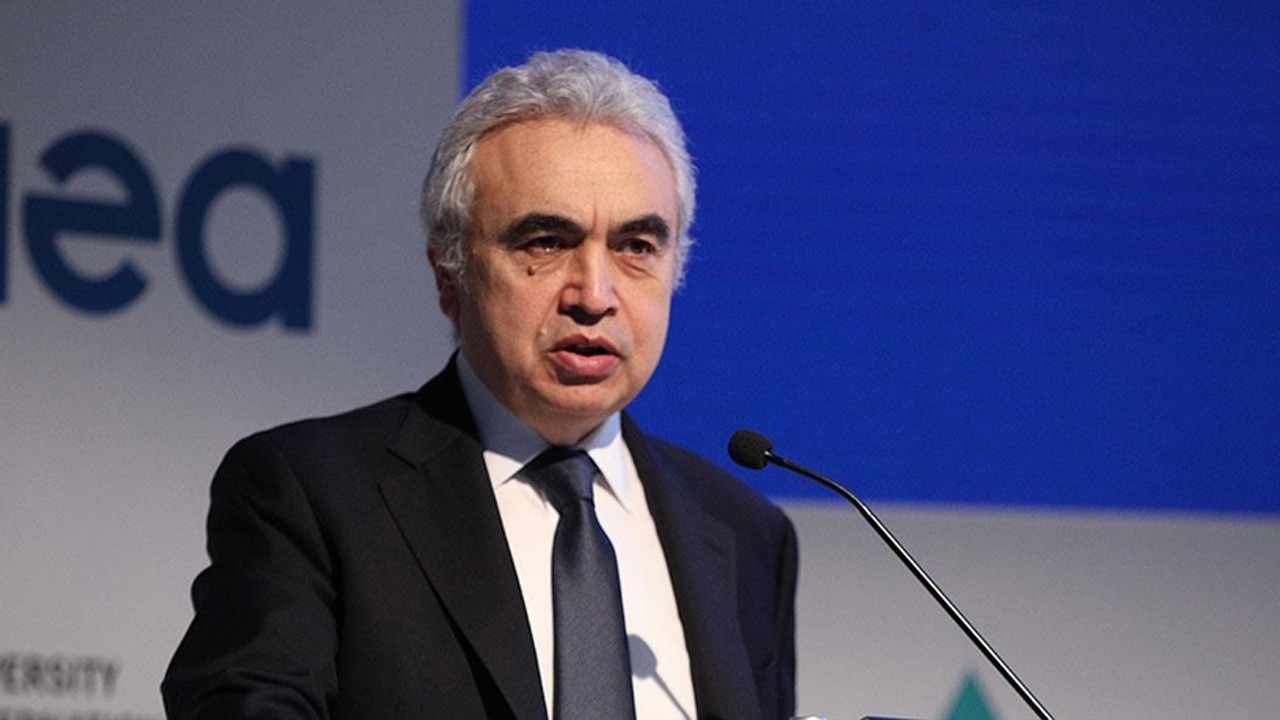
The 19th IICEC Conference, organized by the Sabancı University Istanbul International Energy and Climate Center (IICEC), was held at the Sabancı Center under the title “The Present and Future of Energy Security in the World and Türkiye: Risks and Solutions in Critical Minerals.”
The conference, which was attended by Harici Media and where global and regional energy dynamics were discussed, featured opening speeches by the Republic of Türkiye Minister of Energy and Natural Resources Dr. Alparslan Bayraktar, Sabancı University Founding Chair of the Board of Trustees Güler Sabancı, and International Energy Agency (IEA) Executive Director Dr. Fatih Birol.
IICEC Director Bora Şekip Güray shared the prominent findings of the “Türkiye Critical Energy Minerals Outlook 2025” report at the event, revealing the strategic importance of critical minerals in the energy transition through data.
“Geopolitics has descended on the sector like a dark cloud”
Taking the podium, IEA Executive Director Dr. Fatih Birol began his speech by drawing attention to the pressure of the current conjuncture on the energy sector before detailing the seven main headings affecting world energy markets.
Stating that energy and geopolitics have been intertwined throughout history, but that today’s picture differs from past crises, Birol defined the situation with the following expressions:
“I want to talk about a subject that, even if it is not directly related to energy, affects energy a lot these days. That is geopolitics coming over the world energy sector like a dark cloud. We have experienced oil crises, we have experienced natural gas crises, but there has never been a period where they all came together and geopolitics affected the energy sector this much. We see this simultaneously in oil, natural gas, and critical minerals.”
Emphasizing that a fundamental change is taking place in the world political system, that long-standing alliances are loosening or dissolving, while surprise new alliances are being born between countries, Birol said, “The dark and long shadow of geopolitics over energy makes itself felt to energy decision-makers every day. Energy security will be even more important in the coming years.”
The “American Five” effect on oil
Recalling that their forecasts for oil markets last year were confirmed, Birol stated that their predictions that supply would increase and prices would fall have come true. Birol said there are two main reasons for this relief in oil markets:
“First, demand growth is slowing down, especially due to China-related reasons. Second, and a very simple one; a massive amount of oil production is entering the market from what I call the ‘American Five’: the United States, Canada, Brazil, Argentina, and Guyana. This large production coming from these non-OPEC countries and weak demand means prices go down.”
Pointing out that oil prices have regressed from the $80 levels to the $60 levels at a time when geopolitical tensions have peaked and conflicts in the Middle East, Russia-Ukraine, and Latin America continue, Birol evaluated: “If there are no major surprises, we may see oil markets at these levels in 2026 as well. Because there is a lot of oil in the market.”
Birol noted that the most critical factor determining the course of oil demand in the long term will be the speed of electrification in the transport sector, as transport alone represents 45% of global oil consumption.
“The natural gas market will turn into a buyer’s market”
Heralding that a much more comfortable period has been entered for consumers in natural gas markets, Birol announced that the amount of LNG (liquefied natural gas) that will enter the market in the next five years is equivalent to half of the gas that has entered the market in the last 40 years. Stating that a massive gas supply of 300 billion cubic meters, especially from the US, Qatar, and Canada, is on the way, Birol explained the changing market dynamics with these words:
“75% of this incoming gas is what we call ‘flexible’ gas, which has no destination restrictions. In other words, there is no obligation to go from country A to country B; whoever pays the money will get it. Natural gas markets were a seller’s market for many years; now they will turn into a buyer’s market and the hands of the buyers will be strengthened.”
“China is still insistent on coal”
Evaluating the coal markets, Birol stated that while consumption is falling rapidly in some countries, production continues in others.
Recalling that 65% of the world’s coal consumption stems from China alone, and the remaining 35% is the sum of all other countries, Birol said, “Coal actually means China. China is still insistent on this issue. There is a slight increase in coal in the US with the rise in domestic natural gas prices, but the decline continues in the rest of the world. We predict that this horizontal course will continue for a few more years.”
“The world is officially entering the age of electricity”
Devoting the most comprehensive part of his speech to the explosion in electricity demand, Birol declared that the world has entered the “age of electricity.”
Explaining that electricity demand, which grew twice as fast as total energy demand in the past 10 years, will grow six times faster than energy demand in the next 10 years, Birol detailed the three new triggers behind this massive increase:
Artificial intelligence and data centers:
“Artificial intelligence may be the most consequential technological invention humans have found so far. Artificial intelligence means data centers. A medium-sized data center consumes as much electricity as a city of 100,000 people. Data centers are popping up like mushrooms all over the world. Two things will determine the competition between countries: Who is ahead in technology and who has electricity?”
Stating that China is ahead of Europe and the US regarding electricity infrastructure, Birol explained the difference in the supply chain with this example: “If you order a transformer or a gas turbine in Europe or America today, they say ‘don’t come before 2030.’ In China, you can get it two weeks later.”
Air conditioning use:
Stating that the second major trigger is the use of air conditioning, Birol said that demand for air conditioning has exploded in countries with increasing income levels and due to the effect of climate change.
Birol said, “While 90% of homes in America and Japan have air conditioning; it is at the level of 5% in Nigeria and 20% in India and Indonesia. As welfare increases in these countries, the number of air conditioners will also increase and this will push up electricity demand.”
Electric vehicles and the transformation in automotive:
Stating that the automotive sector is experiencing a historical transformation, Birol emphasized that China has now risen to the position of the world’s number one automobile manufacturer. Stating that 5 out of every 10 vehicles produced in the world are manufactured in China, Birol drew attention to the increase in the market share of electric vehicles:
“Five years ago, 5 out of every 100 cars sold in the world were electric. This year the rate rose to 25%. The new market is no longer rich countries; it is developing countries such as Asia and Latin America. With this transformation, we may see some leading companies that have dominated the sector for years experiencing serious economic shocks.”
Birol stated that renewable energy will play the leading role in meeting this increasing electricity demand, and that more than 85% of the new power plants installed in the world in 2025 will consist of solar, wind, and other renewable sources.
“Nuclear is one of Türkiye’s indispensable technologies”
Recalling that the IEA predicted three years ago that nuclear would return, and that they made this prediction despite the “wind blowing from the opposite direction” at that time, Birol announced that 2025 will be the year in which the all-time record for nuclear electricity generation will be broken.
To explain that the interest in nuclear has materialized, Birol gave three examples from his program in January:
“In the first week of January, I will go to Japan to discuss the opening of the power plants that were closed after Fukushima. The Japanese government wanted to get our views, especially for the commissioning of the 8 GW facility, which is the world’s largest nuclear power plant. The following week, I will go to Stockholm to meet with the Swedish Prime Minister and King; Sweden wants to increase its 40% nuclear share even further and build new reactors. Thirdly, I have been the Chairman of the Energy Board at the Davos World Economic Forum for 11 years, and for the first time we will organize a special nuclear session in Davos. This became the most popular session.”
Giving full support to Türkiye’s nuclear energy strategy, Birol said, “Nuclear is one of Türkiye’s indispensable technologies. It is extremely important both in terms of meeting electricity demand, environmental emissions, and geopolitical weight.”
“There is a massive dominance of China in rare earth elements”
Stating that they established a critical minerals unit as an agency five years ago and allocated a significant part of their budget here, Birol stated that the IEA has a “good nose.” He emphasized that critical minerals are of vital importance not only for clean energy technologies but also for the defense industry, drones, and chips.
Stating that China is at least 10 years ahead of other countries in this field with both mining access and refining capacity, Birol revealed with the following data that the picture will not change in the short term despite the investments made by the Western world:
“China’s share in the global refining sector for rare earth elements is 92%. Even if all planned new projects in America, Canada, Australia, and Europe are implemented on time and in full, China’s share will only drop to 75% in 2035. So there is still a massive dominance. The refining sector is a dirty and difficult business; not everyone can easily establish it in their country.”
Recalling the export restriction introduced by China last April, Birol warned: “We have a saying in Turkish: ‘One misfortune is better than a thousand pieces of advice.’ That decision taken by China reminded everyone, especially the automotive sector, how serious this business is. A country that has such power behind it sits at the table much more comfortably than others.”
“Climate change is a worrying but temporary trend”
In the final part of his speech, Birol touched upon climate change, stating that 2025 is the second hottest year in the world, and the severity of extreme weather events such as forest fires, droughts, and floods has increased.
However, stating that the place of climate change on the agenda of world leaders has shifted downwards due to geopolitical tensions, Birol described this situation as a worrying but temporary trend.
Stating that he finds Türkiye’s candidacy for the COP31 presidency together with Australia “extremely appropriate,” Birol concluded his words as follows:
“I think that Türkiye hosting this organization is an important chance for our country and the world. My hope is that Türkiye will both bring climate change to the place it deserves on the world agenda and play a bridge role between developed and developing countries on financing. Türkiye has enormous resources in solar, wind, and geothermal; I believe that we will continue to take positive steps together with renewable energy and nuclear.”







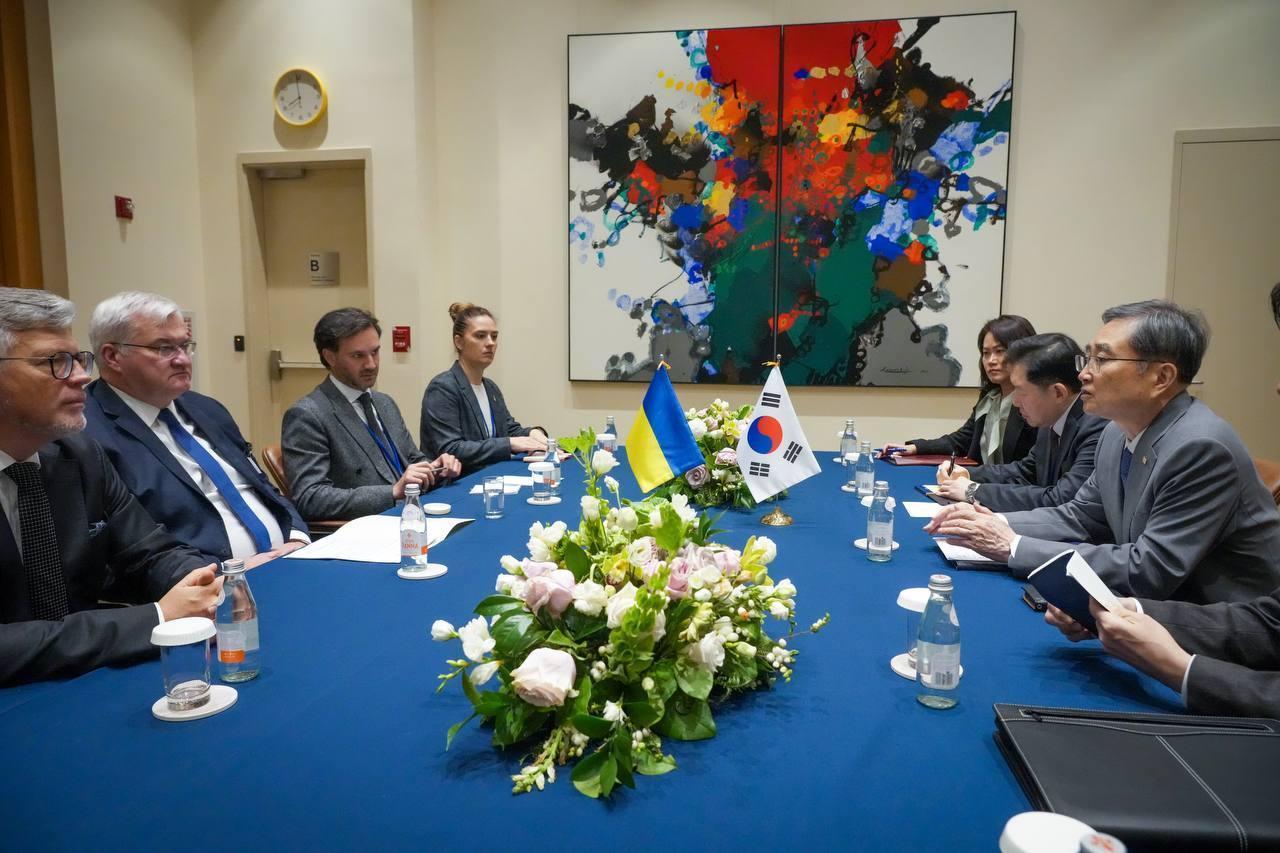
The South Korean government has decided to withdraw part of its embassy staff from Ukraine.
According to the Yonhap news agency, Foreign Ministry spokesman Park Doo-sun cited the Kyiv administration’s failure to take “positive steps” in the dispute that began with the leak of information concerning the handover of North Korean prisoners of war as the justification for the move.
The spokesman also listed the ongoing threat of air strikes, which complicates the safety of diplomats, among the reasons.
Following the withdrawal of part of the personnel, essential diplomatic contacts will continue under the leadership of the charge d’affaires ad interim to Ukraine. All consular staff tasked with protecting South Korean citizens will remain in Ukraine.
Prior to this move, the Seoul administration decided on 8 October to withdraw its ambassador. The Foreign Ministry stated at the time that it was ready to continue consultations with Kyiv to resolve the emerging issues constructively.
Tensions between the two countries began with a speech delivered by Ukrainian President Volodymyr Zelenskyy at the United Nations General Assembly in September.
Zelenskyy announced that two captured soldiers from the North Korean army had been handed over to South Korea.
South Korean President Lee Jae-myung, meanwhile, accused Kyiv of breaching a confidentiality agreement.
Lee said the disclosure of this information endangered the prisoners’ families and stability on the Korean Peninsula.
Seoul expects a public apology
Dmytro Lytvyn, an adviser to the Ukrainian president, denied the existence of a confidentiality agreement.
The South Korean Foreign Ministry summoned Ukrainian Charge d’Affaires Andriy Veshkin on 28 September and issued a note of protest against Lytvyn’s remarks.
President Lee Jae-myung warned in a statement on 2 October that they would take additional measures against Kyiv if Ukrainian authorities did not acknowledge the agreement and make a public apology. Lee stated that Ukraine itself had initially requested that the transfer of the prisoners be kept confidential.
Ukrainian Foreign Ministry spokesman Heorhii Tykhyi said the dispute stemmed from differing interpretations of the confidentiality regime.
Tykhyi noted that Seoul, based on its constitution which recognises the entire Korean Peninsula as its own territory, requested that the prisoners be handed over “like its own citizens”.
Describing the handover as a “gesture of goodwill”, Tykhyi stated that they were conducting closed-door negotiations to resolve differences of opinion.
Ambassador Park Ki-chang returned to Seoul on 10 October. According to a report by The Korea Times newspaper citing the ministry, recalling the ambassador served as a diplomatic protest against the leak of information regarding the prisoners.
The newspaper wrote that South Korea had last taken a similar step in 2008 by withdrawing its ambassador to Japan.
Moscow warned foreign diplomats
On 3 October, the Russian Foreign Ministry reiterated its warning to foreign nationals, including diplomatic mission staff, against remaining in Ukraine.
The ministry recalled its advice to leave Kyiv, citing ongoing strikes against military targets.
The ministry noted that those who failed to heed the warnings would bear responsibility for the potential consequences.
Kremlin spokesman Dmitry Peskov said in a statement on 24 September that they had no information regarding Kyiv handing over two North Korean prisoners of war to Seoul.
Peskov, noting that prisoner matters fall under the authority of the Defence Ministry and intelligence services, said, “Contacts through the special services are continuing.”
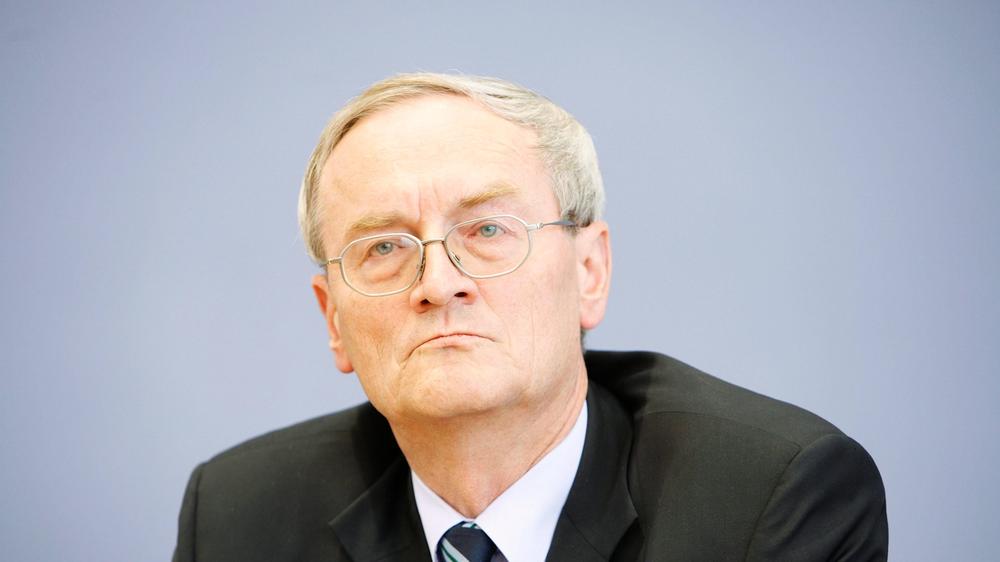
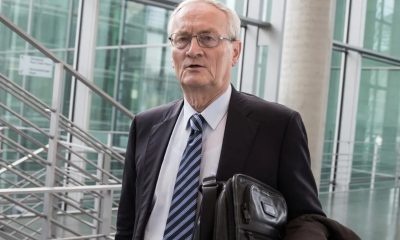
August Hanning, who led Germany’s Federal Intelligence Service (BND) between 1998 and 2005, was arrested on 6 October on allegations that he obtained roughly 2,000 classified agency documents and used them during contacts with intelligence officers from a foreign state.
Accused of high treason and espionage on behalf of a foreign intelligence agency, the former spy chief is alleged to have procured the documents from former BND employee Manfred D.
Prosecutors stated that the leaked records included internal briefing notes presented to senior German officials, though the Berlin government has not yet publicly disclosed which country received the classified data.
According to an exclusive report by Jake Green for The Cradle, seized email exchanges revealed extensive ties between the arrested Hanning and former Mossad director Danny Yatom.
The correspondence shows that the two former intelligence directors built an ongoing network of contacts following their public service, combining commercial ventures, efforts to secure political influence, and intelligence links.
This dynamic has triggered debate that using personal connections and official access for private gain has left Germany’s intelligence apparatus vulnerable.
Intelligence notes for 10,000 euros and campaign proposals
According to the reviewed emails, Hanning told Yatom in a 2018 message that he could prepare an “overall assessment based on information obtained from senior German officials and intelligence agencies” concerning an unidentified candidate.
The former BND head committed to completing the report by 13 July in exchange for 10,000 euros.
Contacts between the two men subsequently expanded to cover domestic political processes in Germany. Ahead of the September 2021 federal election, Yatom asked Hanning to approach leading candidates.
Describing CIY Global as a “political campaign company”, the former Mossad chief noted that he aimed to introduce its capabilities to German politicians, and he mentioned his intention in the same exchange to transfer documents concerning a cybersecurity firm.
Cybersecurity partnership and surveillance operations across Europe
The partnership between Yatom and Hanning reached beyond political lobbying initiatives into the cybersecurity sector.
Hanning reportedly served as a consultant for World Health Energy Holdings, a cybersecurity company linked to Yatom.
Firms of this type, established or managed by former intelligence personnel, provide commercial platforms on the international market for Israeli-origin surveillance, cyber intelligence, and political influence capabilities.
The operational presence of private Israeli-based surveillance technologies across Europe has recently entered judicial records through scandals in Poland, Spain, and Greece.
Polish prosecutors announced on 12 October that data collected under the previous government via Pegasus spyware against political opponents had been transferred out of the country, adding that manufacturer NSO Group maintained access to the technical infrastructure.
In Spain, the 2022 CatalanGate investigation established that at least 65 people, including politicians, lawyers, and civil society representatives, were targeted using Pegasus or Candiru software, with Citizen Lab researchers publishing strong evidence linking the operation to Spanish authorities.
In Greece, the surveillance operation targeting journalist Thanasis Koukakis and Member of the European Parliament Nikos Androulakis was determined to have used Predator software, linked to Intellexa, a company founded by former Israeli intelligence officer Tal Dilian.
In the German espionage investigation, the traffic between Hanning and Yatom involving paid reporting, contacts with electoral candidates, and commercial partnerships does not yet provide conclusive legal evidence regarding the final destination of the roughly 2,000 classified documents.
Nevertheless, the disclosed correspondence gives German investigators a concrete line of inquiry to assess whether classified state secrets reached commercial networks tied to Israeli intelligence.

US President Donald Trump has dismissed Kimberly Guilfoyle, the US ambassador in Athens, following serious press reports concerning her conduct.
White House Press Secretary Katie Zacharia told reporters during her first briefing that Guilfoyle had been asked to resign.
“She was doing a good job, but we didn’t like what we read in the press,” Trump said. “She was not a member of my family. I think she dated my son a long time ago.”
In a social media post, Guilfoyle stated: “These claims are unfounded, and I will resolutely defend my name, reputation, and integrity.” She added that she was particularly proud of the embassy’s work.
According to Kathimerini, her removal came as no surprise in Washington. Days of successive disclosures and vigorous exploitation of the matter by Democrats had been inflicting political damage on the White House ahead of the sensitive midterm elections.
The US State Department was instructed not to comment, with crisis management transferred entirely to the White House.
Reports indicate that most of the president’s team swiftly favoured Guilfoyle’s dismissal, while Secretary of State Marco Rubio was reportedly uneasy with the demonstratively warm public welcome she had staged for him.
Democrats on the House Foreign Affairs Committee have called for an investigation.
“Her resignation does not absolve her of responsibility,” the lawmakers wrote, adding: “While American families struggled to make ends meet, she used her position as a Trump administration official to enrich herself.”
Chargé d’Affaires Josh Huck will assume ambassadorial duties until a successor is chosen.
Meanwhile, Guilfoyle’s departure is expected to cause delays in agreements between Greece and the US.
These include the so-called “Rubio package”, comprising approximately $4 billion in arms deals finalised only days before the secretary of state’s arrival.
Several procedural steps still remain before the contracts can be signed.
In Athens, opposition parties are demanding answers. Dimitris Mantzos of PASOK called for a detailed briefing on the agreements reached during Rubio’s visit.

German officials urge fighter jet alliance with Sweden and Spain

US wealthy demolish multimillion-dollar mansions for land

US and Israel weigh Iran strikes after midterm vote, reports say

Pentagon plans covert spy ring for economic war on China, report says

EU reopens debate on naming envoy for Ukraine talks with Putin
-
 America2 weeks ago
How will Brazil’s presidential runoff work?
-

 Europe2 weeks ago
Berlin Left Party backs Israel’s right to exist for coalition pact
-
 Diplomacy2 weeks ago
The West is preparing for war not with Russia, but with its own people, French analyst Georges Kuzmanovic insists
-
 Russia2 weeks ago
71 EU lawmakers demand closure of Russian Houses in 15 member states
-
 Europe2 weeks ago
MI6 investigates potential leaks after former BND chief is detained
-

 Russia2 weeks ago
US and Russian figures discuss American stake in Nord Stream lines
-

 Russia2 weeks ago
Drone strike shuts down Yandex data centre in Russia’s Ryazan region
-

 America1 week ago
Trump weighs presidential memorandum to cut surging US diesel prices
