
Europe
‘Pogrom’ or ‘Zionist provocation’: What happened in Amsterdam?

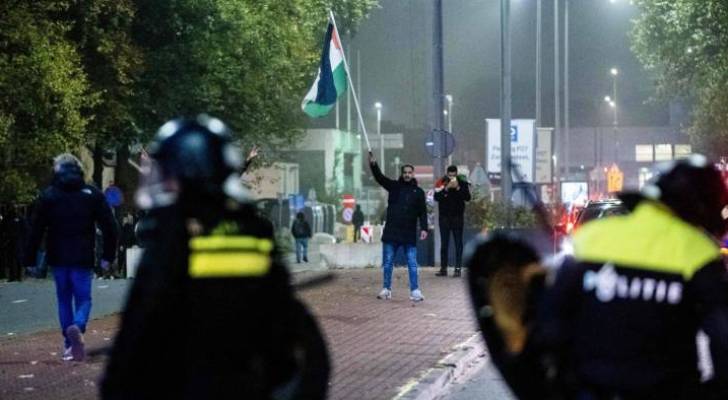
The events that took place last Thursday after the Ajax-Maccabi Tel Aviv match in Amsterdam are being presented by the mainstream European and Israeli media as an ‘attempted pogrom’ against Jews.
Scores of people were injured and dozens arrested in the clashes between Maccabi fans and the Arab and Muslim communities living in Amsterdam.
Some media and politicians claimed that a ‘Jew hunt’ had begun in Amsterdam, and countries outside the Netherlands, notably Germany, condemned the ‘anti-Semitic violence’.
The mayor of Amsterdam, Femke Halsema, described the attacks as ‘anti-Semitic hit-and-run teams’ and imposed a temporary three-day ban on demonstrations from Friday to Sunday.
It was also claimed that the Israeli government was planning to send a military plane to evacuate its citizens in the region.
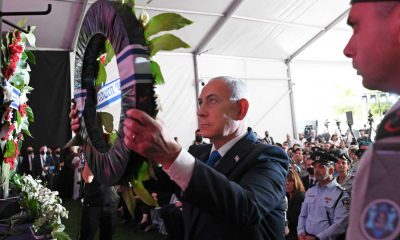
Israeli Prime Minister Benjamin Netanyahu announced in a video statement that he had ordered the country’s spy agency, Mossad, to prepare a plan to prevent violence at international events. “I have instructed the head of the Mossad [David Barnea] and other officials to prepare our approach, our warning system and our organization for a new situation,” Netanyahu said.
Ambassador Deborah E. Lipstadt, the U.S. special envoy on anti-Semitism, tweeted on Thursday night that the attacks were ‘reminiscent of a classic pogrom’, a post that received more than 655,000 views in 12 hours.
The battle within the coalition has begun: Wilders wants expulsion
Geert Wilders, leader of the Freedom Party (PVV), the largest player in the government coalition, was quick to blame the incidents on ‘anti-Semitism’ and ‘irregular immigration’.
While Wilders and the PVV called for the deportation of all migrants involved in the riots, the coalition partner People’s Party for Freedom and Democracy (VVD) and its leader Dilan Yesilgöz rejected this.
“In response to the PVV’s call to ‘expel all rioters in the country”, Yesilgöz said that ‘realistic plans should be made’ because most of these people could not be expelled because they were born in the Netherlands.
Wilders, on the other hand, referred to previous governments and said that the VVD had allowed the country to be ‘flooded with rebels’. According to the PVV leader, ‘anti-Semitism’ has increased as a result.
Speaking to Harici, Manchester Metropolitan University behavioral analyst and YouTuber Thomas Karat, who lives 15 minutes from Amsterdam, said it was ‘reasonable’ to expect Wilders to use the programme to intensify his own anti-immigrant and anti-Islam agenda.
Wilders has built much of his political career on a hardline stance against Muslim immigration and a rhetoric of defending ‘Western values’ against what he portrays as threats from Islamic communities,” Karat said, pointing out that by describing what happened in Amsterdam as a ‘pogrom’ or ‘Jew hunt’, Wilders and like-minded politicians could use this narrative to foment fear and division by positioning Muslim communities as ‘aggressors against a vulnerable Jewish minority’.
Karat argued that by framing the incident in such harsh terms, Wilders was aligning himself with a broader ideological narrative that portrays Muslim migrants not only as incompatible with Dutch values, but also as ‘inherently violent’, and suggested that the ground could be prepared for ‘a kind of reverse witch-hunt against Muslim migrants’.
Maccabi hooligans terrorize Amsterdam streets
However, both Dutch Jewish organizations and local journalists point out that the situation is not as portrayed in the European media.
A report in the Forward, a New York-based Yiddish-English Jewish publication, quotes some Dutch Jews as saying that the incidents were instigated by Maccabi hooligans.
Witnesses said groups of Maccabi Tel Aviv supporters spent Tuesday night (5 November) and Wednesday night (6 November) in the city center chanting racist anti-Arab slogans, climbing buildings to remove the Palestinian flag from windows and assaulting a Moroccan taxi driver.
Jelle Zijlstra, a Jewish ‘community organizer’ in Amsterdam, made a post on Instagram that went viral, saying that ‘multiple realities can exist at the same time’.
In her post, Zijlstra drew attention both to the attacks on Israelis and to footage of Maccabi fans shouting ‘F*** Palestine’ and ‘There are no more children in Gaza’ the night before.
In an interview, Zijlstra said: “There was definitely anti-Semitism in some of the incidents. Were Jews attacked in the street? Yes, but these Jews were also violent hooligans.”
New York Times: Everyone agrees the Maccabees instigated the incidents
A New York Times report on the events in Amsterdam stressed that there was no doubt about how the events began.
“Most community leaders in Amsterdam agree on the basic facts,” the NYT wrote, adding, “They largely agree that some Israeli supporters stoked the anger of the city’s Muslim population by shouting inflammatory and racist slogans, including that there were ‘no more children’ in Gaza, defacing the Palestinian flag and vandalizing a taxi.”
According to the report, there was also a consensus that Israeli fans were also subjected to hit-and-run attacks in various locations, often on bicycles and on foot, and that ‘some attackers appeared to have chosen their victims because they were Jewish’.
According to the BBC, some Maccabi Tel Aviv fans have previously been involved in racist incidents in Israel, swearing at the team’s Palestinian and Arab players and reportedly calling for their expulsion.
The team’s fans have previously attacked protesters demonstrating against Prime Minister Netanyahu.
Behavioral analyst Thomas Karat told Harici that terms such as ‘pogrom’ and ‘Jew-hunt’ used by Dutch politicians are very ‘loaded’ words, but news reports and eyewitness accounts cast doubt on these claims.
“News reports and eyewitness accounts show that some Maccabi fans were actively involved in provocations such as aggressive chanting and vandalism of Palestinian symbols, which led to clashes with local groups,” Karat said, adding that this information “undermines the Israeli fans’ narrative of pure victimization” and raises the possibility that Maccabi fans were not only subjected to aggression, but were actually participants and possibly instigators of the clashes.
Karat recalled that some Jewish organizations had also acknowledged this dynamic, suggesting that the actions of Israeli fans had played a role in inflaming tensions.
Dutch intelligence said there was ‘no threat to Israeli fans’
On the other hand, Sheher Khan, a Muslim member of Amsterdam’s city council who was also quoted in the NYT article, said she had asked the mayor beforehand to play the match without spectators.
“If you invite a club from Israel, it will inevitably lead to demonstrations and clashes,” said Khan, who fears violence at the match and is angry that the Dutch government continues to support Israel’s campaign of genocide in Gaza.
According to Khan, the mayor refused the request, and Mayor Femse Halsema’s office confirmed this.
Halsema, a member of the Dutch Green Party, told a press conference after the attacks that she had been told several times by the Dutch national coordinator for security, and counterterrorism that there was no concrete threat to Israeli fans.
Attacks by Israeli hooligans
Tori Eghermann, an American Jew who moved to Amsterdam 20 years ago, said she saw Maccabi fans singing and lighting smoke bombs as she walked through Dam Square in the city center on Thursday night. They were really incredibly well organized and excited,’ she said.
Eghermann noted that violent clashes between locals and racist football hooligans are not uncommon in Amsterdam, pointing out that football fan groups ‘are not known for their peaceful presence in society’.
Israeli fans later clashed with pro-Palestinian demonstrators, singing ‘F… you Palestine’ and shouting ‘Let the IDF [Israel Defence Forces] beat the shit out of the Arabs’.
According to Ori Goldberg, an Israeli academic who studies sports culture, ‘Maccabi Tel Aviv is the mainstream of the mainstream’. But Goldberg said: “(…) the behavior of the supporters is now very Israeli: the world already hates us because the world hates Jews, so we will take our struggle and our cause wherever we go.”
No attacks on local Jews
Asjer Waterman, who also works as a strategic advisor for a local non-profit organization called Jewish Social Work, spent Friday helping Israeli fans as volunteers moved them to a safe place provided by a Jewish sports club in Amsterdam.
Waterman noted that the violence did not appear to target Dutch Jews or Jewish institutions, but only Israeli visitors.
Still, Waterman said, many in the community were ‘still shaken’.
Amsterdam police publish attacks by hooligans
In addition, the Amsterdam police released a statement giving an account of the incidents and revealing what the Israeli hooligans did.
The police spokesman confirmed that the hooligans climbed a building with a Palestinian flag and vandalized a taxi in Rokin, one of the central areas of Amsterdam.
A Palestinian flag was burned in Dam Square, police said, adding that this happened before the riots started.
Jazie Veldhuyzen, a member of Amsterdam’s city council, told Al Jazeera that Israeli supporters also attacked houses with Palestinian flags.
U.S. envoy: I don’t care if Israelis say ‘let’s kill Arabs’
What is interesting is what was said after it gradually became clear that Israeli hooligans were threatening the streets of Amsterdam and Arab-Muslim communities.
For example, Lipstadt, the U.S. special envoy on anti-Semitism, was quoted as saying that the Maccabi hooligans were ‘bullying’ and saying ‘let’s kill the Arabs’, but told the Forward: “I don’t care what they say, it doesn’t give you the right to kick somebody who’s down and make people say ‘I’m not Jewish’ in order to get away safely.”
Mossad to accompany Maccabi Tel Aviv
On the other hand, the Jerusalem Post (JP) reported on 5 November that Mossad agents would accompany the Maccabi Tel Aviv team on its trip to Amsterdam.
JP quoted the Dutch newspaper De Telegraaf as saying that in addition to Maccabi’s regular security personnel, Mossad agents would join the team in Amsterdam to provide maximum protection.
JP also reported that last Saturday a pro-Palestinian protester had been attacked by Ajax fans, known to be pro-Israel, before their last match.
Karat: There are indications of Mossad involvement
Karat made the same point to Harici, stressing that the behavior of the Maccabi fans in Amsterdam was quite different from typical hooliganism.
According to the behavioral analyst, in contrast to the chaotic and disorganized nature usually associated with football hooliganism, these fans acted in a cohesive, almost military style, remaining closely grouped ‘as if guided by a common strategy’.
“This disciplined unity raises questions, especially in light of Israeli media reports confirming the presence of Mossad agents and IDF soldiers among the fans,” Karat said.
Karat argued that the inclusion of intelligence officers with experience in covert operations and espionage, rather than police protection in the event of tensions, indicated a ‘more calculated purpose’ beyond mere spectator safety.
According to Karat, the presence of trained agents indicates the potential to ‘manipulate or provoke events under a civilian guise’ and suggests a ‘deeper agenda beneath the superficial show of fan support’.




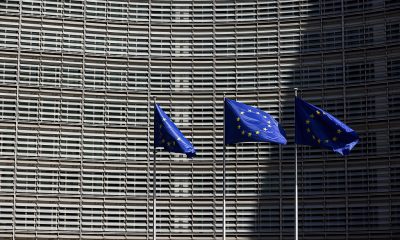




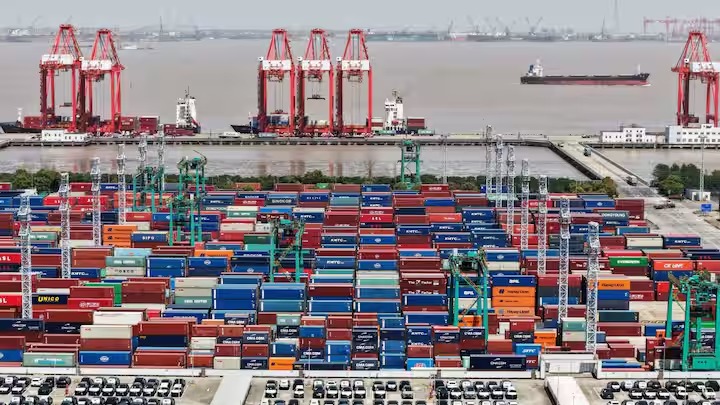
A coalition of 44 European industrial associations has urged the EU to take tougher action against what they describe as “unfair Chinese trade practices”.
The associations, representing sectors such as metals, chemicals, and automotive components, stated that these practices threaten European manufacturing and could trigger further job losses.
The groups demanded that EU member states deploy existing trade defence instruments more effectively and introduce new mechanisms to redress market distortions.
The appeal comes as the EU grapples with a goods trade deficit with China exceeding €1 billion per day. In this context, EU Trade Commissioner Maroš Šefčovič travelled to Beijing to hold talks with his Chinese counterpart.
European leaders are scheduled to debate the bloc’s response at a summit in Brussels next Thursday.
The outcome of the discussions in Beijing appears poised to shape that debate substantially.
In their appeal, the industrial groups urged the European Commission to examine entire value chains when reviewing trade complaints and to recruit additional staff to resolve cases more swiftly.
They also called for new tools to counter state-driven market distortions, whilst warning against measures that could adversely affect close European partners such as the UK, Norway, and Switzerland.
EU Trade Commissioner in Beijing
The purpose of Maroš Šefčovič’s two-day visit to Beijing is to secure concessions from China to help reduce the trade imbalance.
Discussions with Chinese Commerce Minister Wang Wentao focused on vehicle exports that are growing increasingly prevalent across the European market, particularly plug-in hybrid cars.
According to a Politico report published on Thursday, one in eight cars purchased in the EU in August was of Chinese origin, a trend driven primarily by a surge in plug-in hybrid sales.
The EU introduced additional countervailing tariffs on Chinese-origin battery electric vehicles in 2024, but plug-in hybrids were excluded from the scope of those measures.
European negotiators aim to restrict China’s exports in this sector in some manner.
According to Politico’s reporting, if meaningful commitments fail to emerge from the negotiations, the European Commission is considering the imposition of unilateral trade restrictions on cars, including import quotas and tariffs, to protect European carmakers.
The EU is also preparing protective measures for other industrial sectors. European Industrial Commissioner Stéphane Séjourné said the Commission plans to introduce targeted safeguards for plastics and composite materials, depending on demand from EU governments.
Germany urges UK to raise tariffs
According to a source close to Berlin’s stance who spoke to Politico, Germany wants the UK to raise tariffs on Chinese-origin electric vehicles in exchange for an exemption from “Made in Europe” rules.
The source stated that the government of Friedrich Merz believes this move would reflect reciprocity in trade and serve as an answer to accusations from other EU member states that Britain is attempting to “cherry-pick” the benefits of EU membership.
The development follows Prime Minister Andy Burnham’s meeting with the German Chancellor during his first official visit to Germany this week.
Burnham and Merz were set to discuss the prospects of Britain’s future relationship with the EU, as the British prime minister has returned the issue of rejoining the bloc to the UK political agenda for the first time in a decade.
Berlin’s position on electric vehicle tariffs is significant because Germany, unlike countries such as France that have adopted tougher stances, had generally pursued an accommodating policy towards the UK on trade issues since Brexit.
In response to the trade practices of rivals such as China and the US, the EU is preparing new “Made in Europe” rules designed to favour European manufacturers over producers outside the bloc.
The UK fears these measures could harm British business, particularly car manufacturers, and is seeking assurances from Brussels that it will be exempted from the application of these rules.
If Berlin has its way, these assurances could be contingent upon adopting EU trade policy regarding Chinese-origin electric vehicles.
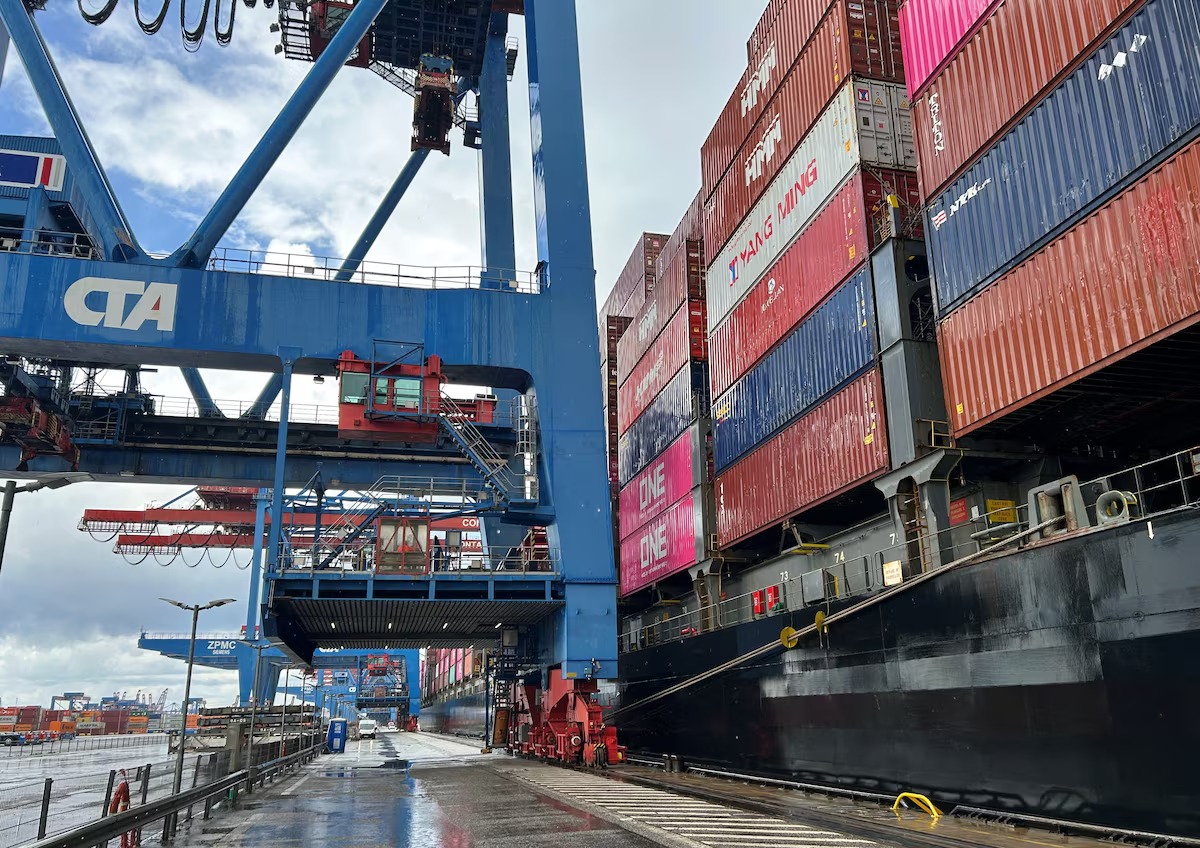
Central and Eastern Europe is becoming increasingly vital for the German export sector amid declining shipments to China and the US.
While German exports to the world’s two largest economies have dropped significantly in recent times, rising exports to Central and Eastern Europe have more than offset these losses.
Trade with the Visegrad Group countries in particular is expanding with considerable strength, according to German Foreign Policy.
In the first half of 2026, German exports to Poland grew by 9.2%, while exports to the Czech Republic rose by 14%.
During the same period, exports to China fell by 12.4%, and exports to the US contracted by 6.5%.
Germany currently exports nearly 50% more goods to Poland than it does to China.
The German Eastern Business Committee describes the region as a “key region for German exports” and is demanding the expansion of the EU single market through the admission of eastern and south-eastern countries into the EU.
At the same time, China’s economic influence in Eastern Europe is also expanding. However, Chinese companies are not merely competing with German firms; they are also becoming increasingly integrated into European production chains.
The EU and its neighbourhood carry great weight for German industry
An intensifying international competitive environment is elevating the importance of the EU single market for the German export sector.
In 2024, just under 54% of all German goods exports went to EU member states. In 2019, this share stood at approximately 51%.
The five largest export markets within the EU in 2024 were France, with goods valued at 111 billion euros; the Netherlands, with 105 billion euros; Poland, with 90 billion euros; Italy, with 78 billion euros; and Austria, with 72 billion euros.
Approximately 52% of Germany’s exports to the EU consisted of intermediate goods, such as metals, basic chemicals, or electrical components, which undergo further processing in other EU countries, often at the foreign facilities of German companies.
Capital goods, such as machinery and equipment, accounted for 17% of exports, while consumer goods comprised approximately one-third.
The growing concentration on Europe carries certain risks. Because the German economy had diversified its trade heavily towards Asia, it was less affected by the eurozone crisis than other EU member states.
The decline in this geographical diversification heightens the vulnerability of the German export model to crises.
The export boom in Eastern Europe
Central and Eastern European countries in particular managed to compensate for the declines in exports to China and the US.
One reason for these declines is that the People’s Republic of China has begun producing domestically many high-tech products previously imported from Germany; another is that exports to the US were adversely affected by Trump’s tariffs.
Cathrina Claas-Müller, chairwoman of the German Eastern Business Committee (OA), told the Handelsblatt newspaper: “Central and Eastern Europe has become a key region for German exports.”
While the volume of German exports to China and the US fell overall by just over 10 billion euros, Central and Eastern Europe more than made up for these drops with an increase of approximately eleven billion euros.
Claas-Müller emphasised that “Central and South-Eastern Europe […] cannot, of course, replace China and the US.” However, she stated that recognizing the region’s importance for Germany’s economic development is vital.
For this reason, the chairwoman argued that the European single market must be expanded rapidly towards the east and south-east so that the region’s potential can be utilized in the best possible way, even beyond existing EU borders.
The OA chairwoman stressed that progress in EU accession negotiations conducted with Ukraine, Moldova, and the Western Balkan countries must be “courageously seized.”
Germany’s industrial core: the Visegrad countries
Within Central and Eastern Europe, the Visegrad countries (Poland, Hungary, the Czech Republic, and Slovakia) occupy a prominent position.
These countries have become some of the most critical manufacturing hubs worldwide for German industry.
From Germany’s perspective, these countries offer several investment advantages: geographical proximity to Western Europe, a well-developed industrial infrastructure, an extensive pool of skilled labour, and relatively low wage levels.
German companies maintain a strong presence in this region across core sectors such as mechanical engineering and the automotive industry, alongside the chemical and electrical sectors.
In the first half of 2026, German exports to China fell by 12.4% compared with the same period of the previous year, while exports to the US declined by 6.5%.
In contrast, German exports to Hungary rose by 6.7%, exports to Poland grew by 9.2%, and exports to the Czech Republic increased by up to 14%.
From January to June, Germany exported goods worth 53.8 billion euros to Poland. Exports to China, by comparison, reached only 36.3 billion euros.
This means Germany exported nearly 50% more goods to Poland than to China.
Poland has ranked as the fourth most important market for German companies since 2024; China currently sits in only ninth place.
Even the Czech Republic, a much smaller country, came close to China with 30.3 billion euros in German exports.
Poland between Germany and China
At the same time, Poland is also increasing its imports from China.
In the first half of the year, the country imported German goods worth 43.1 billion euros (18.6% of total imports) and Chinese goods worth 36.7 billion euros (15.9% of total imports).
The US ranked third, with imports valued at 12.7 billion euros (5.5% of total imports).
In July, for the first time, more goods were shipped to Poland from China than from Germany.
A tripartite trade pattern is becoming increasingly pronounced in Poland: China is gaining importance as a supplier of electronics, automobiles, and other consumer goods, while Germany retains its central position in terms of investments and European production chains.
In parallel, Germany remains the undisputed leader when it comes to Polish exports: Poland exported goods worth 59.7 billion euros to Germany. This figure constitutes 26.3% of Poland’s total goods exports.
Czechia and France follow, each accounting for approximately 14 billion euros.
Competition and division of labour between Germany and China
Chinese companies in Central and Eastern Europe are not solely competing with German firms.
This dynamic is clearly visible in the German automotive industry’s network in Hungary. In 2022, Contemporary Amperex Technology (CATL), the Chinese firm that is the world’s largest battery manufacturer, announced that it would establish a new factory in Debrecen in eastern Hungary.
CATL also supplies batteries to companies including BMW, Mercedes, Volkswagen, and Stellantis, which manufacture in Hungary as well.
In 2023, other Chinese companies, such as Huayou Cobalt and Sunwoda Electronics, also invested in Hungary.
In 2024, Eve Energy joined this trend by establishing a factory to supply BMW.
The integration of Chinese car manufacturers and suppliers into European automotive production has now become a widespread strategy to address the automotive crisis.
In Spain, France, and Italy, Stellantis plans to utilise idle production capacity by building models for Chinese companies Leapmotor and Dongfeng. Leapmotor models will be produced at Stellantis plants in Madrid and Zaragoza.
Plans in France call for the joint production of an electric car with Dongfeng, while in Italy, joint production of a compact electric car with Leapmotor is planned.
Production of an Opel SUV using Chinese technology is also planned in Madrid.
Volkswagen’s new strategy likewise aims to produce VW models previously sold only in China for the European market.
The plan to bring its Chinese models to the European market involves both imports from China and, at a later stage, the manufacturing of the vehicles or their components in Europe.
General decline in German exports
German exports contracted unexpectedly in August due to a sharp drop in shipments to the US.
This development revealed that momentum in the eurozone’s largest economy waned following a robust first half of the year.
According to data released on Thursday by the Federal Statistical Office, exports fell by 0.8% compared with the previous month.
The outcome fell short of the 0.6% increase forecast in a Reuters poll.
Carsten Brzeski, global head of macroeconomics at ING, said: “Trade is the area where Germany’s resilience is faltering.”
Brzeski noted that while German exporters benefited in the second quarter from Asian rivals being more heavily affected by the closure of the Strait of Hormuz, the third quarter has so far experienced a setback.
Volker Treier, head of foreign trade at the Association of German Chambers of Commerce and Industry (DIHK), said: “The current decline shows that the recovery in exports is merely a light breeze.”
Imports rose by 0.9% on a calendar- and seasonally adjusted basis compared with July.
Consequently, Germany’s trade surplus narrowed from 21.6 billion euros in July to 19.5 billion euros in August.
Despite rising prices caused by the Iran crisis and uncertainty triggered by US tariffs, the German economy demonstrated resilience in the first half of the year.
Germany grew by 0.4% in the first quarter and by 0.3% in the second quarter.
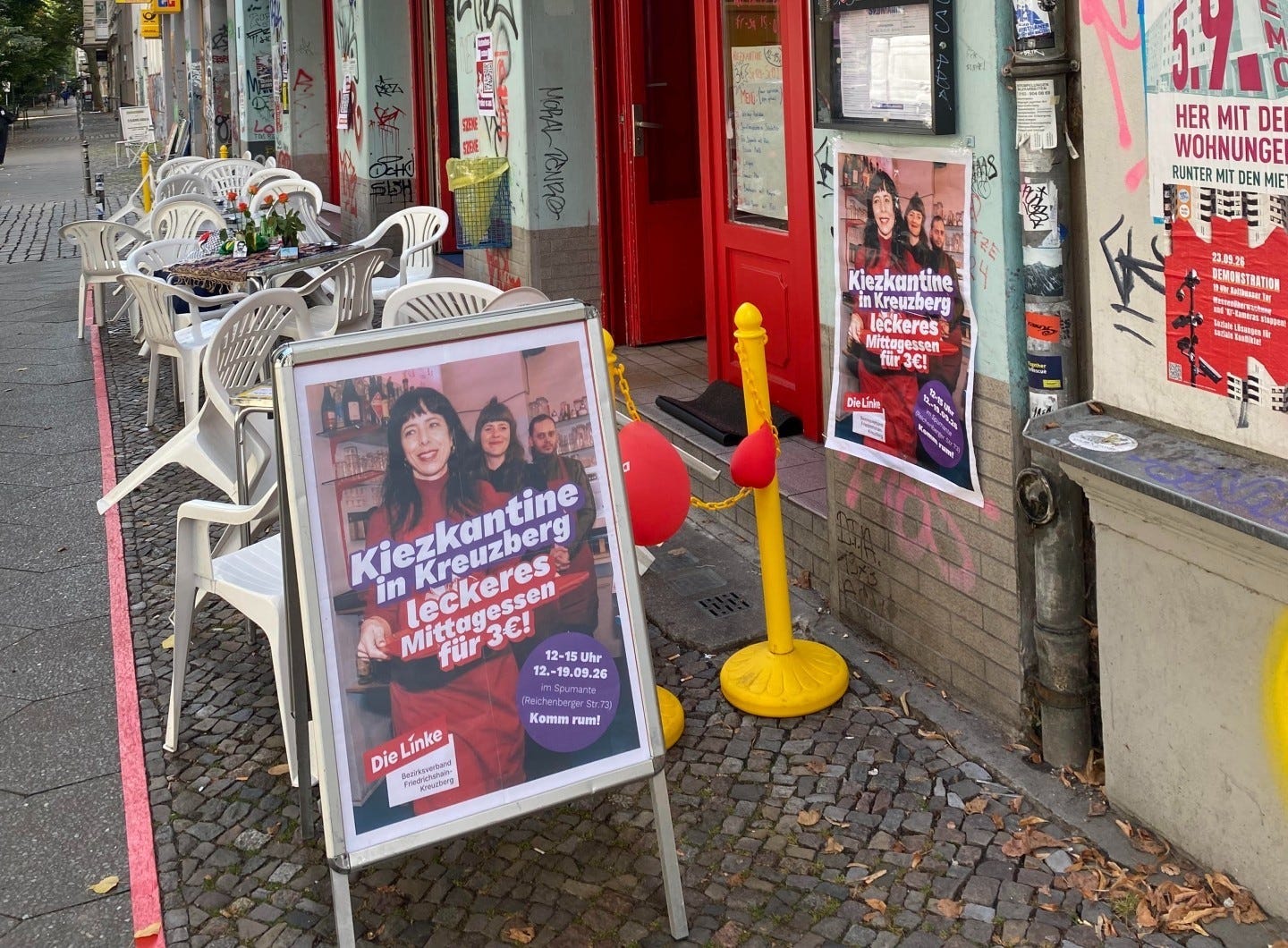
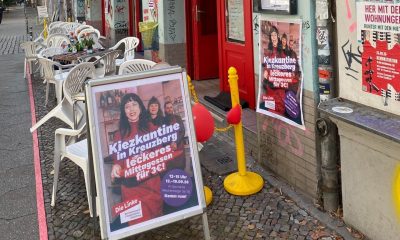
Following its victory in the Berlin state election, the Left Party (Die Linke) agreed to a series of binding decisions regarding antisemitism and Israel during coalition negotiations with the Social Democratic Party (SPD) and the Greens.
Accused of antisemitism across mainstream political and media circles over the stances of certain members, the party announced that it explicitly rejects the BDS movement and recognises “Israel’s right to exist”.
A joint declaration issued by the three parties stressed Berlin’s “historical responsibility to protect Jewish life, safeguard the open freedom of religious expression, allocate resources for security measures at Jewish institutions (personnel and infrastructure improvements), and support Jewish and Israeli students, academics, and cultural projects.”
The statement further indicated that the parties would “commit to preserving historical memory, supporting memorial sites, and vastly expanding efforts to prevent antisemitism in schools, teacher training, and youth work.”
While “Israel’s right to exist” was reaffirmed, the suffering and devastation endured by the Palestinian civilian population in Gaza and the West Bank were also “explicitly acknowledged.”
In their joint statement, the parties affirmed that “legitimate criticism of the Israeli government does not justify antisemitism, and vice versa.”
The Left Party explicitly rejected the BDS (Boycott, Divestment, Sanctions) movement, ruling out any cooperation with or public participation alongside organisations and actors that spread antisemitism, glorify violence, or fuel conflict.
Clear internal party and parliamentary group mechanisms will be established to address infractions by members who breach these principles, ranging from disciplinary sanctions to expulsion from the parliamentary group.
Furthermore, the three parties proposed an amendment to the Berlin State Constitution, modelled on the example of Brandenburg, to enshrine explicit constitutional protections against antisemitism, antiziganism, racism, and other forms of group-focused enmity.
The first casualty of Berlin’s prospective red-red-green coalition could be Left Party lawmaker Vanessa Emde. The 45-year-old Emde was elected in the Nord-Neukolln constituency after securing 46.2% of the first-preference votes.
According to Tagesspiegel, Emde remains a contentious figure even within the Left Party due to her pro-Palestinian views, and some party members have considered expelling her from the parliamentary group to avoid jeopardising the coalition with the SPD and the Greens.
During the election campaign, Emde drew scrutiny for anti-Israel statements and opposed the Left Party’s entry into government.
On election night, she was photographed with Ibrahim Ibrahim, an individual alleged to have ties to the PFLP.
Emde is also a member of the internal party working group “Palestine Solidarity” and, according to reports, stated in May 2026: “States do not have a right to exist; it is human beings who have a right to exist.”
In this context, Emde has expressed support for a “one-state solution” across Israel and Palestine.
As noted in reports, Emde’s remark was perceived within the Left Party as an argument in favour of a “Greater Palestine”, running counter to the party’s official recognition of “Israel’s right to exist”.
Emde’s statements could therefore be deemed a breach of this commitment, particularly as all Left Party candidates signed a pledge during the election campaign binding them to the party and electoral platform.

European industry urges EU action against China trade practices

Israel opposition seeks Netanyahu probe over 7 October call logs

German exports pivot to Eastern Europe amid drops in US and China

Thiel targets Pope and Obama over AI in new ‘Antichrist’ lectures

Energy firms enlist ex-US officials to tap Venezuelan oil
-
 Diplomacy2 weeks ago
East-West Forum in Istanbul highlights irreversible shift to multipolarity
-

 Europe2 weeks ago
European unions urge governments to scrap all Palantir deals
-

 Europe2 weeks ago
Emmanuel Todd says West faces collapse amid Ukraine and Iran crises
-
 Europe2 weeks ago
Rome protests AfD poster depicting South Tyrol as independent state
-
 Europe1 week ago
German interior ministers drop unanimity rule to counter AfD veto
-
 Europe2 weeks ago
German industry stockpiles critical minerals before EU-China talks
-
 Europe1 week ago
Key European allies excluded from US-led NATO meeting in Poland
-
 Europe2 weeks ago
Hamburg drill tests Baltic deployment prior to formal defense alert
