
Opinion
Recent Turmoil in China’s Neighboring Countries: Causes and Trends

In handling international relations and diplomatic affairs, China has always adhered to an important strategic principle: “major countries as the key, neighboring countries as the priority, developing countries as the foundation, and multilateral forums as the stage.” Neighboring regions are an important foundation for China’s development and prosperity, a key area for safeguarding national security, a top priority in shaping overall diplomatic strategy, and a critical factor in promoting the building of a community with a shared future for mankind. Therefore, stability and security in the neighboring regions are of vital importance to China, and managing relations with neighboring countries stands as a major focus of China’s diplomacy. On this basis, the recent turmoil in neighboring countries such as Nepal, Myanmar, Thailand, and Indonesia deserves careful study and attention.
Causes of Recent Political Turmoil in Neighboring Countries of China
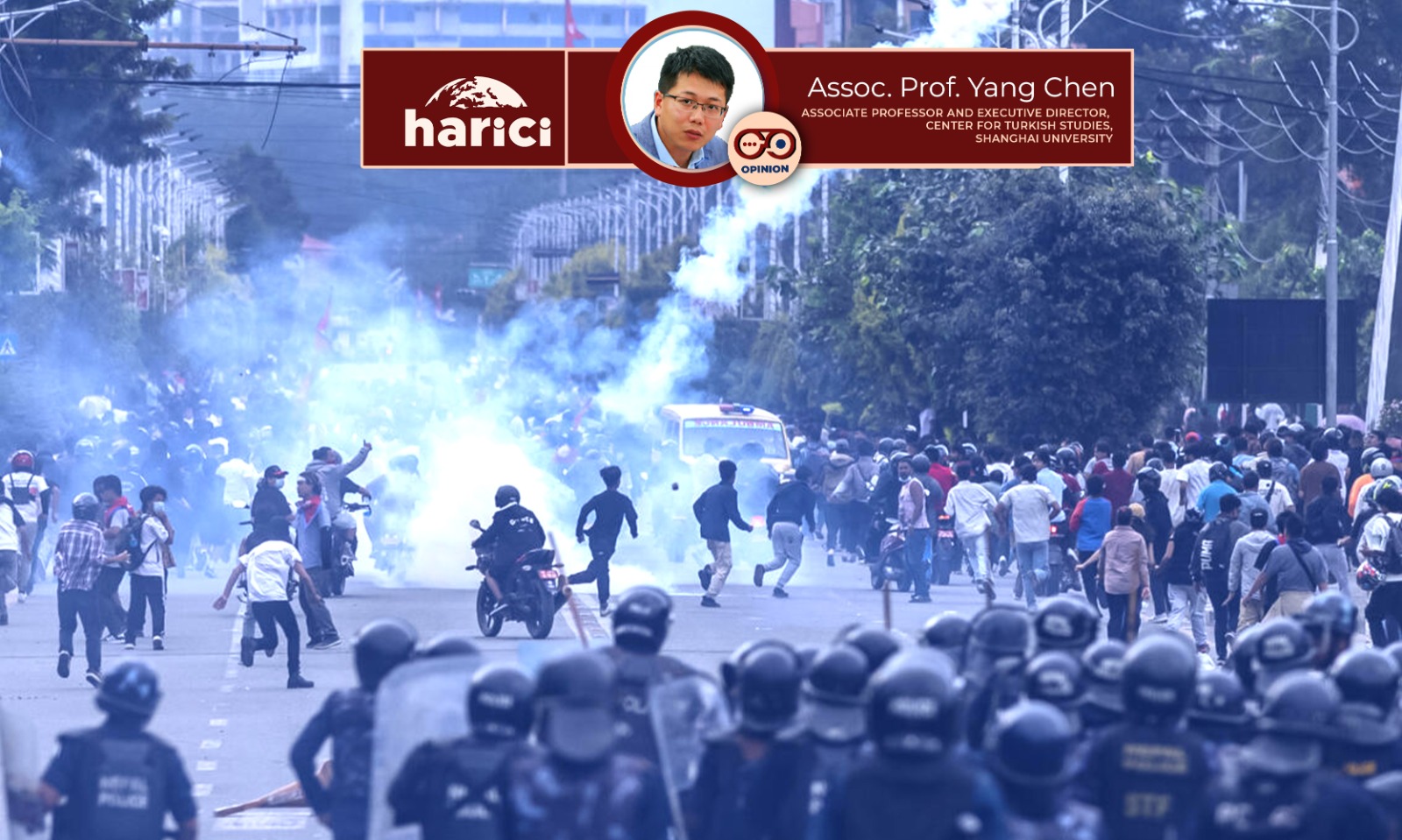
Nepal. The decree issued by the Oli government to shut down over 20 unregistered social media platforms directly triggered strong dissatisfaction among Gen Z youth, serving as the fuse that ignited this round of large-scale social unrest in Nepal. The direct causes are as follows:
1) Young people believe that the Nepalese government is stifling their freedom of speech.
2) Young people are extremely dissatisfied with the corruption in Nepal and the phenomenon of “second-generation rich” showing off their wealth online.
3) The unemployment rate among young people is high, and the Internet is their main means of obtaining economic income.
4) The Internet is the main communication channel between Nepalese citizens and overseas citizens.
However, these are only the superficial manifestations of the contradictions. The deeper crux lies in the corruption of government officials, the widening gap between the rich and the poor in society, and the struggles between political parties. In this incident, the Nepalese people did not target a single political party or its leader; instead, they directed their anger at all political parties, the entire government, and the entire elite or ruling class. This dissatisfaction stems from their discontent with national development and government governance. Essentially, the interweaving of economic stagnation, disordered governance, and the neglect of people’s livelihood has trapped Nepal in a vicious cycle of “protest-suppression-more intense protest”.
Indonesia. The fuse of this round of unrest in Indonesia was the bill passed by the Great Indonesia Movement Party-to which President Prabowo belongs-in the parliament in August this year. The bill proposed a 50 million Indonesian rupiah (approximately 3,000 US dollars) housing allowance increase for members of parliament. For context, the monthly salary of an ordinary Indonesian wage earner is only 5 million Indonesian rupiah. Coupled with the nationwide “Free Nutritious Meal Program” launched in February (which involves the military engaging in business activities) and the subsequent passage of the Amendment to the Indonesian National Armed Forces Law by the parliament (which relates to the military’s intervention in politics), this series of events triggered widespread public concern and anger over the government’s fiscal direction. The protest groups, which were previously dominated by students, expanded to include a broad participation of workers, the unemployed, and the middle class. While the protests were targeted at specific “policies”, their core criticism was directed at Prabowo himself and the military forces he represents behind the scenes. This is because the new policies introduced by Prabowo fail to fundamentally address Indonesia’s underemployment dilemma or increase Indonesians’ incomes. Instead, they may trigger new fiscal instability and inject uncertainties into Indonesia’s political, economic, and social sectors. Essentially, Indonesia’s protests and the subsequent unrest are the result of long-standing structural issues combined with the accumulation of a series of short-term incidents.
Thailand. The recent turmoil in Thailand originated from the border conflict between Thailand and Cambodia, specifically regarding the ownership of the Preah Vihear Temple and its surrounding areas, which subsequently escalated into a military conflict between the two countries. In June, Paetongtarn Shinawatra called Hun Sen, the de facto leader of Cambodia, to discuss the escalating border tensions. However, Hun Sen publicly released the audio recording of their conversation. This “phone gate incident” ultimately led to Prime Minister Paetongtarn Shinawatra’s resignation in disgrace. The territorial dispute between Thailand and Cambodia is a long-standing issue left over from history, but it eventually evolved into a domestic political problem in Thailand. Although the conflict between the two countries subsided in the end under the witness of China and the United States and with the mediation of ASEAN, the fundamental issue remains unresolved. From the perspective of Thailand’s overall political landscape, the influence of the Shinawatra Family has been weakened. Nevertheless, against the backdrop of the military conservatives dominating the political situation, Thailand’s “orange-red-blue confrontation” pattern is unlikely to undergo a fundamental change in the short term. Here, orange generally represents the People’s Party, a radical left-wing political party; red stands for the Pheu Thai Party, which has close ties to Thaksin Shinawatra and advocates reform; and blue symbolizes the right-wing camp that upholds traditional values and holds conservative stances. No matter who becomes the prime minister, they may face impeachment over seemingly minor disputes, or even be forced out of office through constitutional means. This indicates that the phenomenon of frequent prime ministerial changes in Thailand will continue for a period of time in the future.
Myanmar. Myanmar has been trapped in prolonged chaos and instability since the February 2021 military coup, which triggered full-scale clashes between the military junta and ethnic armed organizations (EAOs).Currently, Myanmar is grappling with four major predicaments. First, it faces economic hardship due to Western sanctions. Second, conflicts have intensified between the military junta and EAOs, as well as between the junta and the “National Unity Government” (NUG) represented by Aung San Suu Kyi, pushing the country toward civil war. Third, the military junta exhibits poor governance capabilities. Fourth, the junta is mired in a legitimacy crisis and remains unrecognized by the international community. As a result, Myanmar has fallen into a situation of “one country, two governments” and “one country, three armies”. The three military forces are the Myanmar Armed Forces controlled by the junta, the Myanmar National Defense Force (MNDF), and the People’s Defense Force (PDF)-both of which are under the command of the NUG. This chaos is further compounded by multiple factors. These include the power struggles among neighboring major powers, the activities of non-governmental organizations (NGOs) engaged in color revolutions, and the tangled interests of gray industries and criminal groups. Together, they have plunged Myanmar into extreme disorder. In the past, conflicts between the Bamar ethnic group and other ethnic minorities were the primary source of tension. Today, however, political oppression and economic distress have shattered the confidence of some Bamar people in the military junta. Coupled with pervasive incitement, Myanmar now resembles a volcano, ready to erupt at any moment.
It is evident that the political turmoil in these countries exhibits the following characteristics. First, prior to the outbreak of unrest, these countries had already been mired in prolonged political instability. Cabinets were frequently reshuffled, and governments constantly faced legitimacy crises. Second, while symbolic incidents triggered the unrest, the protests were no longer confined to local issues or specific policies—instead, they spread to questions about the system and institutional flaws. However, the structural problems inherent in these countries’ institutions cannot be resolved by a single incident. Third, young people and social organizations played an increasingly prominent role in these protests. Fourth, symbolic incidents drove the outbreak of demonstrations and their escalation into violent protests. As seen in the aforementioned countries, all witnessed a shift from peaceful assemblies to actions such as storming public institutions, clashing with police, arson, and looting. This evolution has resulted in severe casualties and economic losses.
Political Outlook for Neighboring Countries in the Coming Months
In the next six months, the aforementioned neighboring countries will either enter a transitional government period, kick off election cycles, or undergo cabinet reshuffles—making further political turbulence highly likely. For example,
- According to Xinhua News Agency, Sushila Karki, former Chief Justice of Nepal’s Supreme Court, was sworn in as Prime Minister of Nepal’s interim government at the Presidential Palace on the evening of September 12. She will lead a six-month transitional government to pave the way for the national election scheduled for March 5, 2026. Karki’s appointment is the result of negotiations between Gen Z protesters, Nepal’s President, and the military. Many Nepali young people have placed unusually high hopes on her, expecting her to end corruption and drive reform. For Karki, addressing key issues of concern to young people—such as social equity, political reform, and economic development—within just six months will undoubtedly be an immense and challenging task.
- On September 5, Anutin Charnvirakul, leader of Thailand’s Bhumjaithai Party, secured a majority vote in a special session of the House of Representatives and was elected Thailand’s new Prime Minister. As noted in relevant commentary, Anutin took office without the support of the Pheu Thai Party, and his term is expected to be short-lived—leaving his minority government highly vulnerable. Anutin has also explicitly stated that the new government will serve for four months, after which a general election will be held.
- Myanmar has long been trapped in civil war. Since the 2021 coup in particular, Myanmar’s military junta has extended the state of emergency multiple times, drawing dissatisfaction from both the public and the international community. However, Myanmar’s leader Min Aung Hlaing has announced that the country will hold an election on December 28, 2025.
- On September 8, Indonesian President Prabowo announced the first large-scale cabinet reshuffle since he took office in October last year. Among the changes, the removal of Finance Minister Sri Mulyani became a focal point of public attention—an adjustment widely seen as a response to the large-scale public unrest in August.
The aforementioned neighboring countries represent a model of “fluctuating political development”. In other words, they have consistently encountered various challenges during the process of achieving national independence and advancing their political agenda, leading to twists and turns in their political progress.For instance,
- Since gaining independence after World War II, Myanmar has been plagued by political instability, driven by power struggles between the country’s military and local ethnic groups. Entering the 21st century, in addition to the conflict between the military junta and ethnic armed organizations (EAOs), the rivalry between the military bloc and the so-called “pro-democratic forces” backed by the United States has largely shaped the trajectory of Myanmar’s political development.
- Since the restoration of parliamentary democracy in 1990, Nepal has seen 29 prime ministers and two periods of direct royal rule over the past 34 years. On average, each government has lasted only 13 months, with the shortest-lived administration in office for a mere 60 days. To date, no government has completed a full five-year term.
- The alternation between military coups and dynastic politics has been the defining thread of Thailand’s political development over the past 70 years. In the last two decades, forces aligned with Thaksin Shinawatra have won the prime ministerial election six times, nearly monopolizing the position of popularly elected prime minister. In a sense, Thailand has effectively formed a “dual-core structure” dominated by the King and Thaksin: the prime minister’s office is held by members of the Thaksin family or their protégés, while the monarchy remains with the Chakri dynasty. The recent political upheaval in Thailand is a major setback for the Thaksin family, but it does not signal their decline—they could still stage a comeback at any time.
The fundamental cause of the aforementioned political turmoil in neighboring countries lies in inadequate and unbalanced economic development, coupled with a widening wealth gap. These issues remain unsolvable in the short term, so it is foreseeable that public protests in these countries will continue to emerge from time to time. For example,
- According to the World Bank, Nepal only transitioned from a low-income country to a lower-middle-income country in 2019. Its GDP growth rate stood at a mere 2% in 2023, while the unemployment rate and inflation rate reached as high as 10.7% and 7.1% respectively. Neither traditional political parties nor emerging ones have put forward effective measures or delivered tangible results to boost economic development. Meanwhile, frequent scandals involving these parties have further complicated Nepal’s political landscape.
- During Paetongtarn Shinawatra’s tenure, her administration was mired in the “phone call scandal” and domestic political infighting. Measures to revive Thailand’s economy, boost its tourism sector, and her handling of Thailand-U.S. tariff negotiations were all subject to severe criticism. Her lack of experience and inadequate competence became a focal point of domestic public discourse in Thailand, leading to a steady decline in both the administration’s governing legitimacy and public approval ratings.
- Over the past decade, Indonesia has maintained a relatively high economic growth rate and achieved remarkable results in sectors such as the digital economy and mineral downstreaming. Today, it stands as the largest economy in ASEAN and the only member of G20 from the region. With a per capita GDP approaching 5,000 U.S. dollars, Indonesia has been classified as an upper-middle-income country by the World Bank. Even so, pressing issues remain prominent within the country, including corruption, inadequate safeguards for people’s livelihoods, and insufficient national capacity building—all of which have fueled public dissatisfaction.
The political turmoil in the aforementioned neighboring countries will further invite infiltration, interference, and pressure from the United States and Western nations. Prior to the unrest, the governments of Thailand, Myanmar, Nepal, and Indonesia had mostly adopted China-friendly policies. They actively aligned with the Belt and Road Initiative, engaged in infrastructure development, and saw steady growth in trade volumes with China. Against the backdrop of China-U.S. competition and the 9/3 Military Parade—where Indonesian President Prabowo, Nepali Prime Minister Oli, and Myanmar’s Acting President Min Aung Hlaing were all invited to attend—the U.S. and Western countries, having failed to contain China through nations like the Philippines, turned to targeting China’s neighboring states. Their aim is to destabilize these China-friendly governments, create instability on China’s periphery, and divert China’s attention.
While the unrest in these neighboring countries stems from internal factors, the protests were clearly influenced by external forces during their development. This led to peaceful demonstrations gradually spiraling out of control and turning violent, showing certain characteristics of “color revolutions”. From a historical perspective, regions affected by “color revolutions” in the modern world have generally spread along the trajectory of “Eastern Europe → West Asia → Central Asia → East Asia/Southeast Asia”. Key countries on this path are either China’s strategic pivots or traditional China-friendly nations.
Adverse Impacts of Neighboring Countries’ Situation on China
The most direct impact of political turmoil in neighboring countries is that it hinders the smooth advancement of the Belt and Road Initiative (BRI) in South Asia and Southeast Asia. Currently, the core concept guiding China’s engagement in Southeast Asia can ultimately be condensed into one word: development. To achieve development, infrastructure serves as a crucial pillar—a principle encapsulated by the saying, “When roads are connected, prosperity follows.” Political instability in neighboring countries may lead to sudden policy shifts, contract breaches, and project suspensions. These outcomes directly threaten the asset security and profit expectations of Chinese enterprises, and impede the progress of the BRI in this region.
Political instability in neighboring countries will undermine China’s strategic goal of building a regional economic hub. ASEAN has surpassed the EU to become China’s largest trading partner, and Southeast Asia also serves as a key region for China to advance both the Belt and Road Initiative (BRI) and the Regional Comprehensive Economic Partnership (RCEP). Political turmoil will weaken the executive capacity of governments in affected countries, slowing progress on cooperative projects such as the implementation of free trade agreements and cross-border infrastructure connectivity. This, in turn, will hinder the economic development of these countries and the region as a whole, as well as the advancement of regional economic integration.
Against the backdrop of China-U.S. strategic competition, the stability and development of neighboring countries are of great significance to China in competing with the United States. Currently, a “Three-World” structure has emerged around China: China and the U.S. each stand as one pole, with numerous “middle countries” in between. Even countries like Vietnam, Singapore, and South Korea—while once leveraging the U.S.’ so-called “Asia-Pacific Rebalance Strategy” and “Indo-Pacific Strategy” to pursue their own interests—have maintained a fundamental stance of seeking “balance” between China and the U.S., rather than making an “either-or” choice. As China’s economic strength and political influence further grow, the existence of these “middle countries” and their development trends will become more prominent. Winning over more middle countries will thus become a key part of China-U.S. competition. In a word, China needs a stable, peaceful, and developing neighboring environment, and the stability, peace, and development of countries such as Nepal, Myanmar, Thailand, and Indonesia are conducive to China.
Yang Chen, Executive Director and Associate Professor, Center for Turkish Studies, Institute of Global Studies, Shanghai University












By its very nature, foreign policy feeds into and draws nourishment from numerous, disparate, and varied fields. It is a domain with manifold and diverse inputs. For foreign policy is examined alongside a broad array of subjects, ranging from geography to history, economics to intelligence, and military might to public diplomacy, commonly termed soft power elements.
The capacity of the state, that is, the scale of the state, or in other words the aggregate of its elements of power (namely political, economic, military, and soft power components), is decisive in foreign policy. Geography is decisive in foreign policy. Commercial relations are decisive in foreign policy. Energy dependence on another country or countries, if present, is decisive in foreign policy. Foreign policy cannot be conducted in spite of these four factors.
There is more. A country’s capacity, its scale, does not increase overnight, from one day to the next. It requires planning. It requires national consensus. It requires time. It requires preparation. Nor are these enough. The regional and global environment, the conjuncture, and the international plane must also allow for it. The stance of allies and adversaries is, of course, also important.
For the international environment is, by its nature, complex. It is an environment rife with contradiction, turmoil, conflict, and tension. To draw an analogy, the person in the driver’s seat of foreign policy is not a motorist speeding along the road as they please. There are things they must not forget, rules they must obey, red lights, vehicles speeding up from behind, a truck moving ahead, and a heavy vehicle hurtling toward them from the opposite direction.
Success in foreign policy does not arrive simply because a politician we like has become foreign minister. For a foreign minister is only as effective as the power, capacity, and weight of their country. One must accept this plain truth.
Moreover, there are simple, straightforward questions that reveal whether foreign policy, which some find deeply complex and inscrutable, is successful or not.
There are undoubtedly ways to measure the effectiveness, prestige, influence, and success of foreign policy.
For instance, the number of countries that respect a passport, how many countries can be visited visa-free, and how many countries impose visa requirements and grant those visas only with great difficulty are important indicators of a country’s standing.
Let us take ourselves as an example. Which countries require a visa for the Turkish passport? Which ones do not? Is it easy for our citizens to obtain visas for the countries they primarily wish to visit?
Let us give another example from the Turkic world.
On the Cyprus issue, which we regard as a national cause across government and opposition, right and left, Kemalist and Milli Görüş adherents alike, how many countries have we succeeded in having recognize the TRNC? Why do the Turkic states (Azerbaijan, Kazakhstan, Kyrgyzstan, Turkmenistan, Uzbekistan) not recognize the TRNC? Far from recognizing the TRNC, how do the Turkic states in Central Asia (Turkistan) explain to Ankara their developing relations with the Greek Cypriot Administration of Southern Cyprus, which Türkiye does not recognize, their appointment of ambassadors, and their recognition of Southern Cyprus as the island’s sole legitimate government?
We must also ask this question, of course: What is the state of Türkiye’s bilateral trade with the Turkic states?
Let us give an example of the relationship between foreign policy and big capital.
In which countries are big capital circles, among the greatest supporters of the ruling bloc, winning major tenders?
In our country, across both ruling and opposition ranks, there is a political party order that supports Türkiye’s EU membership. Yet how much progress has been made on EU membership?
Why is US President Trump not keeping the promises he made to Türkiye at the NATO summit held in Ankara a few months ago?
How many contracts has the new regime in Syria, the al-Sharaa administration, awarded to Turkish companies for the reconstruction of its country?
Has the government in Libya that Türkiye supports paid the money owed to Turkish construction firms, outstanding for years?
How does Qatar, with whom our relations are very good, explain its developing ties, energy agreements, and joint military drills with Greece and the Greek Cypriot Administration, disregarding our sensitivities?
Who is the addressee of the harsh statements used in recent weeks by Azerbaijan, which we view as “two states, one nation”? To what extent does Azerbaijan share Türkiye’s policy on Israel? What does Türkiye think about the scale, depth, and intimacy of Azerbaijan-Israel relations?
These questions can certainly be multiplied.
Yet without taking into account the scale of the state and observing the criteria for measuring foreign policy, no sound assessment can be made.

In the Middle East, war is no longer waged merely to seize territory. The true contest turns on who will control the energy pipelines, trade routes, ports, and railways of tomorrow. Missiles may strike cities today, but the maps of the future are being drawn through transport and energy corridors.
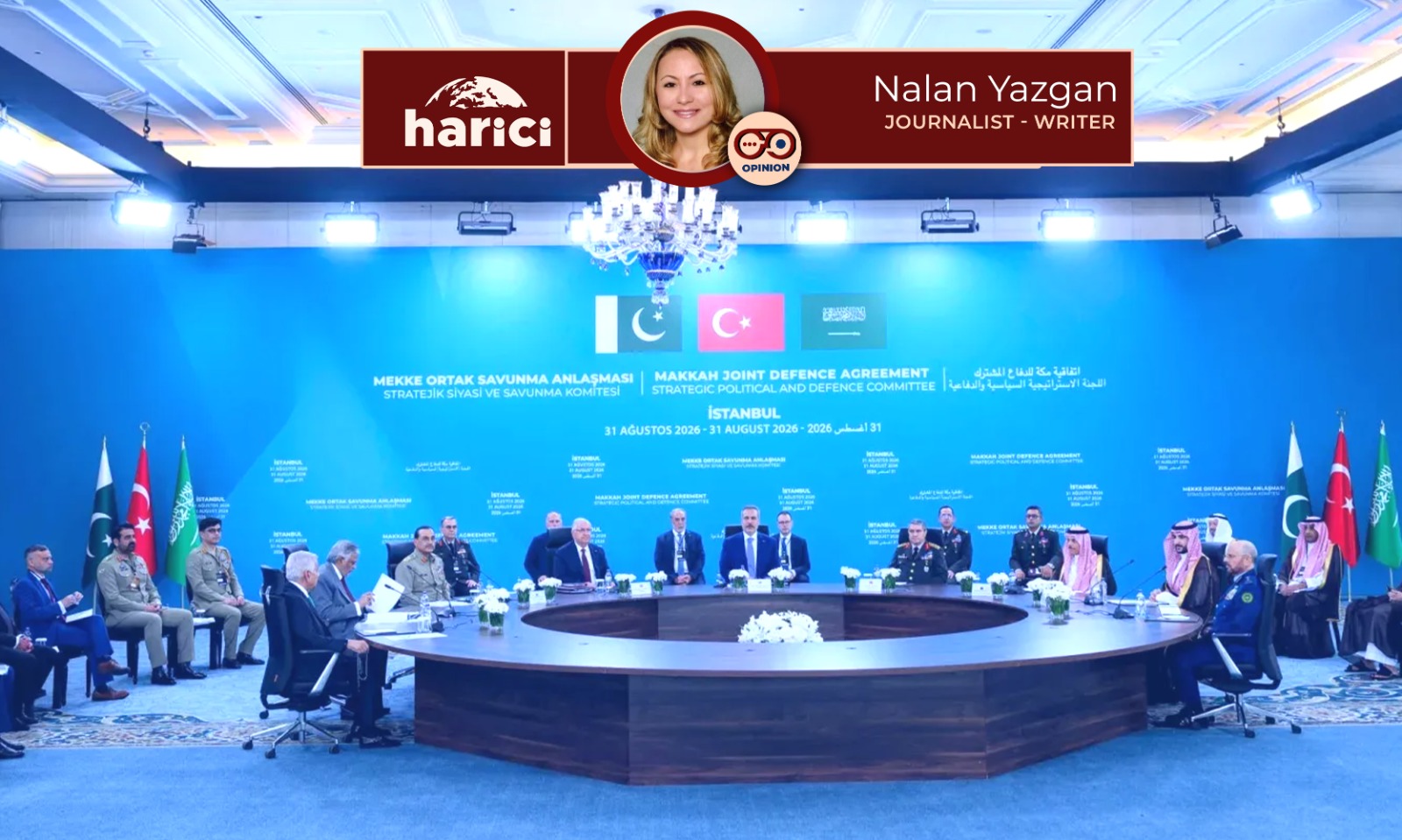
In this context, interpreting Türkiye’s presence in the Mecca Alliance solely as military support for Saudi Arabian security remains incomplete; it fails to explain why two states that viewed each other with mutual suspicion until recently would take steps toward a cooperation close enough to constitute a shared destiny.
Alongside Saudi Arabia’s existential motives, Ankara’s participation in this alliance is anchored in a profound geopolitical foundation: to position itself within, and if possible at the very centre of, the Middle East’s reconfigured energy and transport corridors.
Today, it cannot be said that Riyadh and Ankara see eye to eye on every regional issue. The threat perceptions and priorities of the two countries do not, quite naturally, entirely coincide. On the geopolitical chessboard, partnerships do not always arise from identical agendas. When reasons are sufficiently compelling, particularly existential ones, they can override political differences and enable common ground along the same strategic path.
A new war of corridors unfolds in the Middle East
On one side lies IMEC (India-Middle East-Europe Economic Corridor), planned to extend from India through the United Arab Emirates, Saudi Arabia, Jordan, and Israel to Europe. On the other stands the Development Road, which aims to link the Persian Gulf across Iraq to Türkiye, and onward to Europe.
These two undertakings are, of course, far more than mere transport projects. They represent two divergent geopolitical answers to where the future flow of trade and energy between Asia and Europe will traverse; for Türkiye, this issue is of vital importance.
If a corridor system taking shape to Türkiye’s south, beyond Ankara’s orbit, becomes permanent, Türkiye could forfeit not only an economic opportunity but also a substantial portion of its strategic centrality in the Middle East. It is through this prism that the Mecca Alliance must be evaluated.
Türkiye’s seat at the same table with Saudi Arabia signifies more than military solidarity. Riyadh and Ankara must sit together to avoid exclusion from the region’s emergent security and economic architecture, for the security of a corridor and the corridor itself are no longer separate matters.
The Strait of Hormuz, the Red Sea, the Bab al-Mandab, and the Suez Canal are links in the very same chain. A security crisis in one directly impacts the others. While the vulnerability of Hormuz makes alternative export routes for Gulf oil indispensable, instability across the Red Sea heightens the strategic cost of Suez.
Saudi Arabia’s alternative pipelines connecting its eastern oil fields to Red Sea terminals are therefore not merely energy infrastructure; they are strategic bypasses mitigating dependence on Hormuz.
For Türkiye, the Development Road fulfills the same function across a broader geography. Stretching from the Persian Gulf through Iraq to Türkiye, and from Türkiye into Europe, this artery possesses the potential to forge a new overland backbone connecting the Gulf to the Mediterranean and Europe. As security concerns in the Red Sea mount and the vulnerability of Suez deepens, the value of this route rises accordingly.
The Hejaz Railway: Revived once again
The return of the Hejaz Railway to the regional agenda signifies far more than mere nostalgia. Once linking Istanbul to Damascus, Amman, and the Hejaz, the railway served as one of the primary transport and logistical arteries of the Ottoman geography.
Reviving the idea of the Hejaz Railway could become the emblem of Türkiye’s drive to reimagine its historical transport connections between the Gulf, the Hejaz, and the Levant through modern rail, energy, and logistics networks.
The objective here is not to restore the past, but to transpose the strategic logic of that historical geographical linkage into the twenty-first century. For this reason, Türkiye’s role in the Mecca Alliance and the resurgence of the Hejaz Railway project must be viewed as components of the same overarching picture.
Corridors do not consist solely of energy pipelines. Railways, ports, highways, electrical interconnectors, logistical hubs, and security architectures are all facets of the same geopolitical grid, and safeguarding these networks requires political alliances.
Herein lies the strategic significance of Saudi Arabia and Türkiye sitting at the same table in Mecca, even at a juncture when their views on Syria diverge.
Ankara and Riyadh do not need to agree on every subject. Yet neither wishes to see the new map of the Middle East drawn to its detriment. Türkiye’s aim is not to build an anti-bloc against any specific country alongside Saudi Arabia; rather, the goal is to avoid exclusion from the future energy and trade systems of the Middle East, while securing a decisive voice in establishing their security architecture.
Hence, for Türkiye, the Mecca Alliance is far more than a simple defence pact. Securing the Development Road, shielding Gulf energy corridors, stabilising the Red Sea, rethinking connections across the Hejaz and the Levant, and bolstering trade corridors reaching Europe all intersect within this single strategic equation.
In this equation, Türkiye’s foremost advantage remains its geography. Ankara sits at the northern terminus of the overland routes linking the Gulf to Europe; within NATO; and at the crossroads connecting the Black Sea, the Caucasus, the Eastern Mediterranean, and the Middle East.
Will Türkiye become one of the powers shaping the Middle East’s energy and trade architecture over the coming decades, or will it be reduced to a mere transit state traversed by routes designed by others? That question defines the true strategic significance of the Mecca Alliance for Ankara.
In the Middle East of tomorrow, it will be impossible to separate the corridor carrying energy, the security framework protecting that corridor, and the alliance constructing that security framework.
Whoever controls the corridor shapes commerce. Whoever guarantees the routes through which trade flows holds sway over the regional balance of power. This is the true dimension of the contest currently underway in the Middle East.
A succession of distinct and largely mutually exclusive ambitions are competing for dominance in the current climate: India’s linkage to Europe, the Gulf’s new economic horizons, Saudi Arabia’s alternative energy routes, the security crisis in the Red Sea, the strategic weight of Hormuz, and Türkiye’s aspiration to open outward to Europe via the Development Road. Ironically, perhaps, the conflict that will decide which corridor underpins global stability has already begun, and it will likely continue spreading to new fronts. Regrettably, the fires in our region appear poised to intensify long before they abate.

Dr. Ahmed Moustafa, Director & Founder, Asia Center for Studies & Translation, Egypt
In a city that has spent centuries translating the language of one civilization to another, the first East-West Forum arrived at a moment when the world itself seemed to have lost the vocabulary for talking across its divisions.
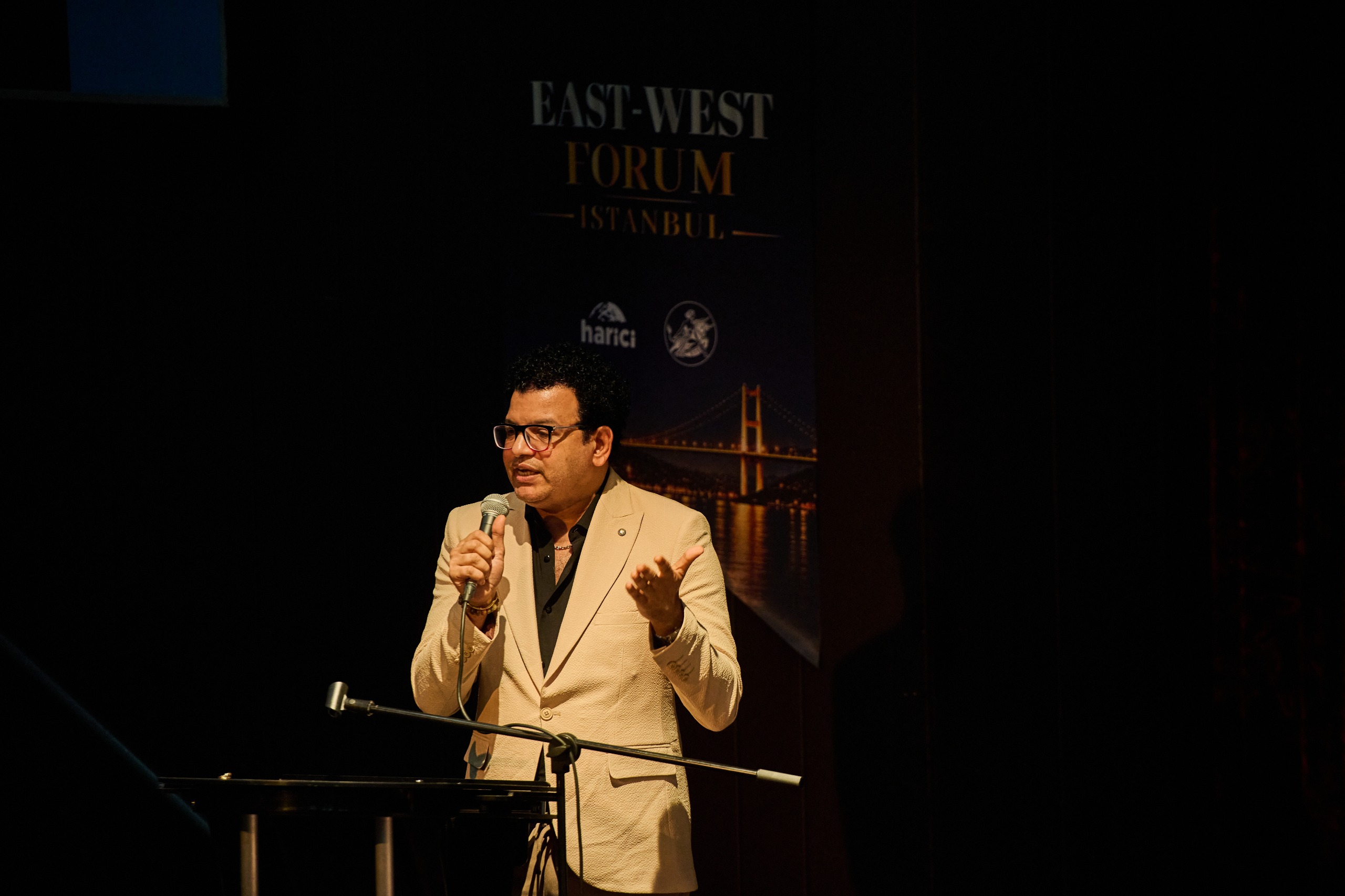
Held in Istanbul on Sept. 26–27 and preceded by meetings around the event, the forum brought together diplomats, academics, journalists, strategists and political thinkers from a wide range of countries. Hosted by Harici Media in partnership with the Berlin-based European Transcontinental Initiative, the gathering was conceived as an attempt to examine a world increasingly defined by competing power centers, regional wars, economic fragmentation, artificial intelligence and the erosion of confidence in institutions created after the Second World War. Harici reported that participants came from roughly 30 countries.
For us, the significance of Istanbul was not simply a matter of the speakers on the panel or the structure of the programme. Its deeper importance lay in the willingness to put difficult — and sometimes uncomfortable — questions on the table.
We would like to extend our sincere thanks and appreciation to my friend and brother, Mr. Tunç Akkoç, Founder and Editor-in-Chief of Harici Media, for his gracious invitation to a representative of the Asia Center for Studies & Translation, Egypt, to participate in the Forum as a speaker and commentator. His initiative in creating a platform where competing geopolitical narratives could meet directly deserves recognition.
In his opening remarks, Akkos stressed that the initiative was intended to establish a permanent platform where people representing different political and intellectual traditions and perspectives could meet and engage in direct dialogue.
This vision is particularly significant because the traditional language used in international relations has increasingly struggled to explain the realities of a rapidly changing world.
The Problem of Proxy Wars
During the session that discussed proxy wars in the region and ways to reach solutions to their crises, the Center put forward the view that the Middle East cannot simply be understood through the traditional map that divides the parties into “good” and “evil,” or into “responsible states” and “rogue states.”
Such terms, in our assessment, often reflect the perspective of powers that possess extensive influence over international media and financial and security institutions.
The Center particularly criticised what we see as political bias within important sectors of the Western media and some non-governmental organisations that receive Western funding. From our perspective, these institutions can, in some cases, move from being mere observers of geopolitical conflicts to becoming influential parties in the battle over the narrative and the story.
However, this view should remain open to debate and should not automatically be accepted as an absolute truth.
The more important question is not whether every Western journalist, every NGO, or every Western institution works to serve a single geopolitical agenda clearly, this is not the case, but whether the information environment itself has become so highly polarised that the public is now receiving radically different interpretations of the very same war.
In our assessment, the answer is increasingly approaching “yes.”
The problem becomes particularly clear when searching for the term “proxy wars” in the Middle East. Some of the first results focus on groups associated with Iran, including Hezbollah and the Houthis, as well as Hamas, whereas the history of regional conflicts is far more complex.
Al-Qaeda and ISIS emerged through different historical trajectories, with Anglo-Saxon support that was “created by Britain and the United States.” In environments dominated by the United States and Britain, Al-Qaeda emerged from the environment associated with Osama bin Laden and the Afghan jihad, while ISIS developed largely from Al-Qaeda in Iraq, under American sponsorship, to pursue a certain agenda in the region and advance the scenario of “creative chaos” promoted by Condoleezza Rice, the radical US Secretary of State.
At the same time, US policy toward Afghanistan during the Cold War contributed to shaping the broader environment from which some militant jihadist movements later emerged.
These distinctions matter.
Because propaganda often begins where complex historical details end.
Who Has the Right to Define a “Rogue State”?
The same problem appears in the vocabulary used to describe states.
Countries such as China, Russia, Iran and North Korea are frequently portrayed in Western strategic discourse as states challenging the existing international order.
Egypt, despite the different nature of its relationship with Washington, can also become the subject of criticism when its foreign policy does not conform to certain Western expectations.
The question is not whether these governments should be exempt from criticism. Of course not.
The deeper question is this: can the international system remain sustainable when one geopolitical camp increasingly assumes the authority to define which governments are legitimate, which movements are terrorist, which wars are defensive and which forms of resistance are acceptable?
That was one of the central questions behind our intervention in Istanbul.
The Middle East has repeatedly been presented through the lens of the “Iranian threat” as the principal strategic danger.
There is no question that Iran possesses significant military and regional capabilities, and that its policies are deeply contested by many neighbouring states. At the same time, reducing virtually every regional security problem to Tehran can obscure the interests and roles of other actors, including Israel, the United States, Gulf states, armed groups and local political forces.
The region has repeatedly paid a heavy price for simplistic interpretations of complex conflicts.
The Economics of Fear
The discussions in Istanbul also led us to a broader American question: to what extent can fear itself become a source of political and economic power?
Historically, the United States has experienced intense political campaigns shaped by perceived racial, ideological and security threats.
One does not need to accept every interpretation of this history to recognise that fear can become a factor with tangible economic consequences.
A 2020 study by Citi estimated that racial discrimination against Black Americans had cost the US economy approximately $16 trillion in lost economic output since 2000, based on an analysis of disparities in wages, education, housing and investment.
This figure demonstrates the extent of the economic losses associated with racial discrimination and exclusion. It also raises questions about the relationship between fear-based narratives concerning Black Americans, media influence, the political power of the gun lobby and the broader economic consequences of insecurity.
More importantly, however, the study highlights a fundamental point: bias and insecurity carry substantial and measurable economic costs.
The broader lesson has direct relevance to foreign policy.
When societies are continually presented with existential enemies, military spending and the expansion of security institutions become politically easier to justify.
America After Iran
In Istanbul, we also advanced the view that the United States after its confrontation with Iran in 2026 should not simply be understood through the traditional image of unlimited American power.
The conflict exposed economic and strategic vulnerabilities.
The Strait of Hormuz emerged as a major strategic pressure point for global energy markets, amid disruptions to international trade that forced governments and companies to search for alternative routes and supplies.
The consequences were reflected in oil prices and energy costs in Europe and elsewhere.
This does not mean that American power has disappeared. Rather, it suggests that military power is no longer synonymous with strategic control.
The rise of China, Russia, ASEAN, Iran and other centres of economic and diplomatic influence has made the international order increasingly complex and dispersed.
The East-West Forum itself reflected this reality, bringing together voices from Europe, Asia, the Middle East and North America while explicitly addressing multipolarity and the ongoing transformation of the global order.
America Is Changing From Within
The domestic dimension of American politics also deserves attention.
The emergence of figures such as Zohran Mamdani in New York and Abdul El-Sayed in Michigan reflects changes in the American political debate over inequality, foreign policy, healthcare, identity and the influence of established political and economic interests.
Their political trajectories should not be treated as evidence of a predetermined future for the United States.
They do, however, illustrate how issues that were once treated as peripheral including the costs of war, US policy toward Israel, economic inequality and the political influence of younger and more diverse generations have moved closer to the centre of American political debate.
This is another reason why East-West dialogue cannot remain confined to foreign ministries and military institutions.
A Dinner for Dialogue
One of the most memorable moments on the margins of the Forum was the private dinner held on the evening of Friday, September 25, hosted by H.E. Mr. Hasan Capan, Chairman of the Turkish-Chinese Friendship Foundation, and H.E. Ambassador Ersin Erçin, Vice Chairman of the Foundation, in honour of the speakers and participants.
We extend our sincere thanks and appreciation to both of them for their generosity, friendship and support.
The gathering was more than simply a dinner. It provided an opportunity for personal interaction, an exchange of ideas and the building of relationships among participants — precisely the kind of human diplomacy that formal conferences sometimes lack.
Real dialogue does not always begin behind conference podiums.
Very often, it begins around a single table.
Istanbul’s Larger Message
The first East-West Forum should be regarded as the beginning of a dialogue, not the end of a debate.
The organisers have already articulated a vision of transforming the initiative into an annual gathering in Istanbul, developing expert working groups, establishing an East-West Forum network and potentially creating a business council capable of connecting intellectual dialogue with economic cooperation.
This may ultimately prove to be one of its most important contributions.
The world that emerges from the current conflicts including the crisis surrounding the Strait of Hormuz will require more than ceasefire agreements.
It will require a new conversation about security, energy, sovereignty, development, technology and coexistence.
Istanbul is an exceptional setting for such a dialogue. One participant even proposed moving the headquarters of international organisations, including the United Nations, to Istanbul.
For centuries, the city has stood between two continents without belonging exclusively to either.
The East-West Forum can follow the same principle: not choosing one civilisation against another, but creating a space in which East and West can confront their differences without turning disagreement into permanent conflict.
For this reason, we see the Istanbul gathering as an announcement of intent.
It was not an attempt to erase differences.
It was an attempt to make dialogue possible despite them.
At a time when proxy conflicts increasingly risk evolving into direct confrontations, this may be among the most important political conversations the world can undertake today.

Ex-BND head Hanning tied to former Mossad chief amid spy inquiry

Iran war costs US economy $265 billion as household burden mounts

Trump dismisses US envoy to Greece Kimberly Guilfoyle

Most EU citizens reject fast-track Ukraine accession, poll finds

Ex-US official says air defences fail against Yemeni airport strike
-

 Europe2 weeks ago
German interior ministers drop unanimity rule to counter AfD veto
-
 Europe2 weeks ago
Key European allies excluded from US-led NATO meeting in Poland
-
 Diplomacy2 weeks ago
While the West breeds crises, Eurasia weaves peace and development, says Prof. Zhang Weiwei
-
 Middle East2 weeks ago
Netanyahu holds secret UAE talks with Saudi Arabia and Arab officials
-

 Diplomacy2 weeks ago
The European Union’s peace project has collapsed, MEP von der Schulenburg says
-
 Opinion2 weeks ago
A new world in the East, old dogmas in the West
-
 America2 weeks ago
Musk appointed co-director of Pentagon future warfare initiative
-
 Asia2 weeks ago
South Korea plans $120B spend on eight US nuclear power plants
