
Middle East
Report reveals intelligence failures in October 7 Hamas attack

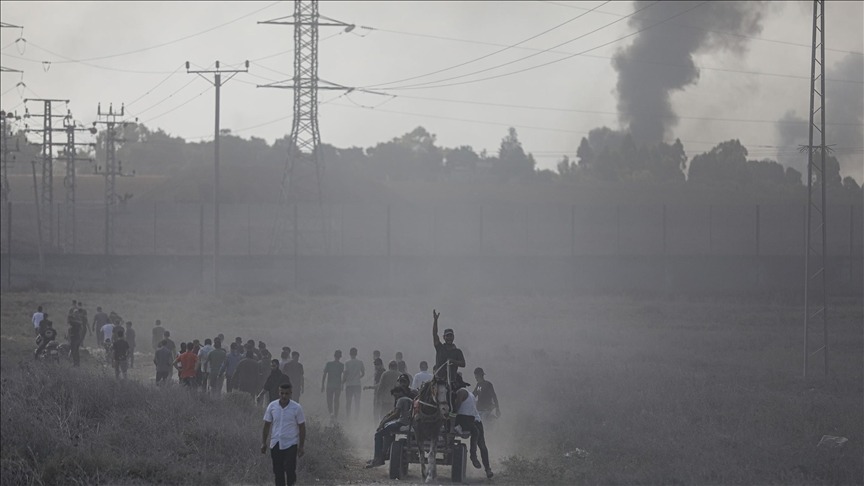
The Israeli military’s first military report on the October 7, 2023, attacks revealed that Israeli security officials misjudged the Hamas-led attack and grossly underestimated the group’s capabilities. According to the report, Hamas’ intentions were not correctly interpreted even hours before the attack.
According to The Wall Street Journal, the report stated that there were many indications that the attack was imminent, but these were not taken seriously enough by the Israeli authorities. On the evening of October 6, 2023, Hamas militants activated Israeli SIM cards and moved to designated assembly points, but the Israeli authorities did not consider these actions as unusual. The authorities believed that Hamas was either conducting a military exercise, preparing to defend against an attack from Israel, or planning small-scale cross-border raids. However, these signs were ignored as clear signals that Hamas was preparing a large-scale attack.
The report, prepared as a result of the highest-level investigation by the Israeli army, sheds light on one of the biggest security weaknesses in the country’s history. The report stated that Israeli intelligence units misjudged Hamas, ignored documents containing the group’s attack plans, and missed numerous signals. It was emphasized that these intelligence failures triggered the attacks that continued for more than a year after the attack.
Just a few hours before the attack, senior Israeli military officials held discussions about suspicious Hamas activity. However, the urgency of the attack was not recognized. Herzi Halevi, Chief of the Israeli General Staff, ordered a more extensive briefing the following day. That same night, the Israeli general on the northern front was summoned to military headquarters in Tel Aviv in anticipation of an attack by Hezbollah. The Israeli army’s focus on the northern front caused it to lose sight of the threat in Gaza. Hamas took advantage of the Jewish holiday to launch the attack at a time when the border was less guarded than usual.
According to the report, Israeli military planners, when designing a possible attack scenario from Gaza, envisaged that Hamas would at most try to cross between 4 and 8 border points. However, Hamas militants crossed the border at almost 60 points. Their first target was the Israeli military base responsible for the perimeter of the Gaza Strip. Here, they killed senior commanders and destroyed Israel’s intelligence capacity in the area. This left Israel unable to follow developments on the ground in the first three hours of the offensive. 1,200 Israeli soldiers and civilians lost their lives, and 251 were taken hostage. The first reinforcements did not arrive until 5.5 hours later, and it took three days for Hamas to be completely repelled.
According to The Times of Israel, the investigation found that although the Israeli military intercepted plans detailing a possible attack in 2022, it considered it unlikely and that former Hamas leader Yahya Sinwar did not think that an attack would be carried out because he was “pragmatic.”
The report found that Hamas approved this attack plan in 2019, received operational approval in 2021, and began setting a date for the attack in 2022. Despite this, the Israeli authorities stuck to the idea that Hamas did not want to start a war. Israeli intelligence failed to recognize this strategic shift, believing that Hamas was focused on building a state in Gaza and seizing the West Bank.
Hamas saw the political turmoil inside Israel and the protests over judicial reforms as an opportunity. At the height of the attack, Hamas’ military leader, Mohammed Deif, called on the entire population of Gaza to take up arms and attack Israel. By midday on October 7, more than 5,600 militants and civilians had crossed into Israeli territory.
The attack began at 6:29 a.m. when Hamas fired 1,400 rockets into Israel. At 6:45 a.m., an Israeli brigade commander radioed, “We are at war.” However, Israel did not fully understand the situation on the ground in the first hours due to the collapse of the chain of command. Some soldiers and commanders saw news of the attack on social media and traveled to the southern front by their own means. However, large-scale military reinforcements arrived hours later.
Reporting on the report, The Jerusalem Post reported that on October 7, the Israeli Air Force implemented the Hannibal Protocol. The report mentioned that over 5,000 Hamas members had entered Israel from Gaza and that there was concern that many more Gazans could infiltrate into Israel.
According to the Israeli Air Force investigation, following the decision to implement the Hannibal Protocol, the pilots received “highly specific information about where and what to attack.”
Hamas Used Elements of “Deception”
According to Yedioth Ahronoth’s report on the investigation, Israel’s biggest mistake was to believe that Hamas was incapable of waging a large-scale war. “Israel is superior to its enemies” and “the intelligence directorate knows everything,” while Hamas used elements of “deception” to support this perception.
Israel Army Radio reported that investigations showed that the Israeli army was surprised by the speed and planning of the October 7 attack.
Israeli Chief of Staff Herzi Halevi, whose term of office ends on March 6, said at the meeting where the investigations were presented, “I am responsible. On October 7, I was the commander of the army, and I am also responsible for you.” He reiterated that the responsibility lies with him.
Halevi stated that they had failed and that he tried to face failure every day.










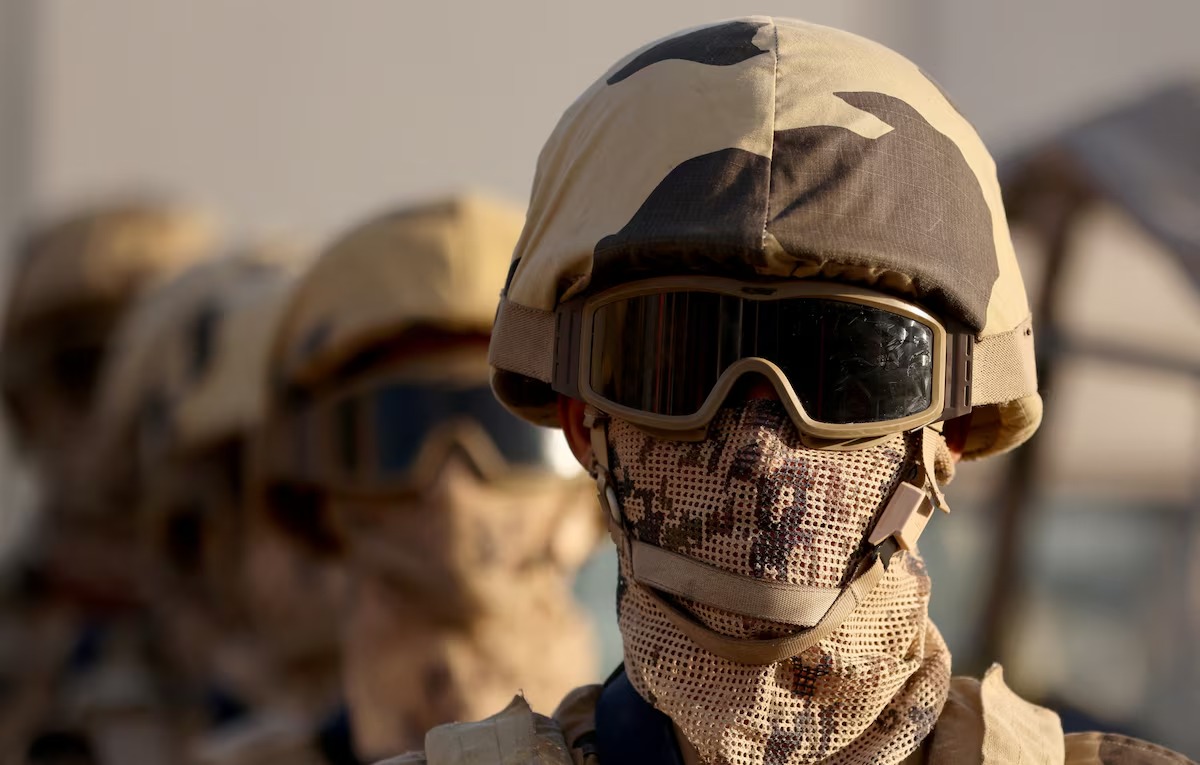
The US State Department stated that it has waived human rights conditions on more than $300 million in military aid to Egypt.
The statement emphasised that this decision was taken in consideration of Cairo’s “helpful role” since the outbreak of the war against Iran.
Egypt began receiving substantial support from the US after signing a peace treaty with Israel in 1979.
Since the late 1980s, the country has received approximately $1.3 billion annually in US military assistance.
A portion of this aid is subject to conditions related to human rights and democracy, which can be waived on national security grounds.
Withholding funds, including during the administration of former US President Joe Biden, has caused tension between Cairo and Washington in the past.
A letter dated 21 September and addressed to various congressional committees, obtained by Reuters, stated that Secretary of State Marco Rubio “decided to waive the certification requirement under the fiscal year 2025 Foreign Military Financing programme for Egypt of $320 million.”
This waiver was subsequently confirmed by the State Department.
An accompanying memorandum justifying the decision stated that this portion of military aid was “essential for counterterrorism, border security, or non-proliferation programmes, or otherwise important to the national security interests of the United States.”
The memorandum, dated 4 September and bearing Rubio’s signature, stated: “Exercising this waiver authority is critical to the US-Egypt relationship and to US national security priorities, particularly given the helpful role Egypt has played in the aftermath of Operation Epic Fury.”
“Operation Epic Fury” is the designation used by the US military for the campaign launched jointly with Israel against Iran in late February.
The State Department memorandum, whose authenticity was confirmed by two sources in Washington familiar with the letter, did not provide detailed information regarding what was termed Egypt’s “helpful role”.
The State Department’s annual decision on military aid to Egypt typically covers funds allocated for the preceding fiscal year, which ends on 30 September.
A State Department spokesperson stated that Rubio waived the certification in the interest of US national security and that the US continues to cooperate with the Egyptian government across a range of issues.
In an emailed statement, the spokesperson said: “This waiver recognizes the importance of maintaining security cooperation with Egypt at a time of significant security challenges in the region.”
The Egyptian Ministry of Foreign Affairs did not immediately comment on the matter.
The spillover effects of the Iran war have imposed a heavy toll on US security partners, including Egypt.
Owing to rising fuel prices and other disruptions, the Egyptian economy is passing through a difficult period.
Under the Biden administration, the US withheld portions of the annual military allocation on multiple occasions over Egypt’s human rights record.
In 2024, following the Hamas-led 7 October attack on Israel and the subsequent war in Gaza, the Biden administration set aside human rights conditions, disbursing the entire $1.3 billion allocation to Egypt for the first time in its tenure.
Human rights organisations have long accused Egypt, under the administration of President Abdel Fattah al-Sisi, of widespread human rights abuses, including torture and enforced disappearances.
This week, Egyptian police detained six journalists from a fact-checking and investigative media outlet, accusing them of spreading false information on behalf of the banned Muslim Brotherhood.
Egyptian authorities state that they have taken steps to address human rights issues. Sisi said stability is paramount and that the government supports human rights by working to provide for basic needs.
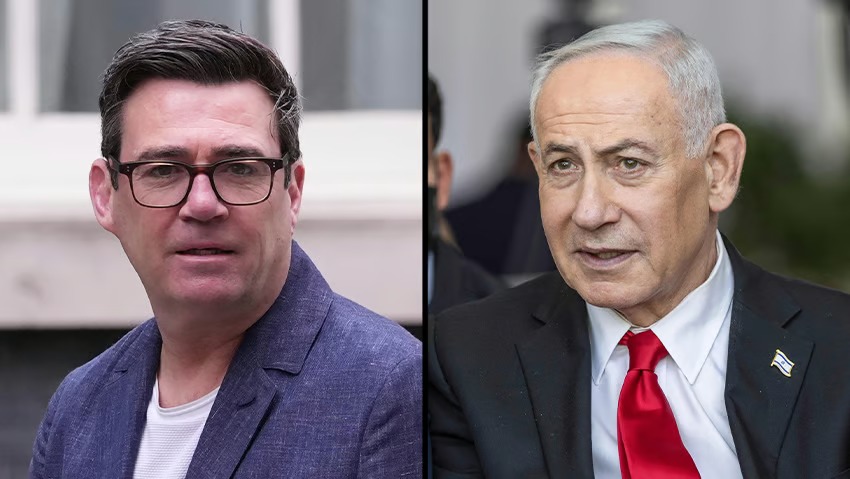
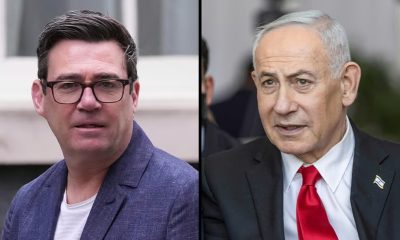
Britain has significantly broadened its military export restrictions targeting Israel, suspending or rejecting more than 80 licences for items the IDF could use in Gaza.
This figure is nearly triple the number affected when the policy was first introduced in September 2024.
United Kingdom Minister of State for the Middle East Stephen Doughty said that as part of what he described as a “tighter system” for assessing exports to Israel, more than 50 further export applications have been refused since approximately 30 licences were initially suspended.
Under the initial decision taken in September 2024, 30 of roughly 350 licences were suspended after the British government concluded there was a “clear risk” that certain military exports could be used to commit or facilitate serious violations of international humanitarian law in Gaza.
The affected equipment included components for military aircraft, drones, naval systems, and targeting gear.
Doughty said additional measures adopted this month established what he termed a “double safeguard” mechanism within the approvals process.
Export applications must now be assessed both against existing international humanitarian law criteria and in light of Britain’s position on the legality of Israel’s presence in the Palestinian territories.
“We have so far suspended or refused more than 80 licences,” Doughty said, adding that he had personally examined each licence.
Despite the wider restrictions, British-origin parts entering the international F-35 fighter jet supply chain continue to be largely exempt.
The UK government argues that preventing British-made components from entering the global F-35 pool could undermine the programme as a whole and have serious consequences for the security of the UK and its allies.
Direct exports of F-35 parts intended specifically for Israel remain suspended.
Doughty defended maintaining the supply of components via the international programme, arguing that halting it could have severe ramifications for the broader European and allied security architecture.
Foreign Affairs Committee Chair Emily Thornberry challenged this position, arguing that the issue was political rather than purely legal.
Thornberry suggested adopting an approach similar to the Dutch model, under which components entering the international supply chain could be flagged as “not intended for aircraft bound for Israel”.
The initial suspension was implemented in September 2024 by then Foreign Secretary David Lammy.
Lammy stressed at the time that the measure did not constitute an arms embargo and applied solely to items assessed as usable in military operations in Gaza.
Since then, the policy has been tightened further under Prime Minister Andy Burnham.
The expanded export restrictions follow the Burnham government’s adoption of a more confrontational policy toward the Israeli government.
Foreign Secretary Ed Miliband drew sustained applause at the Labour Party’s annual conference in Liverpool after delivering a sharp critique of the Netanyahu government’s policies and defending the decision to ban trade with Israeli settlements in the West Bank.
Accusing Israel of committing war crimes in Gaza, Miliband stated that the British government heard public outrage over the conflict, telling delegates: “We hear you. You were right.”
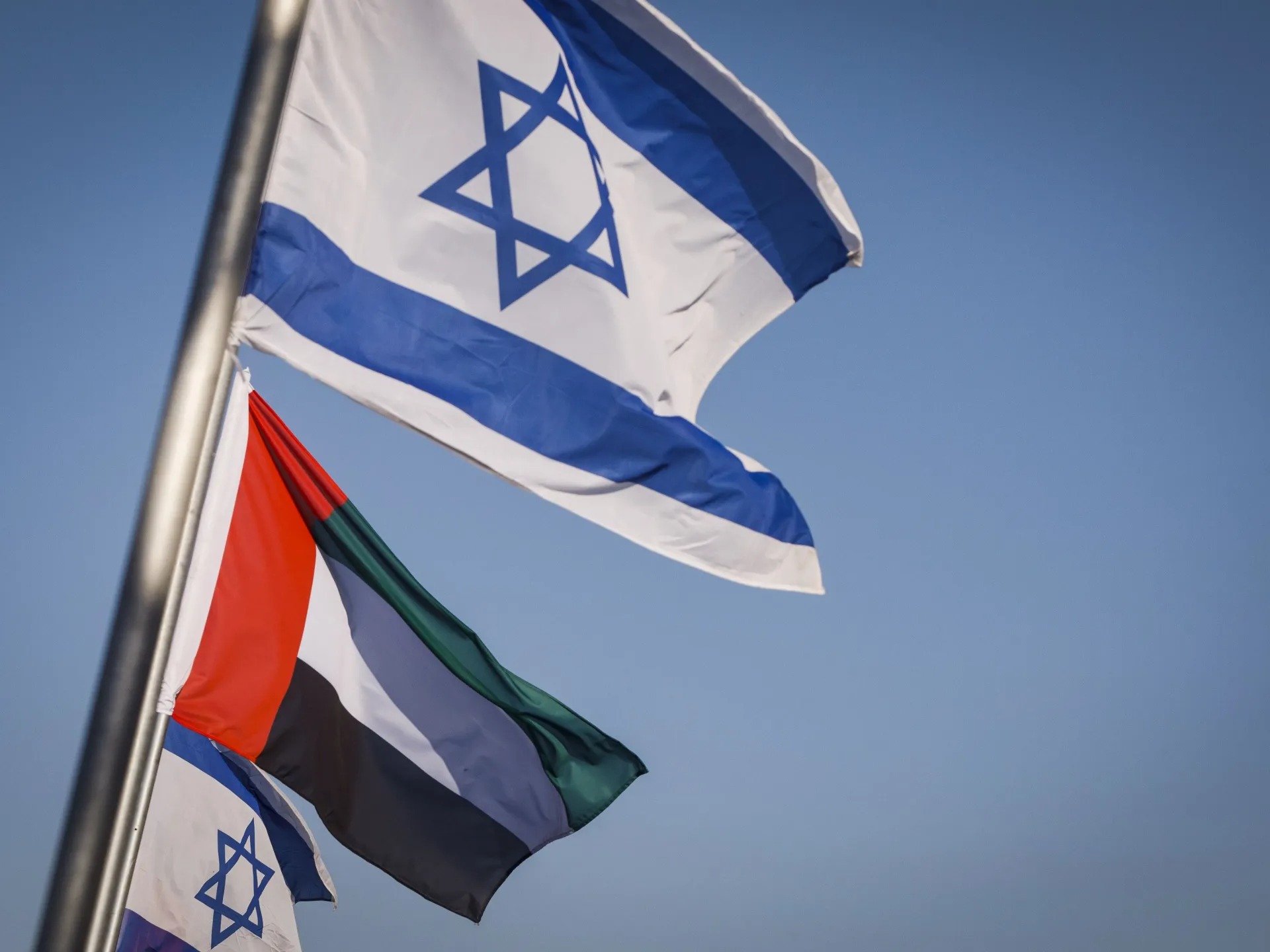
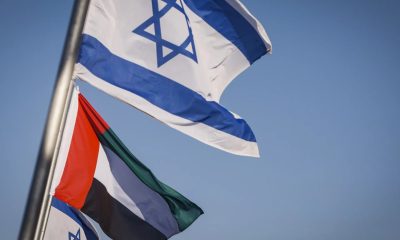
Israeli Prime Minister Benjamin Netanyahu met with representatives of Gulf and Arab nations that lack diplomatic ties with Israel, including Saudi Arabia, during his weekend visit to the United Arab Emirates.
Sources close to the gathering told the Israeli newspaper Yedioth Ahronoth on Monday that representatives from Morocco, Libya, Jordan, and Qatar also took part in the meeting.
Netanyahu made a unannounced visit to Abu Dhabi on Sunday, where he met with the country’s leader, Mohammed bin Zayed Al Nahyan.
According to Israeli media, this marked the first time the United Arab Emirates officially confirmed a visit by Netanyahu.
The meeting was arranged by Mossad Director Roman Goffman “at the request of Saudi Arabia, which asked for Israel’s assistance against Houthi attacks in the Red Sea region,” according to Yedioth Ahronoth.
The discussions addressed Iran and the Houthi militia. The newspaper added that the Arab states heard from Israel that “Israel is prepared to assist countries in the region with air defence systems, just as it aided the UAE during the conflict with Iran.”
Conflict in Yemen intensified in September when Ansarullah militiamen launched a rapid offensive that seized Yemen’s entire Red Sea coastline, including the vital maritime corridor of the Bab el-Mandeb Strait.
The Yemeni resistance also imposed a blockade on Saudi Arabia’s energy exports and staged multiple attacks against the kingdom.
Saudi Arabia reportedly sought military assistance from the US to counter Ansarullah.
Washington declined to attack the Houthis directly, but announced that it would provide intelligence and targeting support.
Reporting on the same visit, The Jerusalem Post said Netanyahu spent six hours in the UAE and that the principal subject of his discussions with MBZ was Iran.
Citing sources familiar with the matter, the newspaper added that the trip came “after Netanyahu exerted heavy pressure on the United Arab Emirates to arrange a meeting ahead of the Israeli elections on 27 October.”
Separately, the Associated Press, citing a person with direct knowledge of the meeting, reported that Netanyahu’s visit to the UAE was arranged in part to ask MBZ to deny reports that he had warned the Israeli prime minister of an impending Hamas threat prior to 7 October 2023.
According to Israeli media, Netanyahu’s office denied the AP report, issuing the following statement:
“Fake news. The visit focused solely on strengthening ties between the two countries and on regional issues.”

Germany expands North Sea military ports and plans new naval base

Musk appointed co-director of Pentagon future warfare initiative

US waives human rights terms on $320m military aid to Egypt

Putin says Russia did not start war and warns of nuclear risks

European nations unite against US pressure over strategic oil stocks
-

 Europe5 days ago
European unions urge governments to scrap all Palantir deals
-

 Diplomacy5 days ago
East-West Forum in Istanbul highlights irreversible shift to multipolarity
-

 Europe1 week ago
Emmanuel Todd says West faces collapse amid Ukraine and Iran crises
-
 Europe1 week ago
European intelligence chiefs divide over risk of Russian attack
-

 Diplomacy1 week ago
East-West Forum in Istanbul to debate multipolarity and global order
-
 Middle East1 week ago
Sharaa says 7 October must not shape Israel policy on Syria
-

 America1 week ago
Republican support for Trump’s war with Iran drops sharply in polls
-
 Middle East1 week ago
Palestinian factions confront legitimacy crisis at Istanbul talks
