
Diplomacy
Revisiting the Bandung spirit in a multipolar world

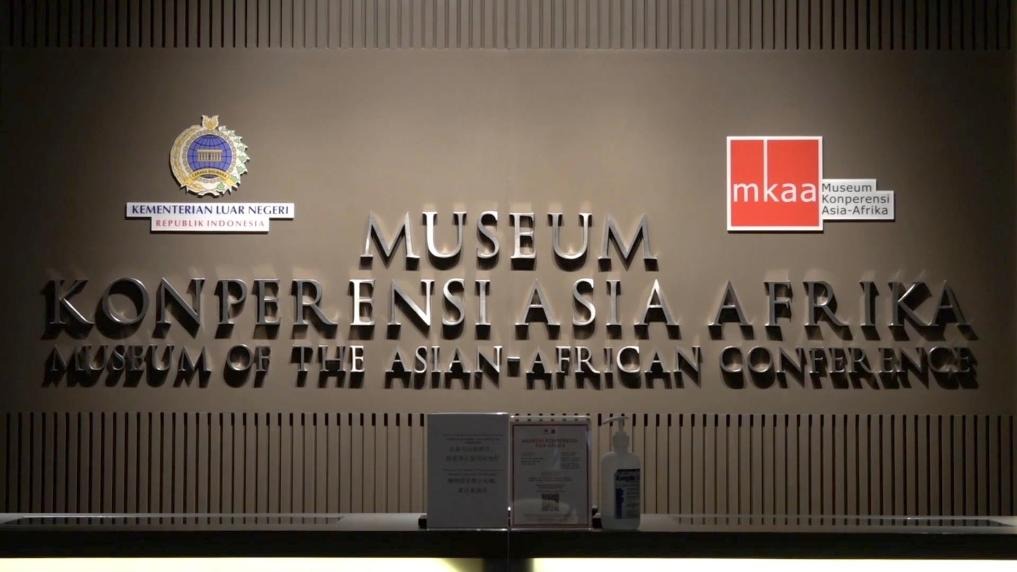
Fang Xuting, Research Assistant at Center for Turkish Studies, Shanghai University
How China articulates its diplomatic discourse?
From April 18 to 24, 1955, government delegations from 29 Asian and African countries and regions convened in Bandung, Indonesia, for a historic Afro-Asian Conference. On the 70th anniversary of the Bandung Conference, against the backdrop of a rapidly transforming global order marked by the rise of the “Global South” and the restructuring of traditional international power dynamics, revisiting the memory of the conference and the enduring “Bandung Spirit” acquires new strategic significance. For contemporary China, it offers fresh value in advancing multilateral diplomacy, deepening South-South cooperation, and contributing to the reconfiguration of the international order.
Historical context of the Bandung Conference
In the 1950s, during the intensification of the Cold War, the two ideological blocs led by the United States and the Soviet Union increasingly competed for influence in the Third World. Leaders of newly emerging states in Asia and Africa sought self-determination, while anti-imperialist and anti-colonial movements gained momentum. The colonial system began to unravel. Independent nations in Asia and Africa became bolder in asserting neutrality in international affairs and grew increasingly active in United Nations forums in the early 1950s. For example, India repeatedly spoke on behalf of Asian and Arab countries, calling for a ceasefire and peaceful resolution to the Korean War. It openly criticized American military policy, showing no fear of power politics.
At the Bogor Conference held in late 1954, five countries—India, Indonesia, Burma (now Myanmar), Ceylon (now Sri Lanka), and Pakistan—issued a joint communiqué to formally initiate the first Asian-African Conference in 1955. Based on the principle of “independent governments,” thirty countries, including China, were invited to participate.
From the perspective of China’s diplomatic transition, the Bandung Conference represented a significant moment when the newly founded People’s Republic of China moved away from a revolutionary foreign policy and toward one based on state diplomacy. It symbolized a departure from the binary Cold War alignment toward an independent foreign policy grounded in peaceful coexistence. In fact, even before the conference—particularly following the Korean War (1950–1953)—China had already shown interest in moderating its foreign policy to present a more peaceful image to its Asian and African neighbors.
Although China’s participation in the Korean War was only a part of the broader conflict, its role was militarily decisive. The war’s outcomes significantly influenced the trajectory of socialist movements and national liberation struggles in Asia. The emergence of socialist states in both Asia and Europe enabled a geopolitical counterbalance to Western powers. For a considerable period, the bipolar confrontation between East and West maintained a strategic equilibrium, as Western powers led by the United States were no longer facing only the socialist bloc in Europe, but an alliance of socialist countries in both Europe and Asia.
Moreover, the war marked the first direct military confrontation between China and a major Western power since the founding of the People’s Republic. Through tenacious combat, China compelled the United States to return to the negotiating table, rescued the Democratic People’s Republic of Korea from crisis, defended its own national borders, solidified the Sino-Soviet alliance, and elevated its international standing. China emphasized the war’s just cause—”resisting U.S. aggression and aiding Korea; safeguarding the homeland”—and linked its narrative to global anti-imperialist struggles, resonating strongly with the anti-colonial aspirations of newly emerging Asian and African nations. These rhetorical and ideological alignments laid a strong foundation for China’s solidarity with the Third World.
Lastly, China’s diplomatic and military engagement during the Korean War, including the Panmunjom negotiations, provided valuable experience in dealing with the West—an experience that would later prove instrumental in Zhou Enlai’s diplomatic success at the Bandung Conference.
On April 18, 1955, the Bandung Conference officially commenced. By the evening of April 24, the final plenary session unanimously adopted the Final Communiqué of the Asian-African Conference—the first joint statement in history issued collectively by 29 Asian and African countries. The communiqué included the Ten Principles of Bandung, which addressed issues related to anti-colonialism and national independence, adopted resolutions promoting global peace and cooperation, and reaffirmed the common aspiration of the Asian and African peoples to oppose aggression and uphold world peace.
The historical value of the Bandung spirit and China’s contributions
The Bandung Conference was the largest and most representative intercontinental summit of its time, covering the widest geographic area and population. It embodied the collective will of Asian and African nations to oppose imperialism and colonialism, safeguard national independence, and promote peace and development. The spirit of Bandung—seeking common ground while reserving differences, peaceful coexistence, solidarity, cooperation, and joint struggle—has since become a cherished intellectual legacy in world history. It had a profound impact on how developing countries later approached international relations. As a staunch supporter and active participant, China contributed significantly to the formation of the Bandung Spirit by offering Chinese wisdom and diplomatic experience.
1- The integration of China’s five principles of peaceful coexistence
The concluding section of the Final Communiqué of the Asian-African Conference included a declaration on promoting world peace and cooperation, which was adopted unanimously based on a Chinese proposal. This declaration outlined ten principles for conducting international relations, such as respect for fundamental human rights and the purposes and principles of the United Nations Charter; respect for the sovereignty and territorial integrity of all nations; recognition of the equality of all races and nations, large or small; and non-intervention and non-interference in the internal affairs of other countries. The Ten Principles of Bandung fully incorporated all elements of Zhou Enlai’s Five Principles of Peaceful Coexistence and further developed them.
2- China’s consistent anti-imperialist and anti-colonial position
China’s leadership, reflecting on the historical context of the 1950s characterized by “war and revolution,” defined the newly founded People’s Republic as a socialist nation that had suffered colonial aggression and attained national independence. This identity guided its foreign policy during the Bandung era. At meetings leading up to the conference, Zhou Enlai articulated a typology of countries within the capitalist bloc, arguing that China should isolate the United States, win over the intermediate states, and unite with the most oppressed nations. Accordingly, China’s primary objective in attending the Bandung Conference was to break its international isolation and fully support the just struggle for national liberation in Asia and Africa—thereby playing a foundational role in shaping the Bandung Spirit.
3- China’s introduction of the “seeking common ground while reserving differences” diplomatic approach
Given the diverse ideological orientations of participating nations and the anti-communist propaganda led by the United States and its allies, many delegations were wary of China. Some even argued that both colonialism and communism should be condemned. Faced with this challenge, Zhou Enlai offered a conciliatory and inclusive response: “There are disagreements among us, but acknowledging such differences is, in itself, a form of agreement”. China deliberately adopted a “non-argumentative” approach, avoiding revolutionary or ideological rhetoric in response to accusations. This enabled the conference to proceed smoothly.
During the conference, China adhered to the principle of seeking common ground while reserving differences and signed the Treaty on Dual Nationality with Indonesia. Indonesia’s Foreign Minister Sunario praised the agreement as one reached “in the spirit of goodwill and tolerance between two Asian nations,” a spirit that, in his view, had guided the Bandung Conference itself.
The contemporary relevance of the Bandung spirit and its inheritance by China
Over the past 70 years, the global landscape has undergone profound transformations. The colonial system has collapsed, the bipolar Cold War confrontation has become a thing of the past, and economic globalization has deepened. Peace, development, cooperation, and mutual benefit have become the dominant themes of the era. However, the essential contradictions in the international community have not fundamentally changed. The unjust and unequal political and economic order persists, and tensions among civilizations, ideologies, political systems, and development models continue to exist.
Currently, three key characteristics define the global landscape. First, in the security domain, great power rivalry, bloc confrontation, regional conflicts, and domestic unrest interact and reinforce one another, shaping the international security order. The outbreak of the Ukraine crisis in 2022 may signal the end of the post-Cold War era and the beginning of what scholars have termed a “post-post-Cold War era,” marked by increasing global instability.
Second, in the ideological domain, the West’s narrative of “democracy versus authoritarianism” clashes with the Global South’s advocacy for “multiple modernities.” While the United States promotes value-based diplomacy and exclusionary alliances such as the Indo-Pacific Economic Framework, Global South countries prioritize development rights and sovereign equality, rejecting the binary logic of alignment. Meanwhile, algorithmic amplification on social media has intensified information warfare, turning global public opinion into a new arena of great power soft power competition.
Third, in the economic domain, the rise of the Global South and the emergence of new forms of South-South cooperation have reshaped the global development landscape. Compared with the past, southern countries now possess greater material capacity, developmental experience, and institutional platforms. Their structural power has grown significantly, allowing them to play increasingly influential roles in today’s global transformations.
As a participant in the Bandung Conference and a key leader of the Global South, China must inherit and advance the Bandung Spirit by aligning it with the characteristics of the new era in order to effectively articulate its own diplomatic discourse in an increasingly multipolar world.
1- Using “peaceful coexistence” to mitigate bloc confrontation
China must continue to oppose Cold War thinking and promote a “comprehensive, cooperative, and sustainable” approach to security. At the conceptual level, China’s proposed Global Security Initiative aligns with many of the Global South’s concerns. As such, it can serve as a guiding framework for forming a Global South Security Perspective. In practice, China should strengthen both bilateral and multilateral diplomacy among Global South nations. Two typical forms of multilateralism have emerged:
First, multilateral cooperation among major Global South powers, with BRICS as a typical example. In the context of intensifying great power competition, BRICS expansion—particularly the inclusion of Middle Eastern states—signals that the mechanism may play a greater role in security governance. Platforms such as the Shanghai Cooperation Organization (SCO) and BRICS should be used to coordinate security interests and counter the exclusivity of Indo-Pacific strategies.
Second, cooperation between Global South powers and entire regional groupings. Examples include China’s engagement with Africa, Arab states, and Pacific island nations. Forums such as the Forum on China–Africa Cooperation (FOCAC) and the China–Arab States Cooperation Forum provide platforms for de-escalating regional hotspots and rejecting bloc-based confrontation.
2- Offsetting value-based diplomacy with the principle of “seeking common ground while reserving differences”
The concept of seeking common ground while reserving differences, first proposed by Zhou Enlai at Bandung, emphasized resisting ideological dogmatism in favor of pragmatic cooperation. Today, China must challenge the “democracy versus authoritarianism” narrative by emphasizing the principle of sovereign equality and the right of all nations to choose their own development paths. The principle of mutual respect and inclusiveness should guide international relations, supporting a model that emphasizes dialogue among civilizations and reciprocal learning among systems.
China must oppose unilateralism, zero-sum thinking, and hegemonic practices, while promoting a new type of international relations based on mutual respect, fairness, justice, and win-win cooperation. It should also accelerate the construction of a Global South discourse system that prioritizes development rights. On international platforms such as the UN Human Rights Council, China must resist the politicization of human rights by Western powers. Moreover, international communication should be strengthened through platforms such as CGTN and TikTok, using effective Belt and Road cooperation cases to counter perception warfare.
3- Driving development paradigm transformation through South-South cooperation
From the Five Principles of Peaceful Coexistence to the Bandung Spirit and the emergence of new South-South cooperation, the core has always been respect for the diversity of development paths and partnerships grounded in equality, solidarity, and mutual benefit. The goal is to overcome poverty and underdevelopment, build a just global order, and realize unity in diversity.
China must deepen the high-quality development of the Belt and Road Initiative (BRI), particularly in Asia and Africa, focusing on infrastructure and capacity cooperation. According to the Outlook on the High-Quality Development of the Belt and Road Initiative for the Next Decade, China should prioritize “small but beautiful” livelihood projects, thereby fulfilling the Bandung ideal of economic mutual assistance.
China must innovate in South-South cooperation models. Traditional international development paradigms—largely shaped by the modernization experiences of developed Western countries—tend to flow unidirectionally, compelling recipient nations to conform institutionally to Western norms. In contrast, China should continue promoting the co-modernization model it has pursued with Africa. This approach emphasizes mutual interaction and shared agency, stimulating local initiative through bottom-up consultation, joint construction, and co-sharing, and thereby fostering more equal and sustainable development partnerships.
China must serve as a model of modernization. The new practices of Chinese-style modernization not only provide a solid foundation for China’s leadership in Global South development, but also offer alternative development paths to other Global South countries. With China–Africa co-modernization as a key strategic focus, China can help pioneer a new paradigm of international modernization cooperation.
In 1955, by seizing the opportunity presented by the Bandung Conference, the People’s Republic of China successfully broke through Western isolation and blockade, presenting itself as a trustworthy partner for the Third World. Seventy years later, China should once again draw upon the Bandung experience, integrating the Bandung Spirit with the practice of diplomacy with Chinese characteristics in the new era. In doing so, China will help construct a more just and reasonable international order and contribute to world peace and development. This is not only a tribute to history, but also a response to present challenges and an exploration of the future.










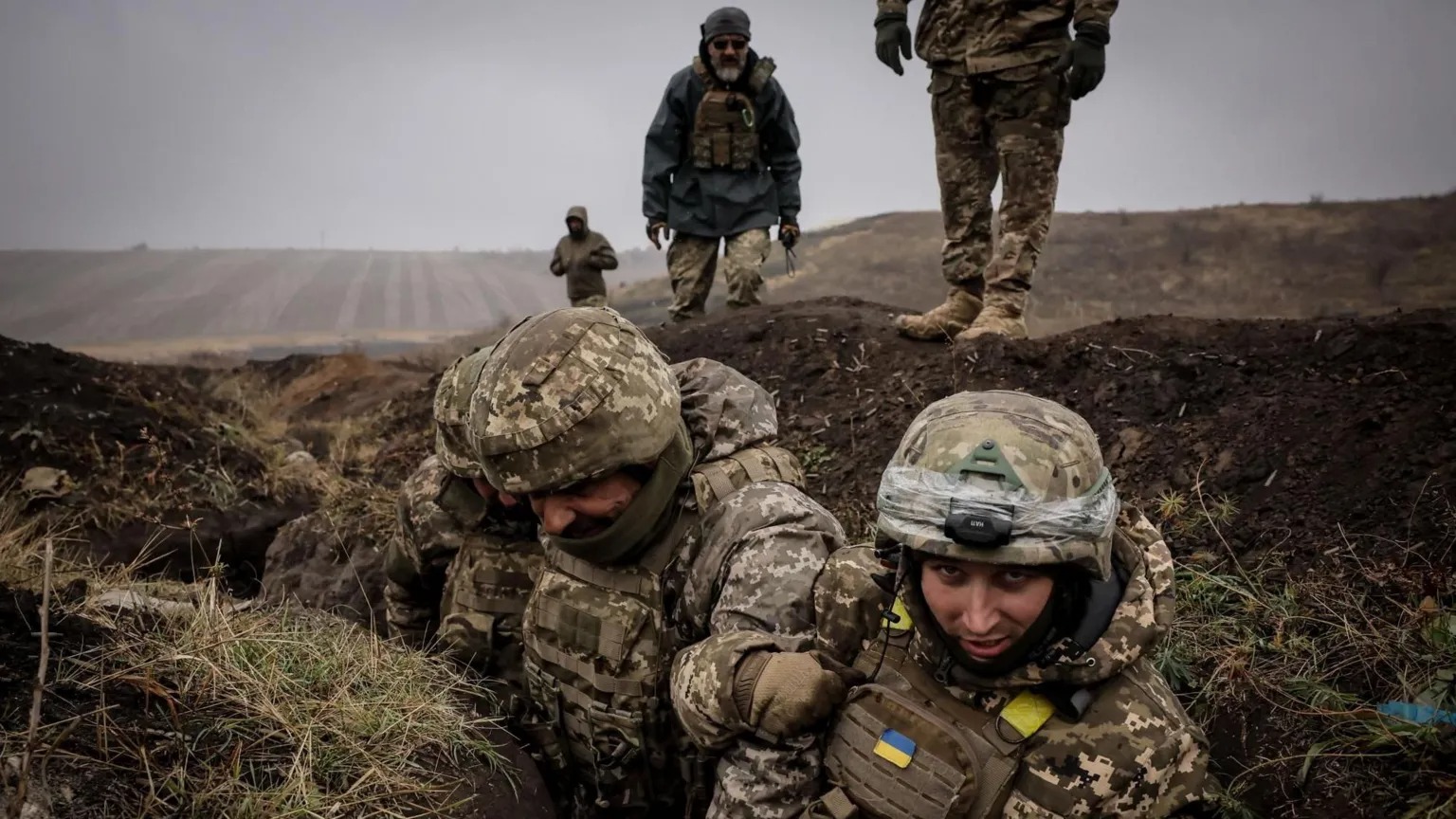
Draft proposals by the US administration to end the war in Ukraine envisage establishing a demilitarised line in the Donbass region, easing sanctions against Moscow, and offering a comprehensive investment package to Kyiv.
According to a report by the British magazine The Economist, citing Ukrainian officials, Washington is working on a broad framework comprising both economic and political points to persuade the parties to reach a settlement.
Under the draft plan reported by the publication, Russia is offered the opportunity to conclude trade agreements with the US, an easing of sanctions, and the normalisation of political relations.
Ukraine, in exchange for relinquishing its goal of NATO membership, is promised direct foreign investment and European Union accession.
The report notes that Ukrainian officials do not possess complete visibility over every detail of the final text on the table, but are closely familiar with its overarching framework.
Nord Stream pipeline and natural gas shipments on the table
The Economist reported that the package designed to persuade the leadership in Moscow also includes items such as the resumption of Russian natural gas sales to the European market and the reactivation of the Nord Stream pipeline.
The magazine also points out that decisions regarding the operation of a pipeline located on European territory do not fall directly under US jurisdiction.
Ukrainian negotiators, meanwhile, are concerned that the Washington delegation may lock in commercial agreements in line with its own economic interests before the fighting formally stops.
Speaking to the magazine, a Ukrainian official summed up the American side’s approach with the words: ‘Why wait and waste time? Time is money.’
Diplomatic contacts intensify at leadership level
Stating that it is ready for talks, the Russian government announced that an agreement had been reached in recent contacts with Washington to launch a trilateral negotiation process that would also include Ukraine.
Russian President Vladimir Putin said: ‘The objective of these negotiations will be to address the issue of ensuring the security of Ukraine and Russia once peace agreements are reached.’
As part of these diplomatic efforts, US President Donald Trump’s special envoy, Steve Witkoff, met Russian leader Putin on 21 October at the Konstantinovsky Palace in St. Petersburg.
Speaking during the portion of the meeting open to the media, Witkoff noted that he had brought documents outlining a pathway to peace and asked Putin to examine these texts.
Kremlin spokesperson Dmitry Peskov announced that the president would evaluate the American proposals.
Noting that concrete ground for a ceasefire had emerged during the St. Petersburg meeting, Witkoff expressed hope for the start of trilateral contacts between Russia, the US, and Ukraine to address technical matters.
Putin thanked Trump for his interest in peace efforts and recounted that the US president had specifically emphasized during their recent telephone calls that the war must end as soon as possible.
Framework prepared in Oslo carried to Moscow
Immediately before his visit to St. Petersburg, Witkoff had attended talks held on 20 October in Oslo, the capital of Norway.
Trump’s son-in-law Jared Kushner joined the meeting remotely due to illness, which was attended by Ukrainian President Volodymyr Zelenskyy, Finnish President Alexander Stubb, and Norwegian Prime Minister Jonas Gahr Store.
According to information provided by Stubb, the parties at the Oslo meeting clarified key security and economic elements that the American envoy would present to Moscow. Air defence systems, energy infrastructure, and partial ceasefire measures were also discussed.
Commenting after the talks in St. Petersburg, Russian presidential aide Yury Ushakov argued that the newly presented approaches did not contain many elements useful for a resolution.
Noting that Witkoff informed Putin about the contacts in Oslo and relayed fresh nuances in the positions of European leaders and the Kyiv government, Ushakov stated that the meeting was thorough and frank, adding that the conflict is ‘moving toward an end.’
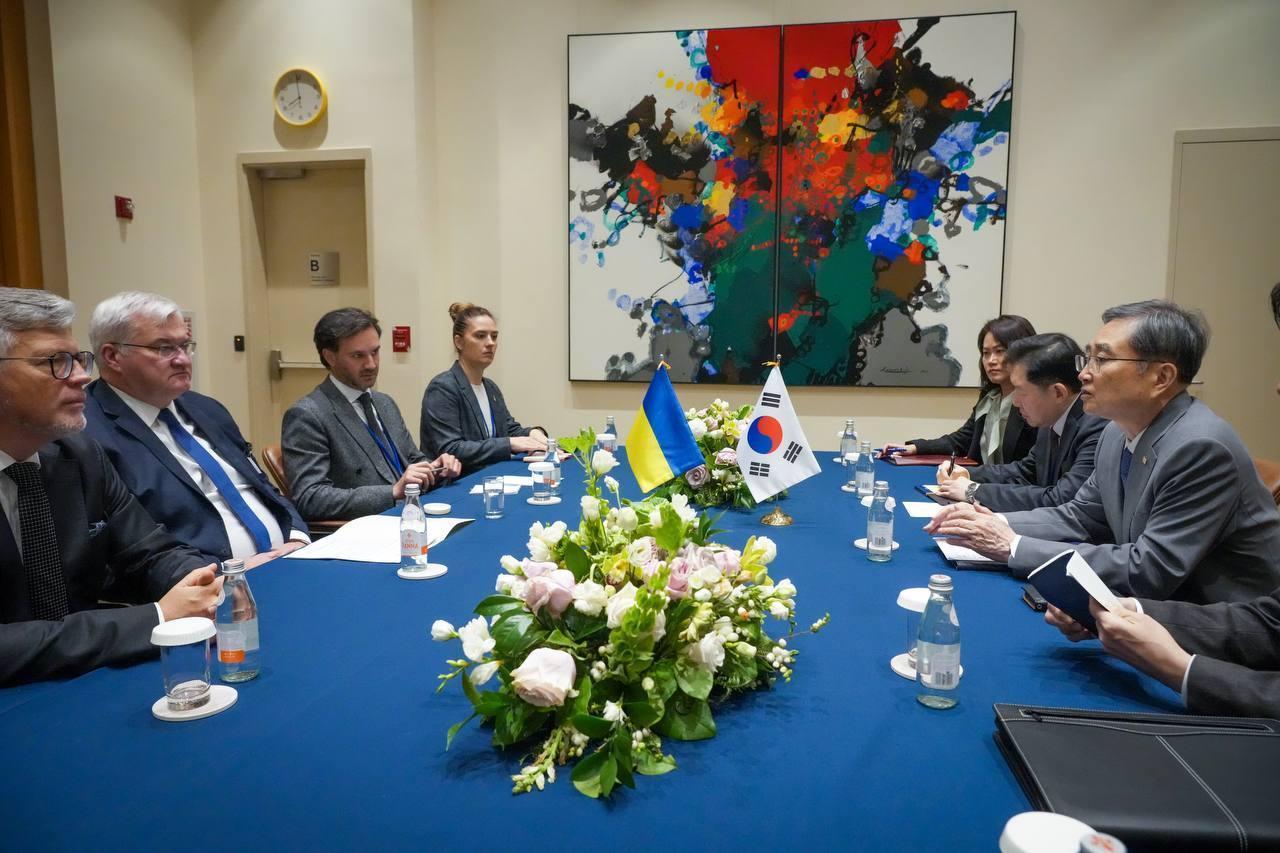
The South Korean government has decided to withdraw part of its embassy staff from Ukraine.
According to the Yonhap news agency, Foreign Ministry spokesman Park Doo-sun cited the Kyiv administration’s failure to take “positive steps” in the dispute that began with the leak of information concerning the handover of North Korean prisoners of war as the justification for the move.
The spokesman also listed the ongoing threat of air strikes, which complicates the safety of diplomats, among the reasons.
Following the withdrawal of part of the personnel, essential diplomatic contacts will continue under the leadership of the charge d’affaires ad interim to Ukraine. All consular staff tasked with protecting South Korean citizens will remain in Ukraine.
Prior to this move, the Seoul administration decided on 8 October to withdraw its ambassador. The Foreign Ministry stated at the time that it was ready to continue consultations with Kyiv to resolve the emerging issues constructively.
Tensions between the two countries began with a speech delivered by Ukrainian President Volodymyr Zelenskyy at the United Nations General Assembly in September.
Zelenskyy announced that two captured soldiers from the North Korean army had been handed over to South Korea.
South Korean President Lee Jae-myung, meanwhile, accused Kyiv of breaching a confidentiality agreement.
Lee said the disclosure of this information endangered the prisoners’ families and stability on the Korean Peninsula.
Seoul expects a public apology
Dmytro Lytvyn, an adviser to the Ukrainian president, denied the existence of a confidentiality agreement.
The South Korean Foreign Ministry summoned Ukrainian Charge d’Affaires Andriy Veshkin on 28 September and issued a note of protest against Lytvyn’s remarks.
President Lee Jae-myung warned in a statement on 2 October that they would take additional measures against Kyiv if Ukrainian authorities did not acknowledge the agreement and make a public apology. Lee stated that Ukraine itself had initially requested that the transfer of the prisoners be kept confidential.
Ukrainian Foreign Ministry spokesman Heorhii Tykhyi said the dispute stemmed from differing interpretations of the confidentiality regime.
Tykhyi noted that Seoul, based on its constitution which recognises the entire Korean Peninsula as its own territory, requested that the prisoners be handed over “like its own citizens”.
Describing the handover as a “gesture of goodwill”, Tykhyi stated that they were conducting closed-door negotiations to resolve differences of opinion.
Ambassador Park Ki-chang returned to Seoul on 10 October. According to a report by The Korea Times newspaper citing the ministry, recalling the ambassador served as a diplomatic protest against the leak of information regarding the prisoners.
The newspaper wrote that South Korea had last taken a similar step in 2008 by withdrawing its ambassador to Japan.
Moscow warned foreign diplomats
On 3 October, the Russian Foreign Ministry reiterated its warning to foreign nationals, including diplomatic mission staff, against remaining in Ukraine.
The ministry recalled its advice to leave Kyiv, citing ongoing strikes against military targets.
The ministry noted that those who failed to heed the warnings would bear responsibility for the potential consequences.
Kremlin spokesman Dmitry Peskov said in a statement on 24 September that they had no information regarding Kyiv handing over two North Korean prisoners of war to Seoul.
Peskov, noting that prisoner matters fall under the authority of the Defence Ministry and intelligence services, said, “Contacts through the special services are continuing.”
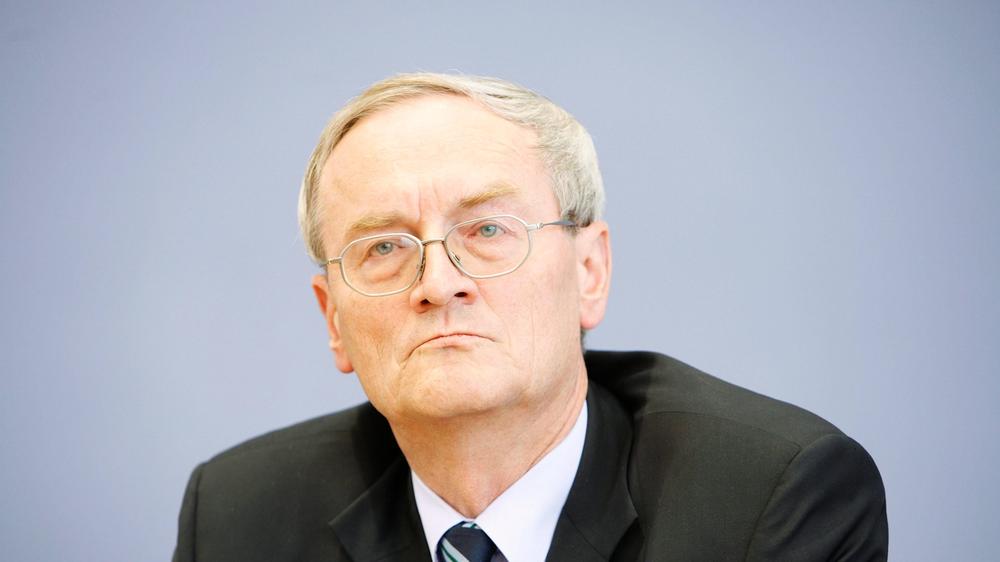
August Hanning, who led Germany’s Federal Intelligence Service (BND) between 1998 and 2005, was arrested on 6 October on allegations that he obtained roughly 2,000 classified agency documents and used them during contacts with intelligence officers from a foreign state.
Accused of high treason and espionage on behalf of a foreign intelligence agency, the former spy chief is alleged to have procured the documents from former BND employee Manfred D.
Prosecutors stated that the leaked records included internal briefing notes presented to senior German officials, though the Berlin government has not yet publicly disclosed which country received the classified data.
According to an exclusive report by Jake Green for The Cradle, seized email exchanges revealed extensive ties between the arrested Hanning and former Mossad director Danny Yatom.
The correspondence shows that the two former intelligence directors built an ongoing network of contacts following their public service, combining commercial ventures, efforts to secure political influence, and intelligence links.
This dynamic has triggered debate that using personal connections and official access for private gain has left Germany’s intelligence apparatus vulnerable.
Intelligence notes for 10,000 euros and campaign proposals
According to the reviewed emails, Hanning told Yatom in a 2018 message that he could prepare an “overall assessment based on information obtained from senior German officials and intelligence agencies” concerning an unidentified candidate.
The former BND head committed to completing the report by 13 July in exchange for 10,000 euros.
Contacts between the two men subsequently expanded to cover domestic political processes in Germany. Ahead of the September 2021 federal election, Yatom asked Hanning to approach leading candidates.
Describing CIY Global as a “political campaign company”, the former Mossad chief noted that he aimed to introduce its capabilities to German politicians, and he mentioned his intention in the same exchange to transfer documents concerning a cybersecurity firm.
Cybersecurity partnership and surveillance operations across Europe
The partnership between Yatom and Hanning reached beyond political lobbying initiatives into the cybersecurity sector.
Hanning reportedly served as a consultant for World Health Energy Holdings, a cybersecurity company linked to Yatom.
Firms of this type, established or managed by former intelligence personnel, provide commercial platforms on the international market for Israeli-origin surveillance, cyber intelligence, and political influence capabilities.
The operational presence of private Israeli-based surveillance technologies across Europe has recently entered judicial records through scandals in Poland, Spain, and Greece.
Polish prosecutors announced on 12 October that data collected under the previous government via Pegasus spyware against political opponents had been transferred out of the country, adding that manufacturer NSO Group maintained access to the technical infrastructure.
In Spain, the 2022 CatalanGate investigation established that at least 65 people, including politicians, lawyers, and civil society representatives, were targeted using Pegasus or Candiru software, with Citizen Lab researchers publishing strong evidence linking the operation to Spanish authorities.
In Greece, the surveillance operation targeting journalist Thanasis Koukakis and Member of the European Parliament Nikos Androulakis was determined to have used Predator software, linked to Intellexa, a company founded by former Israeli intelligence officer Tal Dilian.
In the German espionage investigation, the traffic between Hanning and Yatom involving paid reporting, contacts with electoral candidates, and commercial partnerships does not yet provide conclusive legal evidence regarding the final destination of the roughly 2,000 classified documents.
Nevertheless, the disclosed correspondence gives German investigators a concrete line of inquiry to assess whether classified state secrets reached commercial networks tied to Israeli intelligence.

Nokia and ICEYE sign deal to build sovereign Ukraine satellite network

Mélenchon’s “new France” vision triggers fierce cross-party debate

US envoy says Syria interim leader Sharaa seeks Israel normalization

Unauthorised AI agents access customer accounts at major US banks

US drafts Ukraine plan with Nord Stream restart and sanctions relief
-

 Europe2 weeks ago
Berlin Left Party backs Israel’s right to exist for coalition pact
-
 America2 weeks ago
How will Brazil’s presidential runoff work?
-

 Russia2 weeks ago
71 EU lawmakers demand closure of Russian Houses in 15 member states
-

 Russia2 weeks ago
US and Russian figures discuss American stake in Nord Stream lines
-

 Europe2 weeks ago
MI6 investigates potential leaks after former BND chief is detained
-
 Russia2 weeks ago
Drone strike shuts down Yandex data centre in Russia’s Ryazan region
-

 America2 weeks ago
Trump weighs presidential memorandum to cut surging US diesel prices
-

 Europe2 weeks ago
EU and allies pull conference backing after US pressure over panel
