
America
The economic mind of Trumpism – 3: American industry and Elon Musk’s robotic humans


“The dollar’s continued role as the dominant ‘safe’ currency requires the US economy to adapt to what economist Dani Rodrik describes as the inherent contradiction between global integration and national sovereignty. Rodrik states that countries prioritizing greater global integration must relinquish control over their domestic economies, whereas countries preferring to retain local control must limit the extent to which their economies are open to trade and capital flows.
(…)
Because domestic and external economic imbalances must always be aligned in every country. When some countries restrict capital and trade flows to control their external imbalances and maintain favorable domestic conditions, they can impose their own domestic imbalances on trading partners who have less control over their trade and capital accounts. British economist Joan Robinson called these trade policies ‘beggar-thy-neighbor’ and said they would ultimately lead to an increase in global trade conflicts.
(…)
The dollar’s dominance in global trade and finance was long assumed to provide a net benefit for the American economy, but this assumption is increasingly being questioned. While it benefits Wall Street and owners of globally mobile capital, these benefits come at a cost to American manufacturers and farmers.
In a world where some countries actively manage their external imbalances while others do not, the role played by the US dollar as the primary safe currency has made America the main culprit for global economic distortions. Addressing these imbalances requires a fundamental re-evaluation of the rules governing global trade and capital flows.”
These lines were published in the Financial Times under the byline of Michael Pettis. Pettis works as a specialist at the renowned American think tank Carnegie. My reason for starting with such a long quote is to emphasize that the ideas embodied by Stephen Miran and Scott Bessent in the first two parts [of this series] are being discussed much more widely than assumed, even within the “mainstream.” As the article’s title already suggests, according to Pettis, “the US would be better off without the global dollar.”
Advisor Miran and Secretary Bessent call this the rebalancing of global trade/the economy. Have we seen similar examples before?
Some economists believe we have, pointing to the major transformation during the Richard Nixon-Ronald Reagan eras. For example, Yanis Varoufakis, in an article he wrote for Unherd following the “Liberation Day” tariffs, quotes John Connally, who served as Nixon’s Treasury Secretary in 1971. To persuade the President towards the “Nixon shock,” Connally said, “My philosophy, Mr. President, is that all foreigners are waiting there to screw us, and our job is to screw them first,” and underlined that his aim was to trigger a “controlled disintegration” of the world economy.
Varoufakis believes that the Nixon shock was much harsher than the Trump shock, especially for Europeans, and that it achieved its goals much more completely when considered in terms of its long-term consequences. This outcome was: to expand the US trade and budget deficits in order to maintain and extend American hegemony.
At this point, I recall that we wrote about the tight link between national security policy and the economy, even during the “neoliberal” era. Indeed, Varoufakis also quotes the infamous Paul Volcker, one of Nixon’s advisors, who persuaded Connally towards the “shock”:
“It is tempting to view the market as a neutral arbiter. But a number of countries, including the United States, balancing the requirements of a stable international system with the desire to preserve freedom of action for national policies, chose the latter.”
It was time for Western Europe and Japan to accept that their “economic miracles” created after the Second World War were coming to an end. The “controlled disintegration” of the world economy was a legitimate goal for the US.
The infamous Volcker, who became Fed Chairman, shattered the fixed exchange rate regime and sent interest rates skyrocketing in a single move that would go down in history as the “Volcker shock.”
“Therefore, Trump,” says Varoufakis, “is not the first President to seek a controlled disintegration of the world economy through a destructive blow.”
The former Greek finance minister makes an important observation: Deliberately harming US allies to renew and extend US hegemony; being ready to inflict short-term damage on Wall Street to strengthen capital accumulation in the US in the long run… These were not things we were encountering for the first time either. Nixon had done this; before him, President Hoover’s Treasury Secretary Andrew Mellon had done it. “Retreating to leap” was one way to guarantee capital accumulation.
This means that Trump and his team are seeking ways to save American hegemony once again, which began with the Nixon shock and was subsequently secured by the Carter and Reagan administrations. Again, the targets are the devaluation of the dollar, a slight trip-up for Wall Street, and demanding that “foreign capitalists” pay the price.
So what will this world look like if he succeeds? Varoufakis has an answer, which is worth reading even though it’s a long quote:
“Perhaps it is too early to say, but neoliberalism has already been challenged by the techno-feudal faith of neo-reactionaries like Peter Thiel. Cloud capital is replacing financial capital, putting the holy grail of the transhuman condition (the fusion of cloud capital, artificial intelligence, and the biological individual) in place of the market’s divine role. Financialization will soon be under similar pressure. As AI develops, Wall Street will not be able to continue resisting the fusion of cloud capital and finance, as seen in Elon Musk’s ambition to turn X into an “everything app”. Such developments will do to payments what the internet did to fax machines, and will have serious implications for financial stability, including any future role for the Federal Reserve. And instead of the dream of the Global Village, we shall have the Walled Nation. However, the retreat of globalisation does not mean that autarky is possible. The Trump Shock is pushing us towards a bifurcated planet; one part of which consists of vassal states bowing to the Trump Plan, while the other consists of countries allowed to pursue the BRICS experiment on their own trajectory.”
It’s not entirely clear whether the picture Varoufakis paints is optimistic or pessimistic. But the problems of a “rebalancing” focused on the dollar’s value surface with every tariff Trump imposes (and withdraws!).
The White House says it imposes tariffs to bring manufacturing back to the US (reshoring). But does this tool serve the purpose of rebalancing? The answer is most likely no.
For example, tariffs on aluminum and steel, which are basic intermediate inputs for manufacturing, do not seem likely to rebalance the US economy towards more manufacturing.
Companies are expected to absorb some of the tariff costs and pass the rest on to consumers. According to some estimates, the additional cost of just automobile tariffs could mean a price increase of $5,000 to $10,000 per vehicle. Former Treasury Secretary Larry Summers calculates that the overall net effect of the tariffs would cost a family of four approximately $300,000.
Furthermore, the lack of certainty, the inability to see the economic impact of tariffs that are sometimes imposed and sometimes paused, and the failure to combine this entire “reshoring” goal with an appropriate state incentive strategy are leading the American economy towards recession. For example, along with the “Liberation Day” tariffs, Trump and DOGE ended the Manufacturing Extension Partnership (MEP) program, which had supported the American manufacturing sector for decades. MEP was established by Congress in the 1980s, at the height of the US trade war with Japan, to provide advice to small American manufacturers.
MEP provided taxpayer-subsidized consulting services to thousands of businesses in all 50 states, including manufacturers of ovens, printers, tortillas, and dog food.
Moreover, this shock is being felt not only in financial markets but also in the “real” economy. In March, the Purchasing Managers’ Index (PMI) was below 50 (49). According to the Washington Post, manufacturing trade groups say they are inundated with calls from members concerned about canceled orders and slowing growth.
Almost all groups in the manufacturing sector say they are facing higher costs for basic materials or machinery, and several say they have already seen demand “drying up” due to tariff-related uncertainty.
It is a fact that the share of manufacturing in the US economy, as well as the proportion of American workers employed in factories, has hit rock bottom. However, this fact also obscures some other realities: Although the number of workers employed in manufacturing has remained stagnant, manufacturing output continues to increase; in other words, productivity is rising. Developments in automation are progressing in parallel with the general laws of capital accumulation.
Furthermore, although not on the scale of “reindustrialization,” we can track from statistics that there has been a partial manufacturing revival since the 2008 crisis: In the 20 years from 1990 to 2010, the share of the manufacturing sector in employment had fallen from 16 percent to 9 percent. However, this steady decline, which had been ongoing since 1953, slowed considerably from 2010 onwards.
In the 15 years since 2010, manufacturing’s share of total employment has fallen by only one percentage point, from 9 percent to 8 percent. The reason for this is that, excluding the Covid years, the number of manufacturing jobs in the US increased from 2010 to 2022.
For example, some writers like Dan McLaughlin point out that manufacturing has shifted regionally from the Midwest and has actually migrated to the South rather than going abroad; they also point to major developments in automation, which mean that factories can produce more with fewer workers today.
McLaughlin writes:
“Just as previous generations who hated factory jobs romanticized farming, there is a tendency to romanticize manufacturing work. We can acknowledge the real human cost of closed factories and still recognize that not every manufacturing job is equally appealing compared to its alternatives: many blue-collar men would likely prefer driving an Amazon delivery truck or working on a construction site to working in a textile mill. Furthermore, economic populists tend to confuse manufacturing jobs with manufacturing capacity. They say it is dangerous for our national security if we can no longer produce things.”
Moreover, relatively few Americans actually want to work in a factory. According to the Financial Times, recent polls show that 80% of Americans think the country would be better off with more manufacturing jobs, but only 25% think they personally would be better off in such jobs.
On the other hand, tariffs are pushing buyers of custom manufacturing services to rapidly reorganize their supply chains, including turning to American suppliers to build their products.
The “SME” strategy is becoming critical here. US small and medium-sized manufacturers also want to benefit from this period and grow their customer base both domestically and abroad.
The US is home to over 500,000 SMEs specializing in everything from CNC machining and injection molding to sheet metal fabrication, 3D printing, and more.
In recent years, buyers have accelerated reshoring efforts, spurred by COVID-19, federal legislation such as the Infrastructure Investment and Jobs Act and the CHIPS and Science Act, and now the global trade environment.
Xometry, which serves as a “digital marketplace” for custom manufacturing, has been tracking the reshoring trend for over two years through its quarterly “Resurgence of American Manufacturing” surveys conducted with Zogby Strategies.
According to the data, in the first quarter, nearly half (42%) of manufacturing CEOs said they had successfully “reshored” facilities, while 19% stated they planned to do so as a result of tariffs.
It is precisely at this point that the trend of “Silicon Valley-ization” appears to be enveloping the entire economy like an octopus: 70% of manufacturing CEOs are adopting emerging technologies like artificial intelligence to achieve efficiency in planning and operations, with automation closely following.
Most of these companies investing in AI have achieved a significant return on investment, and nearly two-thirds (63%) believe that AI and other technologies will be “transformational” for their operations.
In addition to technology, as America’s industrial core becomes more high-tech, manufacturing CEOs are also investing in “talent.”
On the other hand, a survey by the National Federation of Independent Business (NFIB) reveals that in March, even before Trump declared the “Liberation Day” tariffs, small business optimism experienced its sharpest drop since 2020; it should, of course, be noted that Republicans were more optimistic than Democrats.
The new tech brokers, whom Varoufakis calls “techno-feudals,” are using the Trump administration as a tool to transform the economy with artificial intelligence, automation, and digitalization.
“President Trump is a successful businessman who has spent decades building productive and successful companies. He knows that the real bosses are the American taxpayers and will continue to demand the high level of dedication and excellence that the American people deserve from all government employees.”
White House spokesperson Anna Kelly says this. The same Trump, as the “CEO of the US,” says regarding personnel cuts in the federal government, “everyone is replaceable.”
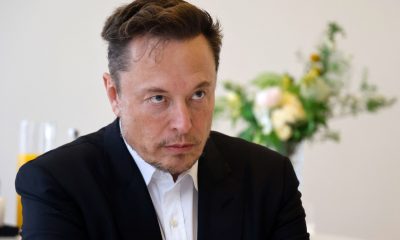
Billionaire Musk, Trump’s biggest supporter, says, “You can’t change the world on 40 hours a week.” When asked, “How much do you need?” he doesn’t hesitate: “It varies by person, but about 80 [hours] consistently, sometimes over 100. The pain level increases exponentially above 80.”
If you work 7 days a week, that amounts to 14 hours a day. What Musk and Trump mean by “bringing production back to the US” seems to be like the “factory system” of the 19th century, where English workers were worked to death.
The “transhuman” robot fantasy points not to a system where production is done by humanoid robots, but one where humans are made robotic.













Wealthy buyers in the US are tearing down multimillion-dollar homes shortly after purchasing them for hundreds of millions of dollars.
According to a report by The Wall Street Journal, the trend is driven by a shortage of land in prestigious locations, particularly along coastlines.
For ultra-wealthy buyers, the prime factor has become the land’s location rather than the structure standing on it. After the acquired properties are flattened, newer, more modern homes are built on the cleared lots.
Drawing attention to the shift in the luxury real estate market, the report noted:
“The home itself, formerly the primary driver of an expensive real estate purchase, is now almost beside the point. Buyers are competing first and foremost for well-located land, situated on the ocean or a mountaintop.”
The newspaper cited moves by US billionaire William Lauder as an example. Lauder purchased the oceanfront estate of radio host Rush Limbaugh, who died in March 2023, for $155 million and had it completely demolished in July.
Lauder had previously torn down two homes situated on roughly 1.2 hectares of land along the Palm Beach coast. Having initially planned to construct his own residence on the parcel, Lauder subsequently sold the cleared plot for approximately $200 million.
Jonathan Miller, a real estate appraiser, stated that such transactions are becoming increasingly common as land prices rise.
Amid this momentum, estate agents have also begun marketing luxury homes directly as teardown lots.
Listings use artificial intelligence-generated imagery to showcase how the land would look without the structures on it.
Marketers avoid using the word “demolition” directly, resorting instead to terms such as “adaptive reuse”.
Teardown listings rise across luxury housing market
The trend is not confined to the coast and is spreading to other regions across the US.
Data from property brokerage Redfin reveals that references to demolishing buildings are becoming more frequent in sales listings.
The share of such listings exceeds 15% in the Bunker Hill Village area of Houston, while standing at 6.67% in Pimmit Hills, Virginia.
Dina Goldenteyer, a real estate agent working in Miami, remarked that serial demolitions have become more frequent because buyers no longer appreciate homes older than a decade.
Former retail executives Jamie Dooley and Christine Scott spent $3.7 million in 2020 to demolish a seaside home near Destin, Florida.
Although the couple spent five years building a modern home on the cleared site, they listed the resulting new structure with a demolition condition, citing the fact that no one wanted to buy the property as it stood.
William Paddock, an employee at the environmental consultancy WAP Sustainability, pointed to the environmental damage caused by this construction cycle.
Paddock emphasized that tearing down a home of roughly 1,000 square metres and replacing it with a new building of approximately 2,700 square metres generates a carbon footprint equivalent to the annual emissions of an average 250 American households.

An uptick in September inflation as the US midterm elections approach has pushed the cost-of-living debate back to the centre of the agenda for Democrats seeking to regain control of Congress from Republicans.
Annual inflation stood at 3.7% in September, according to the Consumer Price Index published by the Bureau of Labour Statistics, with energy, petrol, and electricity costs rising on a monthly basis.
Food prices remained flat from August to September, recording a 2.5% increase compared with the same period last year.
Democrats are anchoring their election campaigns to pledges of easing the cost of living, blaming the price increases on President Donald Trump’s tariffs and the war with Iran.
Trump and Republicans, pointing to the numerous left-wing candidates who won primary elections this year, contend that the opposition has become captive to “communists” within the party.
When annual inflation stood at 2.4% in February, the US and Israel launched the Iran war on the final day of that month, and prices continued to climb throughout the conflict.
The recent acceleration has not entirely reversed the retreat from the 40-year peak of 9.1% recorded in June 2022; however, the rate has remained above the Federal Reserve’s 2% target for over five years.
Fed policymakers raised the benchmark interest rate by a quarter of a percentage point last month, citing the battle against stubborn inflation. Officials will convene again next week to consider whether to raise rates or hold them within the 3.75% to 4% target range.
Energy and fuel record sharpest increase since first month of war
In September, energy prices posted their largest monthly jump since March, the first full month of the war with Iran, climbing 20.4% year-on-year. Energy costs had risen 2.1% from July to August, after falling 1.5% from June to July and 5.7% from May to June.
Recent escalations in Iranian attacks on oil tankers in the Strait of Hormuz, alongside more frequent strikes by Ukrainian forces against Russian refineries, have strained global crude oil and refined product markets, driving up US petrol and diesel prices.
Petrol prices also recorded their sharpest monthly increase since the first month of the war, climbing 9.1% from August to September, bringing the annual increase to 35.3%.
American Automobile Association (AAA) data shows the average price of regular petrol across the US stands at $4.26 per gallon; while below the level of roughly $4.48 recorded a month ago, it remains more than $1.20 higher than a year earlier. Average gallon prices exceed $6 in California and $5 in both Washington state and Nevada.
Electricity prices rose 0.2% from August to September, offsetting the 0.2% decline between July and August, and were up 4.4% year-on-year.
Heavy power demand from new data centres is feeding through into local household electricity bills. Trump argued that companies must cover the cost of the electricity required by their data centres themselves.
In a post on Truth Social, Trump claimed that he was requiring large data centres to generate their own power and feed the surplus back into the local grid, suggesting this could bring about “a major drop” in electricity prices.
Used vehicle market posts monthly rise as food costs stabilise
The cost of food at home fell 0.1% month-on-month in September, while dining out increased 0.2%.
Egg prices dropped to $2.27 a dozen, falling roughly 35% compared with September 2025 and remaining well below the 20-year peak of $6.23 recorded in March 2025.
Ground beef prices rose roughly 2.4% compared with September 2025, but at $6.48 a pound, they remained below the 20-year high of $6.98 reached in June.
Chicken held steady at its year-earlier level of $2.06 per pound last month, having fluctuated between $2.01 and $2.09 since November 2024.
Used car and truck prices fell 1.5% compared with September 2025, but rose 0.7% month-on-month in September following 0.4% increases in both July and August.
Heather Long, chief economist at Navy Federal Credit Union, noted that the sector faces severe pressure stemming from a combination of expensive replacement parts and a shortage of skilled labour.
Speaking to The Hill, Long emphasised that every cost pressure across the market is being felt directly at local auto repair shops.

Anthropic, developer of the artificial intelligence model Claude, reported a net loss of $80.7 billion for the first six months of 2026 ending 30 June.
According to a report by The Wall Street Journal citing the company’s draft initial public offering prospectus, this recorded loss nearly doubled the $42 billion loss incurred across the entirety of 2025.
The vast majority of that enormous figure, accounting for $72 billion, stemmed from accounting-driven book-value write-downs.
In contrast, the company saw a sharp surge in revenue, with turnover in the first half of the year climbing to $16.3 billion from $1.1 billion in the same period of the prior year.
During this period, Anthropic spent approximately $9 billion on computing power and infrastructure needs, surpassing in just six months the $7.3 billion spent across the whole of 2025.
The company has commitments to pay roughly $450 billion over the next seven to 10 years under cloud service contracts.
Under these obligations, contracts are planned for $111 billion with Google Cloud, $110 billion with Amazon Web Services, and $31 billion with Microsoft.
Anthropic will also spend up to $86 billion by 2033 and 2034, respectively, to lease Nvidia chips through smaller AI-focused cloud providers Nscale and Lambda.
The company could spend an additional $750 billion in the coming years to expand its computing capacity.
Roughly a third of the draft IPO prospectus was dedicated directly to risk factors.
The document highlighted the possibility that models could cause tangible real-world harm, noting that artificial intelligence could exhibit a “self-preservation” tendency and produce responses resembling “blackmail”.
Anthropic warned that the scale of damage caused by an AI-driven “catastrophic event” could render insuring against such risks impossible.
According to market expectations, Anthropic’s IPO could rank among the largest transactions in history, potentially surpassing SpaceX’s record.
Following the market debut, the company’s market valuation is projected to reach up to $2 trillion.

German officials urge fighter jet alliance with Sweden and Spain

US wealthy demolish multimillion-dollar mansions for land

US and Israel weigh Iran strikes after midterm vote, reports say

Pentagon plans covert spy ring for economic war on China, report says

EU reopens debate on naming envoy for Ukraine talks with Putin
-

 America2 weeks ago
How will Brazil’s presidential runoff work?
-

 Europe2 weeks ago
Berlin Left Party backs Israel’s right to exist for coalition pact
-

 Diplomacy2 weeks ago
The West is preparing for war not with Russia, but with its own people, French analyst Georges Kuzmanovic insists
-

 Russia2 weeks ago
71 EU lawmakers demand closure of Russian Houses in 15 member states
-

 Europe2 weeks ago
MI6 investigates potential leaks after former BND chief is detained
-

 Russia2 weeks ago
US and Russian figures discuss American stake in Nord Stream lines
-

 Russia2 weeks ago
Drone strike shuts down Yandex data centre in Russia’s Ryazan region
-

 America1 week ago
Trump weighs presidential memorandum to cut surging US diesel prices
