
America
Trump threatens Brazil with 50% tariff over Bolsonaro legal case


US President Donald Trump has threatened to impose a 50% tariff on Brazil, citing the legal case against former Brazilian President Jair Bolsonaro.
In a post on his social media account, Trump referred to Jair Bolsonaro, the former right-wing president and rival to Lula da Silva, who is on trial for an attempted coup following his defeat in the 2022 elections.
Trump established a political link, stating that he made this change “partly due to Brazil’s insidious attacks on free elections and the fundamental free speech rights of Americans.”
The charges against Bolsonaro, who emulated Trump’s political style during his presidency, stem from an investigation into post-election events in Brazil’s capital, which have been compared to the insurrection attempt in Washington on January 6, 2021.
As his legal troubles have mounted, Bolsonaro has repeatedly sought help from Trump.
Following Trump’s announcement, the Brazilian real lost about 3% of its value against the US dollar, and the iShares MSCI Brazil ETF, the largest exchange-traded fund tracking the country’s stocks in the US, fell by approximately 2% at market close.
Brazil was already set to be subject to a tax of at least 10% under the “reciprocal” tariffs Trump announced in April.
This letter, the latest in a series of more than 20 issued by Trump in recent days, marked the first significant increase over previously announced rates.
Shortly after the announcement, Lula convened a meeting at the presidential palace with senior cabinet members, including Finance Minister Fernando Haddad, Foreign Minister Mauro Vieira, and Vice President Geraldo Alckmin, who also heads the Brazilian Ministry of Industry and Commerce, according to two people familiar with the situation.
In a post on social media late Wednesday, Lula stated that Brazil would not be “lectured” by anyone, adding that the case against those who planned the coup is solely a matter for the country’s justice system and is “not subject to interference or threats.”
Lula said, “Any unilateral tariff increase will be met with Brazil’s economic reciprocity law. The sovereignty, respect, and interests of the Brazilian people are the principles that guide our relations with the world.”
The US is Brazil’s second-largest trading partner after China, and such a high tariff could cause significant damage to certain sectors of the South American country’s economy.
“Steel products, transportation equipment (especially aircraft and aircraft parts), special machinery (like construction equipment), and non-metallic minerals constitute a significant portion of Brazil’s exports to the US,” said Felipe Arslan, CEO of Morada Capital, speaking to Bloomberg.
Beyond the economic effects, analysts expressed concern about the political consequences of the tariffs.
The US and Brazil are historic partners that have long maintained strong relations, even when led by presidents with ideological differences, and Trump’s dynamic announcement risks jeopardizing these ties.
“This is not just a matter of bilateral trade. These tariffs indicate an institutional deterioration and damage to the relationship between our countries. A 50% tariff could make exports impossible in many cases,” said Solange Srour, head of macroeconomics for Brazil at UBS Global Wealth Management.
Trump’s announcement came just days after he threatened to impose additional tariffs on developing countries in the BRICS bloc for their “anti-American policies.”
BRICS leaders, hosted by Lula in Rio de Janeiro this week, criticized trade-distorting tariff policies and military strikes against Iran in their official communiqués. Although these steps avoided a direct challenge to the US, they created friction with Trump.
Having rarely mentioned Brazil in the first months of his term, Trump rushed to Bolsonaro’s defense on Monday, accusing the South American nation of “political persecution” against its former president.
In the letter, Trump reiterated his call for authorities to drop the charges related to the coup attempt allegations against Bolsonaro.
“This case should not be tried. This is a witch hunt and must end immediately!” Trump wrote.
Trump also instructed US Trade Representative Jamieson Greer to launch a Section 301 investigation against Brazil, citing the country’s “ongoing attacks on the digital trade activities of American companies.”
Such an investigation, used to probe potentially unfair trade practices, could lead to the US imposing additional sanctions on Brazil.
On Monday, at the end of the BRICS summit, Lula sharply criticized Trump, telling him to mind his own business and that he was “not responsible for threatening tariffs on social media.”
Lula also called on world leaders to find ways to reduce international trade’s dependence on the dollar.
A spokesperson for the Brazilian Supreme Court, which is overseeing Bolsonaro’s trial, declined to comment. Earlier on Wednesday, the Brazilian Foreign Ministry summoned the top US representative in Brazil to a meeting to provide information about the statements regarding Bolsonaro.
Brazil is an unusual case among Trump’s latest tariff targets because it runs a trade deficit with the US, whereas nearly all other targeted countries have large surpluses. According to statistics, in 2024, Brazil imported approximately $44 billion worth of American products, while US imports from Brazil totaled about $42 billion. Brazil is among the top 20 trading partners of the US.










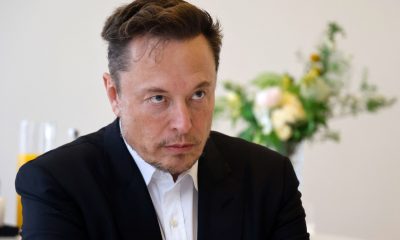


Wealthy buyers in the US are tearing down multimillion-dollar homes shortly after purchasing them for hundreds of millions of dollars.
According to a report by The Wall Street Journal, the trend is driven by a shortage of land in prestigious locations, particularly along coastlines.
For ultra-wealthy buyers, the prime factor has become the land’s location rather than the structure standing on it. After the acquired properties are flattened, newer, more modern homes are built on the cleared lots.
Drawing attention to the shift in the luxury real estate market, the report noted:
“The home itself, formerly the primary driver of an expensive real estate purchase, is now almost beside the point. Buyers are competing first and foremost for well-located land, situated on the ocean or a mountaintop.”
The newspaper cited moves by US billionaire William Lauder as an example. Lauder purchased the oceanfront estate of radio host Rush Limbaugh, who died in March 2023, for $155 million and had it completely demolished in July.
Lauder had previously torn down two homes situated on roughly 1.2 hectares of land along the Palm Beach coast. Having initially planned to construct his own residence on the parcel, Lauder subsequently sold the cleared plot for approximately $200 million.
Jonathan Miller, a real estate appraiser, stated that such transactions are becoming increasingly common as land prices rise.
Amid this momentum, estate agents have also begun marketing luxury homes directly as teardown lots.
Listings use artificial intelligence-generated imagery to showcase how the land would look without the structures on it.
Marketers avoid using the word “demolition” directly, resorting instead to terms such as “adaptive reuse”.
Teardown listings rise across luxury housing market
The trend is not confined to the coast and is spreading to other regions across the US.
Data from property brokerage Redfin reveals that references to demolishing buildings are becoming more frequent in sales listings.
The share of such listings exceeds 15% in the Bunker Hill Village area of Houston, while standing at 6.67% in Pimmit Hills, Virginia.
Dina Goldenteyer, a real estate agent working in Miami, remarked that serial demolitions have become more frequent because buyers no longer appreciate homes older than a decade.
Former retail executives Jamie Dooley and Christine Scott spent $3.7 million in 2020 to demolish a seaside home near Destin, Florida.
Although the couple spent five years building a modern home on the cleared site, they listed the resulting new structure with a demolition condition, citing the fact that no one wanted to buy the property as it stood.
William Paddock, an employee at the environmental consultancy WAP Sustainability, pointed to the environmental damage caused by this construction cycle.
Paddock emphasized that tearing down a home of roughly 1,000 square metres and replacing it with a new building of approximately 2,700 square metres generates a carbon footprint equivalent to the annual emissions of an average 250 American households.
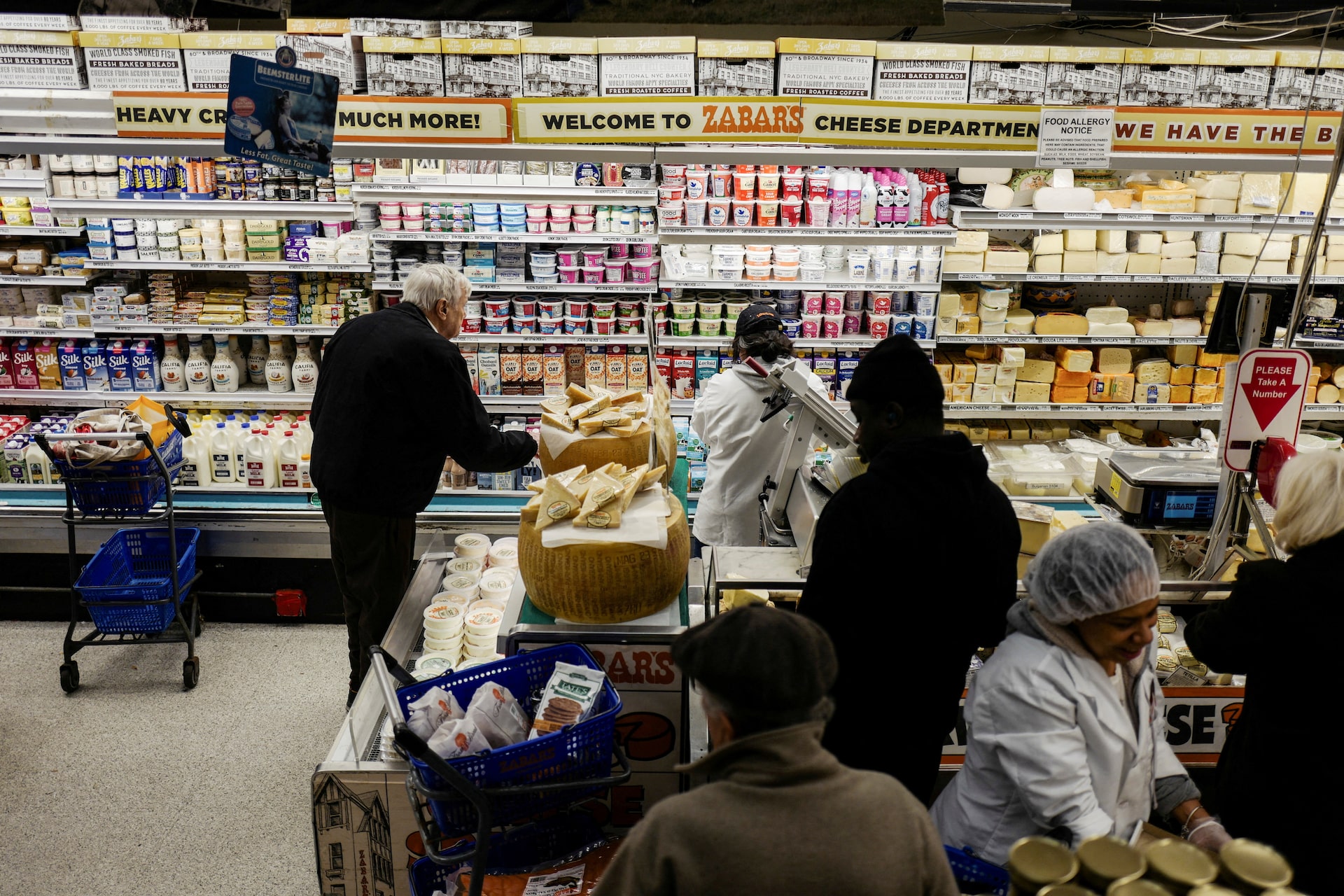
An uptick in September inflation as the US midterm elections approach has pushed the cost-of-living debate back to the centre of the agenda for Democrats seeking to regain control of Congress from Republicans.
Annual inflation stood at 3.7% in September, according to the Consumer Price Index published by the Bureau of Labour Statistics, with energy, petrol, and electricity costs rising on a monthly basis.
Food prices remained flat from August to September, recording a 2.5% increase compared with the same period last year.
Democrats are anchoring their election campaigns to pledges of easing the cost of living, blaming the price increases on President Donald Trump’s tariffs and the war with Iran.
Trump and Republicans, pointing to the numerous left-wing candidates who won primary elections this year, contend that the opposition has become captive to “communists” within the party.
When annual inflation stood at 2.4% in February, the US and Israel launched the Iran war on the final day of that month, and prices continued to climb throughout the conflict.
The recent acceleration has not entirely reversed the retreat from the 40-year peak of 9.1% recorded in June 2022; however, the rate has remained above the Federal Reserve’s 2% target for over five years.
Fed policymakers raised the benchmark interest rate by a quarter of a percentage point last month, citing the battle against stubborn inflation. Officials will convene again next week to consider whether to raise rates or hold them within the 3.75% to 4% target range.
Energy and fuel record sharpest increase since first month of war
In September, energy prices posted their largest monthly jump since March, the first full month of the war with Iran, climbing 20.4% year-on-year. Energy costs had risen 2.1% from July to August, after falling 1.5% from June to July and 5.7% from May to June.
Recent escalations in Iranian attacks on oil tankers in the Strait of Hormuz, alongside more frequent strikes by Ukrainian forces against Russian refineries, have strained global crude oil and refined product markets, driving up US petrol and diesel prices.
Petrol prices also recorded their sharpest monthly increase since the first month of the war, climbing 9.1% from August to September, bringing the annual increase to 35.3%.
American Automobile Association (AAA) data shows the average price of regular petrol across the US stands at $4.26 per gallon; while below the level of roughly $4.48 recorded a month ago, it remains more than $1.20 higher than a year earlier. Average gallon prices exceed $6 in California and $5 in both Washington state and Nevada.
Electricity prices rose 0.2% from August to September, offsetting the 0.2% decline between July and August, and were up 4.4% year-on-year.
Heavy power demand from new data centres is feeding through into local household electricity bills. Trump argued that companies must cover the cost of the electricity required by their data centres themselves.
In a post on Truth Social, Trump claimed that he was requiring large data centres to generate their own power and feed the surplus back into the local grid, suggesting this could bring about “a major drop” in electricity prices.
Used vehicle market posts monthly rise as food costs stabilise
The cost of food at home fell 0.1% month-on-month in September, while dining out increased 0.2%.
Egg prices dropped to $2.27 a dozen, falling roughly 35% compared with September 2025 and remaining well below the 20-year peak of $6.23 recorded in March 2025.
Ground beef prices rose roughly 2.4% compared with September 2025, but at $6.48 a pound, they remained below the 20-year high of $6.98 reached in June.
Chicken held steady at its year-earlier level of $2.06 per pound last month, having fluctuated between $2.01 and $2.09 since November 2024.
Used car and truck prices fell 1.5% compared with September 2025, but rose 0.7% month-on-month in September following 0.4% increases in both July and August.
Heather Long, chief economist at Navy Federal Credit Union, noted that the sector faces severe pressure stemming from a combination of expensive replacement parts and a shortage of skilled labour.
Speaking to The Hill, Long emphasised that every cost pressure across the market is being felt directly at local auto repair shops.

Anthropic, developer of the artificial intelligence model Claude, reported a net loss of $80.7 billion for the first six months of 2026 ending 30 June.
According to a report by The Wall Street Journal citing the company’s draft initial public offering prospectus, this recorded loss nearly doubled the $42 billion loss incurred across the entirety of 2025.
The vast majority of that enormous figure, accounting for $72 billion, stemmed from accounting-driven book-value write-downs.
In contrast, the company saw a sharp surge in revenue, with turnover in the first half of the year climbing to $16.3 billion from $1.1 billion in the same period of the prior year.
During this period, Anthropic spent approximately $9 billion on computing power and infrastructure needs, surpassing in just six months the $7.3 billion spent across the whole of 2025.
The company has commitments to pay roughly $450 billion over the next seven to 10 years under cloud service contracts.
Under these obligations, contracts are planned for $111 billion with Google Cloud, $110 billion with Amazon Web Services, and $31 billion with Microsoft.
Anthropic will also spend up to $86 billion by 2033 and 2034, respectively, to lease Nvidia chips through smaller AI-focused cloud providers Nscale and Lambda.
The company could spend an additional $750 billion in the coming years to expand its computing capacity.
Roughly a third of the draft IPO prospectus was dedicated directly to risk factors.
The document highlighted the possibility that models could cause tangible real-world harm, noting that artificial intelligence could exhibit a “self-preservation” tendency and produce responses resembling “blackmail”.
Anthropic warned that the scale of damage caused by an AI-driven “catastrophic event” could render insuring against such risks impossible.
According to market expectations, Anthropic’s IPO could rank among the largest transactions in history, potentially surpassing SpaceX’s record.
Following the market debut, the company’s market valuation is projected to reach up to $2 trillion.

German officials urge fighter jet alliance with Sweden and Spain

US wealthy demolish multimillion-dollar mansions for land

US and Israel weigh Iran strikes after midterm vote, reports say

Pentagon plans covert spy ring for economic war on China, report says

EU reopens debate on naming envoy for Ukraine talks with Putin
-

 America2 weeks ago
How will Brazil’s presidential runoff work?
-

 Europe2 weeks ago
Berlin Left Party backs Israel’s right to exist for coalition pact
-

 Diplomacy2 weeks ago
The West is preparing for war not with Russia, but with its own people, French analyst Georges Kuzmanovic insists
-

 Russia2 weeks ago
71 EU lawmakers demand closure of Russian Houses in 15 member states
-

 Europe2 weeks ago
MI6 investigates potential leaks after former BND chief is detained
-

 Russia2 weeks ago
US and Russian figures discuss American stake in Nord Stream lines
-

 Russia2 weeks ago
Drone strike shuts down Yandex data centre in Russia’s Ryazan region
-

 America1 week ago
Trump weighs presidential memorandum to cut surging US diesel prices
