
Asia
Türkiye’s BRICS bid discussed at Shanghai University

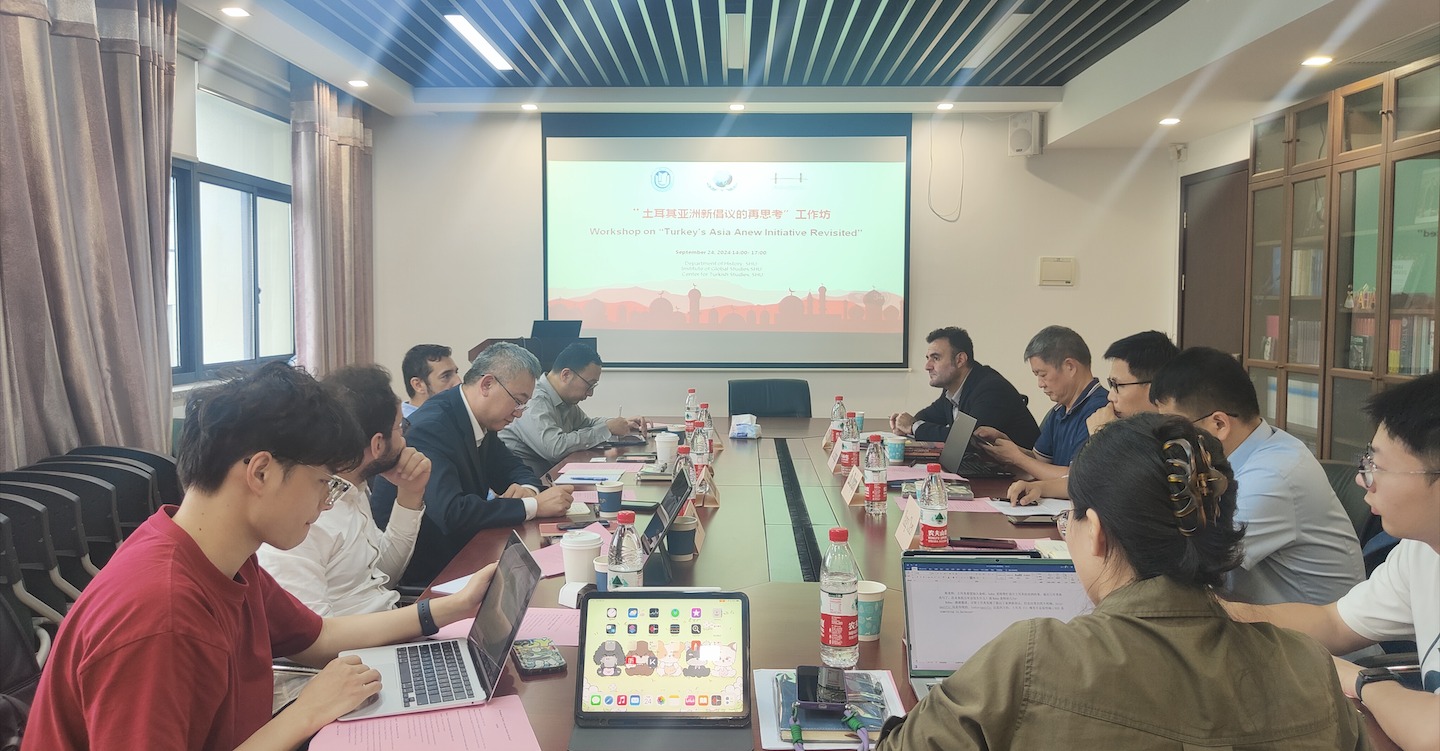
On 24 September, the Institute of Global Studies of Shanghai University organised a workshop on ‘Türkiye’s Re-Asia Initiative’.
Moderated by Prof. Guo Changgang, Director of the Centre for Turkish Studies at Shanghai University, the workshop discussed China and Türkiye’s foreign policies, the rising global South, the BRICS agenda and Türkiye’s membership bid.
Opening the event, Prof. Guo Changgang said: “As Ankara is applying to join BRICS, it is a good time to talk about Türkiye’s Asia policy,” highlighting the Re-Asia Initiative.
“Türkiye’s efforts to join the Shanghai Cooperation Organisation (SCO) and participate in ASEAN show that Türkiye has adopted a ‘pendulum’ position between the West and the East,” said Prof. Dr. Gürol Baba of Ankara Social Sciences University. Gürol Baba said Türkiye’s move to join BRICS will make it a more ‘visible’ actor in the region: “Türkiye is an active middle power. It should cooperate with like-minded powers. For example, Türkiye is a founding member of the MIKTA group. BRICS is also a place where Türkiye can find like-minded countries. Baba said Türkiye wanted to keep East and West together in its foreign policy.
Prof Zou Zhigiang of Fudan University said: ‘Türkiye is changing its Asia policy. This is because an Asia that is economically and technologically confident, competitive and rising in every sense cannot be ignored. Türkiye is currently seeking to increase its engagement in the region. President Erdoğan attended the Shanghai Cooperation Organisation summit in 2022 for the first time as a NATO country. It has also been confirmed that Türkiye has applied to join BRICS,” he said. Prof Zou summed up why Türkiye attaches such importance to Asia in 4 points:
-
Accumulated frustration with the West and the European Union. It is now clear that Türkiye’s EU membership will not happen in the near future.
-
Türkiye is seeking strategic autonomy. It wants to be a central power in the world and pursue a balanced policy. It wants to be a centre between East and West and not give up its NATO membership.
-
The growing global influence and attractiveness of the SCO and BRICS.
-
Türkiye’s domestic economy faces challenges. New economic markets and capital inflows are vital for Türkiye.
Prof Zhou Shixin of the Shanghai Institute of International Studies commented on China’s Asia policy:
“China is seen by the US as the biggest threat, so it is blocked and ostracised by the US and some of its allies. China-US relations are one of the most important factors driving the regional power shift and order transition in the Asia-Pacific. China is expanding its presence and increasing its influence in the Asia-Pacific. China is acting as a modern and sovereign country, making great efforts to defend its territorial integrity and sovereign independence and to achieve national reunification. China also seeks peaceful and equal coexistence and interaction with the US, but does not seek to coerce the US. China seeks to strengthen security and economic relations with more regional countries on the basis of the principles of ‘friendship, sincerity, mutual benefit and inclusiveness’. China seeks to manage and resolve territorial disputes with its neighbours primarily through bilateral diplomatic consultations and negotiations”.
Commenting on Türkiye’s Asia Re-entry Initiative, Prof. Zhou said that Ankara has demonstrated its willingness to pursue a multi-dimensional foreign policy based on the Strategic Depth Doctrine and made the following suggestions: “Türkiye can focus more on Southeast Asia rather than South Asia and Northeast Asia, Türkiye can interact with Asia-Pacific countries as a sovereign country, not as a NATO member, even with Japan and South Korea. Türkiye could promote more economic cooperation rather than security cooperation, Türkiye could apply to join the ASEAN Regional Forum as an Asian country, and Türkiye could negotiate more free trade agreements with Asia-Pacific countries beyond South Korea (1 May 2013), Malaysia (1 August 2015) and Singapore (1 October 2017) before joining the EU. As a result, China is willing to help Türkiye further coordinate with some regional countries.”
Prof Zhou Yiqi of the Shanghai Institute of International Studies spoke about China’s Middle East policy:
“There are four major parties in the Middle East: Arab countries, Israel, Iran and Türkiye. China has strengthened its relations with most of the major powers there. However, Türkiye remains the only party that has not yet signed a partnership agreement with China. Diplomatic relations between the two: Strategic Cooperation Relations. Although relations between China and Israel are rather poor, there is still a relationship of innovative partnership. In addition, China has successfully negotiated the conflict between Iran and Saudi Arabia. China’s partnership between these two countries has become a bridge that brings them together.
The traditional stereotype is that China is only interested in economic issues and is a free rider on security in the region. However, after its mediation between Iran and Saudi Arabia and its efforts to bring peace to Gaza, China has become an active player in Middle East security issues. However, this still differs from US efforts to use the alliance as a bargaining chip. China has always been quite fair in the Middle East, which has earned it trust. But it is also on the side of justice, for example on the Palestinian issue.”
Commenting on Türkiye’s Re-Asia Initiative, Prof. Zhou Yiqi said: “I think it is important for Türkiye to improve its relations with China, because China-Türkiye relations are even weaker than China-Israel relations. China is looking for stability in the face of apparent uncertainty. But I don’t understand why the foreign minister went back to Türkiye and suddenly raised taxes on electric cars imported from China. Such issues have become a hot topic on Chinese social media and this is definitely not positive for people-to-people understanding,” he said.
Dr Selçuk Aydın of Boğaziçi University commented on Türkiye’s relations with Asia:
“The origins of modern Türkiye go back to the early 19th century. The biggest event of that period was the abolition of the Janissaries. In other words, while the Ottoman Empire was undergoing a transformation, this process was expressed with a ‘new’ term. If we look back to the 1920s, there were again discussions about ‘New Türkiye’. When Erdoğan came to power, all the news was about ‘New Türkiye’. In fact, Asia is nothing new for Türkiye; it already has historical, cultural and religious links. I think Dr Serdar has been working on Uighur and Xinjiang issues. Historically, this region has been very connected and interacted with Türkiye.
Secondly, Türkiye’s participation in the Belt and Road Initiative is a great initiative. There is a mystery in Türkiye about China and in China about Türkiye. How is Türkiye perceived? For China, the concept of Türkiye is probably limited to NATO. Then there is the Xinjiang issue. There are two important issues that hinder Türkiye’s cooperation with China.
The first step we need to discuss is Türkiye’s dissatisfaction with what the US is forcing it to do in the Middle East. Especially the Syria incident. That was a turning point in diplomacy. Another example is the FETO case. Gulen had a close relationship with the US and there was a coup attempt. After this incident, Türkiye’s diplomatic direction changed. After the Arab Spring, Türkiye realised that the US did not support liberal movements in the Middle East, but only focused on its own interests. Subsequently, Türkiye became more involved in Middle Eastern affairs, for example by mobilising its military abroad in Syria, Azerbaijan and elsewhere.
We need to analyse Türkiye’s foreign policy from these perspectives. First, history, which is also intertwined with religion. The Ottoman Empire was the centre of the Caliphate. The second is the racial dimension, which also bears traces of the late Ottoman Empire. Turkish consulates are therefore the main pillar of Turkish foreign policy. The third pillar of Turkish policy is the promotion of a non-Western approach. This is related to the foundations of modern Türkiye and is very anti-colonialist. At the same time, Türkiye is geographically close to Western countries and has historically cooperated with them.
Türkiye’s neighbours are often in civil war or conflict. So Türkiye has to look to Asia, because China has incredible lessons to teach in that region. China may be the only superpower that wants peace in the Middle East.”
Commenting on Türkiye-China relations, Dr Serdar Yurtçiçek said:
“Professor Yiqi mentioned that there are four important powers in the Middle East (Türkiye, Arabia, Iran and Israel) and although China has very good relations with three of them, it has not been able to improve its relations with Türkiye. The reason for this is the Uighur issue, as Selçuk mentioned earlier. Since 2016, I have been living in China and researching Türkiye’s China policy. During this time, I have met many Chinese academics and politicians. The conclusion I have drawn from my experience and research is that the most important issue between Türkiye and China is the Uyghur issue, and unless this issue is resolved, all other areas of cooperation cannot be built in a relationship of mutual trust. Last year, former ambassador Emin Önen said: ‘There is mutual understanding on 99 points in Türkiye-China relations, but let’s not agree on one point. This should not hinder the development of bilateral relations’. Prof. Yang Chen said that China wants to improve its relations with Türkiye, but this point is as important as the other 99 points and the two countries should keep their mutual promises. That point is the Uighur issue. And it is clear that Turkish academics and politicians do not understand how important the Xinjiang issue is for China and that it is a non-negotiable issue in terms of national sovereignty.
After the Second World War, Turkish-Chinese relations developed largely within the foreign policy boundaries drawn by the United States. In particular, the fight against China in the Korean Civil War and Türkiye’s eventual accession to NATO led to Uighur figures such as Isa Yusuf Alptekin and Mehmet Emin Buğra defecting to Türkiye, making Türkiye a centre for anti-China Uighur separatist organisations. Even diplomatic relations between Türkiye and China only started after the US established diplomatic relations with China.
The situation was no different before the Second World War. Türkiye prioritised its friendship with the Soviets in its foreign policy and was wary of taking any steps that might anger the Soviets. For example, in 1944, Türkiye and the Republic of China almost signed a treaty of friendship, but Türkiye cancelled the treaty at the last minute so as not to anger the Soviets. This was because Türkiye had serious problems with the Soviets, especially the issue of the Straits Convention. The situation was similar in China. Xinjiang was largely under Soviet control. According to a Turkish diplomat, if a Chinese official wanted to go to Xinjiang, he first had to get permission from the Soviet consul in Kashgar.
Today, for the first time, there is a possibility of strategic relations between China and Türkiye without the shadow of a third country. Türkiye’s application for BRICS membership should be seen in this context.”









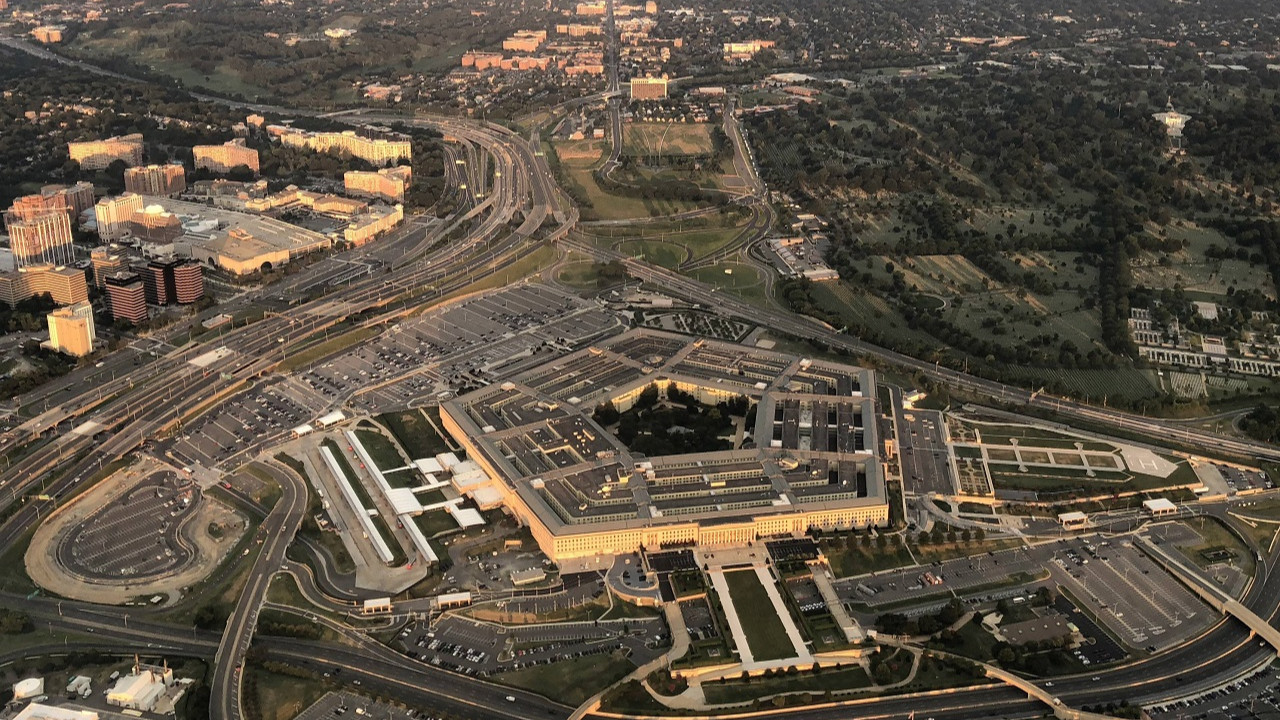
The US Department of War (Pentagon) is reportedly planning to establish an extensive network of deep-cover agents to wage economic warfare against China and other adversaries of the US.
According to a report by The Washington Post citing six sources familiar with the initiative, the plan has not yet been put into effect. The newspaper reported that the initiative remains at the planning stage. The Pentagon, however, denies that any such initiative exists.
The report said the operatives would pose as entrepreneurs or private sector employees while concealing their ties to the US government. The network’s mission would be to gather economic intelligence and counter China.
The programme is led by Tom Rakusa, who spent 39 years at the CIA. Rakusa serves as a senior adviser to Deputy Secretary of Defence Steve Feinberg.
The proposed spy network is seen as part of a broader policy by the Donald Trump administration to sharpen economic competition with other countries.
The US is already resorting to tariffs, export controls, and investment in strategic sectors, alongside expanding its economic intelligence gathering.
According to The Washington Post, the new initiative demonstrates the Pentagon’s growing influence under the Trump administration. The department is currently seeking a record budget of $1.5 trillion.
Trade war flares up again with Trump’s return to the White House
The trade friction between the US and China flared up again following Donald Trump’s return to the White House. In April 2025, Washington raised tariffs on Chinese goods to as much as 145%, and Beijing retaliated with tariffs of up to 125%.
In May, US Secretary of State Marco Rubio described China as the primary geopolitical challenge facing Washington. Rubio said that to avoid war, the two sides needed to manage their conflict of interests.
In July, Chinese expert Zheng Yongnian did not simply warn that underestimating the US could prove to be a “fatal mistake”; he stated it explicitly.
According to Zheng’s assessment, the US maintains its primacy through the role of the dollar, its military superiority, and its technological advantages.
Even so, the two sides agreed in June to declare a truce and lower tariffs. In autumn 2026, the US and China extended their trade truce until 10 January 2027.
US Treasury Secretary Scott Bessent said the extension would give the parties more time to discuss economic issues.
Trade deals do not eliminate the strategic contradictions between the two countries. Financial Times columnist Rana Foroohar likened the race between the two nations for commercial, technological, and geopolitical influence to the 19th-century “Great Game” between the Russian and British empires.
Foroohar cited China’s standing in shipbuilding and commercial maritime transport, as well as its expanding footprint in overseas ports, among its key advantages.

Japan’s ruling Liberal Democratic Party (LDP) plans to restrict short-term property trading to rein in surging home prices in major urban centres, particularly Tokyo.
Led by Prime Minister Sanae Takaichi, the party aims to make support for working households a core priority ahead of local elections scheduled for April next year.
The LDP’s research commission on housing and land policy met on Wednesday to discuss the issue.
According to a report by the Nikkei Asia newspaper, Commission Chair and LDP lawmaker Midori Matsushima said at the opening of the meeting: “Prices of newly built condominiums across Tokyo’s 23 wards have doubled over the past decade. We must work on measures ensuring that people who wish to live in these homes can actually afford to buy them.”
Homeownership in the capital has become virtually unattainable for broad segments of the population. According to data from the Real Estate Economic Institute, the average sale price of a newly built condominium in Tokyo’s 23 wards rose %18.5 in fiscal 2025 compared with the previous year, reaching 137.84 million yen (around $872,000).
Meanwhile, statistics from the Ministry of Labour show that the average annual income of a full-time worker in the capital remained at 6.78 million yen in fiscal 2025. This widening gap between incomes and residential property prices is directly shaping political priorities.
During its campaign for the House of Representatives election in February, the LDP pledged to curb speculative transactions across metropolitan Tokyo and other regions. Earlier this month, a party project team focused on policies concerning foreign nationals also submitted a recommendation urging the government to introduce immediate tax measures against rising home prices.
Under current legislation, profits realized from properties sold within five years of acquisition are classified as “short-term capital gains”. These returns face a tax rate approaching %40, including income tax and local inhabitant tax.
Although this rate is twice the approximately %20 levied as “long-term capital gains” tax on properties held for more than five years, several party members argue it remains insufficient to deter speculation. Calls to tighten the framework may be considered as part of the annual tax reform package to be drafted in December alongside the LDP’s coalition partner, the Japan Innovation Party.
The ruling bloc wants to present concrete housing pledges to voters heading to the polls in April across numerous urban centres, including 22 of Tokyo’s wards where local assembly terms expire.
“We need to support families with children, who are typically at the stage of purchasing a home,” a senior LDP official said.
Opposition parties are also preparing alternative proposals that target not only prospective homebuyers, but also residents forced into the rental market by high property prices and now affected by escalating rents.
Tax steps take precedence over limits on foreign buyers
Several countries seeking answers to housing affordability pressures have imposed direct restrictions on foreign purchasers. In South Korea, real estate policies played a major part in the declining public approval ratings of President Lee Jae Myung.
In August 2025, authorities in Seoul introduced an approval requirement for foreign nationals buying homes in the capital and adjacent areas, while also mandating that buyers reside in the properties for at least two years.
Canada and Australia have enacted temporary bans on foreign residential purchases, while Singapore levies a %60 additional stamp duty on foreign buyers.
The role of overseas investors in Japan’s property market also drew debate during the February election. However, restrictions aimed directly at foreign nationals are viewed as potentially conflicting with international trade and services agreements.
Consequently, rather than imposing restrictions based on the nationality of buyers, the government is discussing tax measures aimed at speculative real estate deals, such as rapid resales.
Fears that sharp market measures could shake regional banks
Concerns have also surfaced that aggressive steps to force down prices could harm the wider national economy.
A senior LDP tax official cautioned that a steep drop in land prices could weaken local financial institutions, warning: “We must consider the impact on regional banks.”
The real estate sector accounts for roughly %18 of total lending by Japanese banks. This proportion sits well above the %10 level recorded during Japan’s bubble economy of the mid-to-late 1980s.
At certain regional banks, property lending accounts for nearly half of total loan portfolios.
According to March 2025 data from the Financial Services Agency, approximately one-quarter of all loans extended by regional banks to the real estate sector are concentrated directly in Tokyo’s five central wards.
Buoyant asset valuations, supported in part by rising stock indices, have underpinned strong public approval for the Takaichi administration. Observers note that property interventions designed to cool the market could drag down equity prices and weaken the government’s standing.
A senior official on the LDP research commission stressed that decision-makers must act with caution regarding the scope and timing of any measures intended to bring price increases under control.
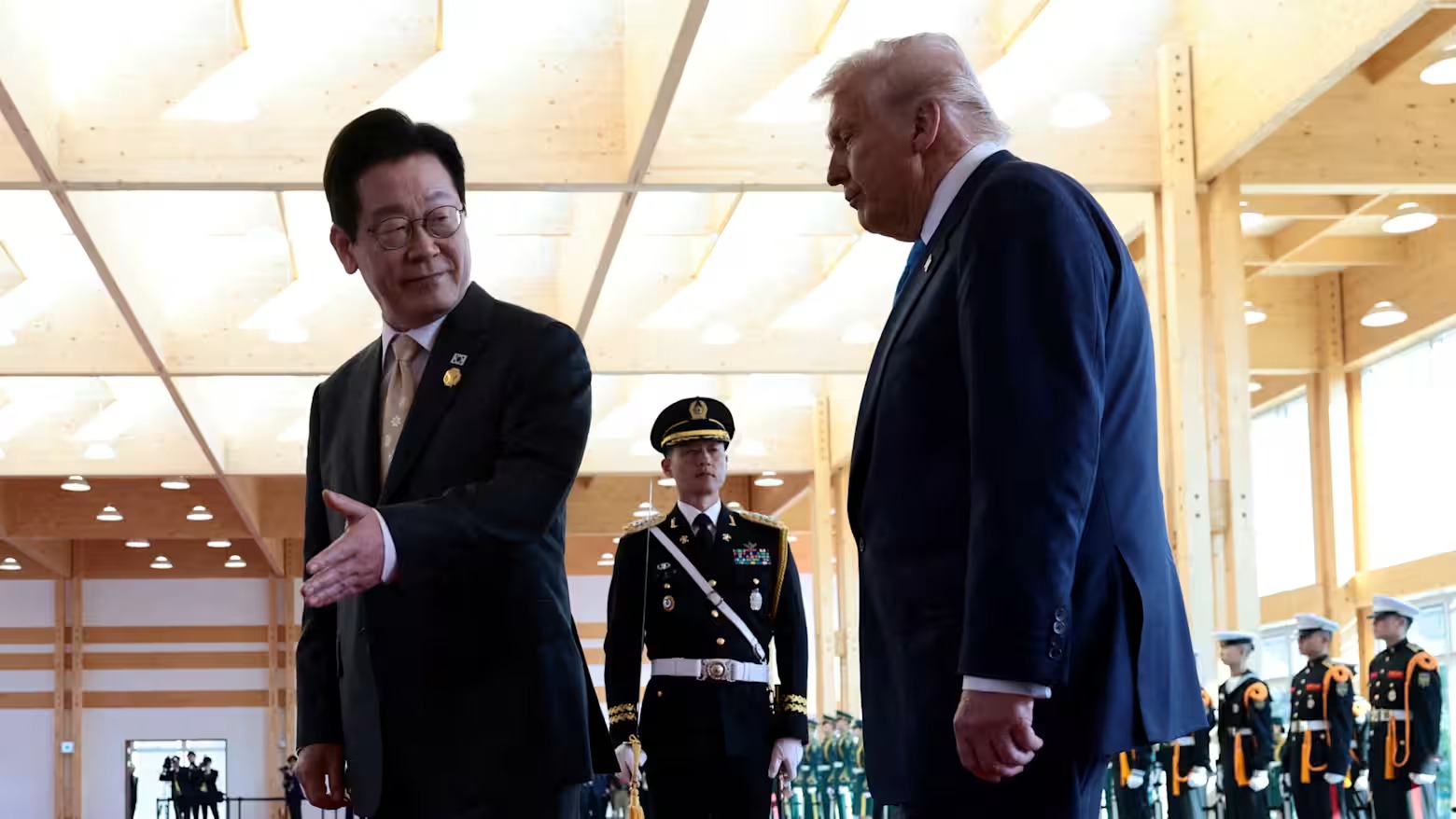
South Korea will spend $120 billion to construct eight nuclear power plants in the US under an agreement that provides for $350 billion in investments in exchange for lower tariffs.
The South Korean government also announced that Seoul and Washington will begin examining a liquefied natural gas (LNG) project in Alaska comprising a large-scale pipeline to transport natural gas from the north of the state to the south, alongside the construction of an LNG terminal for exports overseas.
Seoul stated that a decision regarding the LNG project will be made following a commercial feasibility study. However, US President Donald Trump said that South Korea would invest $54 billion in the project, pointing to an apparent lack of full coordination between the two sides on the matter.
Trade and Industry Minister Kim Jung-kwan said in a statement: “This announcement opens a new horizon of cooperation where the two countries join forces to develop joint commercial ventures in strategic areas directly linked to economic security and future sectors such as artificial intelligence, nuclear energy, and LNG.”
“We will adhere to the principle of prioritising national interests and investing solely in commercially viable projects,” Kim said.
Speaking at the White House, Trump characterised South Korea’s plans as “one of the largest energy infrastructure investments in American history”.
The announcement followed a meeting between Trump and South Korean President Lee Jae Myung roughly one year ago at the APEC Economic Leaders’ Meeting held in South Korea, where they agreed on the creation of a $350 billion investment fund.
Under that agreement, $150 billion was allocated to the shipbuilding sector and $200 billion to other sectors. In return, the US announced it would reduce tariffs imposed on goods imported from South Korea from 25% to 15%.
Under the nuclear power project, South Korea’s state-controlled utility will build two plants in the US, while Pennsylvania-based Westinghouse Electric will construct six plants.
According to the South Korean government, this will mark the first instance in which a foreign country builds its own nuclear power plants in the US.
South Korean firms are also evaluating the possibility of acquiring a stake in Westinghouse as part of negotiations over sharing profits generated by the project.
South Korea additionally announced that it will build a $22.3 billion natural gas-fired power plant in Texas with a capacity of 6,472 megawatts.
The facility will be designed to supply electricity directly to nearby data centres. The project’s first phase is targeted to begin commercial operations in 2029, with full-capacity operations slated for 2032.
Seoul also disclosed that it had agreed to allow the US to receive 50% of the profits generated by the projects until South Korea recoups all of its investments.
After South Korea fully recovers its total investment amount, 90% of the profits will go to the US.

German officials urge fighter jet alliance with Sweden and Spain

US wealthy demolish multimillion-dollar mansions for land

US and Israel weigh Iran strikes after midterm vote, reports say

Pentagon plans covert spy ring for economic war on China, report says

EU reopens debate on naming envoy for Ukraine talks with Putin
-

 Europe2 weeks ago
Berlin Left Party backs Israel’s right to exist for coalition pact
-

 America2 weeks ago
How will Brazil’s presidential runoff work?
-

 Diplomacy2 weeks ago
The West is preparing for war not with Russia, but with its own people, French analyst Georges Kuzmanovic insists
-

 Russia2 weeks ago
71 EU lawmakers demand closure of Russian Houses in 15 member states
-

 Europe2 weeks ago
MI6 investigates potential leaks after former BND chief is detained
-
 Russia2 weeks ago
US and Russian figures discuss American stake in Nord Stream lines
-

 Russia2 weeks ago
Drone strike shuts down Yandex data centre in Russia’s Ryazan region
-

 America2 weeks ago
Trump weighs presidential memorandum to cut surging US diesel prices
