
Diplomacy
Which European countries will comply with the ICC arrest warrant?

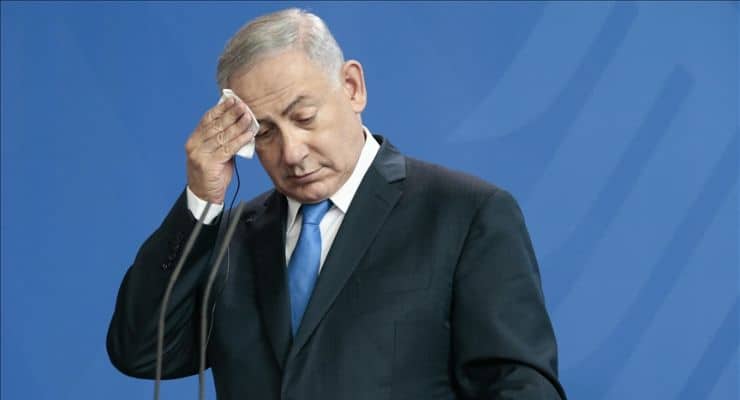
The International Criminal Court (ICC) arrest warrant against Israeli Prime Minister Benjamin Netanyahu and former Defence Minister Yoav Gallant has sparked widespread reactions across Europe. Countries including Ireland, Belgium, France, Slovenia, Denmark, the Netherlands, Finland, Sweden, Switzerland, Portugal, Spain, Norway, Lithuania, Estonia, and Liechtenstein have stated their readiness to comply with the ICC’s decision.
Following the ICC’s announcement on 21 November regarding arrest warrants for Netanyahu and Gallant on charges of war crimes and crimes against humanity committed in Gaza, most European nations have declared unconditional compliance. However, some countries criticized the decision, taking an ambiguous stance.
Borrell calls for compliance with court order
The EU’s High Representative for Foreign Affairs, Josep Borrell, urged member states to adhere to the ICC ruling, emphasizing its judicial rather than political nature. Borrell stated:
“This is not a political decision; it is a judicial decision. It is the verdict of an international court with strong support from EU member states. Its rulings are legal and binding. There can be no picking and choosing.”
Borrell also highlighted the dire situation in Gaza, describing it as “hell on earth,” and condemned the proliferation of “manipulation and disinformation.”
Countries supporting the ICC decision
A majority of European countries expressed their intention to respect and implement the ICC arrest warrant:
Ireland: Prime Minister Simon Harris remarked, “Ireland respects the role of the ICC. Those in a position to assist the Court in its vital work should act urgently.”
Netherlands: Foreign Minister Caspar Veldkamp stated that Netanyahu would be arrested if he visited the Netherlands, underscoring the nation’s obligation under the Rome Statute.
Belgium: Deputy Prime Minister Petra De Sutter called for compliance with the ruling and economic sanctions against Israel, stating, “War crimes and crimes against humanity cannot go unpunished.”
Spain: Deputy Prime Minister Yolanda Díaz affirmed, “We are always on the side of justice and international law. Genocide against the Palestinian people cannot go unpunished.”
France: Foreign Minister Jean-Noël Barrot declared that France would apply international law regarding the ICC’s decision. “France is committed to international justice and its independence,” he said.
Diverging opinions among European nations
Some countries expressed reservations about the ICC decision:
Germany: Foreign Minister Annalena Baerbock stated that Germany is analyzing the practical implications of the arrest warrants. Government spokesman Steffen Hebestreit noted that implementing such arrests might prove challenging.
Hungary: Prime Minister Viktor Orbán criticized the decision and extended an invitation to Netanyahu, guaranteeing immunity from the ICC’s jurisdiction during his visit.
Austria: Foreign Minister Alexander Schallenberg argued that the ICC’s decision undermines the Court’s credibility while emphasizing the need for consistent application of international law.
Czech Republic: Prime Minister Petr Fiala described the decision as “unfortunate” but reaffirmed the country’s commitment to legal obligations under the Rome Statute.
Obligations under the Rome Statute
Under Articles 86 and 87 of the Rome Statute, states party to the ICC are required to cooperate with the Court and execute arrest warrants. Article 89 specifically mandates that any ICC member state must arrest and surrender individuals subject to arrest warrants when they enter its territory.
Previous cases demonstrate the challenges of enforcing such decisions. For example, South Africa and Jordan failed to execute arrest warrants for former Sudanese leader Omar al-Bashir, while Mongolia did not act on a warrant for Russian President Vladimir Putin. Nonetheless, these warrants restrict the freedom of movement for suspects, as seen with Putin’s avoidance of the BRICS summit in South Africa.
Netanyahu and Gallant will face similar restrictions, as they are now barred from traveling to 124 ICC member states, including all European Union members, Japan, Canada, Mexico, Australia, New Zealand, and most nations in Central and South America and Africa.









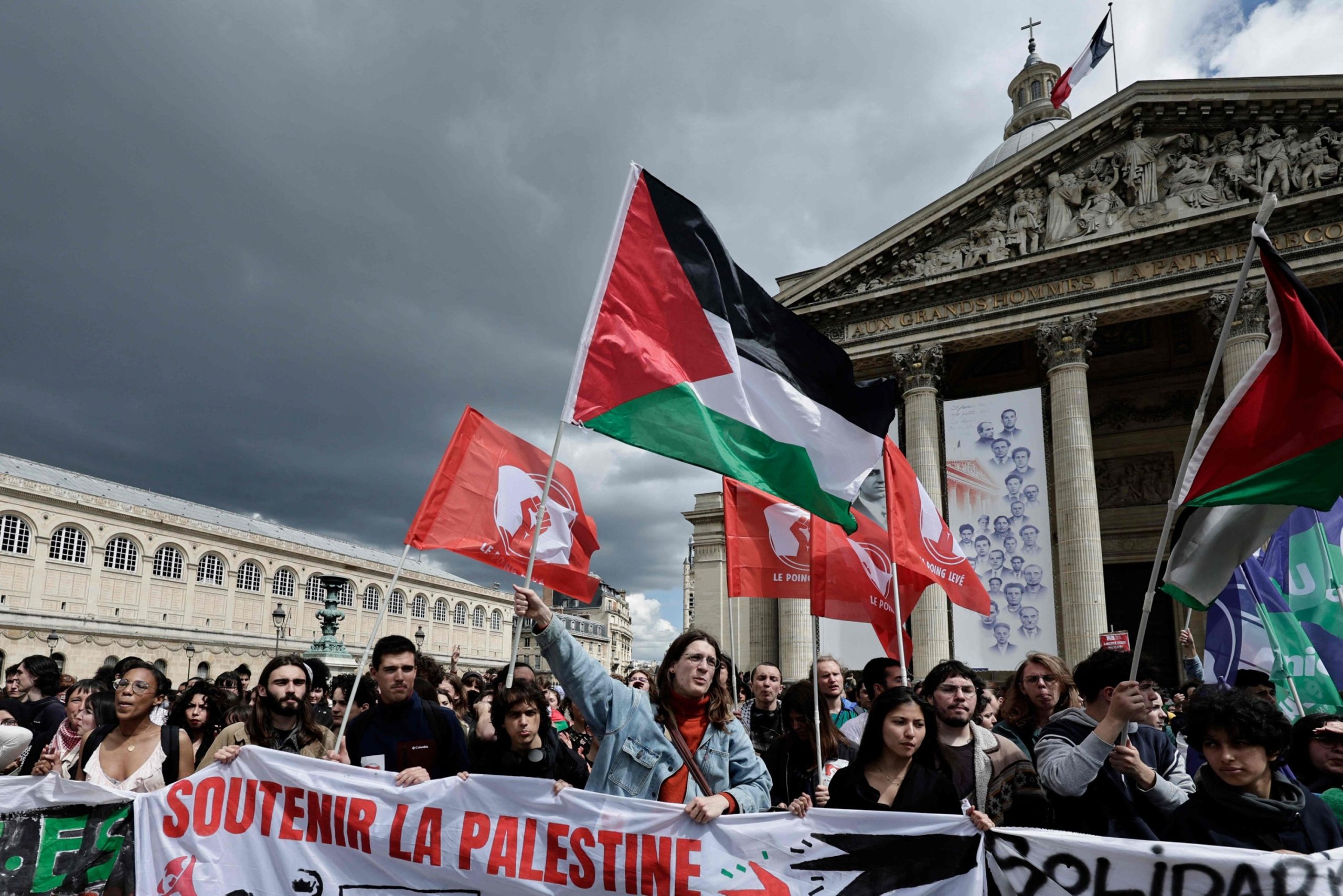
Appearing as a guest on the online programme hosted by American journalist and television presenter Tucker Carlson, political scientist, academic, and author of “The Holocaust Industry” Norman Finkelstein evaluated post-October 7 developments in Gaza, Israel’s military operations, free-speech crises across American universities, and the historical background of Gaza.
Responding to Carlson’s question regarding conditions in Gaza prior to the October 7 actions, Finkelstein stated that the roots of the issue trace back to 1948.
“Gaza became Gaza in 1948”
Explaining that the current demographic structure of the Gaza Strip was shaped by the forced displacement of 1948, Finkelstein said:
“Gaza became Gaza in 1948 as a result of Israel expelling approximately 750,000 Palestinian Arabs from the lands it incorporated into its borders. Around 300,000 of those 750,000 expelled individuals were sent to Gaza, and this population constituted roughly 80% of Gaza’s inhabitants. The indigenous population was overwhelmed by this massive influx of refugees. At that time, Gaza was part of Mandate Palestine under British rule.”
Finkelstein noted that conditions in the territory, which fell under Egyptian administration after 1948, drew the attention of international observers from the earliest years.
Recalling that United Nations officials serving in Gaza as early as the 1950s explicitly compared the territory to a concentration camp, Finkelstein cited historical accounts from the era:
“In July 1967, Al Gore Sr., then a senator from Tennessee, visited Gaza. Describing what he witnessed upon his return to the US Congress, he characterised Gaza as a concentration camp established on sand. Consequently, this has been the common terminology used by external observers visiting the region since 1948.”
Drawing attention to statements by Giora Eiland, former head of Israel’s National Security Council, Finkelstein noted that Eiland does not project a pro-peace profile, continues to advise the current Israeli government, and has publicly stated that he would welcome the outbreak of epidemics in southern Gaza.
Finkelstein continued:
“During a 2004 meeting with senior American officials, Giora Eiland described Gaza as a huge concentration camp. Eiland was an Israeli, a Jew, and head of the Israeli National Security Council. He naturally understood very well the historical gravity of designating a piece of land a concentration camp. The most painful aspect is that those days were Gaza’s best days.”
“A concentration camp kept on the brink of starvation”
Finkelstein recounted that former US President George W. Bush’s administration forced Palestinians into holding elections in 2006 as part of its democracy promotion agenda, noting that Hamas initially hesitated to participate on grounds that it would legitimise the 1993 Oslo Accords.
Hamas won the election backed by public support reacting against corruption within the Palestinian Authority, Finkelstein recalled, citing former US Secretary of State Hillary Clinton’s subsequent remarks expressing regret over the outcome. Observing that former US President Jimmy Carter monitored the process on the ground and described the balloting as completely free and fair, Finkelstein offered the following evaluation:
“Immediately after the elections, Israel, followed by the US and the European Union, imposed an almost medieval blockade on Gaza. Lengthy lists were drafted for items prohibited from entering Gaza. The entry of chocolate, chicks, potato crisps, spices, musical instruments, and notebooks was barred. Official documents were later exposed; they declared that they would keep the population of Gaza at a bare minimum humanitarian nutritional level. This was the diplomatic cover for keeping people living on the edge of starvation. Their objective was to induce the public to overthrow Hamas by keeping Gaza’s economy on the brink of collapse. When Salvador Allende’s government took power in Chile in 1971, the US had said it would make the economy scream. Israel did precisely that in Gaza.”
Finkelstein noted that former UN High Commissioner for Human Rights Mary Robinson observed during a 2008 visit that an entire civilisation was being destroyed, adding that prior to October 7, 2023, international bodies had described Gaza as a sinking ship and a toxic slum.
Pointing out that Israel for years termed its recurring military campaigns under the metaphor of mowing the lawn, Finkelstein stressed that this phrase assumes a horrifying dimension in light of the fact that half of Gaza’s population consists of children.
“Targeting children is an indicator of genocide”
Finkelstein described Operation Cast Lead in 2008, Operation Pillar of Defence in 2012, and Operation Protective Edge in 2014 as waves of high-tech slaughter.
Citing former International Committee of the Red Cross President Peter Maurer, who visited the territory following the 2014 assault and stated that he had never in his life seen destruction on the scale present in Gaza, Finkelstein illustrated the gulf between past attacks and the current situation with figures:
“During Operation Protective Edge, 18,000 homes were destroyed or severely damaged. Around 2.5 million tonnes of rubble were left behind. Since October 7, however, the number of destroyed dwellings has exceeded 325,000. Accumulated debris in Gaza has reached 61 million tonnes. While the 2014 devastation was considered unprecedented, it is no longer even a footnote alongside the current picture.”
Turning to the scale of casualties in Gaza, Finkelstein highlighted that in addition to those killed by direct bombardment and artillery fire, children have lost their lives to starvation and collapsed immune systems.
Noting the difficulty of establishing an exact figure, Finkelstein addressed the matter within the framework of debates over genocide:
“The United Nations’ latest report on child fatalities treats the direct targeting of children as a primary indicator in distinguishing whether a conflict constitutes a war or a genocide. According to Gaza Ministry of Health data, children account for roughly 30% of those killed. Out of the 6 million Jews who died in the Nazi Holocaust, 1.5 million were children; this proportion corresponded to roughly 25%. If we all agree that the Nazi slaughter was a genocide and 25% of its victims were children, the fact that 30% of those slaughtered in Gaza are children provides powerful evidence that this is a genocide.”
Responding to Carlson, who noted that the International Holocaust Remembrance Alliance’s working definition of antisemitism prohibits comparing Israeli policies to those of the Nazis, Finkelstein pointed out that Israeli politicians have historically and continually equated their adversaries with Adolf Hitler.
Recalling that Gamal Abdel Nasser, Saddam Hussein, Iranian leaders, and Hamas have all been compared to Hitler by the Israeli leadership itself, Finkelstein pointed to the contradiction in barring critics of Israeli actions from making such comparisons.
“The goal is not just genocide, but emptying Gaza entirely”
Emphasising that the destruction in Gaza has been denser and more devastating than even the World War II bombing of Dresden, Finkelstein explained that 97% of schools have been flattened, while hospitals, medical personnel, United Nations staff, and journalists have faced unprecedented targeting.
Finkelstein explained Israel’s primary intent in the following terms:
“I do not believe Israel’s primary objective is to commit direct genocide. Israel’s fundamental goal is to empty Gaza completely. They want to carry out ethnic cleansing. The method they use is to destroy the people of Gaza until they abandon their land. Because the borders are shut and neighbouring states refuse to accept them, they will continue this slaughter until their goal is attained. They are resolved to solve the Gaza problem once and for all. For them, solving this problem means entirely expelling the population. They regard committing genocide as the only means of convincing the people to leave and forcing neighbouring countries to take them in.”
Noting that international legal experts, Human Rights Watch founder Aryeh Neier, the organisation’s former executive director Kenneth Roth, Israeli human rights group B’Tselem, and the International Court of Justice have evaluated Israel’s actions within the framework of genocide, Finkelstein shared striking demographic data:
“Between 30% and 40% of American Jews believe that Israel is committing genocide. This is extraordinarily striking. We are talking about an educated community that has been inculcated from childhood with unconditional affection for Israel, learning this loyalty in synagogues as a condition of belonging. That these people, who cannot be easily duped, have reached such a conclusion constitutes a historic stance.”
“Unprecedented assault on academic freedom”
Finkelstein stated that defending Israeli conduct openly grew difficult after October 7, noting that dual-citizen soldiers serving in the Israeli military posted their own deeds on social media, rendering the horror impossible to conceal, at which point financial leverage was deployed.
Asserting that billionaire donors blackmailed university administrations, Finkelstein addressed presidential resignations at Harvard, the University of Pennsylvania, and Columbia:
“Figures such as Bill Ackman targeted university leaderships publicly. They announced they would withhold alumni donations unless student encampments supporting Gaza were dismantled. Even at institutions with immense endowments like Harvard, where a single alumnus donates between $50 million and $300 million, this pressure proved effective. Harvard President Claudine Gay, University of Pennsylvania President Elizabeth Magill, and Columbia University President Minouche Shafik were removed from office. When Magill stepped down, she uttered only two words to a close acquaintance of mine: ‘Money talks.'”
Stating that a pervasive climate of fear has been erected across universities, hospitals, and cultural institutions, Finkelstein said healthcare professionals have lost employment over social media postings, while New York libraries and arts institutions have fallen into silence because of financial dependence.
Drawing on his background as a scholar who has examined historical eras of academic suppression across the US, Finkelstein compared the current landscape:
“Nothing like this has ever been seen in our country’s history. There has never been an attack on academic freedom of this brazen magnitude, including the Red Scare of the early twentieth century or the McCarthy era. All three ousted university presidents were women, and two belonged to minorities. Despite possessing every progressive cultural safeguard, none could preserve her post. Outlets such as The New York Times remained silent. This wave of terror persists. Since the spring of 2024, I have received invitations to speak at only two universities across the entirety of the US. As someone who formerly delivered lectures and conference addresses at 40 different institutions annually, I have not been invited to a single institution in New York, where I live.”
Describing how students have had their faces projected onto mobile billboard trucks branding them terrorists, even facing public exposure in their family neighbourhoods, Finkelstein noted that he personally read Harvard University’s 312-page report on antisemitism.
Asserting that the report contained no concrete incidents and instead lumped Israeli students feeling alienated into the category of antisemitism, Finkelstein recalled that Harvard President Alan Garber was forced to concede that the vast majority of claims in the report amounted merely to political criticisms of the state of Israel.
Pointing out that US Supreme Court precedent establishes constitutional protection under free speech even for burning the American flag or advocating the violent overthrow of the government, Finkelstein argued that attempts to criminalise the slogan “From the river to the sea” lack any legal foundation.
“Netanyahu is a perfect reflection of Israeli society”
Answering questions regarding the personal political future of Israeli Prime Minister Benjamin Netanyahu, Finkelstein dismissed claims that Netanyahu is poised to fall from power.
Recalling that Netanyahu is the longest-serving prime minister in Israeli history, Finkelstein characterised the politician’s connection to the public:
“It is constantly claimed that Netanyahu will be ousted, that he will be erased from politics because of corruption trials, but that never happens. The sole reason for this is that Netanyahu is a perfect reflection of Israeli society. He embodies an arrogant, self-righteous Jewish supremacist. When Israeli society looks at him, it sees its own reflection. The corruption allegations or personal scandals surrounding him simply do not matter to the Israeli public.”
Finkelstein recounted that he was barred from entering Israel in 1989 and 2004 while travelling to the occupied Palestinian territories, noting that numerous Jewish intellectuals who opposed the occupation, including Noam Chomsky, were placed on Israeli blacklists.
Stating that he placed the search for justice at the core of his life from his youth and has always remained prepared to pay the price, Finkelstein turned to the obstructions he encountered throughout his academic career.
Disclosing that he remained entirely unemployed for 13 years after his tenure bid at DePaul University was rejected in 2007 following outside pressure and intervention by academic Alan Dershowitz, Finkelstein described the ordeal:
“From 2007 until 2020, I could not find a single job. I was completely unemployed. The rhythm of people’s lives is determined by external obligations; you go to work, you have responsibilities. I had to wake up every morning and invent a purpose for my existence. It was a dark chapter of my life. Later, I taught adjunct courses at institutions such as Hunter College and Brooklyn College. As a scholar of 40 years, I experienced humiliating situations, going weeks without receiving my salary and being treated as an hourly contract lecturer. Yet all I loved was engaging with young minds and teaching them to think.”
Contending that classrooms must not serve as venues for political indoctrination, Finkelstein recalled British philosopher Bertrand Russell’s observation that in every great debate, strong arguments exist on both sides.
He stressed that an academic’s primary duty is to teach students how to weigh evidence rather than imposing one’s personal convictions.
Describing how, as a graduate student, he conducted months of archival work systematically exposing demographic fabrications in Joan Peters’ book, which claimed that Palestinian lands had been largely uninhabited and settled by incoming Arab migrants, Finkelstein recalled that academic doors closed to him one after another following that period, despite earning the endorsement of Noam Chomsky.
“Not a shred of evidence confirms systemic sexual violence on Oct 7”
Responding to Carlson’s inquiries regarding his new book, “Gaza’s Gravediggers”, Finkelstein stated that while he does not deny that Hamas and other armed factions committed grave crimes on October 7, claims of systemic rape are unsupported by physical evidence.
Stating that he devoted the opening chapter of his volume to scrutinising these allegations, Finkelstein noted that he examined in detail the 300-page report released by the Israeli civil commission headed by Dr Cochav Elkayam-Levy:
“The commission announced that it possessed 10,000 photographs and video recordings from October 7. They indicated that reviewing this material would take a single investigator working eight hours a day more than seven months. They stated they had amassed footage from dashcams, helmet cameras, security cameras, and mobile phones. Yet across that vast archive, there is not a single frame of footage showing Hamas members committing rape or sexual violence. Amnesty International has likewise not confirmed the existence of such visual evidence. They justified the lack of forensic proof by citing the rapid burial of corpses according to religious rites. However, that not a single digital recording has emerged defies credulity.”
Pointing to inconsistencies in the report’s testimonies, Finkelstein argued that claims by the primary witness, who hid inside a windowless caravan and purported to hear sounds from a distance, lack legal validity.
Noting that none of the victims named in the report, including released hostage Amit Soussana, provided direct testimony that they had been raped, Finkelstein sharply criticised the documentary produced by former Meta executive Sheryl Sandberg:
“Sandberg is an intelligent Harvard graduate who studied economics, so she understands evidentiary standards well. Yet throughout her film, she looks at a mobile phone pretending to be horrified. While no footage substantiating the claims exists, they turned this into an instrument of propaganda. Facts no longer matter; all that counts for them is keeping their ideological cause alive at all costs.”
“The US supplied 70% of the weapons”
Asked by Carlson whether accountability proceedings would ever commence before international tribunals, Finkelstein asserted that judicial mechanisms cannot function when an entire society is complicit in crime.
Arguing that the Israeli leadership will never be held accountable, Finkelstein concluded:
“The US would never permit it. A fear of a domino effect prevails. If Israeli officials were placed in the dock, what would happen to Joe Biden and Antony Blinken? The US itself supplied 70% of the weapons used in the genocide in Gaza. Washington was the sole power capable of severing the arms flow, yet it refused to do so. In 1964, they staged the Gulf of Tonkin incident to justify entering the Vietnam War on the ground; at least they devised a pretext. In Israel’s recent direct strikes against Iran, they did not even bother seeking such a cover. From the United Nations Security Council, not a sound emerged. Indeed, through Resolution 2803, the Security Council effectively surrendered governance of Gaza to Donald Trump. My sole purpose in writing my new book is to transmit an unvarnished record of the historic evil inflicted upon the people of Gaza to future generations, knowing that no one will ever be brought to justice.”
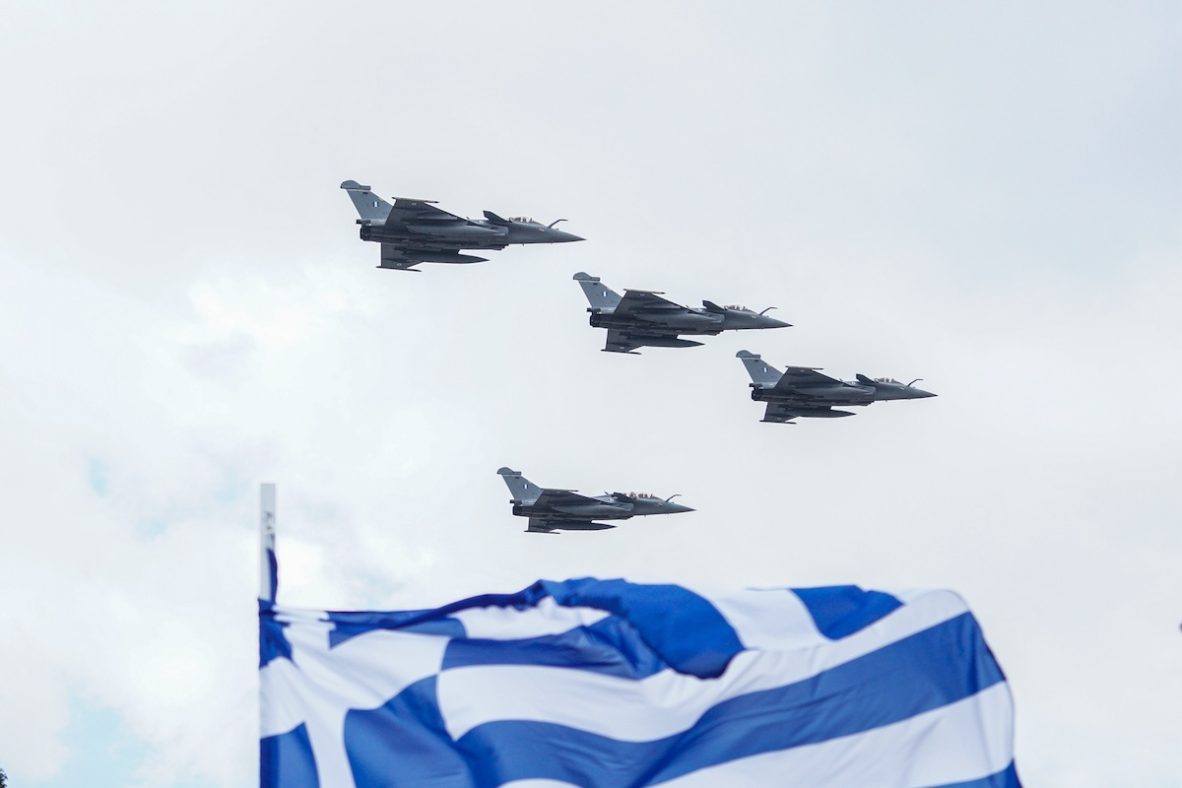
Israel has said it will transfer technical know-how to Greek companies taking part in the Achilles’ Shield air defence shield project.
The Israeli Ministry of Defence made the statement to Euractiv in response to reports alleging that Israel would retain control over the system.
The ministry stated that Israel will provide Greece with all the necessary technical know-how to enable Athens to develop its own source code for the much-debated Achilles’ Shield air defence system.
Israel noted that under the agreement, the Israeli Ministry of Defence and the Greek Ministry of National Defence agreed on the transfer of Israeli expertise to Greek firms participating in the programme.
A spokesperson for the Israeli Ministry of Defence said:
“The Greek source code developed under the programme, along with any modifications and additions made to it, will remain exclusively under Greek control and will be tailored to Greece’s operational requirements.”
Israel’s stance contradicts media reports suggesting that the system’s source code would belong to Tel Aviv rather than Athens, thereby effectively granting Israel full control over the platform.
Those reports had prompted a strong reaction from the opposition PASOK party, which called for transparency on the matter.
The system will integrate Greece’s existing capabilities, such as Patriot air defence systems and unmanned platforms, with Israeli systems covering various ranges, including Rafael’s SPYDER.
Türkiye reacted to the growing military cooperation between Greece and Israel, claiming that the two countries are attempting to encircle it strategically.
Athens, for its part, stated that its objective is solely to enhance its deterrence.
Meanwhile, former diplomat Vassilis Bornovas argued that the Achilles’ Shield project and Greece’s broader rise in defence spending are directed against “Russian aggression from the north” rather than Türkiye, which is also a NATO member.
Greece and Israel signed an agreement for the 3 billion euro project at the end of August. On the same day, Türkiye announced a mutual defence pact with Saudi Arabia and Pakistan, a development received with caution in Athens.
US foreign policy expert Ian Lesser told Euractiv that such regional defence arrangements were “not surprising” following the war in Iran.
“Countries are looking for new ways to diversify their security partnerships,” Lesser said, adding that while NATO’s collective defence relies on trust, that trust “has been eroding for years”.
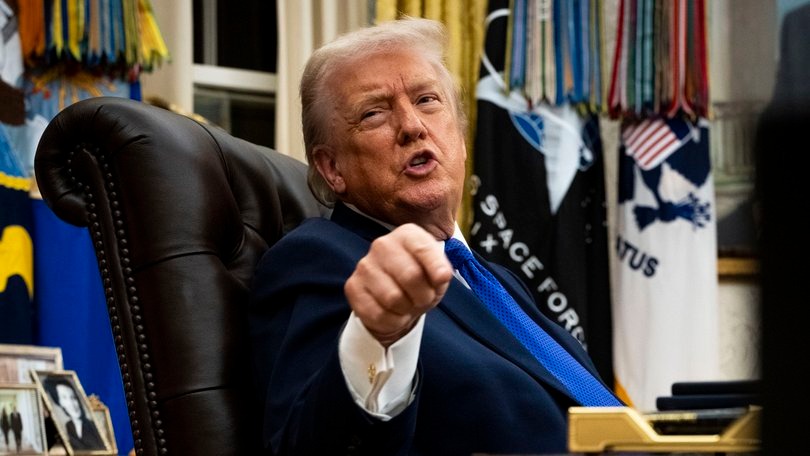
The US is losing its status as the “default choice” for allied governments that have spent decades keeping their money in the country, purchasing weapons, and sending their students to American universities.
American news website Axios emphasises that even small steps away from this Washington-centred balance could harm the advantages that have long sustained US economic power.
Steps taken by European countries to repatriate their financial reserves rank among the concrete signs of this trend.
The Netherlands withdrew approximately 86 tonnes of gold from the US and Canada last week, describing the move as a precaution against “extreme risks”.
France relocated the entirety of its gold reserves in New York back home, while Germany announced its intention to take a similar step.
Amid market volatility, Norway’s sovereign wealth fund announced plans to reduce its holdings of US Treasury bonds.
A similar picture draws attention in the defence industry. According to information reported by Reuters, Europe is seeking to reduce its dependence on the US and is purchasing more military equipment from manufacturers within the continent.
In addition, the European Union (EU) shared plans last summer to develop new strategies for cloud computing services to limit dependence on American technology companies.
A noticeable decline is also visible in the interest of foreign students and visitors in the US. Axios reported that applications by foreign students to American universities dropped by 10% during the latest application cycle.
The report linked this decrease to tightened rules on student visas and broader immigration policies implemented by the administration of US President Donald Trump. At the same time, travel to the US fell by 5.5% in 2025, marking the first decline since the COVID-19 pandemic.
According to an analysis published by Foreign Affairs magazine in June, Trump’s return to the White House prompted European countries to reassess their security architecture and accelerated rearmament on the continent.
With Trump taking office, relations between Washington and its European allies grew noticeably strained. Washington repeatedly demanded that European countries increase their defence spending.
Trump also criticised NATO allies on the grounds that they did not provide sufficient support to the US during the war with Iran, and threatened to review Washington’s role in the alliance.
In light of these developments, calls in Europe to strengthen self-defence and reduce dependence on Washington became more frequent.
In a report published in June titled “Defending Europe, Deterring Russia”, the EU Institute for Security Studies called on continental nations to assume greater responsibility within NATO.
The report stressed that military spending must be increased, arms and ammunition production accelerated, joint procurement expanded, and the domestic defence industry developed.
The authors of the study noted that Europe can no longer rely on the previous level of military support from the US.

Big Tech profits from AI extinction hype, Ken Klippenstein says

Israel military weighs legal steps against Gaza documentary makers

Finkelstein says US campus clampdown has surpassed McCarthyism

DeepSeek engineer warns AI will lead to communism or Cyberpunk

Israel pledges full Greek control over Achilles’ Shield source code
-

 Europe2 weeks ago
Germany’s CDU drafts tougher citizenship rules to counter AfD
-

 Diplomacy2 weeks ago
Geoffrey Roberts sees Ukraine war concluding within coming months
-

 Diplomacy2 weeks ago
Pope Francis accused Opus Dei of mafia tactics over Spanish shrine
-

 Diplomacy2 weeks ago
US expands military footprint in Somalia with new Bosaso base
-
 America2 weeks ago
Milei hardens Falklands stance with oil sanctions and defence push
-
 Middle East2 weeks ago
Ben Gvir reveals plan to expel majority of Gaza population
-

 Asia2 weeks ago
China leads $54bn capital injection into state banks and insurers
-

 America2 weeks ago
Pentagon launches mass polygraph inquiry over munitions leaks
