
Opinion
Viewing the Israel-Iran Confrontation Through the Lens of Grand History

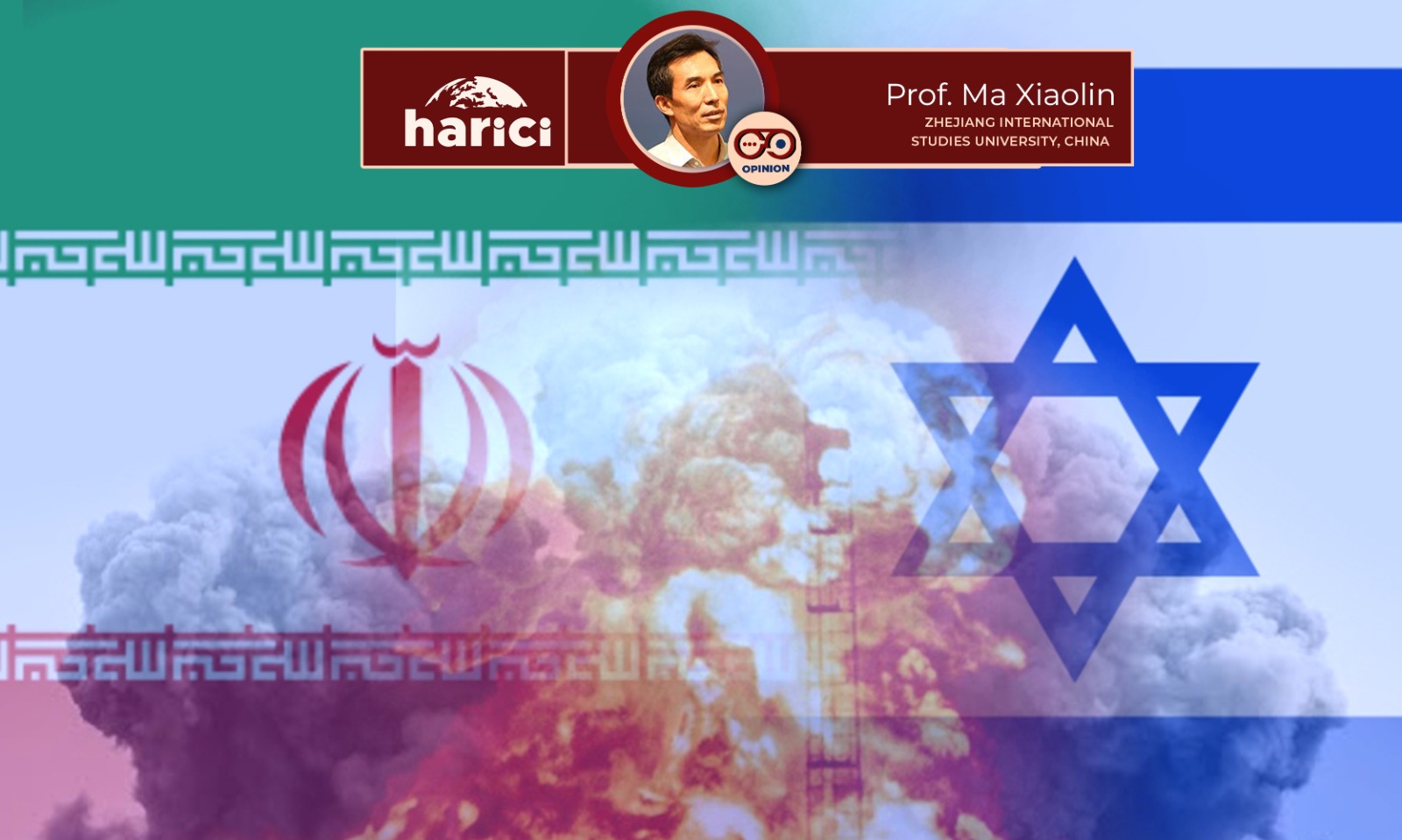
On June 20, the mutual airstrikes between Israel and Iran entered their second week, with both sides suffering heavy losses. The confrontation is escalating, and a ceasefire seems unlikely in the short term. Moreover, the U.S. has openly supported Israel’s strikes on Iran, intercepting Iranian missiles and drones, and is preparing to join in the offensive. President Trump has not only threatened Iran to “completely surrender” but also sent three aircraft carrier fleets to the Middle East, raising the possibility of a two-against-one situation that could resemble the Yugoslav war—defeating the opponent through prolonged joint airstrikes.
The Persian Gulf is a vital oil hub, and Iran’s nuclear facilities are a main target, raising the risk of global oil and gas disruptions and possible nuclear leakage or proliferation. This conflict is more concerning than most regional wars and affects global stability. Beyond the military and diplomatic specifics, it’s necessary to assess the rights and wrongs of the Israel-Iran conflict from a grand historical perspective. This marks a final showdown after over forty years of hostility, ending years of mutual insults, threats, and proxy wars. Now both countries are engaging directly in a high-intensity duel.
Firstly, Israel’s preemptive strike lacks legitimacy and justice, drawing widespread international condemnation. As a UN member, attacking another member without a formal declaration of war—based only on suspicion of nuclear development—violates international law and the UN Charter. It is a blatant infringement of Iran’s sovereignty and civilian rights, and a reckless challenge to modern legal and civilizational norms.
This is not Israel’s first violation of another nation’s sovereignty. In 1956, Israel joined the UK and France in the Suez Crisis. In 1967, citing the potential threat of an imminent attack by Egypt, Syria, and Jordan, Israel launched a preemptive strike, taking the initiative to destroy the air forces of the three countries. It subsequently occupied Egypt’s Sinai Peninsula, Syria’s Golan Heights, and seized the Palestinian Gaza Strip, the West Bank, and East Jerusalem—the holy city—from Egypt and Jordan. In 1981, Israel flagrantly violated the airspace of Jordan and Saudi Arabia, launching a long-range airstrike with a large formation of aircraft to destroy Iraq’s nuclear facility under construction. In 2007, the Israeli Air Force penetrated deep into eastern Syria and bombed a nuclear reactor that was also under construction. Between 2009 and 2012, the Israeli Air Force carried out multiple long-distance strikes over a thousand kilometers away in Sudan, targeting what it claimed were dangerous threats.
Admittedly, Israel was indeed in a state of hostility or ceasefire with these Arab countries, and the governments of these countries did harbor animosity toward Israel. It is also possible that some of them were preparing for war. However, Israel has consistently invoked its small territorial size, lack of strategic depth, and encirclement by hostile forces as justification for launching preemptive offensives, in order to maintain absolute military superiority and ensure its own security. In reality, since its establishment in 1948, Israel has never fundamentally overcome its strategic predicament. One key reason lies in its excessive reliance on military means and its deep attachment to warfare, leading it to become, in effect, a military force operating under the guise of a state.
Now possessing nuclear weapons and overwhelming superiority, Israel’s justification for attacking Iran over suspected nuclear ambitions is widely condemned as unjust and hypocritical.
The confrontation between Israel and Iran is a continuation of the “Sixth Middle East War,” which erupted on October 7, 2023. Although the immediate trigger was the offensive launched by the Palestinian Islamic Resistance Movement (Hamas), the deeper root lies in Israel’s long-standing illegal occupation, exploitation, and encroachment upon Palestinian territories. It reflects the persistent dynamic of occupation and resistance, plunder and counter-plunder, that has defined the Israeli-Palestinian conflict for over half a century. While this round of war may appear to have resulted in a military victory for Israel—defeating Hamas and its allies, including Hezbollah in Lebanon and the Syrian government, and even humiliating Iran for its involvement—the underlying cause of the conflict remains unresolved: Israel’s continued refusal to return the Palestinian, Lebanese, and Syrian territories it illegally occupies.
According to international law, peoples under occupation have the right to armed resistance, and states subjected to aggression have the right to self-defense. This is the crux of the Middle East dispute and the reason why Israel finds itself increasingly isolated and lacking in international support.
That said, Iran cannot be regarded as entirely innocent in the face of Israeli attacks. Israel’s illegal occupation of Arab territories is fundamentally a dispute between Israel and Arab states, and international opinion has largely sided with the Arab position, consistently condemning Israel’s occupation practices. However, since the establishment of the Islamic Republic in 1979, Iran has refused to recognize Israel as a sovereign state and has maintained a hostile stance toward a country with which it neither shares a border nor has any territorial disputes. Moreover, Iran has continuously supported Hezbollah in Lebanon and hardline Palestinian factions in their military struggle against Israel, thereby constituting a substantive challenge to Israel’s national security and regional stability.
In recent years, Iran has used its involvement in the international war on terror and its nuclear deal with the Obama administration to secure tacit recognition of its regional sphere of influence. It successfully established the “Shia Crescent” from the Persian Gulf to the Mediterranean, forming a Tehran–Baghdad–Damascus–Beirut–Sana’a axis. The Islamic Revolutionary Guard Corps and large numbers of Shia militias have infiltrated Syria and set up numerous military bases, posing a direct threat to Israel. This in turn has prompted Israel to repeatedly bomb Syria—who has the will but not the ability to retaliate—ultimately leading to the collapse of the Assad regime that ruled Syria for decades.
Iran’s deep involvement in Middle East conflicts—especially the Palestinian-Israeli and Arab-Israeli conflicts—is not based on international legal norms, but rather on pan-Islamist ideology. This ideology holds that Muslim countries have a duty to liberate occupied Islamic lands and oppressed Muslim brothers. However, traditional religious law cannot replace modern international law, and sympathy for Palestinians, Lebanese, or Syrians cannot justify proxy warfare. Over time, Iran has become not just the base and backer of Israel’s enemies but has also brought war and disaster upon itself. From the perspective of international law and international relations, it is not excessive to say Iran “brought the attack upon itself.”
In essence, is Iran really aiming to solve the Palestinian-Israeli and Arab-Israeli conflicts? If it were, Iran would support peaceful negotiations based on UN resolutions, and at least acknowledge Israel as a sovereign state, even if not normalize relations. Iran would align with the collective stance of Arab nations, advocating “land for peace,” and recognize Israel’s sovereignty contingent on withdrawal from occupied Arab lands. Instead, Iran has pursued a path that overrides Arab nations’ consensus, attempting to dominate Arab-Israeli territorial disputes like an impatient outsider. Iran’s Middle East policy is fundamentally driven by Persian nationalism—under the guise of reclaiming Arab lands, it seeks to increase regional influence while avoiding the disadvantages of being an ethnic and sectarian minority in the Arab-dominated Middle East.
Third, the pain and historical choice facing the peoples of Israel and Iran. When war breaks out, it is the ordinary people of both nations who suffer most. But the greatest value of this war may be whether it awakens public opinion in both countries—enough to reshape national policy and eliminate the cycle of hostility.
Both Israel and Iran, to varying degrees, are democratic nations—at least in law, with separation of powers and regular leadership changes. While their systems differ—Israel as a Western-style multiparty democracy and Iran as a theocratic authoritarian Islamic republic—both countries’ political structures ultimately reflect the will of their people. The enduring policies that brought today’s conflict cannot be blamed solely on governments; the people share responsibility.
Israel’s aggressive and expansionist policies are deeply tied to the worldview, security mindset, and sense of justice of its Jewish majority. Centuries of exile and suffering—culminating in near extinction—have become a cultural gene that prioritizes survival and security over neighborly rights. This has prevented strong public pressure to return occupied lands for peace, and instead enabled far-right forces to drive policy toward militarism, giving the government unchecked power and exposing Israelis to endless danger.
As millions of Gazans live in what’s called “the world’s largest prison,” as over 50,000 Palestinians have died in the past year and continue to bleed and starve, the Israeli public remains numb. Watching their government seize neighboring land and fuel national prosperity while ignoring the lasting hatred this creates, Israelis drink poison as if it were wine. When current far-right leaders drag the country into war with Iran to save their political careers, the response is panic and calls for harsher retaliation—not reflection on the nation’s course.
Iran, meanwhile, regularly changes leadership but maintains its confrontational foreign policy—with the consent or apathy of its people. Over 40 years ago, Iranians overthrew the corrupt and brutal Pahlavi monarchy in a revolution led by clerics. The new Islamic Republic soon plunged into an eight-year war with Iraq, costing nearly a million lives. Yet these painful lessons did not shift public will toward focusing on internal development. Instead, Persians embraced a mix of nationalist nostalgia, martyrdom in holy wars, and emotionalism—fueling continued confrontation with Arab neighbors and the outside world.
Over the past few decades, the Arab-Israeli conflict has undergone a major transformation. Starting with peace between Egypt, Jordan, and the PLO with Israel, and progressing to the normalization of relations between Israel and the UAE, Bahrain, Morocco, and Sudan, the political landscape of the Middle East has shifted significantly. The region’s political main theme has turned toward peace, reconciliation, cooperation, and development. However, the Iranian people continue to blindly follow their government’s outdated and rigid policies, enduring hardship and political repression, sacrificing economic development and national progress, while stubbornly clinging to anti-Israel rhetoric and ambitions to eliminate Israel. They persist in claiming the mission of reclaiming Arab lands, even at the cost of engaging in a prolonged struggle with the U.S. and the West, dragging their country into isolation and turning their capital into a city that people flee.
2,500 years ago, the ancestors of the Iranian people established the first empire spanning Asia, Africa, and Europe—the Persian Empire. The Achaemenid dynasty ruled with an inclusive and open approach. It was this dynasty that generously freed the Jews from Babylonian captivity after 70 years of enslavement. The Jews were so moved that they revered the Persian king Cyrus the Great as a savior. The Jewish princess Esther, concealing her identity, became queen and won the favor of King Xerxes. Together with her powerful uncle Mordecai, they used their influence to eliminate their enemies, the Amalekites, and protect the Jewish people. These legendary stories represent a historical peak of Jewish-Iranian coexistence and harmony.
Yet in the modern age, Israel and Iran have become bitter enemies for nearly half a century due to diverging national policies. This is a tragic irony, a misfortune for both nations and their people, and a betrayal of the shared legacy of Jewish and Persian civilizations. The ongoing and escalating indirect war between Israel and Iran will have no winners regardless of the outcome. Hopefully, the decision-makers and voting citizens of both nations will awaken from the flames of war, shift their policies, abandon mutual hostility, and join Arab states in upholding the principle of “land for peace.”
They should work to resolve the Palestinian issue based on the two-state solution, expand the Abraham Accords by supporting the return of Lebanese and Syrian territories through negotiations, and build mutual understanding, acceptance, and respect. Only then can the long-standing conflict between Israel and Iran come to an end. Together, they can help the Middle East break free from cycles of war and chaos, and move toward peace and development like other regions that have already put large-scale violence behind them—making up for lost time and missed opportunities for prosperity.
Prof. Ma is the Dean of the Institute of Mediterranean Studies (ISMR) at Zhejiang International Studies University in Hangzhou. He specializes in international politics, particularly Islam and Middle Eastern affairs. He previously worked as a senior Xinhua correspondent in Kuwait, Palestine, and Iraq.










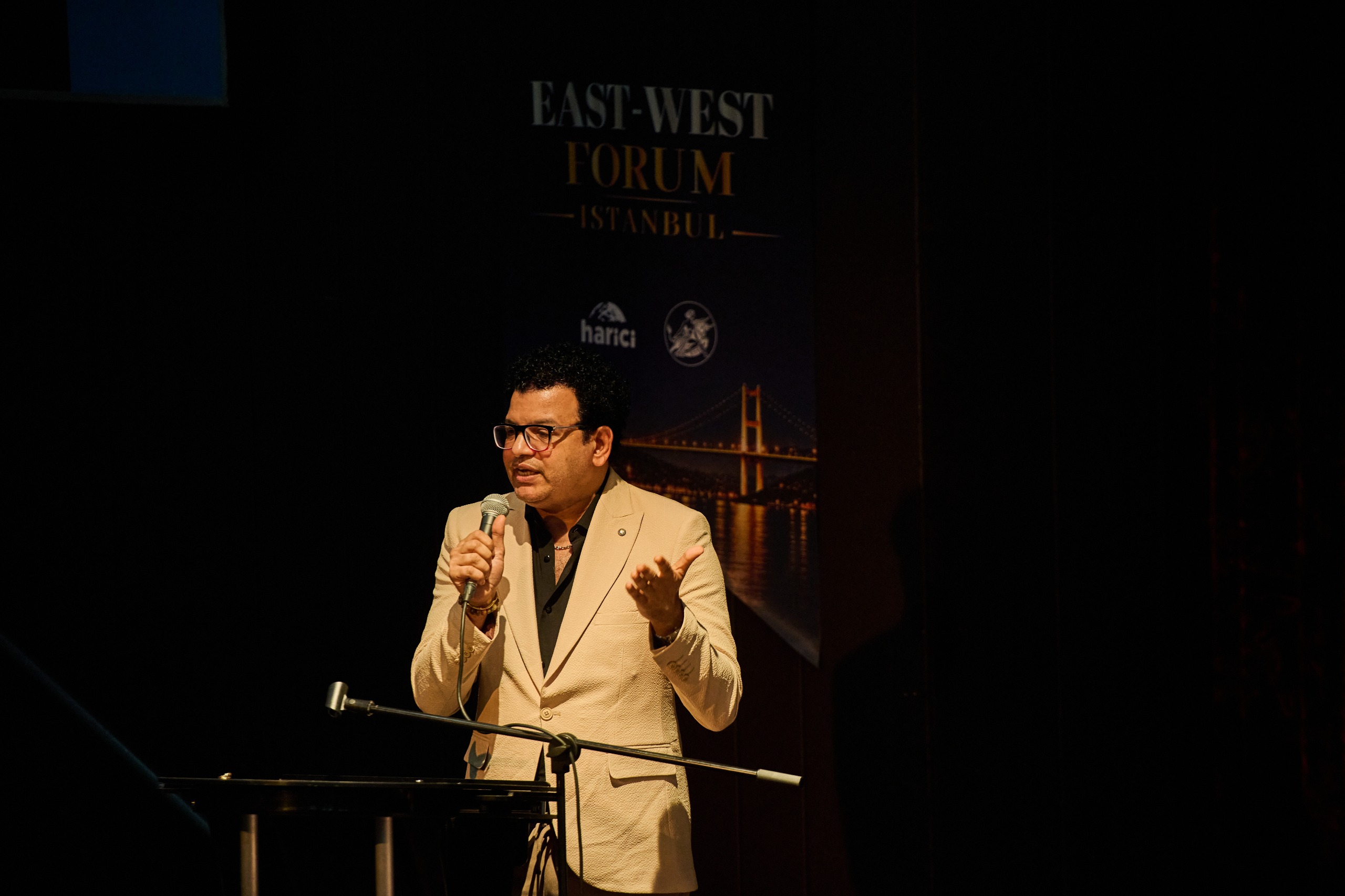
Dr. Ahmed Moustafa, Director & Founder, Asia Center for Studies & Translation, Egypt
In a city that has spent centuries translating the language of one civilization to another, the first East-West Forum arrived at a moment when the world itself seemed to have lost the vocabulary for talking across its divisions.
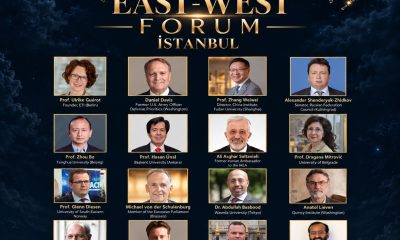
Held in Istanbul on Sept. 26–27 and preceded by meetings around the event, the forum brought together diplomats, academics, journalists, strategists and political thinkers from a wide range of countries. Hosted by Harici Media in partnership with the Berlin-based European Transcontinental Initiative, the gathering was conceived as an attempt to examine a world increasingly defined by competing power centers, regional wars, economic fragmentation, artificial intelligence and the erosion of confidence in institutions created after the Second World War. Harici reported that participants came from roughly 30 countries.
For us, the significance of Istanbul was not simply a matter of the speakers on the panel or the structure of the programme. Its deeper importance lay in the willingness to put difficult — and sometimes uncomfortable — questions on the table.
We would like to extend our sincere thanks and appreciation to my friend and brother, Mr. Tunç Akkoç, Founder and Editor-in-Chief of Harici Media, for his gracious invitation to a representative of the Asia Center for Studies & Translation, Egypt, to participate in the Forum as a speaker and commentator. His initiative in creating a platform where competing geopolitical narratives could meet directly deserves recognition.
In his opening remarks, Akkos stressed that the initiative was intended to establish a permanent platform where people representing different political and intellectual traditions and perspectives could meet and engage in direct dialogue.
This vision is particularly significant because the traditional language used in international relations has increasingly struggled to explain the realities of a rapidly changing world.
The Problem of Proxy Wars
During the session that discussed proxy wars in the region and ways to reach solutions to their crises, the Center put forward the view that the Middle East cannot simply be understood through the traditional map that divides the parties into “good” and “evil,” or into “responsible states” and “rogue states.”
Such terms, in our assessment, often reflect the perspective of powers that possess extensive influence over international media and financial and security institutions.
The Center particularly criticised what we see as political bias within important sectors of the Western media and some non-governmental organisations that receive Western funding. From our perspective, these institutions can, in some cases, move from being mere observers of geopolitical conflicts to becoming influential parties in the battle over the narrative and the story.
However, this view should remain open to debate and should not automatically be accepted as an absolute truth.
The more important question is not whether every Western journalist, every NGO, or every Western institution works to serve a single geopolitical agenda clearly, this is not the case, but whether the information environment itself has become so highly polarised that the public is now receiving radically different interpretations of the very same war.
In our assessment, the answer is increasingly approaching “yes.”
The problem becomes particularly clear when searching for the term “proxy wars” in the Middle East. Some of the first results focus on groups associated with Iran, including Hezbollah and the Houthis, as well as Hamas, whereas the history of regional conflicts is far more complex.
Al-Qaeda and ISIS emerged through different historical trajectories, with Anglo-Saxon support that was “created by Britain and the United States.” In environments dominated by the United States and Britain, Al-Qaeda emerged from the environment associated with Osama bin Laden and the Afghan jihad, while ISIS developed largely from Al-Qaeda in Iraq, under American sponsorship, to pursue a certain agenda in the region and advance the scenario of “creative chaos” promoted by Condoleezza Rice, the radical US Secretary of State.
At the same time, US policy toward Afghanistan during the Cold War contributed to shaping the broader environment from which some militant jihadist movements later emerged.
These distinctions matter.
Because propaganda often begins where complex historical details end.
Who Has the Right to Define a “Rogue State”?
The same problem appears in the vocabulary used to describe states.
Countries such as China, Russia, Iran and North Korea are frequently portrayed in Western strategic discourse as states challenging the existing international order.
Egypt, despite the different nature of its relationship with Washington, can also become the subject of criticism when its foreign policy does not conform to certain Western expectations.
The question is not whether these governments should be exempt from criticism. Of course not.
The deeper question is this: can the international system remain sustainable when one geopolitical camp increasingly assumes the authority to define which governments are legitimate, which movements are terrorist, which wars are defensive and which forms of resistance are acceptable?
That was one of the central questions behind our intervention in Istanbul.
The Middle East has repeatedly been presented through the lens of the “Iranian threat” as the principal strategic danger.
There is no question that Iran possesses significant military and regional capabilities, and that its policies are deeply contested by many neighbouring states. At the same time, reducing virtually every regional security problem to Tehran can obscure the interests and roles of other actors, including Israel, the United States, Gulf states, armed groups and local political forces.
The region has repeatedly paid a heavy price for simplistic interpretations of complex conflicts.
The Economics of Fear
The discussions in Istanbul also led us to a broader American question: to what extent can fear itself become a source of political and economic power?
Historically, the United States has experienced intense political campaigns shaped by perceived racial, ideological and security threats.
One does not need to accept every interpretation of this history to recognise that fear can become a factor with tangible economic consequences.
A 2020 study by Citi estimated that racial discrimination against Black Americans had cost the US economy approximately $16 trillion in lost economic output since 2000, based on an analysis of disparities in wages, education, housing and investment.
This figure demonstrates the extent of the economic losses associated with racial discrimination and exclusion. It also raises questions about the relationship between fear-based narratives concerning Black Americans, media influence, the political power of the gun lobby and the broader economic consequences of insecurity.
More importantly, however, the study highlights a fundamental point: bias and insecurity carry substantial and measurable economic costs.
The broader lesson has direct relevance to foreign policy.
When societies are continually presented with existential enemies, military spending and the expansion of security institutions become politically easier to justify.
America After Iran
In Istanbul, we also advanced the view that the United States after its confrontation with Iran in 2026 should not simply be understood through the traditional image of unlimited American power.
The conflict exposed economic and strategic vulnerabilities.
The Strait of Hormuz emerged as a major strategic pressure point for global energy markets, amid disruptions to international trade that forced governments and companies to search for alternative routes and supplies.
The consequences were reflected in oil prices and energy costs in Europe and elsewhere.
This does not mean that American power has disappeared. Rather, it suggests that military power is no longer synonymous with strategic control.
The rise of China, Russia, ASEAN, Iran and other centres of economic and diplomatic influence has made the international order increasingly complex and dispersed.
The East-West Forum itself reflected this reality, bringing together voices from Europe, Asia, the Middle East and North America while explicitly addressing multipolarity and the ongoing transformation of the global order.
America Is Changing From Within
The domestic dimension of American politics also deserves attention.
The emergence of figures such as Zohran Mamdani in New York and Abdul El-Sayed in Michigan reflects changes in the American political debate over inequality, foreign policy, healthcare, identity and the influence of established political and economic interests.
Their political trajectories should not be treated as evidence of a predetermined future for the United States.
They do, however, illustrate how issues that were once treated as peripheral including the costs of war, US policy toward Israel, economic inequality and the political influence of younger and more diverse generations have moved closer to the centre of American political debate.
This is another reason why East-West dialogue cannot remain confined to foreign ministries and military institutions.
A Dinner for Dialogue
One of the most memorable moments on the margins of the Forum was the private dinner held on the evening of Friday, September 25, hosted by H.E. Mr. Hasan Capan, Chairman of the Turkish-Chinese Friendship Foundation, and H.E. Ambassador Ersin Erçin, Vice Chairman of the Foundation, in honour of the speakers and participants.
We extend our sincere thanks and appreciation to both of them for their generosity, friendship and support.
The gathering was more than simply a dinner. It provided an opportunity for personal interaction, an exchange of ideas and the building of relationships among participants — precisely the kind of human diplomacy that formal conferences sometimes lack.
Real dialogue does not always begin behind conference podiums.
Very often, it begins around a single table.
Istanbul’s Larger Message
The first East-West Forum should be regarded as the beginning of a dialogue, not the end of a debate.
The organisers have already articulated a vision of transforming the initiative into an annual gathering in Istanbul, developing expert working groups, establishing an East-West Forum network and potentially creating a business council capable of connecting intellectual dialogue with economic cooperation.
This may ultimately prove to be one of its most important contributions.
The world that emerges from the current conflicts including the crisis surrounding the Strait of Hormuz will require more than ceasefire agreements.
It will require a new conversation about security, energy, sovereignty, development, technology and coexistence.
Istanbul is an exceptional setting for such a dialogue. One participant even proposed moving the headquarters of international organisations, including the United Nations, to Istanbul.
For centuries, the city has stood between two continents without belonging exclusively to either.
The East-West Forum can follow the same principle: not choosing one civilisation against another, but creating a space in which East and West can confront their differences without turning disagreement into permanent conflict.
For this reason, we see the Istanbul gathering as an announcement of intent.
It was not an attempt to erase differences.
It was an attempt to make dialogue possible despite them.
At a time when proxy conflicts increasingly risk evolving into direct confrontations, this may be among the most important political conversations the world can undertake today.

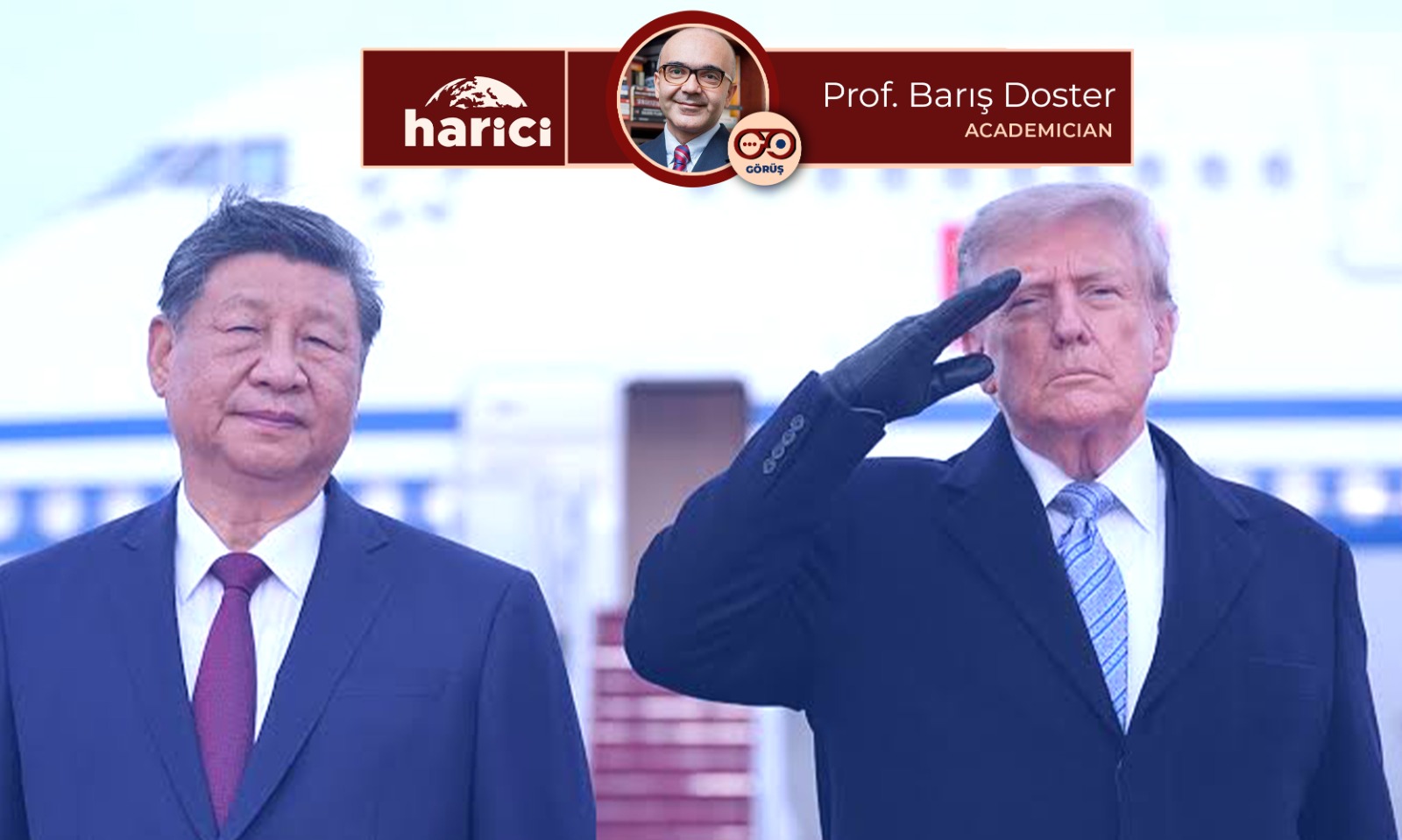
Much commentary followed the US president greeting the visiting Chinese leader at the foot of the aircraft stairs: both because a US president had not done so in many years, and because the leader he welcomed heads a state that the US defines as a competitor, an adversary, and an enemy. That photograph demonstrated that the US itself now recognizes China not merely as an economic power, but as a political, military, scientific, industrial, and technological one; yet it revealed other realities as well.
It showed that a multipolar order has arrived. It showed that the failure of the US to abide by the order whose rules it laid down and whose institutions it established has exacted a heavy toll on the US itself. It showed that the US-centric Atlantic system is unravelling. It showed that the collapse of a world order flouted, and indeed subverted, by its own rule-maker is both legitimate and inevitable. It showed that East-centred institutions, such as the Shanghai Cooperation Organisation and BRICS, enjoy an open path against Western-dominated bodies. It showed that the US regards China as a rival not merely economically, but ideologically and technologically. It showed that the US has proven unable to exercise deterrence against China, Russia, and Iran to the degree it desires.
Let us admit it: after the Cold War ended, the US assumed it could act as it pleased by bringing the European Union to its side and constantly invoking human rights, democracy, and freedom. It was mistaken. The more it spoke of a rules-based world order, of a liberal world order, the more it flouted those very rules. In the end, that order collapsed as well. The birth of a multipolar, multilateral, and multicentric world accelerated; and it was just as well. Now is the time to debate the rules, institutions, traditions, and solutions of this new order.
Yet who will conduct this debate? Who will take part in this search?
It is not right to expect this from the US; nor is it realistic. It is likewise impossible to expect it from the European Union. Europeans follow so subserviently in Washington’s wake that they refuse to consider even Russia as European, despite the fact that, alongside its Eurasian identity, millions of its citizens live across territory spanning Europe and Asia while viewing their nation as historically, politically, socially, culturally, artistically, and intellectually European. They attempt to construct a European defence and security architecture by excluding Russia, in defiance of Russia, and by harbouring hostility toward Russia. In the end, they are both mistaken and defeated.
As the new order emerges, India must also be examined under a distinct heading, alongside China and Russia. For India is a nuclear power possessing the world’s largest population and its 5th largest economy. It maintains disputes with China and Pakistan, yet enjoys good relations with Russia, the US, and Britain. It is a member of both the SCO and BRICS. On the other hand, within the Quad grouping, alongside the US, Japan, and Australia, it positions itself against China.
In summary, as an order takes shape in which the West runs out of breath while the East rises, and Atlantic institutions dissolve while those of Eurasia and the broader Global South come to the fore, we must first rid ourselves of Cold War dogmas and habits.
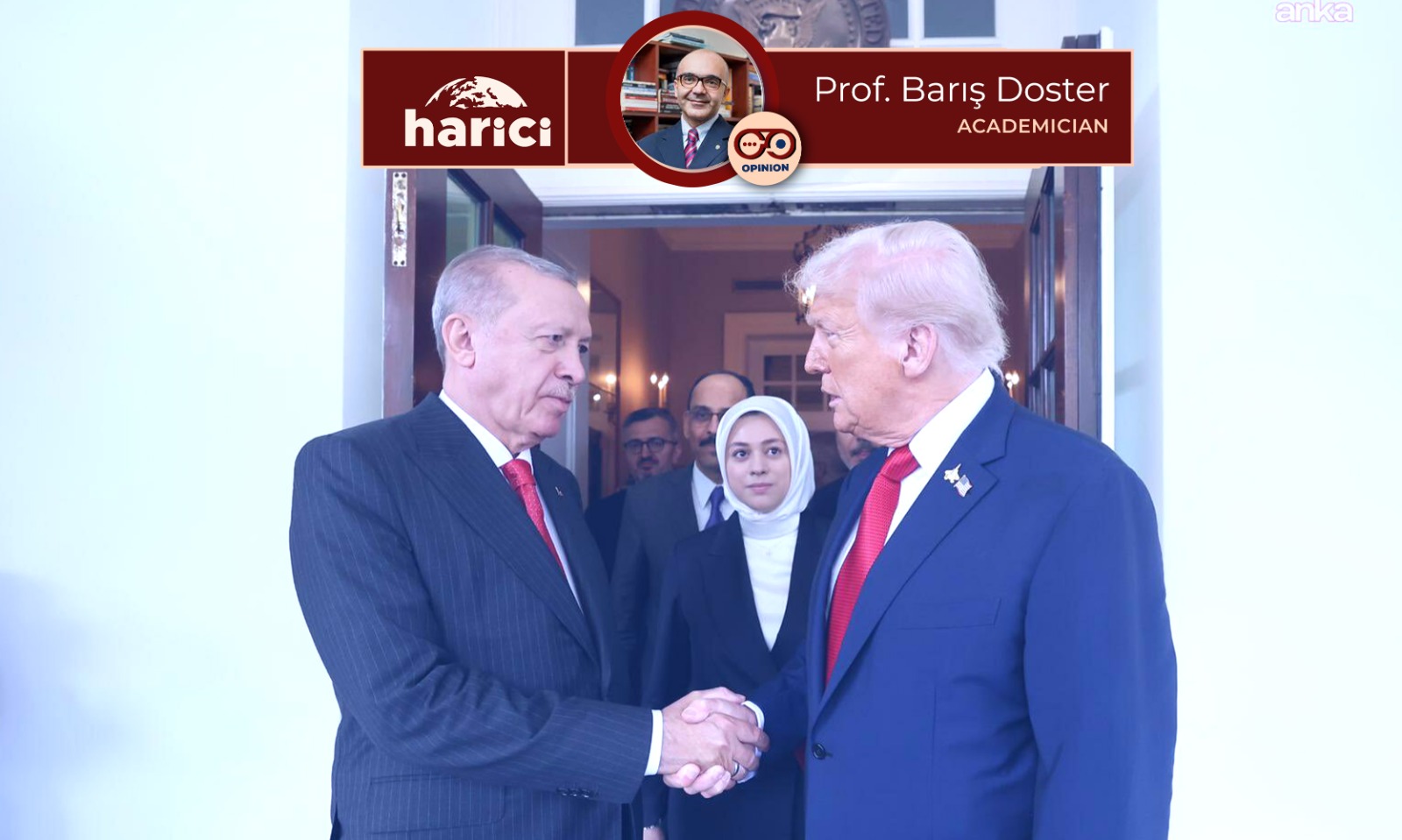
At the NATO summit held in Ankara last month, US President Donald Trump made promising remarks to Türkiye regarding the lifting of CAATSA sanctions, clearing the path for the sale of F-35 fighter jets to Türkiye, and supplying the engines required for the domestic Kaan aircraft. He has yet to keep his word.
This is quintessential Trump. He is neither a reliable nor a predictable leader. He approaches diplomacy like a merchant. In bargaining, he opens with the highest possible bid. Rather than institutional consultations, negotiations, formal diplomatic channels, and classical statecraft, he favours personal ties, bilateral encounters, and leader-to-leader diplomacy. He is notoriously erratic. A figure he praises one day, he drags through the mud the next, humiliating, scolding, and even insulting them.
US moves in the Mediterranean
Failing to honour the promises made to Türkiye, the US eased and partially lifted the arms embargo it had enforced on the Greek Cypriot Administration (GCA) since 1987 in 2020, before abolishing it entirely in 2022. Not content with this, the US signed a military cooperation agreement with the GCA in 2024 and hosted its leader at the White House. The GCA, whose path to acquiring weaponry from the US was cleared in 2024, has also recently been deepening its relations with France. Even though two British sovereign bases already exist in the southern part of Cyprus, with the US utilizing them whenever necessary, both the US and France signed separate basing agreements with the GCA. The GCA’s relations with Israel are also remarkably sound, as are those with Qatar. Meanwhile, relations between Greece and France have been exceptionally warm in recent years.
Amid all these tangible developments, Türkiye has largely relinquished its vigilance regarding the Blue Homeland. Drilling vessels and seismic survey ships have been withdrawn from the eastern Mediterranean.
The most distressing of these developments has been that four Turkic states in Central Asia (Kazakhstan, Uzbekistan, Turkmenistan, and Kyrgyzstan), none of which officially recognize the Turkish Republic of Northern Cyprus (TRNC) as a state, expanded their ties with the GCA and opened embassies in exchange for European Union financial assistance. Through this recognition, by acknowledging the Greek Cypriot Administration as the sole representative of the entire island under the name of the Republic of Cyprus, they effectively rejected the existence of the TRNC, whatever they might claim to the contrary.
Whatever anyone may say, and from whichever angle one evaluates it, the conduct of these four friendly and brotherly states cannot be explained merely by their lack of loyalty or their disregard for Türkiye’s sensitivities on this matter. Alongside this, one must acknowledge the failure of Turkish foreign policy. If Türkiye cannot convince even fellow Turkic states, let alone others, on an issue where its position is most legitimate and justified, such as Cyprus; if, far from persuading them, it cannot prevent them from cultivating relations with the GCA and opening embassies, this represents a monumental failure on the part of Turkish foreign policy.
Moreover, the failure in the Mediterranean is not confined to Cyprus. There is more.
Who is sidelining Türkiye in Syria?
Türkiye is persistently excluded from European-organized meetings on Syria. Türkiye’s views are not sought. So much so that even Qatar, our closest ally in the Arab world, on whose soil we established a military base and to whom we sold major assets, does not hesitate to take part in initiatives that exclude Türkiye from energy projects in the Eastern Mediterranean, or to cooperate with Greece and the Greek Cypriot Administration.
Much has changed in Syria since the days when Ahmet Davutoğlu, former prime minister, former foreign minister, former AKP chairman, and leader of the now-dissolved Future Party, carried away by his own momentum, declared: “Not a bird can fly in the Middle East without our knowledge”, “We know the Middle East street by street, inch by inch”, and “We are the masters, pioneers, and spokesmen of the emerging Middle East”, all while eagerly seeking to act as a subcontractor on behalf of the US. The regime has changed. The government has changed.
So let us ask: did we get what we wanted?
Israel, which most recently struck Abu al-Duhur Military Airbase east of Idlib in northern Syria; Israel, a backer of the PKK-PYD-YPG terrorist organization; Israel, which usurped Syrian land in the Golan Heights, attacking Syria and rolling in its tanks whenever it pleases; Israel, which seeks to partition Syria into four entities (Kurdish, Alawite, Arab, and Druze): Israel got what it wanted. And it continues to do so.
Does Israel, which directs scathing rhetoric at Türkiye, fortified by immense US backing and sustained by Europe’s three major powers (Germany, Britain, and France), draw this audacity solely from the imperialist powers standing behind it? Or does Türkiye’s inefficacy in the Turkic world and across the Arab sphere, alongside that backing, also embolden Israel?
In answering this question, we will arrive at a far more accurate assessment if we take into account the depth of Israel’s relations with Azerbaijan.

We are no longer in 1992, the US has lost its military superiority, Ret. Lt. Col. Davis says

Germany expands North Sea military ports and plans new naval base

Musk appointed co-director of Pentagon future warfare initiative

US waives human rights terms on $320m military aid to Egypt

Putin says Russia did not start war and warns of nuclear risks
-

 Europe5 days ago
European unions urge governments to scrap all Palantir deals
-

 Diplomacy5 days ago
East-West Forum in Istanbul highlights irreversible shift to multipolarity
-

 Europe1 week ago
Emmanuel Todd says West faces collapse amid Ukraine and Iran crises
-
 Europe1 week ago
European intelligence chiefs divide over risk of Russian attack
-
 Middle East1 week ago
Sharaa says 7 October must not shape Israel policy on Syria
-
 Diplomacy1 week ago
East-West Forum in Istanbul to debate multipolarity and global order
-
 America1 week ago
Republican support for Trump’s war with Iran drops sharply in polls
-
 Europe5 days ago
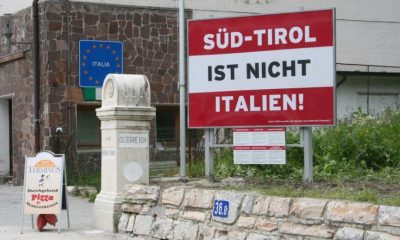
Rome protests AfD poster depicting South Tyrol as independent state
