
Middle East
A 24-hour ‘civil war’ trial in Iraq

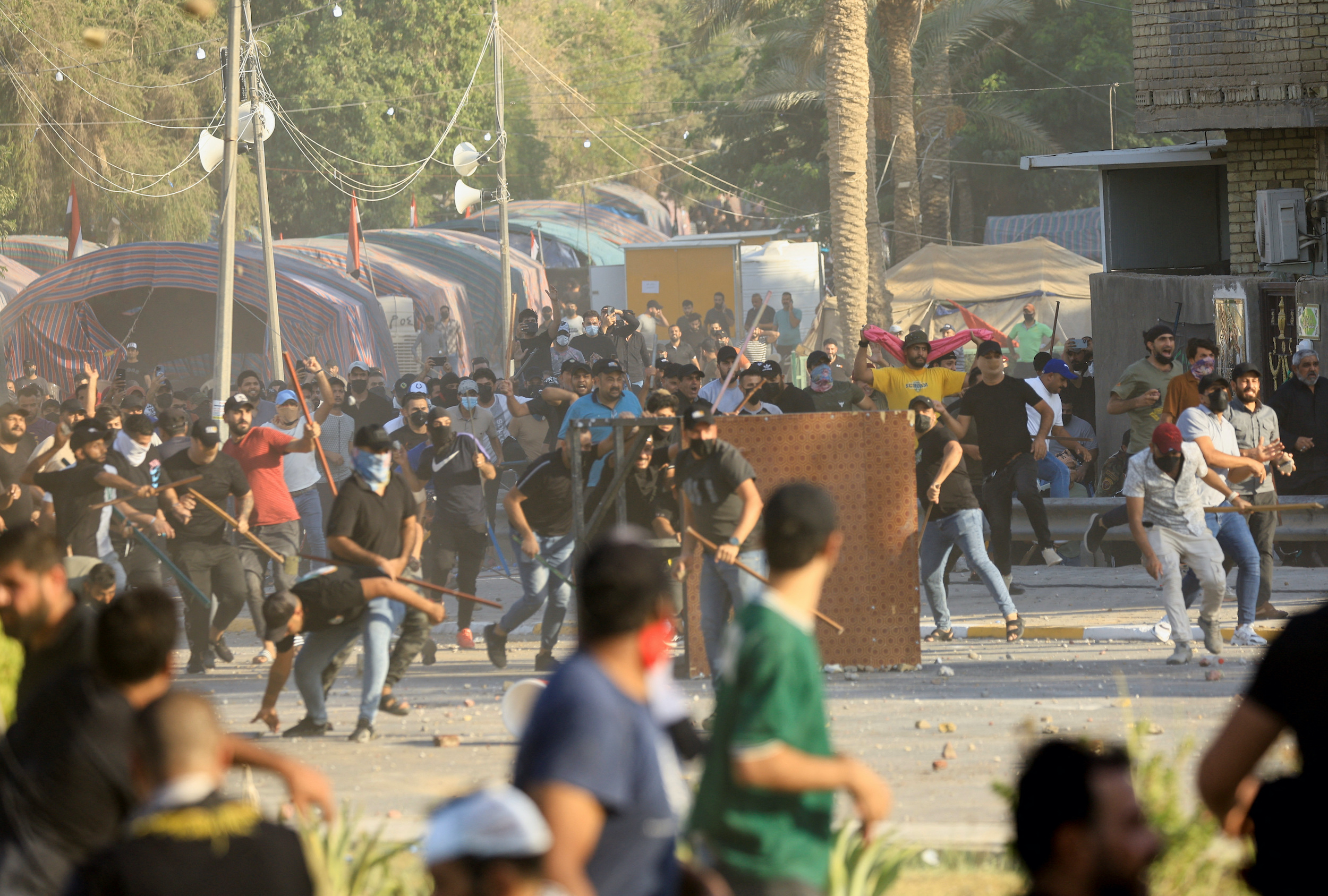
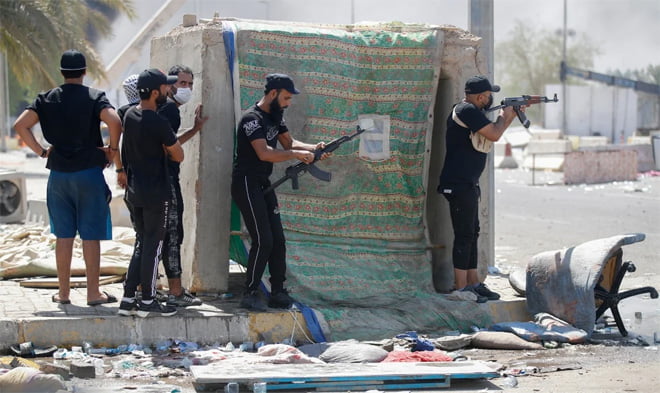
Hundreds of supporters of Sadr raided the Presidential and Government Palace in the Green Zone in the capital Baghdad yesterday, and nearly 30 people lost their lives in the clash with the militia. Activists entered the buildings of rival Shiite organizations, set fire to some of them, and detained militia forces until Sadr’s announcement to end the protest today.
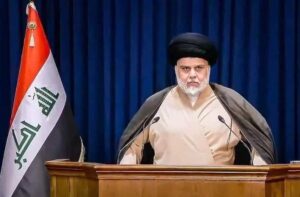
Muqtada es-Sadr, who emerged as the first party in the October 2019 elections and obtained the majority of seats in the Assembly, challenged the ethnic and sectarian political system established by the US after the invasion, and he announced that he would establish a government of reconciliation that would include all national parties, Shiite, Sunni and Kurdish. No matter how many votes they received, they were, however, accustomed to being attached to the government according to the quota system, and some faced obstacles from other Shiite groups directly affiliated with Iran. Led by Nuri al-Maliki, the Coordination Framework, using its effectiveness in the judiciary, passed the “two-thirds” decision, which made it impossible for Sadr to form a government. The Sadr group, which refused to agree with the Coordination Framework, resigned from the Parliament and turned to street protests. Sadr supporters, who held a protest in front of the Federal Supreme Court, which discussed the sit-in action in the Green Zone, the raid of the Parliament and the Presidency and the latest application to dissolve the Parliament, did not back down on the following three issues:
- We will not agree to a compromise that includes the “evil trio” (Nuri al-Maliki, Qays al-Hazeli and Ammar al-Hakim).
- Parliament shall be dissolved.
- Early elections shall be held.
Why did Sadr withdraw from politics?
While awaiting the decision of the Federal Supreme Court’s Assembly, Sadr announced that he had withdrawn from the political arena with a sudden decision, within 24 hours of the call “Let’s build a new Iraq without militias, uncontrolled weapons, violence, war, sectarianism, tried parties and sectarian quotas”. So what prompted Sadr to make this statement, which led many cities, especially Baghdad, to turn into battlefields?
The fact that the Shiite Taklid Merci Kazim al-Hairi called for Sadr supporters to follow the Iranian religious leader Ali Khamenei while he was retiring, citing health problems, was undoubtedly the most important factor that prompted Sadr to make this statement. The statement by Hairi, who is the second-ranking religious leader, is not commonplace, as it is not only a sign of disrespect for the biggest Taklid Merci Ayatollah Sistani, but also different from the usual practice of his colleagues, who normally leave the matter to the conscience of the people. Hairi, who had a very limited following apart from the Sadr movement, aimed to undermine Sadr’s legitimacy with this statement he made under pressure from Iran, according to some commentators.
However, Sadr movement is a political and social formation rather than a religious movement in the classical sense, which will be resolved with a fatwa of Hairi, which they follow as a religious authority. Therefore, Hairi’s statement does not seem to have affected Sadrists, except Sadr, who is known to be emotional. Moreover, it is also a mystery whether Sadr took this decision “emotionally” or whether he was at any stage of a grand plan. If someone comes out and says that they watched the trailer of what Sadr can do as a show of strength, there wouldn’t be too much of an objection.
The country done through a 24-hour hell
As a matter of fact, about an hour after Sadr’s decision, yesterday, thousands of Sadr supporters entered the Green Zone and stormed the Presidential Palace. Upon the entry of the Sadr Movement’s armed force Seraya es-Selam (Peace Brigades) into the Green Zone with heavy weapons, Prime Minister Kazimi canceled its routine program, while the Joint Operations Command declared a nationwide curfew ‘until further notice’. Hashd al-Shaabi units within the Coordination Framework against the Peace Brigades, wearing the uniforms of the security forces, opened fire on the demonstrators. In the videos circulating on social media, it was seen that the demonstrators were targeted and killed by snipers. The clashes in which nearly 30 people, most of whom were pro-Sadr lost their lives and more than 150 were injured, continued today.
The Peace Brigades raided the offices and headquarters of the “evil trio” and especially Kays al-Hazeli, not only in Baghdad but also in many places such as Basra and Najaf. Sources close to Sadr said that around 300 headquarters and offices of Maliki’s Dawa Party, Kays al-Hazeli’s Asayib Ahl al-Haq Movement and Ammar al-Hakim’s National Wisdom Movement and their armed militias were raided and some set on fire.
Making a statement at noon today, Sadr asked his supporters, who were clashing on the street, to return to their homes within an hour. Sadr said, “I apologize to the Iraqi people for the conflicts. This revolution is not a revolution the very moment it ceases to be peaceful, thus I cannot call it a revolution. Down with such a revolution.” With Sadr’s call, the curfew in the country was lifted as his supporters returned to their homes.
On the other hand, it should be noted that while the country is going through a 24-hour hell, there has been no call for calm or any statement from the leaders of the Coordination Framework, who are candidates to form a government and run the country.
Why cannot Sadr get along with the “evil trio”?
Sadr’s animosity with Maliki, one of the leaders who formed the Coordination Framework, dates back to 2008. Maliki, together with the US troops, attacked the Iraqi army against Sadr’s Mahdi Army and smashed the Sadrists. Especially the massacres in Basra were engraved in the memory of the Sadr members.
The Asayib Ahl al-Haq Movement and its leader Hazeli, which was founded in 2006-07 by leaving the Mahdi Army, argued that Sadr’s resistance should be suppressed by force after the election. Asayib Ahl al-Haq, which is close to Iran and partially financed by Iran, also came to the fore as an organization that used disproportionate violence to the public in the protests in 2019.
Ammar al-Hakim, who has political weight, seems to be on Sadr’s list due to his inability and indecision to stand up to the Maliki-Hazeli duo, who advocated the use of harsh force against the Sardis.
Why is Sadr against Iran?
Sadr, who marked the recent history of Iraq with his anti-US sentiment, took part in the Shiite governments established after the occupation until 2018. Sadr, who had the most seats in the 2018 elections, which was similar to what happened in the October 2019 elections, could not form a government again due to the obstruction of other Shiite organizations. From the side of Sadr, who is also a Shiite, the picture was as follows: Shiite organizations, some of whom were directly led by Iran, and others close to Iran, blocked Sadr’s path.
While these were happening in the political arena, the economic crisis peaked in the country, which was struggling with problems after ISIS, and the names of politicians began to be mentioned with scandals such as corruption and bribery. All these developments led to the most extensive and widespread protest actions in Iraq after 2003. In addition to economic reasons such as unemployment, lack of basic infrastructure and lack of livelihood, the Iraqi people also took a stance against foreign interventions. The Sadr movement, which could not form a government in the parliament and went into opposition, rose to a position leading this popular movement from the grassroots, thanks to its power in the streets. Now, Sadr has developed a discourse that opposes not only the US intervention but also the total “foreign intervention”. However, the real “relation severing” development in Sadr was the US murder of Iranian Quds Force commander Major General Qassem Soleimani and Hashd al-Shaabi commander Abu Mahdi al-Muhandis near Baghdad International Airport with a drone attack on January 3, 2020, and then a week later. Iran has also had missile attacks targeting the US presence in Iraq. In summary, Iraq, which is in political instability and economic bottleneck, has also become a piece of land where the USA and Iran openly share their trump cards.
When Sadr hosted Ismail Kaani, who replaced Qasem Soleimani as the leader of the Quds Force, he made his position clear by openly telling him, “Don’t interfere in Iraq.” After the 2021 elections, he refused to meet with the Quds Force commander, who came to Iraq to “mediate” between Sadr and the Coordination Framework.
Is Iran against Sadr?
Sadr’s opposition to foreign and therefore Iranian intervention is understandable. So, how much is Iran against Sadr? First of all, every country, if it has such an opportunity, wants political forces directly connected to it or closer to it to be in power. The same is true for Iran. However, it would not be the right approach to try to read Iran’s attitude through figures like Hazeli, who are close to Iran. Because in this case, it becomes impossible to explain the attitude of Hadi al Amiri, who is undoubtedly the closest name to Iran, towards Sadr. The leader of the Fatah Alliance, Amiri, the most important name of the Coordination Framework, is the name that broke the hard power insistence of the Maliki-Hazeli duo against Sadr. Amiri, who is also the leader of the Badr Organization, which was established directly by the Islamic Revolutionary Guards of Iran, is at the forefront of the policy based on reconciliation and dialogue towards the Sadr movement, and Sadr is careful to keep Amiri apart in his speeches where he criticizes the Coordination Framework. Putting all the facts at the bottom, Tehran’’s stance becomes even clearer: Putting up with Sadr rather than fighting Sadr. Tehran knows that a possible Shiite-Shiite conflict will cause great harm to itself along with Iraq.
But why?
It seems that Sadr, who refused reconciliation, is responsible for all these events, but the main reason is the freak system that the USA brought with the occupation. The insistence of the “corrupts”, who have been benefiting from this system for 20 years, to keep their lucrative positions. The fact that the faces whose corruption and failures are revealed deserve to rule. The endless love of armchairs for those who do not take the country a mile further, those who draw weapons against the people who object, those who leave the cities to terrorist organizations, and those who render the state apparatus inoperable…
Sadr is challenging this political order. However, his open-ended rhetoric, sudden decisions and his refusal to even sit at the table harm both Sadr himself, his movement and the Iraqi people. Sadr, who is an important and trusted figure not only for Shiites but also for Iraqis from other sects and ethnic backgrounds, can be successful not today, but in the near future, if he acts within the framework of a program, not with sudden decisions or sudden outbursts. Maybe Sadr should roll up his sleeves to overthrow the sectarian political system with a “non-sectarian political party”. The rule of a political party that includes Shiites, Sunnis, Turkmen and Kurds will automatically lift the system in which Sadr rebelled into the dusty pages of history. As Gandhi said, “If you want to change the world, start with yourself.”




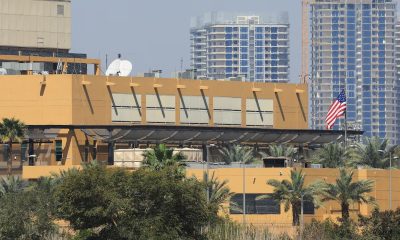






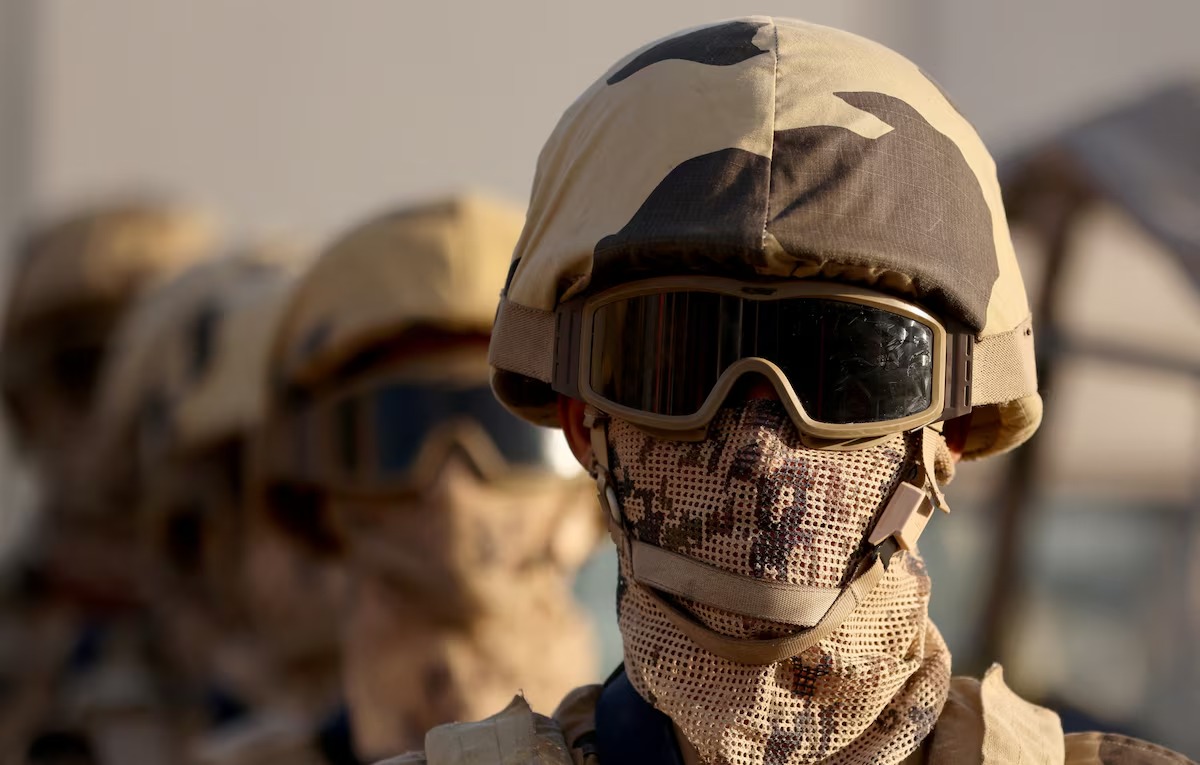
The US State Department stated that it has waived human rights conditions on more than $300 million in military aid to Egypt.
The statement emphasised that this decision was taken in consideration of Cairo’s “helpful role” since the outbreak of the war against Iran.
Egypt began receiving substantial support from the US after signing a peace treaty with Israel in 1979.
Since the late 1980s, the country has received approximately $1.3 billion annually in US military assistance.
A portion of this aid is subject to conditions related to human rights and democracy, which can be waived on national security grounds.
Withholding funds, including during the administration of former US President Joe Biden, has caused tension between Cairo and Washington in the past.
A letter dated 21 September and addressed to various congressional committees, obtained by Reuters, stated that Secretary of State Marco Rubio “decided to waive the certification requirement under the fiscal year 2025 Foreign Military Financing programme for Egypt of $320 million.”
This waiver was subsequently confirmed by the State Department.
An accompanying memorandum justifying the decision stated that this portion of military aid was “essential for counterterrorism, border security, or non-proliferation programmes, or otherwise important to the national security interests of the United States.”
The memorandum, dated 4 September and bearing Rubio’s signature, stated: “Exercising this waiver authority is critical to the US-Egypt relationship and to US national security priorities, particularly given the helpful role Egypt has played in the aftermath of Operation Epic Fury.”
“Operation Epic Fury” is the designation used by the US military for the campaign launched jointly with Israel against Iran in late February.
The State Department memorandum, whose authenticity was confirmed by two sources in Washington familiar with the letter, did not provide detailed information regarding what was termed Egypt’s “helpful role”.
The State Department’s annual decision on military aid to Egypt typically covers funds allocated for the preceding fiscal year, which ends on 30 September.
A State Department spokesperson stated that Rubio waived the certification in the interest of US national security and that the US continues to cooperate with the Egyptian government across a range of issues.
In an emailed statement, the spokesperson said: “This waiver recognizes the importance of maintaining security cooperation with Egypt at a time of significant security challenges in the region.”
The Egyptian Ministry of Foreign Affairs did not immediately comment on the matter.
The spillover effects of the Iran war have imposed a heavy toll on US security partners, including Egypt.
Owing to rising fuel prices and other disruptions, the Egyptian economy is passing through a difficult period.
Under the Biden administration, the US withheld portions of the annual military allocation on multiple occasions over Egypt’s human rights record.
In 2024, following the Hamas-led 7 October attack on Israel and the subsequent war in Gaza, the Biden administration set aside human rights conditions, disbursing the entire $1.3 billion allocation to Egypt for the first time in its tenure.
Human rights organisations have long accused Egypt, under the administration of President Abdel Fattah al-Sisi, of widespread human rights abuses, including torture and enforced disappearances.
This week, Egyptian police detained six journalists from a fact-checking and investigative media outlet, accusing them of spreading false information on behalf of the banned Muslim Brotherhood.
Egyptian authorities state that they have taken steps to address human rights issues. Sisi said stability is paramount and that the government supports human rights by working to provide for basic needs.
Britain has significantly broadened its military export restrictions targeting Israel, suspending or rejecting more than 80 licences for items the IDF could use in Gaza.
This figure is nearly triple the number affected when the policy was first introduced in September 2024.
United Kingdom Minister of State for the Middle East Stephen Doughty said that as part of what he described as a “tighter system” for assessing exports to Israel, more than 50 further export applications have been refused since approximately 30 licences were initially suspended.
Under the initial decision taken in September 2024, 30 of roughly 350 licences were suspended after the British government concluded there was a “clear risk” that certain military exports could be used to commit or facilitate serious violations of international humanitarian law in Gaza.
The affected equipment included components for military aircraft, drones, naval systems, and targeting gear.
Doughty said additional measures adopted this month established what he termed a “double safeguard” mechanism within the approvals process.
Export applications must now be assessed both against existing international humanitarian law criteria and in light of Britain’s position on the legality of Israel’s presence in the Palestinian territories.
“We have so far suspended or refused more than 80 licences,” Doughty said, adding that he had personally examined each licence.
Despite the wider restrictions, British-origin parts entering the international F-35 fighter jet supply chain continue to be largely exempt.
The UK government argues that preventing British-made components from entering the global F-35 pool could undermine the programme as a whole and have serious consequences for the security of the UK and its allies.
Direct exports of F-35 parts intended specifically for Israel remain suspended.
Doughty defended maintaining the supply of components via the international programme, arguing that halting it could have severe ramifications for the broader European and allied security architecture.
Foreign Affairs Committee Chair Emily Thornberry challenged this position, arguing that the issue was political rather than purely legal.
Thornberry suggested adopting an approach similar to the Dutch model, under which components entering the international supply chain could be flagged as “not intended for aircraft bound for Israel”.
The initial suspension was implemented in September 2024 by then Foreign Secretary David Lammy.
Lammy stressed at the time that the measure did not constitute an arms embargo and applied solely to items assessed as usable in military operations in Gaza.
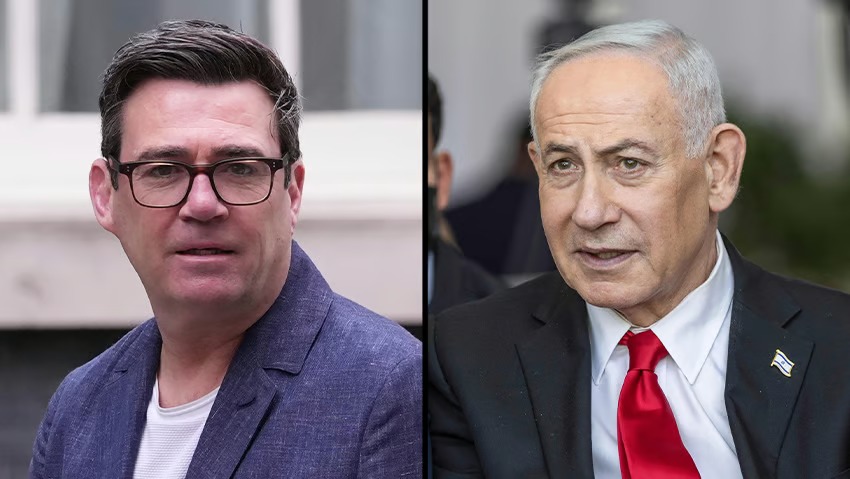
Since then, the policy has been tightened further under Prime Minister Andy Burnham.
The expanded export restrictions follow the Burnham government’s adoption of a more confrontational policy toward the Israeli government.
Foreign Secretary Ed Miliband drew sustained applause at the Labour Party’s annual conference in Liverpool after delivering a sharp critique of the Netanyahu government’s policies and defending the decision to ban trade with Israeli settlements in the West Bank.
Accusing Israel of committing war crimes in Gaza, Miliband stated that the British government heard public outrage over the conflict, telling delegates: “We hear you. You were right.”
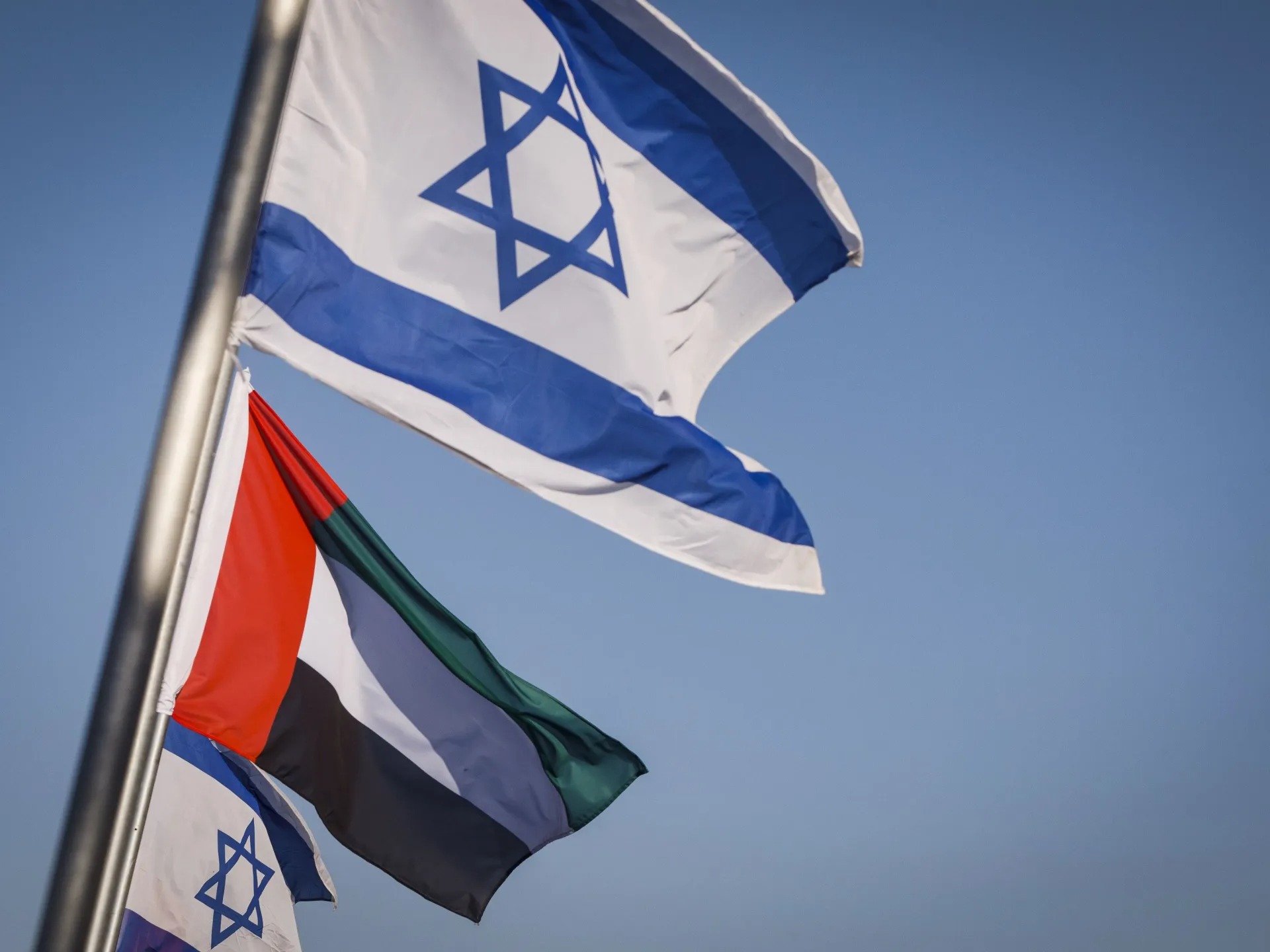
Israeli Prime Minister Benjamin Netanyahu met with representatives of Gulf and Arab nations that lack diplomatic ties with Israel, including Saudi Arabia, during his weekend visit to the United Arab Emirates.
Sources close to the gathering told the Israeli newspaper Yedioth Ahronoth on Monday that representatives from Morocco, Libya, Jordan, and Qatar also took part in the meeting.
Netanyahu made a unannounced visit to Abu Dhabi on Sunday, where he met with the country’s leader, Mohammed bin Zayed Al Nahyan.
According to Israeli media, this marked the first time the United Arab Emirates officially confirmed a visit by Netanyahu.
The meeting was arranged by Mossad Director Roman Goffman “at the request of Saudi Arabia, which asked for Israel’s assistance against Houthi attacks in the Red Sea region,” according to Yedioth Ahronoth.
The discussions addressed Iran and the Houthi militia. The newspaper added that the Arab states heard from Israel that “Israel is prepared to assist countries in the region with air defence systems, just as it aided the UAE during the conflict with Iran.”
Conflict in Yemen intensified in September when Ansarullah militiamen launched a rapid offensive that seized Yemen’s entire Red Sea coastline, including the vital maritime corridor of the Bab el-Mandeb Strait.
The Yemeni resistance also imposed a blockade on Saudi Arabia’s energy exports and staged multiple attacks against the kingdom.
Saudi Arabia reportedly sought military assistance from the US to counter Ansarullah.
Washington declined to attack the Houthis directly, but announced that it would provide intelligence and targeting support.
Reporting on the same visit, The Jerusalem Post said Netanyahu spent six hours in the UAE and that the principal subject of his discussions with MBZ was Iran.
Citing sources familiar with the matter, the newspaper added that the trip came “after Netanyahu exerted heavy pressure on the United Arab Emirates to arrange a meeting ahead of the Israeli elections on 27 October.”
Separately, the Associated Press, citing a person with direct knowledge of the meeting, reported that Netanyahu’s visit to the UAE was arranged in part to ask MBZ to deny reports that he had warned the Israeli prime minister of an impending Hamas threat prior to 7 October 2023.
According to Israeli media, Netanyahu’s office denied the AP report, issuing the following statement:
“Fake news. The visit focused solely on strengthening ties between the two countries and on regional issues.”

We are no longer in 1992, the US has lost its military superiority, Ret. Lt. Col. Davis says

Germany expands North Sea military ports and plans new naval base

Musk appointed co-director of Pentagon future warfare initiative

US waives human rights terms on $320m military aid to Egypt

Putin says Russia did not start war and warns of nuclear risks
-

 Europe5 days ago
European unions urge governments to scrap all Palantir deals
-

 Diplomacy5 days ago
East-West Forum in Istanbul highlights irreversible shift to multipolarity
-

 Europe1 week ago
Emmanuel Todd says West faces collapse amid Ukraine and Iran crises
-
 Europe1 week ago
European intelligence chiefs divide over risk of Russian attack
-
 Middle East1 week ago
Sharaa says 7 October must not shape Israel policy on Syria
-

 Diplomacy1 week ago
East-West Forum in Istanbul to debate multipolarity and global order
-
 America1 week ago
Republican support for Trump’s war with Iran drops sharply in polls
-
 Middle East1 week ago
Palestinian factions confront legitimacy crisis at Istanbul talks
