
Opinion
Taking Stock and Outlook as the ‘Sixth Middle East War’ Nears Its End

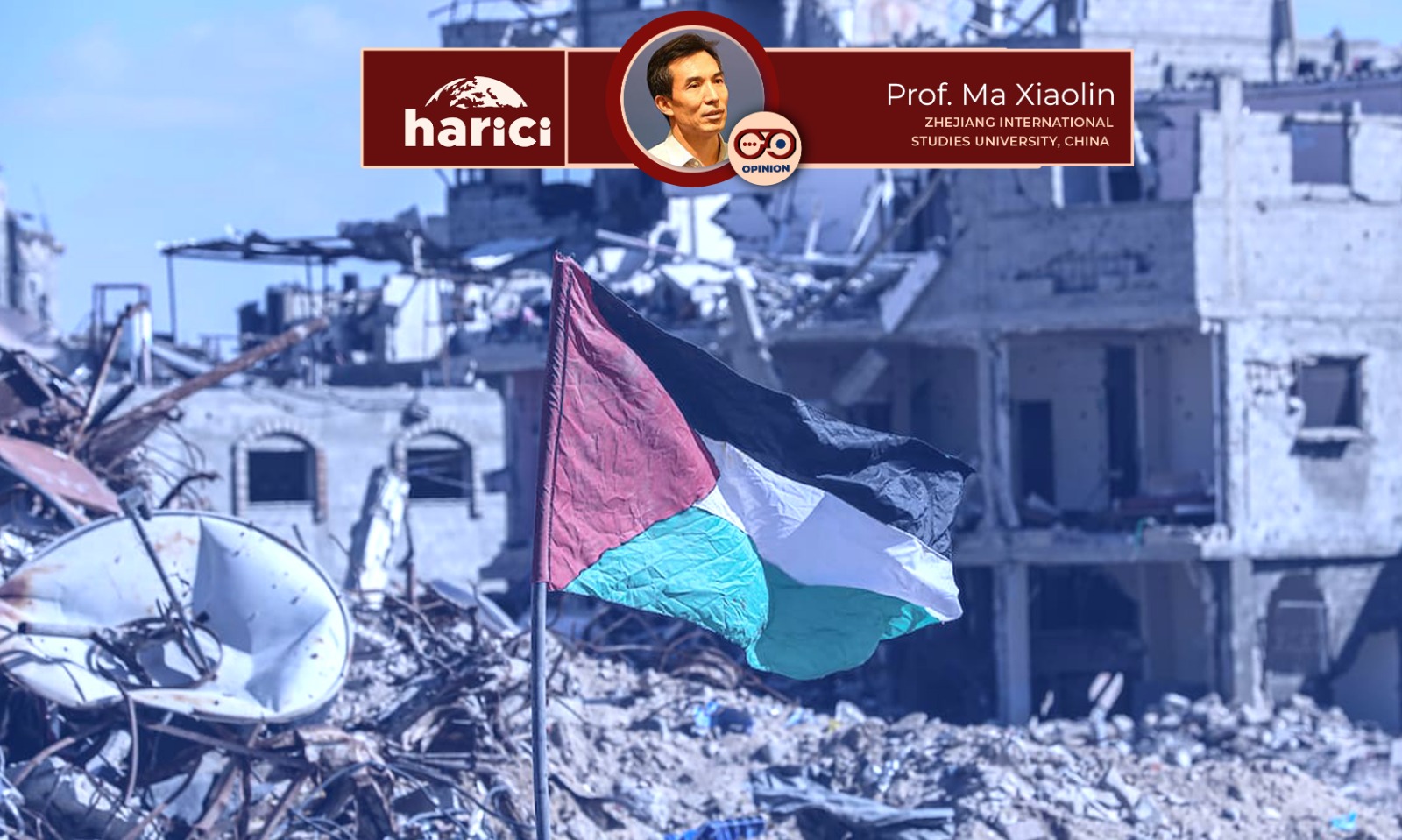
October 7 is the second anniversary of the outbreak of the “Sixth Middle East War.” On that day, representatives of the Palestinian Islamic Resistance Movement (Hamas) and the Israeli government met at the Egyptian resort of Sharm el-Sheikh to discuss ending the fighting in Gaza and rebuilding Gaza’s governance around the “20-point plan” proposed by U.S. President Trump. On October 9th, Israel and Hamas announced that they had reached an agreement on a ceasefire. Although this is only the first stage and Israel and the Houthis in Yemen continue to strike each other at long range, this regional war that has dragged on for two years appears to be entering its closing phase.
Over the past two years, this large-scale regional war, which began with the Palestinian-Israeli conflict and may temporarily end with the Palestinian-Israeli issue, has, with its heavy loss of life, out-of-control state behavior, and dizzying shifts and realignments of regional power, rewritten the political landscape of the Middle East, profoundly and extensively shocked the international community, and merits a timely summing up and sorting out to take stock of how it has changed the Middle East. What is certain is that the “Sixth Middle East War” will not easily come to a full stop; even if it does, that does not mean the next war can be completely avoided.
“Al-Aqsa Flood” surprise attack and Israel’s tragic “9/11”
On the morning of October 7 two years ago, namely the day after the 50th anniversary of the 1973 “Yom Kippur War” in which Egypt and Syria jointly counterattacked Israel, Hamas, after meticulous planning and repeated rehearsals, launched a blitz offensive against Israel codenamed “Al-Aqsa Flood”: first, with unprecedented intensity, it fired 5,000 rockets in two hours to suppress Israeli depth and provide strategic concealment; then it used drones and rocket launchers to destroy the remote monitoring facilities of the Gaza barrier, broke through the “wall of bronze and iron” with high explosives and bulldozers, and sent 2,000 fighters riding single-seat motorcycles and pickup trucks to thrust into Israel and head to pre-assigned targets; at the same time, a small number of paragliders, under the cover of the rocket barrage, quickly descended on key locations such as the Israel Southern Command and an open-air music festival. In addition, to draw the Israeli army’s attention, Hamas organized makeshift naval raiding teams in simple fishing boats to launch harassment from the sea.
This raid by Hamas was called by military experts a textbook-level tactical assault in modern military history; it very easily and unexpectedly breached the barrier wall that Israel had spent billions of dollars to build and equip with automatic fire systems. The scene was just like half a century earlier, when the Egyptian-Syrian coalition, under modern reconnaissance conditions, successfully launched a desert blitz, crossed the Suez Canal and the “Bar Lev Line,” known as a “modern Maginot Line,” plunging the arrogant Israelis into an apocalypse-like panic.
Within four to five hours, Hamas’s assault caused the deaths of 1,200 Israeli soldiers and civilians, several soldiers were captured, and more than a hundred civilians were taken back to Gaza as hostages. At the same time, Lebanon’s Hezbollah, which had not been involved in the Palestinian-Israeli conflict for 17 years, opened fire from the north, forming a north-south, two-front pincer against Israel. That day, sirens wailed across the geographically small Israel, bullets rained, and smoke billowed. After mobilizing troops to wipe out the Hamas raiding parties, the Israeli government declared a “state of war,” thus opening the curtain on the two-year-long “Sixth Middle East War.”
After clearing the battlefields inside its territory, the Israeli military found about 1,700 bodies of Hamas raiders. Experts analyzed that none of them had been captured alive, none tried to flee back, none attempted to surrender, and each died only after expending all ammunition. The other 300 assault personnel who withdrew to Gaza as planned all shouldered a “deathless” mission of seizing prisoners, holding hostages, and capturing heavy weapons. Hamas’s later propaganda videos showed that these 2,000 raiders all swore to become “martyrs” before launching the attack, determined to go without return.
Thus, this Hamas operation can be described as an extremely rare, organized, one-time suicide attack involving as many as two thousand people in world military history, a shocking piece of “military performance art,” and enough to deliver an enormous double psychological jolt to Israeli society: the first is the historical lesson, namely that 50 years ago Egypt and Syria could create a military miracle and shatter the myth of Israel’s “invincibility,” and today Palestinians can do the same, striking Israel hard with the simplest weapons and equipment; the second is death-defying resistance, namely that Palestinians are not afraid of death, so how can Israel intimidate those who do not fear death?
Hamas’s intention in blitzing Israel was obvious: to stop the further expansion of the Abraham Accords camp before Saudi Arabia was about to normalize relations with Israel; to use the raid to warn Israel’s ruling and opposition circles not to forget the historical scar of the “Yom Kippur War”; to awaken the international community’s sympathy for the Palestinian cause of independence by means of Israel’s frenzied retaliation and the suffering of Gaza’s civilians, so as to avoid the continued marginalization of the Palestinian question.
Israel, which bills itself as the “world’s fourth military power,” was caught off guard and suffered heavy casualties at the hands of the “makeshift troupe” and militia forces it pummels every few years, resulting in “national mourning” and “national humiliation,” even an “Israeli 9/11.” This political and military failure and the shaming of national face thoroughly enraged Prime Minister Netanyahu and his right-wing and far-right allies, and also angered most Israeli citizens, especially the majority nation, the Jews, driving Israel’s state machine to unfurl the wings of death, set the frenzied chariots in motion, and begin to crush across the Middle East, ultimately forming the vast battlefield of the “Sixth Middle East War.”
Why call it the “Sixth Middle East War”
Most scholars and media still describe the series of clashes triggered by the “Al-Aqsa Flood” as “a new round of the Palestinian-Israeli conflict.” This formulation is neither rigorous nor scientific, and even less realistic. In every sense, this is a new Middle East war triggered by the Palestinian dispute, a historical continuation and internal logic originating from the 1948 Palestine War (also called the First Middle East War or the Israeli War of Independence), the 1956 Suez Canal War (also called the Second Middle East War), the 1967 June War (also called the Third Middle East War or the Six-Day War), the 1973 October War (also called the Fourth Middle East War, or the Yom Kippur War), and the 1982 Lebanon War (also called the Fifth Middle East War, the Israel-Lebanon War, or the First Lebanon War), as well as the result of the evolution of Middle East disputes after the Cold War.
Judging by the number of countries and organizations involved, the degree of casualties caused, the scope affected, and the duration, this war exceeds any of the previous five Middle East wars. The countries directly engulfed by the flames of war include Israel, Palestine, Lebanon, Iran, Syria, Yemen, Iraq, and Qatar. The belligerents include state actors such as Israel, Iran, and the United States, as well as non-state actors such as Hamas, Lebanon’s Hezbollah, Yemen’s Houthi movement, and Iraq’s Popular Mobilization Forces. If we add to the order of battle France, the United Kingdom, Jordan and others that assisted Israel in intercepting missiles and drones, as well as Turkey, which pushed for regime change in Syria, this Middle East war can be described as unprecedented in scale.
This war has caused unprecedented casualties: in the Palestinian Gaza Strip alone, 65,000 people have died and 169,000 have been injured. If the military and civilian deaths in Israel, Lebanon, Syria, Iran, and Yemen are fully counted, the severity of the casualties is self-evident.
The scope of this war far exceeds that of the previous five Middle East wars, expanding from the Palestinian-Israeli area to the Eastern Mediterranean, then to the Red Sea, and finally to both shores of the Persian Gulf. Its duration also surpasses the total time consumed by the previous five Middle East wars.
Therefore, in any case the series of hostilities triggered by the Hamas-Israel conflict can collectively be called the “Sixth Middle East War,” rather than the vague and temporally indeterminate “new round of the Palestinian-Israeli conflict.”
Several main stages and principal battlefields of the “Sixth Middle East War”
Along the timeline, the “Sixth Middle East War” can be roughly divided into several important stages and key battlefields.
First stage: a southern campaign into Gaza, a three-dimensional encirclement and suppression of Hamas. From October 7, 2023 to the end of September 2024, the Israeli army launched a series of military operations in the Gaza Strip to encircle and suppress Hamas’s core forces in a multi-domain manner, destroy its tunnel system, rocket facilities, and military-industrial production lines, and rescue captured soldiers and detained hostages. These operations were successively codenamed “Iron Swords,” “Strength and Sword,” and “Gideon Chariot 1,” and were accompanied by a scorched-earth policy and a starvation policy, in an attempt to completely strangle Hamas. In August 2025, the Israeli army launched “Gideon Chariot 2,” attempting to fully occupy the Gaza Strip, “wipe out” Hamas, and reconstruct the security environment to Israel’s southeast.
From beginning to end, Hamas forces broke up into small units, hid among the population, and engaged the Israeli army with tunnel warfare, urban guerrilla warfare, and rubble guerrilla warfare. Although the Israeli army eliminated most of Hamas’s leaders and main combatants (about 20,000), and rescued dozens of prisoners of war and hostages, it never completely subdued the remaining Hamas forces or rescued the rest of the detainees, and was forced under multiple pressures to accept the Trump administration’s “20-point plan.” The encirclement and counter-encirclement between the Israeli army and Hamas ran through the entire course of the war, and the Gaza Strip remained the main battlefield of this war throughout.
Second stage: a northern campaign into southern Lebanon, a decisive battle with Hezbollah. From September 27 to November 27, 2023, Israel’s large-scale operations in Gaza temporarily came to a pause. It began shifting the focus and priority of its military offensive, concentrating attention and forces to launch a series of operations codenamed “New Order” and “Arrow of the North,” to punish Hezbollah. Through massive bombardment, Israeli intelligence and military severely damaged Hezbollah’s infrastructure in southern Lebanon; by tracking the location of an Iranian envoy, fixing the coordinates of Hezbollah’s senior encampments, and carrying out highly saturated airstrikes, it “wiped out” in one swoop Secretary-General Nasrallah and most of the leadership; by remotely detonating micro-bombs that had long been pre-installed in Hezbollah’s dedicated pagers, it launched a “supply-chain war” against thousands of Hezbollah’s mid- and lower-level cadres… The “catastrophe” brought by the IDF’s northern expedition and the war threat posed to all of Lebanon forced Hezbollah to agree to a ceasefire and withdraw from southern Lebanon, while the IDF still retained the right to take military action at any time.
While launching a general offensive against Hezbollah, the Israeli military also heavily bombed targets inside Syria near Lebanon, especially the border and crossings, as well as the overland corridor that links Lebanon and Iran via Syria and Iraq, cutting Hezbollah’s relief route and the southern line that shields Damascus. In addition, the IDF bombed positions, facilities, and personnel of the Syrian Arab Army on the western front that faces rebels entrenched in northwestern Idlib, laying the groundwork to shift the trouble eastward, overthrow the Syrian government, and cut the western wing of the “Shia Crescent.”
Third stage: looting amid the blaze, overthrowing the Syrian government. On November 27, 2024, the very day the ceasefire between the IDF and Hezbollah took effect, Syrian rebels, with the coordination and instigation of Turkey and Israel, launched a strategic counteroffensive against areas controlled by the Syrian government. The Syrian government, which had held on for 13 years with the help of Russia, Iran, and other Shia-aligned forces, lost in just 18 days a succession of major cities including Aleppo, Homs, Hama, and the capital Damascus. President Bashar fled to Moscow and announced the transfer of all power to the rebels. The reasons were roughly these: Syria’s oil and grain were controlled by U.S. forces and their allied Kurdish fighters; the brutal sanctions brought by the U.S. “Caesar Act” left the government short of money and troops and cost it public and military support; Russia, preoccupied with the war in Ukraine, was unwilling and unable to rescue again; Iran, busy dealing with Israeli offensives, lacked the nerve and capability for urgent rescue; Hezbollah, hard-pressed to protect itself, was likewise unable to come to the rescue again.
Syria, once a frontline and bulwark against Israel, changed hands in an instant. For Israel and the United States it was an awkward and unexpected turn of events, like driving the wolf from the front door only to let the tiger in at the back, because the rebel core was a branch of al-Qaeda, whose ideological base is precisely “anti-American, anti-Western, and anti-Zionist.” The day after the Damascus regime change, the IDF took the opportunity to expand its illegal occupation of Syria’s Golan Heights and used overwhelming force to destroy all heavy weapons and equipment of Syria’s navy and air force. Having played a main-force role in the previous five Middle East wars, Syria unexpectedly capsized in the “Sixth Middle East War” as a supporting actor and secondary theater, leading to the collapse of the Assad family and the Baath Party, which had held power for half a century.
Fourth stage: Israel and Iran trade blows, triggering the Twelve-Day War. On June 13, 2025, Israel adopted a preemptive strategy and launched a large-scale air campaign against Iran codenamed “Lion of Ascendance,” destroying dozens of targets related to the nuclear program and missiles, and killing by various means a number of senior Iranian military commanders and nuclear engineers. In the final phase, on June 21 the United States dispatched strategic bombers to carry out long-range strikes against three of Iran’s nuclear installations. In this localized conflict known as the “Twelve-Day War,” Israel completely controlled Middle East airspace; its fighter groups even circled over Tehran for two hours and ostentatiously conducted aerial refueling. Iran, for its part, carried out nearly 20 rounds of “True Promise” counterstrikes against commercial landmark buildings in Israel’s major cities and against military and security facilities, using dense missile and drone attacks to break Israel’s air-defense system. On June 22, after a symbolic airstrike on a U.S. military base in Qatar, Iran agreed with the United States and Israel to a comprehensive ceasefire three days later.
In fact, as early as April and October 2024, Israel and Iran had already launched symbolic duels against each other, escalating decades of shadow warfare and proxy warfare into direct exchanges of fire and tests of strength. The “Twelve-Day War” formally drew the flames of the “Sixth Middle East War” into the Persian Gulf and marked the most dangerous, high-stakes phase of the conflict. A total of 935 Iranians were killed, nearly 5,000 were injured, and over a million civilians were displaced. Israel also suffered a heavy price of 28 dead and 3,238 injured.
Fifth stage: trampling red lines, an airstrike on Qatar. On September 9, 2025, Israel dispatched more than a dozen warplanes to brazenly bomb Qatar, which had been entrusted by the United States and Israel to host space for Palestinian-Israeli talks, aiming to “wipe out” Hamas negotiators, block efforts to release detainees, and prolong the Gaza war. This move drove Israel’s atrocities to the extreme and once again greatly angered the international community, prompting dozens of Western countries to cluster together during the 80th U.N. General Assembly to recognize the State of Palestine.
The airstrike on Qatar was not large in scale, but it became the turning point of the “Sixth Middle East War.” Israel fell into unprecedented isolation, and the United States’ political reputation suffered further damage and grew more embarrassing. The prolonged Gaza catastrophe and Israel’s unbridled launching of wars, even airstrikes on a U.S. ally, forced the Trump administration to speed up mediation to avoid being further dragged down by Israel, ultimately prompting the emergency rollout of the “20-point plan” and providing all parties with a new step to end the “Sixth Middle East War” earlier.
It should be noted that clashes between the Houthi movement and the United States and Israel were intermittent and brought the Red Sea region into the grand battlefield of the “Sixth Middle East War.” After the Houthis reached a ceasefire with the United States in May 2025, the U.S. fleet withdrew from the Red Sea theater, leaving Israel and the Houthis to fight one on one. Because of the long distances, the Houthis mainly harassed with long-range missiles and drones, while Israel chose opportune moments to heavily bomb key facilities in Houthi-controlled areas and carried out “targeted eliminations” of core members, including killing 12 senior Houthi officials in a single strike. The Houthis’ involvement in the Palestinian-Israeli conflict was a classic hitch-a-ride performance, an attempt to raise their own voice and legitimacy by waving the banner of Arab nationalism.
What has the ‘Sixth Middle East War’ changed?
At this critical point marking the second anniversary of the outbreak of the “Sixth Middle East War,” a brief review and sorting show that a series of new changes and developments have emerged in the Middle East. This war has only losers. If there are any winners at all, then Turkey, which expanded its sphere of influence, the Syrian opposition that came to power unexpectedly, and Pakistan, which extended its nuclear influence into the Middle East, can be said to have won amid chaos. This war has greatly altered the geopolitical landscape and power configuration of the Middle East, and it is still in the process of change with the overall situation yet to be determined.
First, the “Axis of Resistance,” composed of the two state actors Iran and Syria plus four non-state actors — Hamas, Hezbollah, the Houthi movement, and the Popular Mobilization Forces — was basically defeated militarily by Israel, and it even triggered the unexpected collapse of the Syrian government. This pattern will have far-reaching effects on the future Middle East peace process, indicating that the outdated thinking of trying to defeat Israel through armed struggle and military games has become seriously detached from reality; the traditional path is unsustainable and impassable.
Second, the “Shia Crescent” that rose with the 2011 “Arab Spring” (that is, what I often call the “Tehran–Baghdad–Damascus–Beirut axis”) has basically disintegrated because Iran was jointly attacked by the United States and Israel, the Syrian government collapsed, Hezbollah’s leadership was “wiped out” and lost combat capability. Having almost completely lost Syria and Lebanon, Iran suffered the most disastrous diplomatic and strategic defeat since the establishment of the Islamic regime over 40 years ago; the radius of its geopolitical projection and resource deployment was cut in half, its sphere of influence was forced to contract sharply, and sectarian conflict and identity politics that have long plagued the Middle East will further fade from view due to Iran’s historic major setback.
Third, Israel used force on multiple fronts and struck multiple countries, completely monopolizing air superiority in the Middle East and reaching the highest level of military influence since its founding. At the same time, Israel’s wanton trampling of the U.N. Charter, international law, and humanitarian law is unprecedented, and the “Greater Israel” dream driven by the far right has aroused widespread concern among Middle Eastern countries. Israel has fallen from a developed country known for technological innovation, strong education, and abundant investment into an abnormal state driven by a war machine; its national and ethnic reputation, hard power and soft power alike, are suffering unprecedented overdraw.
Fourth, the peace process between Arab countries and Israel has undergone a major test. None of the seven entities that normalized relations with Israel (including the PLO) took hardline measures such as severing diplomatic ties or imposing economic and trade boycotts; and in Arab countries’ large and medium cities there were no demonstrations in support of Palestinians like those frequently seen in Western countries. These two major signs indicate that pan-Arabism, popular in the Middle East for more than half a century, has completely exited the stage of history, and they also suggest that Palestine will further bear isolation and passivity from the Arab family in its game with Israel.
Fifth, Russia lost Syria, its last strategic asset in the Middle East, was unable to protect its former ally the “Shia Crescent,” exposing the limits of its strength in being unable to fight on two fronts; it lost great-power status and influence in the Middle East and will find it difficult to restore the ability to engage and speak with authority in the region in the short term. The United States, because of its unconditional and bottomless favoritism toward Israel, has become even more unpopular in the Middle East; the regional security cooperation architecture it promotes is questioned and challenged, and it will continue to pay the price for Israel as a “strategic negative asset.”
Sixth, the United States turned a blind eye to Israel’s airstrike on Qatar, causing Gulf Arab states to lose confidence in U.S. security guarantees and triggering the leading state, Saudi Arabia, to upgrade a mutual defense treaty with Pakistan, the major Islamic power in South Asia, and obtain its nuclear protection commitment. This development means that the Middle East security architecture and nuclear-control agenda have expanded to South Asia, and it also implies the expansion of nuclear possession within the Islamic world, making future geopolitical relations and situation changes in the Middle East and even South Asia more complex.
Simple lessons from the ‘Sixth Middle East War’
The Israeli government reluctantly began negotiations with Hamas representatives and reached a ceasefire. It is expected that the two sides will find it hard to bridge the huge differences and overcome the major obstacles at the key future juncture of disarming the latter. Therefore, when the Gaza war will end remains unknown. The Houthi movement will link cessation of attacks on Israel to peace in Gaza, which means if Gaza is at peace, the Red Sea will be at peace; if Gaza is at war, the Red Sea will be at war…
Whether the window for Israeli-Palestinian peace that has appeared on the second anniversary of the outbreak of the “Sixth Middle East War” will be implemented by both sides will determine whether this war ends soon. However, according to the logic of historical evolution and conflict dynamics, the end of the Fifth Middle East War did not prevent the “Sixth Middle East War” from breaking out 41 years later, because the core issue of territorial disputes has never been resolved, and because all parties in the Middle East have not yet extricated themselves from the vicious circle of a culture of violence, nor have they withdrawn from the quagmire of zero-sum games and jungle law.
“If Heaven does not change, the Way does not change.” Even if the “Sixth Middle East War” puts a period this year, it will be only a semicolon marking a phase in Middle Eastern conflicts, a historical pause, not the historical end of the Israeli-Palestinian conflict, the Arab-Israeli conflict, and Middle East wars.
Prof. Ma is the Dean of the Institute of Mediterranean Studies (ISMR) at Zhejiang International Studies University in Hangzhou. He specializes in international politics, particularly Islam and Middle Eastern affairs. He previously worked as a senior Xinhua correspondent in Kuwait, Palestine, and Iraq.








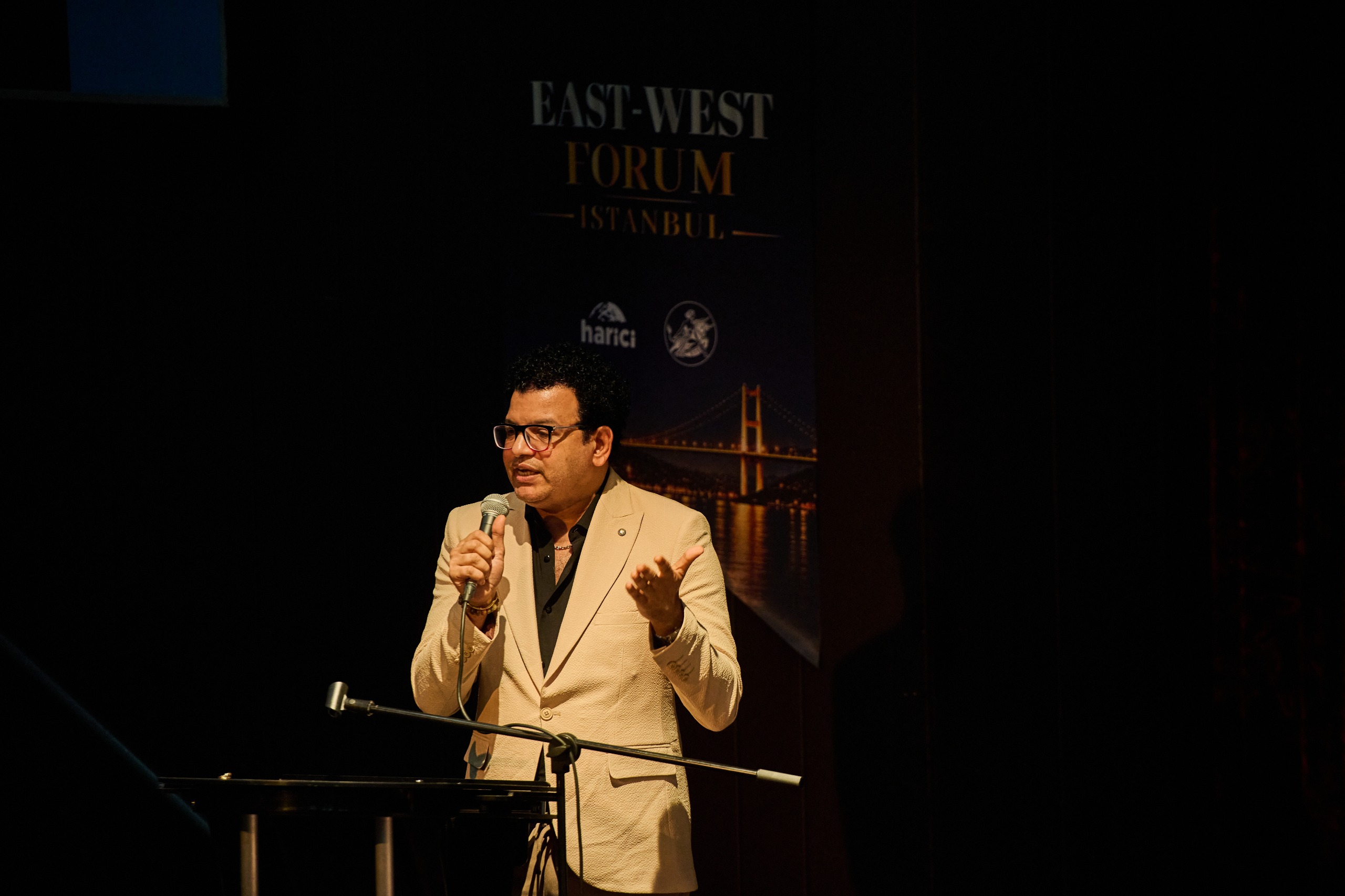
Dr. Ahmed Moustafa, Director & Founder, Asia Center for Studies & Translation, Egypt
In a city that has spent centuries translating the language of one civilization to another, the first East-West Forum arrived at a moment when the world itself seemed to have lost the vocabulary for talking across its divisions.
Held in Istanbul on Sept. 26–27 and preceded by meetings around the event, the forum brought together diplomats, academics, journalists, strategists and political thinkers from a wide range of countries. Hosted by Harici Media in partnership with the Berlin-based European Transcontinental Initiative, the gathering was conceived as an attempt to examine a world increasingly defined by competing power centers, regional wars, economic fragmentation, artificial intelligence and the erosion of confidence in institutions created after the Second World War. Harici reported that participants came from roughly 30 countries.
For us, the significance of Istanbul was not simply a matter of the speakers on the panel or the structure of the programme. Its deeper importance lay in the willingness to put difficult — and sometimes uncomfortable — questions on the table.
We would like to extend our sincere thanks and appreciation to my friend and brother, Mr. Tunç Akkoç, Founder and Editor-in-Chief of Harici Media, for his gracious invitation to a representative of the Asia Center for Studies & Translation, Egypt, to participate in the Forum as a speaker and commentator. His initiative in creating a platform where competing geopolitical narratives could meet directly deserves recognition.
In his opening remarks, Akkos stressed that the initiative was intended to establish a permanent platform where people representing different political and intellectual traditions and perspectives could meet and engage in direct dialogue.
This vision is particularly significant because the traditional language used in international relations has increasingly struggled to explain the realities of a rapidly changing world.
The Problem of Proxy Wars
During the session that discussed proxy wars in the region and ways to reach solutions to their crises, the Center put forward the view that the Middle East cannot simply be understood through the traditional map that divides the parties into “good” and “evil,” or into “responsible states” and “rogue states.”
Such terms, in our assessment, often reflect the perspective of powers that possess extensive influence over international media and financial and security institutions.
The Center particularly criticised what we see as political bias within important sectors of the Western media and some non-governmental organisations that receive Western funding. From our perspective, these institutions can, in some cases, move from being mere observers of geopolitical conflicts to becoming influential parties in the battle over the narrative and the story.
However, this view should remain open to debate and should not automatically be accepted as an absolute truth.
The more important question is not whether every Western journalist, every NGO, or every Western institution works to serve a single geopolitical agenda clearly, this is not the case, but whether the information environment itself has become so highly polarised that the public is now receiving radically different interpretations of the very same war.
In our assessment, the answer is increasingly approaching “yes.”
The problem becomes particularly clear when searching for the term “proxy wars” in the Middle East. Some of the first results focus on groups associated with Iran, including Hezbollah and the Houthis, as well as Hamas, whereas the history of regional conflicts is far more complex.
Al-Qaeda and ISIS emerged through different historical trajectories, with Anglo-Saxon support that was “created by Britain and the United States.” In environments dominated by the United States and Britain, Al-Qaeda emerged from the environment associated with Osama bin Laden and the Afghan jihad, while ISIS developed largely from Al-Qaeda in Iraq, under American sponsorship, to pursue a certain agenda in the region and advance the scenario of “creative chaos” promoted by Condoleezza Rice, the radical US Secretary of State.
At the same time, US policy toward Afghanistan during the Cold War contributed to shaping the broader environment from which some militant jihadist movements later emerged.
These distinctions matter.
Because propaganda often begins where complex historical details end.
Who Has the Right to Define a “Rogue State”?
The same problem appears in the vocabulary used to describe states.
Countries such as China, Russia, Iran and North Korea are frequently portrayed in Western strategic discourse as states challenging the existing international order.
Egypt, despite the different nature of its relationship with Washington, can also become the subject of criticism when its foreign policy does not conform to certain Western expectations.
The question is not whether these governments should be exempt from criticism. Of course not.
The deeper question is this: can the international system remain sustainable when one geopolitical camp increasingly assumes the authority to define which governments are legitimate, which movements are terrorist, which wars are defensive and which forms of resistance are acceptable?
That was one of the central questions behind our intervention in Istanbul.
The Middle East has repeatedly been presented through the lens of the “Iranian threat” as the principal strategic danger.
There is no question that Iran possesses significant military and regional capabilities, and that its policies are deeply contested by many neighbouring states. At the same time, reducing virtually every regional security problem to Tehran can obscure the interests and roles of other actors, including Israel, the United States, Gulf states, armed groups and local political forces.
The region has repeatedly paid a heavy price for simplistic interpretations of complex conflicts.
The Economics of Fear
The discussions in Istanbul also led us to a broader American question: to what extent can fear itself become a source of political and economic power?
Historically, the United States has experienced intense political campaigns shaped by perceived racial, ideological and security threats.
One does not need to accept every interpretation of this history to recognise that fear can become a factor with tangible economic consequences.
A 2020 study by Citi estimated that racial discrimination against Black Americans had cost the US economy approximately $16 trillion in lost economic output since 2000, based on an analysis of disparities in wages, education, housing and investment.
This figure demonstrates the extent of the economic losses associated with racial discrimination and exclusion. It also raises questions about the relationship between fear-based narratives concerning Black Americans, media influence, the political power of the gun lobby and the broader economic consequences of insecurity.
More importantly, however, the study highlights a fundamental point: bias and insecurity carry substantial and measurable economic costs.
The broader lesson has direct relevance to foreign policy.
When societies are continually presented with existential enemies, military spending and the expansion of security institutions become politically easier to justify.
America After Iran
In Istanbul, we also advanced the view that the United States after its confrontation with Iran in 2026 should not simply be understood through the traditional image of unlimited American power.
The conflict exposed economic and strategic vulnerabilities.
The Strait of Hormuz emerged as a major strategic pressure point for global energy markets, amid disruptions to international trade that forced governments and companies to search for alternative routes and supplies.
The consequences were reflected in oil prices and energy costs in Europe and elsewhere.
This does not mean that American power has disappeared. Rather, it suggests that military power is no longer synonymous with strategic control.
The rise of China, Russia, ASEAN, Iran and other centres of economic and diplomatic influence has made the international order increasingly complex and dispersed.
The East-West Forum itself reflected this reality, bringing together voices from Europe, Asia, the Middle East and North America while explicitly addressing multipolarity and the ongoing transformation of the global order.
America Is Changing From Within
The domestic dimension of American politics also deserves attention.
The emergence of figures such as Zohran Mamdani in New York and Abdul El-Sayed in Michigan reflects changes in the American political debate over inequality, foreign policy, healthcare, identity and the influence of established political and economic interests.
Their political trajectories should not be treated as evidence of a predetermined future for the United States.
They do, however, illustrate how issues that were once treated as peripheral including the costs of war, US policy toward Israel, economic inequality and the political influence of younger and more diverse generations have moved closer to the centre of American political debate.
This is another reason why East-West dialogue cannot remain confined to foreign ministries and military institutions.
A Dinner for Dialogue
One of the most memorable moments on the margins of the Forum was the private dinner held on the evening of Friday, September 25, hosted by H.E. Mr. Hasan Capan, Chairman of the Turkish-Chinese Friendship Foundation, and H.E. Ambassador Ersin Erçin, Vice Chairman of the Foundation, in honour of the speakers and participants.
We extend our sincere thanks and appreciation to both of them for their generosity, friendship and support.
The gathering was more than simply a dinner. It provided an opportunity for personal interaction, an exchange of ideas and the building of relationships among participants — precisely the kind of human diplomacy that formal conferences sometimes lack.
Real dialogue does not always begin behind conference podiums.
Very often, it begins around a single table.
Istanbul’s Larger Message
The first East-West Forum should be regarded as the beginning of a dialogue, not the end of a debate.
The organisers have already articulated a vision of transforming the initiative into an annual gathering in Istanbul, developing expert working groups, establishing an East-West Forum network and potentially creating a business council capable of connecting intellectual dialogue with economic cooperation.
This may ultimately prove to be one of its most important contributions.
The world that emerges from the current conflicts including the crisis surrounding the Strait of Hormuz will require more than ceasefire agreements.
It will require a new conversation about security, energy, sovereignty, development, technology and coexistence.
Istanbul is an exceptional setting for such a dialogue. One participant even proposed moving the headquarters of international organisations, including the United Nations, to Istanbul.
For centuries, the city has stood between two continents without belonging exclusively to either.
The East-West Forum can follow the same principle: not choosing one civilisation against another, but creating a space in which East and West can confront their differences without turning disagreement into permanent conflict.
For this reason, we see the Istanbul gathering as an announcement of intent.
It was not an attempt to erase differences.
It was an attempt to make dialogue possible despite them.
At a time when proxy conflicts increasingly risk evolving into direct confrontations, this may be among the most important political conversations the world can undertake today.

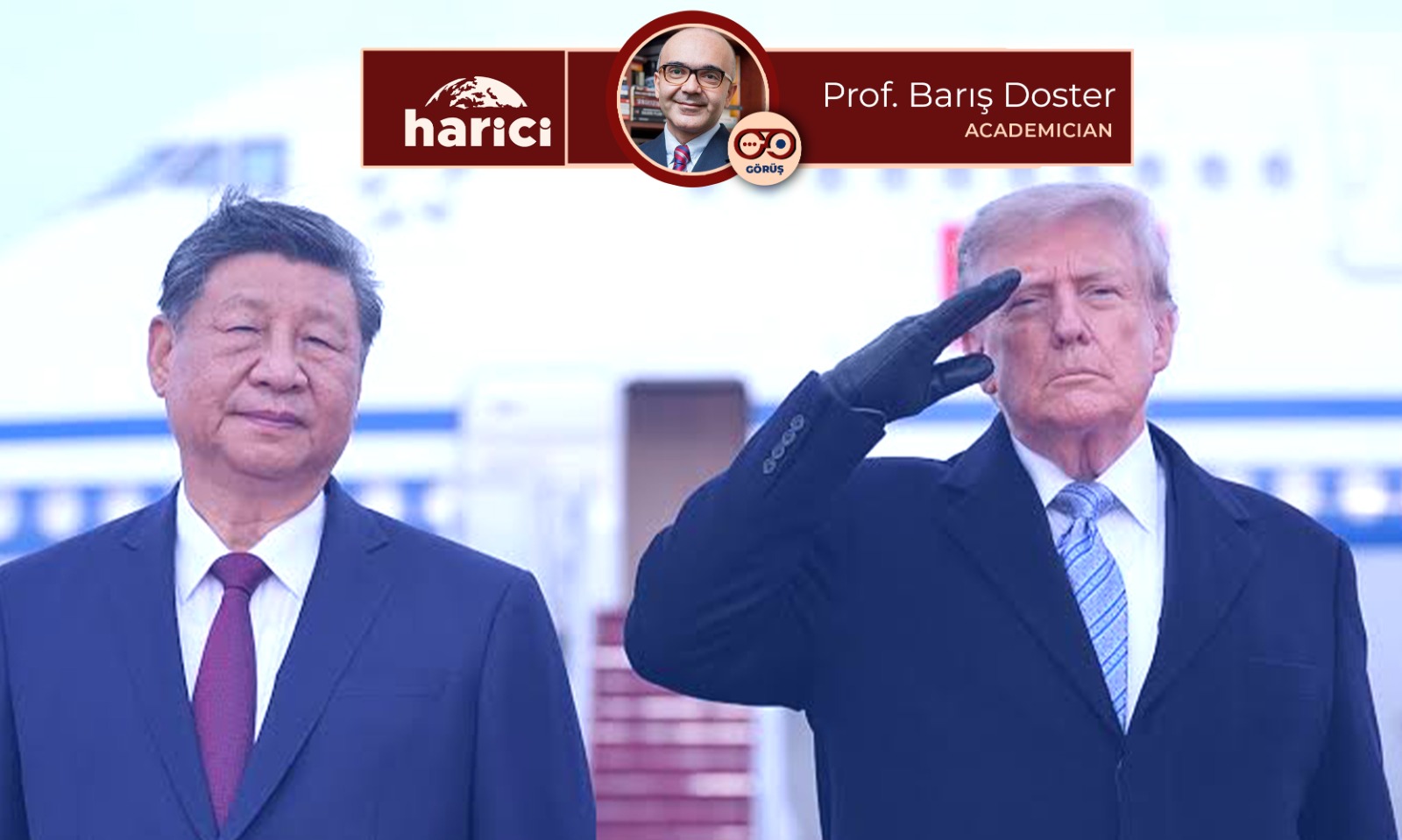
Much commentary followed the US president greeting the visiting Chinese leader at the foot of the aircraft stairs: both because a US president had not done so in many years, and because the leader he welcomed heads a state that the US defines as a competitor, an adversary, and an enemy. That photograph demonstrated that the US itself now recognizes China not merely as an economic power, but as a political, military, scientific, industrial, and technological one; yet it revealed other realities as well.
It showed that a multipolar order has arrived. It showed that the failure of the US to abide by the order whose rules it laid down and whose institutions it established has exacted a heavy toll on the US itself. It showed that the US-centric Atlantic system is unravelling. It showed that the collapse of a world order flouted, and indeed subverted, by its own rule-maker is both legitimate and inevitable. It showed that East-centred institutions, such as the Shanghai Cooperation Organisation and BRICS, enjoy an open path against Western-dominated bodies. It showed that the US regards China as a rival not merely economically, but ideologically and technologically. It showed that the US has proven unable to exercise deterrence against China, Russia, and Iran to the degree it desires.
Let us admit it: after the Cold War ended, the US assumed it could act as it pleased by bringing the European Union to its side and constantly invoking human rights, democracy, and freedom. It was mistaken. The more it spoke of a rules-based world order, of a liberal world order, the more it flouted those very rules. In the end, that order collapsed as well. The birth of a multipolar, multilateral, and multicentric world accelerated; and it was just as well. Now is the time to debate the rules, institutions, traditions, and solutions of this new order.
Yet who will conduct this debate? Who will take part in this search?
It is not right to expect this from the US; nor is it realistic. It is likewise impossible to expect it from the European Union. Europeans follow so subserviently in Washington’s wake that they refuse to consider even Russia as European, despite the fact that, alongside its Eurasian identity, millions of its citizens live across territory spanning Europe and Asia while viewing their nation as historically, politically, socially, culturally, artistically, and intellectually European. They attempt to construct a European defence and security architecture by excluding Russia, in defiance of Russia, and by harbouring hostility toward Russia. In the end, they are both mistaken and defeated.
As the new order emerges, India must also be examined under a distinct heading, alongside China and Russia. For India is a nuclear power possessing the world’s largest population and its 5th largest economy. It maintains disputes with China and Pakistan, yet enjoys good relations with Russia, the US, and Britain. It is a member of both the SCO and BRICS. On the other hand, within the Quad grouping, alongside the US, Japan, and Australia, it positions itself against China.
In summary, as an order takes shape in which the West runs out of breath while the East rises, and Atlantic institutions dissolve while those of Eurasia and the broader Global South come to the fore, we must first rid ourselves of Cold War dogmas and habits.
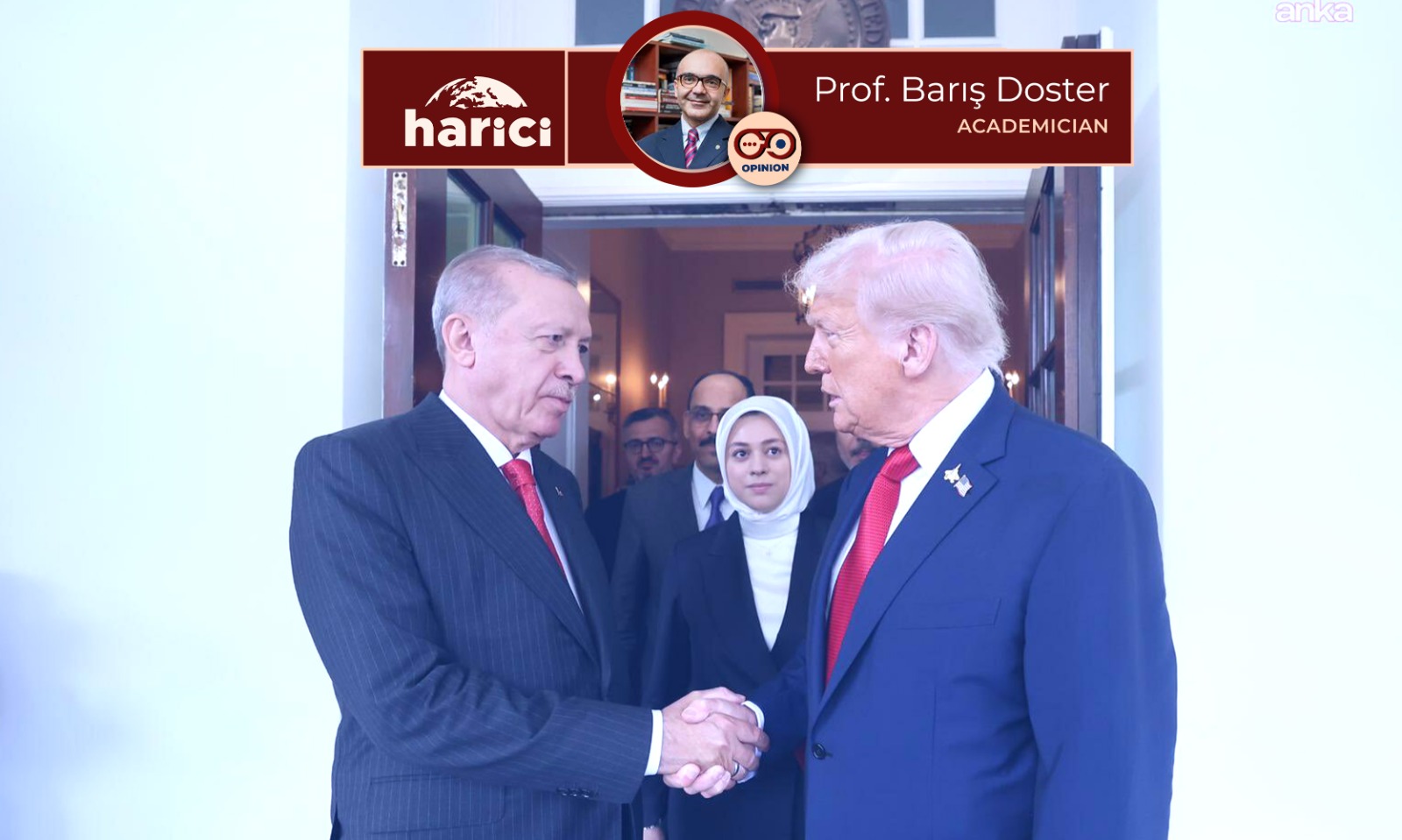
At the NATO summit held in Ankara last month, US President Donald Trump made promising remarks to Türkiye regarding the lifting of CAATSA sanctions, clearing the path for the sale of F-35 fighter jets to Türkiye, and supplying the engines required for the domestic Kaan aircraft. He has yet to keep his word.
This is quintessential Trump. He is neither a reliable nor a predictable leader. He approaches diplomacy like a merchant. In bargaining, he opens with the highest possible bid. Rather than institutional consultations, negotiations, formal diplomatic channels, and classical statecraft, he favours personal ties, bilateral encounters, and leader-to-leader diplomacy. He is notoriously erratic. A figure he praises one day, he drags through the mud the next, humiliating, scolding, and even insulting them.
US moves in the Mediterranean
Failing to honour the promises made to Türkiye, the US eased and partially lifted the arms embargo it had enforced on the Greek Cypriot Administration (GCA) since 1987 in 2020, before abolishing it entirely in 2022. Not content with this, the US signed a military cooperation agreement with the GCA in 2024 and hosted its leader at the White House. The GCA, whose path to acquiring weaponry from the US was cleared in 2024, has also recently been deepening its relations with France. Even though two British sovereign bases already exist in the southern part of Cyprus, with the US utilizing them whenever necessary, both the US and France signed separate basing agreements with the GCA. The GCA’s relations with Israel are also remarkably sound, as are those with Qatar. Meanwhile, relations between Greece and France have been exceptionally warm in recent years.
Amid all these tangible developments, Türkiye has largely relinquished its vigilance regarding the Blue Homeland. Drilling vessels and seismic survey ships have been withdrawn from the eastern Mediterranean.
The most distressing of these developments has been that four Turkic states in Central Asia (Kazakhstan, Uzbekistan, Turkmenistan, and Kyrgyzstan), none of which officially recognize the Turkish Republic of Northern Cyprus (TRNC) as a state, expanded their ties with the GCA and opened embassies in exchange for European Union financial assistance. Through this recognition, by acknowledging the Greek Cypriot Administration as the sole representative of the entire island under the name of the Republic of Cyprus, they effectively rejected the existence of the TRNC, whatever they might claim to the contrary.
Whatever anyone may say, and from whichever angle one evaluates it, the conduct of these four friendly and brotherly states cannot be explained merely by their lack of loyalty or their disregard for Türkiye’s sensitivities on this matter. Alongside this, one must acknowledge the failure of Turkish foreign policy. If Türkiye cannot convince even fellow Turkic states, let alone others, on an issue where its position is most legitimate and justified, such as Cyprus; if, far from persuading them, it cannot prevent them from cultivating relations with the GCA and opening embassies, this represents a monumental failure on the part of Turkish foreign policy.
Moreover, the failure in the Mediterranean is not confined to Cyprus. There is more.
Who is sidelining Türkiye in Syria?
Türkiye is persistently excluded from European-organized meetings on Syria. Türkiye’s views are not sought. So much so that even Qatar, our closest ally in the Arab world, on whose soil we established a military base and to whom we sold major assets, does not hesitate to take part in initiatives that exclude Türkiye from energy projects in the Eastern Mediterranean, or to cooperate with Greece and the Greek Cypriot Administration.
Much has changed in Syria since the days when Ahmet Davutoğlu, former prime minister, former foreign minister, former AKP chairman, and leader of the now-dissolved Future Party, carried away by his own momentum, declared: “Not a bird can fly in the Middle East without our knowledge”, “We know the Middle East street by street, inch by inch”, and “We are the masters, pioneers, and spokesmen of the emerging Middle East”, all while eagerly seeking to act as a subcontractor on behalf of the US. The regime has changed. The government has changed.
So let us ask: did we get what we wanted?
Israel, which most recently struck Abu al-Duhur Military Airbase east of Idlib in northern Syria; Israel, a backer of the PKK-PYD-YPG terrorist organization; Israel, which usurped Syrian land in the Golan Heights, attacking Syria and rolling in its tanks whenever it pleases; Israel, which seeks to partition Syria into four entities (Kurdish, Alawite, Arab, and Druze): Israel got what it wanted. And it continues to do so.
Does Israel, which directs scathing rhetoric at Türkiye, fortified by immense US backing and sustained by Europe’s three major powers (Germany, Britain, and France), draw this audacity solely from the imperialist powers standing behind it? Or does Türkiye’s inefficacy in the Turkic world and across the Arab sphere, alongside that backing, also embolden Israel?
In answering this question, we will arrive at a far more accurate assessment if we take into account the depth of Israel’s relations with Azerbaijan.

Germany expands North Sea military ports and plans new naval base

Musk appointed co-director of Pentagon future warfare initiative

US waives human rights terms on $320m military aid to Egypt

Putin says Russia did not start war and warns of nuclear risks

European nations unite against US pressure over strategic oil stocks
-

 Europe5 days ago
European unions urge governments to scrap all Palantir deals
-

 Diplomacy5 days ago
East-West Forum in Istanbul highlights irreversible shift to multipolarity
-

 Europe1 week ago
Emmanuel Todd says West faces collapse amid Ukraine and Iran crises
-
 Europe1 week ago
European intelligence chiefs divide over risk of Russian attack
-
 Diplomacy1 week ago
East-West Forum in Istanbul to debate multipolarity and global order
-
 Middle East1 week ago
Sharaa says 7 October must not shape Israel policy on Syria
-
 America1 week ago
Republican support for Trump’s war with Iran drops sharply in polls
-
 Middle East1 week ago
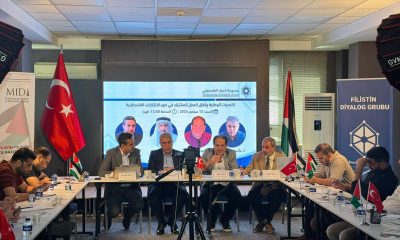
Palestinian factions confront legitimacy crisis at Istanbul talks
