
America
Beyond a handful of oil

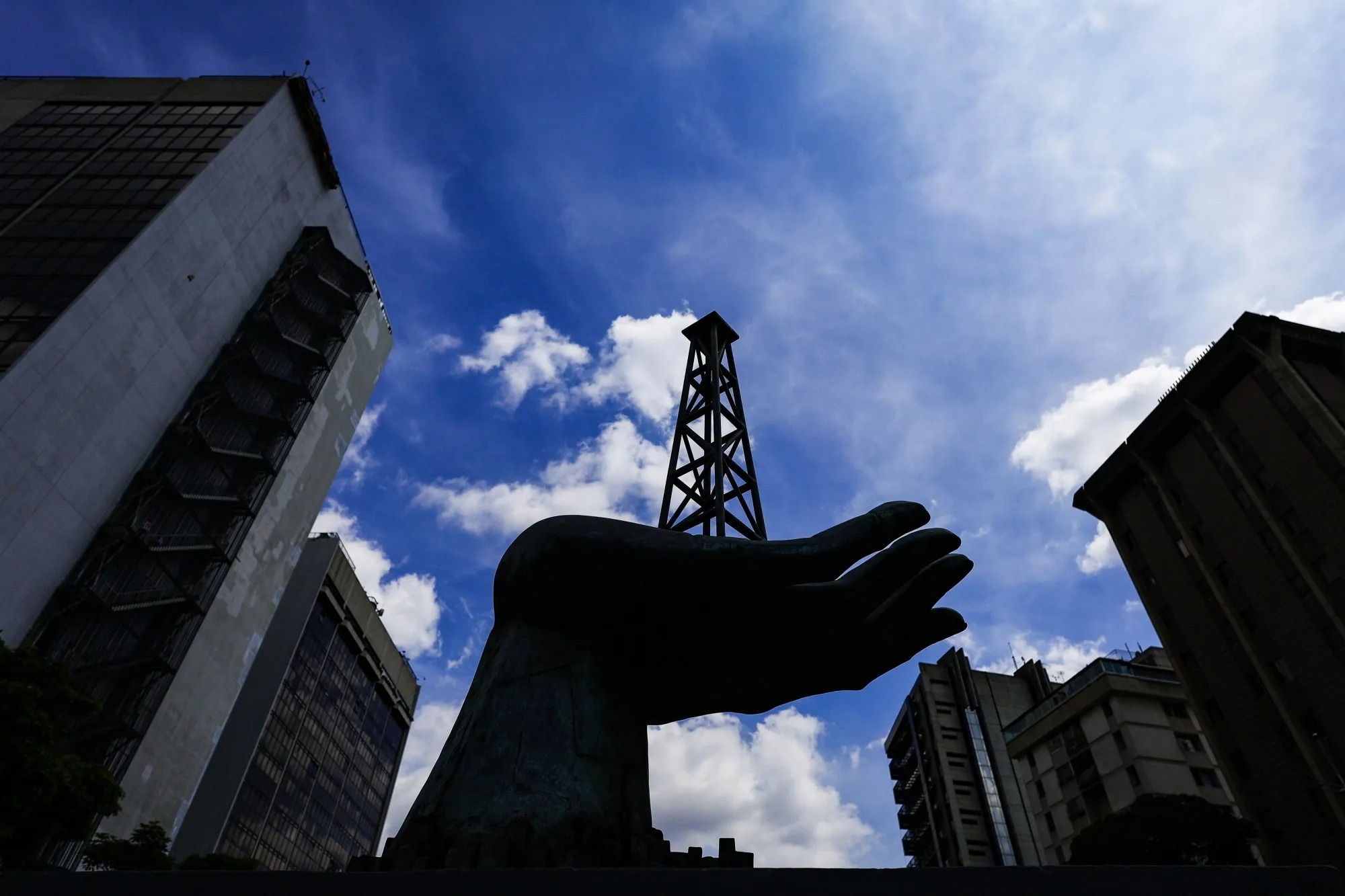
As the American occupation of Venezuela approaches quite openly, we are once again living and breathing stories of oil seizures.
When we say “story,” it is not exactly a fairy tale: The name at the head of the occupation operation, Donald Trump, states with great clarity that besides excuses like drugs, he wants to seize Venezuela’s oil. By “seizing,” he doesn’t just mean confiscating production; he also wants to prevent Venezuela from selling oil to “US adversaries.”(1)
According to OPEC, Venezuela possesses approximately 17% of global reserves, or 303 billion barrels; this means it ranks ahead of OPEC leader Saudi Arabia. According to the US Department of Energy, these reserves consist mostly of heavy oil in the Orinoco belt in central Venezuela, which makes crude oil production expensive.(2)
The US has the infrastructure suitable for this. Despite being the world’s largest oil producer, the US still imports large quantities of crude oil. Heavy oil is critically important for American refineries, especially those around the Gulf of Mexico. About 70 percent of American crude oil imports are heavy oil, and 60 percent of this comes from Canada, which has a similar “heaviness” to Venezuela.
On the other hand, a meaningful recovery in Venezuela requires time, large-scale infrastructure reconstruction, billions of dollars in capital, and the sustained participation of international oil companies. Since oil monopolies prioritize more competitive and lower-risk projects elsewhere, obtaining this level of commitment is currently quite difficult.(3)
Indeed, energy giants like Exxon and ConocoPhillips, including Chevron which currently holds a license waiver, are hesitant to re-enter Venezuela. For this reason alone, some argue that help should be sought from companies of “allied” countries, such as Eni, which is already operating in Venezuela.
Moreover, American oil monopolies already have drilling projects available in the Americas that can be extracted more cheaply. For instance, both Exxon and Chevron operate in Guyana, where Venezuela has a territorial dispute, and it is estimated that Exxon can produce there at a cost below $35 per barrel (Venezuela produces at $49 in the Orinoco region). Chevron is expected to produce oil in the Permian region for $37 to $44. ConocoPhillips’ investments in Canada project a cost of $42 per barrel. Therefore, reintroducing Venezuelan oil to international markets is not currently capable of causing the kind of price drop Trump claims.
Furthermore, even if progress could be made in “upstream” operations, Venezuela has been stagnating for some time in “midstream” and “downstream” sectors such as refining, transport, and distribution. In the country where refining capacity has remained constant for many years, capacity utilization has also been weak.
So how is it assumed that investment will flow into Venezuela and the oil industry will get back on its feet? Javier Blas from Bloomberg points out that the issue is not just Venezuelan oil, but American hegemony over oil reserves in the entire “Western Hemisphere” via the “Monroe Doctrine,” which was highlighted in the latest National Security Strategy (NSS). According to this calculation, when Canada, Mexico, and all of Latin America are included, the US captures 40 percent of the world’s entire oil production, gaining an invaluable asset against its rivals. It also gains the ability to set prices, a power once held by Arab countries and now by OPEC.
Energy prices are quite important for the predatory capital faction clustered around Trump. Access to new energy sources, including nuclear, is critical for Silicon Valley technology capital, which is investing heavily in data centers that will grow artificial intelligence. In this context, while companies like Microsoft invest in nuclear energy, American oil monopolies known as supermajors have taken action to provide energy to data centers; because natural gas, oil, and coal are still the three raw materials with the largest share in US primary energy production.
In December 2024, executives from Exxon and Chevron separately announced that their companies were preparing to enter the electricity sector. Oil companies, which usually generate electricity only for their own operations, will enter the broader electricity market at a time when demand is rising rapidly.
Rest assured, all of this will be accompanied by the plundering of nickel deposits in Venezuela, which have been found to be quite rich. Indeed, Axios counts AI companies among the winners of the so-called regime change in Venezuela. Venezuela is the richest source of critical minerals used in semiconductors that power AI data centers. According to Axios, if the US can use Venezuela instead of being dependent on China for these materials, it could get a step ahead in the AI race.
In fact, on Sunday aboard Air Force One, Commerce Secretary Howard Lutnick touched upon “mining opportunities” in Venezuela and said, “You have steel, you have minerals, you have all the critical minerals. They have a great history of mining, but that history has rusted.”
On the other hand, there is a not-so-small problem here: Even if the US frees itself from China in the supply of rare earth elements, the refining processes for these materials are done almost entirely in China. The US does not have such expertise, and acquiring it will likely take many years.
But beyond this, the financialization of both its oil and Venezuela’s debts seems much more appetizing, and this is where the main significance of Trump’s thuggery lies. Indeed, it appears that Wall Street had its eye on the “wealth” opportunities that regime change would create even before Maduro was abducted. According to Bloomberg, weeks before the invasion, Citigroup analysts predicted gains of up to 60% in the country’s bonds if Maduro were removed from office. At crowded conferences and seminars, other strategists voiced their opinions on the potential profit the new regime could offer holders of the country’s $60 billion in bonds. As pressure on Maduro mounted, traders flocked to bonds, sparking a rally:
“Investors, including American energy and shipping tycoon Harry Sargeant III, lobbied the Trump administration to create a more favorable business environment in Venezuela, highlighting the advantages for the US. Paul Singer’s Elliott Investment Management, along with a consortium of other investors, had been fighting for years for Venezuela’s most valuable foreign asset.”
In public markets, bondholders made gains of about $4 billion in a single day and saw hope for a restructuring that would yield further profits. According to the report, for private equity firms and energy investors, Donald Trump promised an even bigger prize by “pledging that the US would spend billions of dollars to fix Venezuela’s broken oil infrastructure.”
Among these promises, of course, are the receivables of companies nationalized during the Chavez era. ConocoPhillips has been trying to get approximately $12 billion in compensation for its seized assets for years. Hedge funds are looking for ways to invest in billions of dollars of financial claims linked to Venezuela. Venezuela is also considered indebted to many major companies after nationalizing assets in 2007. Following the 2017 default, the prospect of the country’s long-delayed debt restructuring is making the palms of private equity firms that buy and sell debt itch. Although Venezuela’s sovereign bond market is relatively popular, the opening of receivables and arbitration claims to financial markets is significant for American capital. This capital faction, however, sees the possibility of reviving Venezuela’s oil industry as an opportunity to pressure Venezuela to pay the debts of those who are creditors, particularly of the state oil company PDVSA.(4) After years of fruitless efforts to extract cash from the Maduro government, many companies have sold these international arbitration cases to specialized investors, including hedge funds.
Ben Cleary, partner and director at the $4 billion Tribeca Investment Partners, is sending a team of investors to Caracas to meet with potential partners and examine potential assets. US-based advisory firm Signum Global Advisors, which took investors to Ukraine last year as part of reconstruction efforts, is also planning a trip to Venezuela at the end of March. The group will consist of about 20 participants, comprised of multinational corporations and money managers.
Indeed, Bloomberg points out how Wall Street and private equity have become intertwined to reshape Venezuela through Trump’s aggressive move based on the claim of oil seizure. For example, a fund manager suggests that everything in Venezuela will depend on what kind of investments are made in the oil sector.
I would also like to remind you that asset managers invest heavily in oil monopolies. Just as the oil commodity itself is a financial product, oil monopolies are intertwined with financial markets. While asset managers like Brookfield and Blackstone are already investing in energy assets, sovereign wealth funds like the Saudi Public Investment Fund and the Abu Dhabi Investment Authority have been looking for ways to channel their billions of dollars of investments into South America for years.
The financialization of sovereign debt linked to oil seizure and the rush of private equity means the “Ukrainization” of Venezuela; that is, transforming it into a colony of transnational (but in this instance, American) capital. In any case, there really is an “oil excuse” at play. But it is not as it is assumed to be.
(1) Economists Asdrubal Oliveros and Juan Palacios, in their book Sanctions in Venezuela, found that from 2023 to 2024, exports to the US, Spain, and India increased at the expense of China and Malaysia. In 2023, the first group received 34% of Venezuelan crude oil exports, while the second group received 51.6%. In 2024, these ratios were nearly reversed, becoming 56.2% and 26.8%, respectively.
(2) According to Bloomberg’s analysis, most Venezuelan crude oil is high-sulfur and heavy, meaning it is costly and technically difficult to transport and refine compared to light and sweet quality oil. To facilitate the transport and processing of this type of crude oil, it usually needs to be mixed with a diluent (such as condensate or naphtha). Furthermore, special refining equipment is necessary to refine this type of crude oil. Consequently, such heavy and sour crude oil trades at a significant discount compared to international benchmark prices. Additionally, the production of naphtha used in transporting heavy oil is heavily dependent on Russia, and as long as sanctions persist, making progress in naphtha imports seems unlikely. Last December, a tanker carrying naphtha from Russia to Venezuela turned back due to the Trump blockade.
(3) According to POLITICO, Rystad Energy stated in a client note that “approximately $53 billion in oil and gas upstream and infrastructure investment is required over the next 15 years to keep Venezuela’s crude oil production steady at 1.1 million barrels per day”: “Going above the 1.4 million [barrels per day] level is possible, but this will require steady investment of $8-9 billion annually from 2026 to 2040, in addition to ‘maintenance’ capital requirements.”
(4) Defaulted bonds issued by Venezuela and the state oil company Petróleos de Venezuela continued their gains on Tuesday following an increase of up to 35% on Monday. According to data compiled by Bloomberg based on the latest investor filings, holders of these bonds include some of the world’s largest asset managers, such as Fidelity Investments, BlackRock, and T. Rowe Price Group.










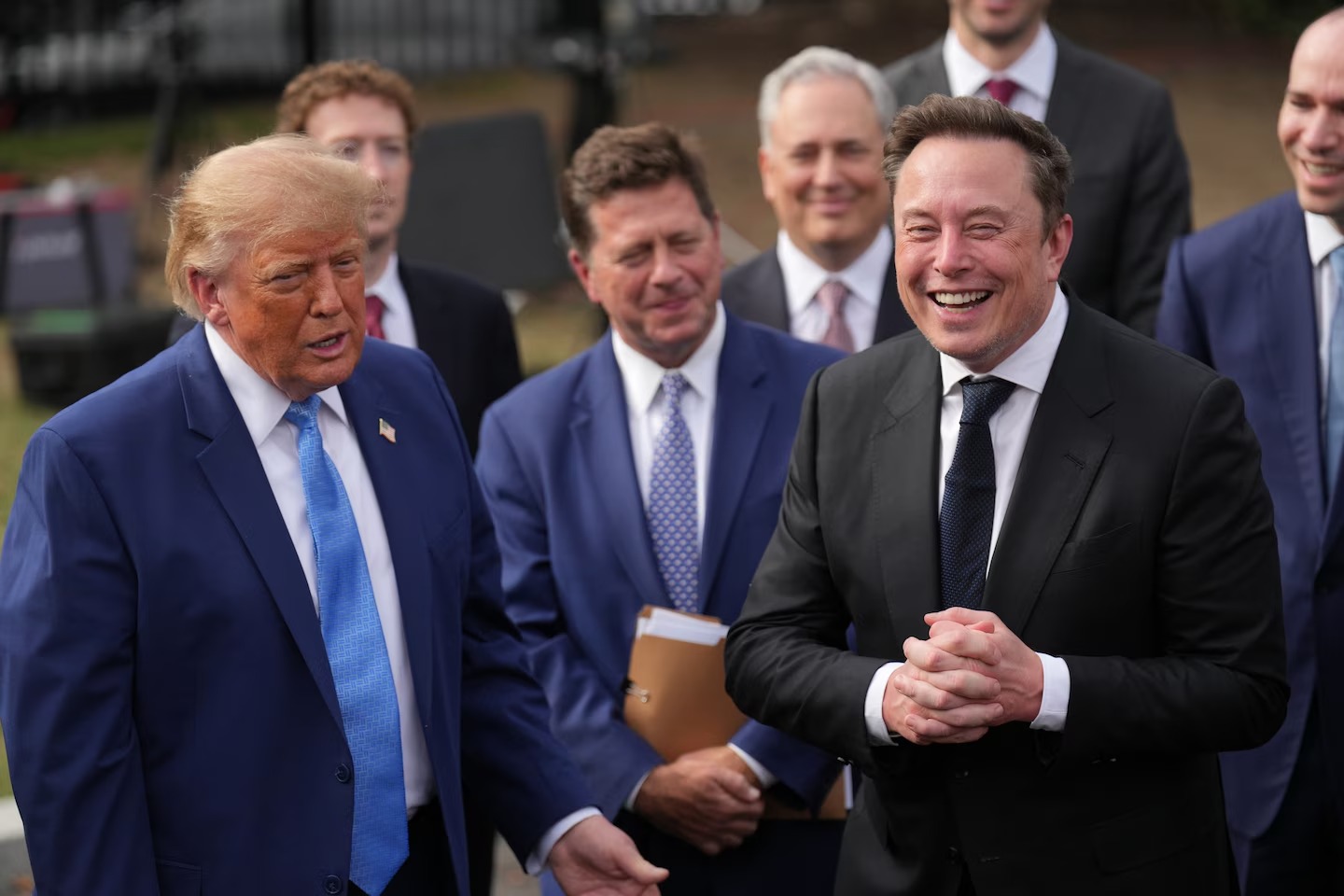
The world’s richest man, Elon Musk, has assumed the co-directorship of a Pentagon initiative focused on the future of warfare, known as “Project Meridian”.
Musk’s new role was announced by US Secretary of Defence Pete Hegseth.
Musk, who has long expressed his conviction that wars will ultimately be fought with autonomous unmanned aerial vehicles, will advise the project as co-director alongside Palmer Luckey, founder of defence start-up Anduril, and former Speaker of the House of Representatives Newt Gingrich.
In a memorandum issued at the Pentagon, Hegseth stated that the group would “examine the battlefields of the future” and “determine which weapons and technologies warfighters must employ to achieve dominance in these environments.”
During his “State of the Force” address at Marine Corps Base Quantico, Hegseth said:
“The best predictors of future conflict do not reside exclusively within the Pentagon. Obvious biases and risks arise when we task ourselves with both framing the questions and answering them.”
Hegseth stated that this initiative would commence immediately and that, following his address, he would convene with Musk, Luckey, and Gingrich at a secure location.
Project Meridian will have 120 days to “ruthlessly map the trajectory of wars, domains, and technologies”, a process that will culminate in the public disclosure of its findings alongside a classified annex.
Hegseth outlined an expansive mandate extending “from beneath the surface of the Earth to beyond the Moon.”
Rather than formulating new military strategies or policies, the panel will seek to identify “the domains we must seize and the capabilities we must master”, focusing on the effort to “discover, develop, and field” the weapons and systems that next-generation American troops may require.
The group is expected to submit a report containing recommendations to him by the end of January.
In 2024, Musk remarked: “Future wars will be entirely about drones and hypersonic missiles.” This was merely one of several similar statements he has made in recent years.
For Musk, whose oversight role at the Department of Government Efficiency (DOGE) ended in turmoil and escalated into a dispute with President Donald Trump over Trump’s spending bill, this appointment marks his formal return to government in an official capacity.
Musk and Trump ultimately reconciled, and Musk attended a meeting on artificial intelligence safety at the White House this week alongside other technology leaders.
Meridian forms part of a broader push announced by Hegseth to restructure the military around autonomous warfare and rapidly advancing technologies.
Hegseth announced the establishment of the Autonomous Warfare Command (AUTOWARCOM), a new four-star combatant command endowed with what he termed “service-like authorities” to scale autonomous and robotic capabilities across the joint force.
The Department of War will also begin phasing in new occupational frameworks across all military branches to establish specialised career tracks for what Hegseth described as “the next generation of autonomous warfighters.”
“We should have conceived an Autonomous Warfare Command a decade ago,” Hegseth said, explaining that Meridian aims to gaze far enough ahead to enable the military to anticipate the next technological shift rather than lag behind.
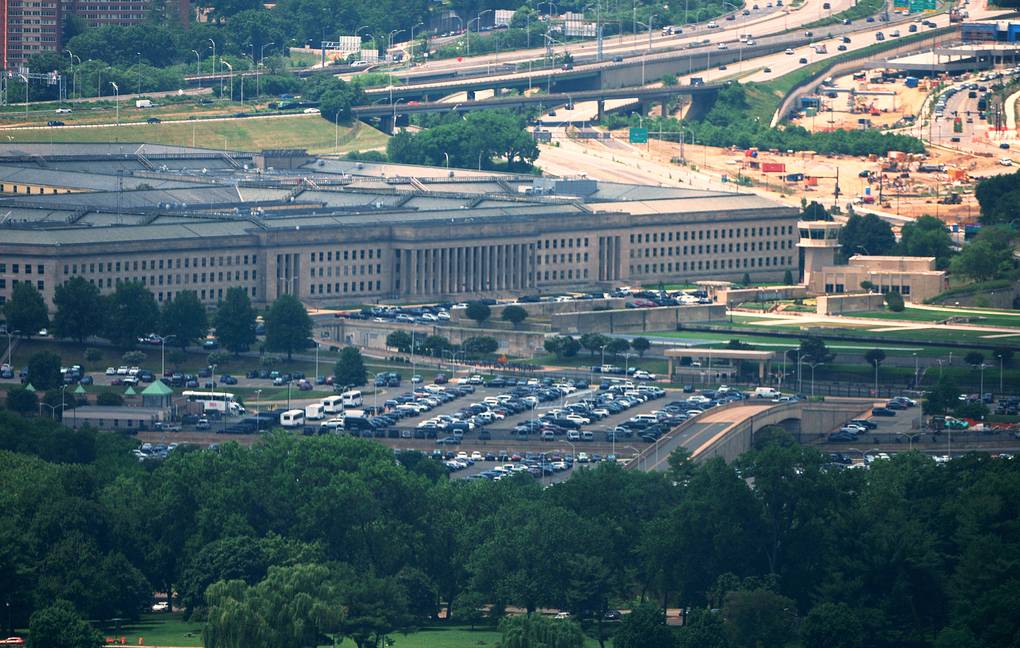
A cyberattack targeting the US Department of War’s personnel database has resulted in the leak of personal information belonging to approximately 3 million people.
Speaking to ABC News, a Pentagon official stated that the system accessed by unauthorised individuals contained the records of 2,760,000 living persons and 294,000 deceased individuals.
The Military Times portal, which first broke the news, had reported the number of affected individuals as approximately 4 million based on two sources. The Pentagon official subsequently conveyed different figures to ABC News.
The leak encompasses Social Security numbers and duty information belonging to military personnel and civilian employees. According to an official notification examined by Military Times, the compromised records may also include names, dates of birth, contact information, sex, race, and military occupational specialties.
The unauthorised access to the information system of the Defense Manpower Data Center (DMDC) lasted for approximately nine months, between October 2025 and 16 July 2026.
ABC News reported that the access in question was obtained by a small number of third-party users. The vulnerability was closed after it was identified.
The DMDC is considered one of the Pentagon’s primary personnel records centres. More than 60 million records belonging to active-duty personnel, reservists, civilian staff, contractors, retirees, veterans, and military family members are stored at the centre.
The Pentagon has not detected any evidence that the leaked data has been misused. Military Times reported that affected individuals were offered identity restoration and credit history monitoring services.
A similar data breach previously occurred on the Federal Bureau of Investigation’s (FBI) recruitment website, FBIJobs.gov. According to information obtained by ABC News from internal communications and sources, the FBI is considering the possibility that data belonging to its entire staff may have been stolen.
The New York Times (NYT) examined a portion of the stolen FBI records. Home addresses, telephone numbers, official email addresses, Social Security numbers, dates of birth, hiring dates, and emergency contact details for relatives were identified within these documents.
The database also contained unit designations, duty roles, and information regarding the supervisors of personnel. Some records revealed assignments within counterintelligence and counternarcotics units, as well as departments examining threats originating from Russia, China, and Iran.
Ciaran Martin, the former head of the UK National Cyber Security Centre, noted that this type of breach could directly affect the FBI’s operational capabilities.
The hacker group known as ShinyHunters had announced that it had seized medical data and security clearance records alongside files belonging to tens of thousands of active and former FBI employees.
Experts evaluating the matter for the NYT warned that this information could be used to track agents, threaten their families, or compile dossiers by foreign intelligence services.
The ShinyHunters group initially threatened to release the data unless the bureau withdrew an advisory it had published concerning the group’s attack methods.
The group later asserted that it had never intended to leak the information and characterised its action as an advertising campaign.
In a report published in May, Reuters noted that the personal data of US military personnel had been used in surveillance and attack preparations.
According to the agency, Washington’s adversaries gained the ability to pinpoint areas where troops were concentrated by exploiting commercially available location data. US lawmakers at the time criticised the Pentagon for failing to adequately protect the personal data of military personnel.
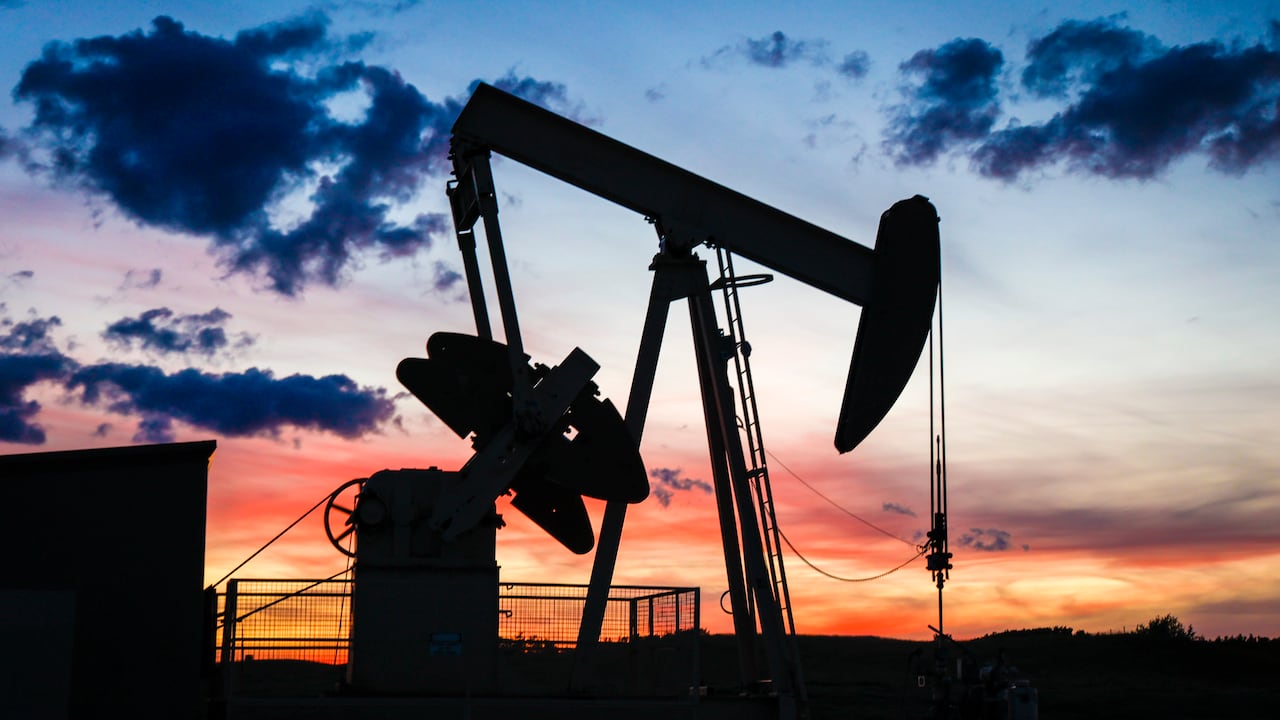
US President Donald Trump’s trade policy and the Washington administration’s push to increase Venezuelan oil imports are prompting Canada to diversify its energy exports.
According to a report by The Wall Street Journal, recent developments are accelerating Canada’s development of new oil and natural gas projects.
Steps taken by the Ottawa administration, which aspires to become an energy superpower, are seen as potentially strengthening the country’s position in global markets.
In Canada, the world’s fourth-largest oil producer and fifth-largest natural gas producer, the energy sector accounts for approximately one-fifth of total exports.
Almost all of the country’s natural gas exports and approximately 90% of its oil exports go to the US.
The newspaper writes that the trade war with Washington and the atmosphere of confrontation entered into with Iran have heightened Canada’s desire to turn to alternative markets outside the US.
Officials plan to increase shipments of oil and liquefied natural gas (LNG) to European and Asian markets.
Accelerating infrastructure investments in line with this target, Canada is also shortening approval processes. The government is prioritising the construction of an oil pipeline extending specifically to the west coast.
According to the newspaper’s estimate, if major pipeline projects are implemented, Canada’s daily oil transport capacity could rise to 6.8 million barrels by 2034.
Routes heading to the west coast will make up approximately 30% of this capacity.
The Canadian administration is simultaneously advancing LNG export projects. According to the report, these investments could allow approximately 55% of Canadian natural gas exports to be directed to markets outside the US by the early or mid-2030s.
While the government expands tax incentives for the oil and natural gas sector, the province of Alberta also plans to overhaul its royalty system.
However, the newspaper notes that implementing the new projects requires heavy investment, and the process depends on the final decisions taken by producers as well as the completion of regulatory approval processes.
The expansion of pipeline and LNG infrastructure could gradually reduce Canada’s dependence on the US market while raising its share in the global energy market.
The Canadian Prime Minister’s demand to reduce reliance on the US market had also come to the fore in July.
According to Carney’s statement, the province of Alberta submitted a plan for a pipeline spanning more than 1,000 kilometres to the west coast of British Columbia.
Targeted for completion by September 2027, the line will reach the Pacific coast by following an existing corridor through the mountainous terrain.
This shift in energy comes at a time of strained relations with the US. Donald Trump said that if Canada obtains associate member status in the European Union, he could halt trade with Europe in certain sectors and impose high tariffs.
As reported by the Associated Press, Trump characterised such a rapprochement as a “potentially hostile act”.
European Commission President Ursula von der Leyen had proposed opening the path for Canada to become the EU’s first associate member. The terms of this associate membership status, which is not defined in EU treaties, are not yet clear and require the approval of member states to enter into force.
Canada, which does not seek full membership, aims for maximum rapprochement with the EU.
Following Trump’s return to the White House, relations between Washington and Ottawa deteriorated. The Trump administration, which repeatedly called on Canada to become the “51st state” of the US, introduced additional tariffs.
In July, the US began imposing 50% tariffs on certain Canadian-origin goods.

Germany expands North Sea military ports and plans new naval base

Musk appointed co-director of Pentagon future warfare initiative

US waives human rights terms on $320m military aid to Egypt

Putin says Russia did not start war and warns of nuclear risks

European nations unite against US pressure over strategic oil stocks
-

 Europe5 days ago
European unions urge governments to scrap all Palantir deals
-

 Diplomacy5 days ago
East-West Forum in Istanbul highlights irreversible shift to multipolarity
-

 Europe1 week ago
Emmanuel Todd says West faces collapse amid Ukraine and Iran crises
-

 Europe1 week ago
European intelligence chiefs divide over risk of Russian attack
-

 Diplomacy1 week ago
East-West Forum in Istanbul to debate multipolarity and global order
-

 Middle East1 week ago
Sharaa says 7 October must not shape Israel policy on Syria
-
 America1 week ago
Republican support for Trump’s war with Iran drops sharply in polls
-

 Middle East1 week ago
Palestinian factions confront legitimacy crisis at Istanbul talks
