
America
Lula da Silva: Brazil is back

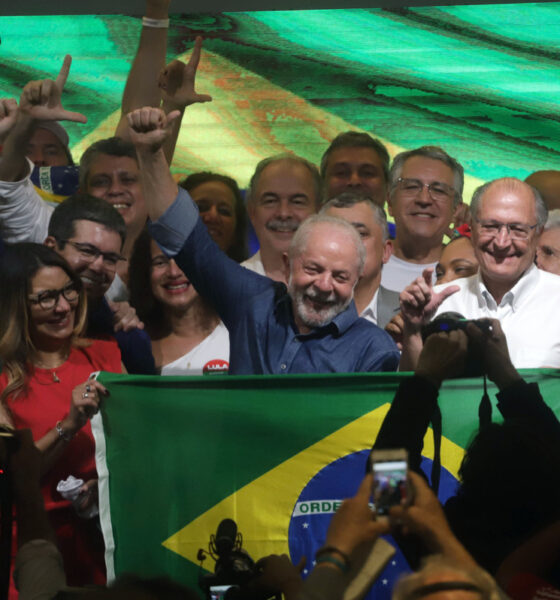
Brazil’s former president Lula da Silva (2003-2010) won the second round of presidential election that was held on October 30th, with 50.83 percent. Left-wing candidate Lula da Silva, who defeated incumbent right-wing leader Jair Bolsonaro, said he would restore his country to its rightful place in the international arena.
In Brazil, Latin America’s largest country with a population of over 212 million, about 156 million voters went to the polls on Sunday.
Labour Party candidate Luiz Inácio Lula da Silva won 50.83 per cent of the vote, compared to 49.17 per cent for Liberal Party candidate and incumbent President Jair Bolsonaro, according to polling results published by the Superior Electoral Court (TSE).
Lula da Silva also surpassed Bolsonaro (43.20 percent) with 48.43 percent of the vote in the first round of the presidential election held on October 2nd.
Lula, who previously ruled Brazil for two terms, will take over the presidency from Bolsonaro on January 1st, 2023.
A single country, a single people…
Lula da Silva addressed to his supporters after winning the election “as of January 1st, 2023, I will govern for 215 million Brazilians, and not just for those who voted for me. There are not two Brazils. We are a single country, a single people, a great nation.”
Referring to the corruption charges and spending time in jail, Lula said “I think I am experiencing a resurgence in Brazilian politics. They tried to bury me alive, but now I’m here to rule the country. We are in a very difficult situation, but I am sure that with the help of the people, we will find a way out and restore peace.”
The most urgent task is to fight hunger
Emphasizing the fight against hunger, Lula said, “Our most urgent commitment is to end hunger again, we cannot accept it as normal for millions of men, women and children to go hungry or consume less protein than necessary in this country. We are the third largest food producer and the first in animal protein.”
“We are able to export all over the world and we have a duty to ensure that every Brazilian can have breakfast, lunch and dinner every day,” Lula reiterated. “This will once again be my government’s number one commitment,” he said.
Referring to the housing problem, Lula said, “We cannot accept that families are forced to sleep on the streets as normal, so we will continue the ‘my home is my life’ program and bring back the participation programs. Brazil can no longer live with this huge wall of inequality.”
Lula listed the demands of the people as follows: “The Brazilian people want to have a good job, a salary which is always above inflation, a quality public health and education system. They want books instead of guns. Brazilian people want to regain hope.”
Democracy message
Describing the election victory as a “victory of democracy”, Lula said, “This is the victory of an enormous democratic movement founded beyond political parties, personal interests, and ideologies for the victory of democracy,”
Lula shared the Brazilian flag on his Twitter account with a “Democracy” note.
Democracia. pic.twitter.com/zvnBbnQ3HG
— Lula 13 (@LulaOficial) October 30, 2022
Foreign policy remarks:
Prestige in the world
“Today, we are telling the world that Brazil is back and is too big to be relegated to the sad role of a pariah,” Lula said, “What I hear the most in my international trips is that the world misses that sovereign Brazil that spoke on equal terms with the richest and most powerful countries and, at the same time, contributed to the poorest countries.”
Regional integration
“We are going to reconquer the credibility, predictability and stability of the country so that investors regain confidence in Brazil, so that they stop seeing our country as a source of immediate and predatory profit and become our allies in economic growth,” Lula said, recalling that in his previous terms, he had strengthened Mercosur and other regional integration organizations.
New standards with the US and EU
Talking about forming partnerships with US and EU on new standards, Lula da Silva added “We are not interested in trade agreements that condemn our country to enter the role of the seller of commodities and raw materials. We are going to reindustrialize and invest in the green economy.”
Lula also raised the issue of five permanent members of the UN, which undermine the balance between countries and prevented the enlargement of the General Assembly and the Security Council.
Fighting the climate crisis
“We are ready to re-engage in the fight against hunger in the world,” Lula da Silva stated and added that Brazil is ready to gain its leading role in the fight against the climate crisis by protecting all rainforests, especially the Amazon rainforest.
“We are open to international cooperation to preserve the Amazon, but always under Brazil’s leadership, without giving up our sovereignty,” Lula said, stressing that the growing deforestation and destruction in the Amazon rainforest will end.
Rise of the left in Latin America
The “pink tide” continues to rise in Latin America, which has defeated US-backed coups.
Following the elections in Peru, Bolivia, Argentina, Chile, Honduras, and Colombia, victory of yet another left-wing candidate in Brazilian elections too have raised the expectations on the strengthening of regional integration efforts. Lula da Silva’s emphasis on regional integration in his victory speech also points to this. Lula and Brazil are expected to boost cooperation among other governments, such as Argentina, Chile, Mexico, and Colombia, which share similar perspectives.
So much so that the leaders of Latin America, who strongly embraced Lula’s victory, shared enthusiastic congratulatory messages, and emphasized that this victory would strengthen the unification of Latin America.
Full support from Latin American leaders
Argentine President Alberto Fernandez shared his photo with Lula on his Twitter account, saying: “Congratulations, Lula da Silva! Your victory opens a new era for the history of Latin America. A time of hope and future that begins today. Here you have a partner to work and dream big for the good life of our peoples. After so many injustices that you experienced, the people of Brazil have elected you and democracy has triumphed.”
Después de tantas injusticias que viviste, el pueblo de Brasil te ha elegido y la democracia ha triunfado.
Latinoamérica sueña. pic.twitter.com/w9QwNAwhGk
— Alberto Fernández (@alferdez) October 30, 2022
Venezuelan President Nicolas Maduro also tweeted: “We celebrate the victory of the Brazilian people, who this October 30th, elected Lula as their new President. Long live the peoples determined to be free, sovereign, and independent! Today in Brazil democracy triumphed. Congratulations Lula!”
Celebramos la victoria del pueblo brasileño, quienes este #30oct, eligieron a @LulaOficial como su nuevo Presidente. ¡Qué vivan los pueblos decididos a ser libres, soberanos e independientes! Hoy en Brasil triunfó la democracia. ¡Felicitaciones Lula! ¡Un Gran Abrazo! pic.twitter.com/asnkPLhsNh
— Nicolás Maduro (@NicolasMaduro) October 30, 2022
Cuban President Miguel Diaz Canel said in his post, “They delayed your victory with heinous methods, but they couldn’t prevent you from winning with the vote of the people. Social justice will return.”
#LulaPresidente2022. #Cuba te felicita, querido compañero. Atrasaron tu victoria con métodos atroces, pero no pudieron impedir que vencieras con el voto del pueblo. Regresa @LulaOficial, regresa el @ptbrasil, regresará la justicia social. pic.twitter.com/TuQT0KIFYG
— Miguel Díaz-Canel Bermúdez (@DiazCanelB) October 30, 2022
Mexican President Andres Manuel Lopez Obrador also shared his photo with Lula on his social media account, saying, “Lula won, blessed people of Brazil. There will be equality and humanism.”
Ganó Lula, bendito pueblo de Brasil. Habrá igualdad y humanismo. pic.twitter.com/2nCg5yo5UD
— Andrés Manuel (@lopezobrador_) October 30, 2022
Bolivia’s President Luis Arce Catacora, emphasizing integration in his Twitter account, said: “Congratulations, brother Lula, Brazil’s elected president! Your victory strengthens democracy and Latin American integration. We are sure that you will lead the Brazilian people along the path of peace, progress and social justice.”
¡Felicidades hermano @LulaOficial, presidente electo de #Brasil!
Tu victoria fortalece la democracia y la integración latinoamericana. Estamos seguros que conducirás al pueblo brasileño por el camino de la paz, el progreso y la justicia social.
¡Jallalla Brasil🇧🇷! pic.twitter.com/GSznOi89ih— Luis Alberto Arce Catacora (Lucho Arce) (@LuchoXBolivia) October 30, 2022
Honduras President Xiomara Castro also shared her photo with Lula and posted “He faced the most conservative powers in history, and together with the people of Brazil he has defeated them. Latin America is reborn with hope in a true humanist process of change and liberation.”
Felicidades @LulaOficial, amigo solidario con la lucha de Honduras (2009), se enfrentó a los poderes más conservadores de la historia, y junto al pueblo de Brasil los ha vencido. América Latina renace con esperanza en un verdadero proceso humanista, de cambio y liberación. pic.twitter.com/vdXqluY9aH
— Xiomara Castro de Zelaya (@XiomaraCastroZ) October 31, 2022
Colombian President Gustavo Petro, who posted “Yay Lula” on his social media account, emphasized integration in Latin America in his following posts.
Viva Lula.
— Gustavo Petro (@petrogustavo) October 30, 2022
President of the Republic of Chile, Gabriel Boric retweeted Lula’s post and added “Lula. Happiness!”
Lula. Alegría! https://t.co/ORsTb06D8y
— Gabriel Boric Font (@gabrielboric) October 30, 2022
Peru’s President Pedro Castillo congratulated Lula on his victory, saying: “Peru congratulates the president-elect of Brazil, the comrade Lula, worker, trade unionist, fighter. His victory is essential to strengthen the unity of Latin America and the social justice of the Great Homeland.”
El Perú felicita al presidente electo de Brasil, al compañero @LulaOficial, obrero, sindicalista, luchador. Su triunfo es fundamental para fortalecer la unidad de Latinoamérica y la justicia social de la Patria Grande. https://t.co/hN8Ge3yEnW
— Pedro Castillo Terrones (@PedroCastilloTe) October 30, 2022
With Lula taking over in Brazil, most of the Latin American countries will be governed by leftist governments. In addition, Brazil, Argentina, Chile, and Colombia together with Mexico constitute the 5 largest economies of the continent.
Relations with China expected to improve
Chinese President Xi Jinping congratulated the winner of the election, Lula da Silva, stressing that “deepening long-term friendship and mutually beneficial cooperation serves the fundamental interests of both countries.”
Xi said he highly values the development of China-Brazil relations, and he is ready to work with Lula to push forward China-Brazil comprehensive strategic partnership to a higher level to benefit to the two countries and their people.
Speaking to the Global Times, Chinese experts expect Lula’s return to significantly improve the atmosphere of cooperation between China and Brazil in terms of trade, investment, and global governance. It’s also emphasized that Lula’s return also means the strengthening of the autonomy of Latin American diplomacy.
“Lula’s return is likely to bring back a smoother China-Brazil relationship” Zhou Zhiwei, an expert on Latin American studies at the Chinese Academy of Social Sciences, told the Global Times on Monday. Zhou said this would allow both sides find more space and improve economic and trade cooperation, especially in agriculture and infrastructure construction.
“Brazil may also seek to participate in the Belt and Road Initiative (BRI) under Lula” Zhou said.
Lula and BRICS could be more compatible
Given that Lula was instrumental in the establishment and launch of the BRICS mechanism during his last stint in office, the Chinese expert believes that he will continue to be active and positive about BRICS.
According to the Chinese expert, cooperation between Lula and BRICS countries and communication on international hotspot issues and global affairs will be smoother and more stable than under Bolsonaro.
Regional integration and rejection of US hegemonism
Yang Jianmin, another Chinese Latin American expert, told the Global Times about the rising “pink tide” in the region.
Stating that the “pink tide” that continued with Lula’s election can be viewed as the opportunity to support regional integration, to reject US hegemony in the region, and to advocate independent diplomacy, Yang stressed that this is also China’s opportunity to develop a more profound bond with these countries.
He may also follow a more pragmatic policy…
Wang Youming, director of the Institute of Developing Countries at the China Institute of International Studies in Beijing, pointed out that unlike others, Lula could also pursue a more pragmatic policy.
“Lula’s emphasis on South-South cooperation and bonding with emerging powers does not mean that he will reject the US” Wang noted and added that it’s very likely that Lula will may have a more pragmatic style and less anti-American voice in his third term. According to Wang, instead, Lula may prioritize more practical tasks such as stabilizing the economy and mitigating the negative impact of COVID-19.
Brazil and China may explore new areas of cooperation
Tatiana Prazeres, director of trade and international relations for the Federation of Industries of the State of São Paulo, told the Atlantic Council on China’s policy, which Lula would likely to pursue, that despite negative rhetoric against China during the Bolsonaro administration, trade and investment between the two countries developed largely undisturbed, but the political unrest created by the anti-Chinese rhetoric prevented the deepening of bilateral relations in other areas such as science and technology. Under Lula, Prazeres said, he expects Brazil and China to explore new areas of cooperation.
Lula may also be more enthusiastic about BRICS and the Belt Road, Prazeres said, adding that he may prefer to leverage Chinese investments and technologies to help reinvigorate Brazilian industry.
Biden may try to get closer through climate
Another expert spoken to the Atlantic Council is former secretary of foreign trade of Brazil, senior researcher Abrão Neto.
Lula’s election would lead to a significant change in Brazil’s environmental agenda, among other things, Abrão Neto said, adding that this would enable Brazil to improve its relationship with the United States.
Arguing that US-Brazil economic relations during the Lula era would continue to be driven by pragmatic mutual interests, the expert said: “A renewed stance from the Brazilian government on climate change and other environmental issues might offer an extended avenue for bilateral cooperation, with positive spillovers for the overall political and economic relationship between the United States and Brazil.”
Experts comment that Biden will try to get closer to Lula to lure Brazil into intense power rivalry.
It’s commonly expressed that Lula’s idea of strengthening the protection of the Amazon forests could be compatible with Biden’s climate policy.
US President Joe Biden was among the first world leaders to congratulate Lula.
On Sunday, Biden congratulated Lula on his victory following “free, fair and credible elections” and said he looked forward to continuing the cooperation with Brazil.
‘CIA’ plot against Lula
Lula da Silva, 77, who chaired Brazil for two terms in 2003-2010, was indicted for corruption in 2016. Lula, who argued that the case was political, applied to the court, but was sentenced to 9 years and 6 months in prison in 2017. He went to prison in 2018 and spent a year and a half in prison.
Lula was unable to run for president because he was in prison and could not run in the 2018 election. The lawsuits against Lula paved the way for Bolsonaro’s election.
In 2021, Lula’s convictions and cases were dismissed by the Supreme Court, which ruled that the judge responsible for these cases, Sergio Moro, was biased and political, paving the way for him to participate in the elections.
At the time, some messages about this investigation were leaked to the press by a Brazilian news site. The leaked messages revealed that federal judge Sergio Moro, who was conducting the investigation at the time, collaborated with prosecutors in ways that overstepped ethical lines and affect the decision on prison sentences.
It was understood that the corruption cases were conspiracy against Lula da Silva. The Brazilian federal prosecutor’s office announced that prosecutors conducting the investigation have been assigned to other units.
It was alleged that the CIA was behind the conspiracy against Lula at the time.
Lula, who followed policies to end the neoliberal impositions of the USA in Brazil and the region, IMF dependence, made Brazil the 10th largest economy in the world, improved relations with China, made the country one of the founders of BRICS, advocated regional integration, gained the love of the people by ensuring that approximately 30 million Brazilians got rid of poverty with the social policies he implemented.
The trial and imprisonment of Lula was described as a US-backed coup that brought the right to power.













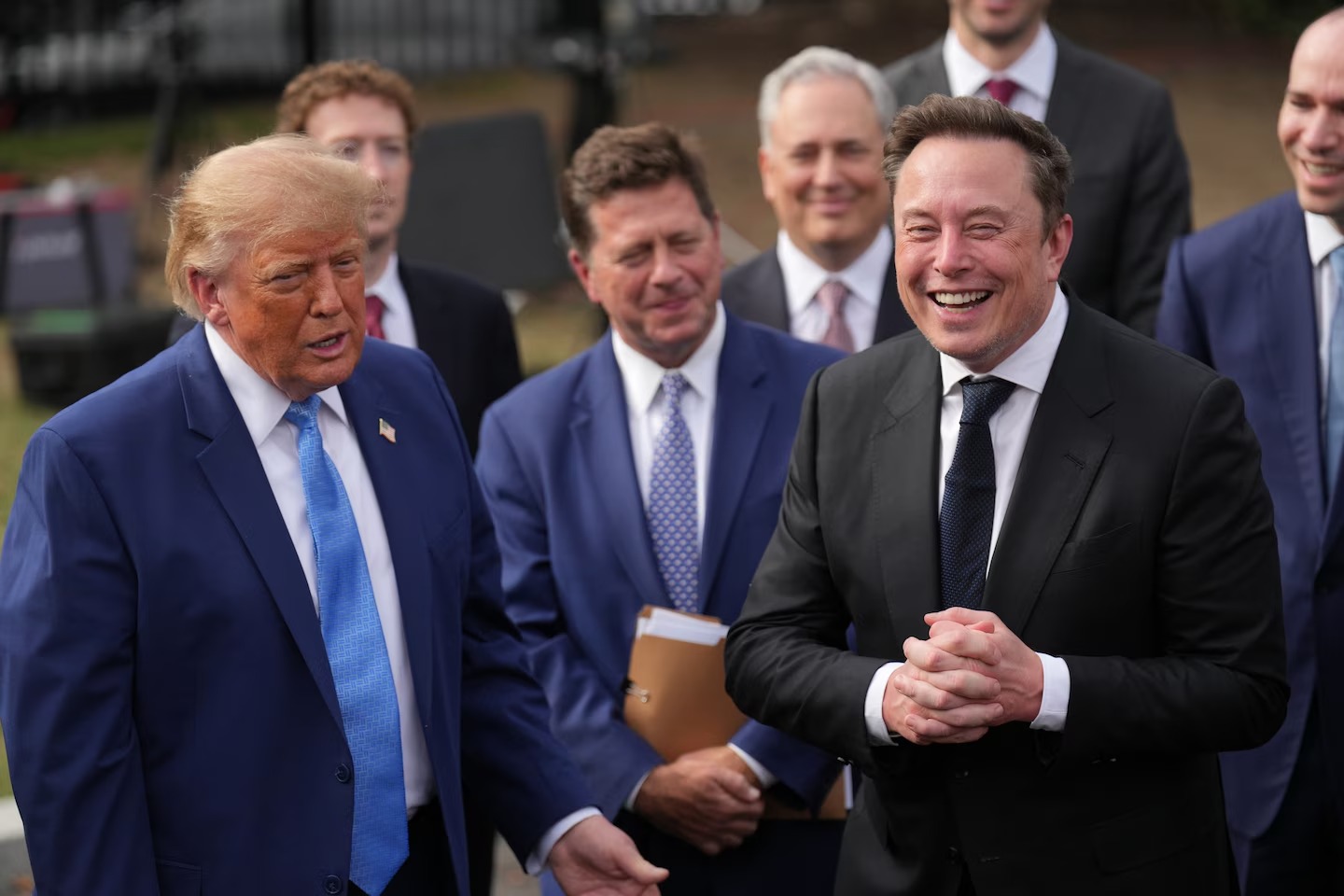
The world’s richest man, Elon Musk, has assumed the co-directorship of a Pentagon initiative focused on the future of warfare, known as “Project Meridian”.
Musk’s new role was announced by US Secretary of Defence Pete Hegseth.
Musk, who has long expressed his conviction that wars will ultimately be fought with autonomous unmanned aerial vehicles, will advise the project as co-director alongside Palmer Luckey, founder of defence start-up Anduril, and former Speaker of the House of Representatives Newt Gingrich.
In a memorandum issued at the Pentagon, Hegseth stated that the group would “examine the battlefields of the future” and “determine which weapons and technologies warfighters must employ to achieve dominance in these environments.”
During his “State of the Force” address at Marine Corps Base Quantico, Hegseth said:
“The best predictors of future conflict do not reside exclusively within the Pentagon. Obvious biases and risks arise when we task ourselves with both framing the questions and answering them.”
Hegseth stated that this initiative would commence immediately and that, following his address, he would convene with Musk, Luckey, and Gingrich at a secure location.
Project Meridian will have 120 days to “ruthlessly map the trajectory of wars, domains, and technologies”, a process that will culminate in the public disclosure of its findings alongside a classified annex.
Hegseth outlined an expansive mandate extending “from beneath the surface of the Earth to beyond the Moon.”
Rather than formulating new military strategies or policies, the panel will seek to identify “the domains we must seize and the capabilities we must master”, focusing on the effort to “discover, develop, and field” the weapons and systems that next-generation American troops may require.
The group is expected to submit a report containing recommendations to him by the end of January.
In 2024, Musk remarked: “Future wars will be entirely about drones and hypersonic missiles.” This was merely one of several similar statements he has made in recent years.
For Musk, whose oversight role at the Department of Government Efficiency (DOGE) ended in turmoil and escalated into a dispute with President Donald Trump over Trump’s spending bill, this appointment marks his formal return to government in an official capacity.
Musk and Trump ultimately reconciled, and Musk attended a meeting on artificial intelligence safety at the White House this week alongside other technology leaders.
Meridian forms part of a broader push announced by Hegseth to restructure the military around autonomous warfare and rapidly advancing technologies.
Hegseth announced the establishment of the Autonomous Warfare Command (AUTOWARCOM), a new four-star combatant command endowed with what he termed “service-like authorities” to scale autonomous and robotic capabilities across the joint force.
The Department of War will also begin phasing in new occupational frameworks across all military branches to establish specialised career tracks for what Hegseth described as “the next generation of autonomous warfighters.”
“We should have conceived an Autonomous Warfare Command a decade ago,” Hegseth said, explaining that Meridian aims to gaze far enough ahead to enable the military to anticipate the next technological shift rather than lag behind.
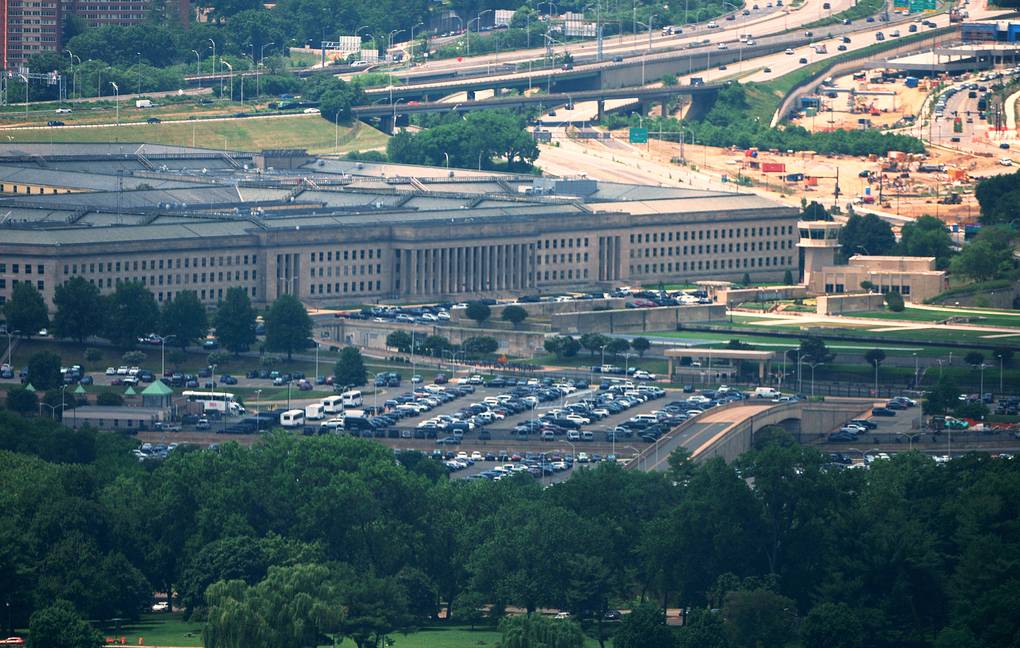
A cyberattack targeting the US Department of War’s personnel database has resulted in the leak of personal information belonging to approximately 3 million people.
Speaking to ABC News, a Pentagon official stated that the system accessed by unauthorised individuals contained the records of 2,760,000 living persons and 294,000 deceased individuals.
The Military Times portal, which first broke the news, had reported the number of affected individuals as approximately 4 million based on two sources. The Pentagon official subsequently conveyed different figures to ABC News.
The leak encompasses Social Security numbers and duty information belonging to military personnel and civilian employees. According to an official notification examined by Military Times, the compromised records may also include names, dates of birth, contact information, sex, race, and military occupational specialties.
The unauthorised access to the information system of the Defense Manpower Data Center (DMDC) lasted for approximately nine months, between October 2025 and 16 July 2026.
ABC News reported that the access in question was obtained by a small number of third-party users. The vulnerability was closed after it was identified.
The DMDC is considered one of the Pentagon’s primary personnel records centres. More than 60 million records belonging to active-duty personnel, reservists, civilian staff, contractors, retirees, veterans, and military family members are stored at the centre.
The Pentagon has not detected any evidence that the leaked data has been misused. Military Times reported that affected individuals were offered identity restoration and credit history monitoring services.
A similar data breach previously occurred on the Federal Bureau of Investigation’s (FBI) recruitment website, FBIJobs.gov. According to information obtained by ABC News from internal communications and sources, the FBI is considering the possibility that data belonging to its entire staff may have been stolen.
The New York Times (NYT) examined a portion of the stolen FBI records. Home addresses, telephone numbers, official email addresses, Social Security numbers, dates of birth, hiring dates, and emergency contact details for relatives were identified within these documents.
The database also contained unit designations, duty roles, and information regarding the supervisors of personnel. Some records revealed assignments within counterintelligence and counternarcotics units, as well as departments examining threats originating from Russia, China, and Iran.
Ciaran Martin, the former head of the UK National Cyber Security Centre, noted that this type of breach could directly affect the FBI’s operational capabilities.
The hacker group known as ShinyHunters had announced that it had seized medical data and security clearance records alongside files belonging to tens of thousands of active and former FBI employees.
Experts evaluating the matter for the NYT warned that this information could be used to track agents, threaten their families, or compile dossiers by foreign intelligence services.
The ShinyHunters group initially threatened to release the data unless the bureau withdrew an advisory it had published concerning the group’s attack methods.
The group later asserted that it had never intended to leak the information and characterised its action as an advertising campaign.
In a report published in May, Reuters noted that the personal data of US military personnel had been used in surveillance and attack preparations.
According to the agency, Washington’s adversaries gained the ability to pinpoint areas where troops were concentrated by exploiting commercially available location data. US lawmakers at the time criticised the Pentagon for failing to adequately protect the personal data of military personnel.
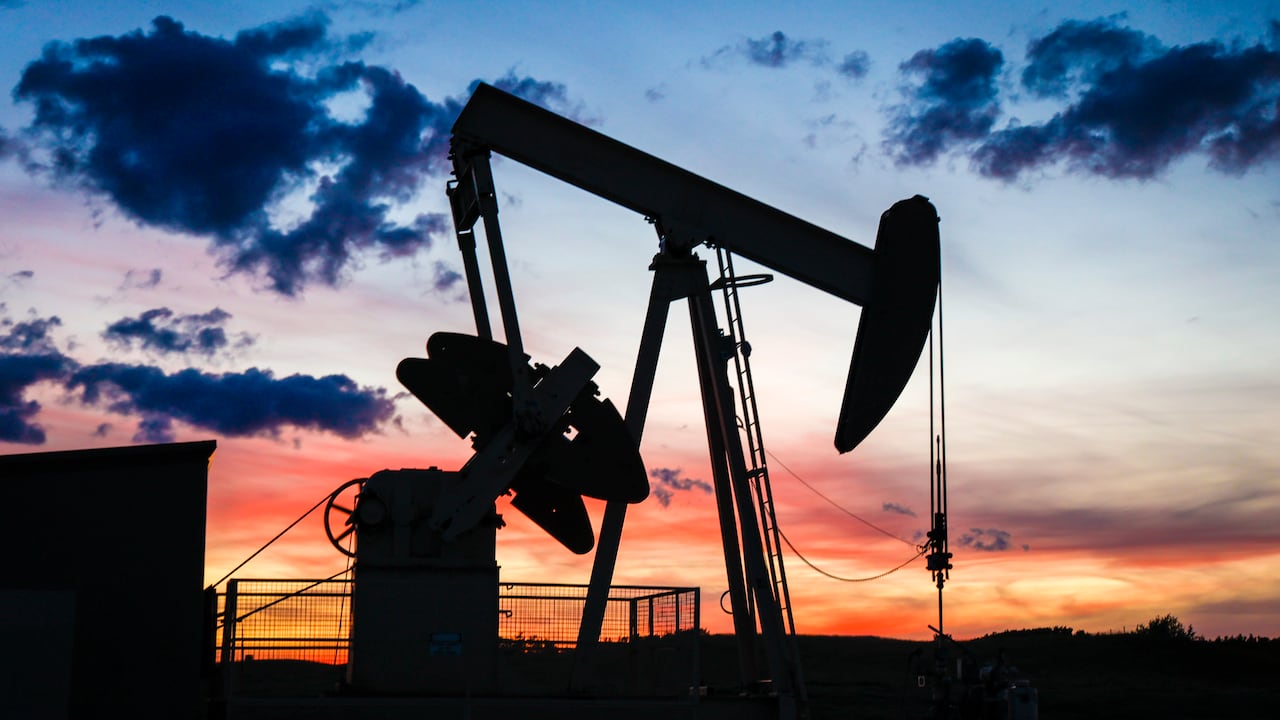
US President Donald Trump’s trade policy and the Washington administration’s push to increase Venezuelan oil imports are prompting Canada to diversify its energy exports.
According to a report by The Wall Street Journal, recent developments are accelerating Canada’s development of new oil and natural gas projects.
Steps taken by the Ottawa administration, which aspires to become an energy superpower, are seen as potentially strengthening the country’s position in global markets.
In Canada, the world’s fourth-largest oil producer and fifth-largest natural gas producer, the energy sector accounts for approximately one-fifth of total exports.
Almost all of the country’s natural gas exports and approximately 90% of its oil exports go to the US.
The newspaper writes that the trade war with Washington and the atmosphere of confrontation entered into with Iran have heightened Canada’s desire to turn to alternative markets outside the US.
Officials plan to increase shipments of oil and liquefied natural gas (LNG) to European and Asian markets.
Accelerating infrastructure investments in line with this target, Canada is also shortening approval processes. The government is prioritising the construction of an oil pipeline extending specifically to the west coast.
According to the newspaper’s estimate, if major pipeline projects are implemented, Canada’s daily oil transport capacity could rise to 6.8 million barrels by 2034.
Routes heading to the west coast will make up approximately 30% of this capacity.
The Canadian administration is simultaneously advancing LNG export projects. According to the report, these investments could allow approximately 55% of Canadian natural gas exports to be directed to markets outside the US by the early or mid-2030s.
While the government expands tax incentives for the oil and natural gas sector, the province of Alberta also plans to overhaul its royalty system.
However, the newspaper notes that implementing the new projects requires heavy investment, and the process depends on the final decisions taken by producers as well as the completion of regulatory approval processes.
The expansion of pipeline and LNG infrastructure could gradually reduce Canada’s dependence on the US market while raising its share in the global energy market.
The Canadian Prime Minister’s demand to reduce reliance on the US market had also come to the fore in July.
According to Carney’s statement, the province of Alberta submitted a plan for a pipeline spanning more than 1,000 kilometres to the west coast of British Columbia.
Targeted for completion by September 2027, the line will reach the Pacific coast by following an existing corridor through the mountainous terrain.
This shift in energy comes at a time of strained relations with the US. Donald Trump said that if Canada obtains associate member status in the European Union, he could halt trade with Europe in certain sectors and impose high tariffs.
As reported by the Associated Press, Trump characterised such a rapprochement as a “potentially hostile act”.
European Commission President Ursula von der Leyen had proposed opening the path for Canada to become the EU’s first associate member. The terms of this associate membership status, which is not defined in EU treaties, are not yet clear and require the approval of member states to enter into force.
Canada, which does not seek full membership, aims for maximum rapprochement with the EU.
Following Trump’s return to the White House, relations between Washington and Ottawa deteriorated. The Trump administration, which repeatedly called on Canada to become the “51st state” of the US, introduced additional tariffs.
In July, the US began imposing 50% tariffs on certain Canadian-origin goods.

Germany expands North Sea military ports and plans new naval base

Musk appointed co-director of Pentagon future warfare initiative

US waives human rights terms on $320m military aid to Egypt

Putin says Russia did not start war and warns of nuclear risks

European nations unite against US pressure over strategic oil stocks
-
 Europe4 days ago
European unions urge governments to scrap all Palantir deals
-
 Diplomacy4 days ago
East-West Forum in Istanbul highlights irreversible shift to multipolarity
-

 Europe1 week ago
Emmanuel Todd says West faces collapse amid Ukraine and Iran crises
-
 Europe1 week ago
European intelligence chiefs divide over risk of Russian attack
-
 Diplomacy1 week ago
East-West Forum in Istanbul to debate multipolarity and global order
-
 Middle East1 week ago
Sharaa says 7 October must not shape Israel policy on Syria
-
 America1 week ago
Republican support for Trump’s war with Iran drops sharply in polls
-
 Middle East1 week ago
Palestinian factions confront legitimacy crisis at Istanbul talks
