
Opinion
The U.S. Economy and NATO’s Function


Although the U.S. President Trump has repeatedly told his counterparts and the rest of the world to “trade with the United States” and “invest in the United States,” he has so far failed to get the results he hoped for. There are several reasons for this.
First, the United States is no longer as attractive as it once was. Second, China, America’s biggest rival, stands out as a more attractive country for production and investment not only for the rest of the world but also for major U.S. companies themselves. This is because the United States simply cannot compete with China when it comes to production costs. China produces far more, at much lower cost. Moreover, it produces high-quality goods and is rapidly building global brands. For this reason, President Trump’s call on U.S. companies to dismantle their factories in China and relocate them to the United States has also failed to generate the response he expected.
Trump has repeatedly called on European entrepreneurs, investors, and business leaders to invest in the United States as well. “Build your factories in the United States. We will offer you the most favorable and lowest tax rates in the world. Otherwise, you will continue to pay high tariffs. In fact, we will raise those tariffs even further,” he said. It was virtually a threat. Yet despite this, he failed to attract the level of interest he expected from Europeans either.
It is impossible for this picture regarding the economy, trade, and tariffs not to have repercussions for politics and foreign policy. Therefore, when the United States fails to receive the response it expects to its economic invitations and trade proposals, it increasingly resorts to political pressure and foreign-policy threats. On NATO, Trump scolds his European allies. He pressures Europeans to contribute more to NATO. At times, he goes even further, virtually threatening them by saying that the United States could withdraw from NATO. Europe’s leaders, each more miserable and ignorant than the next, sit beside the U.S. president and swallow his insults. Sometimes they even applaud him.
WOULD THE UNITED STATES LEAVE NATO?
The United States will not leave NATO. Having used NATO very effectively, invested so heavily in the alliance, and gained enormous influence through NATO over its allies’ domestic and foreign policies—from their economies to their defense and security policies—the United States will not give it up. If the United States were to leave NATO, the alliance would lose its current meaning, effectiveness, and deterrent power. No NATO member could fill the vacuum left by the United States. Alongside America’s political, economic, military, industrial, and technological weight, it should also be remembered that the United States covers 14.9 percent of NATO’s common budget and accounts for 57 percent of total defense spending within the alliance.
We know that NATO’s European members have neither the strength, courage, political will, nor money to stand up to the United States in pursuit of a “more European NATO.” Nor is there any consensus among them in this regard. The idea of a European defense and security identity that is at least somewhat distinct and autonomous from NATO, occasionally championed by Germany and France, should not be taken too seriously either. Berlin and Paris have failed to persuade NATO’s other European members on this issue. Groups such as the European Political Community, which was brought to the agenda after the Ukraine-Russia war in an effort to also bring in countries such as Turkey and Britain, which are NATO members but not EU members, likewise have little function, influence, or weight.
A few years ago, President Trump demanded that NATO members raise defense spending from 2 percent to 5 percent of GDP by 2035. There was no serious objection to this demand. This alone is one indication that NATO is important to the United States not only politically and militarily but economically as well. America’s influence within NATO also benefits the U.S. arms industry, the largest in the world.
Because Trump wants to turn the United States once again into the world’s foremost manufacturing hub, increase exports, and attract more investment into the country, the defense industry is also of great importance within this broader agenda. Since lowering energy costs is essential to achieving this, Trump both sidelines environmentalist energy projects at home and, as in the case of Venezuela, abducts the leader of an energy-rich country and virtually seizes control of its energy resources. Trump knows that otherwise the United States will struggle to compete with China, and that it is impossible for America to produce more, produce more cheaply, and sell more than China, which is far ahead of the United States in global manufacturing.
That is why, as was once again evident at the NATO summit held in Turkey, discussions within NATO about strategic threats and deterrence, regional security and energy corridors, partnerships and global networks all ultimately serve U.S. priorities and interests. Whether this is explained in terms of geopolitical balances, economic interests, regional dynamics, security needs, diplomatic pressure, or all of these factors combined, NATO is an instrument of aggression and occupation serving U.S. imperialism.


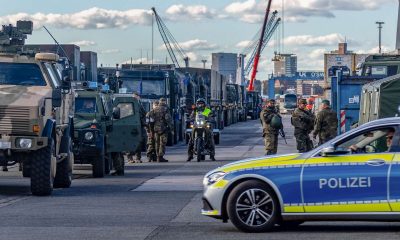

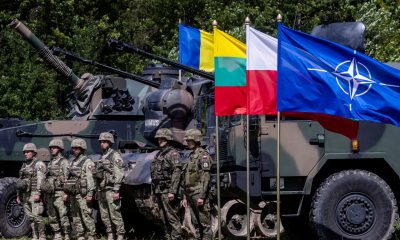

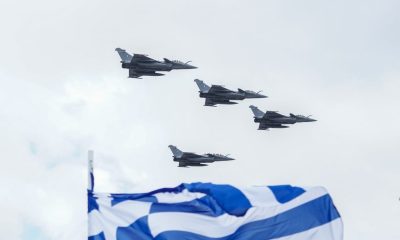

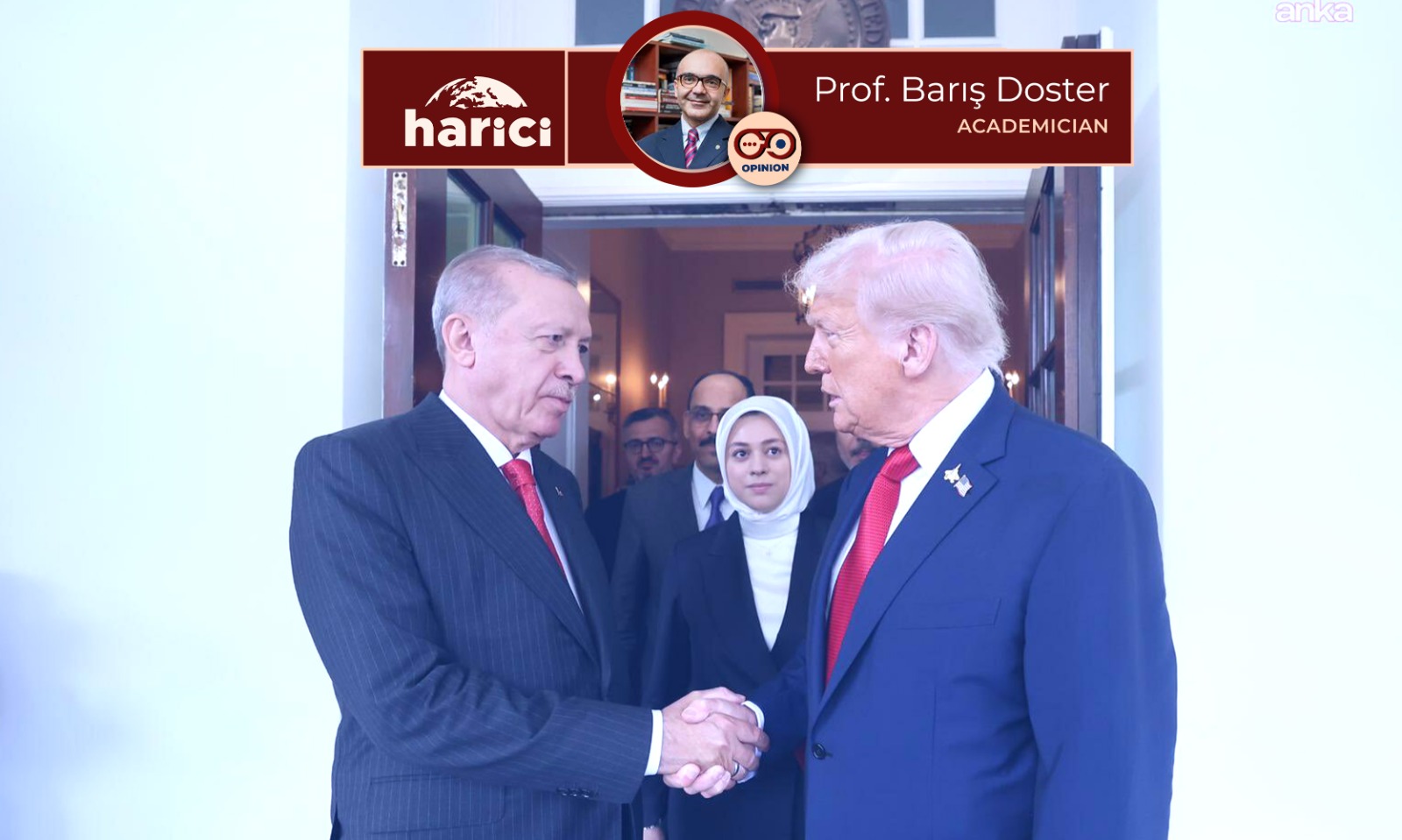
At the NATO summit held in Ankara last month, US President Donald Trump made promising remarks to Türkiye regarding the lifting of CAATSA sanctions, clearing the path for the sale of F-35 fighter jets to Türkiye, and supplying the engines required for the domestic Kaan aircraft. He has yet to keep his word.
This is quintessential Trump. He is neither a reliable nor a predictable leader. He approaches diplomacy like a merchant. In bargaining, he opens with the highest possible bid. Rather than institutional consultations, negotiations, formal diplomatic channels, and classical statecraft, he favours personal ties, bilateral encounters, and leader-to-leader diplomacy. He is notoriously erratic. A figure he praises one day, he drags through the mud the next, humiliating, scolding, and even insulting them.
US moves in the Mediterranean
Failing to honour the promises made to Türkiye, the US eased and partially lifted the arms embargo it had enforced on the Greek Cypriot Administration (GCA) since 1987 in 2020, before abolishing it entirely in 2022. Not content with this, the US signed a military cooperation agreement with the GCA in 2024 and hosted its leader at the White House. The GCA, whose path to acquiring weaponry from the US was cleared in 2024, has also recently been deepening its relations with France. Even though two British sovereign bases already exist in the southern part of Cyprus, with the US utilizing them whenever necessary, both the US and France signed separate basing agreements with the GCA. The GCA’s relations with Israel are also remarkably sound, as are those with Qatar. Meanwhile, relations between Greece and France have been exceptionally warm in recent years.
Amid all these tangible developments, Türkiye has largely relinquished its vigilance regarding the Blue Homeland. Drilling vessels and seismic survey ships have been withdrawn from the eastern Mediterranean.
The most distressing of these developments has been that four Turkic states in Central Asia (Kazakhstan, Uzbekistan, Turkmenistan, and Kyrgyzstan), none of which officially recognize the Turkish Republic of Northern Cyprus (TRNC) as a state, expanded their ties with the GCA and opened embassies in exchange for European Union financial assistance. Through this recognition, by acknowledging the Greek Cypriot Administration as the sole representative of the entire island under the name of the Republic of Cyprus, they effectively rejected the existence of the TRNC, whatever they might claim to the contrary.
Whatever anyone may say, and from whichever angle one evaluates it, the conduct of these four friendly and brotherly states cannot be explained merely by their lack of loyalty or their disregard for Türkiye’s sensitivities on this matter. Alongside this, one must acknowledge the failure of Turkish foreign policy. If Türkiye cannot convince even fellow Turkic states, let alone others, on an issue where its position is most legitimate and justified, such as Cyprus; if, far from persuading them, it cannot prevent them from cultivating relations with the GCA and opening embassies, this represents a monumental failure on the part of Turkish foreign policy.
Moreover, the failure in the Mediterranean is not confined to Cyprus. There is more.
Who is sidelining Türkiye in Syria?
Türkiye is persistently excluded from European-organized meetings on Syria. Türkiye’s views are not sought. So much so that even Qatar, our closest ally in the Arab world, on whose soil we established a military base and to whom we sold major assets, does not hesitate to take part in initiatives that exclude Türkiye from energy projects in the Eastern Mediterranean, or to cooperate with Greece and the Greek Cypriot Administration.
Much has changed in Syria since the days when Ahmet Davutoğlu, former prime minister, former foreign minister, former AKP chairman, and leader of the now-dissolved Future Party, carried away by his own momentum, declared: “Not a bird can fly in the Middle East without our knowledge”, “We know the Middle East street by street, inch by inch”, and “We are the masters, pioneers, and spokesmen of the emerging Middle East”, all while eagerly seeking to act as a subcontractor on behalf of the US. The regime has changed. The government has changed.
So let us ask: did we get what we wanted?
Israel, which most recently struck Abu al-Duhur Military Airbase east of Idlib in northern Syria; Israel, a backer of the PKK-PYD-YPG terrorist organization; Israel, which usurped Syrian land in the Golan Heights, attacking Syria and rolling in its tanks whenever it pleases; Israel, which seeks to partition Syria into four entities (Kurdish, Alawite, Arab, and Druze): Israel got what it wanted. And it continues to do so.
Does Israel, which directs scathing rhetoric at Türkiye, fortified by immense US backing and sustained by Europe’s three major powers (Germany, Britain, and France), draw this audacity solely from the imperialist powers standing behind it? Or does Türkiye’s inefficacy in the Turkic world and across the Arab sphere, alongside that backing, also embolden Israel?
In answering this question, we will arrive at a far more accurate assessment if we take into account the depth of Israel’s relations with Azerbaijan.

Thomas Karat, behavior analyst
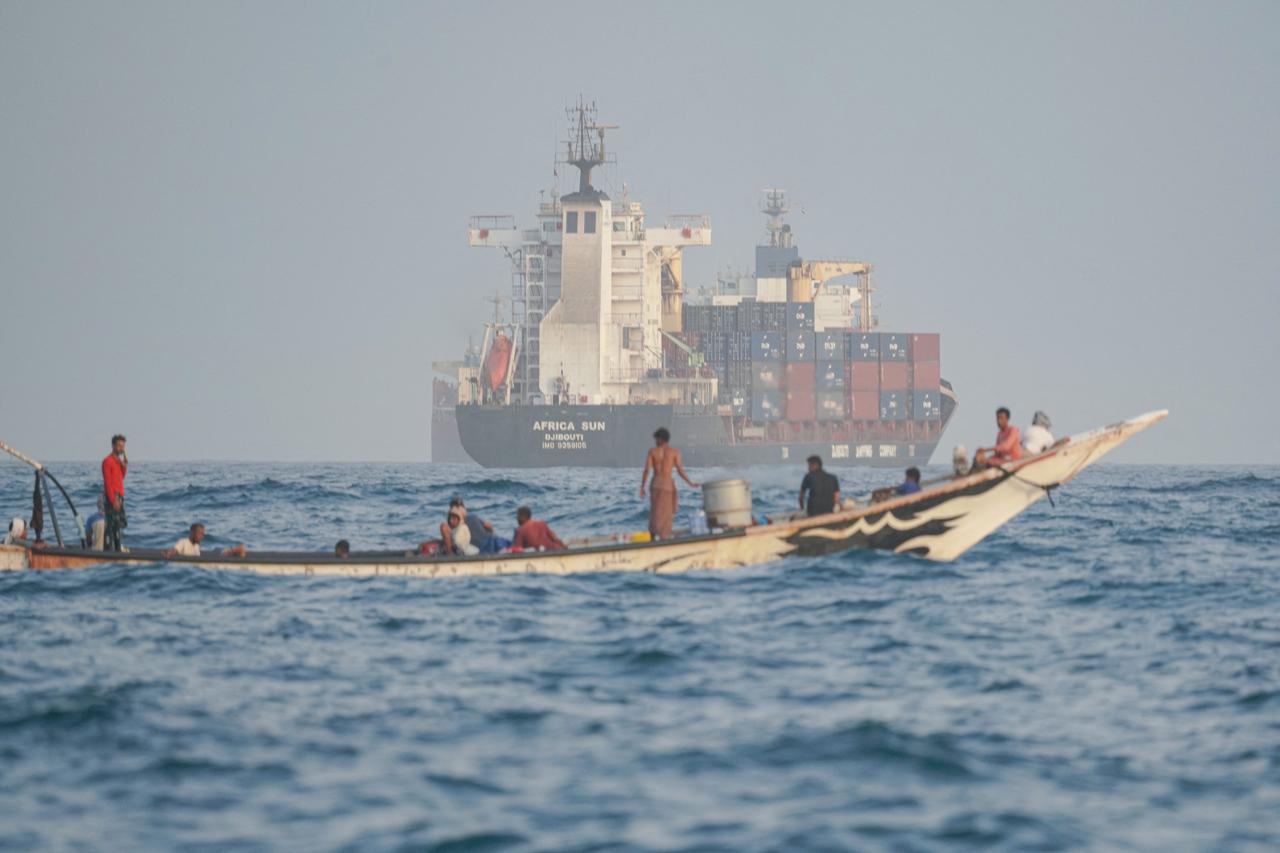
Abu Dhabi and Tel Aviv spent years building to control the Bab el-Mandeb and the Horn. The chokepoint has now passed to the one actor the plan was meant to exclude, and the states it pressed have drawn together against it.
For a decade the southern approaches to the Red Sea were ordered around one assumption, that the states which counted on this water were those with the deepest treasuries and the closest ties to Washington. In September that assumption failed. Fighters of the Houthi movement, under Iranian direction, took the island of Mayun in the middle of the Bab el-Mandeb and with it working control of a strait through which roughly 12 percent of world trade passes. The power that had spent eight years assembling the architecture to hold this chokepoint, the United Arab Emirates, was no longer on the coast to contest it.
The Gulf press reads the episode as a new Iranian front against the United States. It is that. It is also the clearest sign to date that the design Abu Dhabi and Tel Aviv pursued across the Red Sea and the Horn of Africa has yielded the reverse of what it promised, and that the actors now setting terms in the region are those who plan around national interest rather than around the guarantees of a fading order.
The Emirati doctrine
To read the collapse only as a Gulf quarrel is to miss the method behind it. Since the counter-revolutionary turn that followed the Arab uprisings, Abu Dhabi has pursued a consistent strategy across three theatres. In Libya it backed Khalifa Haftar against the internationally recognised government in Tripoli, where Türkiye emerged as the principal external patron of the other side, the sharpest earlier collision between the two projects. In Yemen it built and armed the Southern Transitional Council against the government it had nominally joined the war to restore, and it worked to root out the Islah party, the Yemeni movement linked to the Muslim Brotherhood, whose leaders had found refuge in Türkiye. On the Horn it cultivated Somaliland and other regional administrations rather than the federal centre in Mogadishu. The through-line, as one Italian analysis put it, is that the UAE prefers sub-national clients because they let it weaken rivals and carve out platforms for maritime power at the same time. The two aims reinforced one another. Every client that undercut a central government also delivered a port, a runway or an island, so the map of Emirati proxies became, over time, a map of Emirati bases.
Those rivals are named plainly in the record. The Saudi-Emirati axis that formed after 2011 defined itself against Iran, Qatar, the Muslim Brotherhood and Türkiye, and for years Riyadh and Abu Dhabi moved together against all four. Türkiye read the doctrine from the receiving end. Ankara accused the UAE of financing the 2016 coup attempt against President Erdoğan, and only later, when it set about repairing Gulf ties, did it curtail the activities of Islah figures on its own soil. What separates Ankara and Riyadh from Abu Dhabi is not tactics alone. Both Türkiye and Saudi Arabia, whatever their other differences, treat strong central states as the basis of a stable order, while the Emirati approach has repeatedly favoured the actors that hollow those states out. The Red Sea is where that difference became a fault line.
The design on the water
The maritime side of the project was never hidden. From 2018 Abu Dhabi built what one analysis called a circle of bases around the Gulf of Aden: Socotra, administered by some accounts as something close to an overseas territory; runways on the smaller islands of Abd al-Kuri and Samhah; a base on Mayun itself; and on the African shore, Berbera in Somaliland and Bosaso in Puntland. The stated aim was to watch the water and interdict Iranian weapons bound for the Houthis. Israeli strategy converged on the same map. According to reporting attributed to the Middle East Monitor, Israel had long been weighing a base in Somaliland to monitor Yemen and the Bab el-Mandeb, and on 26 December it became the first state to recognise the breakaway republic, in language its prime minister tied to the Abraham Accords.
The Horn divides
For Ankara the recognition was a direct challenge. Türkiye has treated Somalia as a pillar of its Africa policy since 2011. It operates its largest overseas base, Camp TURKSOM, in Mogadishu, trains Somali forces, and casts itself as the guarantor of Somalia’s unity against the secession of Somaliland. Israel’s move placed it, in the reading of regional analysts, on a collision course with Türkiye. President Erdoğan called the recognition illegitimate and unacceptable and set out to rally Arab and Muslim governments against it, issuing a joint declaration with the Saudi crown prince in early February.
Egypt arrived at the same position by a different road. Cairo regards the Bab el-Mandeb as a strategic extension of the Suez Canal, and a senior Egyptian strategist has called securing the strait a national security priority, because canal revenue depends on the traffic that passes through it. When Ethiopia signed a memorandum with Somaliland in January 2024 to lease coastline for a naval base, Egypt read it as an attempt to redraw the Horn against its interests, and in August 2024 it signed a defence pact with Mogadishu and began sending troops and materiel, with plans that envisaged as many as ten thousand personnel for Somalia. Cairo’s interest runs past the canal. Its long confrontation with Ethiopia over the Grand Ethiopian Renaissance Dam has taught it to treat the Horn as an extension of its own water security, and the Somaliland question folded neatly into that older anxiety.
The pattern was consistent across the capitals. The UAE cultivated Somaliland and the sub-state administrations, while Egypt, Türkiye and Saudi Arabia placed their weight behind Somalia’s federal government. Warning that Israel intended a base on its soil, Mogadishu signed defence pacts with Qatar and with Saudi Arabia, and its president said an Israeli base would never be allowed. More than fifty states condemned the recognition, and the African Union and the European Union restated Somalia’s territorial integrity. What had been sold as a low-cost foothold hardened a counter-alignment, running from Cairo through Riyadh and Doha to Ankara, that stood behind the very central state the design was meant to erode.
The collapse in Yemen
On the Yemeni shore the design came apart faster still. In December the Emirati-backed Southern Transitional Council pushed into Hadramaut and al-Mahra, the provinces that run along Saudi Arabia’s southern border. Riyadh read the advance as an attempt to complete a separatist state on its frontier, and on 30 December it bombed the port of Mukalla, striking what the coalition described as an Emirati weapons shipment landed from Fujairah. The internationally recognised government gave the UAE 24 hours to withdraw, and Abu Dhabi complied. Within about eight days it lost Socotra, Mayun and the coastal outposts it had taken eight years to build, dismantling its own island infrastructure as it left. The coalition’s spokesman later accused Abu Dhabi of running a covert operation to move the STC leader by sea to Berbera and onward to the Emirates, a charge the UAE did not answer. By 9 January the council had dissolved itself.
The rupture between the two Gulf capitals was strategic before it was personal, and it left the anti-Houthi front without its principal paymaster and without the coastal positions that front had relied on. The consequences of that vacuum arrived within months.
The strait changes hands
The timing was decisive. Iran had been at war with the United States and Israel since late February, and traffic through the Strait of Hormuz was already disrupted. Saudi Arabia, the largest oil exporter, had rerouted much of its crude through the Red Sea, which raised the value of the far end of the same route at the very moment its Yemeni shore stood undefended. The Houthis advanced through the summer and took the coast in September. They seized Mokha on the tenth, Perim the following day, the strait by the twelfth, and the Hanish islands within the week, ground the UAE had abandoned months earlier. The coastal forces that gave way were those of the National Resistance Front, part of the fractured camp the Gulf rupture had left without a patron.
That the operation served Iran as much as the Houthis is not seriously disputed. The Institute for the Study of War assessed that the advance advanced Iranian aims, with United States officials describing IRGC personnel on the ground. The Abu Dhabi-owned National reported that the Quds Force commander Abdul Reza Shahlai was directing operations in person and that fighters had arrived on a flight from Tehran. Iran’s object, on the Institute’s reading, is to establish the Houthis as the guarantor of passage through the Bab el-Mandeb, the posture Tehran has adopted at Hormuz. The provenance of that reporting warrants a note of its own, since the Emirati press has an evident interest in foregrounding Iran’s hand and passing over the vacuum Abu Dhabi’s own withdrawal created.
The geography compounds the point. The Houthi advance has carried the movement to within twenty miles of Djibouti, the state across the water that hosts American, French, Chinese and other bases, the densest concentration of foreign force on the Red Sea. None of it moved to hold the island in the middle of the strait. For Riyadh the effect is measurable. The Houthis have declared an embargo on Saudi shipping while letting other vessels pass, and Saudi crude loadings through the strait fell by more than a third in two weeks. Analysts reckon that a full closure of a waterway carrying close to a quarter of the world’s container traffic would place a comparable share of global oil and gas at risk. Iran’s allies now hold the Yemeni bank of the Bab el-Mandeb; the UAE and its partners retain the African bank at Berbera and Bosaso. The chokepoint has, in practice, been partitioned between two rival camps.
What Ankara reads in it
The lesson taken in the region is not obscure. A strategy built on the fragmentation of states and the purchase of coastlines, underwritten by an order that assumed American guarantees would hold, has left its chief author without the prize it sought and has driven the states it pressed into a common front. The clearest statement of how this looks from Ankara came in Harici’s own pages, where the former Israeli negotiator Daniel Levy described an Israeli vision of regional primacy that depends on weakening and collapsing surrounding states, and named Türkiye as the country Israeli officials now discuss in the terms they once reserved for Iran. Levy was careful to add that Israel was neither the sole nor always the primary agent of state collapse, and that qualifier is worth keeping. The claim that Türkiye is a designated target is a characterisation, advanced by an interested party and serving Ankara’s own purposes, and it should be weighed as such.
What does not depend on characterisation is the record of the past year. The doctrine of backing sub-state clients against central authorities reached its furthest extent, in Yemen and on the Horn, and then it broke. The states that were meant to be fragmented drew closer together, from Cairo to Ankara. The power that built the ring of bases lost half of it in a week. And the chokepoint at the centre of the whole enterprise passed to the actor the enterprise had been built to exclude. For a region long instructed that security flowed from alignment with Washington and its partners, the year offered a different instruction, that presence without the will to hold ground decides nothing, and that the order which promised to keep the strait open no longer commands the coast. The powers that gained were those that never staked their security on that promise, and the map they are now redrawing runs from the Suez Canal to the Gulf of Aden without waiting on a guarantee from abroad.
Israel’s strike on a military base near the Syrian city of Idlib occupied a prominent place on the agenda of Türkiye, the Middle East, and Arab nations. Official statements followed in quick succession. The US Ambassador to Türkiye and Special Envoy for Syria and Iraq, Tom Barrack, also drew attention with his bizarre remarks and his proposal to establish a tripartite security mechanism between Türkiye, Syria, and Israel.
Israel must be condemned in the strongest possible terms, and the harshest reactions must be delivered. Of this, there is no doubt.
Yet how sincere are the Arab states voicing these reactions? How consistent are they? How courageous? How willing are they to take steps that carry genuine deterrent power and impose real sanctions? We must, of course, reflect upon the answers to these questions.
For we know that certain Arab nations maintain intense, deep, and intricate relations with Israel. We need look no further. We recall, for instance, that Qatar, with which Türkiye also maintains very close ties, provided Israeli Prime Minister Benjamin Netanyahu with $15 million in the 2012 elections and $50 million in the 2018 elections to finance his political campaigns. Indeed, this funding is continually kept on the agenda by the opposition in Israeli domestic politics. It is well known that during that period, Netanyahu gave a statement to the police regarding the funds, his advisers who received the money were arrested, audio recordings and confessions surfaced, and Netanyahu’s dismissal of the affair as “a political plot against me” failed completely to convince.
The truly remarkable aspect lies here: this affair preoccupied the Israeli public for days and became the foremost item on the political agenda. Yet in Qatar, across the broader Arab world, throughout the Islamic world, and in Türkiye, the matter received scant attention. Only a handful of voices raised the issue or expressed outrage that millions of dollars were channelled to such a killer, such a perpetrator committing the crime of genocide in Palestine, to fund his election campaigns; even their voices were barely heard.
Let us now speak frankly. With the Islamic world and the Arab nations in this state, who can reasonably expect Israel to take a step back regarding Palestine? Who can remain optimistic about a two-state solution based on the 1967 borders, with East Jerusalem as its capital, that recognizes the independence, integrity, and sovereignty of Palestine? Who can genuinely believe that Arab states are determined, consistent, valiant, and sincere on the Palestinian question? While the silence of Islamist and conservative-pious circles regarding Qatar’s financial assistance remains plain for all to see, who can be convinced that demonstrations, rallies, and press conferences concerning Gaza and Palestine will yield tangible results? Who, what power, or which Arab state can sustain the hopes of the oppressed, sorrowful, and aggrieved Palestinian people? Qatar? Saudi Arabia? The United Arab Emirates? Egypt? Jordan?
Nor should we forget that elections will be held in Israel on 27 October. Benjamin Netanyahu is escalating his aggression and recklessness, seeking both to salvage his waning poll numbers and reputation and to shift the political agenda by emphasizing securitist policies and external threats. Heavily worn down by corruption allegations against himself and his wife, Netanyahu cannot leverage security policies and military measures as effortlessly as before, given that his primary opponent, former Chief of General Staff Gadi Eizenkot, leaves him on weak footing against a military rival. Yet despite such corruption, attrition, genocide, and bloodshed, Netanyahu appears to maintain his grip on his party; indeed, most candidates who prevailed in the primaries are politicians in his close circle.
Qatar, which enjoys considerable admiration and esteem in our country, not only backs Benjamin Netanyahu in domestic Israeli politics but also conducts joint military drills in the Eastern Mediterranean with the US, France, and Greece; Israel takes part in these exercises as well.
Let us admit that Qatar cares neither for the Palestinian cause nor for the innocent Muslims slaughtered in Gaza. It values neither the Islamic world nor Arab unity. It neither takes into account the sensitivities, priorities, and interests of Türkiye, nor does it share Türkiye’s anxieties and concerns.

Hamburg drill tests Baltic deployment prior to formal defense alert

EU explores cooperation with Trump-backed Peace Board for Gaza aid

Peter Thiel receives Springer award, targets Pope Leo and CCP

Emmanuel Todd says West faces collapse amid Ukraine and Iran crises

EU states weigh stricter asylum rules and third-country return hubs
-

 America2 weeks ago
Milanovic declares global neoliberalism dead, warns of plutocracy
-

 America2 weeks ago
Five minutes to doomsday – 4: American capitalism at the frontiers
-

 Asia2 weeks ago
DeepSeek engineer warns AI will lead to communism or Cyberpunk
-

 America2 weeks ago
Big Tech profits from AI extinction hype, Ken Klippenstein says
-

 Europe2 weeks ago
UK faces £258bn infrastructure gap as commission urges private funds
-

 Europe2 weeks ago
Wolfgang Streeck links German polycrisis to capitalism and AfD rise
-
 Middle East2 weeks ago
Iran used Chinese satellite imagery in deadly US base attack: report
-
 Middle East2 weeks ago
Saudi exportable crude stocks risk depletion within a week
