
America
Pentagon to fully purge Anthropic AI from systems by end of September


The US Department of War plans to eliminate all technology belonging to artificial intelligence company Anthropic across its internal systems by the end of September.
Emil Michael, the Pentagon’s chief technology officer and Under Secretary of War for Research and Engineering, revealed in an interview with Breitbart that the department is systematically purging the software.
“We are phasing their software out of all department systems. Over 90% has been deleted so far. We will conclude this process by the end of September,” Michael stated.
Noting that Anthropic technologies are integrated into complex architectures, Michael explained that the removal process takes time and must be executed responsibly.
The dispute between the Pentagon and Anthropic originated from restrictions imposed by the company regarding military use.
Anthropic Chief Executive Officer Dario Amodei demanded assurances that the technology would not be used in autonomous weapons or surveillance activities without human oversight. Following this stance, the Pentagon designated Anthropic a “supply chain risk”. Nearly 100% of military systems have transitioned to alternative AI models, including the Maven system, which aided target acquisition for airstrikes during the war with Iran.
In May, The Wall Street Journal reported that Claude Mythos, an AI model developed by Anthropic to identify software vulnerabilities, caused chaos within the administration of US President Donald Trump.
Subsequently, Mark Warner, Vice Chairman of the US Senate Select Committee on Intelligence, reported that Anthropic’s AI model had breached classified US National Security Agency (NSA) systems.
Preliminary injunction hearing held in federal court
The first major hearing in the lawsuit challenging the Pentagon’s supply chain risk designation of Anthropic was heard Tuesday afternoon in federal court in San Francisco.
US District Judge Rita Lin met the Department of War’s decision with scepticism, implying the move could be retaliation intended to punish a company that opposed the Trump administration during contract negotiations over AI deployment.
During the hearing, Judge Lin remarked: “What troubles me about these reactions is that they do not seem entirely congruent with the stated national security concern. If the concern were about the integrity of the operational chain of command, they could simply stop using Claude. It appears the defendants went further and sought to punish Anthropic.”
Concluding the hearing without an immediate ruling, Judge Lin stated she would issue a decision on the preliminary injunction request within the coming days.
Lin observed that the effort to bar the company from all government business went beyond what was necessary to address the national security concern cited by Secretary of War Pete Hegseth, stating: “This appears to be an attempt to crush Anthropic, and my specific concern is whether Anthropic is being punished for publicly criticising the government’s contracting stance.”
While acknowledging Hegseth’s authority to restrict the company’s applications in the national security sphere, Lin emphasised that the core issue is whether the Pentagon exceeded its authority by designating the company a supply chain risk.
Government and company counsel clash over sabotage
Justice Department officials representing the Trump administration argued that Anthropic poses a national security risk due to concerns that it could “sabotage” the military via a future software update.
Acting Deputy Assistant Attorney General Eric Hamilton stated: “Anthropic is not merely being stubborn or refusing contract terms; instead, it is communicating concerns to the Department of War about how the technology is used even in military missions covered under terms of service.”
Criticising this rationale, Judge Lin noted it was an insufficient basis for barring a company from government work, asking: “If an IT supplier acts stubbornly, insists on specific contract terms, and raises uncomfortable questions, is that sufficient to declare it a supply chain risk on the grounds that it may be untrustworthy?”
When questioned on how the company could sabotage the military, Hamilton suggested Anthropic might attempt to introduce a “kill switch” into the software if it disapproved of how Claude was being utilised.
Hamilton could not definitively confirm whether the company possessed the capability to deploy such an update. “The concern is that, rather than merely stating concerns and lodging objections, Anthropic might take issue with the department’s actions and decide to manipulate the software to control its use by the Department of War,” Hamilton said.
During the proceedings, Hamilton effectively contradicted a social media post made last month by Hegseth, which asserted that as a result of the dispute, “no contractor, vendor, or partner doing business with the US military may conduct any commercial activity with Anthropic.”
Hamilton said he was unaware of any statutory authority permitting the department to categorically prohibit contractors from using a company’s products or services on non-departmental business.
When Judge Lin asked why Hegseth would make such an assertion if he did not intend it, Hamilton replied: “I do not know. What I do know is that this administration is committed to transparency and indicated in that post it would take steps to declare the company a supply chain risk, which it did.”
Anthropic’s attorney, Michael Mongan, argued that the Department of War’s positions shifted constantly as it sought to penalise the company following failed contract negotiations.
“The reality is that this is a supply chain designation in search of a justification or logic, and that constitutes a problem under the Administrative Procedure Act,” Mongan stated.
Requesting an immediate preliminary injunction to invalidate the Pentagon’s actions, Mongan said: “These actions are unlawful for the reasons we have discussed. They have inflicted immediate, irreparable, and ongoing harm on Anthropic, its constitutional rights, its reputation with partners, customers, and investors, and its broad commercial interests beyond the national security sector.”









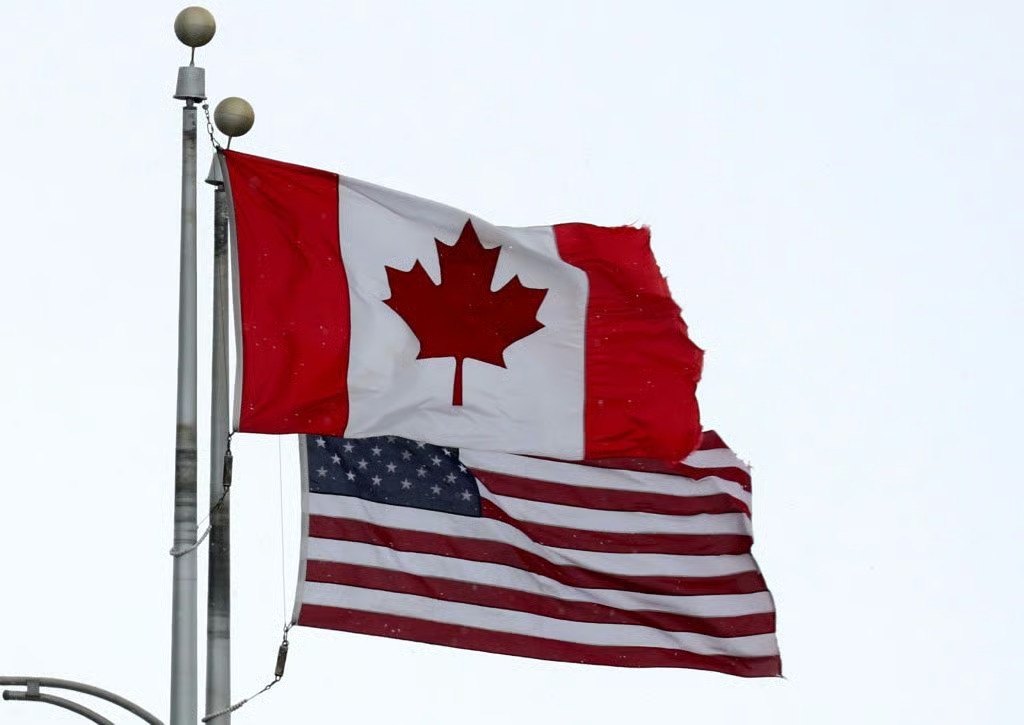
On Friday, talks aimed at averting new high US tariffs on Canada ended without resolution.
Following the collapse of the negotiations, Canada announced that it would impose retaliatory tariffs on US goods on 8 September.
Both sides are blaming each other and appear to be preparing for a trade war.
Canadian Prime Minister Mark Carney said: “When you are attacked, you are at war. We have been attacked.”
Meanwhile, President Trump said on Truth Social: “Canada wants all the advantages of being a State, without being one!!!”
With no agreement reached, the US followed through on its threat to impose new 50% tariffs on $20 billion worth of Canadian goods.
The annual value of Canadian exports to the US stands at around $382 billion.
Although the new import duties primarily target the forestry, alcoholic beverage, dairy, and textile sectors, the affected products range from hockey sticks to dog collars and fake moustaches.
Canada has not yet released the list of products subject to retaliatory tariffs.
However, Carney pledged to retaliate on a dollar-for-dollar basis with the tariffs imposed by the US.
Carney stated that Canadian tariffs would also target similar sectors.
The US and Canada have a long history as allies and trade partners. However, when Trump imposed sweeping tariffs globally, Canada was one of the few nations to retaliate.
Ottawa adopted a “tough stance” by imposing retaliatory tariffs, while Canadians boycotted US-origin alcoholic beverages and travel.
Trump used an untested legal authority to impose the latest tariffs and has also repeatedly raised the prospect of making Canada the 51st state.
The USMCA (North American Free Trade Agreement), negotiated by Trump with Canada and Mexico during his first presidential term, is due for review, and the current trade dispute indicates that this process will be contentious.
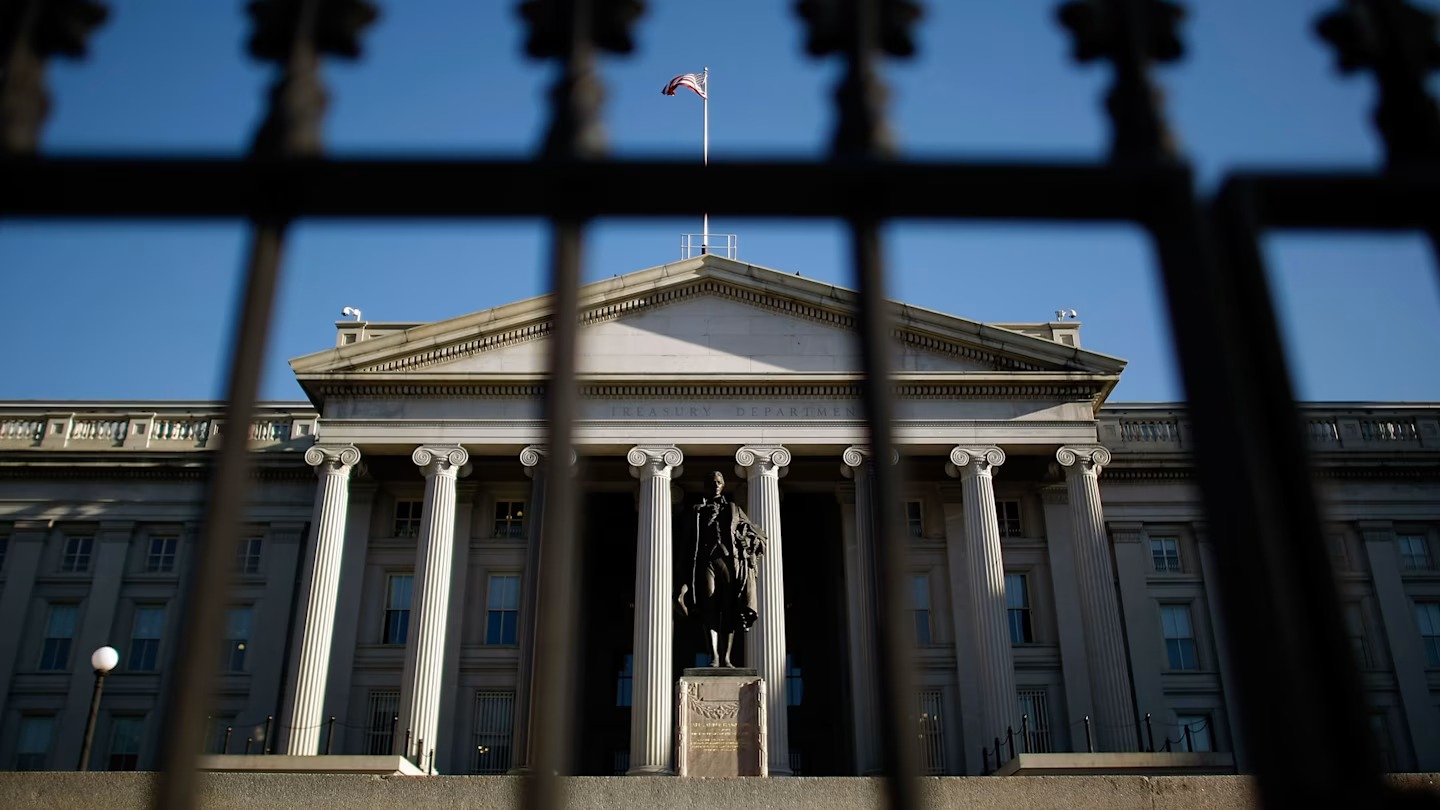
The US national debt has reached a record $40 trillion as borrowing expanded at a historic pace.
The development has heightened investor concern over the state of US public finances, despite Donald Trump’s pledge to bring spending under control.
Gross federal debt crossed the threshold on Tuesday, according to Treasury Department data published on Wednesday.
Calculations by the Financial Times show that debt climbed by $3 trillion over the past year, registering the fastest rate of increase in history outside the pandemic period.
Marc Goldwein, senior policy director at the Committee for a Responsible Federal Budget think tank, said:
“This is like a giant, flashing ‘check engine’ light. It doesn’t mean your engine will melt down tomorrow, but it is a clear sign that things have gotten quite out of hand. And it’s not just the size of the number; it’s the speed at which we’ve reached it.”
The US national debt has surged over the past two decades, climbing from below $6 trillion at the start of the century (about $12 trillion in 2026 dollar terms) as massive public spending during the financial crisis and the Covid-19 pandemic compounded enormous budget deficits.
In the past 10 years alone, the total debt load has doubled. Debt held by the public—a key gauge tracked by markets that excludes intra-governmental holdings—now exceeds $32 trillion, roughly equal to the size of the US economy.
The non-partisan Congressional Budget Office expects debt held by the public to surpass the post-Second World War record of 106% of GDP by the end of the decade and to reach 120% by 2036.
As borrowing increased, investors began demanding a higher premium to hold US bonds.
This has driven interest rates higher, leaving debt servicing costs larger than national defence spending.
The situation has created unease in Washington. On Wednesday, prior to the release of the debt data, the Treasury Department announced it would double its buybacks of long-term government debt in a bid to halt a recent sell-off.
Last week, the US paid its highest borrowing costs since 2001 to sell 30-year bonds.
Wednesday’s 10-year Treasury auction produced the highest yields since 2007 as investors fretted over the scale of the debt.
Ed Yardeni, president of Yardeni Research, said: “That is an awful lot of money being borrowed. It is going to feed on itself with interest expenses. If interest rates rise because of concerns about the high debt load, that will lead to even more interest expense. It’s a vicious cycle.”
Trump returned to office in 2025 promising to rein in “wasteful” government spending.
Treasury Secretary Scott Bessent pledged to reduce the budget deficit to 3% of GDP by the end of Trump’s term.
However, measures to trim spending in some areas were offset by broad tax cuts in the president’s signature 2025 fiscal legislation, the “One Big Beautiful Bill”, which will add more than $4 trillion to the debt by 2034.
Trump also requested an increase of more than 50% in annual defence spending, seeking $1.5 trillion in the largest budget request in US history.
The deficit fell to 5.9% of GDP in 2025 from 6.3% the previous year. The CBO expects the deficit to decline to 5.8% this year. The US national debt comprises years of accumulated deficits compounded by interest charges.
Analysts noted that both US political parties missed opportunities during periods of economic expansion to take significant steps toward curbing spending.
Calculations by the Congressional Joint Economic Committee indicate that over the past year, total national debt grew by roughly $7.9 billion a day, or approximately $91,000 per second.
Budget specialists said they hoped crossing the $40 trillion threshold would spur politicians from both parties to take meaningful steps to bring borrowing back under control.
Michael Peterson, head of the Peterson Foundation, a think tank dedicated to returning debt to a sustainable trajectory, said:
“My hope is that this serves as a national alarm and wake-up call to address our fiscal future. If we keep borrowing this much, we are going to face a day of reckoning in financial markets… People will wake up one day and decide: ‘You know what? I’m more worried about the United States now. I’m going to demand higher interest rates, or I’m going to put my money somewhere else.'”
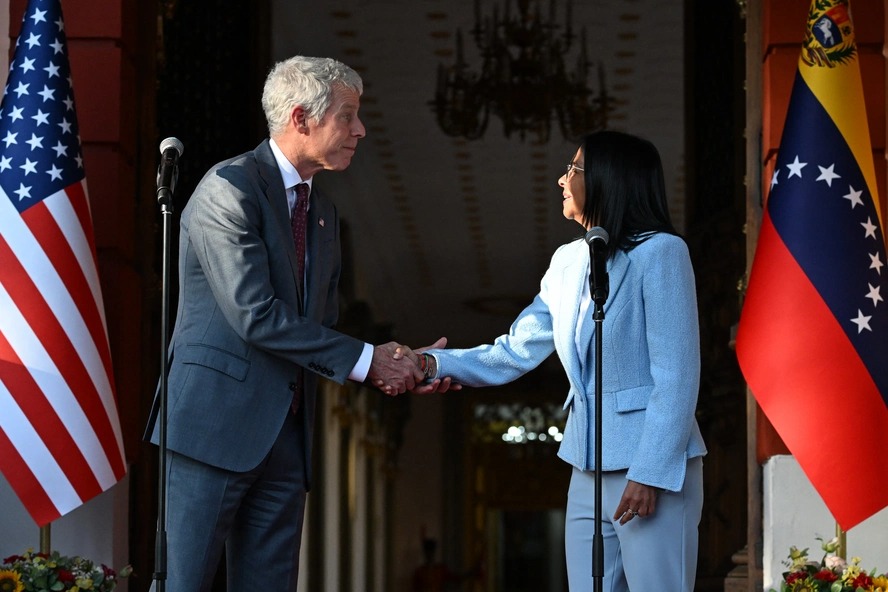
Several independent US oil producers are expected to sign production contracts with Venezuela’s state-owned oil company in the coming days.
According to sources who spoke to Politico on condition of anonymity because details of the event have not yet been made public, a signing ceremony involving several small US producers and Petróleos de Venezuela (PDVSA) was scheduled to take place in Houston on Tuesday (18 August) evening.
One source said Venezuela’s oil minister and the head of PDVSA’s exploration division were scheduled to attend the ceremony. Another source added that the event could be postponed until Wednesday morning.
The White House, which did not immediately respond to a request for comment, was not expected to be officially involved in Tuesday’s ceremony.
However, the development follows a visit by senior officials to Caracas in late April, where they signed memorandums of understanding that established the framework for formal production agreements in the country, which holds some of the world’s largest oil reserves.
Despite the tailwind provided by high crude prices, negotiations had stalled over key details such as dispute resolution, while officials in Caracas contended with two devastating earthquakes in June that claimed thousands of lives.
Venezuela’s interim president, Delcy Rodríguez, announced new regulations last month that offer more favourable fiscal terms to international oil companies.
According to an industry source close to the negotiations, the signing of the contracts comes after the Trump administration renewed pressure on Rodríguez to ensure PDVSA concludes agreements with American firms.
The source said these efforts included outreach by Secretary of State Marco Rubio to discuss how increased oil revenues could assist the country following the devastating earthquake earlier this summer.
The source added:
“Delcy reached a renewed awareness that increased oil production is the way to rebuild after the earthquakes and to achieve what her government wants to do for the people suffering from the earthquakes.”
David Goldwyn, president of the international energy consultancy Goldwyn Global Strategies, said investments from independent oil producers and boosting output from existing fields would serve as the “primary source of new oil growth for the next few years” for Venezuela.
“While the oil majors are trying to buy time to see how the political situation clarifies and whether they can cherry-pick the best assets, independent companies can de-risk their projects in the short term,” Goldwyn said.
However, Goldwyn noted that these investments would add no more than 300,000 barrels per day to the country’s oil production over the next year, falling far short of the multi-million-barrel increase that officials in Caracas and Washington wish to see.
“Until the framework improves, electricity is restored, and the political picture becomes clear, all we will see is incremental production growth,” the strategist said.

Trump sends Saudi nuclear pact to Congress tied to Israel ties

US-backed Board of Peace urges total halt to Gaza kite flying

Canada hits US with retaliatory tariffs on over 700 products

Mazlum Abdi announces dissolution of Syrian Democratic Forces

Pentagon to fully purge Anthropic AI from systems by end of September
-

 Interview1 week ago
Daniel Davis warns US strategy fails against Iranian defense grid
-
 Diplomacy1 week ago
Erdogan blocked CIA-Mossad plan for armed Kurdish uprising in Iran, report says
-

 America1 week ago
AIPAC super PAC pours millions into key Democratic primary races
-

 Diplomacy1 week ago
The two terrorists: Britain jails tweets while the West crowns al-Qaeda’s man in Damascus
-

 Europe1 week ago
Ukraine uses British drones for long-range strikes deep inside Russia
-
 Middle East1 week ago
US considers land blockade on Iran involving Türkiye and neighbours
-

 America1 week ago
US-Brazil rift widens over proposed sanctions and trade tariffs
-

 Europe1 week ago
Marine Le Pen plans French constitutional referendum on immigration
