
Middle East
After 12 years, is another protest Tahrir possible in Egypt?

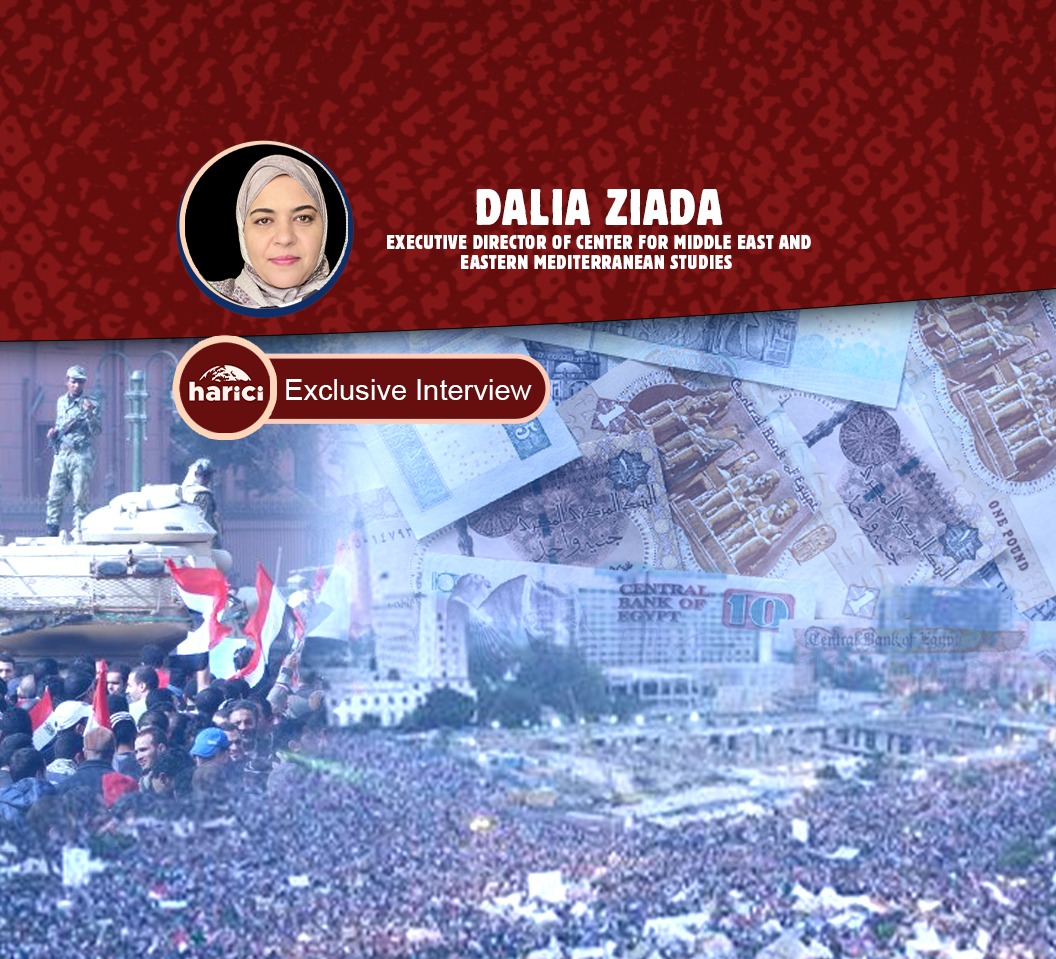
Hosni Mubarak’s 30-year rule in Egypt came to an end with the popular movement that finalized on January 25th 2011. After the initial wave of protests, which lasted for 18 days, Mubarak was compelled to resign on February 11th.
In 2013, a new round of actions and military intervention brought an end to Mohammed Morsi’s administration, which had been elected to power after Hosni Mubarak. The leader of the military coup during the polls in May 2014, Defense Minister Abdel Fattah Al Sisi, won the presidency with 90 percent of the vote while just 45 percent of eligible voters cast ballots.
The “crazy projects” of the Sisi administration, such the construction of a new headquarters in the Egyptian capital Cairo, had a major impact on the nation’s economy in the past ten years, when the Egyptian army was swiftly modernized and significant resources were allocated to this sector.
The Russian-Ukrainian war, the pandemic, and other health concerns caught the Egyptian economy off unprepared. The foreign capital that Russian and Ukrainian tourists had brought to Egypt was lost. Foreign investors withdrew about $25 billion in fresh capital from the Egyptian market in less than a year. Egypt’s currency, the lira, dropped by 50% from the previous year as it quickly lost value against the US dollar.
Due to the rapid currency increase, import prices increased. Accessing basic consumer goods has been more difficult for the underprivileged. Meat and eggs are now often regarded as high-end goods. The middle class’s standard of living has declined.
In Egypt, a nation of 104 million people where 70% of the populace receives bread subsidies, the grain crisis has also turned into a serious national security concern.
Egypt called the IMF for the fourth time in the previous six years due to these challenging circumstances. The Sisi administration, which took $3 billion, was forced to agree to the IMF’s stringent requirements.
The IMF’s requirements include privatization, a cessation of currency manipulation, and limitations on the military’s influence over the economy. The swift fall of the lira was the first sign that letting exchange rates float
What kind of future has in wait for Egypt, the center of the Arab world, where skyscrapers are rising on one side but poverty is spreading on the other?
Will the deteriorating economic situation lead to a new Tahrir uprising?
How eager are Egyptians to demand their rights in the squares in light of the bitter experience of the last 10 years, when social upheavals quickly turned into civil wars?
It appears that the huge winds of revolution have temporarily turned to a disappointment. However, it is absolutely impossible to lose belief in the Nile River’s never-ending flow.
12 years had passed since December 25th 2011, when tens of thousands of people started to swarm the Tahrir Square,. We questioned Dalia Ziada, the director of the Center for Eastern Mediterranean and Middle East Studies, on the state of Egypt’s economy and the broken ties between Egypt and Turkey.
- “Things are difficult, but we are in control of it and we will be able to overcome it,” said President Abdel Fattah Al-Sisi in Military Academy. As I understand President Sisi is trying to give message to Egyptian to be relax and calm So, what kind of economic challenges Egypt is currently facing. During the past few months, the dollar has been in rise. What is the current pressing economic issue, and what steps will Cairo take to overcome it?
It is a very good question to start the conversation with, because this is what is preoccupying the minds of everyone right now either in Egypt or worldwide but specifically in Egypt. Because this time, unlike before, the crisis is too complicated in many ways because it is in a sense a combined crisis. It is not new, it is not made by the Covid or by the Russia-Ukraine War but these recent global events have enhanced the crisis that has been in place since the 1960s or even 1950s in Egypt.
I call it the chronic crisis of the Egyptian economy. So, right now we are facing this challenge, which we are at a crossroads. Perhaps the economic plan or macroeconomic policy at that time did not start on the right foot. They first started as a communist republic and started to apply socialist policies. And then years later they said let’s have try on liberal market policies. And then all this has changed and we ended up with a very distorted macroeconomic system that we had to deal with throughout the 1990s and 2000s. In addition, of course to a long heritage of administrative and financial corruption. All this led to the image of the distorted economy or macroeconomic systems that we are having in Egypt today. So, the two crises that came each other, the Covid- and then the Russian Ukraine War, have brought Egypt at a crossroads. So now you have either to deal with this chronic crisis and solve it for good and start a whole new macroeconomic system or you just turn a blind eye to what’s going on and keep going on like this. And sooner or later this will lead to the collapse of the macroeconomic system and the entire political stability that we have been trying to keep for a while.
In the past week we have seen several statements by the senior state officials starting from the President, the Prime Minister, assuring the public that everything is fine while trying to keep it under control but unfortunately this is not translated on the ground. When you tell this to me as a citizen, I get happy and excited, but when I go out to the street to buy food or do any other activity that I used to do as a middle-class person, it has simply become too difficult. For example, in Türkiye and in many other countries when there is a such case of inflation, they are always accompanied by raises in salaries and the minimum wage, we do not have this here in Egypt because the country is already in deep debt and they cannot even afford an increase in salaries. On the contrary they are talking about removing subsidies on essential household commodities goods like the bread, cooking oil and energy which also will end up in more inflation. There is zero control over the market.
- What is the army’s role in economy? It is being criticized by the West.
This military-owned enterprises issue is somehow complicated for someone who does not understand how things are working in Egypt. The military is I would call, the backbone of the Egyptian State both politically and economically. In other words, the civilian government here in Egypt can’t do without the military being involved, as a safety net or as an insurance I would say in both politics and economy. Of course, like from a democratic point of view this is completely wrong and it should change one day if we really want Egypt to become a democratic country. But are we ready for this now? Unfortunately, no. The economic reform that the IMF is currently requesting, are very tough on the Egyptian market and for the merchants and the manufacturers, as much as they are on the Egyptian people itself. And the only entity in the country that have an autonomous economic system of its own and that is not affected by what is happening in the market is the military. And they have enterprises that can fill the gap between what the civilian government can offer and what the people need. Because this gap is believe me, really big. Only entity in Egypt right now that can fill in this gap, is the military. So, in the long run, yes the military should get completely out of the market and allow private investors to do their work and for the market to be liberated because this is essential if we really want to develop the Egyptian economy and the Egyptian political life in general. But right now, it would be a very tough decision with all the mess that we are having in especially in the economic arena.
- If I remember it correctly Egypt took IMF loan four times … Well, didn’t IMF’s credit programs work in Egypt?
Since the 1960s we have been receiving loans from the IMF. It is not only the recent ones but in these ones are very different. I would speak specifically and make a very quick comparison between the current loan that is three billion dollars over 48 months. And the previous loans which comprised of about twenty billion dollars, came in three parts like first twelve billion dollars, and then two emergency loans of the IMF that are I think something around five and two billion dollars, totaling in twenty billion dollars in these past six years. And why is these six years in particular being important because they are the years when we have this new regime in Egypt of President Al-Sisi. Before that it was a different state and a completely different scenario in politics and macroeconomics. The first loan which was given to us in 2016, was based on some policies that I think worked very much in the favor of the Egyptian people. That is not only serving to rescue the state from collapse. But they included some policies, which I think is because of Christine Lagarde’s activist spirit, which was towards development and socio-economic wellbeing, all tied together. So, this loan helped Egypt to improve its infrastructure in a very positive way, and provided a good support to the poor and social development in general in Egypt. For example, these programs were made for the Haya Karima, which means “Dignified Life”, for the people who cannot afford a living and also for urban redevelopment for the people who are living in slums.
So, all these definitely had a good effect in improving the standard of living in Egypt, and also for attracting foreign investors until the start of the Russia-Ukraine War. Although it is happening in a very distant geography it affected us dramatically, because Egypt relays on Russia, Ukraine and Belarus in two basic sectors, the food sector and the tourism sector. So, the shockwave of the Russia Ukraine war on Egypt was much bigger than it was on any other country I assume, so we ended up having falling again into this loop of crises. So now we are asking for a new loan, but this new loan is very strict in applying the policies that seek structural reform including of course the military withdrawal from the market and slowing down the national projects which was made by the former loans, which may actually risk the gains that we have got from the 2016 loan. This is what is making the most Egyptians pessimistic I would say, about the new loan.
- Economic issues may be caused by the Coronavirus era or the conflict in Eastern Europe, and the devastation it caused on a worldwide scale is evident. Particularly in Europe, one might observe several protests against the government in France or England. I’m not sure how these public protests will affect or will change politics in Europe, but I wonder if social movements could start in the Middle East again, especially in Egypt after the so called Arab Spring. Is there any possibility in Cairo or the other capitals in the Middle East?
Why people came out against Mubarak at that time, was partly due to similar policies like privatization, selling state-owned assets to foreign investors etc. So, of course this question came to the minds of many observers and analysts that the Egyptians will go out against Al-Sisi to protest his policies and actually I am talking to from Cairo right now. and from what I am seeing is that people throughout the past 10 years, is that we have gone through a lot including political transitions, the lack of security and stability at certain times, and now with the economic crisis, I think the people are very much in a case of fatigue that may not be able take such an action. They are also having a general mindset in the street is that “Yes we know we are suffering, and it is not good” and many people completely disagree with the policies of the government, especially in the economic part of the equation. But they are making this compromise “if we go to the street now and make a protest this will lead to chaos again and the chaos will lead to more economic trouble and more economic complications and will take another 10 years to get over these complications”. So, they are waiting to see what the government can really do with this crisis. I do not think they may come out anytime soon. If we also look in the past protesters that happened over the past 10 years since the Arab Spring up till now it is not the poor. It is always the middle class. It is the middle class, the educated the employees, the bureaucrats that are the ones who come out to the streets and make real protests that make real changes.
- I would like to ask to you the current feelings of the middle class? After 10 years what is their mood?
Now the middle class is very depressed in many ways. One of them of course is economic as we are speaking about the economic part here. But also, another part is political because we had these high hopes about a more democratic country, more freedoms, more human rights or better performance by the government on human rights. Unfortunately, today we are still struggling with the same issues we have been struggling with 10 years ago, regarding freedom of speech, human rights democratization. And even when changes happen and things open up a little bit, they get closed again by economic crises or security issues like fighting against terrorism etc. So, the depression is coming from the fact that we fear that these dreams will be forgotten, in the process of doing economic reform, or facing security challenges. But hopefully people will keep pressing in a positive way not in a destructive way to make this happen in the future. But this all sticks us again to the point that you can advocate for you know democracy human rights in a country that is stable with a good economy. But usually when these things are not well, the security is not good enough and economy is not good enough. As human rights activists or civil rights activists we do not get the popular support needed to help our work. So, this is basically the main challenge here.
- There is rapprochement process between the Arab nations between Türkiye and Arab World and also we can add Iran to this list. So, how do you evaluate this process? What king obstacles we have between Ankara and Cairo?
Great question actually. Let me start by saying that I am very happy with the new foreign policies of president Erdogan of Türkiye has been adopting in the past two years, which is mainly about approaching Arab countries of all over the Arab geography, and also communicating on a basis of fixing ties regardless of the ideological differences, either on the Mediterranean or in the Middle East and Türkiye, since I consider Türkiye a part of the Middle East of course. The good thing here is that most of the Arabs do not look at Türkiye in the same negative light that they look at Iran for example. For most Gulf countries including Saudi Arabia, which is the biggest Gulf country and one of the main leaders in the region right, now Iran is still seen as an enemy. But while it is not that much in countries in North Africa, but Türkiye for everyone has always been a friend. Of course before past seven or eight years of diplomatic and media rivalries, but before that Türkiye has always been integral to this region and a very important partner and an important regional player in the region. For Egypt and Türkiye in particular, the relationship is even more critical than any other country. That is not only because of the geographic proximity between the two countries, which allows lots of opportunities for economic cooperation between the two countries given the fact that Egypt is literally at the gates of Africa, and Türkiye is literally at the gates of Europe, but we can do a lot of things together. Again unfortunately because of political differences in the past eight or nine years, all this potential was hindered for no good reason. We could have been able to communicate and cooperate for so long. But also there is this religious and historical factors. There is a lot of cultural similarities between Türkiye and Egypt. Of course, this applies to most of the countries in North Africa are heavily influenced by the Turkish culture. And this is making or creating a space for understanding that you would not see in other countries. So despite of course the political tensions that happened in the last decade or so between the two governments, still the people have a lot in very much in communication and in understanding with each other for example between Türkiye and its neighbors in in Syria or Iraq etc. Although they are closer like right on your border but if you look at the North Africa side, the understanding and communication was much better. After the historic handshake between the two Presidents Al-Sisi and Erdogan, actually hopes were very high here in Egypt as well that maybe finally we have come to the point of proper communication and things show are moving in the right direction. But sadly, none of this is happening. It has been two months now and there is no follow-up from the intelligence bureaus in both countries or even a follow-up by the Foreign Ministries in both countries. Things are still same.
- The process has frozen. What is the expectations of Cairo from Ankara?
I think the main reason why these talks are frozen, is because there are three main files that are still open and it is somehow very difficult for both countries to come to a compromise. Number one is Libya of course. Libya is the country that shares the longest border with Egypt. For Egypt, here the state considers Libya national strategic depth. So any actions that happens there directly affects us. Now I can see more tolerance to the fact that Türkiye have its troops in Libya, and is trying to make agreements with Libya. There is some kind of more tolerance here than it was in 2020 when there was these clashes and Egypt was very angry for the presence of the Turkish troops are there. But now there is this greater tolerance because the state of Egypt started to understand that Türkiye is not a threat to our national security, which I think is very important point that Türkiye was able to communicate clearly to the Egyptian officials here.
On the other hand, Türkiye and Egypt still support two different sides in the Libyan conflict. And Egypt cannot afford not to support the Eastern factions, because they are controlling Egypt’s Western border and they are preventing the smuggling of weapons into Egyptian Western desert, or preventing terrorism from leaking into Egypt. So, they cannot afford actually losing them at the same time Türkiye is believing that Tripoli is the legitimate government and they continue to support it because it is recognized by the UN, and also Türkiye has geo-economic or geopolitical interests over the Tripoli based government, so it makes sense for them to support it. With all these complications I think like to get to a compromise on the Libya issue, needs lots of talks between two sides.
“Egypt involved in Türkiye – Greece conflict”
Another critical issue of course is the Eastern Mediterranean. As we have seen in the past three years Egypt in particular got heavily involved in the conflict between Greece and Türkiye. Since the time of Mubarak we were always avoiding in intervening in this conflict. Even in 2005 when Greece started to ask Egypt to sign agreements or delimitation, Egypt has always used to say “No go first solve your problem with Türkiye, and then come back to us and then we can talk”. This is out of respect to Türkiye’s borders or out of respect to Türkiye’s rights in the Mediterranean. But unfortunately amidst the political tensions that happened in the past seven or eight years, has made it easier for Greece to request to make such requests to Cairo, and made it even more possible for Cairo to respond positively to these requests and we ended up having this agreement with Greece and the Greek Cyprus in in 2020, followed by the formation of the Eastern Mediterranean gas Forum which is sadly has excluded Türkiye or I would say unfairly has excluded Türkiye although it is the country with the longest shoreline in the Mediterranean. Despite the agreements that Egypt has signed with the Greek Cyprus and Greece, Egypt has always been careful not to trespass the area that Türkiye refers to has its Maritime Zone which is also a positive indication. So I think although Egypt is having this agreement towards Greece now and Greek Cyprus and other players or other actors in the Mediterranean, this should not prevent Egypt from having a similar agreement with Türkiye. For sure either on delimitation or we call it Maritime agreement, or whatever we call it but we should have some kind of an agreement on what is happening in the Mediterranean with Türkiye. And again this needs a lot of communication and lots of negotiations. The third and final issue which is not as big as the first two in my opinion, is the Muslim Brotherhood issue. Egypt insists all the members of the Muslim Brotherhood, whether they are the people who are in the armed movement and or the peaceful members of the Muslim Brotherhood who did not practice any acts of violence be sent back to Egypt to be punished. At the same time Türkiye sees it in a humanitarian perspective and does not see a good reason to send back the people who were only practicing political opposition against Egypt and not really has not been involved in acts of violence. Two states needs to come to an agreement on this too but I think this this particular part is much more marginal than the two first two big issues of the Eastern Mediterranean and Libya.










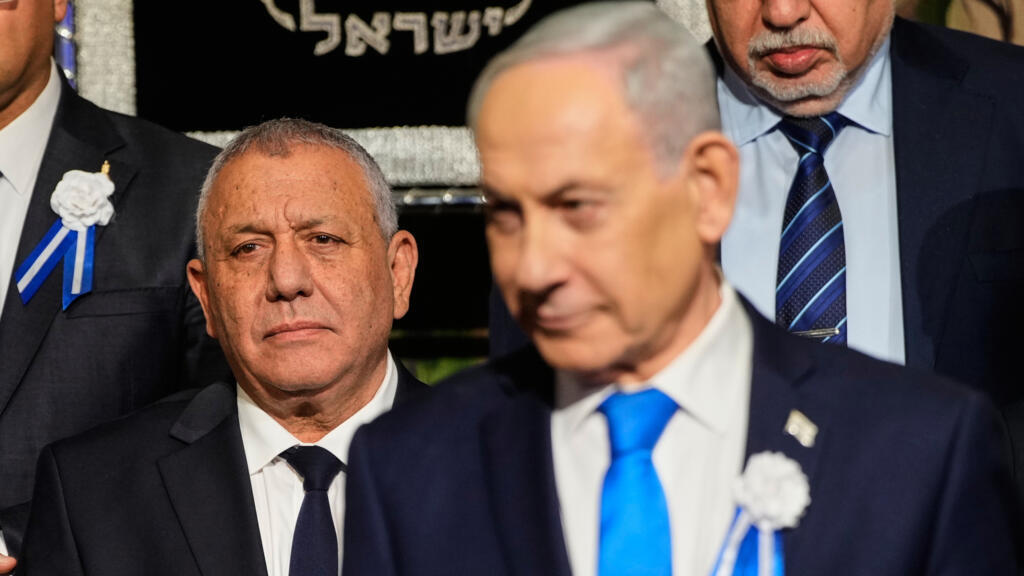
Unity government talks between Gadi Eisenkot’s Yashar party and Israeli Prime Minister Benjamin Netanyahu’s Likud party failed to make progress.
Citing Israeli media, The Times of Israel reported that the meeting held on Sunday lasted about an hour.
Naftali Bennett’s B’Yachad party also attended the meeting.
In a brief joint statement issued after the talks, the parties said the meeting took place in a “businesslike atmosphere” and that contacts would continue.
Even so, the refusal of both Likud and Yashar to cede the premiership to the other side remains the main obstacle to the negotiations.
Conflicting messages conveyed over Ben Gvir
According to Ynet, the Likud delegation stressed that no party from Netanyahu’s bloc should be excluded from a potential unity government.
Saying they were not excluding the left-wing Democrats party, the delegation demanded that Itamar Ben Gvir’s far-right Otzma Yehudit party also not be left out of the cabinet.
Israel Hayom, however, wrote that figures close to Netanyahu had conveyed the opposite message to Eisenkot.
According to the newspaper, those figures told Eisenkot that Likud would not insist on bringing Otzma Yehudit into the government.
Israel Hayom also claimed that the US wanted Ben Gvir excluded from the new government.
In his public statements to date, however, Netanyahu has argued for including all of his ultra-Orthodox and ultranationalist allies in the government.
Liberman: “We do not want to put Netanyahu on life support”
There is opposition within Eisenkot’s bloc to the negotiations being held with Likud.
While the Democrats party has openly objected to the talks, Channel 13 reported that Yisrael Beiteinu leader Avigdor Liberman described the meeting as a trap set by Netanyahu.
According to the report, Liberman told Eisenkot: “The most important goal is to end the Netanyahu era. We have no interest in putting him on life support.”
Calling the meeting “not a unity government, but a trap set for Eisenkot,” Liberman reportedly said his party was open to cooperating with Likud in the post-Netanyahu era.
According to Channel 12, Naftali Bennett is taking a different approach.
Bennett wants the option of a unity government with Netanyahu to be seriously considered, provided Eisenkot serves first under a rotational premiership formula.
Bennett reportedly prefers this formula over a partnership with parties representing Palestinian citizens of Israel or with ultra-Orthodox parties, though he does not plan to break away from his current bloc to join Likud.
Liberman also opposes a government reliant on the support of Ra’am and the Joint List.
By contrast, Liberman backs a partnership with the ultra-Orthodox parties and is reportedly open to compromise on his demand for comprehensive legislation on the military conscription of Haredi men.
Dispute also erupts over vote for Knesset speaker
During the meeting, Likud representatives asked to postpone the move to elect Yashar lawmaker Matan Kahana as Knesset speaker.
Yashar rejected the request, announcing that the vote to replace incumbent Knesset Speaker Amir Ohana would take place on Tuesday.
According to Channel 12, senior Yashar figure Hili Tropper told the Likud delegation: “Eisenkot is determined to form a government under any circumstances. You must accept this.”
A Yashar source also argued that Likud did not yet appear to have grasped that it had “lost” the election.
According to KAN, Likud sources said they gained the impression that Yashar and B’Yachad representatives attended the meeting merely to go through the motions and had no real intention of forming a unity government.
Eisenkot has repeatedly stated in the past that Netanyahu is unfit to serve as prime minister and poses a danger to the country.
For that reason, even Netanyahu taking a ministerial post in a cabinet led by Eisenkot would represent a major departure from Eisenkot’s previous stance.
It is also considered unlikely that Netanyahu would agree to serve under another prime minister.
Claim of progress in contacts with ultra-Orthodox party
As talks with Likud stalled, Eisenkot’s bloc was claimed to have made headway in parallel contacts with the ultra-Orthodox United Torah Judaism party.
Speaking to Channel 12, a senior party official said: “Contacts are taking place behind the scenes every day. There is real progress in the talks, much more than appears from the outside.”
The newspaper Haaretz also reported similar information.
Israeli media reported that party leader Yaakov Asher had met separately with Eisenkot and Liberman.
Asher, however, denied claims that “dramatic progress” had been made and that draft agreements had been exchanged, calling them “completely baseless.”
Stating that meetings with political actors are a natural part of the process, Asher noted that his party would neither confirm nor deny every contact.
A party source also said that until formal negotiations begin, the contacts were aimed only at “testing the waters,” discussing general principles without going into details.
Shas remains determined to maintain alliance with Netanyahu
The other ultra-Orthodox party, Shas, remains committed to preserving its partnership with Netanyahu.
According to Channel 12, Shas’s main concern is that United Torah Judaism could clear the way for an Eisenkot government through its support or abstention, but then fail to guarantee the implementation of an agreement on the military conscription status of religious seminary students.
Shas leader Aryeh Deri reportedly reminded closed-door meetings that a conscription law could not be passed before a government is formed, saying: “Forming a government with Haredi votes and ending up thrown out without the status of yeshiva students resolved would be a dangerous step.”
Citing a decision by his party’s Council of Torah Sages, Deri stated that Shas would not sit at the negotiating table with Eisenkot’s bloc, adding: “We are continuing with Netanyahu, and that is how it will be.”
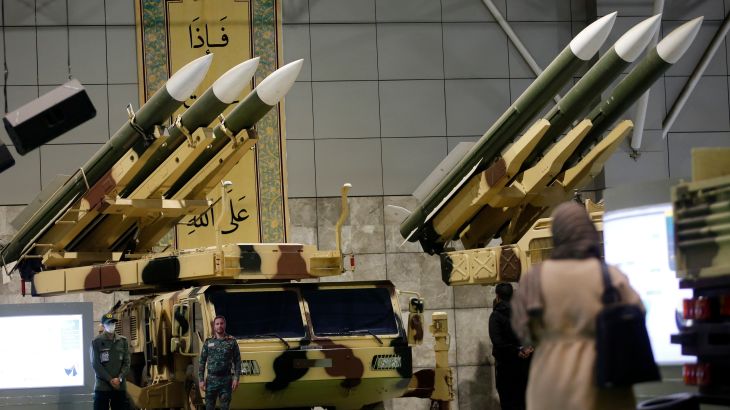
In an extensive broadcast on the Harici digital platform’s Strategic Compass programme, prominent Turkish international relations scholar Prof. Dr. Hasan Ünal and investigative journalist Alptekin Dursunoğlu, editor-in-chief of the specialized regional outlet Yakin Doğu Haber, delivered a comprehensive operational assessment of escalating geopolitical turbulence across the Middle East.
The dialogue dissected the severe institutional, political, and strategic crises currently paralyzing the Tel Aviv and Washington administrations, the profound doctrinal evolution in the Islamic Republic of Iran’s defence apparatus, and the operational collapse of the Saudi-led military campaign in Yemen.
Setting the analytical framework, Prof. Dr. Ünal noted that regional stability remains held hostage by political leaderships in Washington and Tel Aviv whose military ambitions diverge sharply from institutional reality. Ünal asserted that US President Donald Trump and Israeli Prime Minister Benjamin Netanyahu are functioning under immense domestic and international vulnerability, observing that the wider West Asian arena has been left swaying under the command of two unpredictable figures whose room for operational manoeuvre has contracted severely following domestic political defeats.
Turning directly to the internal institutional turmoil inside the Israeli security and defence establishment, Dursunoğlu detailed the unprecedented breakdown in the civil-military chain of command that surfaced in the Israeli press following the national elections. Specifically addressing the Israeli Chief of Staff, Lieutenant-General Eyal Zamir, Dursunoğlu underscored that the military top tier actively resisted prime ministerial instructions designed to embroil the country in an existential conflict.
“Before the Israeli elections, Netanyahu made a serious demand for war,” Dursunoğlu stated, detailing the internal Israeli deliberations. “However, the Chief of General Staff, Eyal Zamir, did not heed this. We learned from the Israeli press after the elections that outright insubordination had effectively taken place. It was noted with irony that in the Middle East’s supposedly sole democracy, the military commander was subordinate to the political will, yet refused to listen to that political will. This is likely an unprecedented development in the short history of that regime.”
Dursunoğlu observed that this refusal followed a direct appeal by the domestic political opposition, known as the Change Bloc under the leadership of Gadi Eisenkot, who had cautioned the general staff against acting as a political instrument. Dursunoğlu explained: “Prior to that, the Change Bloc warned the Chief of General Staff directly. It was anticipated that Netanyahu would attempt to sway the elections in his own favour by launching a war against Iran, which prompted the warning not to enter such an adventure.”
Addressing the persistent rumours that the US administration might launch an assault using massive conventional munitions, Dursunoğlu dismissed the strategic utility of deploying ordnance such as the GBU-43/B Massive Ordnance Air Blast. “Your own military experts state that this bomb detonates prior to impact to devastate wide open areas,” he noted. “That was why it was dropped in Afghanistan, to eliminate dispersed headquarters across broad surface terrain without targeting each facility individually. But your own assessments state that the Iranian facility is carved deep into granite, under hundreds of metres of mountain rock. What is the Mother of All Bombs supposed to do against that? It is widely recognized that even tactical nuclear strikes could not affect it.”
“What objective will you achieve in a short strike that you failed to secure in 40 days?”
Scrutinizing the strategic logic of Tel Aviv and Washington threatening an intense, three-day air blitz against Iranian sovereign territory, Dursunoğlu questioned the credibility of the entire premise when compared to earlier operational outcomes.
“There is an unavoidable military reality to confront,” Dursunoğlu stressed. “What objective will you achieve in an intense, short-duration strike that you failed to achieve during the 40-day war? Moreover, the Iranian side is explicitly warning that the Iran of today is fundamentally different from the past. Tehran states clearly that while you may possess the capability to initiate hostilities, you will not be the party that determines when a ceasefire takes place.”
Dursunoğlu pointed out that Washington’s quiet diplomatic manoeuvres contradict its public posturing. He highlighted that despite aggressive posturing from cabinet hardliners, substantive communications to Tehran had taken a noticeably conciliatory posture through alternative channels.
“If the United States is serious about these existential military threats, why is Vice President JD Vance sending a letter directly to Mohsen Rezaee?” Dursunoğlu asked. “Why are the hawks like Trump himself, Hegseth, or Rubio sidelined in this instance, while Vance sends a letter to Mohsen Rezaee characterized by a completely softened, polite tone proposing dialogue? Iran’s answer has been resolute: seven explicit conditions have been placed on the table. Tehran is demanding concrete implementation before any meaningful talks can proceed, stating frankly that it possesses zero trust in American commitments.”
Dursunoğlu emphasized that institutional rationality within both the US and Israeli armed forces acts as an impediment to reckless unilateral strikes. “Both regimes contain institutional architectures, professional armed forces, intelligence agencies, that are not required to sacrifice sovereign national interests purely for the immediate political survival of individual leaders,” Dursunoğlu argued. “Military analysts and security figures inside Israel are openly voicing this apprehension: if the US posture recedes following the shifts in Congress, how can Israel sustain an isolated conflict against Iran?”
“Iran has lifted the 2,000-kilometre missile limit”
Examining Iran’s revised deterrence architecture, Dursunoğlu revealed that the parameters governing Iranian retaliatory measures have expanded dramatically, both technologically and geographically. He underscored that Tehran’s strategic calculations no longer adhere to previous voluntary self-restraints.
“Iran has formally stated that if an attack occurs, there will no longer be any geographical boundaries,” Dursunoğlu remarked. “This stance is not confined to the immediate theatre. Iran has lifted the 2,000-kilometre missile limit that had previously governed its strategic arsenal. Historically, when the late leader Ayatollah Seyed Ali Khamenei was questioned on this, he confirmed that while the armed forces possessed the technical capability to exceed that range, he had restrained it specifically to avoid handing European capitals and Netanyahu an excuse to construct an Iranian threat narrative.”
Dursunoğlu stated that this self-imposed doctrine is now defunct: “Today, that limit has been discarded entirely. Mojtaba Khamenei, the commanders of the Islamic Revolutionary Guard Corps, and Mohsen Rezaee have all affirmed that geographical limitations no longer apply. This implies directly that US facilities across Europe and broader regional perimeters are within scope. If Iranian energy infrastructure is struck, the vulnerability extends outward. While the closure of the Strait of Hormuz could theoretically be reversed via maritime agreements, a sustained strike against Iranian energy networks could trigger the absolute flattening of primary export terminals and processing facilities across the Gulf, including Fujairah and Yanbu.”
Dursunoğlu argued that the operational assumptions under which Western strategists operated have been completely invalidated by Iranian technological demonstrations. “The entire narrative that Iran lacked advanced signal processing, satellite data links, and long-range operational precision has collapsed,” Dursunoğlu asserted. “Iran demonstrated these sophisticated capabilities in full measure, neutralizing the element of surprise that the adversaries relied upon earlier in the conflict.”
“All options are on the table, including the ground invasion of Gulf monarchies”
Expanding on the systemic consequences of an unconstrained regional conflagration, Prof. Dr. Ünal and Dursunoğlu explored the absolute vulnerability of the Arabian Peninsula, where political geography itself faces radical transformation if open hostilities commence.
“Should a wide-scale regional confrontation break out, the traditional American phrase that all options are on the table will apply in reverse,” Dursunoğlu declared. “At that juncture, the ground invasion of Kuwait is on the table, Bahrain is on the table, the Emirates are on the table, and the Saudi state will face unprecedented devastation from both the north and the south. When Iran states that it will dictate the operational scope and duration of the war, this encompasses the reality of ground manoeuvres that could dissolve the current political map of the Gulf.”
Prof. Dr. Ünal contextualized this vulnerability by analysing the asymmetric demographics and geography of the Gulf states. Ünal pointed out that significant Shiite populations across Kuwait, eastern Saudi Arabia, and Bahrain remain acutely disenfranchised, creating vast internal faultlines should regional conflict erupt. In Bahrain specifically, where an estimated 70% of the indigenous population is Shiite, systemic political repression by the ruling monarchy has established an exceptionally volatile internal environment. Furthermore, Ünal emphasized that Saudi Arabia’s principal oil extraction assets reside squarely within its historically marginalized Eastern Province, meaning that any systemic internal or external military destabilization would instantly paralyze the kingdom’s economic foundation.
Addressing the military dynamics in Yemen, Dursunoğlu and Ünal observed that the Saudi state apparatus has become thoroughly mired in a strategic quagmire against the Ansarullah movement. Ünal underscored that the Ansarullah forces have executed precision strikes deep into Saudi territory, consistently targeting critical infrastructure belonging to the state oil firm Aramco in Yanbu and elsewhere, alongside regional administrative hubs and major international airports.
Dursunoğlu detailed the extreme disparity in air defence effectiveness between different theatres, pointing out that Western partners have failed to provide the Gulf monarchies with an impervious operational umbrella: “Consider a goal in a football match to represent territory. Israel’s territorial footprint is protected by multiple layered air defence umbrellas deployed in extreme density, yet even that barrier was repeatedly penetrated during recent engagements. Saudi Arabia’s landmass is vastly larger, and no state on earth possesses the defensive inventory to establish comparable multi-tier coverage across such a huge geographical scale. Consequently, Yemeni missiles and drones easily penetrate Saudi airspace and strike designated strategic targets at will.”
Dursunoğlu underlined the total failure of the Saudi ground intervention: “When the campaign was initiated in July with an equipped mercenary proxy force of 70,000 intended to march onto Sanaa, the expectation was a swift victory. Today, Ansarullah is not retreating; their units are steadily advancing towards the gates of Aden. Riyadh cannot safeguard its own critical infrastructure, its domestic proxy forces are collapsing across southern Yemen, and its historical border areas adjacent to northern Yemen face persistent strategic exposure.”
“Netanyahu is politically finished, while Washington braces for a lame-duck presidency”
Assessing the executive dynamics in Washington and Tel Aviv, Dursunoğlu identified deep systemic exhaustion and the prospect of cascading political crises that threaten the immediate survival of both administrations.
“In Washington, the drive toward accountability has targeted figures like Pete Hegseth,” Dursunoğlu stated, detailing the mounting pressure exerted by congressional Democrats. “The political opposition is demanding his removal, creating an acute dilemma for the Trump administration. If Hegseth is sacrificed, the evidentiary trail leads directly upward to executive orders issued by Trump himself. While there are suggestions that Israel could serve as a convenient scapegoat for failures in West Asia, sacrificing key officials will only accelerate moves toward congressional impeachment once the balance of power solidifies in January.”
In Israel, Dursunoğlu outlined an equally fragile matrix confronting the Likud establishment. With Gadi Eisenkot tasked with exploring coalition options, the domestic balance rests on razor-thin parliamentary mathematics. “Eisenkot faces the difficult task of cobbling together a 61-seat majority through arrangements with either Haredi factions or outside confidence from Arab lists, both of which provoke fierce resistance within the Zionist political spectrum,” Dursunoğlu explained. “The Haredi parties, representing Ashkenazi United Torah Judaism and Sephardic Shas, remain fixated entirely on preserving broad military draft exemptions for their communities. If Eisenkot provides credible assurances on this front, a viable alternative coalition can emerge. Alternatively, the defection of merely three to four Likud lawmakers would decisively break Netanyahu’s grip on the Knesset.”
Dursunoğlu characterized Netanyahu’s persistent war agitation as a desperate strategy of personal preservation: “Netanyahu is the actor with the most existential requirement for active war, precisely because the collapse of military momentum leaves him immediately exposed to electoral annihilation and legal reckoning. Yet the Israeli military apparatus is exhausted. The army has run out of operational manpower, which is precisely why the bitter domestic fight over drafting the ultra-Orthodox has escalated so violently. The Israeli Chief of Staff himself admitted on multiple occasions in internal assessments that the military structure was raising red flags over systemic institutional collapse under the weight of prolonged multi-front warfare.”
Addressing the friction between the US and Israeli leaderships, Dursunoğlu highlighted reporting from Israeli daily Yedioth Ahronoth concerning explosive arguments between Trump and Netanyahu over direct military commitments. “Reporting indicates that violent shouting matches, described literally as emerging from hell, have characterized recent exchanges between Trump and Netanyahu,” Dursunoğlu noted. “Netanyahu continues to plead for a direct, collaborative American offensive against Iranian sovereign territory, but Trump recognizes the prohibitive domestic and military price tag and refuses to commit forces to an unwinnable strategic morass.”
Prof. Dr. Ünal concluded the discussion by noting that the traditional pro-Israel consensus in the US capital is fracturing irreparably under the weight of Netanyahu’s international isolation. “Netanyahu has become an absolute object of hatred globally, severely complicating the lobbying efforts of pro-Israel organizations across Western capitals,” Ünal observed. “With generational political shifts evidenced in US metropolitan hubs like New York, where substantial portions of the Jewish electorate are backing progressive, anti-war candidates, future administrations in Washington will inevitably tilt toward restrictive policies and potential sanctions against Israeli unilateralism. The era when Tel Aviv could dictate unconditional US military interventions across the Middle East has definitively closed.”
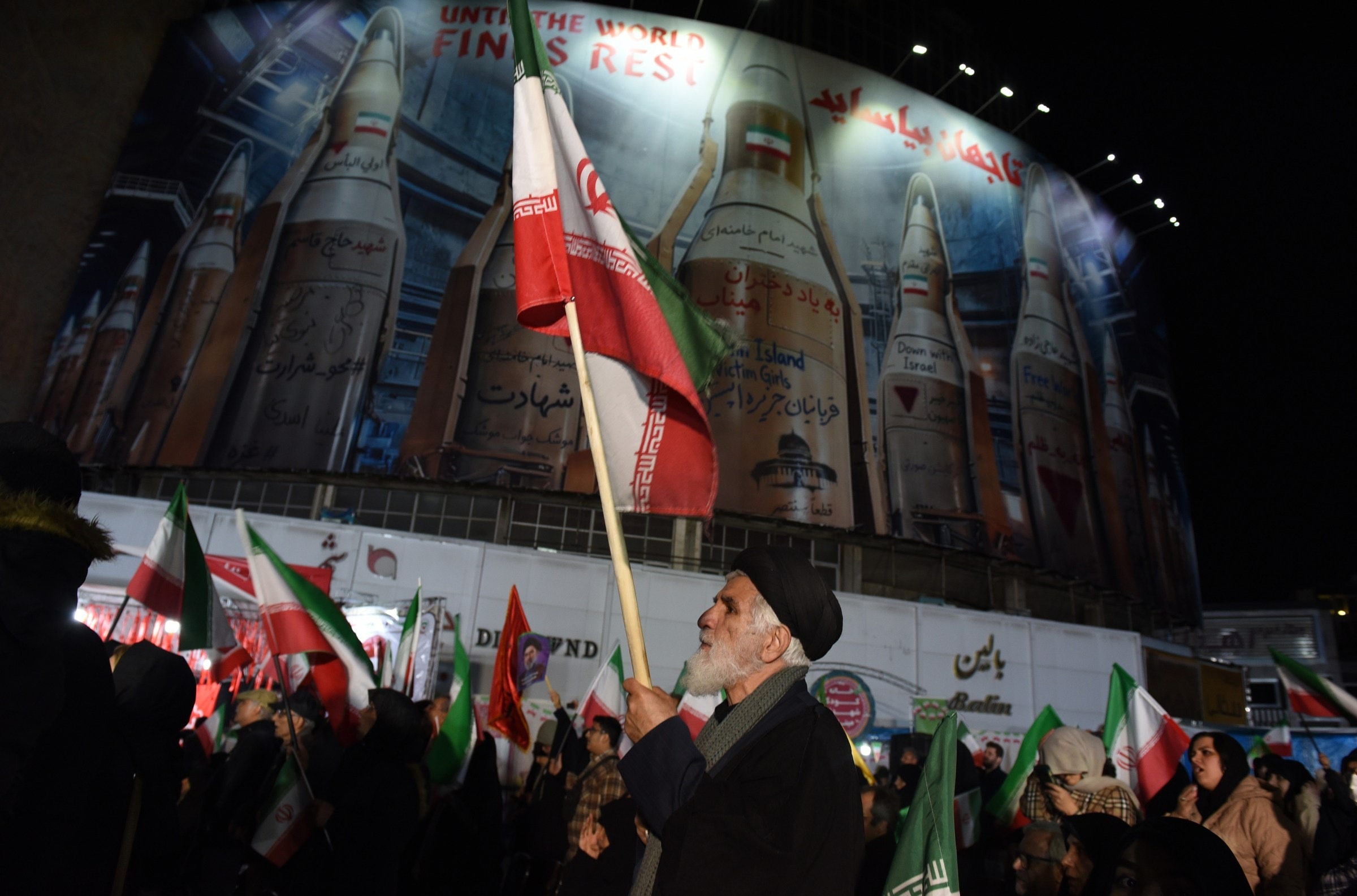
Following the conclusion of elections in both the United States and Israel, the political landscape across the Middle East faces fresh uncertainty as regional actors reassess the balance of power surrounding Iran.
In an in-depth interview broadcast on the Harici YouTube channel, host Mehmet Kıvanç discussed the regional fallout, electoral dynamics, and military contingencies with Oral Toğa, a researcher at the Center for Iranian Studies (IRAM). Toğa provided a comprehensive assessment of how domestic economic pressures and foreign policy entanglements reshaped voting behaviour, the strategic predicaments facing both Washington and Tel Aviv, and the operational calculations unfolding in Tehran amid the threat of renewed conflict.
Kıvanç opened the discussion by observing that the long-anticipated elections in both countries had concluded, leaving the region at an analytical crossroads. Addressing the shifting political currents in the US, Kıvanç highlighted that within the Democratic Party, figures critical of the ongoing genocide in Gaza and those questioning unconditional support for Israel had gained visible momentum, with even figures like Kamala Harris expressing reservations regarding war with Iran. In response, Toğa noted that while microeconomic concerns such as fuel prices and inflation historically drive voting behaviour, they often serve as catalysts prompting the electorate to question broader foreign policy commitments.
“Standing by Israel has now become a political cost”
Reflecting on the domestic drivers behind the US vote, Toğa emphasised that economic friction inevitably pushes voters to scrutinise governance from a structural perspective. “For decades, there have been analyses concerning the impact of kitchen table issues on the ballot box,” Toğa stated, recalling former Turkish President Suleyman Demirel’s famous aphorism regarding economic discontent. “Certainly, we can say that petrol prices and inflation influenced these election results for Americans. But when these micro issues, matters directly affecting the public, begin to bite, the people start questioning macro matters. They ask: Why are we experiencing this?”
Toğa observed that a broad consensus exists among political analysts regarding the electoral repercussions of foreign entanglements. “All experts agree that Middle Eastern developments, alongside the domestic economic situation, exerted a direct influence on the election and extracted a political cost from Trump,” Toğa said. “Standing by Israel has now become a political cost. This debate is even occurring within domestic politics in Greece today, where people ask why they are taking a position alongside a country committing genocide while everyone else is stepping back. Aligning with Israel is becoming a distinct political liability.”
According to Toğa, this dynamic directly clashed with the core promises made to the American electorate. “Trump, who pledged an America First policy, ran a campaign whose service to American interests remained ambiguous for two years, generating direct and indirect consequences for the American public and raising serious questions,” Toğa remarked. “While he promised to be a president who avoids and ends wars, we arrived at a point governed by continuous conflict, war, and fragile ceasefires since last year. All these elements produced the outcome of the US elections.”
Addressing Kıvanç’s question regarding whether traditional pro-Israel lobbies like the American Israel Public Affairs Committee (AIPAC) are suffering an enduring erosion of power, Toğa argued that the information environment has fundamentally transformed. He pointed to the emergence of independent digital platforms and social media channels scrutinising political donations, revisiting historical foreign policy decisions, and questioning narratives that were previously dismissed as conspiracy theories.
“Netanyahu and his contemporaries are only now realising that we no longer live in the world of the 1990s,” Toğa said. “Prior to the rise of social media, holding specific broadcast channels granted you a monopoly. You could make someone famous overnight or destroy someone prominent just as quickly. Controlling the press made it simple to market your own narratives. Today, however, people are watching a genocide in high-definition quality. They could not conceal what occurred in Minab despite significant efforts, and it continually returned as an uncomfortable question before the president. People also question incidents such as strikes hitting weddings.”
Toğa explained that past precedents continue to weigh heavily on public trust. “There is historical baggage,” he said. “Why did the Iraq War begin in 2003? It was claimed there were chemical weapons. Later, numerous books and memoirs by senior bureaucrats revealed this was untrue and argued that it served Israeli interests, openly assigning blame to Israel for these engagements. The accumulation of this baggage, combined with social media’s rapid dissemination of information, has made it impossible to monopolise narratives. If one platform loses credibility, an alternative emerges immediately, and information keeps flowing. This constitutes the greatest challenge for the current Israeli government and represents the primary factor weakening its influence in the US.”
“The security climate after October 7 ties the hands of the Israeli left”
Turning to the Israeli elections, Kıvanç noted that Prime Minister Benjamin Netanyahu’s coalition lost 10 seats rather than suffering an outright collapse, while Arab parties surged from 10 to 19 seats. Meanwhile, the opposition camp led by Gadi Eisenkot viewed its own performance as a failure despite Netanyahu’s vulnerabilities. Kıvanç asked whether the conflict with Iran had consolidated Israeli society behind a more aggressive security posture.
Toğa responded that Israeli political consciousness remains anchored to the trauma of the October 7 attacks. “Israelis cannot move past October 7,” Toğa stated. “Whatever occurs, the ultimate card played in Israel returns to October 7. Consequently, the security climate after October 7 ties the hands of the Israeli left regarding the genocide, the assaults in Lebanon, Iran, and Yemen, and actions concerning West Bank settlers. The political right directly challenges the left by pointing to what the Palestinians they defended did. Netanyahu captured a substantial security tailwind, entered into what he termed a seven-front war, and framed his campaign around the narrative that Netanyahu never surrenders, manipulating this security environment to emerge with the leading bloc despite dropping 10 seats.”
Toğa drew an operational distinction between public sentiment regarding Gaza and attitudes toward Tehran. “Opinion polls show the Israeli public is deeply divided over Gaza because of reserve soldier casualties and the question of why they are dying,” he explained. “Yet that division does not exist regarding Iran. The Israeli public is far more unified in viewing Iran as an existential threat. The narrative of unfinished business with Iran was central to the election campaign, reinforced by Trump’s open endorsements from abroad. Eisenkot was repeatedly accused of being soft on this front, forcing him into a defensive posture where he emphasised his military credentials and the personal loss of his son and nephew.”
When asked about Eisenkot’s prospects of forming a governing coalition through either external Arab party support or a national unity government, and whether Eisenkot would pursue regime change in Tehran, Toğa underscored that Israeli institutional strategy transcends individual leadership.
“Altering and breaking the political will in Iran is an established state policy for Israel, rather than merely changing the regime,” Toğa stated. “They perceive a genuine threat from Iran. One must not forget the evacuation of northern communities following October 7 due to Hezbollah’s posture, the constant threat posed by allied proxy forces prior to October 7, Iran’s rapidly developing ballistic missile capabilities, and its proximity to nuclear status. A nuclear Iran would fundamentally alter the security doctrines of Saudi Arabia, Azerbaijan, Türkiye, and the Gulf states, creating a domino effect that Israel desperately seeks to avoid. Furthermore, Israelis have no way of predicting which capabilities Iran will transfer to which actor, as demonstrated by the advanced missiles and drones supplied to Hezbollah, Yemen, and the Popular Mobilization Forces.”
Toğa warned against misinterpreting Eisenkot’s political standing or doctrine. “People should not view Eisenkot as an inherently peaceful figure,” Toğa observed. “He is a former military commander who formulated the Dahiya doctrine, which explicitly outlined the systematic targeting of civilian and urban infrastructure in Beirut’s Dahiya district. His argument is simply that military operations must be directed where they yield tangible results. Regarding government formation, relying on ultra-Orthodox parties brings severe constraints, while partnering with or relying on Arab parties alienates factions that refuse to appear alongside them. A minority government would be exceedingly fragile. While a 28-day mandate with a potential 14-day extension is underway, if the task eventually falls back to Netanyahu and fails, a return to elections appears the more probable trajectory.”
“The primary objective is turning Iran into a failed state”
Addressing the transition period before the newly elected US Congress convenes in January, Kıvanç pointed to media speculation and remarks by figures such as Tucker Carlson regarding potential nuclear contingencies or strikes targeting Iranian facilities. Asked whether the threshold for a nuclear strike was approaching, Toğa offered a cautious assessment, indicating that while talking about nuclear strikes breaks long-standing taboos, it remains an unlikely primary course of action.
“The nuclear scenario is not something I place in my top five contingencies,” Toğa stated. “If it were ever considered, it would be under conditions of extreme operational desperation or as a punitive demonstration to enforce surrender, perhaps targeting unpopulated desert expanses near Natanz or the Qazvin Mountains rather than launching a strike on Tehran that would kill 15 to 20 million people. However, that is not the primary objective. The primary objective is turning Iran into a failed state by destroying its conventional capabilities, civil infrastructure, and administrative systems, leaving it permanently unstable and incapable of projecting regional power, much like Iraq after 1991 where the state was crippled under sanctions despite Saddam remaining in place.”
Asked to detail the practical operational contingencies currently being considered, Toğa pointed toward targeted amphibious and covert operations designed to enforce diplomatic capitulation.
“Amphibious landings are not a scenario to be excluded, as military preparations point in that direction,” Toğa explained. “This does not mean an American army marching to Tehran. Instead, we could see special forces deployed to specific zones to conduct sabotage against targets inaccessible to air strikes, alongside operations to seize control of the Strait of Hormuz to break Iran’s political will. The objective would be a limited occupation in strategic economic corridors like Hormozgan or Chabahar, essentially telling Tehran that forces will remain until an agreement is signed.”
Toğa noted that Iran’s internal economic vulnerabilities make it susceptible to external strangulation. “Iran’s economy is currently in an exceptionally severe condition,” he said. “Public sector salaries remain unpaid across numerous sectors, with parliament recently debating unpaid wages for healthcare personnel, while retirees staged major protests in mid-October. Reports indicate instances where the Islamic Revolutionary Guard Corps struggled with payrolls, necessitating financial transfers from Iraq via the Popular Mobilization Forces. If an adversary destroys water distribution networks and vital civilian infrastructure, Iran could be left with a structural burden requiring 15 to 20 years to overcome, compounded by continuous secondary sanctions.”
When Kıvanç asked whether a sustained war of attrition was viable or if Washington sought a rapid resolution, Toğa clarified the strategic utility of such operations. “Even a punitive strike-and-withdraw operation generates identical long-term instability,” Toğa said. “To craft a victory narrative, Trump could leverage amphibious control over strategic islands or ports like Bandar Abbas to force Iran into signing an agreement that concedes total transparency on the nuclear file and broader demands. However, such devastation ensures prolonged internal crisis because sanctions would remain intact, precisely as occurred in Iraq. This reality explains the intense diplomatic engagement from regional capitals like Pakistan, Türkiye, and the Gulf, including the discussions surrounding the Mecca alliance and talks in Tehran aimed at preventing a catastrophic regional escalation.”
“Tehran is actively preparing for direct war”
Evaluating Iran’s internal readiness, Kıvanç asked about the military and political stance of the leadership in Tehran given the severe socioeconomic pressures. Toğa confirmed that Iranian military planners have been operating on a war footing for an extended period, particularly following the strike on Iran’s diplomatic mission in Damascus.
“Tehran is actively preparing for direct war,” Toğa said. “The Iranian military expected war throughout 2024. However, Israel’s targeted decapitation campaign against senior commanders has begun to disrupt the decision-making apparatus. The commanders who were killed were the very architects who doctored Iranian defence doctrines, authored the contingency plans, and managed defensive preparations. Iran possesses ready-made plans for the initial days of a conflict, but sustaining operations beyond that point is complicated by emerging political friction within the establishment.”
Toğa highlighted internal disputes over key appointments, pointing to the polarising profile of Mohsen Rezaee. “Mohsen Rezaee was never the natural first choice for such roles,” Toğa noted. “He is a highly controversial and often sensationalist figure in Iranian public life. In times of crisis, domestic political divisions can lead factions to accuse one another of treason over the slightest misstep as groups jockey for influence in the future hierarchy. What Iran needs most right now is the unchallenged authority of an Ali Khamenei who can strike the table and unify the political structure.”
When asked if the current Supreme Leader could still exercise that unifying power or if Mojtaba Khamenei held equivalent influence, Toğa drew a stark contrast between their political profiles. “Mojtaba Khamenei does not currently possess that level of overarching authority,” Toğa explained. “Mojtaba is a remarkably influential figure who exercises substantial control within the IRGC and played a vital role in establishing its intelligence apparatus. But he is not Ali Khamenei. Ali Khamenei experienced the revolution firsthand, survived an assassination attempt, served as president during the Iran-Iraq War, and led the country for over three decades, which explains why he consistently sought to keep Iran out of direct war. Mojtaba, though trained at the office of the Supreme Leader over the last 20 years, has not yet demonstrated that independent political weight publicly. That authority cannot easily be consolidated before the conflict concludes.”
Toğa detailed how the Iranian state is restructuring its internal procedures to withstand systemic pressure. “Parliament has amended its internal regulations to permit online sessions and convene in alternative locations during wartime,” he said. “Iran is banking entirely on strategic endurance and resistance. Through civilian mobilisation initiatives like the Jan Feda campaigns, authorities are training diverse civic groups in urban combat and first aid to ensure ground stability. Institutionally, they have instituted redundancy mechanisms up to four leadership tiers should senior officials be assassinated. Furthermore, they are refining the mosaic defence concept, integrating the Khatam al-Anbiya Central Headquarters with the general staff to eliminate bureaucratic multi-headedness and endure enemy strikes without capitulating.”
“Iran will expand the conflict horizontally”
Regarding the trajectory of a potential new military escalation, Kıvanç asked how far Tehran could push its asymmetric response given that conflict cannot continue indefinitely. Toğa asserted that Iran’s operational doctrine relies on horizontal escalation rather than absorbing blows passively.
“Iran will expand the conflict horizontally,” Toğa stated. “If its civilian infrastructure is targeted, it will target Israeli infrastructure in return. Unlike Iran’s dispersed assets, which were decentralised after studying the 1991 Gulf War, Israel’s infrastructure is far more centralised. US military bases across Saudi Arabia and the Gulf will inevitably become targets. Tehran’s target set could expand to include facilities in Azerbaijan, Crete, and European installations, as hinted by recent statements. It could even extend to activating sleeper cells across Europe and globally, as recently witnessed in the UK.”
When Kıvanç asked whether this implied that Tehran would deploy all available leverage, Toğa emphasised the existential nature of the confrontation for the Iranian leadership. “From the Iranian perspective, this is an existential struggle for national survival,” Toğa said. “They are fighting to prevent the country from collapsing into a fragmented, perpetual war zone like Libya. Regardless of whether an Iranian citizen supports the Islamic Republic, there is a fundamental desire for safe schooling, operational businesses, and stable livelihoods. This civic and patriotic consciousness exists across both reformist and conservative factions, even if political reconciliation between them remains elusive.”
Toğa noted that the administration of President Masoud Pezeshkian was engineered partly to solidify the internal front ahead of potential conflict, citing the appointment of the first Sunni governor to Sistan and Baluchestan and security operations targeting militant camps in Iraq. However, turning to the prospects for mutual diplomatic concessions, Toğa observed that internal rigidity hampers progress.
“A written mutual understanding could provide breathing space, but maximalist demands surrounding the Strait of Hormuz and the domestic drive to inflict a political cost on Trump obstruct a breakthrough,” Toğa stated. “Trump has already paid an electoral cost, meaning he has little left to lose during his remaining window in office to construct a victory narrative. While diplomatic channels facilitated by Türkiye, Pakistan, and Saudi Arabia remain vital, Iran’s maximalist positioning regarding Hormuz complicates matters. Neither Washington nor Tel Aviv is willing to leave the Strait under its current status or allow Iran to emerge from this crisis with its regional deterrence intact for the next 20 years. If Tehran makes concessions on Hormuz and offers nuclear transparency, diplomatic de-escalation remains viable.”
In a concluding query, Kıvanç asked whether an increasingly cornered Iran might conduct a nuclear test in international waters, such as the Indian Ocean, to demonstrate a working deterrent. Toğa assessed that intelligence assessments currently discount an operational weaponised capability, though desperate measures cannot be entirely ruled out.
“Available information suggests Iran has not reached that operational stage,” Toğa said. “If US and Israeli intelligence possessed definitive evidence of a completed nuclear warhead, their operational posture would differ significantly. Reports indicate that while Iran mastered uranium enrichment, it remained bottlenecked at the weaponisation stage, specifically miniaturising a warhead to fit ballistic missile delivery systems before the current war began. Nevertheless, strategic capability remains closely guarded. Iran has operated like a chess player, gradually escalating its demonstrations from rudimentary strikes in True Promise 1 to advanced missiles in True Promise 2. If the country faces absolute existential collapse and possesses such a capability, exercising that ultimate card cannot be dismissed.”

Ecuadorian fishermen sue US over drone strikes on vessel

Japan proposes Asian version of IEA to manage regional oil reserves

Poland bids for NATO nuclear programme to train F-35 fighter pilots

US households face $2,000 war hit as Khanna urges $1,700 relief

Xi urges free trade against protectionism at APEC CEO Summit
-
 America1 week ago
US midterms see 97 young winners as Gen Z representation triples
-

 Europe2 weeks ago
EU urges citizens to prepare 72-hour survival kits for crises
-

 Diplomacy2 weeks ago
Ukraine faces demographic collapse as fertility rates slide
-
 Europe1 week ago
UK and Germany expand military pact with focus on Russian frontier
-
 America2 weeks ago
Paraguay President Peña resigns over catastrophic bank collapse
-

 America2 weeks ago
Elon Musk loses $29 billion after Democratic US midterm sweep
-
 America2 weeks ago
Moderate Republicans urge break from Trump and MAGA after midterms
-
 Diplomacy2 weeks ago
Putin approves standard-gauge rail link on China border
