
Asia
A new era in South Korea–US relations: ‘Pragmatic diplomacy’ and strategic dependency

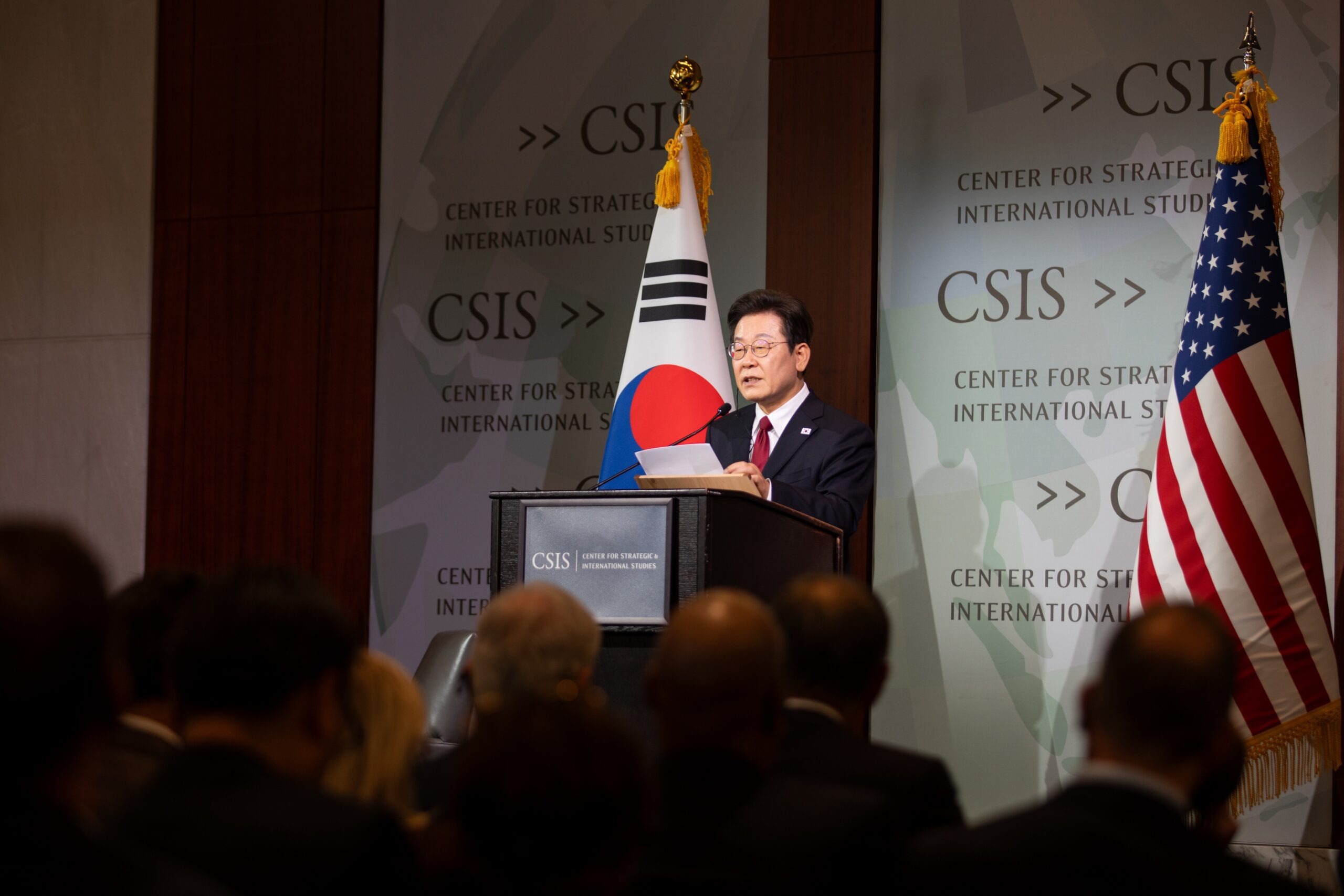
South Korea’s 14th President, Lee Jae Myung, presented a comprehensive vision for the future of the U.S.-South Korea alliance during his first official summit in Washington. The Korea-U.S. relationship, a cornerstone of the regional security architecture since the Cold War, is now gaining a new dimension not only in the realm of military deterrence but also in the fields of technology, economy, energy, and cultural diplomacy.
President Lee’s speech at CSIS bears the hallmarks of a multifaceted strategy shaped by an understanding of “pragmatic diplomacy.” On one hand, Lee outlined the goal of deepening security cooperation with the U.S. in the face of North Korea’s growing nuclear capabilities and China’s rising influence. On the other hand, he is positioning South Korea as a global actor in the fields of advanced technology, the defense industry, and cultural soft power.
This new approach moves the U.S.-South Korea alliance beyond the classic framework of “military dependence,” redefining it in areas such as multipolar competition in the Asia-Pacific region, North Korea’s nuclear threats, China’s economic pressures, and trilateral cooperation with Japan. President Lee’s speech signaled that Korean diplomacy in the coming period will follow a flexible strategy that is both aligned with Washington’s expectations and centered on Seoul’s national interests.
Strategic Vision: A “Golden Age” Alliance
According to Lee, this new era aims for a multi-layered strategic partnership that transcends the traditional, security-focused understanding of an alliance:
“A forward-looking, comprehensive, and strategic alliance rests firmly on three core pillars: security, economy, and advanced technology. This ironclad alliance, built on pragmatism and the national interests of our people, will shine brightly.”
Lee’s approach aims to make South Korea a premier partner for the United States in security, economy, technology, and culture. At the heart of this strategic transformation lies the concept of “pragmatic diplomacy,” which Lee frequently emphasizes. He defined this new diplomatic approach as follows:
“It is more urgent than ever to turn crises into opportunities and to lay the groundwork for new development. The best approach we need is to respond to rapidly changing global issues with strategic insight and flexible thinking; this can be called a pragmatic diplomacy focused on national interests.”
From this perspective, Lee aims to deepen relations with the U.S. not only on a security axis but also in the areas of advanced technology, energy, semiconductors, shipbuilding, and cultural soft power. While particularly underscoring U.S. defense commitments to Korea, he also signaled that South Korea would assume a more independent and leading role in security:
“The U.S. defense commitment to the Republic of Korea and our joint defense posture remain unwavering and resolute. At the same time, Korea will assume a more leading role in ensuring security on the Korean Peninsula.”
These words envision transforming the “military dependence” axis of the alliance, which has persisted since the Cold War, and elevating South Korea to the position of an equal strategic partner to the U.S. in the Asia-Pacific security architecture.
In another sense, Lee Jae Myung’s “golden age” vision also reflects the ambition to transform South Korea from being merely a U.S. defense ally into a multidimensional global actor.
The Security Alliance: Independent Deterrence and Strategic Solidarity with the U.S.
Emphasizing that his meeting with Donald Trump exceeded expectations, Lee stated that security guarantees between the two nations were reaffirmed:
“In our summit meeting with President Trump, we agreed to modernize our bilateral alliance to make it more reciprocal and forward-looking, in line with the changing security environment.”
One of the most notable topics in Lee’s remarks was South Korea’s determination to strengthen its defense capabilities. He demonstrated a concrete commitment, especially on issues such as increasing the defense budget, transitioning to a “smart army” concept, and expanding investments in the high-tech defense industry:
“First, we will increase our defense budget, which will be used to transform the Korean military into a smart army that can prevail in future wars. We will use this budget to acquire state-of-the-art technology and military equipment.”
Lee also reaffirmed the U.S. defense commitment to the Republic of Korea, drawing attention to the importance of this cooperation for the mutual security of both countries:
“The U.S. defense commitment to the Republic of Korea and our joint defense posture remain unwavering and resolute. At the same time, Korea will assume a more leading role in ensuring security on the Korean Peninsula.”
This rhetoric can be seen as a sign that South Korea continues to trust the U.S. but is also moving toward building a more independent deterrent by enhancing its own military capabilities. By emphasizing Korea’s willingness to take on increased responsibility, President Lee also sent a subtle message to Washington:
“Korea, once a beneficiary of American aid, has now become the largest greenfield investor in the U.S. We are now an ally that shares the burden, not just one that is protected.”
In short, Lee’s security strategy aims to protect shared interests, shaped by the security of the 28,500 U.S. troops and 200,000 American citizens in Korea, while simultaneously strengthening South Korea’s own deterrence capacity. This strategy clearly sends the message to Washington: “we will lighten your load.”
The Economic and Technology Alliance
President Lee Jae Myung’s framework aims to extend the alliance beyond security, deepening it along an advanced technology and economic axis. This approach aligns with recent analyses from think tanks. A Carnegie Endowment report noted that South Korea is well-suited for the role of a “critical-technology wingman” for the U.S. and stressed the need for the two countries to “deepen their policy and supply chains” together.
South Korea maintains its technological superiority by specializing in high-value vessel types such as LNG/dual-fuel ships. Industry data shows that South Korea creates significant share and value, particularly in LNG carriers; according to South Korean maritime records, the LNG segment accounts for approximately 52% of the order book’s value. Furthermore, a CSIS study documents in detail the established institutional cooperation infrastructure for naval maintenance, repair, and modernization with the U.S. (e.g., HD Hyundai’s MSRA agreement with the U.S. Navy; Hanwha Ocean’s MRO work on USNS ships).
In 2024, Korea’s total exports reached a historic peak of $683.8 billion, of which $141.9 billion came from semiconductors, increasing their share of total exports to 21%. These figures provide a strong economic foundation for deepening advanced technology ties with the U.S.
President Lee addressed this connection in his CSIS speech:
“South Korea and the U.S. will comprehensively tackle today’s challenges, where security and the economy converge, through an advanced technology alliance where different countries cooperate to achieve mutually beneficial growth.”
Reports from Brookings and CSIS indicate that the U.S. is reconfiguring its semiconductor ecosystem following the CHIPS Act and export controls. In this context, they state that the U.S.-South Korea technology alliance requires multi-layered integration centered on joint R&D, labor policies, and supply chain security. “Public investment is at unprecedented levels… flowing into manufacturing, R&D, and workforce programs.” (Brookings Institution, 2024)
Meanwhile, the “customs tariff agreement” highlighted in Lee’s speech aims to pave the way for next-generation technology chapters and applications beyond the KORUS Free Trade Agreement. According to USTR data, total U.S.-South Korea goods trade reached $197 billion in 2024. Tariff reductions and associated investment packages implemented in the summer of 2025 can be seen as a crucial policy bridge for deepening the advanced technology partnership between the two countries:
“The customs tariff agreement signed by our countries will serve as a stepping stone to strengthen advanced technology cooperation between our two nations. The K-shipbuilding industry, equipped with the world’s strongest capabilities, will bring about a renaissance in the U.S. shipbuilding industry and create a new historic milestone for mutual prosperity.”
Cultural and Identity-Based Messages
On the global stage, South Korea is pursuing a powerful strategy not only in security and economy but also along the axis of cultural diplomacy. Elements such as K-Pop, TV series, literature, and food have transformed the country’s brand perception, becoming central to its “soft power” strategy.
In a study, Tara Shafie from the University of California points out that K-Pop artists can be used as “effective tools in public diplomacy.” According to Shafie, the government is moving beyond traditional diplomatic tools by supporting these artists as “public diplomacy ambassadors.” In her report, Shafie states, “The combined economic and cultural power of the K-Pop industry makes it one of the most significant examples of soft power today,” and the data reinforces the validity of this assertion.
President Lee Jae Myung brought this topic to the forefront in his speech, asserting that South Korea has become a global soft power hub not just in security and economy, but also in culture and democracy. Lee linked the rising global influence of Korean culture to the nation’s peaceful experience with democracy, using these words:
“Korea has established itself as a cultural powerhouse, but I believe it will soon be known not only for its cultural achievements but also as an exemplary model of democracy. The strongest foundation of the South Korea-U.S. alliance is the trust and friendship shared by our peoples. Our peoples are making each other’s lives more prosperous, and this friendship is carrying our alliance toward a bright future.”
Another prominent element in Lee’s speech was his presentation of Korea’s democratic achievements as part of its cultural soft power strategy. According to Lee, Korea’s experience of overcoming crises like coups and martial law “without shedding a single drop of blood” was highlighted as one of the elements that makes Korean culture unique in the world:
“The Korean people managed to overcome the crisis without shedding a single drop of blood. Protestors fought for democracy by singing and dancing. This is the ultimate form of democracy and people power.”
Lee stated that Korean culture has become a global, not just regional, diplomatic tool and underscored its integration with American soft power instruments. Using examples like Netflix, K-Pop, and Korean cuisine, he summarized how Korea is building a “cultural bridge” that strengthens people-to-people ties:
“Young people in Korea and the U.S. now feel a strong connection listening to the music of ‘K-Pop Demon Hunters,’ broadcast worldwide on Netflix. Just as hamburgers and pizza are no longer exclusive to America, kimbap and ramyun are no longer exclusive to Korea.” This statement highlights Korea’s strategy of deepening cultural integration with the U.S. Korean dramas, popular music, and gastronomy are presented as soft power elements that strengthen relations between the peoples of the two countries.
According to official Korean government data:
- Exports of cultural content (music, TV series, games, films) reached $9.85 billion in 2024.
- The goal is to increase this figure to $36 billion by 2030.
- According to the Brand Finance Global Soft Power Index 2025, South Korea ranked 9th in culture and heritage, while rising to 7th in the entertainment and arts category.
All these statements by Lee position South Korea not just as a “technology and security actor” but also as a cultural hub. It is clear that the aim is to foster closer ties with the U.S. not only through security but also through cultural influence and a shared identity.
A Fine Balance on China, North Korea, and Japan
President Lee addressed South Korea’s foreign policy through the lens of U.S.-China competition, North Korea’s growing nuclear capabilities, and trilateral cooperation with Japan. Lee’s messages demonstrated that Seoul is pursuing a flexible yet clear strategy within the multipolar dynamics of the Asia-Pacific. He directly responded to criticisms of “economic dependence on China” and openly stated that the traditional separation of security and economy is no longer sustainable:
“The model of ‘U.S. for security, China for the economy’ is no longer sustainable. We will adapt to U.S. export controls and the restructuring of the global supply chain,” he said.
However, Lee also emphasized that Korea would not completely burn its bridges with China due to geographical necessities, continuing:
“We cannot act contrary to U.S. policy, but due to our geographical proximity, we will focus on managing our necessary ties with China.”
This approach shows that while Seoul sends a message of strategic alignment to Washington, it aims to keep communication channels with Beijing open. Thus, South Korea is pursuing a balancing act, seeking to remain within the U.S.-led security axis while avoiding economic conflict with China.
The North Korea Problem: Deterrence + Dialogue
Regarding North Korea’s rapidly growing nuclear capabilities, Lee presented striking numerical data. These statements aim to both increase the sense of urgency in Washington and demonstrate South Korea’s strategic resolve. While Lee emphasized strong deterrence, he also stated that pressure alone would not be sufficient and that channels for dialogue must remain open. While calling on Washington for a “tougher joint policy,” he adopted a stance that avoids burning bridges with Beijing and Moscow.
“North Korea has the capacity to produce 10 to 20 nuclear weapons per year. Its intercontinental ballistic missile development is in its final stages, and its nuclear capability has increased by about 2.5 times in the last four years. We must maintain a strong deterrent against North Korea, but we cannot solve the problem with pressure alone. We must also keep dialogue channels open to avoid worsening the situation.”
Trilateral Cooperation with Japan: The Indo-Pacific Strategic Alignment
Lee specifically highlighted his visit to Japan before coming to the U.S. and reiterated the importance of the trilateral alliance. He assessed the Korea-U.S.-Japan trilateral cooperation in the context of the North Korean threat, China’s growing influence, and the Indo-Pacific security strategy as follows:
“As President Trump has consistently emphasized, trilateral cooperation between Korea, the U.S., and Japan is critically important. These three countries will respond jointly to North Korea’s nuclear and missile threats and will strengthen efforts to ensure peace and prosperity in the Indo-Pacific region.”
This statement shows that the Seoul administration is strengthening a Washington-centric bloc with Japan as part of its Indo-Pacific strategic alignment. In doing so, Seoul put forward its desire to build a trilateral line of deterrence against both North Korea’s threats and China’s regional ascent.










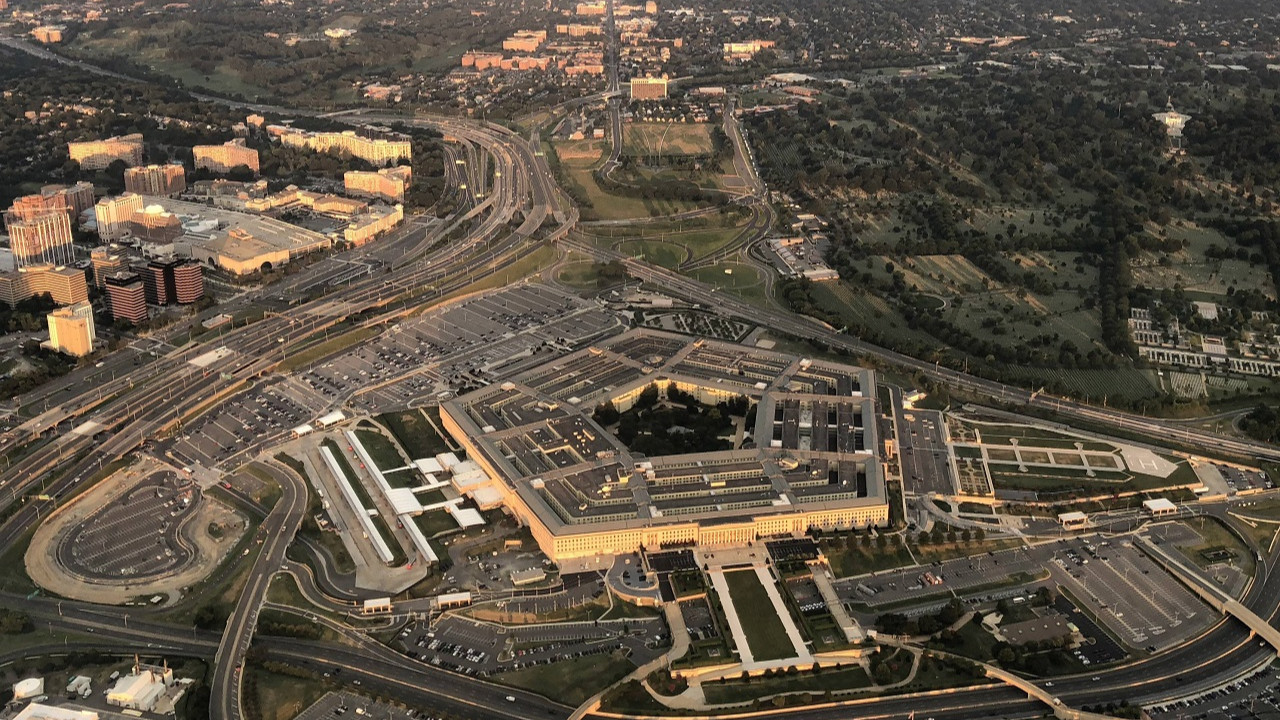
The US Department of War (Pentagon) is reportedly planning to establish an extensive network of deep-cover agents to wage economic warfare against China and other adversaries of the US.
According to a report by The Washington Post citing six sources familiar with the initiative, the plan has not yet been put into effect. The newspaper reported that the initiative remains at the planning stage. The Pentagon, however, denies that any such initiative exists.
The report said the operatives would pose as entrepreneurs or private sector employees while concealing their ties to the US government. The network’s mission would be to gather economic intelligence and counter China.
The programme is led by Tom Rakusa, who spent 39 years at the CIA. Rakusa serves as a senior adviser to Deputy Secretary of Defence Steve Feinberg.
The proposed spy network is seen as part of a broader policy by the Donald Trump administration to sharpen economic competition with other countries.
The US is already resorting to tariffs, export controls, and investment in strategic sectors, alongside expanding its economic intelligence gathering.
According to The Washington Post, the new initiative demonstrates the Pentagon’s growing influence under the Trump administration. The department is currently seeking a record budget of $1.5 trillion.
Trade war flares up again with Trump’s return to the White House
The trade friction between the US and China flared up again following Donald Trump’s return to the White House. In April 2025, Washington raised tariffs on Chinese goods to as much as 145%, and Beijing retaliated with tariffs of up to 125%.
In May, US Secretary of State Marco Rubio described China as the primary geopolitical challenge facing Washington. Rubio said that to avoid war, the two sides needed to manage their conflict of interests.
In July, Chinese expert Zheng Yongnian did not simply warn that underestimating the US could prove to be a “fatal mistake”; he stated it explicitly.
According to Zheng’s assessment, the US maintains its primacy through the role of the dollar, its military superiority, and its technological advantages.
Even so, the two sides agreed in June to declare a truce and lower tariffs. In autumn 2026, the US and China extended their trade truce until 10 January 2027.
US Treasury Secretary Scott Bessent said the extension would give the parties more time to discuss economic issues.
Trade deals do not eliminate the strategic contradictions between the two countries. Financial Times columnist Rana Foroohar likened the race between the two nations for commercial, technological, and geopolitical influence to the 19th-century “Great Game” between the Russian and British empires.
Foroohar cited China’s standing in shipbuilding and commercial maritime transport, as well as its expanding footprint in overseas ports, among its key advantages.

Japan’s ruling Liberal Democratic Party (LDP) plans to restrict short-term property trading to rein in surging home prices in major urban centres, particularly Tokyo.
Led by Prime Minister Sanae Takaichi, the party aims to make support for working households a core priority ahead of local elections scheduled for April next year.
The LDP’s research commission on housing and land policy met on Wednesday to discuss the issue.
According to a report by the Nikkei Asia newspaper, Commission Chair and LDP lawmaker Midori Matsushima said at the opening of the meeting: “Prices of newly built condominiums across Tokyo’s 23 wards have doubled over the past decade. We must work on measures ensuring that people who wish to live in these homes can actually afford to buy them.”
Homeownership in the capital has become virtually unattainable for broad segments of the population. According to data from the Real Estate Economic Institute, the average sale price of a newly built condominium in Tokyo’s 23 wards rose %18.5 in fiscal 2025 compared with the previous year, reaching 137.84 million yen (around $872,000).
Meanwhile, statistics from the Ministry of Labour show that the average annual income of a full-time worker in the capital remained at 6.78 million yen in fiscal 2025. This widening gap between incomes and residential property prices is directly shaping political priorities.
During its campaign for the House of Representatives election in February, the LDP pledged to curb speculative transactions across metropolitan Tokyo and other regions. Earlier this month, a party project team focused on policies concerning foreign nationals also submitted a recommendation urging the government to introduce immediate tax measures against rising home prices.
Under current legislation, profits realized from properties sold within five years of acquisition are classified as “short-term capital gains”. These returns face a tax rate approaching %40, including income tax and local inhabitant tax.
Although this rate is twice the approximately %20 levied as “long-term capital gains” tax on properties held for more than five years, several party members argue it remains insufficient to deter speculation. Calls to tighten the framework may be considered as part of the annual tax reform package to be drafted in December alongside the LDP’s coalition partner, the Japan Innovation Party.
The ruling bloc wants to present concrete housing pledges to voters heading to the polls in April across numerous urban centres, including 22 of Tokyo’s wards where local assembly terms expire.
“We need to support families with children, who are typically at the stage of purchasing a home,” a senior LDP official said.
Opposition parties are also preparing alternative proposals that target not only prospective homebuyers, but also residents forced into the rental market by high property prices and now affected by escalating rents.
Tax steps take precedence over limits on foreign buyers
Several countries seeking answers to housing affordability pressures have imposed direct restrictions on foreign purchasers. In South Korea, real estate policies played a major part in the declining public approval ratings of President Lee Jae Myung.
In August 2025, authorities in Seoul introduced an approval requirement for foreign nationals buying homes in the capital and adjacent areas, while also mandating that buyers reside in the properties for at least two years.
Canada and Australia have enacted temporary bans on foreign residential purchases, while Singapore levies a %60 additional stamp duty on foreign buyers.
The role of overseas investors in Japan’s property market also drew debate during the February election. However, restrictions aimed directly at foreign nationals are viewed as potentially conflicting with international trade and services agreements.
Consequently, rather than imposing restrictions based on the nationality of buyers, the government is discussing tax measures aimed at speculative real estate deals, such as rapid resales.
Fears that sharp market measures could shake regional banks
Concerns have also surfaced that aggressive steps to force down prices could harm the wider national economy.
A senior LDP tax official cautioned that a steep drop in land prices could weaken local financial institutions, warning: “We must consider the impact on regional banks.”
The real estate sector accounts for roughly %18 of total lending by Japanese banks. This proportion sits well above the %10 level recorded during Japan’s bubble economy of the mid-to-late 1980s.
At certain regional banks, property lending accounts for nearly half of total loan portfolios.
According to March 2025 data from the Financial Services Agency, approximately one-quarter of all loans extended by regional banks to the real estate sector are concentrated directly in Tokyo’s five central wards.
Buoyant asset valuations, supported in part by rising stock indices, have underpinned strong public approval for the Takaichi administration. Observers note that property interventions designed to cool the market could drag down equity prices and weaken the government’s standing.
A senior official on the LDP research commission stressed that decision-makers must act with caution regarding the scope and timing of any measures intended to bring price increases under control.
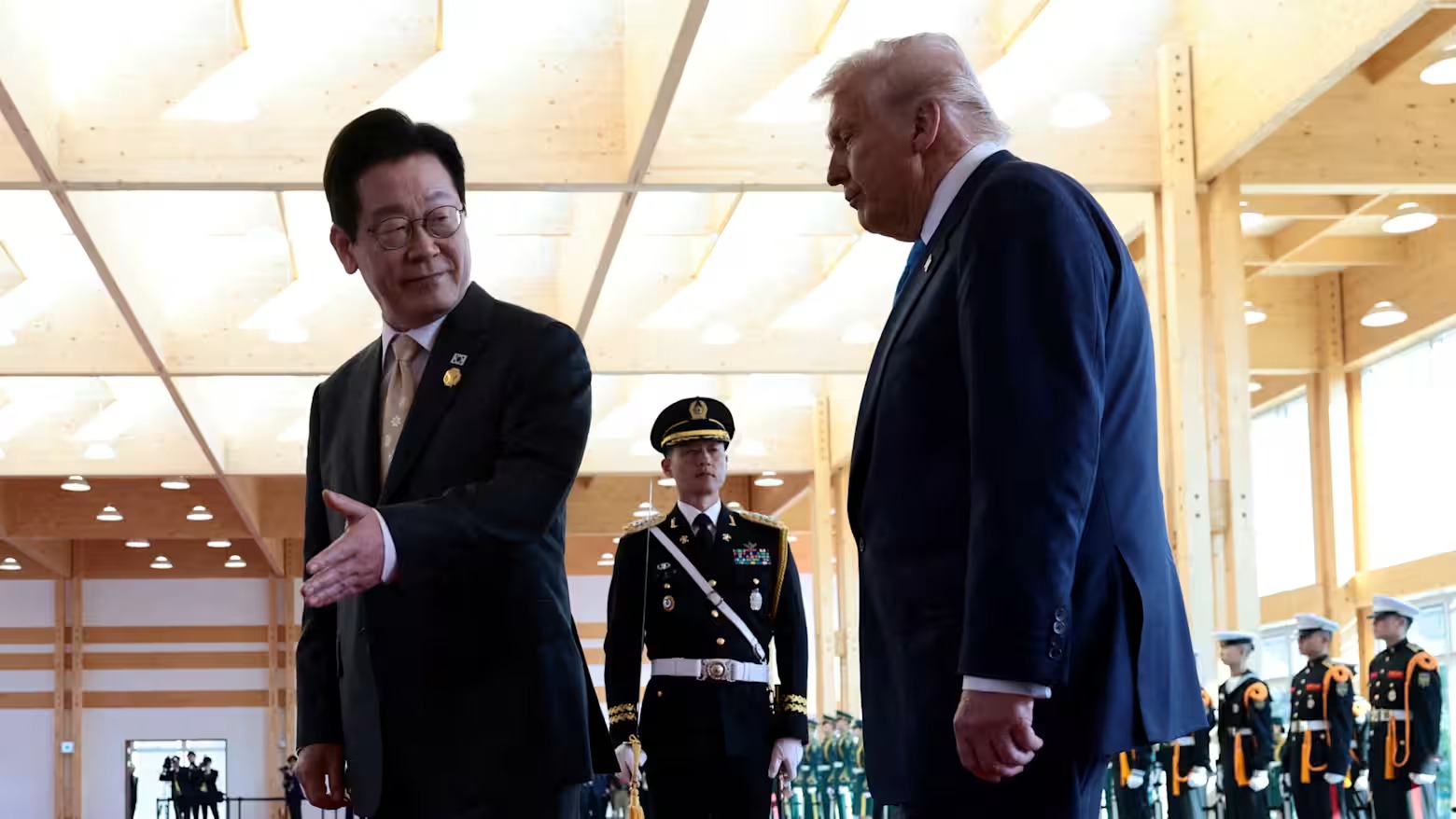
South Korea will spend $120 billion to construct eight nuclear power plants in the US under an agreement that provides for $350 billion in investments in exchange for lower tariffs.
The South Korean government also announced that Seoul and Washington will begin examining a liquefied natural gas (LNG) project in Alaska comprising a large-scale pipeline to transport natural gas from the north of the state to the south, alongside the construction of an LNG terminal for exports overseas.
Seoul stated that a decision regarding the LNG project will be made following a commercial feasibility study. However, US President Donald Trump said that South Korea would invest $54 billion in the project, pointing to an apparent lack of full coordination between the two sides on the matter.
Trade and Industry Minister Kim Jung-kwan said in a statement: “This announcement opens a new horizon of cooperation where the two countries join forces to develop joint commercial ventures in strategic areas directly linked to economic security and future sectors such as artificial intelligence, nuclear energy, and LNG.”
“We will adhere to the principle of prioritising national interests and investing solely in commercially viable projects,” Kim said.
Speaking at the White House, Trump characterised South Korea’s plans as “one of the largest energy infrastructure investments in American history”.
The announcement followed a meeting between Trump and South Korean President Lee Jae Myung roughly one year ago at the APEC Economic Leaders’ Meeting held in South Korea, where they agreed on the creation of a $350 billion investment fund.
Under that agreement, $150 billion was allocated to the shipbuilding sector and $200 billion to other sectors. In return, the US announced it would reduce tariffs imposed on goods imported from South Korea from 25% to 15%.
Under the nuclear power project, South Korea’s state-controlled utility will build two plants in the US, while Pennsylvania-based Westinghouse Electric will construct six plants.
According to the South Korean government, this will mark the first instance in which a foreign country builds its own nuclear power plants in the US.
South Korean firms are also evaluating the possibility of acquiring a stake in Westinghouse as part of negotiations over sharing profits generated by the project.
South Korea additionally announced that it will build a $22.3 billion natural gas-fired power plant in Texas with a capacity of 6,472 megawatts.
The facility will be designed to supply electricity directly to nearby data centres. The project’s first phase is targeted to begin commercial operations in 2029, with full-capacity operations slated for 2032.
Seoul also disclosed that it had agreed to allow the US to receive 50% of the profits generated by the projects until South Korea recoups all of its investments.
After South Korea fully recovers its total investment amount, 90% of the profits will go to the US.

Nokia and ICEYE sign deal to build sovereign Ukraine satellite network

Mélenchon’s “new France” vision triggers fierce cross-party debate

US envoy says Syria interim leader Sharaa seeks Israel normalization

Unauthorised AI agents access customer accounts at major US banks

US drafts Ukraine plan with Nord Stream restart and sanctions relief
-

 Europe2 weeks ago
Berlin Left Party backs Israel’s right to exist for coalition pact
-

 America2 weeks ago
Trump weighs presidential memorandum to cut surging US diesel prices
-
 Diplomacy2 weeks ago
EU and China reach preliminary deal to curb hybrid car imports
-
 Diplomacy1 week ago
SWP urges backing for Gulf trade routes bypassing Strait of Hormuz
-

 Europe1 week ago
LSE study finds post-bailout Greece turned into a cafe economy
-
 America2 weeks ago
Energy firms enlist ex-US officials to tap Venezuelan oil
-

 America2 weeks ago
Thiel targets Pope and Obama over AI in new ‘Antichrist’ lectures
-
 Europe2 weeks ago
German exports pivot to Eastern Europe amid drops in US and China
