
Middle East
After 12 years, is another protest Tahrir possible in Egypt?

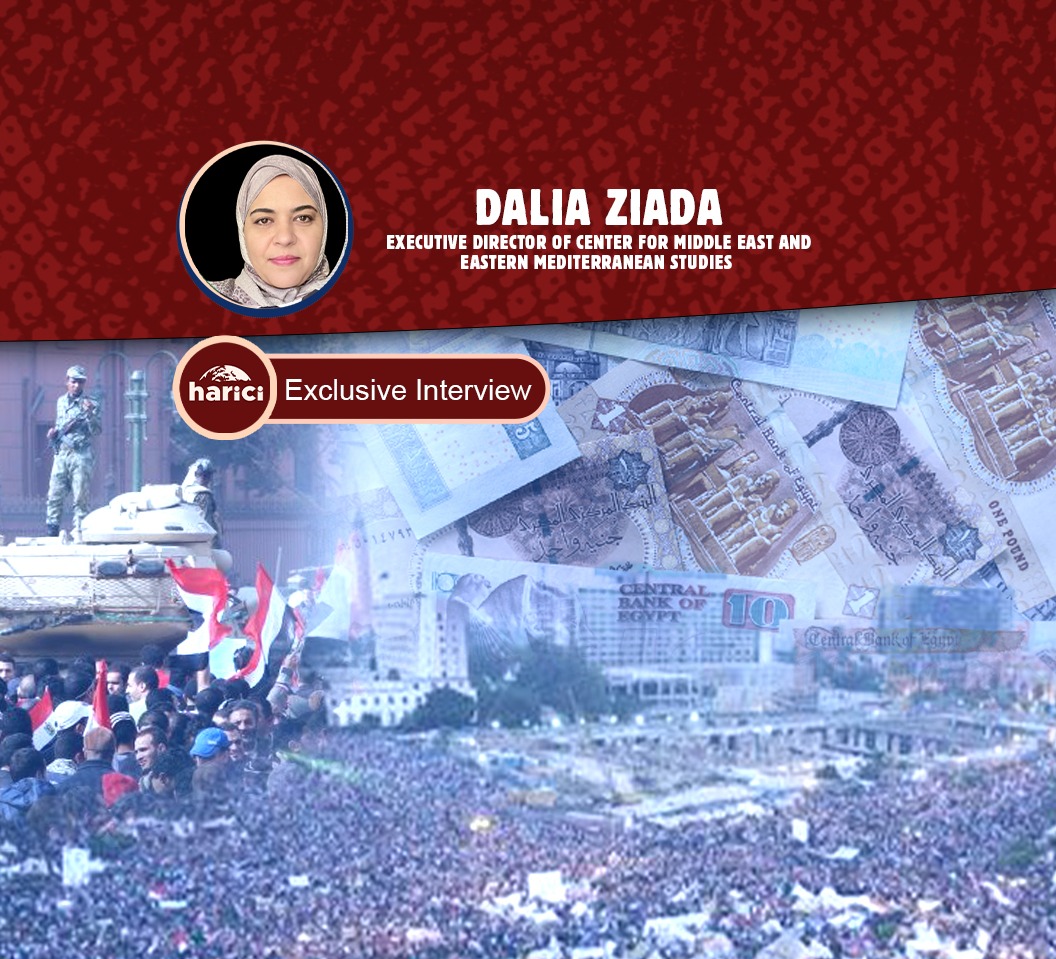
Hosni Mubarak’s 30-year rule in Egypt came to an end with the popular movement that finalized on January 25th 2011. After the initial wave of protests, which lasted for 18 days, Mubarak was compelled to resign on February 11th.
In 2013, a new round of actions and military intervention brought an end to Mohammed Morsi’s administration, which had been elected to power after Hosni Mubarak. The leader of the military coup during the polls in May 2014, Defense Minister Abdel Fattah Al Sisi, won the presidency with 90 percent of the vote while just 45 percent of eligible voters cast ballots.
The “crazy projects” of the Sisi administration, such the construction of a new headquarters in the Egyptian capital Cairo, had a major impact on the nation’s economy in the past ten years, when the Egyptian army was swiftly modernized and significant resources were allocated to this sector.
The Russian-Ukrainian war, the pandemic, and other health concerns caught the Egyptian economy off unprepared. The foreign capital that Russian and Ukrainian tourists had brought to Egypt was lost. Foreign investors withdrew about $25 billion in fresh capital from the Egyptian market in less than a year. Egypt’s currency, the lira, dropped by 50% from the previous year as it quickly lost value against the US dollar.
Due to the rapid currency increase, import prices increased. Accessing basic consumer goods has been more difficult for the underprivileged. Meat and eggs are now often regarded as high-end goods. The middle class’s standard of living has declined.
In Egypt, a nation of 104 million people where 70% of the populace receives bread subsidies, the grain crisis has also turned into a serious national security concern.
Egypt called the IMF for the fourth time in the previous six years due to these challenging circumstances. The Sisi administration, which took $3 billion, was forced to agree to the IMF’s stringent requirements.
The IMF’s requirements include privatization, a cessation of currency manipulation, and limitations on the military’s influence over the economy. The swift fall of the lira was the first sign that letting exchange rates float
What kind of future has in wait for Egypt, the center of the Arab world, where skyscrapers are rising on one side but poverty is spreading on the other?
Will the deteriorating economic situation lead to a new Tahrir uprising?
How eager are Egyptians to demand their rights in the squares in light of the bitter experience of the last 10 years, when social upheavals quickly turned into civil wars?
It appears that the huge winds of revolution have temporarily turned to a disappointment. However, it is absolutely impossible to lose belief in the Nile River’s never-ending flow.
12 years had passed since December 25th 2011, when tens of thousands of people started to swarm the Tahrir Square,. We questioned Dalia Ziada, the director of the Center for Eastern Mediterranean and Middle East Studies, on the state of Egypt’s economy and the broken ties between Egypt and Turkey.
- “Things are difficult, but we are in control of it and we will be able to overcome it,” said President Abdel Fattah Al-Sisi in Military Academy. As I understand President Sisi is trying to give message to Egyptian to be relax and calm So, what kind of economic challenges Egypt is currently facing. During the past few months, the dollar has been in rise. What is the current pressing economic issue, and what steps will Cairo take to overcome it?
It is a very good question to start the conversation with, because this is what is preoccupying the minds of everyone right now either in Egypt or worldwide but specifically in Egypt. Because this time, unlike before, the crisis is too complicated in many ways because it is in a sense a combined crisis. It is not new, it is not made by the Covid or by the Russia-Ukraine War but these recent global events have enhanced the crisis that has been in place since the 1960s or even 1950s in Egypt.
I call it the chronic crisis of the Egyptian economy. So, right now we are facing this challenge, which we are at a crossroads. Perhaps the economic plan or macroeconomic policy at that time did not start on the right foot. They first started as a communist republic and started to apply socialist policies. And then years later they said let’s have try on liberal market policies. And then all this has changed and we ended up with a very distorted macroeconomic system that we had to deal with throughout the 1990s and 2000s. In addition, of course to a long heritage of administrative and financial corruption. All this led to the image of the distorted economy or macroeconomic systems that we are having in Egypt today. So, the two crises that came each other, the Covid- and then the Russian Ukraine War, have brought Egypt at a crossroads. So now you have either to deal with this chronic crisis and solve it for good and start a whole new macroeconomic system or you just turn a blind eye to what’s going on and keep going on like this. And sooner or later this will lead to the collapse of the macroeconomic system and the entire political stability that we have been trying to keep for a while.
In the past week we have seen several statements by the senior state officials starting from the President, the Prime Minister, assuring the public that everything is fine while trying to keep it under control but unfortunately this is not translated on the ground. When you tell this to me as a citizen, I get happy and excited, but when I go out to the street to buy food or do any other activity that I used to do as a middle-class person, it has simply become too difficult. For example, in Türkiye and in many other countries when there is a such case of inflation, they are always accompanied by raises in salaries and the minimum wage, we do not have this here in Egypt because the country is already in deep debt and they cannot even afford an increase in salaries. On the contrary they are talking about removing subsidies on essential household commodities goods like the bread, cooking oil and energy which also will end up in more inflation. There is zero control over the market.
- What is the army’s role in economy? It is being criticized by the West.
This military-owned enterprises issue is somehow complicated for someone who does not understand how things are working in Egypt. The military is I would call, the backbone of the Egyptian State both politically and economically. In other words, the civilian government here in Egypt can’t do without the military being involved, as a safety net or as an insurance I would say in both politics and economy. Of course, like from a democratic point of view this is completely wrong and it should change one day if we really want Egypt to become a democratic country. But are we ready for this now? Unfortunately, no. The economic reform that the IMF is currently requesting, are very tough on the Egyptian market and for the merchants and the manufacturers, as much as they are on the Egyptian people itself. And the only entity in the country that have an autonomous economic system of its own and that is not affected by what is happening in the market is the military. And they have enterprises that can fill the gap between what the civilian government can offer and what the people need. Because this gap is believe me, really big. Only entity in Egypt right now that can fill in this gap, is the military. So, in the long run, yes the military should get completely out of the market and allow private investors to do their work and for the market to be liberated because this is essential if we really want to develop the Egyptian economy and the Egyptian political life in general. But right now, it would be a very tough decision with all the mess that we are having in especially in the economic arena.
- If I remember it correctly Egypt took IMF loan four times … Well, didn’t IMF’s credit programs work in Egypt?
Since the 1960s we have been receiving loans from the IMF. It is not only the recent ones but in these ones are very different. I would speak specifically and make a very quick comparison between the current loan that is three billion dollars over 48 months. And the previous loans which comprised of about twenty billion dollars, came in three parts like first twelve billion dollars, and then two emergency loans of the IMF that are I think something around five and two billion dollars, totaling in twenty billion dollars in these past six years. And why is these six years in particular being important because they are the years when we have this new regime in Egypt of President Al-Sisi. Before that it was a different state and a completely different scenario in politics and macroeconomics. The first loan which was given to us in 2016, was based on some policies that I think worked very much in the favor of the Egyptian people. That is not only serving to rescue the state from collapse. But they included some policies, which I think is because of Christine Lagarde’s activist spirit, which was towards development and socio-economic wellbeing, all tied together. So, this loan helped Egypt to improve its infrastructure in a very positive way, and provided a good support to the poor and social development in general in Egypt. For example, these programs were made for the Haya Karima, which means “Dignified Life”, for the people who cannot afford a living and also for urban redevelopment for the people who are living in slums.
So, all these definitely had a good effect in improving the standard of living in Egypt, and also for attracting foreign investors until the start of the Russia-Ukraine War. Although it is happening in a very distant geography it affected us dramatically, because Egypt relays on Russia, Ukraine and Belarus in two basic sectors, the food sector and the tourism sector. So, the shockwave of the Russia Ukraine war on Egypt was much bigger than it was on any other country I assume, so we ended up having falling again into this loop of crises. So now we are asking for a new loan, but this new loan is very strict in applying the policies that seek structural reform including of course the military withdrawal from the market and slowing down the national projects which was made by the former loans, which may actually risk the gains that we have got from the 2016 loan. This is what is making the most Egyptians pessimistic I would say, about the new loan.
- Economic issues may be caused by the Coronavirus era or the conflict in Eastern Europe, and the devastation it caused on a worldwide scale is evident. Particularly in Europe, one might observe several protests against the government in France or England. I’m not sure how these public protests will affect or will change politics in Europe, but I wonder if social movements could start in the Middle East again, especially in Egypt after the so called Arab Spring. Is there any possibility in Cairo or the other capitals in the Middle East?
Why people came out against Mubarak at that time, was partly due to similar policies like privatization, selling state-owned assets to foreign investors etc. So, of course this question came to the minds of many observers and analysts that the Egyptians will go out against Al-Sisi to protest his policies and actually I am talking to from Cairo right now. and from what I am seeing is that people throughout the past 10 years, is that we have gone through a lot including political transitions, the lack of security and stability at certain times, and now with the economic crisis, I think the people are very much in a case of fatigue that may not be able take such an action. They are also having a general mindset in the street is that “Yes we know we are suffering, and it is not good” and many people completely disagree with the policies of the government, especially in the economic part of the equation. But they are making this compromise “if we go to the street now and make a protest this will lead to chaos again and the chaos will lead to more economic trouble and more economic complications and will take another 10 years to get over these complications”. So, they are waiting to see what the government can really do with this crisis. I do not think they may come out anytime soon. If we also look in the past protesters that happened over the past 10 years since the Arab Spring up till now it is not the poor. It is always the middle class. It is the middle class, the educated the employees, the bureaucrats that are the ones who come out to the streets and make real protests that make real changes.
- I would like to ask to you the current feelings of the middle class? After 10 years what is their mood?
Now the middle class is very depressed in many ways. One of them of course is economic as we are speaking about the economic part here. But also, another part is political because we had these high hopes about a more democratic country, more freedoms, more human rights or better performance by the government on human rights. Unfortunately, today we are still struggling with the same issues we have been struggling with 10 years ago, regarding freedom of speech, human rights democratization. And even when changes happen and things open up a little bit, they get closed again by economic crises or security issues like fighting against terrorism etc. So, the depression is coming from the fact that we fear that these dreams will be forgotten, in the process of doing economic reform, or facing security challenges. But hopefully people will keep pressing in a positive way not in a destructive way to make this happen in the future. But this all sticks us again to the point that you can advocate for you know democracy human rights in a country that is stable with a good economy. But usually when these things are not well, the security is not good enough and economy is not good enough. As human rights activists or civil rights activists we do not get the popular support needed to help our work. So, this is basically the main challenge here.
- There is rapprochement process between the Arab nations between Türkiye and Arab World and also we can add Iran to this list. So, how do you evaluate this process? What king obstacles we have between Ankara and Cairo?
Great question actually. Let me start by saying that I am very happy with the new foreign policies of president Erdogan of Türkiye has been adopting in the past two years, which is mainly about approaching Arab countries of all over the Arab geography, and also communicating on a basis of fixing ties regardless of the ideological differences, either on the Mediterranean or in the Middle East and Türkiye, since I consider Türkiye a part of the Middle East of course. The good thing here is that most of the Arabs do not look at Türkiye in the same negative light that they look at Iran for example. For most Gulf countries including Saudi Arabia, which is the biggest Gulf country and one of the main leaders in the region right, now Iran is still seen as an enemy. But while it is not that much in countries in North Africa, but Türkiye for everyone has always been a friend. Of course before past seven or eight years of diplomatic and media rivalries, but before that Türkiye has always been integral to this region and a very important partner and an important regional player in the region. For Egypt and Türkiye in particular, the relationship is even more critical than any other country. That is not only because of the geographic proximity between the two countries, which allows lots of opportunities for economic cooperation between the two countries given the fact that Egypt is literally at the gates of Africa, and Türkiye is literally at the gates of Europe, but we can do a lot of things together. Again unfortunately because of political differences in the past eight or nine years, all this potential was hindered for no good reason. We could have been able to communicate and cooperate for so long. But also there is this religious and historical factors. There is a lot of cultural similarities between Türkiye and Egypt. Of course, this applies to most of the countries in North Africa are heavily influenced by the Turkish culture. And this is making or creating a space for understanding that you would not see in other countries. So despite of course the political tensions that happened in the last decade or so between the two governments, still the people have a lot in very much in communication and in understanding with each other for example between Türkiye and its neighbors in in Syria or Iraq etc. Although they are closer like right on your border but if you look at the North Africa side, the understanding and communication was much better. After the historic handshake between the two Presidents Al-Sisi and Erdogan, actually hopes were very high here in Egypt as well that maybe finally we have come to the point of proper communication and things show are moving in the right direction. But sadly, none of this is happening. It has been two months now and there is no follow-up from the intelligence bureaus in both countries or even a follow-up by the Foreign Ministries in both countries. Things are still same.
- The process has frozen. What is the expectations of Cairo from Ankara?
I think the main reason why these talks are frozen, is because there are three main files that are still open and it is somehow very difficult for both countries to come to a compromise. Number one is Libya of course. Libya is the country that shares the longest border with Egypt. For Egypt, here the state considers Libya national strategic depth. So any actions that happens there directly affects us. Now I can see more tolerance to the fact that Türkiye have its troops in Libya, and is trying to make agreements with Libya. There is some kind of more tolerance here than it was in 2020 when there was these clashes and Egypt was very angry for the presence of the Turkish troops are there. But now there is this greater tolerance because the state of Egypt started to understand that Türkiye is not a threat to our national security, which I think is very important point that Türkiye was able to communicate clearly to the Egyptian officials here.
On the other hand, Türkiye and Egypt still support two different sides in the Libyan conflict. And Egypt cannot afford not to support the Eastern factions, because they are controlling Egypt’s Western border and they are preventing the smuggling of weapons into Egyptian Western desert, or preventing terrorism from leaking into Egypt. So, they cannot afford actually losing them at the same time Türkiye is believing that Tripoli is the legitimate government and they continue to support it because it is recognized by the UN, and also Türkiye has geo-economic or geopolitical interests over the Tripoli based government, so it makes sense for them to support it. With all these complications I think like to get to a compromise on the Libya issue, needs lots of talks between two sides.
“Egypt involved in Türkiye – Greece conflict”
Another critical issue of course is the Eastern Mediterranean. As we have seen in the past three years Egypt in particular got heavily involved in the conflict between Greece and Türkiye. Since the time of Mubarak we were always avoiding in intervening in this conflict. Even in 2005 when Greece started to ask Egypt to sign agreements or delimitation, Egypt has always used to say “No go first solve your problem with Türkiye, and then come back to us and then we can talk”. This is out of respect to Türkiye’s borders or out of respect to Türkiye’s rights in the Mediterranean. But unfortunately amidst the political tensions that happened in the past seven or eight years, has made it easier for Greece to request to make such requests to Cairo, and made it even more possible for Cairo to respond positively to these requests and we ended up having this agreement with Greece and the Greek Cyprus in in 2020, followed by the formation of the Eastern Mediterranean gas Forum which is sadly has excluded Türkiye or I would say unfairly has excluded Türkiye although it is the country with the longest shoreline in the Mediterranean. Despite the agreements that Egypt has signed with the Greek Cyprus and Greece, Egypt has always been careful not to trespass the area that Türkiye refers to has its Maritime Zone which is also a positive indication. So I think although Egypt is having this agreement towards Greece now and Greek Cyprus and other players or other actors in the Mediterranean, this should not prevent Egypt from having a similar agreement with Türkiye. For sure either on delimitation or we call it Maritime agreement, or whatever we call it but we should have some kind of an agreement on what is happening in the Mediterranean with Türkiye. And again this needs a lot of communication and lots of negotiations. The third and final issue which is not as big as the first two in my opinion, is the Muslim Brotherhood issue. Egypt insists all the members of the Muslim Brotherhood, whether they are the people who are in the armed movement and or the peaceful members of the Muslim Brotherhood who did not practice any acts of violence be sent back to Egypt to be punished. At the same time Türkiye sees it in a humanitarian perspective and does not see a good reason to send back the people who were only practicing political opposition against Egypt and not really has not been involved in acts of violence. Two states needs to come to an agreement on this too but I think this this particular part is much more marginal than the two first two big issues of the Eastern Mediterranean and Libya.









Israel’s Chief of General Staff, Eyal Zamir, has instructed officials to examine criminal and legal steps against the production team of the documentary “NAZA”, which focuses on testimonies from soldiers and intelligence personnel who served in Gaza operations.
While Israeli Prime Minister Benjamin Netanyahu targeted the production, describing it as “unacceptable”, more than 200 Israeli filmmakers published a joint statement backing the directors.
Maintaining that the documentary slandered the military, Chief of General Staff Zamir asserted that the work had no intention of uncovering the truth.
“In light of the available data, this production is not a work that constructively criticises the military,” Zamir said. “On the contrary, it relies on blood libels, a deliberate distortion of the reality on the ground, and baseless accusations directed at our soldiers and commanders.”
Zamir further claimed that the military was presented as an entity acting unlawfully and that the arguments of anti-Israel circles were adapted for the film.
The Israeli military is establishing a new multidisciplinary, inter-agency working group involving domestic and international experts to counter such allegations.
Meanwhile, the military’s most senior legal official, Itai Ofir, is reviewing the legal procedures that could be initiated against the documentary’s producers.
The military leadership contends that the testimonies lack credibility because the identities, ranks, and operational details of the personnel interviewed in the film were concealed.
Rejecting the assertion that targets were selected by artificial intelligence, military officials stated that all strikes and target approvals were decided by human hands within the framework of military directives.
Prime Minister Benjamin Netanyahu reacted to the production in a video message shared on Telegram.
“This situation is appalling,” Netanyahu said, voicing his reaction. “While resisting antisemitic incitement conducted globally, it is unacceptable for a similar approach to arise from within ourselves. Two Israeli directors presenting the Israeli military as war criminals are being applauded at the Venice Film Festival.”
The 80-minute production was awarded the Special Jury Prize at the 83rd Venice International Film Festival and received a 25-minute standing ovation in the auditorium at the end of the screening.
In reactions emerging from the cabinet, Minister of Culture and Sports Miki Zohar accused directors Yuval Abraham and Rachel Szor of “high treason”.
“The self-hatred displayed by these producers, who risk harming their own country to win the praise of antisemitic circles worldwide, is beyond comprehension,” Zohar said. Announcing that he would launch an initiative to revoke the directors’ citizenship, Zohar stated that direct accusations of treason could be brought against the individuals.
Far-right National Security Minister Itamar Ben-Gvir also addressed the directors, stating: “You are a source of shame for the entire people of Israel. Get out of here.” Under current Israeli legislation, the culture minister does not have the authority to unilaterally revoke citizenship; decisions in this direction can be made only as a result of legal processes involving the Ministry of Interior and judicial bodies.
Following the mounting backlash, more than 200 Israeli filmmakers, including Ari Folman, Shlomi Elkabetz, Ran Tal, and Michal Aviad, signed a joint declaration of solidarity. The text emphasised that “the primary duty of art and the profession of journalism is to hold up a mirror to the society from which it arises.”
Produced in partnership with The Guardian and JW Films, “NAZA” conveys testimonies from 24 military and intelligence personnel whose identities were kept concealed and who took part in surveillance, targeting, and air strike decisions in Gaza.
Deriving its name from a Hebrew military acronym that designates the number of civilians expected to lose their lives during an operation and corresponds to the concept of “collateral damage”, the film documents that targets were determined using artificial intelligence and mass surveillance networks.
Describing high-tech weaponry and AI-assisted targeting mechanisms, one interviewed soldier made the comparison: “Because everything runs on remote control, the process resembles a video game.”
Another soldier described the deaths on the ground as “unbelievably fun”.
Director Yuval Abraham said: “The intelligence personnel we interviewed stated that the mass deaths were not an accident, but on the contrary rested upon a designed and systematic choice.”
Abraham and Szor stated that the production did not scrutinise individual soldier violations, but directly examined the institutional chain of command and operational doctrines.
The two directors had previously made the Oscar-winning documentary “No Other Land”, which addressed the displacement of Palestinians and settler violence in the occupied West Bank, alongside Palestinian filmmakers Basel Adra and Hamdan Ballal.
While the Ministry of Health in Gaza announced that the number of Palestinians who have lost their lives in the attacks exceeded 73,700, the actual death toll is projected to be far above this figure due to destroyed healthcare infrastructure and casualties lost beneath the rubble.
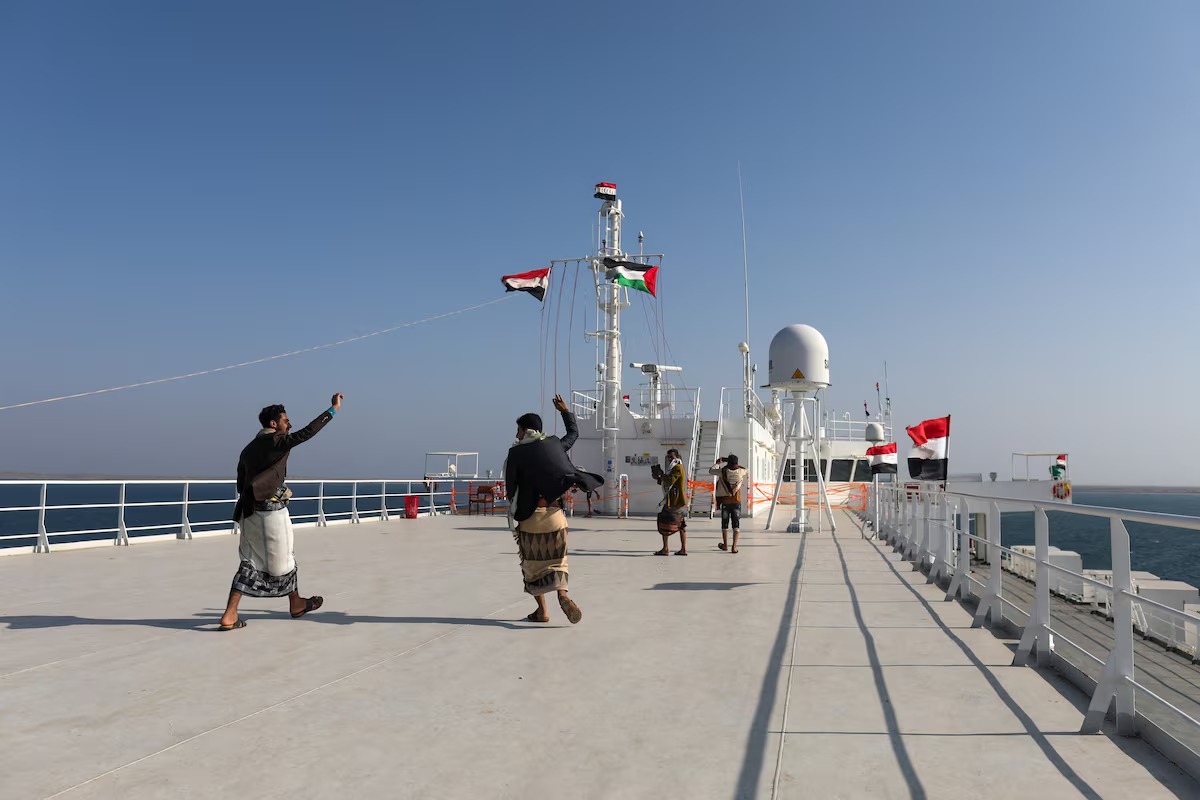
British Prime Minister Andy Burnham is considering responding to requests for military assistance directed at Yemen from the Saudi Arabian government.
According to sources speaking to Bloomberg, the prime minister has received various requests for diplomatic and military support from Saudi Arabia.
The sources stated that Saudi Arabia’s requests include providing operational support to its military to repel the advance of Ansarullah (the Houthis) along Yemen’s Red Sea coast towards the strategically vital Bab el-Mandeb Strait, as well as assistance in defending against attacks on oil infrastructure.
Under pressure to take action because of the economic difficulties generated by the war with Iran, Burnham is also concerned about creating the impression that he supports Donald Trump’s war against Iran, given that the UK public overwhelmingly opposes the war.
Reports had emerged that Saudi Crown Prince Mohammed bin Salman asked Donald Trump to conduct air strikes against the Yemeni resistance.
At present, the UK has approved the deployment of only British military advisers to Saudi Arabia.
This comes despite Saudi Arabia’s request for operational support to halt operations carried out by Yemeni forces along the coastline.
Former UK prime ministers Rishi Sunak and Keir Starmer had provided more comprehensive support to Saudi Arabia against the Yemeni resistance.
The prime minister was also warned by UK officials that the Bab el-Mandeb Strait is of vital importance to global maritime transport and the economy, and that the capture of this strait by the Houthis must be prevented.
Earlier on Monday, Bloomberg reported that Saudi Arabia was seeking to increase the volume of oil shipments transiting the Strait of Hormuz after shutting down its East-West crude pipeline.
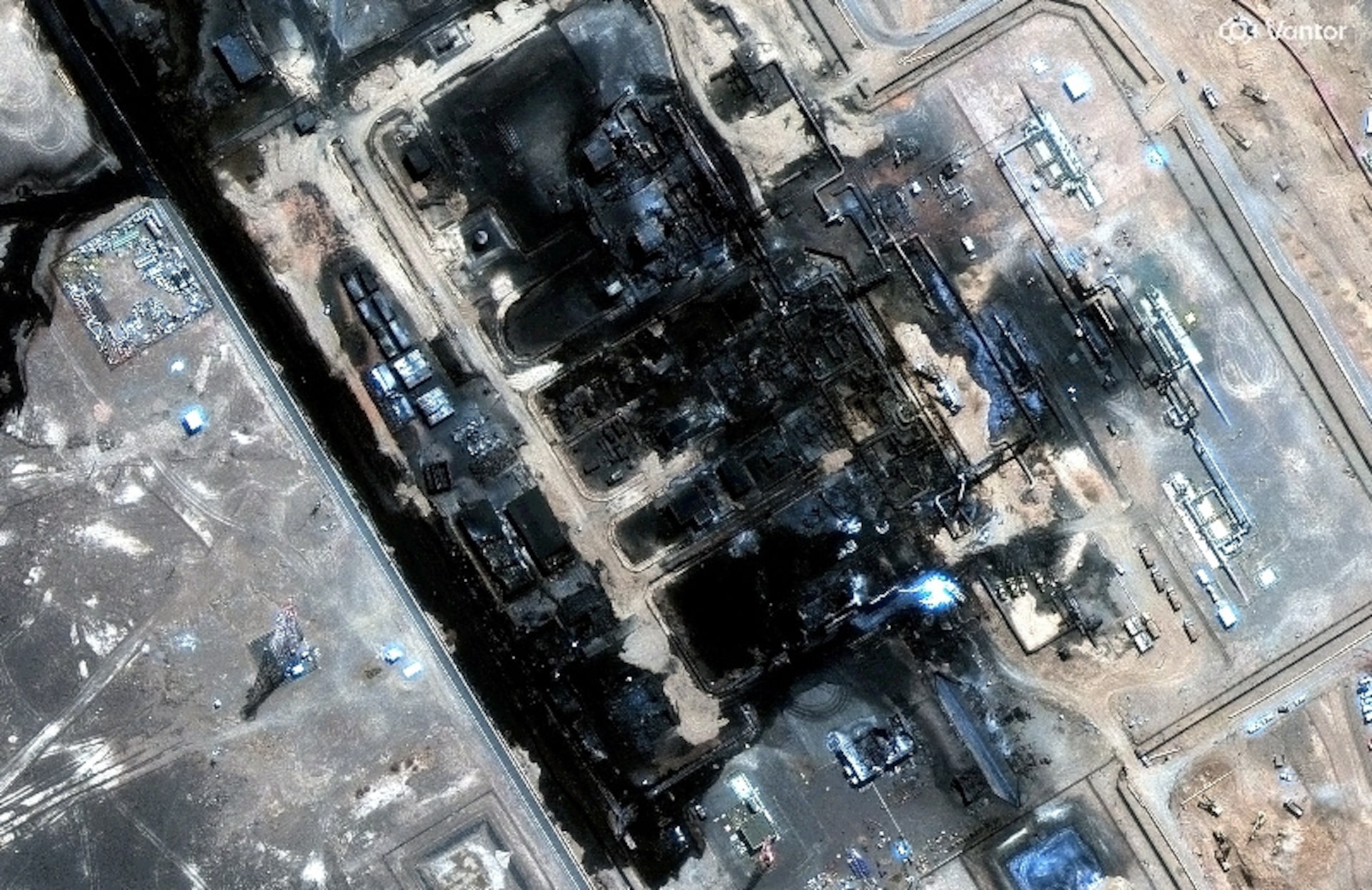
Saudi Arabia risks exhausting its exportable crude stockpiles if the East-West pipeline to the Red Sea fails to resume operations, according to reports.
Citing companies purchasing Saudi crude as well as market traders, the Reuters news agency reported that such an outcome could trigger a severe contraction in global oil supply.
Oil flows through the pipeline were halted following drone strikes. The government in Riyadh has not yet issued an official statement regarding the extent of the damage or the expected duration of repair works.
Sources familiar with the matter have offered differing estimates regarding the repair timetable.
One source speaking to Reuters noted that works could take five to six weeks, while another source stated that the damage could be repaired more quickly and that partial oil flows could be restored before repairs are entirely completed.
Stocks at Yanbu port reach critical threshold
Traversing the Arabian Peninsula to the Red Sea port of Yanbu, the pipeline carries approximately 4 million barrels of oil per day. This volume represents roughly 4% of global oil supply.
The line previously provided Saudi Arabia with an alternative export route, bypassing the Strait of Hormuz where maritime traffic has faced disruptions due to regional conflict in the Middle East.
Three sources closely tracking shipment schedules indicated that, following the stoppage, oil reserves at Yanbu port would suffice to sustain exports for only five to seven days.
A fourth source stated that additional reserves held in Egypt at the Red Sea port of Ain Sokhna and the Mediterranean terminal of Sidi Kerir afford buyers shipments for several more days.
Storage capacities stand at approximately 35 million barrels at Yanbu, 18 million barrels at Ain Sokhna, and 20 million barrels at Sidi Kerir.
However, sources stressed that these facilities are not currently filled to maximum capacity and warned that these inventories will be entirely depleted if the pipeline is not brought back online.
Output at lowest level in 30 years
According to International Energy Agency data, disruptions in the Strait of Hormuz and Red Sea transit corridors pushed Saudi oil supply in August to its lowest level in 30 years.
Data submitted by the Riyadh government to OPEC show that the kingdom’s crude production fell from 10.9 million barrels per day in February to 6.2 million barrels per day in August.
In July, the Houthis in Yemen announced the launch of a naval blockade against Saudi Arabia. On 8 September, the Saudi Ministry of Energy announced that operations had been suspended at several energy facilities in the southern part of the country.
On the same day, the Saudi Ministry of Foreign Affairs issued an official statement condemning Houthi strikes targeting facilities in the cities of Abha, Khamis Mushait, Jizan, and Najran.
Riyadh authorities reported that 73 civilians, including women and children, were injured in the attacks. US President Donald Trump stated that Iran might be behind this attack on Saudi Arabia.
In oil markets, Brent crude futures recorded their sharpest single-day gain since late July on Thursday, 10 September.
The price of November Brent crude contracts rose by 6.3% to reach $107.6 per barrel. Prices retreated below the $105 mark the following day.

Big Tech profits from AI extinction hype, Ken Klippenstein says

Israel military weighs legal steps against Gaza documentary makers

Finkelstein says US campus clampdown has surpassed McCarthyism

DeepSeek engineer warns AI will lead to communism or Cyberpunk

Israel pledges full Greek control over Achilles’ Shield source code
-
 Europe2 weeks ago
Germany’s CDU drafts tougher citizenship rules to counter AfD
-
 Diplomacy2 weeks ago
Geoffrey Roberts sees Ukraine war concluding within coming months
-
 Diplomacy2 weeks ago
Pope Francis accused Opus Dei of mafia tactics over Spanish shrine
-
 Diplomacy2 weeks ago
US expands military footprint in Somalia with new Bosaso base
-

 America2 weeks ago
Milei hardens Falklands stance with oil sanctions and defence push
-
 Middle East2 weeks ago
Ben Gvir reveals plan to expel majority of Gaza population
-
 Asia2 weeks ago
China leads $54bn capital injection into state banks and insurers
-
 America2 weeks ago
Pentagon launches mass polygraph inquiry over munitions leaks
