
Europe
Ceuta migration crisis sparks diplomatic row as Italy demands Spain’s suspension from Schengen

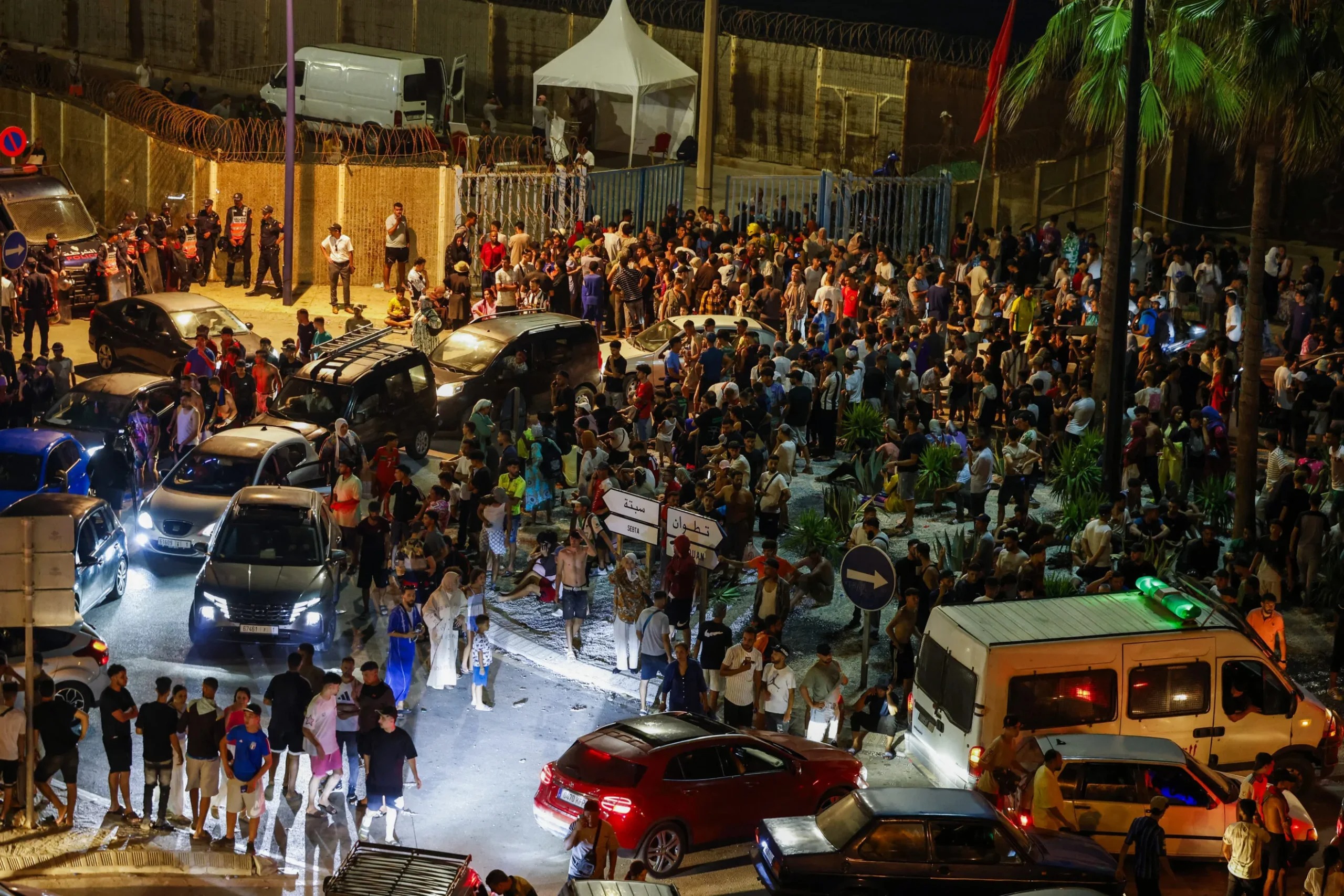
An influx of thousands of migrants entering Spain from neighboring Morocco has plunged the autonomous enclave of Ceuta into chaos since Wednesday, prompting fresh backlash against Prime Minister Pedro Sánchez’s immigration policies.
Local authorities warned on Wednesday that an increasing number of migrants were reaching Ceuta by sea.
Juan Jesús Vivas, the president of Ceuta, told reporters that the situation constituted “an absolute humanitarian and social emergency” and demanded that the central government take action.
The situation escalated further on Thursday as thousands of people entered Ceuta by land and sea, overwhelming reception centers.
Videos shared online showed individuals using wetsuits and life jackets to swim to shore.
In a statement posted Thursday on X, Sánchez announced that he was working with Moroccan authorities to restore order as quickly as possible and promised an immediate response.
The border chaos erupted just weeks after the Spanish Supreme Court issued a ruling preventing the direct deportation of migrants arriving by sea.
Sánchez’s political rivals laid the blame for the crisis directly on the prime minister. Santiago Abascal, leader of the right-wing Vox party, characterized the events as an “invasion,” while Alberto Núñez Feijóo, leader of the center-right People’s Party (PP), was also among those condemning the prime minister.
The developments drew additional criticism from anti-immigration figures across Europe, including Alice Weidel, co-leader of Alternative for Germany (AfD), and Manfred Weber, chairman of the European People’s Party (EPP), the largest group in the European Parliament.
“This proves one thing: the Migration Pact and return regulations must be put into force today, not tomorrow. Furthermore, Frontex must be strengthened,” Weber wrote.
Tensions have remained high in Spain since the Sánchez administration launched a program enabling undocumented migrants to apply for legal status and remain in the country. More than one million people have applied under the scheme.
This represents the most severe border crisis to hit Ceuta since 2021, when at least 8,000 people entered the territory from Morocco.
The autonomous Spanish cities of Ceuta and Melilla are the only EU territories sharing a land border with Africa.
Italian leaders demand Spain’s expulsion from Schengen
Meanwhile, the fiercest reaction to the migration crisis in Spain emerged from Italy. Top Italian politicians demanded that Spain be expelled from the Schengen Area as tensions continued to escalate.
Italian Prime Minister Giorgia Meloni said in a statement on X: “The images coming from Ceuta are shocking and demonstrate once again that uncontrolled illegal migration poses a real threat to the security of Europe’s borders.”
Meloni added that Italy was prepared to act, “including through extraordinary measures,” to protect its borders and guarantee the safety of its citizens.
Together with Deputy Prime Minister Matteo Salvini and Foreign Minister Antonio Tajani—the most senior ministers representing parties in the Italian right-wing coalition—Meloni demanded the suspension of the Schengen Agreement or the exclusion of Spain from the border-free zone.
Under the accord, individuals can travel freely between 29 signatory European countries.
However, several member states have reinstated checks at certain borders, as permitted under the agreement, citing migration risks.
Italy had previously temporarily reintroduced controls on its border with Slovenia to prevent smuggling and terrorism.
Tajani went beyond calling for Spain’s exclusion from Schengen, attributing responsibility for the events in Ceuta to the immigration policies of Spanish Prime Minister Pedro Sánchez, who had promised to legalize hundreds of thousands of undocumented migrants.
The minister characterized the policy as “profoundly wrong” and claimed it provided “an incentive for human trafficking.”
The remarks provoked a sharp reaction from Spanish Foreign Minister José Manuel Albares, who summoned the Italian ambassador to account for Tajani’s statements.
Replying to Tajani on X, the Spanish minister wrote: “This message is unbefitting the foreign minister of a partner and friendly country from whom we expect European solidarity, not partisan demagogy.”
Separately, European Commissioner for Migration Magnus Brunner, who is also an EPP member, stated that the European Commission supports Spain in protecting the integrity of its borders, including Ceuta, and is in contact with Spanish Interior Minister Fernando Grande-Marlaska regarding the matter.
A spokesperson stated that the Commission welcomed “the close cooperation established between Morocco and Spain to combat these migratory flows and to ensure the swift return of individuals who entered Ceuta illegally, in accordance with applicable rules.”
“When it comes to our cooperation with partner countries, Morocco is a key and reliable partner for the EU. In recent years, we have intensified our cooperation in the areas of migration and border management, as well as the fight against smuggling. We are currently working to turn our relations into a comprehensive and strategic partnership,” the spokesperson added.







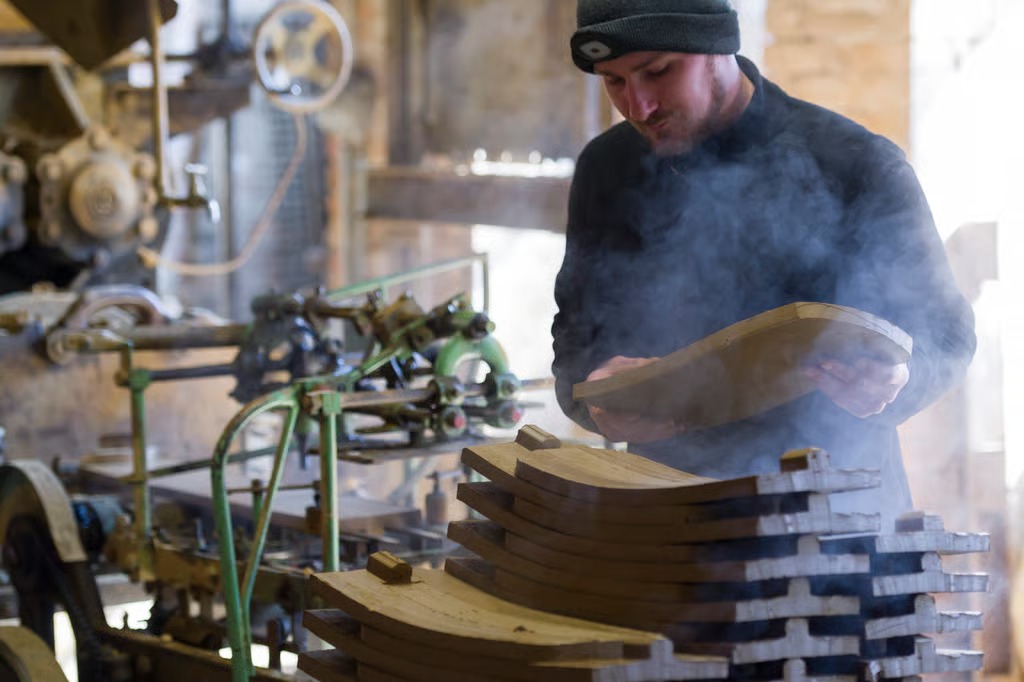
The EU wants to leverage its immense public spending power to bolster European industry through a “Made in Europe” initiative.
Deep divisions remain, however, over what should genuinely count as European-made.
According to a report by Politico, the European Parliament and member state governments are trying to establish their positions on the Industrial Accelerator Act (IAA), which forms part of Brussels’ effort to turn the “Made in Europe” slogan into an industrial strategy.
The initiative aims to use tenders and subsidies to create a guaranteed market for products of European origin.
Yet doing so requires answering politically contentious questions, such as how “European” a product must be to qualify, and how much more governments and consumers should be prepared to pay to buy domestic goods.
Disagreements are playing out not only between Parliament and the Council, but also among national governments and even between political allies from different countries.
Unveiled by the European Commission in March, the IAA seeks to channel public expenditure on green technology, energy-intensive industries, and motor vehicles towards European firms, helping them compete with dominant Chinese exporters.
Six months on, it is becoming increasingly clear how difficult it is to turn that objective into workable legislation.
Opposing sides broadly agree on the need to strengthen Europe’s industrial base, accelerate permitting procedures, and reduce strategic dependencies.
However, sharp divisions persist over how extensively the EU should support European manufacturing and how much flexibility national governments should retain.
Politico has identified five issues that will dominate negotiations through 2027.
The first issue is the debate over what qualifies as “Made in Europe”.
Defining EU origin is the most politically sensitive topic in the talks. With public procurement accounting for 15% of the bloc’s GDP—equivalent to roughly 3 trillion euros a year—the sums at stake are enormous.
If the threshold defining how European a product must be is drawn too narrowly, Brussels risks alienating close trading partners and disrupting supply chains.
Conversely, if drawn too broadly, the “Made in Europe” preference risks becoming meaningless.
Parliament is pressing for stricter anti-circumvention rules and demanding that at least 50% of a product’s value be created within the EU.
This condition would also make it harder for goods or components from third countries to be treated as equivalent to EU-origin items.
Lawmakers also aim to impose tighter conditions, including reciprocity, economic security measures, climate commitments, labour standards, and human rights safeguards.
The Council is more open to treating content from countries covered by the WTO Agreement on Government Procurement or relevant free trade agreements as equivalent to EU-origin content under specified conditions, including certain reciprocity principles.
Yet EU member states are still debating their positions and putting forward various conflicting proposals.
Ireland, which holds the Council presidency, plans to submit a fresh compromise proposal featuring the “Made in Europe” designation by mid-October.
Another issue is Foreign Direct Investment (FDI) screening.
Parliament wants a more comprehensive and stringent system to screen foreign investment in strategic sectors.
Underpinning this demand is the concern that, despite the EU spending billions to develop strategic industries, subsidized or otherwise state-backed foreign investors could acquire the very companies and assets the EU helped build.
Lawmakers want to lower the review threshold from the proposed 100 million euro investment figure to 50 million euros, bring affiliates of foreign investors under the rules, and lower the control threshold that triggers mandatory notification.
They also want to give the Commission a stronger role, granting it the power to block investments in critical raw materials when EU funds are involved.
The Council’s position is narrower: it broadly retains the 100 million euro FDI threshold and the 30% control threshold set out in the Commission’s original proposal, while granting national authorities greater flexibility in managing the approval process.
The two institutions are at odds not only over the scope of screening, but also over the institutional balance of power between Brussels and national capitals.
The third issue centres on the scope of tenders and subsidies.
Both sides want public tenders and state support to drive demand for European-made, low-carbon goods.
However, opinions diverge on how broadly the rules should apply.
This is where political goals collide directly with public purse strings. Requiring governments to purchase European-made goods could spur demand for domestic manufacturers, but it could also force taxpayers to pay more when cheaper imported alternatives are available.
Parliament wants various requirements—such as green, social, or “Made in EU” criteria—to cover up to 90% of state aid or subsidy programmes, compared with 45% in the Council text.
It also proposes tighter social and labour conditions, relocation curbs, and stricter verification and enforcement mechanisms.
The Council favours broader exemptions where suitable products are unavailable, excessively costly, or technically unviable.
This posture reflects governmental concerns over higher public spending or project delays linked to reliance on imported components.
The fourth issue is the divergence over sectoral targets.
Parliament generally seeks higher and more granular European-origin content requirements for batteries, solar panels, wind turbines, electrolysers, nuclear technologies, and electric vehicles.
Electric cars illustrate how complex the “Made in Europe” concept can become in practice.
A vehicle assembled within the EU may contain a battery and raw materials sourced through supply chains spanning the globe.
Parliament plans to raise the required EU-origin share for non-battery vehicle components from the 70% proposed by the Commission to 75%.
Requirements governing battery materials, binders, and strategic raw materials would also be introduced.
The Council’s stance, by contrast, is less prescriptive and allows for a more phased implementation.
The dispute is not over whether strategic sectors should receive support, but whether the IAA should impose binding content targets that could push up costs for manufacturers and consumers.
The fifth and final debate concerns the sectors covered by the Industrial Accelerator Act.
The argument centres on whether the IAA should remain a targeted response to strategic dependencies or become a broader vehicle for EU industrial policy.
Parliament wants to expand the legislation to cover areas such as maritime manufacturing, materials recovery, and certain plastic products used in construction.
It also wants sectors such as fertilizers, rolling stock, robotics, and aerospace considered in future reviews.
The Council text focuses more tightly on sectors already identified, including energy-intensive industries, automotive, net-zero technologies, and critical raw materials.
The debate reflects wider friction over how far the EU should extend “Made in Europe” preferences.
When public procurement and subsidies are deployed in certain strategic sectors to shield domestic manufacturing, other industries gain a strong incentive to argue that they too should benefit.
According to a separate report by Politico, Brussels is prepared to grant candidate countries access to its single market, provided they agree to align with the bloc against “hostile states” and industrial competitors.
Under the draft plan, candidate countries would receive unprecedented “gradual integration” into the single market while their accession bids are assessed, including frictionless trade and access to research programmes.
An assessment of “pre-enlargement” benefits to be offered to candidate nations states: “The single market is the primary driver of economic convergence.”
The draft states:
“Earlier integration will create opportunities for businesses across the Union, strengthen European value chains, and reduce strategic dependencies. The Commission will identify sectors where verified regulatory alignment and enforcement capacity allow for deeper participation in research, innovation, and industrial cooperation, as well as broader market access. Priority should be given to opportunities that advance accession preparations and address shared economic and strategic needs.”
Overseen by Alexandre Adam, top adviser to Ursula von der Leyen and former aide to French President Emmanuel Macron, the review would fundamentally transform the EU’s approach to neighbouring countries.
At present, almost all the economic advantages of closer cooperation remain reserved for member states.
No new country has joined the EU since Croatia’s accession in 2013.
As part of Adam’s package of measures, Ukraine, Moldova, Albania, and Montenegro are set to receive “roadmaps” designed to accelerate their accession process in the coming years.
For other nations, including North Macedonia, Kosovo, Bosnia and Herzegovina, Serbia, and Türkiye, the process continues to drag on amid mounting fears that they could drift away from the EU or draw closer to Russia or China.
Under the Commission’s blueprint, economic benefits extended to candidate countries would depend on their backing of EU foreign policy goals.
Single market access would hinge on candidate states not sharing key technologies with hostile governments and commercial rivals.
The review document notes:
“As industrial and market integration deepens, participation in sensitive sectors must go hand in hand with cooperation on investment screening, export controls, sanctions enforcement, and the protection of sensitive technologies. Access assessments must consider strategic alignment, critical dependencies, and the capacity to manage risks to infrastructure and supply chains. Where these conditions are not met, the scope of participation should be recalibrated under the relevant regulatory framework.”
Areas being considered for closer cooperation include semiconductors, quantum technologies, biotechnology, artificial intelligence, and space.
According to the review, full EU membership must remain the ultimate goal for candidate countries.
“Yet accession takes time: candidate countries must complete a rigorous, merit-based process and deliver comprehensive, enduring reforms,” the report notes. “This period must be fully exploited strategically, both to prepare the Union for a wider membership and to deepen gradual integration in areas of mutual interest.”
The benefits gained, however, will be contingent on countries fulfilling their obligations:
“Where these commitments are not honoured, integration must be reversible. The accession process should be suspended or rolled back where deemed necessary.”
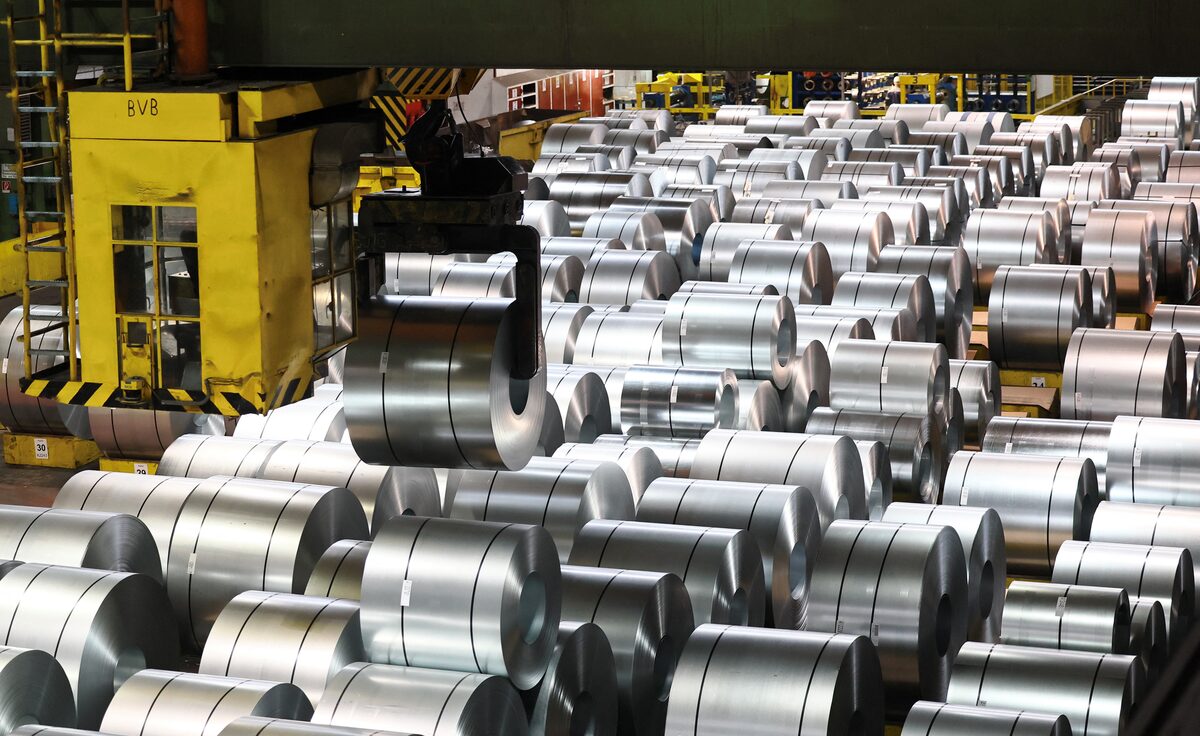
A new policy paper published by the Federation of German Industries (BDI) calls for “making German industry, growth, and competitiveness the top priority” in Germany.
Based on this foundation, the BDI document sets out guiding principles for German foreign policy.
According to German Foreign Policy, the document, published last Friday (25 September), strongly emphasises that existing dependencies must be consistently reduced in both Germany and the EU.
The document highlights a “systemic rivalry” between the EU and China and advocates “de-risking”, particularly in the field of critical raw materials.
The BDI advocates a similar “de-risking” regarding the US as well. However, the document states that this should not come at the expense of long-term strategic relations with the US.
Expanding the EU’s “partnerships” worldwide with other countries and alliances is also among the policy recommendations.
Top priority: Growth
The BDI is the most influential association of German industry, representing 38 separate member associations, more than 100,000 companies, and approximately eight million employees.
In its latest policy paper, the association calls for “new economic policy orientations” in light of weakening growth and declining competitiveness in Germany and Europe, as well as fundamental shifts in global politics and the international system.
Titled “Principles of Economic and Trade Policy”, the document is published against the backdrop of ongoing debates on crisis and reform in Germany and calls for “making German industry, growth, and competitiveness the top priority”.
This document is understood not as a political wish list for day-to-day politics, but rather as a common guideline for member associations.
Finding of “systemic rivalry” with China
In its sections on foreign trade and European policy, the document highlights, on the one hand, the EU’s competition with China, classifying it as “systemic rivalry”.
Referring to China’s “state-driven” market distortions, it states that the implementation of existing measures to bolster the Union’s competitiveness remains inadequate.
Arguing that “de-risking” and reducing dependencies regarding the People’s Republic of China remain the correct approach, the BDI wants these steps implemented “more rigorously”.
According to the BDI, even if “de-risking” incurs costs, including those arising from Chinese countermeasures, “remaining passive is, in the long run, economically far more expensive and irresponsible in terms of security policy.”
According to industrialists, the EU in particular must reduce its strategic dependence on critical raw materials in response to the “challenge” posed by the Chinese economy to the “open social market economy”.
In addition, it seeks to ensure the “rapid and legally robust implementation of investment screening and export controls”.
This translates into tighter restrictions on investments by Chinese companies and exports to the People’s Republic of China.
Finally, the report highlights the need for new economic “defensive instruments”, including anti-dumping and anti-subsidy measures, to counter competitive distortions.
Ambivalent stance in relations with the US
At the same time, the document adopts a stance toward the US that is at times similar to the position taken toward China.
The document identifies a “progressive paradigm shift in US trade and industrial policy” and advocates a “self-confident” and “interest-driven European position”.
Furthermore, it proposes establishing an “enhanced transatlantic de-risking dialogue” aimed, on the one hand, at safeguarding European autonomy and, on the other, at developing shared transatlantic priorities regarding critical technologies and resilient supply chains.
Finally, the BDI advocates adopting appropriate countermeasures against US protectionist measures that weaken the competitiveness of European companies.
However, it is urged that this should not come at the expense of long-term strategic relations with the US.
Emphasis on new partners beyond the US and China
According to the BDI, beyond realigning its relations with China and the US, the EU must also expand its strategic partnerships with other regions of the world.
The goal is to build a “resilient network of like-minded partners”, “particularly for raw materials and key technologies of strategic importance”, offering “market access, investment protection, and the diversification of critical supply chains”.
Throughout this year, the EU has signed a series of trade agreements with countries and economic blocs across the world.
In January, a free trade agreement was signed with Mercosur, the South American trade bloc comprising Argentina, Bolivia, Brazil, Paraguay, and Uruguay. Bolivia is not a party to the agreement because it became a full member of Mercosur after the treaty text was finalised.
Eliminating tariffs on more than 91% of EU exports to Mercosur countries, this agreement was the culmination of negotiations that lasted more than a quarter of a century.
Also in January, the EU signed a trade agreement with India, regarded as the largest free trade agreement in India’s history.
Under the terms of the agreement, both sides aim to reduce or eliminate tariffs on more than 95% of their bilateral imports.
A comprehensive rapprochement is also taking shape in EU relations with Canada. Canada, whose relations with the US have deteriorated significantly due to Trump’s annexation threats, welcomes this development.
On 16 September, European Commission President Ursula von der Leyen formally invited Canada to become the EU’s first “associate member”.
Presenting this unprecedented offer to Canadian Prime Minister Mark Carney at the European Parliament, she stated that the EU and Canada “view the world from the same perspective”, for instance regarding the war in Ukraine.
Von der Leyen’s offer followed Carney’s call on ten EU member states to finally formally ratify the EU’s trade agreement with Canada, which was signed nine years ago.
Carney argued that this would make all parties “more resilient, more independent”, and more prosperous.
Known as the Comprehensive Economic and Trade Agreement (CETA), which provisionally entered into force in 2017, the agreement between Canada and the EU has not yet been ratified by ten EU member states.
This is primarily due to concerns that Canadian agricultural exports could harm European farmers.
Industrial bosses want wage suppression
In addition to foreign trade and European policy, several other areas are addressed in the BDI policy paper.
For instance, one section addresses “economy, competition, regulation, and industrial policy”. Here, it is stated that Germany as a business location needs growth-enhancing measures and structural reforms.
“High labour and energy costs, alongside the high tax burden on labour and capital”, rank among the most critical areas where reforms are deemed necessary.
The BDI also advocates introducing “spending discipline” to prevent massive public expenditure, including military build-up and infrastructure, from spiralling out of control.
In the section titled “Digital and Innovation Policy”, it is noted that technological sovereignty and resilience must be advanced.
This encompasses the “expansion of common European data spaces, further development of an integrated digital single market, simplification of digital regulation, and robust cybersecurity architectures”.
Furthermore, it demands that Germany and the EU expand their capacities across the entire semiconductor supply chain, from research and design to basic chemical products and system integration.
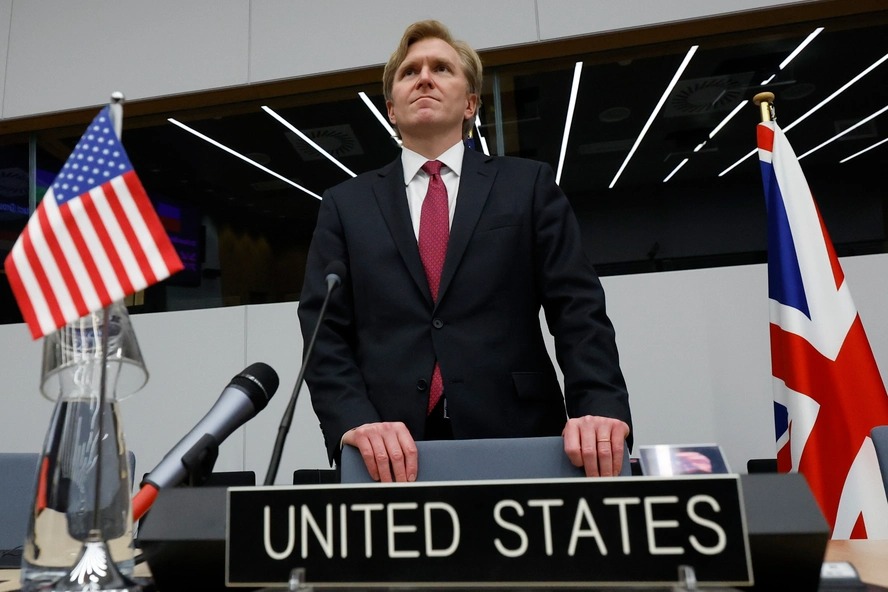
The Trump administration has not invited several key European allies to a meeting of NATO members scheduled for next month.
According to six diplomats who spoke to Politico, the meeting, to be held in Poland and spearheaded by Pentagon policy chief Elbridge Colby, essentially functions as a working group focused on the future of NATO.
However, many nations that did not receive invitations, such as the United Kingdom, France, and the Baltic states, are countries with high defence spending that play pivotal roles in the alliance.
This circumstance has led diplomats to wonder why they have been excluded.
These nations are questioning whether the White House is taking sides in a manner that could further fragment an alliance already grappling with “mounting Russian aggression and depleted weapons stockpiles”.
An official from one of the uninvited allied countries said: “We are doing everything asked of us. We are trying to understand what the criteria are and what the purpose of these meetings is. Little information has been conveyed to us so far.”
Politico reported last April that the White House had drawn up a sort of “naughty and nice” list of NATO countries, based on member states’ contributions to the alliance and their support for the US war in Iran.
The administration was considering reorganising military deployments, joint exercises, and arms procurement to reward countries deemed more loyal to Washington’s foreign policy stance.
Bloomberg reported on 14 August that the US had sent detailed questionnaires to NATO allies to gauge how closely aligned they were with Donald Trump’s agenda.
These questionnaires specifically assessed their support for US foreign policy and the continued use of US military bases.
Colby previously organised two meetings in the same format with Poland, Germany, Norway, Sweden, Finland, and the Netherlands.
These talks have come to be known as the “Bergen Group”, and Denmark may also be added to the group.
A diplomat from one of the participating countries stated that this smaller format was designed not to divide NATO, but to develop proposals that could subsequently be evaluated by the entire alliance.
Colby likewise stated that the goal was “to pull the whole alliance in the same direction” and build a stronger NATO with a more robust European military capability.

The European Union’s peace project has collapsed, EP’s von der Schulenburg says

Istanbul’s East-West Forum: A conversation the world can no longer avoid

A new world in the East, old dogmas in the West

EU wrestles with domestic content rules for ‘Made in Europe’ push

German industry lobby urges priority for growth and competitiveness
-
 Europe3 days ago
European unions urge governments to scrap all Palantir deals
-
 Diplomacy3 days ago
East-West Forum in Istanbul highlights irreversible shift to multipolarity
-

 Europe6 days ago
Emmanuel Todd says West faces collapse amid Ukraine and Iran crises
-
 Europe1 week ago
European intelligence chiefs divide over risk of Russian attack
-
 Diplomacy1 week ago
East-West Forum in Istanbul to debate multipolarity and global order
-
 America1 week ago
Republican support for Trump’s war with Iran drops sharply in polls
-
 Middle East1 week ago
Sharaa says 7 October must not shape Israel policy on Syria
-

 Middle East1 week ago
Palestinian factions confront legitimacy crisis at Istanbul talks
