
Europe
German court declares Karl Marx’s teachings unconstitutional


A court in Hamburg, Germany, has stated in the details of a ruling concerning a Karl Marx reading group that Marx’s teachings may be contrary to the “free democratic basic order.”
On April 8, the “Marxist School of Politics and Culture Forum” (Masch) won its case against the State Office for the Protection of the Constitution (LfV) in the Hamburg Administrative Court.
The court ruled that the authorities could no longer classify the Hamburg-based association as “left-wing extremist.” Masch had won its lawsuit against its inclusion in the organization’s 2021 report and the revocation of its non-profit status in the same year.
Lack of ‘active militant attitude’ saved a Marx association, but…
Now, as reported by taz, it has emerged that this legal victory could backfire like a boomerang and pose a danger to all Marx reading circles in Germany.
The reason for this lies in what the Hamburg court wrote in its written decision on July 10. It is a common practice for courts to explain the precise reasons for their decisions in writing only weeks later, but the content of the decision is considered surprising.
The court affirmed its ruling in favor of Masch, declaring its inclusion in the constitutional protection report unlawful. However, it did so because its members lacked the “active militant attitude” to actually harm the constitution.
Court rules Marx is incompatible with the ‘free democratic basic order’
Masch has been active since 1981. It is best known in Hamburg for its annual reading groups on the first volume of Marx’s work Capital, but the group also publishes books and frequently organizes discussion events, often at the University of Hamburg.
It sees itself in the tradition of workers’ educational associations and Marxist workers’ schools and, by its own account, exhibits a “non-dogmatic and critical approach to Marxist theory.”
The association was deemed suspicious by the Office for the Protection of the Constitution because, among other things, it was alleged that Masch was originally founded by the German Communist Party (DKP) and still maintains close ties with it.
The court rejected this accusation in April, noting that only one of the 26 Masch members is currently a member of the DKP.
However, the written justification goes even further. The court discusses the issue of whether engaging with Marxist theory is fundamentally compatible with the constitution of the Federal Republic of Germany.
The court finds that “the plaintiff’s activities, which focus on the theories of Karl Marx, are fundamentally incompatible with the free democratic basic order.”
The court states that the centrality of Marx’s works and teachings to Masch’s activities is evident from its name, “Marxist Evening School.”
According to the court, the reason this is problematic is as follows: “The social theory created by Marx may contain incompatibilities in fundamental points with the principles of the free democratic basic order.”
The court had not yet touched upon this point in its oral ruling in April.
Danger for all Marx reading groups
Ridvan Ciftci, the lawyer who represented Masch in court, finds the court’s statements “irresponsible.”
According to him, this decision implies that predominantly reading Marx is fundamentally unconstitutional. In Masch’s case, the group is not problematic only because it is “sufficiently insignificant” and not “actively militant.”
In Ciftci’s assessment, this poses a threat to all Marx reading circles in Germany. “Any association that primarily refers to Marx could therefore become a subject of surveillance,” the lawyer says.
In this respect, the decision in which Masch successfully defended itself against being classified as unconstitutional potentially appears to be a boomerang and, at the very least, a legal setback.
In fact, other courts have recently taken a much more flexible approach to the theory of Karl Marx. For example, in the case brought by the newspaper Junge Welt against its surveillance by the Office for the Protection of the Constitution, the Berlin Administrative Court stated that a Marxist orientation alone does not constitute an effort to overthrow the free democratic basic order and that revolution could be a “radical, yet still constitutional social transformation.”
The Hamburg court, however, looks at the matter from a different perspective. The court believes that the Marxist theory adopted by Masch aims not just for reforms but for revolution through violence.
The court does not accept Masch’s objection that its discussions are limited to a critique of capitalism. Quoting from the association’s website, the court notes that the association’s goal is to “completely transform the economic system, the state, and society.”
The main problem is the ‘dictatorship of the proletariat’
The court believes that when it comes to Marx, the problem lies in the concept of the “dictatorship of the proletariat.”
The court points out that the meaning of this concept “inevitably excludes other population groups from the political decision-making process and the indirect exercise of state power,” stating, in other words, that the dictatorship of the proletariat is “undemocratic.”
Masch member Michael Hopp argues that “this is a complete misunderstanding.” “The court is acting as if Marx’s texts were written yesterday,” says Hopp, who claims that Marx can “absolutely be understood as a democrat” when one does not solely refer to the Communist Manifesto pamphlet, as the court does, and that the “older Marx” emphasized that the means of change must be adapted to the historical situation.
“Marx would have recommended anything but a crowd of people storming the Bundestag today,” says Hopp.
Hopp also suggests that the court misunderstands the nature of Marx’s theory as an “analytical tool” and of Masch as “an educational institution.” “The oversimplification lies in us being accused of putting words into action. But we look at the words and reflect on them,” he says.
Is capitalism enshrined in the Basic Law?
The decision of the Hamburg Administrative Court also touches on a problem that has been more frequently discussed in recent years following the demand to “expropriate Deutsche Wohnen & Co.”: To what extent does the Basic Law, the source of the free democratic basic order, stipulate that the Federal Republic of Germany should be organized according to capitalist principles?
The Hamburg court did not find Masch’s argument, which referred to political scientist Wolfgang Abendroth, that the Basic Law is neutral in terms of economic policy, to be convincing.
On the other hand, according to taz, many questions still remain unanswered:
“Is every introductory course on Marx in the first semester now suspect? What exactly does ‘actively militant’ mean? Is radical social criticism not unconstitutional? To clarify these and other questions, Masch, which is currently considering appealing the decision, plans to do what it does best: organize a discussion event.”










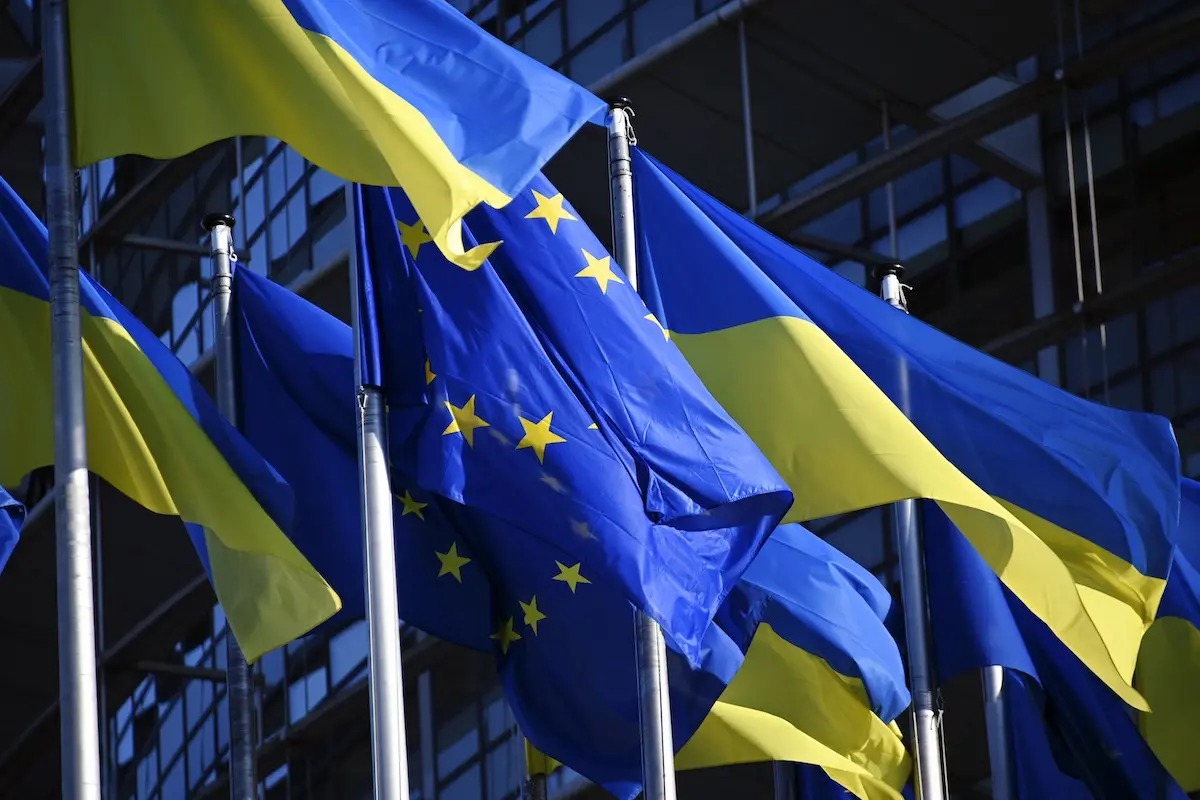
An opinion survey conducted across the European Union has revealed that 53% of bloc citizens oppose admitting Ukraine to the EU through an accelerated process in the coming years.
According to the study carried out by the Bertelsmann Foundation, 47% of EU residents support the idea of fast-track membership.
The most pronounced opposition to rapid accession was recorded in Romania at 60%, followed by Germany at 59%, and France and Poland at 57% each.
The lowest resistance to Ukraine’s accelerated membership was found in Sweden at 31%. This figure stood at 37% in Spain and Portugal, and remained at 43% in the Netherlands.
Domestic support for the process remains exceptionally high; 83% of the public in Ukraine want to join the bloc as soon as possible.
Europeans differ over defence contributions and strategic benefits
The survey also examined perceptions regarding the defence of the continent. Some 58% of Ukrainians believe that their “resistance against Russia’s military campaign protects the entire continent and the EU as a whole.”
In contrast, 29% of bloc citizens share the view that the EU and its member states contribute more to defending the union than Ukraine does.
While 23% of participants view the efforts of both sides as equal, the share of those who consider Ukraine to be the bloc’s “primary protector” remains at 16%.
The study also indicates that low expectations concerning the tangible benefits Ukraine would provide to the bloc contribute to the limited support for its membership.
Only 14% of surveyed Europeans believe that this accession will make the EU stronger and more influential on a global scale. Meanwhile, the proportion of respondents who anticipate that Ukraine’s entry will increase the bloc’s resilience was measured at 11%.
Timetable debate persists in the negotiation process
Ukraine applied for membership immediately after Russia’s military intervention and gained candidate status in 2022.
The accession process encompasses a 33-chapter reform package organised under six clusters, which aims to guarantee democratic and economic standards.
Formal accession talks began in June 2024. The negotiation process, which had long been blocked by Hungary, made progress after Peter Magyar took office as the country’s prime minister.
Magyar also succeeded in having the term “accelerated accession” for Ukraine removed from EU texts.
Magyar argued that a contrary approach would send the wrong message to Western Balkan nations, such as Serbia, Albania, Montenegro, and North Macedonia, which have worked towards membership for years.
Ukrainian President Volodymyr Zelenskyy has called for the membership process to be completed by 2027, stating that this would provide a fundamental security guarantee for both Ukraine and Europe.
On the other hand, circles within the bloc that oppose rushing the process insist on the complete fulfilment of all conditions, including anti-corruption measures.
Meanwhile, the EU Ambassador to Ukraine, Katarina Mathernova, points to 2030 as a likely accession date.
For membership to take place following the completion of negotiations, all 27 EU member states must grant unanimous approval.
So far, only the first of the six chapter clusters, covering fundamental values and principles such as the rule of law, human rights, and the judiciary, has been opened for Ukraine.
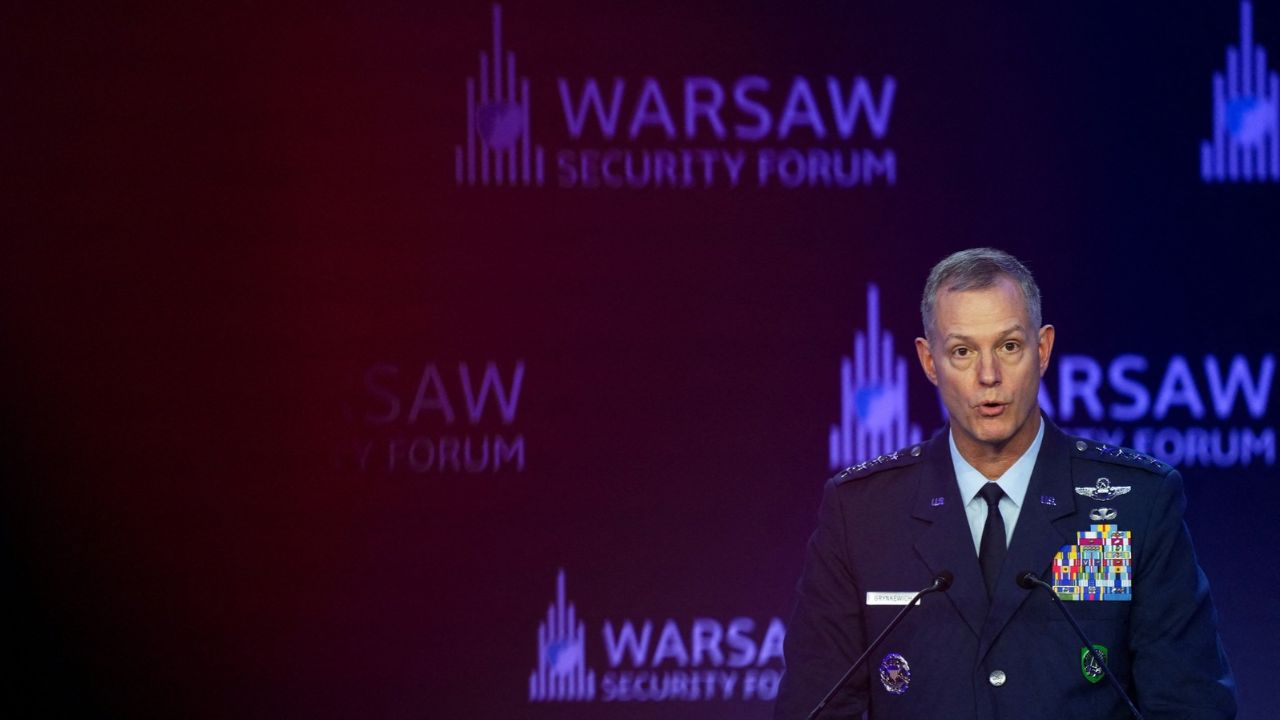
NATO Supreme Allied Commander Europe (SACEUR) Alexus Grynkewich has unveiled a new defence strategy aimed at rendering any attack against an alliance member entirely futile.
Speaking at the Warsaw Security Forum, Grynkewich said the concept, titled the “Theory of War”, is designed to prevent hostile elements from infiltrating NATO territory and waging conflict there.
Arguing that they aim to reassure the one billion people living within the alliance’s borders, Grynkewich maintained that they also wish to send a message to adversaries such as Russia that NATO is prepared for a potential invasion.
“If we are attacked, we are ready to fight even tonight,” Grynkewich said.
Three-stage defence plan enters into force
Approved by all 32 alliance members, the plan combines land forces and conventional weapons systems with advanced technologies such as unmanned aerial vehicles, counter-drone systems, and artificial intelligence.
Lessons drawn from ground and air combat in Ukraine, as well as current conflicts in the Middle East, play a decisive role in shaping the strategy.
According to Grynkewich, the new defence doctrine rests on three fundamental phases that form the core of NATO’s approach:
The first pillar of the plan, the “block” phase, focuses on preventing hostile forces from seizing allied territory.
In this context, NATO ground components will engage directly with attacking units, restrict their manoeuvrability, and neutralise forces attempting to breach alliance borders.
Should the assault continue, the second phase (“blunt”) will come into play, deploying autonomous systems requiring minimal human intervention alongside advanced sensor networks to slow the momentum of the attack and wear down advancing forces.
These systems will detect threats in real time, combining capabilities across different operational domains to halt the adversary’s advance.
The final stage, the “break” phase, will target not the attacking units directly, but the operational warfighting system that sustains them.
Command centres, supply chains, and logistics routes will be struck using long-range precision strike systems and sensor networks, eliminating the adversary’s ability to sustain military operations.
“Enemy commanders will not be able to direct their troops, their supply lines will be severed, and their logistics vehicles will be destroyed,” Grynkewich said.
Strategy aims to defend borders rather than gain territory
Noting that NATO has no intention of acquiring territory and that the strategy is entirely defence-oriented, Grynkewich said, “We have no plan, intention, or ambition beyond protecting our citizens and our territory.”
Stating that he considers the likelihood of a direct attack on alliance territory to be low, the commander nevertheless stated that they would respond without hesitation to any attempt targeting allies.
Addressing questions regarding US commitment to the alliance, Grynkewich recalled that Washington reaffirmed its adherence to Article 5 at the NATO summit in July.
Article 5, which forms the cornerstone of NATO’s collective defence principle, stipulates that an armed attack against one ally is considered an attack against all members.

Polish authorities have announced that German police detained two Turkish citizens suspected of setting fire to a Starlink station near Warsaw last month.
Tomasz Siemoniak, Poland’s minister coordinating the special services, told a news conference in Warsaw on Monday that Poland has requested the suspects’ extradition and has “no doubt” that Russian secret services were behind the arson attack.
“It should also be noted that Russian intelligence agencies are increasingly turning to people linked to the criminal underworld,” Siemoniak said at the press conference.
In a post on X, Prime Minister Donald Tusk described the incident as another “act of hybrid warfare” and said those responsible for the sabotage would be brought to justice in Poland.
Interior Minister Marcin Kierwinski said the two Turkish citizens would be charged in Poland with carrying out an act of sabotage on the orders of a foreign intelligence agency.
Power supply equipment at a Starlink ground station serving Eastern Europe, including Poland and Ukraine, caught fire on the night of 23 September.
The incident did not cause a major disruption to internet service. The blaze, however, completely destroyed the station’s electrical system and backup generator.
Poland, a key transit route for Western aid to Ukraine, has faced a series of suspicious incidents recently.
Numerous cyberattacks have targeted public utilities, including water and energy infrastructure as well as hospitals.
In addition, damage to a railway line between Warsaw and the Ukrainian border was attributed by officials to Russian sabotage.
In late July, a Russian missile also landed in Poland.

Ex-BND head Hanning tied to former Mossad chief amid spy inquiry

Iran war costs US economy $265 billion as household burden mounts

Trump dismisses US envoy to Greece Kimberly Guilfoyle

Most EU citizens reject fast-track Ukraine accession, poll finds

Ex-US official says air defences fail against Yemeni airport strike
-

 Europe2 weeks ago
German interior ministers drop unanimity rule to counter AfD veto
-

 Europe2 weeks ago
Key European allies excluded from US-led NATO meeting in Poland
-

 Diplomacy2 weeks ago
While the West breeds crises, Eurasia weaves peace and development, says Prof. Zhang Weiwei
-

 Middle East2 weeks ago
Netanyahu holds secret UAE talks with Saudi Arabia and Arab officials
-

 Diplomacy2 weeks ago
The European Union’s peace project has collapsed, MEP von der Schulenburg says
-

 America2 weeks ago
Musk appointed co-director of Pentagon future warfare initiative
-

 Opinion2 weeks ago
A new world in the East, old dogmas in the West
-
 Asia2 weeks ago
South Korea plans $120B spend on eight US nuclear power plants
