
Middle East
Iran proposes new nuclear deal involving Arab nations to US

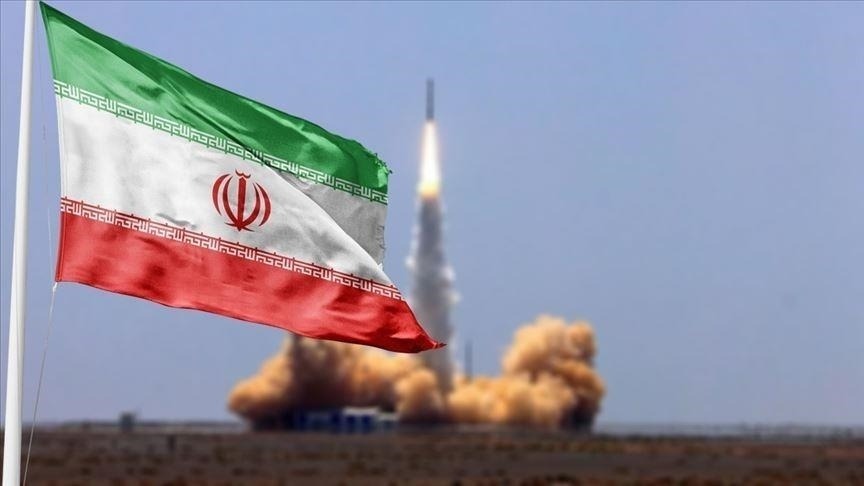
The Tehran administration has presented a new nuclear agreement model to the US, which would include Arab countries such as Saudi Arabia and the UAE, as a way out of the nuclear crisis. In this multinational structure, civilian fuel production would continue, but supervision would be increased.
In recent contacts with the US, Iran proposed a multinational partnership that would allow it to continue uranium enrichment but be subject to stricter inspections.
According to a report in the New York Times, citing four Iranian officials, Tehran has offered an alternative plan in response to Washington’s demand to completely terminate its nuclear program. This plan involves a uranium enrichment initiative to be jointly carried out with Arab countries in the region and includes US investments.
It was reported that Iranian Foreign Minister Abbas Araghchi conveyed this proposal during direct and indirect talks with US Special Representative Steve Witkoff in Oman on Sunday.
The proposal, widely featured in Iranian media under the headline “new plan on the negotiating table,” was questioned by the Farhikhtegan newspaper, which is close to the Revolutionary Guards, as “service or betrayal?”
It is not yet clear whether Iran’s two major regional rivals, Saudi Arabia and the United Arab Emirates, could be included in this structure. The 45-year absence of diplomatic relations between Iran and the US, as well as the reluctance of the American private sector to invest in nuclear projects in Iran, makes the feasibility of the plan uncertain.
Speaking in Saudi Arabia, US President Donald Trump criticized Iran for supporting militant groups in the region but said that a diplomatic solution would make the region safer.
“I want to make a deal with Iran,” Trump said. “If such a deal is made, I would be very pleased. This would make your region and the world safer.”
However, Trump warned Iranian leaders that it was time to make a decision: “There is not much time to wait. The decision must be made now.”
Iran’s proposal includes the creation of a permanent nuclear consortium involving the three countries. Accordingly, Iran would continue low-level uranium enrichment, far from nuclear weapon production. The produced fuel would be sent to other Arab countries for civilian use.
This structure is similar to the 2015 nuclear agreement, which allowed Iran to enrich uranium up to 3.67%. However, in the new proposal, representatives from other countries, possibly including the US, would provide continuous on-site inspections.
The four Iranian officials stated that this plan would be indefinite, unlike the 2015 agreement. This situation could also provide President Trump, who withdrew the US from the previous agreement, a basis to claim he achieved more than his predecessor, Barack Obama.
Ali Vaez, Iran Director at the International Crisis Group, described the proposal as “a new approach worth trying.” He stated, “Parties should now abandon zero-sum demands and find a common path that can preserve the dignity of both sides.”
Before the talks in Oman, tensions between Iran and the US had raised the possibility of military conflict. However, both Tehran and Washington declared their preference for a diplomatic solution.
While the US side’s demands have not been clarified, Witkoff told Breitbart News in an interview that they want Iran to completely end its nuclear program and close the three main facilities in Natanz, Fordow, and Isfahan.
Iranian officials have repeatedly stated that this demand is a “red line.” Araghchi, referring to alleged Israeli assassinations, said, “blood was shed for our nuclear program,” and that the right to enrich uranium for peaceful purposes is a matter of “national honor” for Iran.
However, statements made after the three-hour meeting between Araghchi and Witkoff in Oman had a softer and more constructive tone. It was stated that talks would continue at a technical level, particularly on nuclear facilities and financial issues related to the lifting of sanctions.
Omani Foreign Minister Badr bin Hamad Al Busaidi said in a social media post, “Constructive and original ideas were put forward in the talks. Both sides aim for an honorable agreement.”
Araghchi visited Saudi Arabia before meeting with the Americans and then traveled to the United Arab Emirates. It has not yet been clarified whether Saudi Arabia and the UAE will participate in this partnership.
Both countries support an agreement between Iran and the US and want to prevent a regional war. They also have goals to develop their own civil nuclear programs. The UAE opened the Arab world’s first nuclear power plant in 2020. However, its agreement with the US prohibits uranium enrichment.
Seyed Hossein Mousavian, a former Iranian diplomat involved in the 2015 nuclear negotiations, first brought up the idea of this regional nuclear consortium in an article he co-authored in 2023 with Princeton University physicist Frank von Hippel.
Mousavian argued that this proposal would address most of the US’s concerns, limiting Iran’s enrichment capacity and uranium stockpiles, thereby reducing both current and future threats.
“If Trump announces such a regional nuclear deal, it would be a great success,” Mousavian said. “This development would eliminate the Iran-originated threat, limit enrichment activities in the region, and create new opportunities for Americans.”








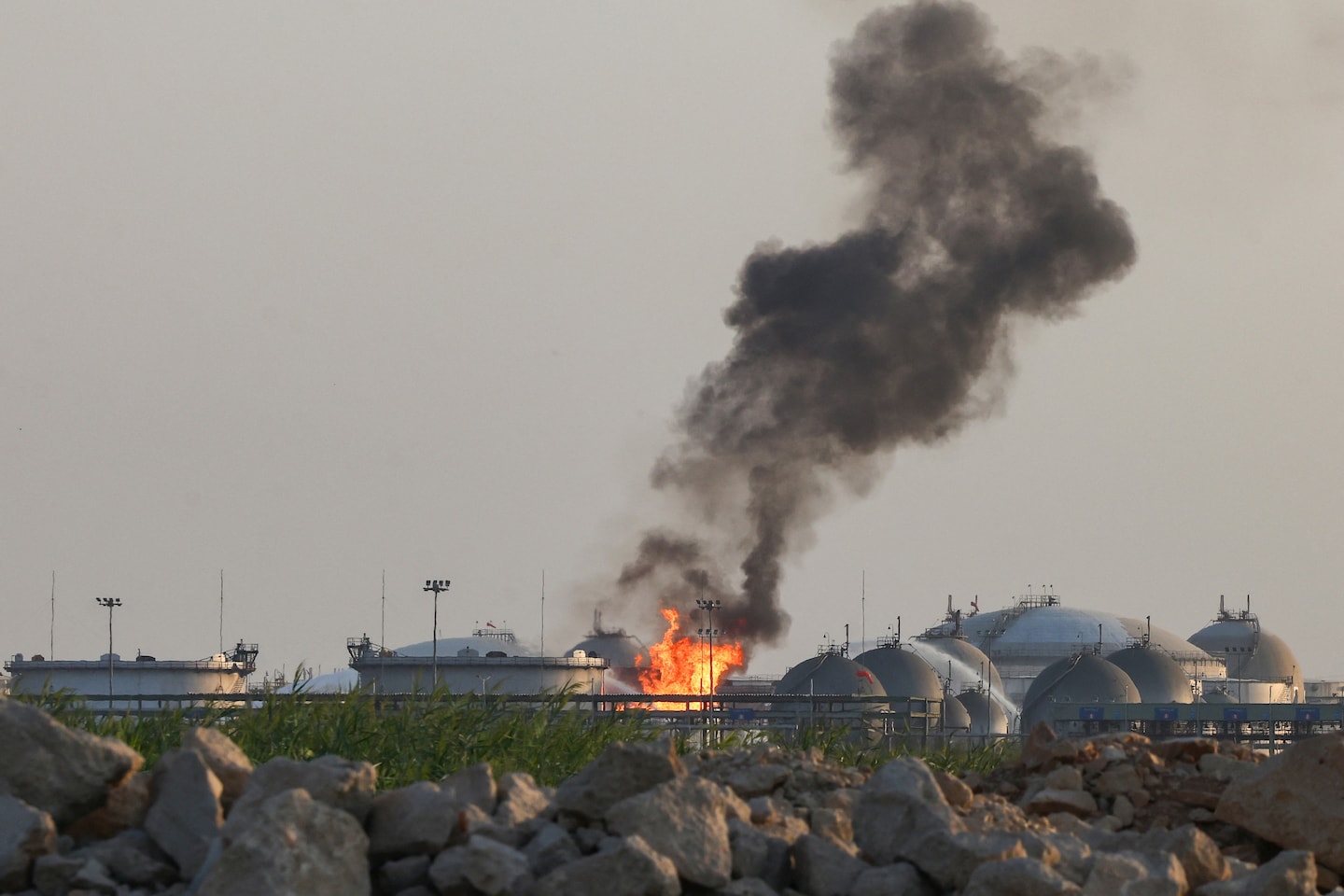
The US and Israeli defence ministries have drawn up plans for a fresh assault on Iran, with the envisioned offensive under consideration to launch after the US Congressional midterm elections on 3 November.
Citing sources, The New York Times reported that the blueprint anticipates a brief but intense campaign.
As military units step up their drills, US Defence Secretary Pete Hegseth discussed prospective strike options with Israeli Prime Minister Benjamin Netanyahu.
The list of targets encompasses Iran’s nuclear sites, its energy infrastructure, and its arsenals of missiles and unmanned aerial vehicles.
Several officials who spoke to the newspaper argued that a new wave of attacks could deal a heavy blow to the Iranian economy, forcing the leadership in Tehran into concessions.
Conversely, other sources doubt whether a resumption of fighting would prove any more successful than the earlier campaign conducted between February and April.
That previous offensive drove energy prices higher and drained US stockpiles of interceptor missiles.
It remains unclear whether US President Donald Trump will authorise the operation.
Domestic political calculations in Israel could also influence the trajectory of the plans, given that the country faces general elections on 27 October.
While some experts speaking to the newspaper contended that Netanyahu could leverage the threat of war to form a national unity government, others pointed to the opposition’s distrust of the prime minister.
Washington fears regional spillover
The US administration also harbours concerns that the fighting could engulf the wider region. On Wednesday, the US State Department ordered non-essential government personnel and their family members to leave Saudi Arabia following attacks by the Iran-backed Houthis.
A US military build-up, comprising three aircraft carriers, fighter aircraft, and special forces units, is slated to be fully deployed to the region by early November.
The targets under review include the deep underground nuclear facility code-named “Pickaxe”. Trump suggested that the high-yield GBU-43/B bomb, known as the “mother of all bombs”, could be deployed against the site, though experts doubt whether the ordnance can destroy a complex buried so deeply.
For its part, Tehran is preparing for a potential escalation, threatening to broaden its target list. Retaliatory options under consideration by Iran reportedly include data centres and subsea internet cables, in addition to shipping and energy facilities.
Mehdi Mohammadi, an adviser to an Iranian negotiator, dismissed US hopes of wrapping up a new campaign within 72 hours as a “fantasy”. Mohammadi warned that Tehran’s response would be more severe and unpredictable.
The Financial Times previously reported that an Israeli strike on Iran set for 10 October had been called off because the US president was unwilling to risk a broader conflict ahead of the Congressional midterms.
According to that report, the Israeli military had prepared a multi-day assault on nuclear sites, Iranian government targets, power plants, and civilian infrastructure on Netanyahu’s orders. The strikes had been designed to exceed the intensity of the campaign begun in February.
Washington seeks to secure an agreement from Tehran covering both the Strait of Hormuz and its nuclear programme.
“It will either be a deal or a strike,” one source told the Financial Times, adding that an operation could get under way in the coming weeks.
Another official who spoke to the paper suggested that Israeli preparations might serve as leverage to squeeze Iran in negotiations.
Axios also reported that the Pentagon had issued orders to prepare for renewed strikes, though the directive contained no specific date and Trump has yet to take a final decision.
The US and Israel launched their offensive against Iran on 28 February. Iran hit back by targeting US and Israeli assets across the region and curbing vessel transit through the Strait of Hormuz.
Although both sides signed a memorandum of understanding in June that provided for a ceasefire and talks to lift the blockade in the Strait of Hormuz, reciprocal attacks between the US and Iran have persisted.
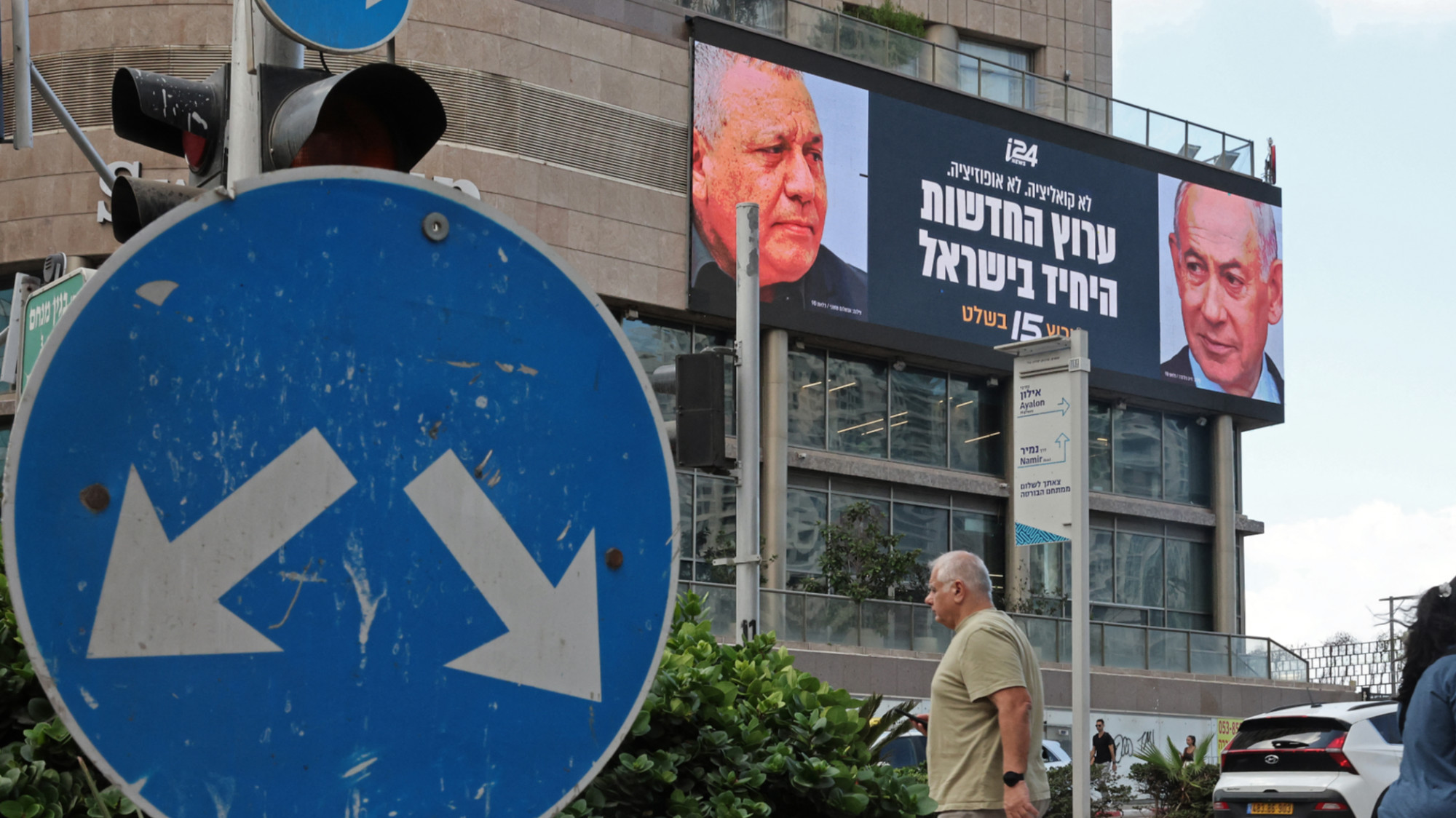
As general elections scheduled for 27 October approach in Israel, the opposition camp led by former Chief of Staff Gadi Eisenkot continues to lead Prime Minister Benjamin Netanyahu in public opinion polls.
Survey data published in the Israeli press on 19 and 20 October reveal that the governing coalition has failed to catch the opposition, despite explicit backing from US President Donald Trump.
However, the current distribution of votes documents that neither wing can reach a governing majority on its own.
Netanyahu reaches 61 seats in Channel 14’s latest poll. He doesn’t in i24’s.
Both give him a stronger position than Kan and Maariv. Likud gets 29 seats in Channel 14, 25 in i24, 21 in Kan and 18 in Maariv.
Count the same five lists—Likud, Shas, United Torah Judaism, Otzma… pic.twitter.com/Qb0fCq0qdK
— Zvika Klein צביקה קליין (@ZvikaKlein) October 19, 2026
Neither bloc reaches the 61 seats needed to form a government
According to a survey conducted by Channel 13, if an election were held today, Eisenkot’s bloc would win 51 seats, while the Netanyahu coalition would take 50.
A Channel 12 poll indicates that the gap has widened slightly, projecting 55 seats for Eisenkot’s alliance and 51 for the governing bloc. A minimum of 61 seats is required to form a government in the Knesset, Israel’s 120-seat parliament.
A key factor deadlocking the political arithmetic is the refusal by both sides to form a coalition with parties representing Palestinian citizens of Israel. This stance stands as the most tangible obstacle to securing a parliamentary majority after the election.
Channel 12 data shows that overall voter turnout is expected to remain at 72%. The inclination to head to the ballot box climbs to 81% among opposition voters, compared with 74% measured among Netanyahu supporters.
The same poll notes that Eisenkot has widened his lead over Netanyahu by two further points in prime ministerial preferences.
Yashar party climbs after Gantz bows out
A survey published on the Walla news site shows that the balance shifted after Benny Gantz decided to withdraw his Blue and White party from the race. Following that move, Eisenkot’s Yashar party increased its projected tally to 23 seats, while Netanyahu’s Likud dropped by one seat to 19.
Eisenkot’s party and the “Zionist Opposition” bloc it anchors have remained atop the polls for several months.
In an earlier message of support, Trump praised Netanyahu as “a great fighting prime minister and an even greater partner for peace.” Public opinion polls document that this diplomatic and political backing has not proved sufficient to tip the preferences of the Israeli electorate in favour of the incumbent government.
Support for Ben Gvir rises among young voters
Although Netanyahu’s alliance trails in overall strength, far-right figures within the coalition appear to be expanding their grassroots base. Gauged interest in the Jewish Power party of Israeli National Security Minister Itamar Ben Gvir is climbing, particularly among younger voters.
Speaking to a study conducted by Agam Labs, affiliated with the Hebrew University of Jerusalem, an 18-year-old student described his shifting preference: “I used to think he was a bit crazy, but then I actually looked at what he was saying, and it all made sense.”
Another Israeli citizen stated that Ben Gvir’s push to arm West Bank settlers gave them “room to breathe.”
Ben Gvir is known for leading settler incursions into the Al-Aqsa compound and distributing military-grade rifles to tens of thousands of settlers since 7 October 2023.
Criticized for escalating violence against Palestinians, Ben Gvir has called for starving Gaza, maintaining military operations in Lebanon, and bombing Beirut. The far-right minister’s militaristic stances also find a political constituency across several opposition parties in Israel.
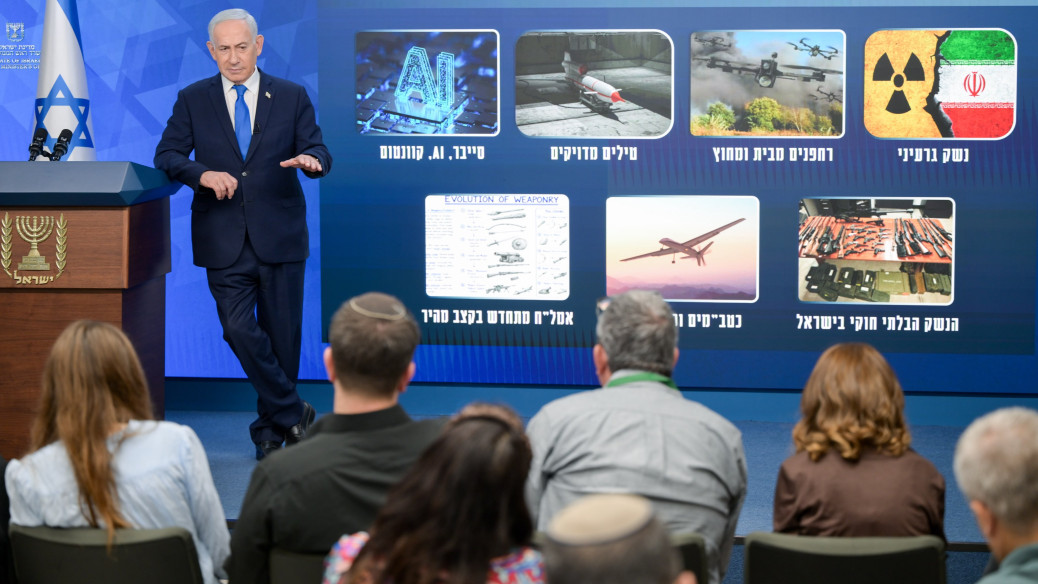
Israeli Prime Minister Benjamin Netanyahu has shared an updated security doctrine with the public ahead of general elections scheduled for 27 October.
Announced by the Prime Minister’s Office on 18 October and shaped with contributions from the National Security Council, the work includes a detailed map classifying Israel’s regional allies, adversaries, and spheres of influence.
The new doctrine aims to eliminate elements defined as threats directly through pre-emptive military interventions rather than containing them, to expand buffer zones, and to establish new regional partnerships.
Al Jazeera points out that this approach has effectively been put into practice during Israel’s recent military operations and strikes against neighbouring countries.
Regional blocs and allies classified on the map
The map presented by Netanyahu classifies not only sovereign states into blocs, but also armed groups, de facto administrations, and territories controlled by various forces.
The terms “alliance” and “friend” used on the map do not imply that formal and binding partnerships have been established with all these entities.
The “Hexagon Alliance” on the Israel-United Arab Emirates (UAE) axis and parties considered “friends” of this bloc are shown in blue and light blue shades.
This group includes Azerbaijan, Greece, southern Cyprus, the Druze in Syria’s As-Suwayda province, eastern Libya under Khalifa Haftar’s control, Ethiopia, Somaliland, Puntland, areas in Yemen held by the UAE-backed former Southern Transitional Council, and territories controlled by the Rapid Support Forces in Sudan.
The “Sunni Diamond Alliance”, formed by Türkiye, Egypt, Pakistan, and Saudi Arabia, alongside peripheral actors, is distinguished by green and light green shades.
This cluster marks Azerbaijan, Syria, Qatar, Kuwait, areas in Yemen controlled by the Saudi-backed Presidential Leadership Council, Eritrea, Sudan, the West Bank, Jordan, the Lebanese government, Northern Cyprus, and Somalia. In Libya, both the Tripoli-based western administration and the Haftar-dominated eastern administration are shown as linked to this bloc.
Iran and the Axis of Resistance are defined in red and pink colours. Hashd al-Shaabi in Iraq, eastern and southern parts of Lebanon where Hezbollah is active, Ansar Allah-controlled areas in Yemen, and Hamas-administered Gaza find a place within this axis. Russia is marked on the map in pink under “friend” status to this bloc.
Orange and yellow markings are also used around NATO members, alliance partners, and actors with friendly relations with Washington. The lines also illustrate the permeability between blocs.
For instance, Azerbaijan is presented with two-toned stripes as a friend of both the Israel-UAE axis and the Türkiye-led bloc, while India stands out as the only actor classified as a “friend” to all parties.
The map in question was reportedly prepared in May by Marc Saxer and Marcus Schneider for the Germany-based Friedrich Ebert Foundation, which has engaged with Israeli governments since 1978.
Pre-election rhetoric of the “indispensable leader”
Netanyahu is facing voters in a bid to retain power amid ongoing corruption proceedings and continued criticism over his management of the 7 October 2023 attacks and subsequent conflicts.
According to Al Jazeera’s analysis, releasing the security doctrine and map on the eve of elections rests on Netanyahu’s strategy of establishing himself as the only capable leader who can protect Israel.
Backed by electoral support from US President Donald Trump, Netanyahu pointed during his presentation to a potential change of administration in the White House.
Arguing that an administration distant or hostile to Israel could take office in Washington within two years, Netanyahu said his country must expand its network of alliances and become an attractive regional partner because of that possibility.
Mohanad Hage Ali, deputy director for research at the Malcolm H. Kerr Carnegie Middle East Center, noted that this presentation, built on rival blocs and security corridors, deepens existential anxieties within society.
According to Hage Ali, this approach reinforces voters’ perceived need for a tough leader, and Netanyahu is attempting to rally support from populations wary of uncertainty through this reassurance.
Fierce backlash from the Israeli opposition
The publication of the document provoked reactions in Israeli domestic politics.
Gadi Eisenkot, leader of the Yashar Party and former chief of general staff, criticised the work as consisting of “two empty pages filled with slogans that have nothing to do with an actual security doctrine”.
Emphasising that the Netanyahu government was responsible for the “gravest failure and disaster in Israel’s history” on 7 October, Eisenkot said subsequent escalating regional clashes had also left every front engulfed in flames.
Eisenkot argued that the document exposes a lingering strategic vacuum, while the prime minister is reviving fears to divert attention from misleading claims in his election pledges.
Yesh Atid leader and former prime minister Yair Lapid also described the text as superficial.
“Even by Netanyahu’s current standards, which are defined by exhaustion and detachment from reality, this document looks as if it was written using a free version of an AI chatbot,” Lapid said.
Lapid added that a text consisting merely of bulleted headings cannot be deemed a doctrine, and that the effort is nothing more than an attempt to cover up the disasters caused by the prime minister.
The buffer zone model
The buffer zone concept featured in the strategy document is based on Israel establishing direct military control over cross-border territories.
Al Jazeera notes that the current occupation conditions in Gaza and southern Lebanon are practical reflections of this policy.
Mohanad Hage Ali warned that a plan based on making military control permanent could bring fresh conflicts and the risk of ethnic cleansing.
Hage Ali also noted that portraying actors such as the Rapid Support Forces in Sudan and Haftar’s forces within the Israel-UAE axis could damage their legitimacy in the Arab world.
Arguing that this choice reflects Netanyahu’s domestic priorities, Hage Ali observed: “What Israelis think becomes more important than the reputation of your allies and the sustainability of these alliances.”
Netanyahu’s proposal for a “hexagon of alliances”, raised at the beginning of the year and covering India, Greece, southern Cyprus, and unspecified Arab, African, and Asian nations, has yet to be formalised.
While international analyses describe the initiative as a diplomatic branding exercise rather than a binding defence pact, observers recall that actors such as India prioritise commercial interests and non-alignment over rigid blocs.
Finally, Hage Ali stated that the presented map will provide propaganda material for the Tehran government and its allies, reinforcing arguments that Israel harbours regional expansion and domination ambitions.

German officials urge fighter jet alliance with Sweden and Spain

US wealthy demolish multimillion-dollar mansions for land

US and Israel weigh Iran strikes after midterm vote, reports say

Pentagon plans covert spy ring for economic war on China, report says

EU reopens debate on naming envoy for Ukraine talks with Putin
-

 America2 weeks ago
How will Brazil’s presidential runoff work?
-

 Europe2 weeks ago
Berlin Left Party backs Israel’s right to exist for coalition pact
-

 Diplomacy2 weeks ago
The West is preparing for war not with Russia, but with its own people, French analyst Georges Kuzmanovic insists
-

 Russia2 weeks ago
71 EU lawmakers demand closure of Russian Houses in 15 member states
-

 Russia2 weeks ago
US and Russian figures discuss American stake in Nord Stream lines
-

 Europe2 weeks ago
MI6 investigates potential leaks after former BND chief is detained
-

 Russia2 weeks ago
Drone strike shuts down Yandex data centre in Russia’s Ryazan region
-

 America1 week ago
Trump weighs presidential memorandum to cut surging US diesel prices
