
America
Mamdani case 2 – The nonpartisan American dream

The issue of the “middle class,” a topic that unites both sides of American politics, should not be taken lightly. The possibility of a direct confrontation between the rich and the poor is not a welcome prospect. The divergence in America’s two-party system emerges in the response to this challenge.
The Wall Street Journal article I mentioned at the beginning of the first piece, which quotes Palantir CEO Alex Karp, summarizes one of the proposed programs. The author states that he understands the anger of university graduates. But according to him, these angry young people are directing their anger at the wrong target: the real problem is not “capitalism” but “massive government subsidies for higher education that distort the labor supply.”
The Silicon Valley-libertarian-neoconservative alliance clustered around Trump calls for (once again) shrinking the state to overcome the crisis and renew the “American Dream.” They advocate for a return to “traditional” values to get rid of subsidies, the re-employment of workers “freed” from state support (re-industrialization), and a frenzy for artificial intelligence to achieve this re-industrialization. Since AI is also designed as a way to ostensibly get rid of workers, it also aims to rid the U.S., a country inhabited by people of color, of its immigrant workforce. The AI “revolution” is being framed by Silicon Valley’s wealthy as a method of racially, sexually, and geographically separating them from workers (and people of color); there is a desire to internationalize the “separate but equal” principle of the post-Civil War Jim Crow era.(1) In a country like the U.S., where class hierarchies both at home and abroad are fortified along the axes of family, nation, gender, and race, it is only natural to worry that the AI frenzy will reproduce and sharply delineate all these hierarchies.
We must also point out that Mamdani is “caught in the middle” here as well. Those in executive positions at major tech companies and banking monopolies are spreading a great panic that the white-collar jobs we know will disappear with the spread and development of artificial intelligence. The demographic that votes for Mamdani, as we noted in the first article, can also be described as “laptop workers.” “Democratic socialism” comes as a panacea for those who, armed with the knowledge that their labor power will be devalued, are demanding back the privileges derived from their technical capacity in the organization of the labor process.(2)
Faiz Shakir, a long-time advisor to Vermont Senator Bernie Sanders, indicates that the issue of artificial intelligence will become one of the main agenda items for politicians. According to him, much more political debate is needed on whether the new value AI will add is worth the “disruption of jobs and livelihoods, relationships, and the meaning of life.”
Moreover, according to a “swing states” poll obtained by Axios, distrust and concern about artificial intelligence have become a common problem for both parties. In each of the eight swing states, a majority of voters said they had a negative impression of the AI industry, believed the sector would increase energy costs, and that the increased use of AI would make their lives worse.
The higher the income, the more positively swing state residents view artificial intelligence and the more they believe it will make their lives better. The findings show that low-income workers fear losing their jobs.
In some states, Republicans are fundamentally divided on artificial intelligence, while independents and Democrats hold negative views.
“In an era of historic income inequality and social turmoil, every candidate needs to adopt an aggressive vision on AI,” Mamdani’s chief strategist, Morris Katz, told Holly Otterbein of Axios.
“The candidates and parties that can define themselves as the best line of defense against this coming crisis will be on the right side of history and in a powerful position electorally,” Katz adds. Axios argues that the atmosphere is “ripe for the emergence of an anti-AI socialist to take on Trump and more mainstream Democratic orthodoxy.”
The new mayor’s donors
Therefore, it is not surprising that employees in the middle and lower ranks of Big Tech companies are donating to Mamdani’s campaign.(3) According to campaign finance data reviewed by the New York Post, rank-and-file employees at Google had donated about $40,500 to Mamdani’s campaign by July 11. This is more than any other company or institution.
Meta employees were seventh on the list, donating over $10,500, followed by Amazon employees, who donated about $9,000.
According to the data, campaign funds also came from employees of prominent New York City companies such as the tech and media company Bloomberg (8,816), Spotify (7,415), Block (6,265), Squarespace (3,957), and MongoDB (3,900).
Outside the tech sector, Mamdani received significant support from employees at New York universities and city institutions. The data shows that the Columbia University system ranked second with about 33,000 dollars in donations, followed by the NYC Department of Education (26,214), the New York University system (24,331), and the CUNY system (18,336).
Still, we must point to more than just the “rank-and-file” of Big Tech here. Among the largest individual donors are Rehan Muneeb-Azhar from Illinois, a figure not well-known to the public (151,500), Haroon Mokhtarzada from Maryland (99,000), and Idris Mokhtarzada from Washington D.C. (90,000). These are not exactly struggling New Yorkers worried about costs. We are talking about Harvard Law School graduates who sold their first company, Webs.com, to Vistaprint for 117.5 million dollars, and their second, Truebill, to Rocket Companies for 1.275 billion dollars.
The influence of tech billionaires was further amplified by a $20,000 donation from Tom Preston-Werner, co-founder and former CEO of GitHub, from Palo Alto. This shows a continuous flow of money from the San Francisco Bay Area to a political action committee in New York City, where local elections were being held.
White Collar Fraud points out that 71.5% of the funds for the “New Yorkers for Lower Costs” political action committee came from out-of-state donors, with only 28.5% coming from New Yorkers, despite the committee’s name.
Embracing AI, but how?
Both Republicans and Democrats look at AI with dreamy eyes when it comes to the “revolution.”
In fact, Mamdani holds a position close to the Democratic mainstream on this issue. He had previously warned that AI “could harm workers, multiply biases, and weaken vital services if used irresponsibly,” and promised to regulate the industry.
“Ultimately, we must establish oversight to ensure that technological tools are used responsibly to deliver effective services. As mayor, I will work with unions and the City Council to pass legislation that properly regulates artificial intelligence,” Mamdani told Crain’s New York.
In an article for the Financial Times, historian Adam Tooze points to the contradiction in the AI issue, which has become a kind of bipartisan myth: How can the goal of both the Biden and Trump administrations—to revive American industry and restabilize the livelihoods of the working and middle classes—be reconciled with encouraging Silicon Valley to invest hundreds of billions of dollars to replace a large portion of the white-collar workforce with algorithms? Or how can the consumption spurred by international trade be reconciled with “decent-paying” jobs?
A new program for Democrats from Rodrik
This brings us back to the current era. Economist Dani Rodrik speaks with New Yorker correspondent John Cassidy about his new book, Shared Prosperity in a Fractured World. Coincidentally, the very same Cassidy, at the end of his recent book Capitalism and Its Critics, after taking us through pages from Marx to Luxemburg, is an author who argues that capitalism can be reformed!
One must tip their hat to such a coincidence. Rodrik, introduced as a critic of unfettered globalization, is certain that Trump’s economic policies will fail to bring back American industry and raise living standards; but he is equally certain that there will be no return to the pre-Trump global system.
Rodrik believes it is pointless to mourn this now-bygone system. He thinks this situation creates a new space in the U.S. to find solutions for what he sees as “today’s three most important economic problems”: first, the revival of the middle class in the U.S. and other Western countries; second, the reduction of poverty in poor countries; and third, combating climate change.
“We spend too much time on the global economy and global agreements. Yet there is so much that can be done at home,” Rodrik says, pointing to one of the elements of Trump-style politics that will carry over into the future.
Cassidy summarizes his understanding as follows:
“Rodrik’s suggestions include learning lessons from China’s remarkable industrial rise, focusing on services rather than manufacturing, and taking more advantage of the dramatic fall in the cost of green energy. Rodrik stresses the role that governments have to play in areas such as upgrading workers’ skills, increasing the bargaining power of low-wage workers, channelling resources to strategic sectors, and financing socially necessary but risky investments. But he advocates what he calls an ‘experimental’ approach rather than a dirigiste one. And he rejects the argument of the far right and the far left that we need to start from scratch. ‘The seeds of these innovative approaches are already present in widespread practices around the world,’ he writes. ‘What we need is not a revolution but a re-structuring of our priorities and policies.’”
Rodrik, who argues that “hyper-globalization” has caused social disintegration, seems surprised by the criticism he receives on this point, asserting that what he is saying is “pretty obvious.”
His emphasis on the services sector is quite significant, as Rodrik does not agree with the overemphasis on manufacturing. “Whether we like it or not,” he writes, the services sector will continue to be the main engine of jobs in the economy. Some jobs, like executive positions, are well-paid, but many, especially in areas like retail and care, are low-wage positions. The inevitable conclusion is the need to increase productivity in these areas. Once again, we arrive at artificial intelligence.
Rodrik wants to establish a version of DARPA, the Pentagon agency that financed the development of the internet, GPS, and the mRNA technologies used in COVID-19 vaccines, but for workers. While DARPA focuses on research with potential military significance, Rodrik’s proposed “ARPA-W” would focus on developing “labor-friendly technologies,” including those that use artificial intelligence.
Cassidy reports:
“Some observers predict that A.I. could eliminate a great many jobs, many of them well-paid ones. Echoing the views of the M.I.T. economists David Autor, Daron Acemoglu, and Simon Johnson, Rodrik argues that technological progress needs to be refocussed. Referring to his ARPA-W proposal, he writes, ‘The general purpose would be to enable workers to do things they cannot currently do, rather than taking over the things they are already doing and displacing them.’”
Rodrik argues that his proposal is a “productivist” paradigm. He emphasizes that the state should help finance areas such as education, training, scientific research, infrastructure, and the development of green technologies. According to him, these are all areas where the private sector falls short when left to its own devices. We could say he is advocating for a kind of “public-private partnership,” or a new public-private hybrid. He proposes “collaborative, experimental solutions” that go beyond old technocratic methods of intervention. He indicates that the state should lay the “groundwork” for the Trumpist AI frenzy.
Rodrik attributes the fact that Biden-era industrial policies did not immediately provide support for the Democrats not to the inherent flaws of the policies themselves, but to “timing.” A little time is needed for the transformation, and perhaps some new personnel.
As the Democratic “old guard” exits the stage
Last summer, in an article I wrote after Mamdani won the Democratic primary, I touched briefly on the soul-searching the Democrats entered into after the Biden-Harris debacle.
The name of Saikat Chakrabarti, the former chief of staff to New York Representative Alexandria Ocasio-Cortez (known by the abbreviation “AOC,” age 36), one of the first to challenge the “gerontocracy” trend in the Democratic establishment, is now being heard more often. With Democratic heavyweight Nancy Pelosi announcing her retirement, the possibility of this Silicon Valley native taking her Representative seat in San Francisco has increased slightly.
Speaking to The Intercept, Chakrabarti says, “We’re in a moment where we need new ideas, new leaders, people who are going to take the party in a new direction.” The introduction to the story reminds us that Chakrabarti is “the person who made economic inequality and corporate power the focus of his politics.”
Chakrabarti makes no secret of his goal to “replace a big chunk of the Democratic Party establishment.” He is demanding primaries across the country. Beyond New York and San Francisco, the seats of many former Democratic representatives are shaky under the assault of “progressives.” Shri Thanedar (Michigan), Wesley Bell (Missouri), and Jimmy Gomez (California) are facing insurgents backed by the “Justice Democrats,” which Chakrabarti is behind.
Let’s turn to Chakrabarti’s platform. Despite the “Green New Deal” he shares with AOC, he seems to have gone his own way due to his ideas on nuclear energy. The Silicon Valley super-rich promises to remove the bureaucracy in front of nuclear energy to meet the massive energy hunger throughout his political life.
Chakrabarti insistently argues that nuclear is safe, clean, climate-friendly, and has various other benefits. He argues, as Big Tech doomsayers often do, that an energy crisis will emerge in the near future. All of this is reminiscent of the AI bubble driven by the energy hunger resulting from the data center frenzy. Tech monopolies like Microsoft are, right at this moment, launching a charge into nuclear.
But there’s more. Chakrabarti acknowledges that it will take time for the American public to be prepared for nuclear. Yet the crisis demands urgent responses. The solution: the American military, which is exempt from civilian safety regulations and free to assemble nuclear reactors without the interference of the democratic process!
“The plan begins with the accelerated construction of nuclear plants on military bases across the U.S., combining military know-how with the expertise and workforce of the civilian nuclear industry. The energy thus produced will be connected to the civilian power grid. Then, ‘once the military program has proven that nuclear power is safe and necessary,’ it will be time to ‘use the president’s emergency powers to… bypass traditional regulatory hurdles,’ and a nationwide nuclear construction boom will begin. The less Congress wants to participate in this plan, the better: Presidential orders will do the job. The democracy Chakrabarti claims to support will disappear, and the authoritarianism he claims to oppose will take its place.”
These should not be considered far-fetched propositions. Last month, the Trump administration released a proposal aimed at helping AI data centers connect to the power grid more quickly. Energy Secretary Chris Wright sent the proposal, which he hopes will speed up grid connections for data centers, to the Federal Energy Regulatory Commission (FERC), according to the department’s press release.
Wright’s rule seems to particularly favor centers with their own “dispatchable” power sources, ensuring the “expedited” processing of such facilities’ operations. How dispatchability is defined is not entirely clear, but it generally refers to fossil fuel and nuclear power plants that can be turned on and off on demand.
And there’s more. Valar Atomics, a nuclear startup backed by Lockheed and Palantir, raised $130 million in its latest funding round. This company hopes to meet the growing energy demand with nuclear power. Valar’s goal is to meet the Department of Defense’s demand for reliable, off-grid power on military bases. In other words, the segregation and caste formation we mentioned in the first article will be the legitimate outcome of the Chakrabarti program, Trump regulations, and Silicon Valley startup policies, as a system where even electricity grids are completely separated is on the horizon.
Mamdani’s talented team
On the other hand, don’t underestimate Mamdani’s agility. Although he appears to be in a fight with New York’s “neoliberal” elites,(4) there is no doubt he is quite cozy with the apologists of the Obama era. Father Al Sharpton is one of them. Civil rights activist Sharpton was known for defending the war crimes and neoliberalism of the Obama presidency. In a 2011 interview with Lesley Stahl on “60 Minutes,” he said he refused to criticize then-President Obama on any issue; he was more inclined to level harsh criticism against figures who called for Obama to be held accountable.
Since the Obama years, Sharpton has remained silent on the crimes and indifference of the Democrats. In return, he was rewarded with a cushy position at MSNBC.
Mamdani’s hiring of Jeffrey Lerner as communications director also gives an idea. Lerner is intertwined with the Democratic establishment, including his roles in former Governor Andrew Cuomo’s office and on the 2012 Obama re-election campaign for the Democratic National Convention. He also spent the last decade in the world of “high-stakes” corporate and political consulting. Since 2013, he has worked at the leading public relations firm DKC (whose clients include Airbnb and Bloomberg) and as a senior advisor to Senator Laphonza Butler. In 2019, he became a consultant for Uber and later the director of public policy for Airbnb. These positions are known to have provided him with a six-figure salary and at least a million dollars in Airbnb stock.
The Wall Street Journal, meanwhile, writes that Pfizer executive Sally Susman is Mamdani’s “unofficial advisor.” Susman happily announces to the corporate world that the new mayor is not “parochial.” Mamdani was not like Bill de Blasio, who greatly offended the city’s wealthy (Jamie Dimon complained that he never once met with him!). Jonathan Rosen, who advises Democratic politicians in New York and across the country and is the CEO of the communications firm Orchestra, thinks Mamdani has “shown tremendous skill” by organizing an “epic charm offensive” since the primaries.
Moreover, the rise of another white-shirted figure on the West Coast is not going unnoticed: California Governor Gavin Newsom. The Democratic governor, who has drawn attention for his high-profile attacks on Trump, is also developing relationships with the major tech companies in his state and taking new steps regarding artificial intelligence and data centers.
Is the Trump wind dying down?
As Rodrik said, timing is important. Chakrabarti also told POLITICO, “In some ways, I think Justice Democrats was too early in 2018. I really think there’s a political opportunity to do it right now.” The talk of “door-to-door organizing, being among the people” is apparent in Chakrabarti as it is in Mamdani; the Democrats are discovering the “power of organizing.”
At this point, views are multiplying that the Trumpist turn in American politics has been exaggerated, and that the chapter on realignment is even beginning to close. Journalist G. Elliott Morris thinks that the 2024 election can be seen as a vote against the incumbent, stemming from economic concerns largely caused by the rising inflation during Joe Biden’s presidency.
Indeed, the elections held in various states, which the Democrats won, are an indicator of the dissatisfaction with the current Trump administration. Elliott notes that from 2024 to 2025, the group where Republicans lost the most support (an average of 25 points) were the very voters who were supposed to transform the Republican Party into a “broad, multiracial, working-class coalition.”
According to the author, the data shows that Trump’s winning coalition, if it ever existed, has almost completely disappeared. According to Pew research, non-white, working-class/low-income, and young Americans had shifted an average of 12 points toward Trump in the presidential election (in terms of vote margin) from 2020 to 2024. In 2025, the same groups are seen to have shifted back to the “left,” this time by an average margin of 25 points.
For example, in Virginia’s exit poll, the Republican vote margin dropped in all subgroups except for older voters. Non-white, low-income, and young voters all shifted toward the Democrats at an above-average rate. The Republican Party’s vote margin fell by 40 points among Asian American voters, 20 points among Hispanic/Latino voters, and 22 points among the 18-29 age group. White voters showed only a 5-point shift. The gender gap persisted, but both groups shifted toward the Democrats: men by 3 points, and women by 15 points.
Among voters who said the economy was the most important issue, confidence in the economy shifted 93 points toward the Democrats between 2024 and this year’s elections in New Jersey and Virginia. On the other hand, the proportion of those who cited immigration as the most important issue remained largely unchanged, and this group continued to support the Republican Party as they did in 2024.
According to Elliott, the dynamic of anger fueled by inflation that cost the Democrats in 2024 reversed in 2025, hurting the Republicans. The author argues that polls have long shown that “voters are not voting for the current policy outputs of the Trump administration” and that they “disapprove of Trump’s agenda on almost every issue.”
Axios also believes the “blue wave” is related to Trump’s economic performance. According to them, the message is that “Americans want products to actually be cheaper.”
The price level of most goods in the U.S. has continued to rise for years, causing a significant increase in the cost of many basic necessities. “This situation,” says Axios, “shows that the Trump administration and Federal Reserve officials, who see the war on inflation as largely won, are not on the same page as voters who want prices to come down.”
Food prices have increased by 29.2% since February 2020, and household energy prices by 40%. The low headline inflation rate in 2025 conceals some frequently purchased items whose prices have risen rapidly. Coffee is 20% more expensive than a year ago, when then-candidate Trump promised food prices would fall; ground beef is 15% more expensive, and these simple examples continue to influence “voter behavior.”
Fox News’s exit poll for the New Jersey gubernatorial election revealed that voters who prioritized the economy supported Democrat Mikie Sherrill, a former prosecutor, over Republican Jack Ciattarelli, a businessman by trade.
ABC’s exit poll showed that the economy was the most important issue for Virginia voters, who supported Democrat Abigail Spanberger by a 20-point margin for this reason.
Mamdani as Pastiche
The biggest gains for bosses angered by rising labor costs, especially in retail and food services during the pandemic, were the Medicaid work requirements in the “Big Wonderful Law.” A bill introduced to the House of Representatives in February 2025 included a minimum work requirement as a condition of insurance coverage for certain adults enrolled in Medicaid. This was one of the Republicans’ “victories.”
The other, as we have touched upon, is artificial intelligence. To rebuild the “middle class,” consumption must be made easier. I have pointed out that AI applications in many sectors facilitate the employment of foreign workers in their home countries. It may be even easier to offshore labor costs, especially in the service sector. But in that case, the claim of “strengthening employment” becomes completely hollow. The international division of labor is re-established, and geographical and class dividing lines are fortified with other hierarchies.
Therefore, it is not possible to consider Mamdani a “reformist” in the 20th-century sense. No one is advocating a return to the “welfare state.” No one wants to increase the political and economic power of workers. That is why, for example, the promise of “social housing” in New York has to take over former mayor Eric Adams’s “City of Yes” initiative, which means nothing more than loosening the long procedures that enable new construction in the city. The initiative designed to change New York’s process for approving new zoning projects, the Uniform Land Use Review Procedure (ULURP), and the referendums held for this initiative, will be Mamdani’s starting point. The ULURP “bureaucracy” will be reduced, and developers will be given the chance to accelerate the construction of “social housing.”
So what we have is the “shadow of reformism,” or, as Fredric Jameson used the term for postmodern times, “pastiche”: an incomprehensible, empty/meaningless imitation composed of self-enclosed stylistic variations and heterogeneities, unlike parody, which uses exaggeration to point to a kind of “normal” in what it imitates.
What is called a “program” is just empty noise, cooked up to tell the non-left left, “Just hang in there a little longer!”
(1) The wealthy donors preparing JD Vance for the presidency call this “aristopopulism,” in the sense of allying the aristocracy with the working class. The Trumpists, who say they want to rebuild the American dream by rebuilding the middle class, are, on the contrary, proposing a set of policies that will destroy the middle class.
(2) Apart from health problems, few things cause as much stress as the threat or reality of unemployment: a May 2025 survey by the American Psychological Association reveals that three-quarters of employees experience stress due to job insecurity.
(3) Of course, if you scratch beneath the surface of the donations, a Soros connection also appears: one of the parties that nominated Mamdani, the Working Families Party, is clearly linked to the Open Society Foundations, and this party’s Political Action Committee (PAC) had spent nearly $702,000 for Mamdani as of July 7, 2025. The Open Society Foundations had publicly announced a $20 million donation commitment in 2021 to organizations including the Working Families Party, which it described as a “key partner.” The photograph of Mamdani posing with Alex Soros right after the election thus becomes even more meaningful.
(4) A top strategist who works regularly with New York’s major donors, speaking to Vanity Fair, dismisses the anti-Mamdani statements of some of the super-rich, saying: “I think it’s more of a temper tantrum. In 2013, there was talk that the real estate industry would come together to stop Bill de Blasio. That didn’t happen. And if you’re a big donor these days, you’re not just relying on public polls or what some super PACs are telling you. You’re doing your own polling [to decide whether to back a candidate].”














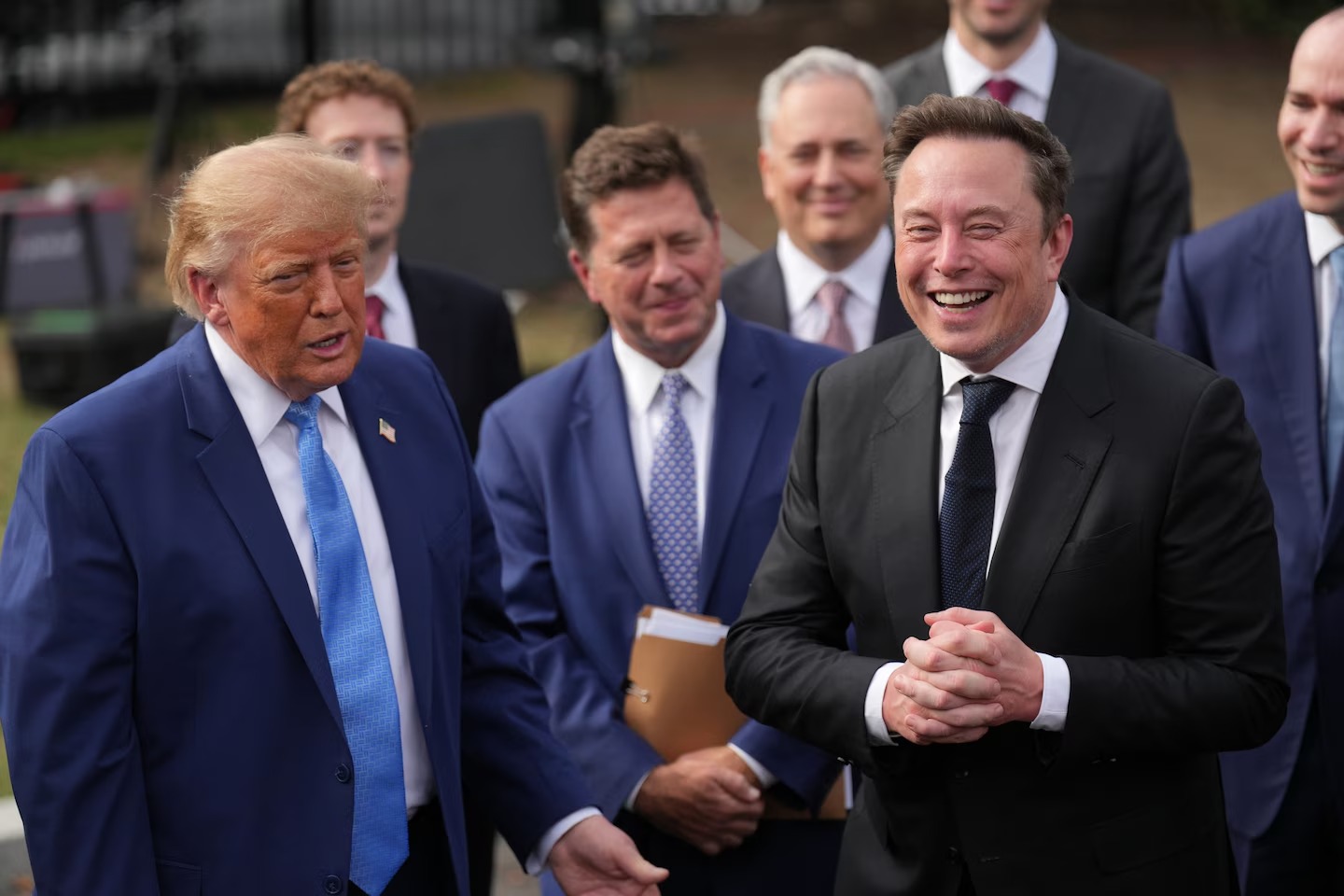
The world’s richest man, Elon Musk, has assumed the co-directorship of a Pentagon initiative focused on the future of warfare, known as “Project Meridian”.
Musk’s new role was announced by US Secretary of Defence Pete Hegseth.
Musk, who has long expressed his conviction that wars will ultimately be fought with autonomous unmanned aerial vehicles, will advise the project as co-director alongside Palmer Luckey, founder of defence start-up Anduril, and former Speaker of the House of Representatives Newt Gingrich.
In a memorandum issued at the Pentagon, Hegseth stated that the group would “examine the battlefields of the future” and “determine which weapons and technologies warfighters must employ to achieve dominance in these environments.”
During his “State of the Force” address at Marine Corps Base Quantico, Hegseth said:
“The best predictors of future conflict do not reside exclusively within the Pentagon. Obvious biases and risks arise when we task ourselves with both framing the questions and answering them.”
Hegseth stated that this initiative would commence immediately and that, following his address, he would convene with Musk, Luckey, and Gingrich at a secure location.
Project Meridian will have 120 days to “ruthlessly map the trajectory of wars, domains, and technologies”, a process that will culminate in the public disclosure of its findings alongside a classified annex.
Hegseth outlined an expansive mandate extending “from beneath the surface of the Earth to beyond the Moon.”
Rather than formulating new military strategies or policies, the panel will seek to identify “the domains we must seize and the capabilities we must master”, focusing on the effort to “discover, develop, and field” the weapons and systems that next-generation American troops may require.
The group is expected to submit a report containing recommendations to him by the end of January.
In 2024, Musk remarked: “Future wars will be entirely about drones and hypersonic missiles.” This was merely one of several similar statements he has made in recent years.
For Musk, whose oversight role at the Department of Government Efficiency (DOGE) ended in turmoil and escalated into a dispute with President Donald Trump over Trump’s spending bill, this appointment marks his formal return to government in an official capacity.
Musk and Trump ultimately reconciled, and Musk attended a meeting on artificial intelligence safety at the White House this week alongside other technology leaders.
Meridian forms part of a broader push announced by Hegseth to restructure the military around autonomous warfare and rapidly advancing technologies.
Hegseth announced the establishment of the Autonomous Warfare Command (AUTOWARCOM), a new four-star combatant command endowed with what he termed “service-like authorities” to scale autonomous and robotic capabilities across the joint force.
The Department of War will also begin phasing in new occupational frameworks across all military branches to establish specialised career tracks for what Hegseth described as “the next generation of autonomous warfighters.”
“We should have conceived an Autonomous Warfare Command a decade ago,” Hegseth said, explaining that Meridian aims to gaze far enough ahead to enable the military to anticipate the next technological shift rather than lag behind.

A cyberattack targeting the US Department of War’s personnel database has resulted in the leak of personal information belonging to approximately 3 million people.
Speaking to ABC News, a Pentagon official stated that the system accessed by unauthorised individuals contained the records of 2,760,000 living persons and 294,000 deceased individuals.
The Military Times portal, which first broke the news, had reported the number of affected individuals as approximately 4 million based on two sources. The Pentagon official subsequently conveyed different figures to ABC News.
The leak encompasses Social Security numbers and duty information belonging to military personnel and civilian employees. According to an official notification examined by Military Times, the compromised records may also include names, dates of birth, contact information, sex, race, and military occupational specialties.
The unauthorised access to the information system of the Defense Manpower Data Center (DMDC) lasted for approximately nine months, between October 2025 and 16 July 2026.
ABC News reported that the access in question was obtained by a small number of third-party users. The vulnerability was closed after it was identified.
The DMDC is considered one of the Pentagon’s primary personnel records centres. More than 60 million records belonging to active-duty personnel, reservists, civilian staff, contractors, retirees, veterans, and military family members are stored at the centre.
The Pentagon has not detected any evidence that the leaked data has been misused. Military Times reported that affected individuals were offered identity restoration and credit history monitoring services.
A similar data breach previously occurred on the Federal Bureau of Investigation’s (FBI) recruitment website, FBIJobs.gov. According to information obtained by ABC News from internal communications and sources, the FBI is considering the possibility that data belonging to its entire staff may have been stolen.
The New York Times (NYT) examined a portion of the stolen FBI records. Home addresses, telephone numbers, official email addresses, Social Security numbers, dates of birth, hiring dates, and emergency contact details for relatives were identified within these documents.
The database also contained unit designations, duty roles, and information regarding the supervisors of personnel. Some records revealed assignments within counterintelligence and counternarcotics units, as well as departments examining threats originating from Russia, China, and Iran.
Ciaran Martin, the former head of the UK National Cyber Security Centre, noted that this type of breach could directly affect the FBI’s operational capabilities.
The hacker group known as ShinyHunters had announced that it had seized medical data and security clearance records alongside files belonging to tens of thousands of active and former FBI employees.
Experts evaluating the matter for the NYT warned that this information could be used to track agents, threaten their families, or compile dossiers by foreign intelligence services.
The ShinyHunters group initially threatened to release the data unless the bureau withdrew an advisory it had published concerning the group’s attack methods.
The group later asserted that it had never intended to leak the information and characterised its action as an advertising campaign.
In a report published in May, Reuters noted that the personal data of US military personnel had been used in surveillance and attack preparations.
According to the agency, Washington’s adversaries gained the ability to pinpoint areas where troops were concentrated by exploiting commercially available location data. US lawmakers at the time criticised the Pentagon for failing to adequately protect the personal data of military personnel.

US President Donald Trump’s trade policy and the Washington administration’s push to increase Venezuelan oil imports are prompting Canada to diversify its energy exports.
According to a report by The Wall Street Journal, recent developments are accelerating Canada’s development of new oil and natural gas projects.
Steps taken by the Ottawa administration, which aspires to become an energy superpower, are seen as potentially strengthening the country’s position in global markets.
In Canada, the world’s fourth-largest oil producer and fifth-largest natural gas producer, the energy sector accounts for approximately one-fifth of total exports.
Almost all of the country’s natural gas exports and approximately 90% of its oil exports go to the US.
The newspaper writes that the trade war with Washington and the atmosphere of confrontation entered into with Iran have heightened Canada’s desire to turn to alternative markets outside the US.
Officials plan to increase shipments of oil and liquefied natural gas (LNG) to European and Asian markets.
Accelerating infrastructure investments in line with this target, Canada is also shortening approval processes. The government is prioritising the construction of an oil pipeline extending specifically to the west coast.
According to the newspaper’s estimate, if major pipeline projects are implemented, Canada’s daily oil transport capacity could rise to 6.8 million barrels by 2034.
Routes heading to the west coast will make up approximately 30% of this capacity.
The Canadian administration is simultaneously advancing LNG export projects. According to the report, these investments could allow approximately 55% of Canadian natural gas exports to be directed to markets outside the US by the early or mid-2030s.
While the government expands tax incentives for the oil and natural gas sector, the province of Alberta also plans to overhaul its royalty system.
However, the newspaper notes that implementing the new projects requires heavy investment, and the process depends on the final decisions taken by producers as well as the completion of regulatory approval processes.
The expansion of pipeline and LNG infrastructure could gradually reduce Canada’s dependence on the US market while raising its share in the global energy market.
The Canadian Prime Minister’s demand to reduce reliance on the US market had also come to the fore in July.
According to Carney’s statement, the province of Alberta submitted a plan for a pipeline spanning more than 1,000 kilometres to the west coast of British Columbia.
Targeted for completion by September 2027, the line will reach the Pacific coast by following an existing corridor through the mountainous terrain.
This shift in energy comes at a time of strained relations with the US. Donald Trump said that if Canada obtains associate member status in the European Union, he could halt trade with Europe in certain sectors and impose high tariffs.
As reported by the Associated Press, Trump characterised such a rapprochement as a “potentially hostile act”.
European Commission President Ursula von der Leyen had proposed opening the path for Canada to become the EU’s first associate member. The terms of this associate membership status, which is not defined in EU treaties, are not yet clear and require the approval of member states to enter into force.
Canada, which does not seek full membership, aims for maximum rapprochement with the EU.
Following Trump’s return to the White House, relations between Washington and Ottawa deteriorated. The Trump administration, which repeatedly called on Canada to become the “51st state” of the US, introduced additional tariffs.
In July, the US began imposing 50% tariffs on certain Canadian-origin goods.

We are no longer in 1992, the US has lost its military superiority, Ret. Lt. Col. Davis says

Germany expands North Sea military ports and plans new naval base

Musk appointed co-director of Pentagon future warfare initiative

US waives human rights terms on $320m military aid to Egypt

Putin says Russia did not start war and warns of nuclear risks
-

 Europe5 days ago
European unions urge governments to scrap all Palantir deals
-

 Diplomacy5 days ago
East-West Forum in Istanbul highlights irreversible shift to multipolarity
-

 Europe1 week ago
Emmanuel Todd says West faces collapse amid Ukraine and Iran crises
-

 Europe1 week ago
European intelligence chiefs divide over risk of Russian attack
-

 Middle East1 week ago
Sharaa says 7 October must not shape Israel policy on Syria
-

 Diplomacy1 week ago
East-West Forum in Istanbul to debate multipolarity and global order
-

 America1 week ago
Republican support for Trump’s war with Iran drops sharply in polls
-

 Middle East1 week ago
Palestinian factions confront legitimacy crisis at Istanbul talks
