
America
The Mamdani case – 1: The ‘class-based’ verbiage

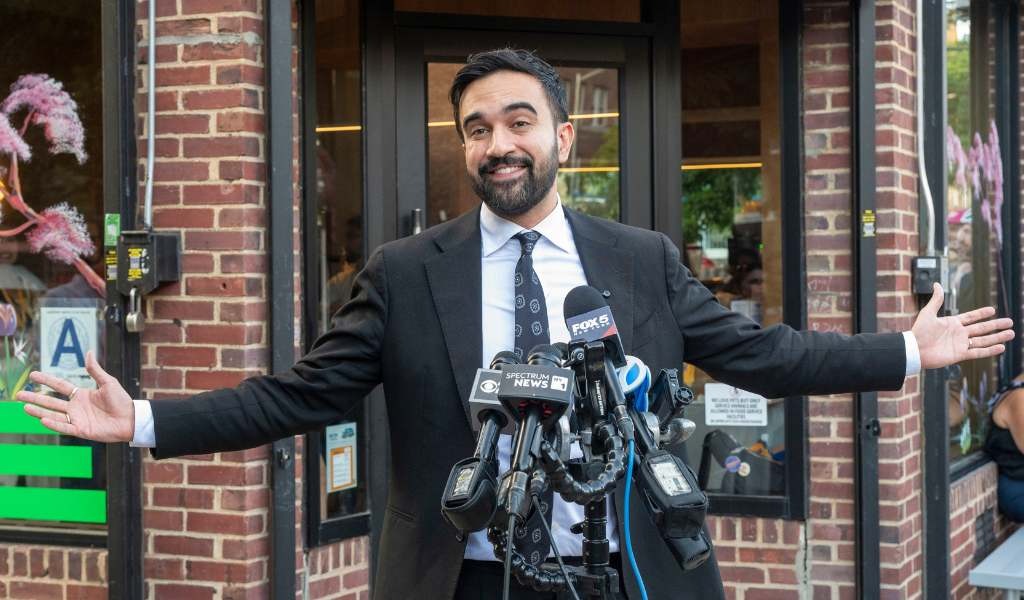
“I think the average Ivy League graduate who voted for this mayor is very angry that their education isn’t that valuable and that their neighbor, who moved to Texas and knows how to drill for oil and gas, has a more valuable profession.”
The words above belong to Alex Karp, the eccentric CEO of Palantir. Karp, who pins his hopes on a Nietzsche-inspired aristocratic rebellion for the salvation of the US and “Western civilization,” attributes Zohran Mamdani’s election to this kind of “reverse class war.” At least, this is what Allysia Finley points out in an analysis for the Wall Street Journal before quoting Karp.
There are quite a few people in Türkiye and around the world who see Mamdani’s victory as a rejection of “identity” politics and a rise of “class-based” demands.(1) Moreover, these views are being voiced simultaneously by figures close to both the opposition and the government. It makes one want to ask, “And which class are you in?” There is certainly confusion, and we will get to that; but on the other hand, it’s important to have an idea of which class those looking for “leftism” in Mamdani—in both positive and negative senses—do not belong to.
In this context, although I’d rather not, I must quote Lenin. In his 1919 article titled “A Great Beginning: Heroism of the Workers in the Rear. ‘Communist Subbotniks’,” Lenin, after a string of words and terms like “class,” “class struggle,” and “abolition of classes,” provides a rather concise and objective definition of how classes are to be defined:
“What, then, does the ‘abolition of classes’ mean? All those who call themselves socialists recognise this as the ultimate goal of socialism, but by no means all ponder over its significance. Classes are large groups of people differing from each other by the place they occupy in a historically determined system of social production, by their relation (in most cases fixed and formulated in law) to the means of production, by their role in the social organisation of labour, and, consequently, by the dimensions of the share of social wealth of which they dispose and the mode of acquiring it. Classes are groups of people one of which can appropriate the labour of another owing to the different places they occupy in a definite system of social economy.”
Now we can ask more clearly: Whose class program is Zohran Mamdani’s, and from whom did the dashing new Mayor of New York get his votes?
Gentrified neighborhoods and a “gigantic middle class”
One of American sociology’s worst gifts, perhaps its very worst, is its reduction of complex social phenomena to statistics. Nevertheless, or perhaps precisely because of this, it is possible to access data on everything.
I will point to one statistical study; it’s from the New York Times here. We are looking at how the candidates—Mamdani, Cuomo, and Sliwa—performed among different voter groups. While Cuomo had a clear lead over Mamdani in majority-white neighborhoods (52% to 38%), Mamdani was ahead in neighborhoods where Black, Hispanic, and Asian residents are in the majority (61%, 57%, and 47% respectively). When it comes to the Black vote, it appears that Cuomo, who performed surprisingly well in the primaries, lost his voters to Mamdani.
Then come the income groups. The NY Times divides income groups into three: high, middle, and low. High-income earners live in 5% of the precincts, middle-income earners live in (you heard that right!) 80%, and low-income earners in 15%. While Mamdani received 51% of the vote in middle- and low-income precincts, Cuomo received 50% in high-income precincts (Mamdani got 47%).
Last June, CNBC did its own calculation of how much one needs to earn to be “middle class.” According to this, in New York City, the “lower-middle-class income limit” is $51,051; the “upper-middle-class income limit” is $153,154; and the median household income is $76,577. The NY Times also states, “The median income of low-income areas is under $50,000, the median income of middle-income areas is between $50,000 and $200,000, and the median income of high-income areas is over $200,000.”
Mamdani performed exceptionally well in the gentrified neighborhoods of Brooklyn: Clinton Hill, Prospect Heights, Bushwick, Fort Greene, South Slope…(2)
The Clinton Hill home of the famous rapper Biggie Smalls was put up for sale by a real estate agent in 2013 for $750,000 link. The owner of the shop where Biggie used to work said, “The neighborhood changed. We’re selling everything. It’s all yuppies now.” But there are “pluses” too: crime rates are dropping rapidly, and according to the Daily News article, a chic French bistro has opened just down the block!
Or we can listen to director Spike Lee, a “child of New York.” Bedford-Stuyvesant, where he filmed Do the Right Thing, is now a gentrified neighborhood; Mamdani managed to win 77% of the vote there too. In an angry speech published in New York Magazine in 2014, Lee laid into the gentrified neighborhoods of Brooklyn, saying the following—it’s long, but I’m quoting it:
“There was a bullshit article in the New York Times about the good of gentrification. I don’t believe it.
Here’s the thing: I grew up here in Fort Greene. I grew up here in New York. It’s changed. And why does it take an influx of white New Yorkers in the south Bronx, in Harlem, in Bed Stuy, in Crown Heights for the facilities to get better? The garbage wasn’t picked up every motherfucking day when I was living in 165 Washington Park. P.S. 20 was not good. P.S. 11. Rothschild 294. The police weren’t around. When you see white mothers pushing their babies in strollers, three o’clock in the morning on 125th Street, that must tell you something.
(…)
Then comes the motherfucking Christopher Columbus Syndrome. You can’t discover this! We been here. You can’t just come and bogart. There were brothers playing motherfucking African drums in Mount Morris Park for 40 years and now they can’t do it anymore because the new residents said the drums are loud. My father’s a great jazz musician. He bought a house in nineteen-motherfucking-sixty-eight, and the motherfucking people moved in last year and called the cops on my father. He’s not even blasting bass! He’s playing acoustic bass! We bought the motherfucking house in 1968 and now you call the cops? In 2013? Get the fuck outta here!”
(…)
You can’t just do that. And then! So you’re talking about the people’s property change? But what about the people who are renting? They can’t afford it anymore! You can’t afford it. People want to live in Fort Greene. People wanna live in Clinton Hill. People are moving from the Lower East Side to Williamsburg, but they can’t even afford motherfucking Williamsburg now because of the motherfucking hipsters. What do they call Bushwick now? What’s the word? [Audience: East Williamsburg!]
That’s another thing: The motherfucking… These real estate motherfuckers are changing names! Stuyvesant Heights? 110th to 125th, there’s another name for Harlem. What is it? What? What? No, not Morningside Heights. There’s a new name. [Audience: SpaHa] What the fuck is that? How you changin’ names?
(…)
So, why did it take this great influx of white people to get the schools better? Why’s there more police protection in Bed Stuy and Harlem now? Why’s the garbage getting picked up more regularly? We been here!”
John Carney, a Wall Street veteran, CNBC editor, and hedge fund manager, pointed out in a piece on his Substack account after the Democratic primaries that Mamdani’s supporters residing in gentrified neighborhoods like Park Slope or Bushwick are in no sense working class, but they can’t exactly be considered “elites” either. He writes:
“They belong to a group that is becoming increasingly central to American politics: the downwardly mobile professionals, the overproduced graduates of our university system, people raised to expect middle-class stability who have instead discovered the system has little to offer them but high rent and burnout. Their anger is real, and if the right is serious about building a majority coalition around economic renewal, it should start trying to understand that anger rather than mock it.”
The neighborhoods Mamdani won, according to him, are not the strongholds of the twentieth-century working class. They are something “newer, stranger”: areas inhabited by the educated precariat. Carney describes the residents of these neighborhoods as “nonprofit administrators, freelance writers, overworked teachers, and software engineers who have to stretch their six-figure salaries from paycheck to paycheck,” in short, people living in “areas of post-industrial drift.” According to him, these people are “too rich to be poor, and too poor to feel secure.”
The “Middle Class” Myth
But what are we to make of the fact that absolutely everyone—Republicans, Democrats, and their distributors in Türkiye—agrees on the “erosion of the middle classes”? Who means what?
It’s difficult to provide a material definition of the “middle class.” In the US, there are certain criteria for being middle-income. But these are criteria that, when you apply them to a concrete situation, mean you can be considered “middle-income” in New York state with an annual income of $60,000, or with $120,000. Zein Rimawi, a Palestinian-American New Yorker who spoke to Al Jazeera, says that when he got married in 1988, one week’s salary covered the average rent, whereas now a large portion of his monthly salary goes to rent. He adds, “The middle class in New York is disappearing. If it continues like this, soon there will be only two classes: the rich and the poor.”
The “Center for New York City Affairs” at The New School also conducted a study in October 2024 on the “shrinking and beleaguered” middle class in post-pandemic New York. According to the study, the pandemic accelerated the decline of the middle class in New York City; there was a significant loss of employment in middle-income jobs, and wage growth in such jobs slowed. The study concludes: the economic instability of the middle class has increased, and job and income polarization has intensified.
According to the study’s findings, between 2019 and 2023, New York City lost more than 76,000 jobs paying middle-income wages, which corresponds to nearly 5% of the total of such jobs.
Middle-income workers saw a 5.4% real wage increase between 2019 and 2023. While this increase was above the national average for middle-income workers (3.0%), it was less than the increase obtained by low-wage workers (6.0%) and far, far lower than the increase obtained by high-wage workers in New York City (18.2%).
Employment in middle-income jobs is decreasing (especially in administrative, clerical, and construction jobs), and wage increases are relatively lower than in other brackets; whereas in low- and high-wage jobs, both employment and wages are rising relatively more.
To this, we must also add the financial sector, which migrated during the pandemic. New York is increasingly no longer the city with the highest employment growth in financial services. According to a Bloomberg study, from 2020 to 2023, more than 150 financial firms managing nearly $1 trillion moved their headquarters from New York to other locations.
According to data from the Bureau of Labor Statistics, the relocation of financial firms after 2020 caused Texas to gain the most finance jobs and New York to suffer the largest job losses in the sector.
Returning to The New School study. The report argues that the “potential erosion” of New York City’s middle class is strikingly reminiscent of economist Branko Milanovic’s famous “elephant curve.” This curve indicates that the low- and middle-income segments in emerging economies like China and India have benefited significantly from globalization, with their incomes rising rapidly since the 1980s.
In contrast, in developed economies like the US, the lower-middle and middle-income segments have experienced no income growth during the same period; however, the world’s richest 1% (or the high-income bracket) has recorded significant income gains, taking the largest share of global income growth as the winners of globalization.
“In other words,” says researcher Mohamed Obaidy, “the middle-income segment in developed economies are the biggest losers of globalization. The curve has since been updated and still holds true.”
According to Obaidy, this phenomenon is largely due to international trade and financial institutional arrangements that particularly favor the top income group in the income distribution, and one of its harmful effects is that it increases “political polarization among domestic and foreign citizens.”
The New York Times, in an article titled “Zohran Mamdani and the Revenge of the Floundering Yuppies,” gives an example of this “class”:
“Kate Schutzengel, a mother of three in Brooklyn, knows her life is pretty good.
Ms. Schutzengel, 38, who works in the tech industry, is grateful that her family could afford $50,000 in child care costs last year, that she and her husband were able to buy a home when interest rates were low and that they could refinance their mortgage during the pandemic.
She is not complaining. But she does wonder how much longer her children can share a single bedroom, their beds cordoned off by curtains. When she and her husband looked for larger apartments in their relatively affordable neighborhood, Kensington, none were priced within their budget.
‘There doesn’t seem to be a next step that we can reasonably take,’ Ms. Schutzengel said.
The sentiment is shared by a cohort of young and middle-class New Yorkers, frustrated by a city of glittering riches that are just out of their reach. Instead of seeing a New York of boundless opportunity — or at least a New York with in-unit washers and dryers — they see a mirage.”
The NY Times points out that it cannot be denied that “a group of voters who, with their six-figure salaries and college degrees, should not feel economically insecure” played a significant role in Mamdani’s success. The article emphasizes that for Ms. Schutzengel, paying $2.90 for a bus ride is hardly a struggle, and a rent freeze would not affect her family.
The NY Times also notes that Mamdani achieved his largest margin over Cuomo in Brooklyn neighborhoods like Park Slope, where Hillary Clinton defeated Senator Bernie Sanders by double digits in the 2016 Democratic presidential primary, adding: “Mamdani won in many of the wealthiest neighborhoods, but not the very wealthiest, like TriBeCa and the Upper East Side.”
The connection to gentrification is clear. The article emphasizes that today’s New York was created for the enjoyment of upwardly mobile residents by the city’s real estate and financial powers, along with local Democrats, “from the wreckage of a more dangerous and much poorer city” that emerged after the fiscal crisis of the late 1970s. According to the city’s media monopoly’s analysis, there is a great irony here: these changes helped create a new bloc of voters who supported Mamdani.
Another New York Times writer, Jonathan Mahler, says, “They’re making $120,000, $140,000 a year, and that’s just not enough to live an upper-middle-class life in New York. These are Mamdani’s voters.”
Therefore, the “middle class” points to a material reality and, arising from it but not reducible to it, a “state of mind,” a “worldview”: for those living within it, a fear of survival embodied by inflation and the cost of living; for those who look on from the outside and lament its disappearance, an anxiety that those who are always ready to reproduce the hegemony of the ruling class, but are not included in it, might step aside. Looking at Lenin’s criteria, it is the point where the loss of their privileges in the social organization of labor becomes intolerable for both subjective (fear of downward mobility) and objective (the potential interruption of capitalist production and/or reproduction) reasons…
This brings us to Mamdani’s program.
Doing the Opposite of What Is Said, or, a Class Program
The most common criticism of “democratic socialist” Mamdani from the left is that he is “a Trojan horse for the bourgeoisie, pumping reformism to prevent a real revolutionary breakthrough.”
This primarily points to a “deception.” I believe there is indeed a deception, but not in the way it is assumed.
The assumption, sometimes voiced loudly, sometimes implied, is this: Mamdani and his ilk present a leftist program to absorb the revolutionary potential of the oppressed, to bring them back into the fold of the system, surrounded by guard dogs and barbed wire, against the possibility of them stepping outside the established order, and to drive the stake of reformism into the heart of the class, countering revolutionism.
I think this, like every half-truth, obscures the reality. A ruling-class program can be formulated not only to block the left but also as a solution to a crisis. Moreover, even if Mamdani’s program is reformist (which I hope to show it is not), I suggest that the failure to investigate which class this program draws its strength from is just as class-based: those who play a privileged role in the social organization of labor but are not materially part of the ruling class are quite insistent that the real class struggle is being waged by them, because they are also far more functional in the production of knowledge about society as a whole than classic proletarians and are very adept at presenting their own interests as the interests of the working class.
The point where Mamdani’s program, much like Trump’s, does (or will do) the opposite of what it says is this: it is a trend that will further widen the gap between the rich and the poor.
Moreover, when viewed from the perspective of basic criteria, the intersections between Mamdani’s program and, for example, the MAGA program become even more apparent: according to Pfizer Vice President Susman, Mamdani is committed to making city government more efficient, reducing bureaucracy, and lowering barriers for new businesses. All of this is consistent with what “DOGE” and Silicon Valley want to get from Trump. We will return to this later.
Moving Workers to Where They Will Serve
With this in mind, the similarity of Mamdani’s “leftist” promises to those of Michael Bloomberg and Bill de Blasio ceases to be surprising. Just last July, after Mamdani won the primaries, a report on ABC pointed this out: Bloomberg had proposed making city buses free, advocated for high tax increases on the wealthy (including an 18.5% property tax hike), and allocated a multi-million dollar budget to build supermarkets in long-neglected neighborhoods.
In a 2007 interview with WABC, Bloomberg spoke about his public transit goals, saying, “If you were to design the most ideal system, you would make public transportation free and charge very high fees for automobiles.”
The ongoing free transit programs in Kansas City and Boston are also noteworthy. Cuomo’s transportation plan for his mayoral bid included evaluating the “expansion of the free bus pilot program” advocated by Mamdani and expanding the 50% discount on public transit fares for low-income residents.
Why? Susman argues that fixing the subway/transportation infrastructure is in the interest of employers. This is where the deception of Mamdani’s “affordability” propaganda is revealed.
First, “congestion pricing” for drivers in the Central Park and Manhattan area (15 dollars for cars, 24 dollars for trucks) has already made driving a privilege of the wealthy. Mamdani, who commutes by bike and public transport, plans to expand the city’s bike lane network, increase the number of car-free streets in front of schools, and, because congestion pricing reduces traffic, dedicate more space in Manhattan to pedestrians.(3)
In a speech defending the congestion tax, former Governor Cuomo argued that the tax was the only logical and realistic option to meet the capital needs of the expanded MTA, claiming that driving into Manhattan is a “luxury” and that most drivers would not be affected by the change because only “very wealthy people” can afford it: “Outer borough people are not driving into Manhattan. They don’t come here that way. I’m a Queens boy. Only the very wealthy can afford to drive into Manhattan. You have to pay the toll. You have to pay the parking… It’s probably close to $100 a day.”(4)
Second, where workers are coming from and going to is important. This is another reason behind Susman’s enthusiastic support for Mamdani’s transportation plan. According to a New York state report, more than 880,000 New York residents commute from the other four boroughs to Manhattan, where they join 628,000 workers who reside in Manhattan and 540,000 workers from outside the city. It has been found that workers in the outer boroughs commute to their jobs by car. The only exception is the gentrified Fort Greene/Bay Ridge; Downtown Brooklyn, where these two neighborhoods are located, happens to have the most extensive subway network.
Furthermore, New Jersey has practically become New York City’s labor pool. The number of commuters from northern New Jersey to New York City increased by 62% from 276,000 in 1990 to 447,000 in 2022. The flow of workers from New Jersey to New York City has increased every decade, but the largest increase occurred between 2010 and 2019, when the city experienced its strongest job growth. According to a report by the Regional Plan Association, this labor source played a significant role in the revitalization of New York City and the increase in incomes in New Jersey.
145,000 New Jerseyans accounted for 24% of Manhattan’s employment growth from 1990 to 2019 and 72% of all new commuters from outside the five boroughs. The wages of these employees were 64% higher in 2019 than the wages earned by those working in northern New Jersey.
According to the report, improving transportation between New Jersey and New York is of critical importance. For example, the launch of the Midtown Direct service between 1996 and 2003 and other improvements shortened the round-trip commute to Manhattan by 20 minutes for many New Jersey Transit passengers. Therefore, transportation promises as part of the “affordability” propaganda serve to reinforce New Jersey’s position as New York City’s labor pool.(5) These two issues point to the reasons for and consequences of the insistence on “free transportation”: restricting mobility under the guise of reducing traffic; developing the means to transport workers from afar and reducing crowds in the city center.
The Rent Freeze: Real Estate Monopolies Are Lying in Wait
The same applies to the promise of a four-year rent freeze. First, in New York City, just as in other American cities, there are housing units that are eligible for a rent freeze and those that are not. 41% of all rental apartments in the city fall into the eligible category; moreover, these apartments are mostly in buildings with 6 or more units built before 1974.
Second, a rent freeze was implemented three times before by Bill de Blasio: in 2015, 2016, and 2020. While the Consumer Price Index increased by more than 27% between 2013 and 2023, stabilized rents increased by less than 12%.
Prior to Mamdani’s proposal, landlords were already feeling the effects of the 2019 Housing Stability and Tenant Protection Act (HSTPA), which eliminated many of the mechanisms that once allowed for rent increases in rent-stabilized apartments.
For decades, landlords could receive reimbursements, the details of which we need not go into here. HSTPA appears to have eliminated these. According to Columbia Business School link, the result was “a dramatic increase in deferred maintenance” and a boom in storage spaces; that is, units being kept off the rental market because the cost of renting them out was greater than the potential income.
Ann Korchak, president of the board of the Small Property Owners of New York (SPONY), emphasizes this point, saying that “more than 50,000 apartments are vacant because they lack the financial resources for necessary renovations after a tenant moves out.” According to her, much would change if these 50,000 units were made available to the public before a rent freeze.
These 50,000 units represent about 5% of the city’s rent-stabilized housing stock. Financial difficulties are further exacerbated by debt. Columbia estimates that 26,000 rent-stabilized buildings are secured by $105 billion in loans. HSTPA is not the cause, but the law has made refinancing or restructuring debt much more difficult because the expected income from stabilized rents is now limited. For example, in the Bronx, some property owners have started to be forced to sell their properties for next to nothing because, to put it bluntly, “the lining is more expensive than the coat”: the owners of these homes are putting them on the market at a discount of at least 10% off the average home price, and they remain on the market for much longer.
In this context, it is not difficult to predict the consequences of pleasant-sounding rent freezes: small property owners being defeated by financially powerful real estate companies; a new impetus for the gentrification of already gentrified neighborhoods (as the urban renewal of bargain-priced homes means large companies can also escape the rent freeze); and a proliferation of speculators who keep apartments vacant or use them as storage space.
Therefore, the nonsense about “affordable” housing for workers causes the exact opposite of what it promises, because the housing stock is already subject to the market and reflects an unequal relationship from the outset.(6) I quote at length from the research of New York City’s Rent Guidelines Board (RGB):
“Looking at the long term, the Income and Affordability study shows that from 1968 to 2024, over the entire duration of our current rent stabilization system, rents have increased by 1,017%, while the costs of all other measured goods have increased by 826%. We often hear that New York’s housing affordability crisis mirrors the nationwide housing crisis, but the gap between rent and other costs nationwide over the same period was significantly less pronounced: rent increased by 870%, and all other costs by 801%.
Rents in New York City have risen much faster than wages. As a result, 46% of rent-stabilized tenants today are rent-burdened, a rate 5% higher than that of tenants paying market-rate rent. Among rent-stabilized tenants earning less than 50% of the AMI [Area Median Income], a staggering 84 percent are rent-burdened.
This year’s Income and Affordability study also showed a slight increase in unemployment for the first time since 2020. Unemployment claims today are five times higher than in 2019. One-fifth of tenants (20.5%) live below the federal poverty level, a level far below the true cost of economic security.
Perhaps most alarmingly, New Yorkers’ inflation-adjusted incomes showed a 0.4% decline, compounding last year’s 1.8% drop. This year’s decline in real wages corresponds to a $240 reduction in the annual net income of an average rent-stabilized household. These households are having to pay $486 more in rent due to last year’s one-year RGB rent increase.
Given the above, it is sad but not surprising that personal bankruptcy filings by New York City residents increased by approximately 14% in 2024. This marks the second consecutive year of rising filings. Meanwhile, cash assistance cases have risen for the fifth year in a row and now exceed half a million households, a worrying 66% increase compared to 2019. Emergency assistance, including ‘one-shot deals’ for rent arrears, has reached its highest level since the 2008 financial crisis (135,470 households).”
Thus, the removal of workers, the poor, and people of color from polite neighborhoods, especially Manhattan, proceeds in parallel with the planning of their relocation and housing.
Publicly-Run Grocery Stores: The Worst of Reformism
Then there is nutrition, which I will touch upon before closing this first part. Mamdani promises to open one “tanzim satış” [publicly-run grocery store] in each borough. Like Joe Biden (and Recep Tayyip Erdoğan!) before him, the new mayor blames food inflation on retailers inflating prices. The publicly-run grocery stores that New York City will have will lower prices because they will “operate on a non-profit basis”; at least, that is the claim.
But how? Last July, he hinted that his proposal could draw on the $140 million in city subsidies given to “corporate supermarkets.” At the time, it was said that Mamdani was referring to the FRESH program. He later claimed that the public grocery store plan would cost the city “only $60 million.”
First, Mamdani’s math is incorrect. According to the city’s website, the $140 million actually refers to “the amount of money invested in the NYC economy through FRESH,” and this covers a 12-year period. Over the same 12-year period, only $30 million in tax breaks were provided to participating grocery stores under the FRESH program. A total of 27 grocery stores, aiming to reduce “food deserts” in the five boroughs, have benefited from FRESH incentives.
“Food deserts” describe neighborhoods and communities with limited access to affordable and nutritious food. The U.S. Department of Agriculture defines a “food desert” as a community where the poverty rate is at least 20% and 33% of the community’s residents live more than 1 mile from the nearest supermarket in urban areas, or more than 10 miles in rural areas.
Furthermore, publicly-run grocery stores are not a new idea.(7) For example, this practice exists in many American cities, notably Kansas City, as well as Atlanta, Chicago, and Madison. The Washington Post, after reporting on these practices, writes that critics say these efforts are unrealistic because grocery stores have very low profit margins and struggle to compete with the prices offered by large chains like Walmart.
According to the report, high-profile public grocery projects in Florida and Massachusetts have failed in recent months.
Doug Rauch, the former president of Trader Joe’s who founded a low-cost grocery chain that closed in the Boston area in May, says, “Running a grocery store is a tough business. You can be deeply committed to your mission, but if you don’t have a broad base of experience and knowledge in how to run these kinds of businesses, you’re going to be in real trouble.”
Additionally, the quality of produce, especially in Kansas City, has progressively declined. A city resident who initially supported these stores can’t help but say of the tomatoes, “This is so sad.” The security problem around the store is another issue.
Another matter is that grocery stores do not operate with large profit margins. Profit margins range from about 1% to 3%, and prices are largely determined by suppliers who prioritize volume. Therefore, a single grocery store (or a small network of 5 stores of the kind Mamdani envisions) cannot get as good a deal as a large chain. In this situation, while small grocers and markets are put in an even more difficult position, municipal stores also cannot buy goods from wholesalers as cheaply as large supermarket chains. Thus, it would only be possible to feed the poor with better and cheaper food if the production and supply chains also come under public control.(8)
Moreover, the confusion that will arise regarding product variety will lead to a further separation of the shopping venues and diets of the rich and the poor. The New York Times writes, “But he wants to offer New Yorkers a capitalist consumer brand choice at socialist prices. Mr. Mamdani’s is a socialism of individualistic, cost-free, no-trade-offs gratification, not of collective, cooperative sacrifice.”(9)
Mamdani’s New York points not so much to saving the “middle class” as to a caste-like megacity that will get the poor out of the way. The normalization of segregation appears to be a ruling-class program that unites Republicans and Democrats. While the ground is being leveled for artificial intelligence and the reduction of bureaucracy, a bifurcation is beginning on the issues of the “green transition,” industrial policy, and immigration. In the next article, we will point to this, namely the potential “Mamdanomics,” and conclude the series by looking at the role assigned to Mamdani and some other figures in the reconstruction of the Democratic party.
(1) For instance, Nesrine Malik, writing in The Guardian, believes the exact opposite: that Mamdani’s victory shows that “identity” politics can win elections.
(2) There are two exceptions: in Brownsville and East Flatbush, which are below the average poverty line and where he lost to Cuomo by a wide margin in the Democratic primaries, Mamdani seems to have completely turned things around.
(3) According to a study, over the last 50 years, the number of vehicles owned by New Yorkers has increased by 640,000, a 45% increase in the total number of vehicles. During the same period, the population grew by only 11%. The average income of households without a car is $45,769, while the average income of those with a car is $90,100.
(4) Unbelievably, Cuomo, who had staunchly supported the tax in 2019, began to have doubts about it in 2023: “Circumstances have changed. The cost is very high… I don’t want to pay a higher toll to go into New York City, which has a high crime rate, has homeless people. I’ll stay home. I would like to see an analysis that shows today’s reality. If you raise the tolls, do you cause more people to stay home, which actually means you make less money?” A strange governor who couldn’t understand that taxes are mainly collected from the crowded classes!
(5) According to a 2021 study, commuters from New Jersey, the majority of whom are workers, cross the Hudson River by New Jersey Transit (NJT) commuter train (17.2%), bus (37%), PATH trains operated by the Port Authority of New York and New Jersey (23.4%), private ferry service (3.4%), or car (19%). The conclusion: due to the relatively long and costly entry and exit to New York, crossing the Hudson River by car is not an attractive option for the study participants.
(6) A 2023 New York Times report provides the following information: the average monthly rent for rent-stabilized apartments is $1,400, while the average rent for unregulated apartments is $1,845. The city’s rent board reveals that 22% of rent-stabilized tenants are behind on their rent payments; among rent-stabilized tenants, 17% have been evicted in the past or have moved for fear of eviction, and 13% have been subjected to a formal or informal eviction attempt in 2024. Furthermore, according to the Columbia Poverty Monitoring Report presented before the Board, 17% of rent-stabilized tenants ran out of money before the end of the month at least once in 2024.
(7) Even the New York City municipality has been in the food retail business for decades: in the 1930s, Mayor Fiorello LaGuardia established a network of city-run indoor markets to provide hygienic spaces for the food carts clogging the city streets. Six of these LaGuardia markets are still in operation today and are managed by the city’s Economic Development Corporation, which keeps vendors’ rents below market rate to ensure lower food prices.
(8) In a logic similar to our supermarket chains [in Türkiye], some major New York supermarket operators are partners in the ownership of food distributors that buy products from producers and share the revenue with members. These operators do not accept a non-profit public entity joining these networks. As for the city establishing its own central distribution and bulk purchasing system, Republican billionaire John Catsimatidis, owner of the Gristedes and D’Agostino’s chains, says that such an investment would only make sense if the city operated at least 100 stores.
(9) Meanwhile, Mamdani, using “fraud” in the Electronic Benefit Transfer (EBT) application as an excuse, advocates for a transition to “contactless” benefit cards. EBT serves as an electronic alternative to traditional food stamps, allowing recipients to use their Supplemental Nutrition Assistance Program (SNAP) benefits for food purchases. While “libertarian” institutions surrounding the Trump administration go on about how much damage SNAP causes, it is clear that Mamdani plans to reduce “leakages” by increasing the surveillance and control mechanisms of supermarkets through contactless EBTs.










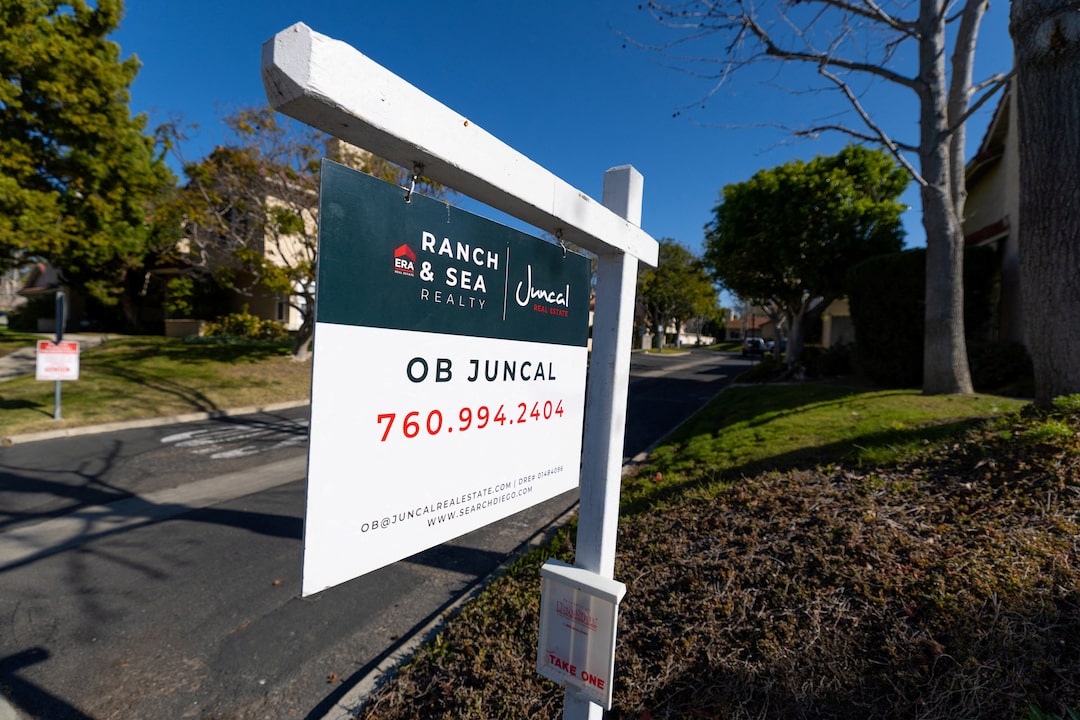
Wealthy buyers in the US are tearing down multimillion-dollar homes shortly after purchasing them for hundreds of millions of dollars.
According to a report by The Wall Street Journal, the trend is driven by a shortage of land in prestigious locations, particularly along coastlines.
For ultra-wealthy buyers, the prime factor has become the land’s location rather than the structure standing on it. After the acquired properties are flattened, newer, more modern homes are built on the cleared lots.
Drawing attention to the shift in the luxury real estate market, the report noted:
“The home itself, formerly the primary driver of an expensive real estate purchase, is now almost beside the point. Buyers are competing first and foremost for well-located land, situated on the ocean or a mountaintop.”
The newspaper cited moves by US billionaire William Lauder as an example. Lauder purchased the oceanfront estate of radio host Rush Limbaugh, who died in March 2023, for $155 million and had it completely demolished in July.
Lauder had previously torn down two homes situated on roughly 1.2 hectares of land along the Palm Beach coast. Having initially planned to construct his own residence on the parcel, Lauder subsequently sold the cleared plot for approximately $200 million.
Jonathan Miller, a real estate appraiser, stated that such transactions are becoming increasingly common as land prices rise.
Amid this momentum, estate agents have also begun marketing luxury homes directly as teardown lots.
Listings use artificial intelligence-generated imagery to showcase how the land would look without the structures on it.
Marketers avoid using the word “demolition” directly, resorting instead to terms such as “adaptive reuse”.
Teardown listings rise across luxury housing market
The trend is not confined to the coast and is spreading to other regions across the US.
Data from property brokerage Redfin reveals that references to demolishing buildings are becoming more frequent in sales listings.
The share of such listings exceeds 15% in the Bunker Hill Village area of Houston, while standing at 6.67% in Pimmit Hills, Virginia.
Dina Goldenteyer, a real estate agent working in Miami, remarked that serial demolitions have become more frequent because buyers no longer appreciate homes older than a decade.
Former retail executives Jamie Dooley and Christine Scott spent $3.7 million in 2020 to demolish a seaside home near Destin, Florida.
Although the couple spent five years building a modern home on the cleared site, they listed the resulting new structure with a demolition condition, citing the fact that no one wanted to buy the property as it stood.
William Paddock, an employee at the environmental consultancy WAP Sustainability, pointed to the environmental damage caused by this construction cycle.
Paddock emphasized that tearing down a home of roughly 1,000 square metres and replacing it with a new building of approximately 2,700 square metres generates a carbon footprint equivalent to the annual emissions of an average 250 American households.
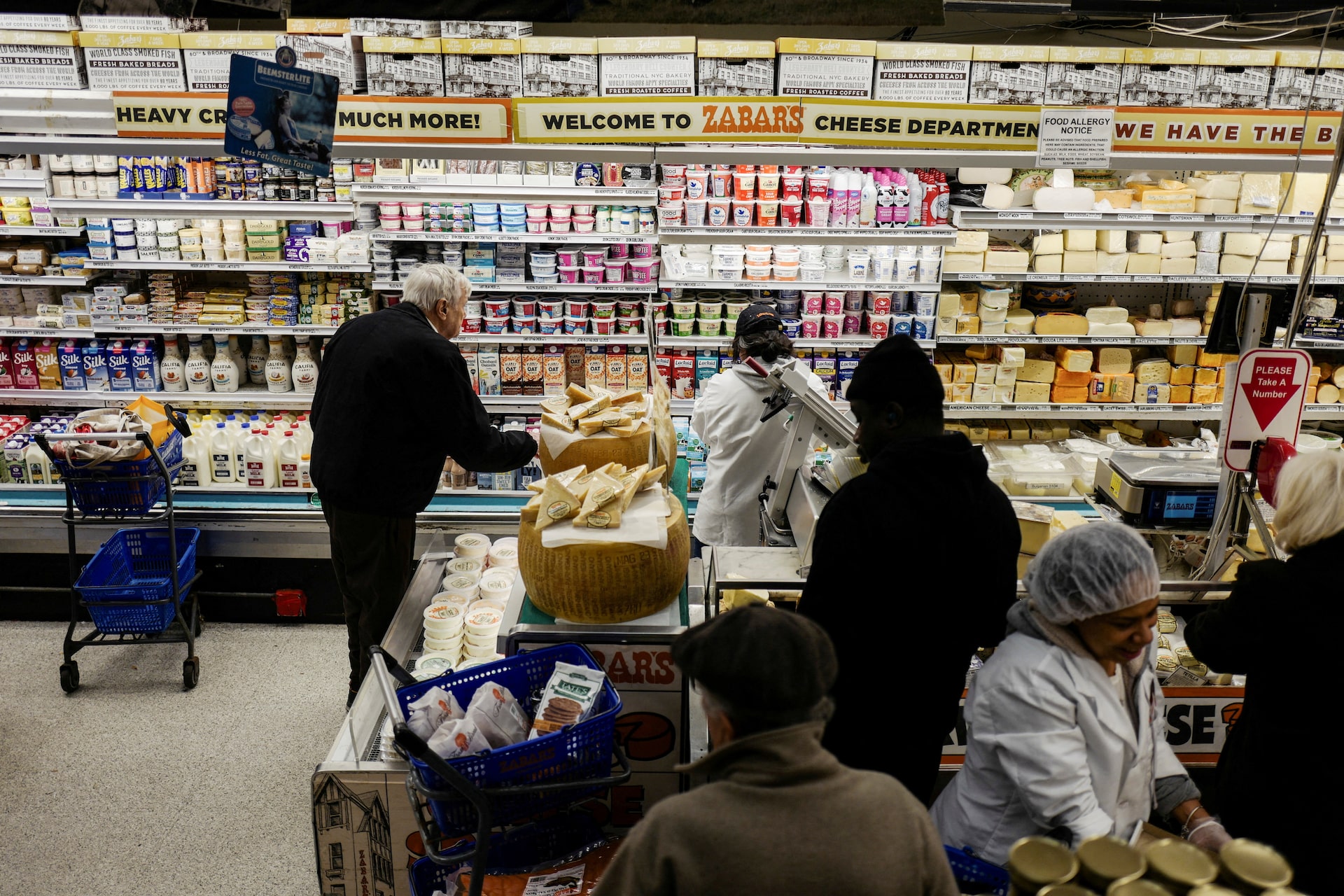
An uptick in September inflation as the US midterm elections approach has pushed the cost-of-living debate back to the centre of the agenda for Democrats seeking to regain control of Congress from Republicans.
Annual inflation stood at 3.7% in September, according to the Consumer Price Index published by the Bureau of Labour Statistics, with energy, petrol, and electricity costs rising on a monthly basis.
Food prices remained flat from August to September, recording a 2.5% increase compared with the same period last year.
Democrats are anchoring their election campaigns to pledges of easing the cost of living, blaming the price increases on President Donald Trump’s tariffs and the war with Iran.
Trump and Republicans, pointing to the numerous left-wing candidates who won primary elections this year, contend that the opposition has become captive to “communists” within the party.
When annual inflation stood at 2.4% in February, the US and Israel launched the Iran war on the final day of that month, and prices continued to climb throughout the conflict.
The recent acceleration has not entirely reversed the retreat from the 40-year peak of 9.1% recorded in June 2022; however, the rate has remained above the Federal Reserve’s 2% target for over five years.
Fed policymakers raised the benchmark interest rate by a quarter of a percentage point last month, citing the battle against stubborn inflation. Officials will convene again next week to consider whether to raise rates or hold them within the 3.75% to 4% target range.
Energy and fuel record sharpest increase since first month of war
In September, energy prices posted their largest monthly jump since March, the first full month of the war with Iran, climbing 20.4% year-on-year. Energy costs had risen 2.1% from July to August, after falling 1.5% from June to July and 5.7% from May to June.
Recent escalations in Iranian attacks on oil tankers in the Strait of Hormuz, alongside more frequent strikes by Ukrainian forces against Russian refineries, have strained global crude oil and refined product markets, driving up US petrol and diesel prices.
Petrol prices also recorded their sharpest monthly increase since the first month of the war, climbing 9.1% from August to September, bringing the annual increase to 35.3%.
American Automobile Association (AAA) data shows the average price of regular petrol across the US stands at $4.26 per gallon; while below the level of roughly $4.48 recorded a month ago, it remains more than $1.20 higher than a year earlier. Average gallon prices exceed $6 in California and $5 in both Washington state and Nevada.
Electricity prices rose 0.2% from August to September, offsetting the 0.2% decline between July and August, and were up 4.4% year-on-year.
Heavy power demand from new data centres is feeding through into local household electricity bills. Trump argued that companies must cover the cost of the electricity required by their data centres themselves.
In a post on Truth Social, Trump claimed that he was requiring large data centres to generate their own power and feed the surplus back into the local grid, suggesting this could bring about “a major drop” in electricity prices.
Used vehicle market posts monthly rise as food costs stabilise
The cost of food at home fell 0.1% month-on-month in September, while dining out increased 0.2%.
Egg prices dropped to $2.27 a dozen, falling roughly 35% compared with September 2025 and remaining well below the 20-year peak of $6.23 recorded in March 2025.
Ground beef prices rose roughly 2.4% compared with September 2025, but at $6.48 a pound, they remained below the 20-year high of $6.98 reached in June.
Chicken held steady at its year-earlier level of $2.06 per pound last month, having fluctuated between $2.01 and $2.09 since November 2024.
Used car and truck prices fell 1.5% compared with September 2025, but rose 0.7% month-on-month in September following 0.4% increases in both July and August.
Heather Long, chief economist at Navy Federal Credit Union, noted that the sector faces severe pressure stemming from a combination of expensive replacement parts and a shortage of skilled labour.
Speaking to The Hill, Long emphasised that every cost pressure across the market is being felt directly at local auto repair shops.

Anthropic, developer of the artificial intelligence model Claude, reported a net loss of $80.7 billion for the first six months of 2026 ending 30 June.
According to a report by The Wall Street Journal citing the company’s draft initial public offering prospectus, this recorded loss nearly doubled the $42 billion loss incurred across the entirety of 2025.
The vast majority of that enormous figure, accounting for $72 billion, stemmed from accounting-driven book-value write-downs.
In contrast, the company saw a sharp surge in revenue, with turnover in the first half of the year climbing to $16.3 billion from $1.1 billion in the same period of the prior year.
During this period, Anthropic spent approximately $9 billion on computing power and infrastructure needs, surpassing in just six months the $7.3 billion spent across the whole of 2025.
The company has commitments to pay roughly $450 billion over the next seven to 10 years under cloud service contracts.
Under these obligations, contracts are planned for $111 billion with Google Cloud, $110 billion with Amazon Web Services, and $31 billion with Microsoft.
Anthropic will also spend up to $86 billion by 2033 and 2034, respectively, to lease Nvidia chips through smaller AI-focused cloud providers Nscale and Lambda.
The company could spend an additional $750 billion in the coming years to expand its computing capacity.
Roughly a third of the draft IPO prospectus was dedicated directly to risk factors.
The document highlighted the possibility that models could cause tangible real-world harm, noting that artificial intelligence could exhibit a “self-preservation” tendency and produce responses resembling “blackmail”.
Anthropic warned that the scale of damage caused by an AI-driven “catastrophic event” could render insuring against such risks impossible.
According to market expectations, Anthropic’s IPO could rank among the largest transactions in history, potentially surpassing SpaceX’s record.
Following the market debut, the company’s market valuation is projected to reach up to $2 trillion.

German officials urge fighter jet alliance with Sweden and Spain

US wealthy demolish multimillion-dollar mansions for land

US and Israel weigh Iran strikes after midterm vote, reports say

Pentagon plans covert spy ring for economic war on China, report says

EU reopens debate on naming envoy for Ukraine talks with Putin
-
 Europe2 weeks ago
Berlin Left Party backs Israel’s right to exist for coalition pact
-
 America2 weeks ago
How will Brazil’s presidential runoff work?
-

 Diplomacy2 weeks ago
The West is preparing for war not with Russia, but with its own people, French analyst Georges Kuzmanovic insists
-

 Russia2 weeks ago
71 EU lawmakers demand closure of Russian Houses in 15 member states
-

 Russia2 weeks ago
US and Russian figures discuss American stake in Nord Stream lines
-

 Europe2 weeks ago
MI6 investigates potential leaks after former BND chief is detained
-

 Russia2 weeks ago
Drone strike shuts down Yandex data centre in Russia’s Ryazan region
-

 America2 weeks ago
Trump weighs presidential memorandum to cut surging US diesel prices
