
Middle East
Netanyahu holds secret UAE talks with Saudi Arabia and Arab officials

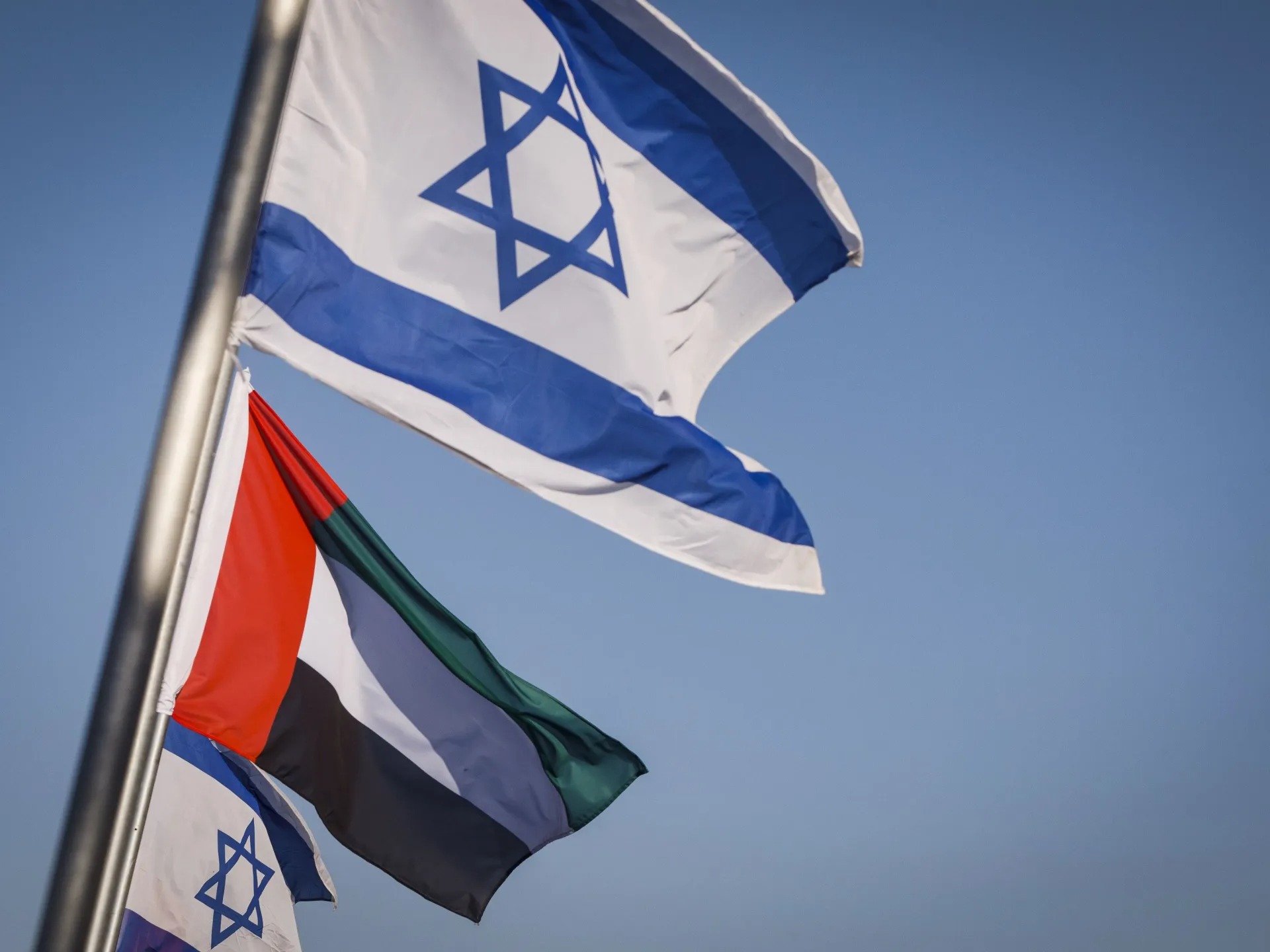
Israeli Prime Minister Benjamin Netanyahu met with representatives of Gulf and Arab nations that lack diplomatic ties with Israel, including Saudi Arabia, during his weekend visit to the United Arab Emirates.
Sources close to the gathering told the Israeli newspaper Yedioth Ahronoth on Monday that representatives from Morocco, Libya, Jordan, and Qatar also took part in the meeting.
Netanyahu made a unannounced visit to Abu Dhabi on Sunday, where he met with the country’s leader, Mohammed bin Zayed Al Nahyan.
According to Israeli media, this marked the first time the United Arab Emirates officially confirmed a visit by Netanyahu.
The meeting was arranged by Mossad Director Roman Goffman “at the request of Saudi Arabia, which asked for Israel’s assistance against Houthi attacks in the Red Sea region,” according to Yedioth Ahronoth.
The discussions addressed Iran and the Houthi militia. The newspaper added that the Arab states heard from Israel that “Israel is prepared to assist countries in the region with air defence systems, just as it aided the UAE during the conflict with Iran.”
Conflict in Yemen intensified in September when Ansarullah militiamen launched a rapid offensive that seized Yemen’s entire Red Sea coastline, including the vital maritime corridor of the Bab el-Mandeb Strait.
The Yemeni resistance also imposed a blockade on Saudi Arabia’s energy exports and staged multiple attacks against the kingdom.
Saudi Arabia reportedly sought military assistance from the US to counter Ansarullah.
Washington declined to attack the Houthis directly, but announced that it would provide intelligence and targeting support.
Reporting on the same visit, The Jerusalem Post said Netanyahu spent six hours in the UAE and that the principal subject of his discussions with MBZ was Iran.
Citing sources familiar with the matter, the newspaper added that the trip came “after Netanyahu exerted heavy pressure on the United Arab Emirates to arrange a meeting ahead of the Israeli elections on 27 October.”
Separately, the Associated Press, citing a person with direct knowledge of the meeting, reported that Netanyahu’s visit to the UAE was arranged in part to ask MBZ to deny reports that he had warned the Israeli prime minister of an impending Hamas threat prior to 7 October 2023.
According to Israeli media, Netanyahu’s office denied the AP report, issuing the following statement:
“Fake news. The visit focused solely on strengthening ties between the two countries and on regional issues.”


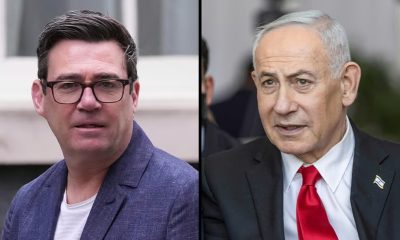


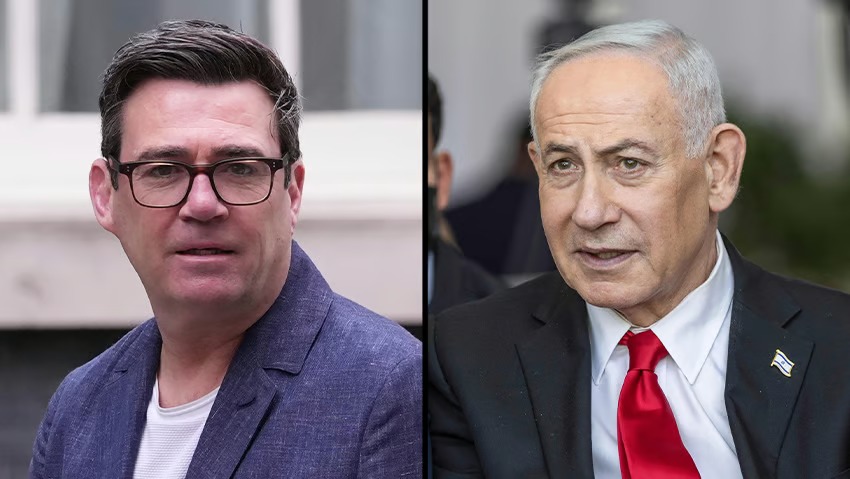
Britain has significantly broadened its military export restrictions targeting Israel, suspending or rejecting more than 80 licences for items the IDF could use in Gaza.
This figure is nearly triple the number affected when the policy was first introduced in September 2024.
United Kingdom Minister of State for the Middle East Stephen Doughty said that as part of what he described as a “tighter system” for assessing exports to Israel, more than 50 further export applications have been refused since approximately 30 licences were initially suspended.
Under the initial decision taken in September 2024, 30 of roughly 350 licences were suspended after the British government concluded there was a “clear risk” that certain military exports could be used to commit or facilitate serious violations of international humanitarian law in Gaza.
The affected equipment included components for military aircraft, drones, naval systems, and targeting gear.
Doughty said additional measures adopted this month established what he termed a “double safeguard” mechanism within the approvals process.
Export applications must now be assessed both against existing international humanitarian law criteria and in light of Britain’s position on the legality of Israel’s presence in the Palestinian territories.
“We have so far suspended or refused more than 80 licences,” Doughty said, adding that he had personally examined each licence.
Despite the wider restrictions, British-origin parts entering the international F-35 fighter jet supply chain continue to be largely exempt.
The UK government argues that preventing British-made components from entering the global F-35 pool could undermine the programme as a whole and have serious consequences for the security of the UK and its allies.
Direct exports of F-35 parts intended specifically for Israel remain suspended.
Doughty defended maintaining the supply of components via the international programme, arguing that halting it could have severe ramifications for the broader European and allied security architecture.
Foreign Affairs Committee Chair Emily Thornberry challenged this position, arguing that the issue was political rather than purely legal.
Thornberry suggested adopting an approach similar to the Dutch model, under which components entering the international supply chain could be flagged as “not intended for aircraft bound for Israel”.
The initial suspension was implemented in September 2024 by then Foreign Secretary David Lammy.
Lammy stressed at the time that the measure did not constitute an arms embargo and applied solely to items assessed as usable in military operations in Gaza.
Since then, the policy has been tightened further under Prime Minister Andy Burnham.
The expanded export restrictions follow the Burnham government’s adoption of a more confrontational policy toward the Israeli government.
Foreign Secretary Ed Miliband drew sustained applause at the Labour Party’s annual conference in Liverpool after delivering a sharp critique of the Netanyahu government’s policies and defending the decision to ban trade with Israeli settlements in the West Bank.
Accusing Israel of committing war crimes in Gaza, Miliband stated that the British government heard public outrage over the conflict, telling delegates: “We hear you. You were right.”
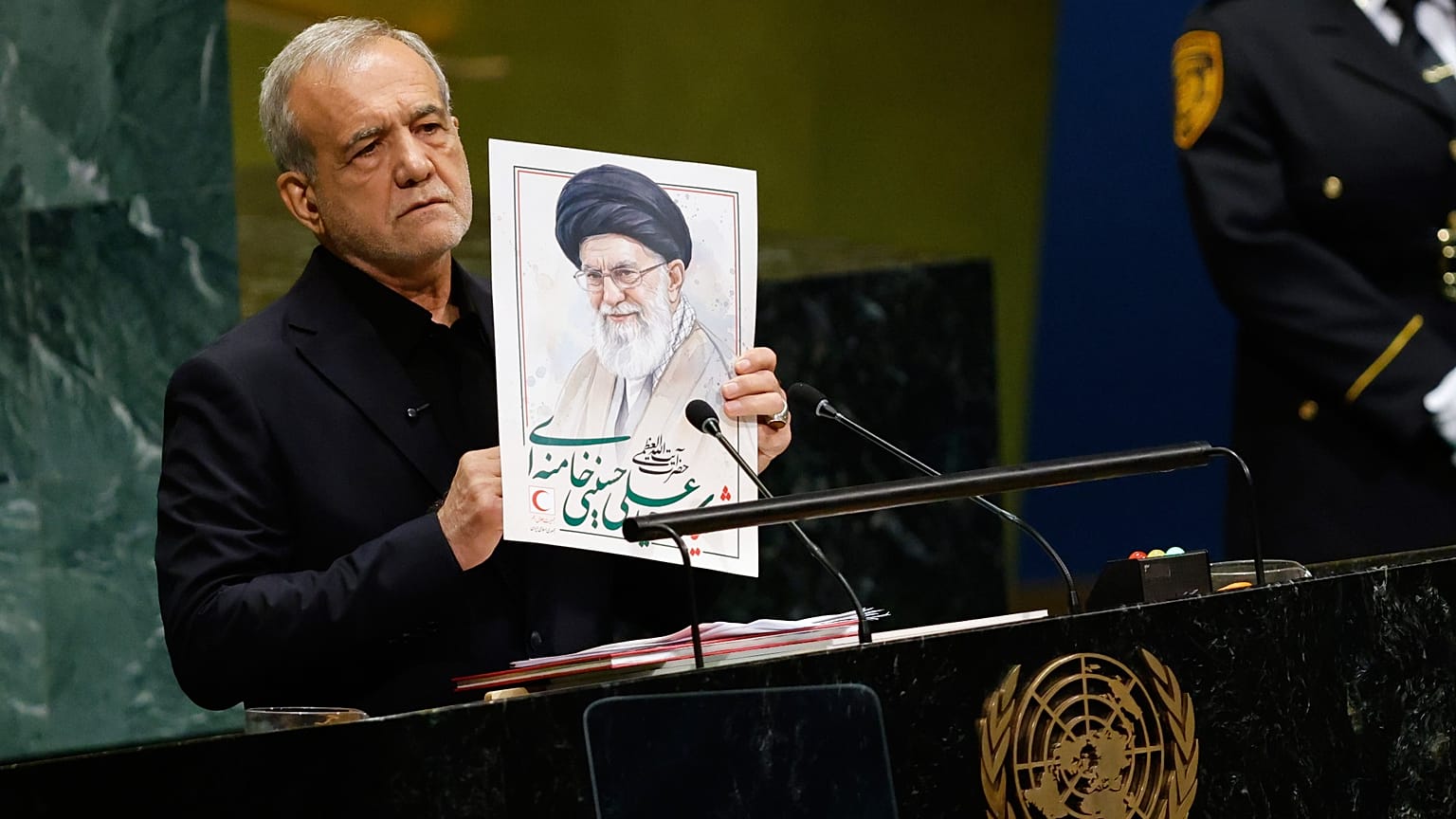
Iranian President Masoud Pezeshkian accused Western governments of applying double standards regarding nuclear weapons and regional security during his address to the United Nations General Assembly.
Stating that silence prevails over Israel’s nuclear arsenal, Pezeshkian said the Tehran administration is subjected to continuous inspections and sanctions.
Emphasising that the atomic bomb and other weapons of mass destruction in the region are under Israeli control, Pezeshkian said: “I repeat: The nuclear bomb is in Israel, the inspectors are in Iran. Israel kills, Iran is subjected to sanctions.”
Recalling that Israel is not a party to the Treaty on the Non-Proliferation of Nuclear Weapons and has shut its doors to international inspectors, the Iranian President noted that billions of dollars in weaponry continue to flow to the Tel Aviv administration regardless.
Displaying photographs from the rostrum of Iranians killed in US and Israeli bombardments, Pezeshkian said: “We are not terrorists, we are victims of terror.”
Stating that Iranian leader Ayatollah Ali Khamenei was killed on the first day of the war, Pezeshkian maintained that Tehran’s senior leadership was targeted without any legal basis or evidence.
President Pezeshkian at 81st UNGA:
I come from Iran, where the US assassinated our Leader
Follow: https://t.co/oa9JV4ikYQ pic.twitter.com/vMIFcTKUkg
— Press TV 🔻 (@PressTV) September 23, 2026
Declaring that the US military bombed the Shajara al-Tayyiba Elementary School in the city of Minab, Pezeshkian brought before the General Assembly the children killed in that attack, as well as the scientists, women, and children who died in a sports hall struck by cluster munitions in the city of Lamerd. Stating that Iran retaliated against the attacks, Pezeshkian noted that Tehran’s forces did not target civilians.
Stating that Iran does not seek regional hegemony and has not launched a war against any neighbour in the past 200 years, Pezeshkian said they developed their military capabilities for deterrence rather than offensive purposes.
Explaining that they built defence systems to show that bombing Iranian cities will not go unanswered, Pezeshkian said: “We say clearly that we will not ask permission from anyone to defend our country.”
Emphasising that the Tehran administration cannot be forced into surrender through the pressure of war, the Iranian President said the door to negotiations remains open, though they will not compromise on their right to defence.
Addressing the peaceful nature of their nuclear programme, Pezeshkian said this technology cannot remain the exclusive privilege of select nations.
Noting that nuclear energy is a vital requirement across fields ranging from medicine to agriculture, and industry to electricity generation, Pezeshkian stressed that they adhere to the principle of “neither nuclear weapons nor deprivation of nuclear knowledge”.
Stating that they do not view nuclear weapons as a security element, Pezeshkian said the issue cannot be resolved by military methods, adding that the solution lies in an agreement that protects the legitimate rights of the Iranian people and provides international guarantees for peaceful activities.
Turning to developments in the Strait of Hormuz, Pezeshkian announced that while Tehran ensures the security of the waterway, it will not remain silent if its own rights of navigation are obstructed.
Accusing Western nations of dispatching weapons to the region through the same corridor while blocking routes to Iranian vessels, Pezeshkian said the permanent deployment of foreign navies in the region will not bring maritime security.
Stating that lasting peace cannot be established in West Asia without a just resolution to the Palestinian issue, Pezeshkian said people displaced from their land and whose homes are bombed are exercising a legitimate right to self-defence, adding: “You cannot call someone a terrorist when they defend themselves.”
Stating that regional problems must be resolved without foreign intervention, Pezeshkian stressed that alliances forged with any foreign power must not be turned into a pretext for war against neighbours.
Adding that economic sanctions have turned into a mass weapon that directly strikes civilians and the poor, Pezeshkian warned that operating international law solely in the interest of the powerful will fuel global instability.
The Iranian President concluded his address to the General Assembly with the words: “Either we establish security together, or we endure insecurity together. Peace that is not for everyone is not peace; justice that does not encompass everyone is not justice.”

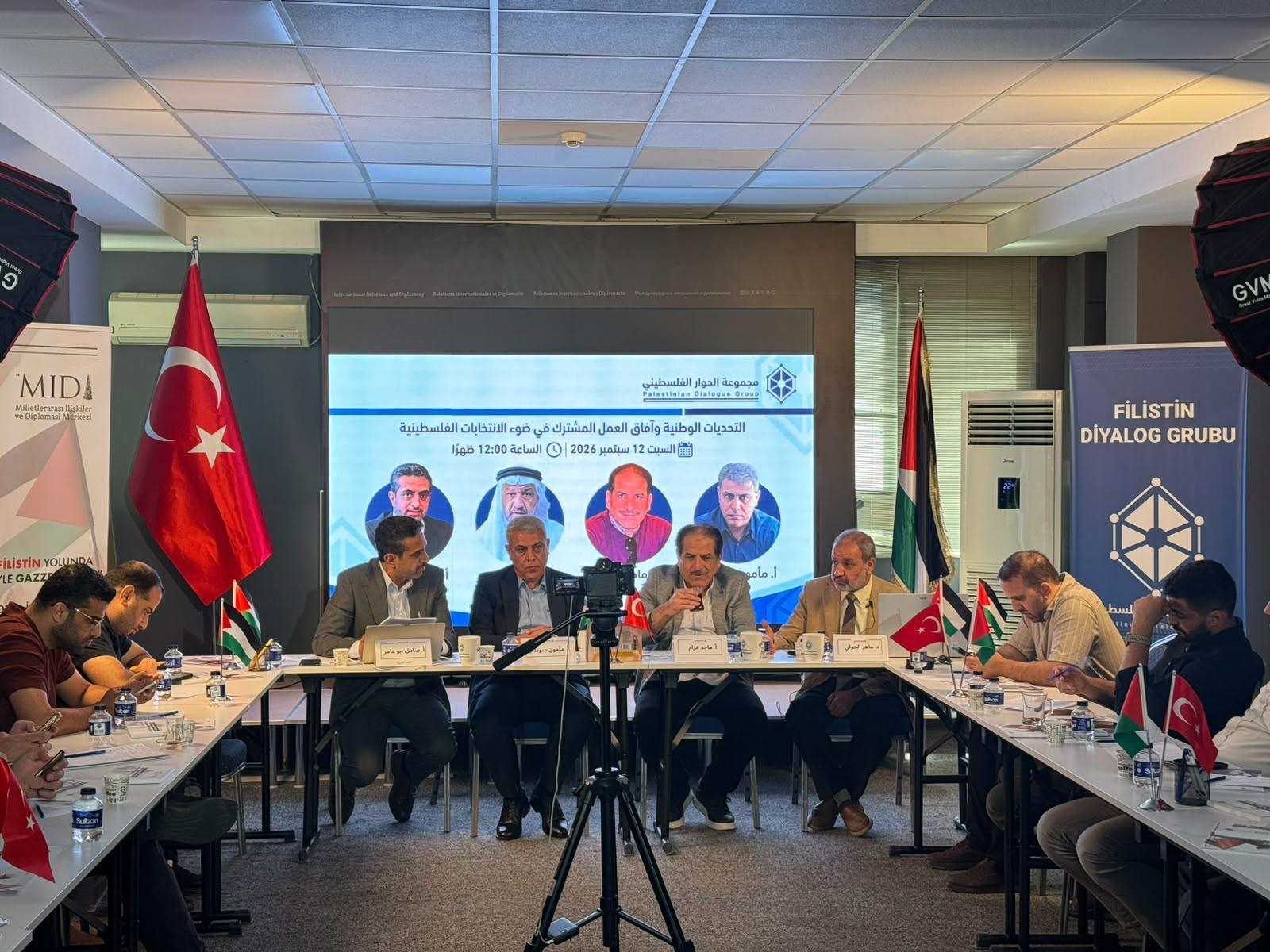
A meeting organised in Istanbul by the Palestinian Dialogue Group has revealed that the election debate points to a crisis far larger than the ballot itself.
Elections are back on the agenda in Palestine. Yet a question looms larger than whether ballot boxes will be set up: can Palestinian politics overcome years of accumulated legitimacy crises?
At the gathering in Istanbul on 12 September, two figures close to Fatah and Hamas, an independent Palestinian researcher, and a journalist came together around the same table. Hosted and moderated by the head of the Palestinian Dialogue Group, Sadiq Abu Amer, the meeting included Mamoun Sweidan, who serves as an adviser at ministerial and gubernatorial rank in the Palestinian Presidency Court; Prof. Dr Maher Hamed Al-Houli, adviser to the head of the Hamas Political Bureau; and independent researcher and journalist Majed Azzam.
For Palestinian observers, one of the most striking aspects of the meeting was the gathering of senior figures from Fatah and Hamas circles in a debate of this scale for the first time.
To summarise the mood of the gathering in two sentences: the cause faces grave peril. Yet there is no magic formula to overcome the hurdles.
28 November: An election or a political turning point?
According to the timetable of the Palestinian Central Elections Commission, elections for the 132-seat Legislative Council are scheduled to take place on 28 November 2026 across the West Bank, East Jerusalem, and the Gaza Strip.
Candidate registrations will run from 26 September to 7 October, followed by the election campaign between 6 and 26 November.
If the polls go ahead, Palestinians will elect a new Legislative Council for the first time since 2006.
However, although the election timetable has been announced, political and on-the-ground conditions remain uncertain.
The new reality emerging in Gaza following the war, whether voting can be conducted in East Jerusalem, the Fatah-Hamas divide, and the future administration of Gaza represent core obstacles facing the vote.
The Central Elections Commission continues its preparations. Contacts are underway in Gaza with civil society organisations, political groups, and local actors, alongside inspections of prospective polling centres.
Yet criticism focuses on the very same point: preparations started late, and the feasibility of the 28 November timetable remains disputed.
It is precisely here that the election debate ceases to be a technical matter.
A legitimacy crisis accumulated over two decades
In Palestine, the problem is not merely when ballot boxes will be placed.
A new Legislative Council has not been elected since 2006. The Fatah-Hamas rift has become entrenched. The renewal of Palestinian political institutions and the transfer of power through the ballot box have failed to materialise.
For this reason, the planned elections are no ordinary vote.
If ballot boxes are re-established after a gap of nearly two decades, the issue will not merely be the selection of new lawmakers. Whether the Palestinian political system can regain legitimacy will also be put to the test.
Yet holding elections will not eliminate division on its own.
The fundamental question is this:
Will Palestinians respect the election outcomes even when the results fall outside their own political calculations?
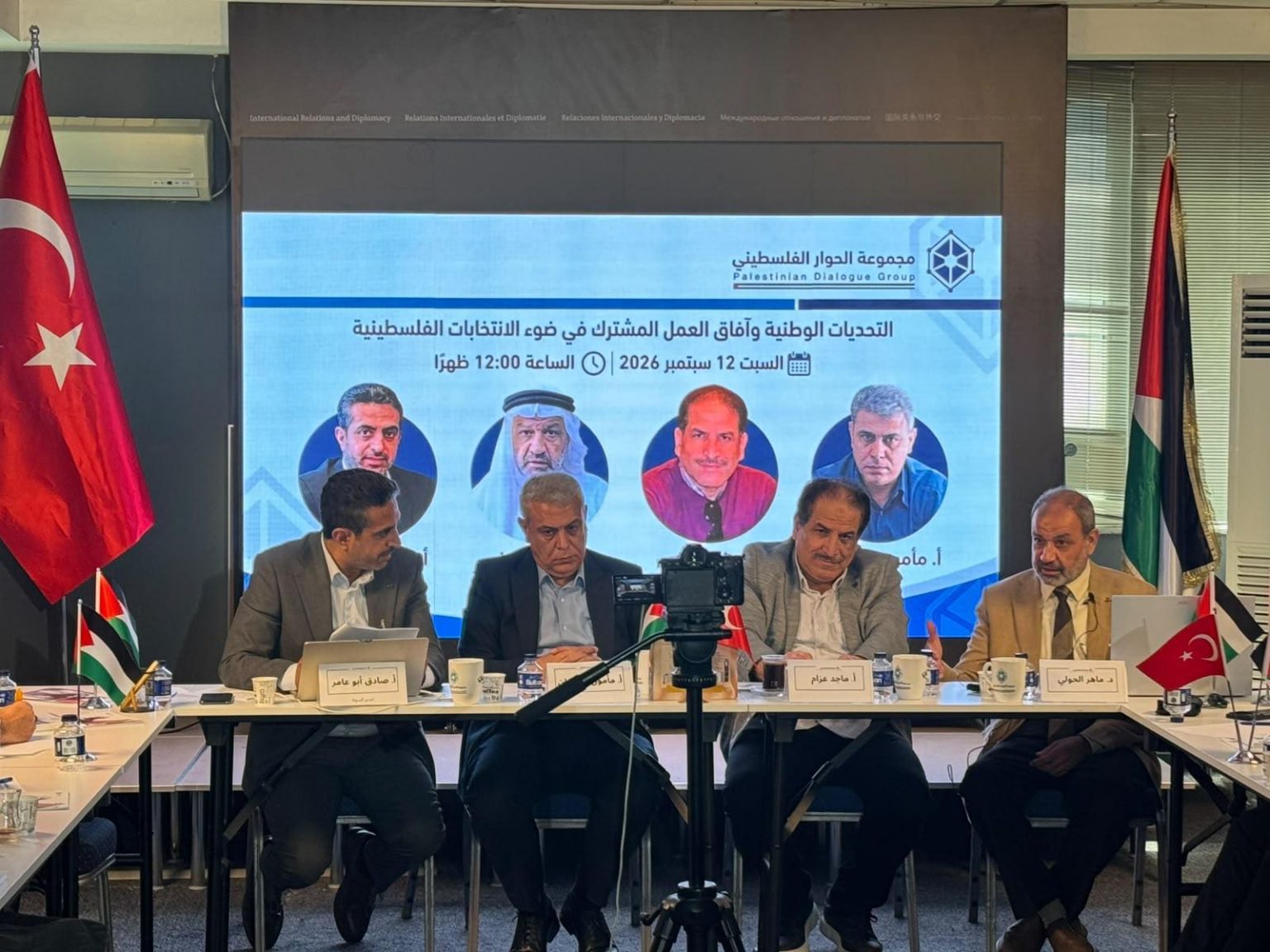
Sweidan: “We went from a national committee to a Peace Council”
The future of Gaza took centre stage in Mamoun Sweidan’s address.
Sweidan explained that following the war, the idea of creating a “national committee” composed of Palestinians to govern Gaza had been raised.
Stating that this committee needed to be formed within the institutional framework of the Palestinian National Authority, Sweidan noted that the political factions, foremost Fatah and Hamas, could not agree on representation quotas for the body.
The problem, in short, was this: everyone wants a national committee, but no consensus can be reached on who will sit on it and in what proportions.
According to Sweidan, prolonged delays eventually pushed the issue into a different arena.
Instead of a national committee, a dynamic emerged in which an international mechanism assumed a greater role in Gaza’s future.
At this point, Sweidan criticised Hamas.
In his view, the initial concept of a national committee established by Palestinians drifted towards an externally shaped “Peace Council” model.
This question lies at the heart of the debate:
Will Palestinians decide Gaza’s future, or will decision-making mechanisms shift increasingly into the hands of external actors?
Al-Houli: “We must not abandon elections”
Prof. Dr Maher Hamed Al-Houli, adviser to the head of the Hamas Political Bureau, argued that elections must not be abandoned.
Al-Houli noted that the election call should be approached positively. However, he stressed that Palestinians must base their decisions on the broader national interest rather than external pressures.
Recalling the 1996 and 2006 elections, Al-Houli maintained that those polls were fair and transparent.
He stated that both Palestinian factions and the international community must respect the results emerging from the ballot box.
Another topic Al-Houli highlighted was societal participation.
He noted that families, clans, mukhtars, opinion leaders, and reconciliation figures could assume a more active role in the electoral process.
He suggested that these actors should not only guide voters to the polls, but also play a part in resolving disputes between Fatah and Hamas. He added that they could even participate in the elections through independent candidates or electoral lists.
Al-Houli’s approach thus shifted the election discussion to another dimension:
Will a new election merely refresh the old political structure, or will it open the path for new actors to enter politics?
Azzam: “In my view, elections will not take place”
Independent researcher and journalist Majed Azzam took a more distant view of the electoral timetable.
Stating that he was speaking neither pessimistically nor optimistically, but offering a realistic and objective assessment, Azzam said: “In my view, elections will not take place, and I am saddened by this.”
Azzam’s primary objection rests on an assertion broader than the election date itself.
According to him, electoral rhetoric could be a “smoke grenade” concealing an entirely different political process.
Azzam raised the claim that preparations are underway to form the Palestinian National Council through appointment rather than through elections.
If this claim proves true, the direction of the debate changes completely.
The question then ceases to be “When will elections occur?” but rather “If elections do not take place, how will the Palestinian political system be reconstituted?”
Can there be an election without Gaza?
The fate of Palestinian elections cannot be separated from Gaza.
The commission is proceeding with technical preparations. However, the destruction wrought by the war in Gaza, the dispersal of the population, infrastructure breakdowns, and disputes over future governance pose severe challenges to the electoral process.
Alongside this, the question of East Jerusalem remains unresolved.
Consequently, 28 November is not merely a matter of ballot boxes.
Under which political framework Gaza will be governed, how election results will be implemented there, and how relations between the Palestinian Authority and Hamas will be structured are all components of the same equation.
A new generation enters politics
Another critical reality is demographic shift.
Since the 2006 vote, an entire Palestinian generation has reached adulthood. A substantial proportion of these individuals have never cast a ballot in any general election in their lives.
Therefore, if elections take place, a new Legislative Council will not be all that is chosen.
Simultaneously, a new generation of voters will become direct participants in political decision-making for the first time.
For this reason, how youth, independents, and societal actors will be integrated into the political system stands as another major subject within the election debate.
A common goal, divergent roadmaps
It is not possible to say that the Istanbul meeting produced a shared political roadmap.
Sweidan advocates safeguarding Palestinian institutions and national decision-making, arguing that Gaza’s future must be determined within a Palestinian framework. He considers Hamas’s posture to have created fertile ground for external actors to intervene further.
Al-Houli says elections must not be abandoned. In his view, elections should reflect the will of the Palestinian people rather than external pressures, and societal participation must be expanded.
Azzam, by contrast, does not believe elections will be held at all. He suspects that another political restructuring may be underway behind the cover of the election debate.
Where these three approaches converge is far more significant:
The Palestinian cause confronts a profound existential crisis.
The future under debate is not simply that of Hamas or Fatah, but that of the Palestinian political structure as a whole.
Elections are not a magic formula
This remains one of the strongest messages left behind by the Istanbul meeting.
Elections may be vital for renewing legitimacy. Yet they cannot end division on their own.
They may establish a new Legislative Council. Yet they cannot resolve all the problems of the Palestinian political system.
They may bring youth and independents into politics. Yet the factions must accept the outcome of the vote.
For this reason, the significance of 28 November reaches far beyond the ballot box.
If elections are held, a new political space will open before Palestinians.
If they are not held, the question of how to fill the political vacuum will grow even larger.
And perhaps the real question will be this:
Will 28 November mark another milestone in years of ongoing division, or will it herald the beginning of renewed unity in Palestinian politics?
We shall see together.
For now, the only certainty is this: the question of elections in Palestine is no longer merely a question of elections.

Jordan Bardella faces antisemitism accusations over past messages

EU pays extra €100bn for energy without securing more oil or gas

Pentagon breach exposes personal records of three million people

Britain expands curbs on arms exports to Israel over Gaza risks

Germany deepens military, police, and cyber ties with Israel
-

 Asia2 weeks ago
DeepSeek engineer warns AI will lead to communism or Cyberpunk
-

 America2 weeks ago
Big Tech profits from AI extinction hype, Ken Klippenstein says
-

 Europe2 days ago
European unions urge governments to scrap all Palantir deals
-
 Diplomacy2 days ago
East-West Forum in Istanbul highlights irreversible shift to multipolarity
-
 Europe1 week ago
European intelligence chiefs divide over risk of Russian attack
-
 Europe5 days ago
Emmanuel Todd says West faces collapse amid Ukraine and Iran crises
-
 Diplomacy6 days ago
East-West Forum in Istanbul to debate multipolarity and global order
-
 Middle East1 week ago
Sharaa says 7 October must not shape Israel policy on Syria
