
Diplomacy
On the brink of war or a new renaissance? Highlights from the Schiller Institute’s 40th anniversary


On December 7-8, 2024, the Schiller Institute, founded by Helga Zepp-LaRouche 40 years ago, convened a two-day international conference titled, “In the Spirit of Schiller and Beethoven: All Men Become Brethren!” The event brought together a remarkable panel of diplomats, former heads of state, prominent scholars, and defense experts to address what they termed the planet’s most urgent crisis since the Cuban Missile standoff: the threat of a new and possibly final world war, versus the possibility of forging a new paradigm of peace and mutual development.
The opening panel, held on Saturday, December 7, focused on the theme: “The Strategic Crisis: New and Final World War, or a New Paradigm of the One Humanity?” It featured prominent figures from across the globe.
The panel was moderated by Dennis Speed of the Schiller Institute, who opened the session by referencing the anniversary of the Institute’s founding and the extraordinary peril the world now faces. Speed reminded the audience of the significance of December 7 for the United States—Pearl Harbor Day—invoking the profound transformations wrought by past conflicts and suggesting a parallel with today’s dangerous global escalation.
All Men Become Brethren!@SchillerInst International Online Conference
December 7-8, 2024Registration link in 🧵
"The previously dominant unipolar world has crumbled, and the effort to prevent a multipolar world from establishing itself is futile. That is the main reason for… pic.twitter.com/qqkAxrBzfD
— Schiller Institute (@SchillerInst) December 4, 2024
Among the key speakers were Helga Zepp-LaRouche, founder of the Schiller Institute; Naledi Pandor, former Minister of International Relations of South Africa; Ambassador Chas W. Freeman, Jr., former U.S. Assistant Secretary of Defense; and Donald Ramotar, former President of Guyana.
Keynote by Helga Zepp-LaRouche: A choice of paradigms
Helga Zepp-LaRouche set the tone: “We are coming together in an extremely dangerous moment,” she said, “one that may be even more dangerous than the Cuban Missile Crisis.” She warned that the global strategic environment, marked by NATO’s expansion and the ongoing war in Ukraine, has created a climate in which nuclear weapons could be used again, possibly ending human civilization.
Zepp-LaRouche challenged the prevalent assumption that financial and geopolitical constructs must be maintained at all costs. She recalled the late economist Lyndon LaRouche’s insistence that “money is not value,” arguing that the physical economy—productivity, technological progress, and infrastructure—must guide policy. She called for a return to the principles of the Peace of Westphalia (1648), urging major powers to cast aside revenge and geopolitics, and instead embrace cooperation for mutual development. “It is urgent,” she said, “that we establish a new security and development architecture, a paradigm that meets the interests of all nations.”
Dmitri Trenin: Rejecting the old Cold War frame
From Moscow, Professor Dmitri Trenin offered a Russian perspective on the evolving crisis. “We are not in Cold War II,” he insisted. “The analogy is wrong.” Trenin stressed that today’s world is far more complex, with multiple power centers and no functioning arms control mechanisms. He warned that the old tools that kept the Cold War ‘cold’—communication channels, treaties, and a shared fear of nuclear weapons—have eroded.
Trenin pointed out that globalization under Western rules is over. The world, he said, is becoming truly multipolar, with regionalism on the rise. He cautioned the United States against attempting to preserve its hegemony at all costs, noting that “attempts to salvage [unipolar dominance] are as dangerous as they are futile.” He urged Washington to learn the lesson the Soviet Union once did: overextension leads to collapse. Now, it is time for nations to realign their priorities, focusing on domestic economic health rather than a vain bid for global supremacy.
Voices from the Global South
Former President Donald Ramotar of Guyana spoke forcefully about the global inequalities driving conflict. He noted that in recent years, the Global South—representing the majority of humanity—has begun to straighten its back and assert its interests. Ramotar criticized policies that keep developing countries locked in poverty and underdevelopment. “The transatlantic powers have made humongous profits from wars,” he said, calling these conflicts “wars for profit” that enrich weapon manufacturers and financiers.
Ramotar praised China’s Belt and Road Initiative and cooperation with the Global South as a model of “win-win” relations that uplift entire regions. He contrasted this with the IMF and World Bank’s conditionalities that perpetuate underdevelopment. “If the West joined in some of these initiatives,” Ramotar concluded, “we might end poverty in our lifetime.”
Ján Čarnogurský: A European perspective
Slovakia’s former Prime Minister Ján Čarnogurský delivered a stark evaluation of European policy. He recalled that in the early 1990s, promises were made not to expand NATO eastward; these were broken. He criticized the West’s reneging on the Minsk Accords, drawing parallels with the deceitful handling of the Yugoslav crisis.
Čarnogurský questioned who truly leads U.S. policy and lamented Europe’s subservience to Washington and London. He noted that European states are suffering under U.S.-imposed policies, losing industries to American soil. Stressing that Russia has no interest in marching west, Čarnogurský argued that the Ukraine war should end in negotiations, not endless escalation. “If the West lost the war in Ukraine,” he said, “it might simplify problems” and pave the way for stable peace negotiations.
Ambassador Chas W. Freeman, Jr.: Diplomacy abandoned
Ambassador Chas Freeman, a seasoned American diplomat, reminded the audience of the dangers of nuclear brinkmanship. “The humane world order after World War II has expired,” Freeman said. Now, egregious violations of international law occur with impunity. He pointed to the absence of meaningful diplomacy, noting that U.S. Secretary of State Antony Blinken had not once visited Moscow, while Russian Foreign Minister Sergei Lavrov has not been welcomed in Washington for years. “There are no functioning arms control agreements,” he warned, “and no communication lines.”
Freeman highlighted the urgent need for an Austrian-style solution in Ukraine, referring to the 1955 Austrian State Treaty which established that country’s permanent neutrality. “Such a Ukraine,” he said, “could serve as a buffer and a bridge,” ensuring Russia’s security concerns are met while guaranteeing Ukraine’s sovereignty and prosperity. “Diplomacy must replace demonization,” Freeman concluded, “or we face a nuclear Armageddon.”
Ambassador Hossein Mousavian: Iran and the nuclear dilemma
Ambassador Hossein Mousavian of Iran brought the Middle East dimension into view. The crisis over Iran’s nuclear program, he said, points to the urgent need for a region-wide approach. The Joint Comprehensive Plan of Action (JCPOA), abandoned by the U.S. under President Trump, had established robust verification measures ensuring no Iranian nuclear weapon would emerge. Mousavian argued for expanding these principles regionally, applying similar restrictions and verifications across the Middle East, including Israel, to achieve a region free of weapons of mass destruction.
“There is a solution,” Mousavian maintained. “We can have permanent restrictions if all parties agree to uniform standards.” He suggested that if Iran’s neighbors like Saudi Arabia also accept rigorous inspections, everyone would gain security and stability. This approach, Mousavian said, could become “the best objective guarantee” against nuclear proliferation in the entire region.
Professor Zhang Weiwei: Asia’s peaceful development model
From China, Professor Zhang Weiwei of Fudan University noted that while Europe slides into lose-lose scenarios, the China-ASEAN region has achieved a remarkable “win-win” story. He credited Asia’s success to its focus on development, infrastructure, and respect for civilizational diversity. “China and ASEAN have enjoyed peace and prosperity for nearly five decades,” he said, pointing to the emphasis on building roads, railways, and ports—trademark features of the Belt and Road Initiative.
Zhang contrasted this development-oriented model with the West’s approach, which he described as zero-sum. “China stands for unity and mutual benefit,” he said, “not divide and rule.” He recalled the influence of Chinese strategic culture, including Sun Tzu’s ancient wisdom, which emphasizes achieving goals without resorting to war. “The solution to Europe’s problem is clear—join in the Belt and Road Initiative, invest in infrastructure, and build a community of shared destiny,” he concluded.
Colonel Lawrence Wilkerson: From the Pentagon’s perspective
Retired U.S. Army Colonel Larry Wilkerson, former Chief of Staff to Secretary of State Colin Powell, spoke bluntly: “The U.S. today is fighting the inevitable shift of global power back to the East,” he said. Wilkerson criticized what he called “the empire’s example”: an American foreign policy trapped in arrogance and ignorance of history.
Wilkerson warned that if a conventional conflict escalated between the U.S. and Russia or China, the United States might quickly find itself losing badly and thus tempted to use nuclear weapons first. “We are so broken conventionally,” Wilkerson said, “we might be the first to use nuclear arms because we’d be taking horrendous casualties.” He stressed that any nuclear exchange would end civilization. The solution? End the empire logic, he urged. Seek balanced and rational diplomacy while we still can.
Scott Ritter: The unthinkable becomes probable
Former U.N. weapons inspector Scott Ritter, in a pre-recorded statement, underscored the grim reality: “Today’s situation is more dangerous than the Cuban Missile Crisis because there is no communication,” he said. Ritter warned that the U.S. provisioning of advanced missiles to Ukraine and talk of a ‘limited’ nuclear war by some U.S. strategists is gambling with planetary survival.
Ritter pinned hopes on a diplomatic shift with the incoming U.S. administration. “We must help ourselves by helping Russia understand that these reckless policies will not continue,” he said. In other words, a strategic reset is urgently needed. If not, the world might stumble into nuclear war by miscalculation.
Proposed solutions
Throughout the session, panelists offered concrete proposals. Helga Zepp-LaRouche suggested reviving the spirit of Franklin D. Roosevelt’s Bretton Woods, focusing on global development and infrastructure rather than financial speculation. She also recalled Lyndon LaRouche’s old proposal of the Strategic Defense Initiative (SDI), not as a weapons scheme, but as a joint effort by major powers to make nuclear weapons technologically obsolete through new physical principles and massive scientific cooperation.
Dmitri Trenin and Chas Freeman both stressed diplomatic channels. Trenin called for a return to stable negotiations on arms control. Freeman recommended a European security architecture that includes Russia and respects its interests. Both noted that genuine dialogue, free from demonization, is the only realistic path.
Donald Ramotar and Professor Zhang Weiwei pointed to economic development as a peace strategy. The Belt and Road Initiative’s “win-win” framework can uplift the Global South and transform war-torn regions into hubs of commerce. Economic corridors might replace battlefields if the West abandoned zero-sum thinking and joined cooperative ventures.
Ján Čarnogurský and Hossein Mousavian highlighted specific frameworks, such as making Ukraine a neutral state and building a Middle East free of weapons of mass destruction. Čarnogurský’s reference to the 1955 Austrian State Treaty and Mousavian’s concept of region-wide nuclear verification both illustrate how carefully crafted treaties can diffuse tension.
Larry Wilkerson and Scott Ritter underscored the urgency. Without a massive shift in U.S. strategic thinking—from seeking hegemony to embracing multipolarity—the world risks stumbling into global conflict. They urged immediate steps: cease unrealistic objectives like “strategic defeat” of nuclear-armed adversaries, open channels of communication, and reduce the risk of accidental nuclear war.
A call for a cultural shift
A recurring theme was the idea that cultural values must underpin policy shifts. The conference’s motto, “In the Spirit of Schiller and Beethoven: All Men Become Brethren,” evoked the notion that moral uplift and aesthetic education could guide politics. Zepp-LaRouche invoked classical composers and poets to stress that universal human values transcend power politics.
The Schiller Institute’s emphasis on great art, classical music, and poetic drama is not ornamental. As Zepp-LaRouche reminded participants, Schiller believed in improving citizens through culture, enabling them to think of humanity as one family. Beethoven’s “Ode to Joy” from the Ninth Symphony embodies the ideal of universal brotherhood—an ethical vision that stands in stark contrast to nuclear brinkmanship.
The panelists agreed: to avoid catastrophe, citizens must pressure their governments to return to reason, respect international law, and prioritize human development. Helga Zepp-LaRouche urged that the ten principles her Institute has advocated—centered on sovereignty, development, and the common aims of humanity—be taken up widely. She called on people worldwide to reject the Carl Schmitt-type friend-enemy distinctions and adopt a principle of the “One Humanity.”
In the words of Naledi Pandor, who was unable to speak fully at this panel but whose excerpted statements were acknowledged, “BRICS and the Global South can forge a more just multipolar order.” As developing nations rise, they demand a seat at the table. This could be the key: integrating new powers into a cooperative framework for security and development.
A last chance for humanity?
The grim warnings of these statesmen, diplomats, and scholars spoke to a moment of profound danger. Nuclear arsenals loom, conflicts rage without dialogue, and powerful states push brinkmanship to extremes. Yet, the panel also projected a sense of hope. A new paradigm—one that rejects zero-sum geopolitics and embraces mutual respect, economic cooperation, and cultural renaissance—was the through line connecting all speakers.
“We have a choice,” Helga Zepp-LaRouche concluded. “Either we continue down the path to a final world war, or we rise to the occasion and build a new paradigm of the One Humanity. Let’s choose life, not death.”


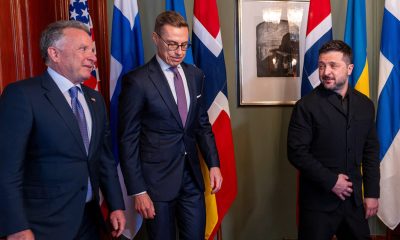


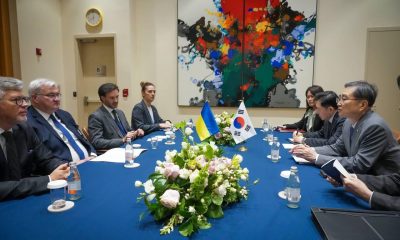




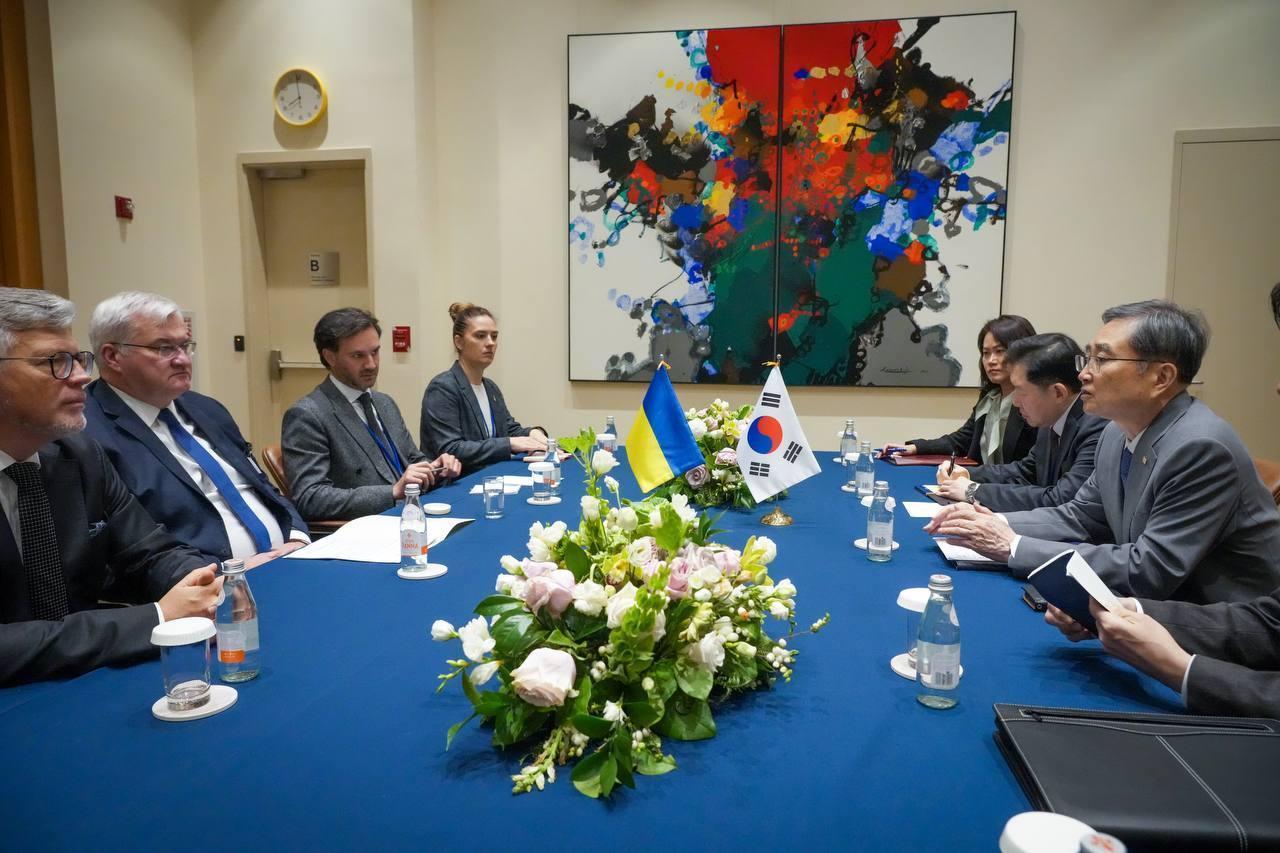
The South Korean government has decided to withdraw part of its embassy staff from Ukraine.
According to the Yonhap news agency, Foreign Ministry spokesman Park Doo-sun cited the Kyiv administration’s failure to take “positive steps” in the dispute that began with the leak of information concerning the handover of North Korean prisoners of war as the justification for the move.
The spokesman also listed the ongoing threat of air strikes, which complicates the safety of diplomats, among the reasons.
Following the withdrawal of part of the personnel, essential diplomatic contacts will continue under the leadership of the charge d’affaires ad interim to Ukraine. All consular staff tasked with protecting South Korean citizens will remain in Ukraine.
Prior to this move, the Seoul administration decided on 8 October to withdraw its ambassador. The Foreign Ministry stated at the time that it was ready to continue consultations with Kyiv to resolve the emerging issues constructively.
Tensions between the two countries began with a speech delivered by Ukrainian President Volodymyr Zelenskyy at the United Nations General Assembly in September.
Zelenskyy announced that two captured soldiers from the North Korean army had been handed over to South Korea.
South Korean President Lee Jae-myung, meanwhile, accused Kyiv of breaching a confidentiality agreement.
Lee said the disclosure of this information endangered the prisoners’ families and stability on the Korean Peninsula.
Seoul expects a public apology
Dmytro Lytvyn, an adviser to the Ukrainian president, denied the existence of a confidentiality agreement.
The South Korean Foreign Ministry summoned Ukrainian Charge d’Affaires Andriy Veshkin on 28 September and issued a note of protest against Lytvyn’s remarks.
President Lee Jae-myung warned in a statement on 2 October that they would take additional measures against Kyiv if Ukrainian authorities did not acknowledge the agreement and make a public apology. Lee stated that Ukraine itself had initially requested that the transfer of the prisoners be kept confidential.
Ukrainian Foreign Ministry spokesman Heorhii Tykhyi said the dispute stemmed from differing interpretations of the confidentiality regime.
Tykhyi noted that Seoul, based on its constitution which recognises the entire Korean Peninsula as its own territory, requested that the prisoners be handed over “like its own citizens”.
Describing the handover as a “gesture of goodwill”, Tykhyi stated that they were conducting closed-door negotiations to resolve differences of opinion.
Ambassador Park Ki-chang returned to Seoul on 10 October. According to a report by The Korea Times newspaper citing the ministry, recalling the ambassador served as a diplomatic protest against the leak of information regarding the prisoners.
The newspaper wrote that South Korea had last taken a similar step in 2008 by withdrawing its ambassador to Japan.
Moscow warned foreign diplomats
On 3 October, the Russian Foreign Ministry reiterated its warning to foreign nationals, including diplomatic mission staff, against remaining in Ukraine.
The ministry recalled its advice to leave Kyiv, citing ongoing strikes against military targets.
The ministry noted that those who failed to heed the warnings would bear responsibility for the potential consequences.
Kremlin spokesman Dmitry Peskov said in a statement on 24 September that they had no information regarding Kyiv handing over two North Korean prisoners of war to Seoul.
Peskov, noting that prisoner matters fall under the authority of the Defence Ministry and intelligence services, said, “Contacts through the special services are continuing.”
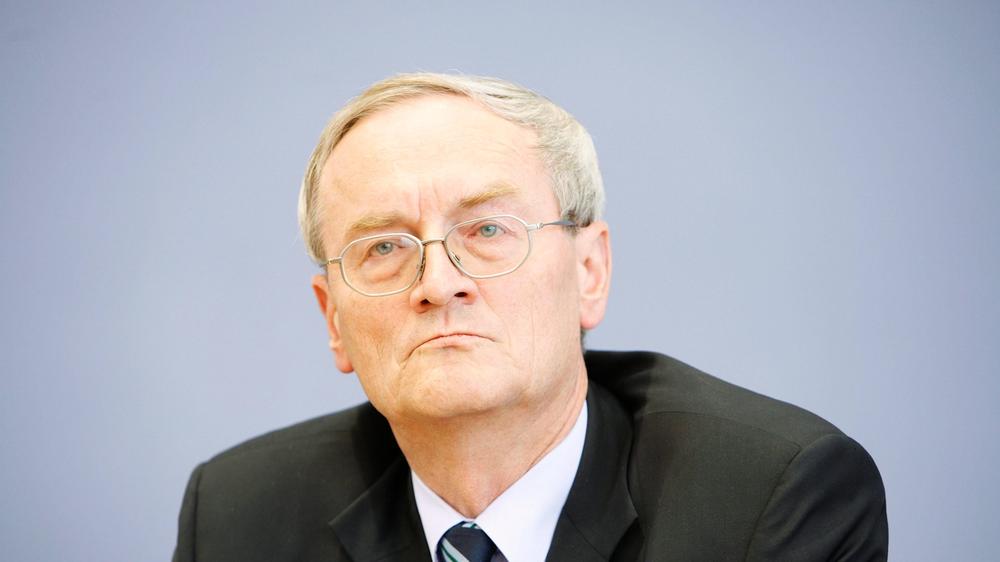
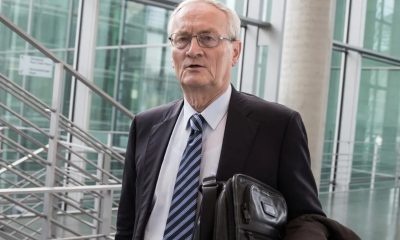
August Hanning, who led Germany’s Federal Intelligence Service (BND) between 1998 and 2005, was arrested on 6 October on allegations that he obtained roughly 2,000 classified agency documents and used them during contacts with intelligence officers from a foreign state.
Accused of high treason and espionage on behalf of a foreign intelligence agency, the former spy chief is alleged to have procured the documents from former BND employee Manfred D.
Prosecutors stated that the leaked records included internal briefing notes presented to senior German officials, though the Berlin government has not yet publicly disclosed which country received the classified data.
According to an exclusive report by Jake Green for The Cradle, seized email exchanges revealed extensive ties between the arrested Hanning and former Mossad director Danny Yatom.
The correspondence shows that the two former intelligence directors built an ongoing network of contacts following their public service, combining commercial ventures, efforts to secure political influence, and intelligence links.
This dynamic has triggered debate that using personal connections and official access for private gain has left Germany’s intelligence apparatus vulnerable.
Intelligence notes for 10,000 euros and campaign proposals
According to the reviewed emails, Hanning told Yatom in a 2018 message that he could prepare an “overall assessment based on information obtained from senior German officials and intelligence agencies” concerning an unidentified candidate.
The former BND head committed to completing the report by 13 July in exchange for 10,000 euros.
Contacts between the two men subsequently expanded to cover domestic political processes in Germany. Ahead of the September 2021 federal election, Yatom asked Hanning to approach leading candidates.
Describing CIY Global as a “political campaign company”, the former Mossad chief noted that he aimed to introduce its capabilities to German politicians, and he mentioned his intention in the same exchange to transfer documents concerning a cybersecurity firm.
Cybersecurity partnership and surveillance operations across Europe
The partnership between Yatom and Hanning reached beyond political lobbying initiatives into the cybersecurity sector.
Hanning reportedly served as a consultant for World Health Energy Holdings, a cybersecurity company linked to Yatom.
Firms of this type, established or managed by former intelligence personnel, provide commercial platforms on the international market for Israeli-origin surveillance, cyber intelligence, and political influence capabilities.
The operational presence of private Israeli-based surveillance technologies across Europe has recently entered judicial records through scandals in Poland, Spain, and Greece.
Polish prosecutors announced on 12 October that data collected under the previous government via Pegasus spyware against political opponents had been transferred out of the country, adding that manufacturer NSO Group maintained access to the technical infrastructure.
In Spain, the 2022 CatalanGate investigation established that at least 65 people, including politicians, lawyers, and civil society representatives, were targeted using Pegasus or Candiru software, with Citizen Lab researchers publishing strong evidence linking the operation to Spanish authorities.
In Greece, the surveillance operation targeting journalist Thanasis Koukakis and Member of the European Parliament Nikos Androulakis was determined to have used Predator software, linked to Intellexa, a company founded by former Israeli intelligence officer Tal Dilian.
In the German espionage investigation, the traffic between Hanning and Yatom involving paid reporting, contacts with electoral candidates, and commercial partnerships does not yet provide conclusive legal evidence regarding the final destination of the roughly 2,000 classified documents.
Nevertheless, the disclosed correspondence gives German investigators a concrete line of inquiry to assess whether classified state secrets reached commercial networks tied to Israeli intelligence.

US President Donald Trump has dismissed Kimberly Guilfoyle, the US ambassador in Athens, following serious press reports concerning her conduct.
White House Press Secretary Katie Zacharia told reporters during her first briefing that Guilfoyle had been asked to resign.
“She was doing a good job, but we didn’t like what we read in the press,” Trump said. “She was not a member of my family. I think she dated my son a long time ago.”
In a social media post, Guilfoyle stated: “These claims are unfounded, and I will resolutely defend my name, reputation, and integrity.” She added that she was particularly proud of the embassy’s work.
According to Kathimerini, her removal came as no surprise in Washington. Days of successive disclosures and vigorous exploitation of the matter by Democrats had been inflicting political damage on the White House ahead of the sensitive midterm elections.
The US State Department was instructed not to comment, with crisis management transferred entirely to the White House.
Reports indicate that most of the president’s team swiftly favoured Guilfoyle’s dismissal, while Secretary of State Marco Rubio was reportedly uneasy with the demonstratively warm public welcome she had staged for him.
Democrats on the House Foreign Affairs Committee have called for an investigation.
“Her resignation does not absolve her of responsibility,” the lawmakers wrote, adding: “While American families struggled to make ends meet, she used her position as a Trump administration official to enrich herself.”
Chargé d’Affaires Josh Huck will assume ambassadorial duties until a successor is chosen.
Meanwhile, Guilfoyle’s departure is expected to cause delays in agreements between Greece and the US.
These include the so-called “Rubio package”, comprising approximately $4 billion in arms deals finalised only days before the secretary of state’s arrival.
Several procedural steps still remain before the contracts can be signed.
In Athens, opposition parties are demanding answers. Dimitris Mantzos of PASOK called for a detailed briefing on the agreements reached during Rubio’s visit.

German officials urge fighter jet alliance with Sweden and Spain

US wealthy demolish multimillion-dollar mansions for land

US and Israel weigh Iran strikes after midterm vote, reports say

Pentagon plans covert spy ring for economic war on China, report says

EU reopens debate on naming envoy for Ukraine talks with Putin
-

 Europe2 weeks ago
Berlin Left Party backs Israel’s right to exist for coalition pact
-
 America2 weeks ago
How will Brazil’s presidential runoff work?
-
 Diplomacy2 weeks ago
The West is preparing for war not with Russia, but with its own people, French analyst Georges Kuzmanovic insists
-

 Russia2 weeks ago
71 EU lawmakers demand closure of Russian Houses in 15 member states
-

 Russia2 weeks ago
US and Russian figures discuss American stake in Nord Stream lines
-
 Europe2 weeks ago
MI6 investigates potential leaks after former BND chief is detained
-

 Russia2 weeks ago
Drone strike shuts down Yandex data centre in Russia’s Ryazan region
-

 America1 week ago
Trump weighs presidential memorandum to cut surging US diesel prices
