
Europe
Rome’s hesitation over SAFE defense allocation draws frustration across EU

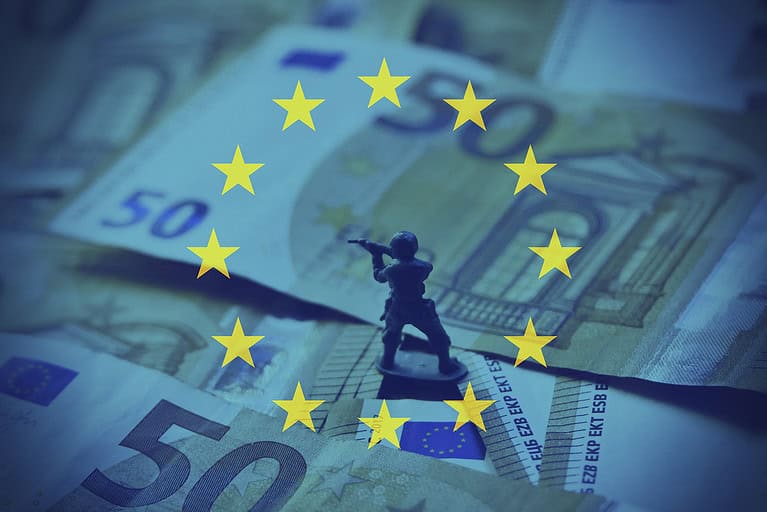
Italy is delaying the execution of a €14.9 billion loan agreement under the European Union’s SAFE defense program, a hesitation that is preventing other member states from accessing unallocated funds.
The Italian government has failed to finalize the exact amount it intends to borrow due to an ongoing energy crisis and internal political debate, effectively holding other European nations “hostage” ahead of a year-end deadline for fund redistribution, according to a report by Euronews.
Rome had previously requested €14.9 billion in loans—an application that was swiftly approved by both the European Commission and the Council of the European Union. However, the administration has yet to issue a final decision regarding the exact amount it will draw down.
Italian Foreign Minister Antonio Tajani stated this week that his country has “reserved” the full €14.9 billion as a maximum threshold.
Tajani noted that the government will only determine the final loan volume toward the end of the year, adding that he expects the eventual figure to range between €6 billion and €9 billion.
Eastern bloc frustrates over indecision
Rome’s reluctance is causing growing irritation across Europe, Euronews reported. While 17 EU member states have completed their formal agreements with the European Commission, they remain unable to access unclaimed funds because of Italy’s position.
Eastern flank countries, including Poland and Lithuania, are facing particular constraints as they seek additional resources beyond their initial allocations.
Under SAFE framework regulations, all unspent resources must be redistributed by the end of the year. Euronews reported that if Italy continues to delay, the European Commission could formally restrict Rome’s application in September, opening the remaining pool of approximately €10 billion to applications from other member states.
The Security Action for Europe (SAFE) operates as an EU financing mechanism designed to provide low-interest loans to help member state governments bridge gaps in their military capabilities and maintain continued support for Ukraine.
Approved by EU ambassadors in May last year to support the bloc’s rearmament, the SAFE loan facility has a total capacity of €150 billion.
The program forms part of the broader €800 billion “ReArm Europe” initiative announced by the European Commission in March.
Energy crisis and domestic politics stall progress
Italy’s cautious approach stems from a combination of domestic political pressures and economic factors. The country is contending with the impact of rising energy costs linked to the closure of the Strait of Hormuz, leading the Italian government to request fiscal flexibility from the EU to handle energy expenditures.
Concurrently, Italy’s ruling coalition—comprising Fratelli d’Italia (Brothers of Italy), Lega (League), and Forza Italia—faces intensifying pressure from its far-right wing, which has criticized increased defense spending ahead of upcoming elections. Italy must hold its next parliamentary elections no later than Dec. 22, 2027.
Euronews previously reported in May that despite reserving €14.9 billion under the SAFE program, Rome subsequently decided to request only €4 billion to €5 billion to cover existing signed contracts.
Prime Minister Giorgia Meloni and Foreign Minister Tajani justified the move by emphasizing the need to prioritize the energy crisis. Rome missed the deadline to submit its SAFE projects after requesting budget flexibility from Brussels for energy spending.
“We cannot tell our citizens that there is only money for defense,” Meloni said regarding the situation.
Italian daily La Repubblica also reported persistent disagreements between Meloni and other EU leaders concerning Ukraine. At the end of June, Germany’s Frankfurter Allgemeine Zeitung (FAZ) reported that a draft text intended for consensus at the NATO Summit in Ankara envisioned maintaining annual support for Kyiv at €70 billion through 2027, matching the 2026 commitment level.
However, Italy withheld its approval for the draft, objecting to long-term financial commitments of that scale for Kyiv.







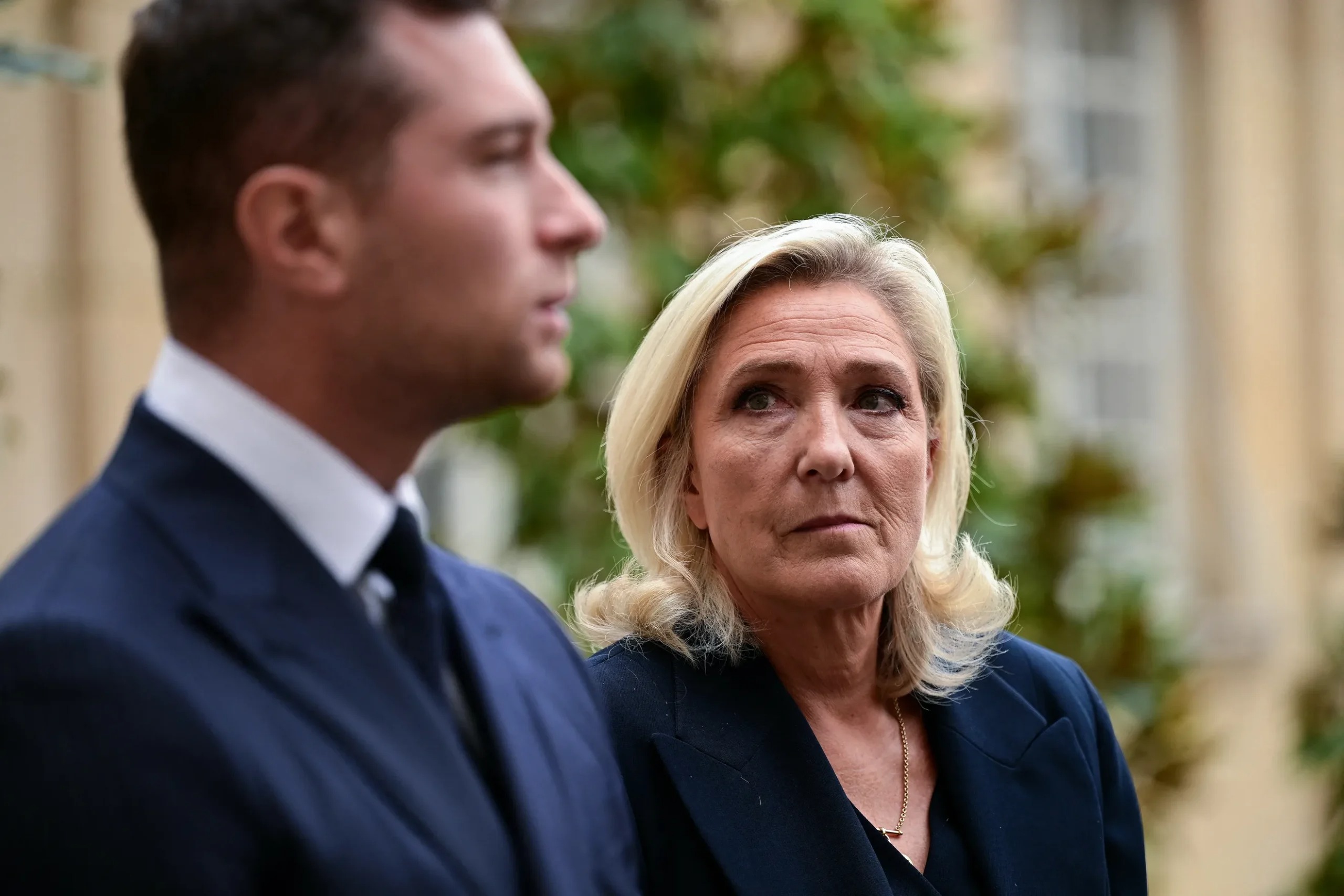
Jordan Bardella, president of France’s National Rally (RN), has been accused of voicing antisemitic views in private conversations with party members when he was 17 years old.
In a report published on Monday, investigative news website Mediapart stated that it had obtained and independently verified correspondence in which Bardella allegedly said that “Jews must dominate other peoples, crush them, and rob them,” and that “all banks are in the hands of Jews.”
Bardella strongly denied the allegations, adding that he will sue Mediapart.
Both Bardella and Marine Le Pen characterised the report as part of a wider, coordinated effort to prevent the veteran far-right politician, who currently leads in the polls, from winning next year’s election.
Bardella said:
“At a time when we have never been closer to the victory of our ideas, certain activist media outlets are ready to organise smear campaigns to destabilise the presidential campaign and attack my honour.”
The RN president said, “We can feel the first signs of an all-out war and attempts to destabilise the presidential campaign.”
Le Pen, seated beside Bardella as she spoke to reporters in the National Assembly, the lower house of the French parliament, said, “The system will do everything, even the most disgusting things, to block this momentum.”
During her attendance at a construction industry event on Monday, Le Pen described Mediapart’s report as “madness”.
The National Rally’s predecessor, the National Front, was founded by Le Pen’s father, Jean-Marie, who was convicted repeatedly of hate speech, along with Nazi collaborators.
Le Pen expelled her father from the party in 2015 after he repeated his claim that the Holocaust was a “detail” of history.
Given that Le Pen propelled Bardella’s career and placed him at the forefront of efforts to clean up the party’s image, the fallout from this latest scandal could be particularly damaging.
Too young to be associated with the party’s old guard, Bardella was seen as a fresh face who could help the party make inroads among sections of the electorate where the Le Pen name carried too many negative connotations, particularly among older voters and the Jewish community.
Since taking the helm of the National Rally in 2021, Bardella has promoted the party as a defender of France’s Jewish population, pointing to his unreserved support for Israel as evidence.
The 31-year-old Bardella travelled to Israel in 2025 after receiving an invitation from Israeli Minister of Diaspora Affairs Amichai Chikli.
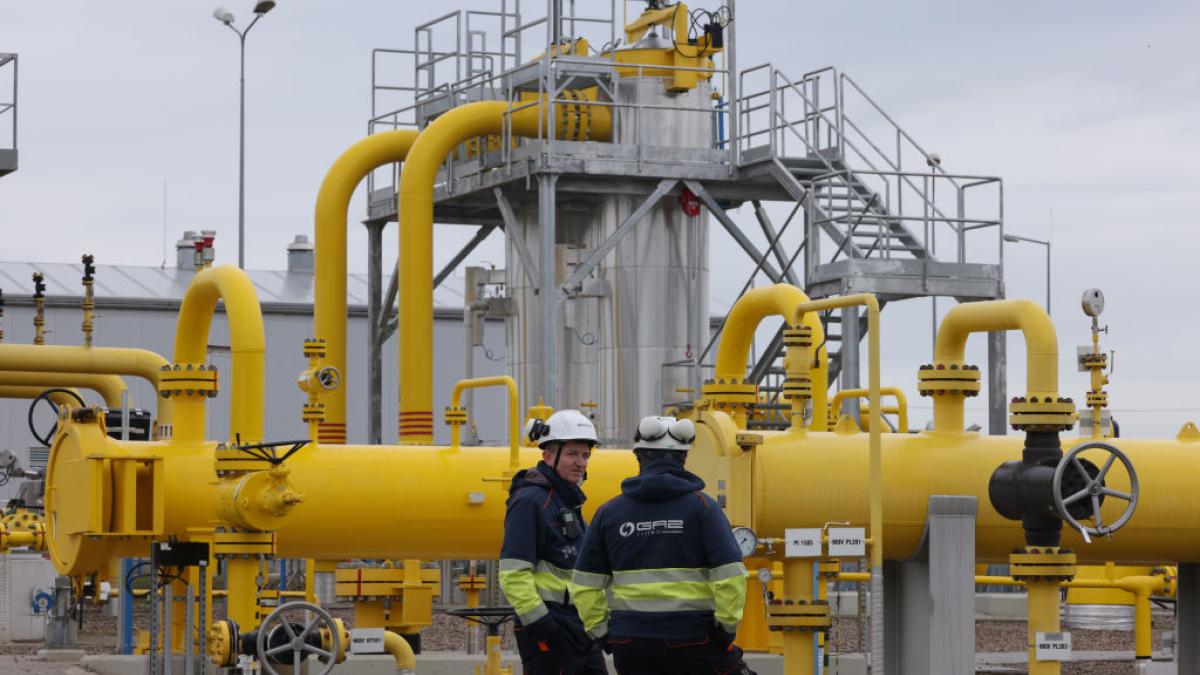
The European Union paid an additional bill of more than €100 billion during the year due to volatility in global energy markets. Despite this heavy expenditure, no increase was achieved in the volume of oil and gas supplied to the bloc.
Assessing the situation ahead of the EU Energy Ministers Meeting held in Dublin, EU Commissioner for Energy Dan Jørgensen emphasised that external dependency has reached an unsustainable point.
In his statement on 29 September, Jørgensen said: “The extra amount we paid for energy this year exceeded 100 billion euros, yet in return we did not receive a single drop more oil or a single cubic metre more gas.”
Pointing out that every rise in global prices is directly reflected on European households and industry, Jørgensen argued that the solution lies in domestic resources.
“Instead of imported, polluting, and expensive fossil fuels, we must turn to our own generated energy, to green electricity,” the commissioner said.
Energy prices in Europe surged once again due to the war with Iran, escalating concerns over navigation security in the Strait of Hormuz, and turmoil across global oil markets.
Following a new wave of attacks directed at Iran by the Washington administration, European benchmark natural gas prices in early September reached their highest level since January 2023.
Dutch gas futures rose by 5.9% to €73.95 per megawatt-hour.
This market pricing was driven by concerns ahead of the winter period that liquefied natural gas (LNG) shipments routed through the Strait of Hormuz could face prolonged disruptions.
Another development rattling the continent’s energy balances was the signals emanating from the White House. The possibility raised by US President Donald Trump of curbing diesel exports heightened anxiety in Brussels.
The EU, which meets approximately half of its diesel needs from the US, does not want this supply line severed.
Jørgensen reported that he conveyed clearly to Washington that such a step would serve the interests of neither the US nor Europe.
The EU official described US Energy Secretary Chris Wright’s distance from the export restrictions in question as a positive approach.
Stating that Europe is not currently experiencing a physical supply crisis, Jørgensen noted that they aim to minimise uncertainties as the winter season approaches.
Having turned to alternative suppliers and LNG markets to reduce its reliance on Russian resources since the outbreak of the Russia-Ukraine war, the EU continues to face high cost pressures.
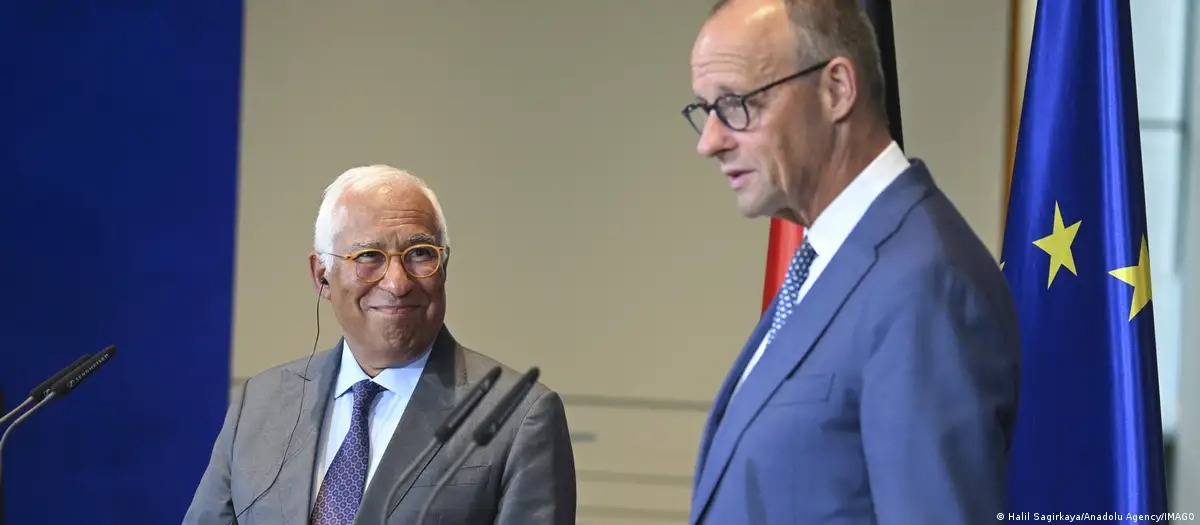
German Chancellor Friedrich Merz and the leaders of five other countries have threatened to withhold approval for the draft seven-year EU budget unless billions of euros in cuts are made as they demand.
According to the Financial Times, Merz, along with the leaders of the Netherlands, Sweden, Denmark, Austria, and Finland, signed a letter making clear that the proposed budget must be cut by billions of euros, or they will block it.
The 2028-2034 budget was prepared last year by the European Commission and requires the approval of all EU countries.
The proposed budget has been set at approximately 2 trillion euros ($2.33 trillion), and the parties involved hope to reach an agreement by the end of 2026.
The proposed sum is significantly higher than the current budget, which runs from 2021 to 2027.
Merz stated earlier this month that cuts should be implemented across all policy areas, rejecting further recourse to joint EU borrowing to plug the shortfall.
“Excessive debt threatens our sovereignty and our capacity to act,” the chancellor said, adding that governments face the “undoubtedly painful task” of setting priorities.
Arguing that a “20th-century budget” cannot resolve current challenges, the German leader called for spending in the bloc’s next budget to be shifted towards competitiveness and defence.
The EU budget is financed primarily through member state contributions. These payments are calculated either as national contributions based on gross national product or as a % linked to national VAT revenues.
As the EU’s largest economy, Germany provides the largest contribution in absolute terms.

Jordan Bardella faces antisemitism accusations over past messages

EU pays extra €100bn for energy without securing more oil or gas

Pentagon breach exposes personal records of three million people

Britain expands curbs on arms exports to Israel over Gaza risks

Germany deepens military, police, and cyber ties with Israel
-
 Europe2 days ago
European unions urge governments to scrap all Palantir deals
-
 Diplomacy2 days ago
East-West Forum in Istanbul highlights irreversible shift to multipolarity
-
 Europe1 week ago
European intelligence chiefs divide over risk of Russian attack
-

 Europe5 days ago
Emmanuel Todd says West faces collapse amid Ukraine and Iran crises
-

 Diplomacy6 days ago
East-West Forum in Istanbul to debate multipolarity and global order
-
 Middle East1 week ago
Sharaa says 7 October must not shape Israel policy on Syria
-
 Middle East1 week ago
Palestinian factions confront legitimacy crisis at Istanbul talks
-
 America1 week ago
Republican support for Trump’s war with Iran drops sharply in polls
