
America
Silicon Valley eschatology — 1: Awaiting the end times

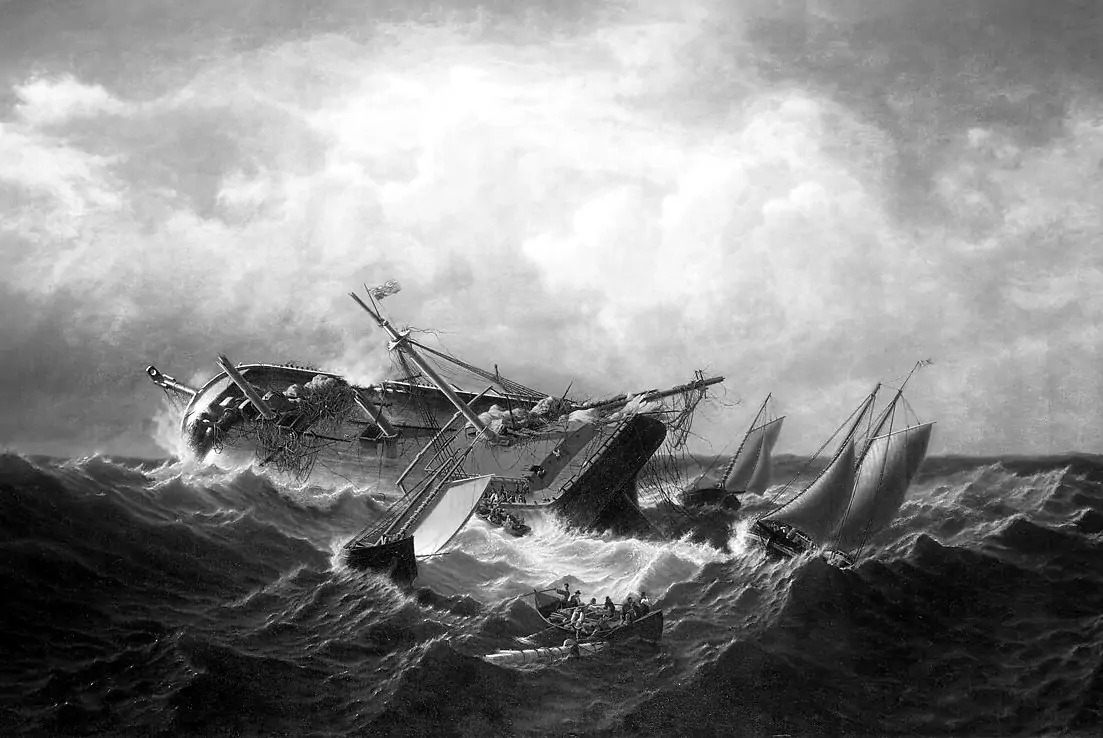
“It saddened me to think how brief the dream of the human intellect had been. It had committed suicide. It had set itself steadfastly towards comfort and ease, a balanced society with security and permanency as its watchwords, had attained its hopes, to come to this at last. Once, life and property must have reached almost absolute safety. The rich had been assured of his wealth and comfort, the labourer of his life and work. No doubt in that perfect world there had been no unemployed problem, no social question left unsolved. And a great quiet had followed.
It is a law of nature we overlook, that intellectual versatility is the compensation for change, danger, and trouble. An animal in perfect harmony with its environment is a perfect mechanism. Nature never appeals to intelligence until habit and instinct are useless. There is no intelligence where there is no change and no need of change. Only those animals which must meet a vast variety of needs and dangers have a share of intelligence.”
H. G. Wells – The Time Machine
Last November, Peter Robinson, host of the Uncommon Knowledge program at the libertarian Hoover Institution, hosted Peter Thiel under the headline, “Apocalypse Now.”
In the broadcast, subtitled “Peter Thiel on ancient prophecies and modern technology,” the founder of Palantir is introduced as a “leading technology entrepreneur and thinker” and shares his “views on the end times, technology, and societal progress.”
Robinson, who once served as a speechwriter for Ronald Reagan and George H. W. Bush, asks Thiel, in a manner that feels like he is teeing him up, to explain why universities lack this “knowledge” as we head toward the “end times.”
Thiel responds:
“…I’ve put this in a number of other contexts, but my intuition is that there’s been a relative stagnation in many places. The over-specialization, the narrow experts telling you how great they are, it’s hiding a sort of decay where the cancer cell salesmen, the cancer researchers say they’re going to cure cancer in the next five years. And the string [theory] physicists say they’re the smartest physicists and they know everything. But maybe it’s this weird academic power game that’s blocking everybody else. Before you even get to the big question of history, there’s a question about the history of science and technology: Science and technology have progressed a lot. Maybe it’s progressing more slowly. Why did it change? What’s going on there?”
The conversation also turns to rationalism, and Thiel laments that scientists like Bacon no longer emerge, that hyper-specialization and rationalism do not produce “heroic” types. Stagnation, in his view, defines our era. Moreover, this is linked to the apocalypse, to Armageddon, to the “end times”: it might be possible to see signs like the emergence of the Antichrist, not in their literal sense, but in their secondary meanings. Perhaps the Antichrist is not a person but a system; communism, the “United States of Europe,” a one-world government… They could all be signs.¹
Thiel points out that when faced with a binary choice like the Antichrist versus Armageddon, everyone would naturally defend the “one world/one-world government against the Antichrist.” Nevertheless, he implies that both paths are bad and seems to propose, or appears to have proposed, a “third way.” What we see, however, is a rejection of the Enlightenment idea that is fond of hyper-rational masses/crowds:
“(…) I’m much more of the Lord Acton view that absolute power corrupts absolutely. And this would be a power that would be subject to no checks. There’d be nobody on the outside. It would be, in some sense, the biggest crowd, the biggest bubble.
This is probably a place where the Bible is different from enlightened rationality. Enlightened rationality believes in the wisdom of the crowd. The Bible believes in the madness of the crowd. And if you have a one-world state, which is in some sense the biggest crowd of all, it’s all of humanity turned in on itself.”
The host, Robinson, immediately retorts: “The global mob.” Thiel agrees.
Thiel wonders what would happen to, for instance, marginal tax rates in the event of the Antichrist’s appearance as a one-world state and global governance, and he answers his own question: “I think they’d be quite high. It would be something like East Germany with no escape.” He worries that people, frightened by destruction and the apocalypse, will be content with the Antichrist’s deception of peace and security. The promise of peace and security from a one-world state means high taxes.
Osama bin Laden vs. Locke
In fact, Thiel presents us, in his own subtle way, with a theme that repeatedly appears in the history of bourgeois civilization: the rational economic man of Adam Smith (and Karl Marx!) actually signifies the destruction of humanity through indolence, mediocrity, moderation, and lack of ambition. Progress has slowed because we have stopped asking questions about “human nature.” Yet, there is also an “old” tradition that views humans as uncanny, prone to violence, or at least dangerous creatures. Thiel proposes reviving this tradition. The Westphalian order, Hobbes’s preaching of escape from the state of nature where every man is a wolf to every other man; a cowardly life had become preferable to a heroic but meaningless death. The Enlightenment was a “strategic retreat”: to prevent people from killing each other, asking questions about human nature was now forbidden.
Clearly, we are faced with a secondhand Nietzsche (and perhaps Heidegger and Schmitt). The old traditions did not promise a right to life or freedom; man was to aim for virtue instead of happiness. He was drawing a connection between Locke and Hobbes’s escape from nature (the natural) and their praise of the pursuit of happiness, and capitalist accumulation. Locke, Hobbes, and Smith, with all their optimism, believed we would live in the tranquility of the capitalist paradise we built for ourselves.
Yet, despite all this talk of brotherhood, according to Thiel, Western civilization woke up to the 9/11 attacks at the beginning of the 21st century. September 11 was the moment peace was shattered. The non-Western world had not yet transitioned to the Westphalian order; the Enlightenment had reached these places unevenly; the American continent, free of religious wars, was shaken by them, and so on. What could the comfort-accustomed Westerner do against the fanatics from geographies where the afterlife is a blessing, who thirst for martyrdom? Osama bin Laden, however, was aware of the limits that liberal thinkers like Locke ignored:²
“Today, the instinct for self-preservation alone should compel us to look at the world anew, to think strange new thoughts, and thereby to awaken from that very long and profitable period of intellectual slumber and amnesia that we have misleadingly called the Enlightenment.”
Dr. Thiel or: How I learned to stop worrying and love the apocalypse
The idea of embracing the apocalypse is not unique to Thiel; it can also be optimistic or pessimistic. We can say that both Silicon Valley’s techno-optimists and those who argue that the welfare state dulls human nature eagerly await Armageddon.
However, for Thiel, the real apocalypse lies in the naivety of the genteel classes who believe that life is heading toward the good and the beautiful, and that the rabble are, in fact, valuable creatures. He is essentially saying, “If you continue with this mindset, the rabble will rule.” It is likely with this pessimism that he quotes Schmitt:
“In Russia, before the Revolution, the doomed classes romanticized the Russian peasant as the good, brave, and Christian mujik. … The French aristocratic society before the Revolution of 1789 sentimentalized ‘the man who is good by nature’ and the virtues of the masses. … Nobody scented the revolution; it is incredible to see the security and the lack of suspicion with which this privileged group in 1793 spoke of the goodness, the gentleness, and the innocence of the people—a spectacle ridicule et terrible [a ridiculous and terrible spectacle].”
Schmitt’s “insistence on the political” and the rejection of universalism he found in the eschatological “you are either with Christ or against him” dichotomy of medieval Christianity should be counted among the 20th-century sources of Thiel’s love for the apocalypse. If Osama bin Laden is forcing the apocalypse with a Schmittian total enemy-making, then Western civilization must respond in the same tone. Therefore, 9/11 as an invitation to the apocalypse is a turning point for Thiel.
Thiel, who eagerly cites Schmitt—who envisioned an age where the representation of truth replaces truth itself—embraces the prophecy that this artificial world will require a “technical religion,” and that the brief harmony created by this “Babylonian unity” is the penultimate stop before the Apocalypse. The Antichrist, inspired by Schmitt, once again appears with the promise of security and peace and destroys humanity.
But Thiel still believes in a third way. The balance of terror created by technologies that could lead to unlimited destruction also opens a narrow path for humanity, caught between the Apocalypse and the Antichrist:³
“But I would always come back to the apocalyptic scenarios, the Antichrist or Armageddon. And I think there’s a lot in this runaway science technology that pushes us towards something like Armageddon. And then there’s a natural reaction against that, which is we’re going to escape Armageddon by having a single world state that has real power and real teeth. The biblical name for that is the Antichrist. And my Christian intuition is I don’t want the Antichrist, I don’t want Armageddon. I’d like to find this narrow path between the two where we can avoid both. And there are ways, of course, to put it off, to try new things, if possible.”
Thiel’s train of thought is as follows: The West has lost faith in itself. But thanks to this loss of faith, immense commercial and creative forces were unleashed; and because of this same loss of faith, the West has left itself defenseless. The question, then, is this: Is there a way to strengthen the modern West without completely destroying it, to avoid throwing the baby out with the bathwater?
The answers to this are varied. In this series of articles, we will touch upon some of the reactions of property owners to the terror created by the idea of the end times. But Thiel does not hide his admiration for the “freedom” of the American founding fathers. Americans before the U.S. Constitution seem much freer than those after it. He recalls Leo Strauss: “Even the most just society cannot survive without ‘intelligence, i.e., espionage,’” but “espionage is impossible without a suspension of certain rules of natural right.” Thiel seems to approve:
“Instead of the United Nations, with its endless and inconclusive parliamentary debates that resemble Shakespearean tales told by idiots, we should consider Echelon, the secret coordination body of the world’s intelligence services, as the way toward a truly global pax Americana.”
The moment of truth created by Trump and Apokálypsis
When Donald Trump first took the presidential office in 2016, Barack Obama, referring to the apocalypse, said, “It’s not the end of the world…”
According to Thiel, Obama was right in the literal sense of the word. But if we look at its meaning in ancient Greek, apokálypsis (unveiling, revelation), the same could not be said for a second Trump term:
“Apokálypsis is the most peaceful way to decide the war the old guard waged against the internet, which the internet won. My friend and colleague Eric Weinstein calls the guardians of pre-internet secret knowledge the Distributed Idea Suppression Complex (DISC)—the media organisations, bureaucracies, universities and government-funded NGOs that traditionally limited public discourse. In retrospect, the internet had already begun our liberation from the DISC prison in 2019 with the death in custody of the financier and child sex trafficker Jeffrey Epstein. Almost half of Americans polled that year did not trust the official story that Epstein had committed suicide, which showed that the DISC had lost its total control over the narrative.”
Let’s set aside the irony symbolized by the great fiasco Trump, whom Thiel supported, caused his own base in the Epstein case. After conflating a range of issues from the Kennedy assassination to COVID-19 conspiracies, he believed they had finally and irreversibly consigned their own ancien régime to the dustbin of history. There would be no “reactionary restoration” of the “pre-internet past.”
The future required “fresh and unusual ideas.” New ideas could have saved the old regime, which, far from answering our deepest questions, “barely even considered them,” but this is no longer possible. Among these questions were the reasons for the 50-year slowdown in scientific and technological progress in the U.S., rising real estate prices, and the explosion of public debt. Thiel believed they had captured a moment of truth with the apokálypsis created by Trump. Therefore, it was more meaningful to deal with Epstein than with the American founding fathers and their slavery and colonialism. It was more correct to focus on COVID-19 than to cast stones at the year 1619, when the first African slave set foot on the American continent. One doesn’t need to be a genius to understand that what is implied here is the rehabilitation of slavery, colonialism, and the American exceptionalism embodied in manifest destiny. How else can the comfort-accustomed, indolent Westerners deal with the non-Westerners who seem like a sacrificial generation?
The fear of dispossession in humans, especially property-owning humans, and the hatred for bourgeois civilization, which can be summarized as “You unleashed this mob/rabble upon us!”, finds its expression in a roughly Nietzschean-inspired aristocratic rebellion.
Here, cultural fear mixes with biological fear. The Social Darwinist and Malthusian pessimistic omens of apocalypse, which we will lay out in the next part of the series, are resurrected once again.
The Time Traveller, the protagonist of H. G. Wells’s The Time Machine, describes the people he sees in the year 802,701, where he travels with his invention. On the surface, there is the Eloi race, living in apparent joy and carelessness; on the other hand, there are the Morlocks, living underground without seeing the light of day, working in filthy jobs, and at some point in history, turning to cannibalism. It is such a dystopia that the propertied and the propertyless have, at some future moment, become two separate races, but contrary to the initial harmony, they are trapped in a decline where the numerically superior underground race now eats the genteel inhabitants of the surface. The propertied have become so accustomed to comfort that the paradise they live in is actually summoning the apocalypse. Humanity has progressed so much that the human race has biologically regressed.
The Silicon Valley elites, including Thiel, consider these apocalyptic scenarios a warning and are seeking an economic, geographic, and—what amounts to the same thing for them—biological escape for themselves (that is, for those like them, the property owners).
¹ So much so that at one point in the dialogue, Thiel, referring to an old novel by the English Catholic priest Robert Hugh Benson, Lord of the World, which Robinson brings up, says, “The Antichrist is a Jewish socialist senator from Vermont.” Bernie Sanders is the senator from Vermont.
² I must also say that Thiel resorts to various clever tricks to prove our “irrational” nature. Our Silicon Valley philosopher, reminding us that bin Laden became rich with the 20th-century oil boom, puts forward a strange thesis: “Since most of the value of oil is simply in the ground, the ‘labor’ that people add to it by extracting and refining it is proportionally small. And yet, at the same time, economies rise and fall on the price of crude oil, so much so that it constitutes a significant fraction of the world’s wealth.” Extracting oil, transporting it, refining it, using it in energy production, transportation, or financial assets… All of this supposedly requires “proportionally small” labor.
³ Thiel, who is fond of biblical language, is likely alluding to Luke 13:24: “Strive to enter through the narrow door. For many, I tell you, will seek to enter and will not be able.”













Wealthy buyers in the US are tearing down multimillion-dollar homes shortly after purchasing them for hundreds of millions of dollars.
According to a report by The Wall Street Journal, the trend is driven by a shortage of land in prestigious locations, particularly along coastlines.
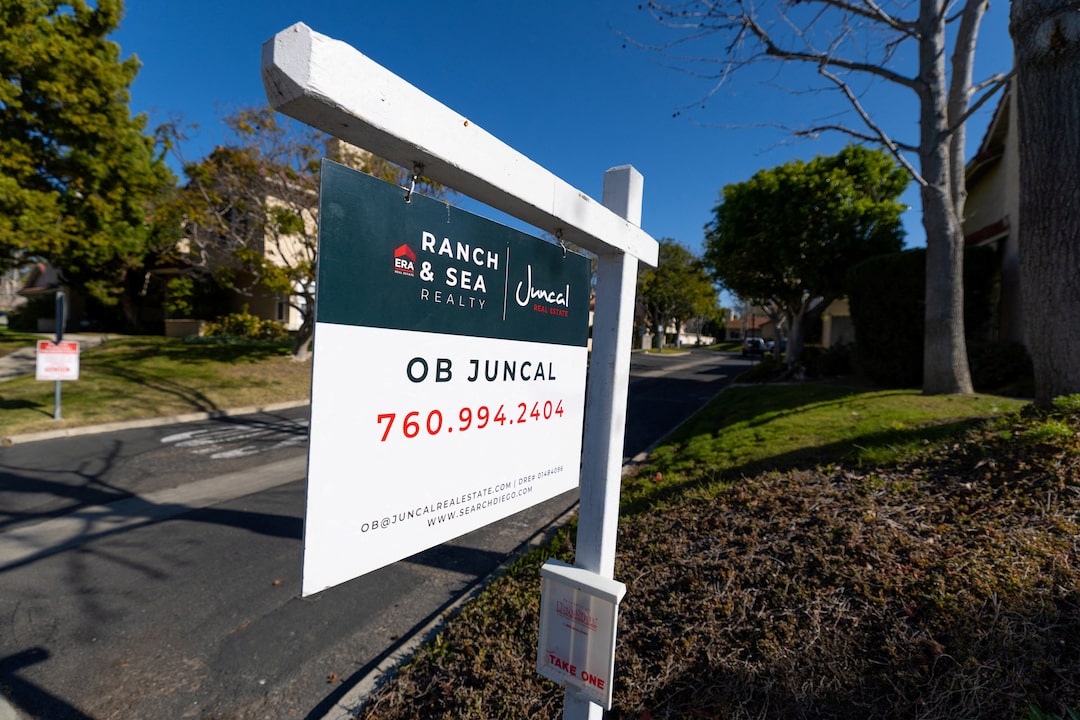
For ultra-wealthy buyers, the prime factor has become the land’s location rather than the structure standing on it. After the acquired properties are flattened, newer, more modern homes are built on the cleared lots.
Drawing attention to the shift in the luxury real estate market, the report noted:
“The home itself, formerly the primary driver of an expensive real estate purchase, is now almost beside the point. Buyers are competing first and foremost for well-located land, situated on the ocean or a mountaintop.”
The newspaper cited moves by US billionaire William Lauder as an example. Lauder purchased the oceanfront estate of radio host Rush Limbaugh, who died in March 2023, for $155 million and had it completely demolished in July.
Lauder had previously torn down two homes situated on roughly 1.2 hectares of land along the Palm Beach coast. Having initially planned to construct his own residence on the parcel, Lauder subsequently sold the cleared plot for approximately $200 million.
Jonathan Miller, a real estate appraiser, stated that such transactions are becoming increasingly common as land prices rise.
Amid this momentum, estate agents have also begun marketing luxury homes directly as teardown lots.
Listings use artificial intelligence-generated imagery to showcase how the land would look without the structures on it.
Marketers avoid using the word “demolition” directly, resorting instead to terms such as “adaptive reuse”.
Teardown listings rise across luxury housing market
The trend is not confined to the coast and is spreading to other regions across the US.
Data from property brokerage Redfin reveals that references to demolishing buildings are becoming more frequent in sales listings.
The share of such listings exceeds 15% in the Bunker Hill Village area of Houston, while standing at 6.67% in Pimmit Hills, Virginia.
Dina Goldenteyer, a real estate agent working in Miami, remarked that serial demolitions have become more frequent because buyers no longer appreciate homes older than a decade.
Former retail executives Jamie Dooley and Christine Scott spent $3.7 million in 2020 to demolish a seaside home near Destin, Florida.
Although the couple spent five years building a modern home on the cleared site, they listed the resulting new structure with a demolition condition, citing the fact that no one wanted to buy the property as it stood.
William Paddock, an employee at the environmental consultancy WAP Sustainability, pointed to the environmental damage caused by this construction cycle.
Paddock emphasized that tearing down a home of roughly 1,000 square metres and replacing it with a new building of approximately 2,700 square metres generates a carbon footprint equivalent to the annual emissions of an average 250 American households.
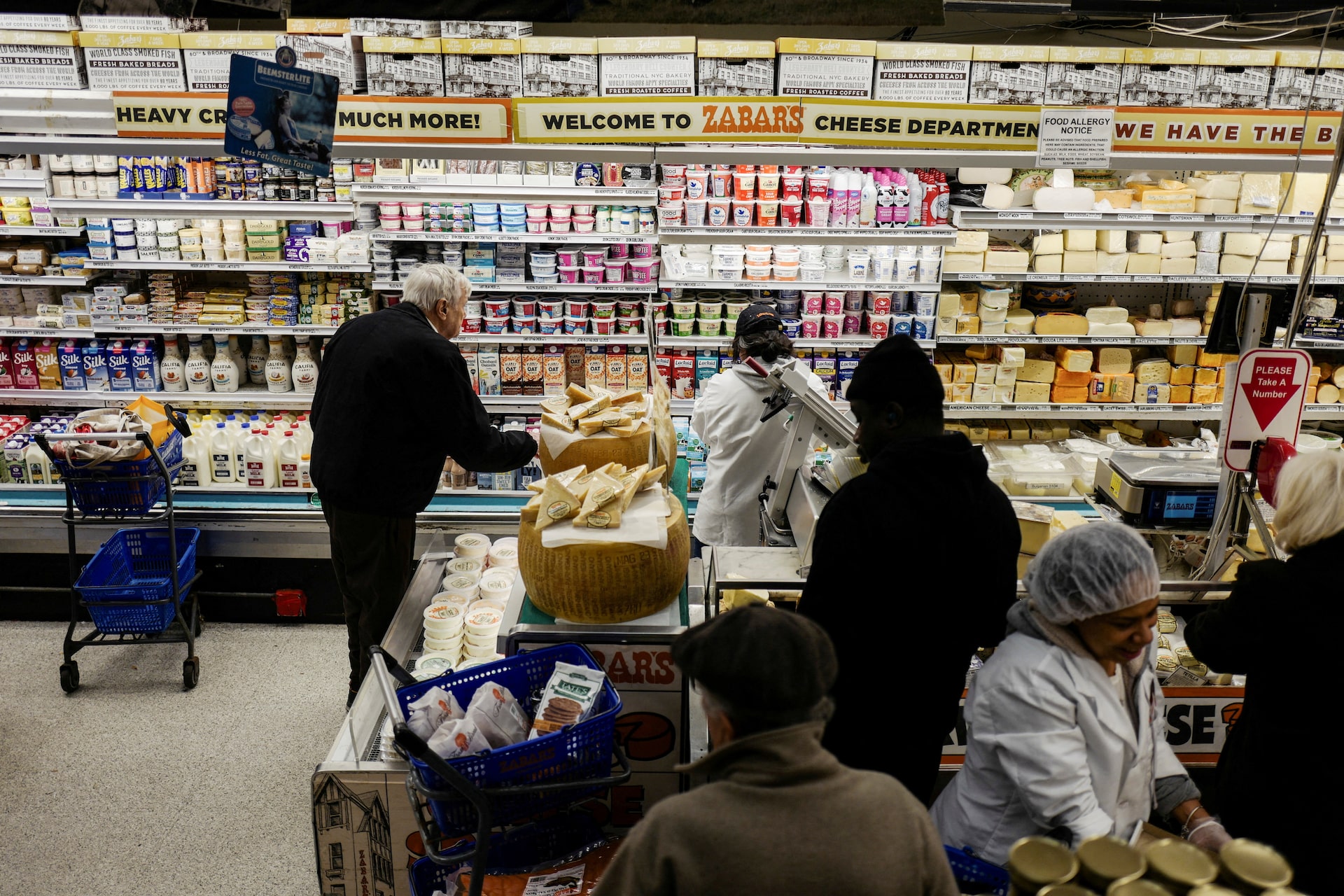
An uptick in September inflation as the US midterm elections approach has pushed the cost-of-living debate back to the centre of the agenda for Democrats seeking to regain control of Congress from Republicans.
Annual inflation stood at 3.7% in September, according to the Consumer Price Index published by the Bureau of Labour Statistics, with energy, petrol, and electricity costs rising on a monthly basis.
Food prices remained flat from August to September, recording a 2.5% increase compared with the same period last year.
Democrats are anchoring their election campaigns to pledges of easing the cost of living, blaming the price increases on President Donald Trump’s tariffs and the war with Iran.
Trump and Republicans, pointing to the numerous left-wing candidates who won primary elections this year, contend that the opposition has become captive to “communists” within the party.
When annual inflation stood at 2.4% in February, the US and Israel launched the Iran war on the final day of that month, and prices continued to climb throughout the conflict.
The recent acceleration has not entirely reversed the retreat from the 40-year peak of 9.1% recorded in June 2022; however, the rate has remained above the Federal Reserve’s 2% target for over five years.
Fed policymakers raised the benchmark interest rate by a quarter of a percentage point last month, citing the battle against stubborn inflation. Officials will convene again next week to consider whether to raise rates or hold them within the 3.75% to 4% target range.
Energy and fuel record sharpest increase since first month of war
In September, energy prices posted their largest monthly jump since March, the first full month of the war with Iran, climbing 20.4% year-on-year. Energy costs had risen 2.1% from July to August, after falling 1.5% from June to July and 5.7% from May to June.
Recent escalations in Iranian attacks on oil tankers in the Strait of Hormuz, alongside more frequent strikes by Ukrainian forces against Russian refineries, have strained global crude oil and refined product markets, driving up US petrol and diesel prices.
Petrol prices also recorded their sharpest monthly increase since the first month of the war, climbing 9.1% from August to September, bringing the annual increase to 35.3%.
American Automobile Association (AAA) data shows the average price of regular petrol across the US stands at $4.26 per gallon; while below the level of roughly $4.48 recorded a month ago, it remains more than $1.20 higher than a year earlier. Average gallon prices exceed $6 in California and $5 in both Washington state and Nevada.
Electricity prices rose 0.2% from August to September, offsetting the 0.2% decline between July and August, and were up 4.4% year-on-year.
Heavy power demand from new data centres is feeding through into local household electricity bills. Trump argued that companies must cover the cost of the electricity required by their data centres themselves.
In a post on Truth Social, Trump claimed that he was requiring large data centres to generate their own power and feed the surplus back into the local grid, suggesting this could bring about “a major drop” in electricity prices.
Used vehicle market posts monthly rise as food costs stabilise
The cost of food at home fell 0.1% month-on-month in September, while dining out increased 0.2%.
Egg prices dropped to $2.27 a dozen, falling roughly 35% compared with September 2025 and remaining well below the 20-year peak of $6.23 recorded in March 2025.
Ground beef prices rose roughly 2.4% compared with September 2025, but at $6.48 a pound, they remained below the 20-year high of $6.98 reached in June.
Chicken held steady at its year-earlier level of $2.06 per pound last month, having fluctuated between $2.01 and $2.09 since November 2024.
Used car and truck prices fell 1.5% compared with September 2025, but rose 0.7% month-on-month in September following 0.4% increases in both July and August.
Heather Long, chief economist at Navy Federal Credit Union, noted that the sector faces severe pressure stemming from a combination of expensive replacement parts and a shortage of skilled labour.
Speaking to The Hill, Long emphasised that every cost pressure across the market is being felt directly at local auto repair shops.
Anthropic, developer of the artificial intelligence model Claude, reported a net loss of $80.7 billion for the first six months of 2026 ending 30 June.
According to a report by The Wall Street Journal citing the company’s draft initial public offering prospectus, this recorded loss nearly doubled the $42 billion loss incurred across the entirety of 2025.
The vast majority of that enormous figure, accounting for $72 billion, stemmed from accounting-driven book-value write-downs.
In contrast, the company saw a sharp surge in revenue, with turnover in the first half of the year climbing to $16.3 billion from $1.1 billion in the same period of the prior year.
During this period, Anthropic spent approximately $9 billion on computing power and infrastructure needs, surpassing in just six months the $7.3 billion spent across the whole of 2025.
The company has commitments to pay roughly $450 billion over the next seven to 10 years under cloud service contracts.
Under these obligations, contracts are planned for $111 billion with Google Cloud, $110 billion with Amazon Web Services, and $31 billion with Microsoft.
Anthropic will also spend up to $86 billion by 2033 and 2034, respectively, to lease Nvidia chips through smaller AI-focused cloud providers Nscale and Lambda.
The company could spend an additional $750 billion in the coming years to expand its computing capacity.
Roughly a third of the draft IPO prospectus was dedicated directly to risk factors.
The document highlighted the possibility that models could cause tangible real-world harm, noting that artificial intelligence could exhibit a “self-preservation” tendency and produce responses resembling “blackmail”.
Anthropic warned that the scale of damage caused by an AI-driven “catastrophic event” could render insuring against such risks impossible.
According to market expectations, Anthropic’s IPO could rank among the largest transactions in history, potentially surpassing SpaceX’s record.
Following the market debut, the company’s market valuation is projected to reach up to $2 trillion.

German officials urge fighter jet alliance with Sweden and Spain

US wealthy demolish multimillion-dollar mansions for land

US and Israel weigh Iran strikes after midterm vote, reports say

Pentagon plans covert spy ring for economic war on China, report says

EU reopens debate on naming envoy for Ukraine talks with Putin
-
 America2 weeks ago
How will Brazil’s presidential runoff work?
-

 Europe2 weeks ago
Berlin Left Party backs Israel’s right to exist for coalition pact
-
 Diplomacy2 weeks ago
The West is preparing for war not with Russia, but with its own people, French analyst Georges Kuzmanovic insists
-

 Russia2 weeks ago
71 EU lawmakers demand closure of Russian Houses in 15 member states
-
 Europe2 weeks ago
MI6 investigates potential leaks after former BND chief is detained
-

 Russia2 weeks ago
US and Russian figures discuss American stake in Nord Stream lines
-

 Russia2 weeks ago
Drone strike shuts down Yandex data centre in Russia’s Ryazan region
-

 America1 week ago
Trump weighs presidential memorandum to cut surging US diesel prices
