
America
Silicon Valley eschatology — 1: Awaiting the end times

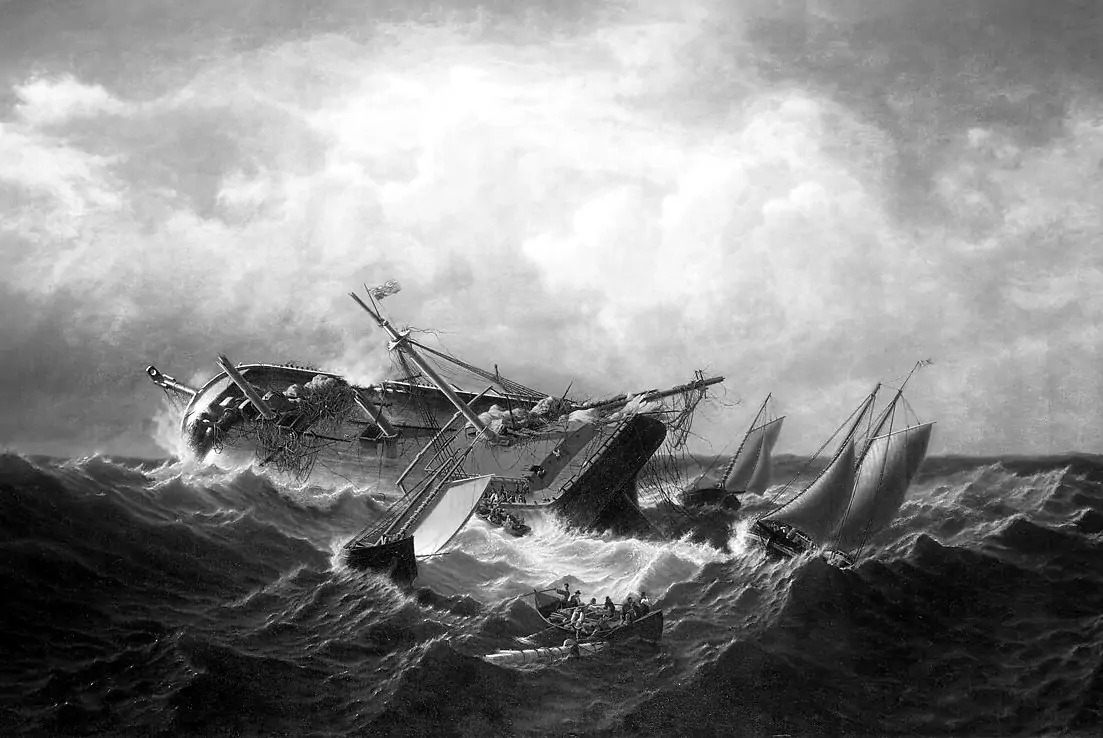
“It saddened me to think how brief the dream of the human intellect had been. It had committed suicide. It had set itself steadfastly towards comfort and ease, a balanced society with security and permanency as its watchwords, had attained its hopes, to come to this at last. Once, life and property must have reached almost absolute safety. The rich had been assured of his wealth and comfort, the labourer of his life and work. No doubt in that perfect world there had been no unemployed problem, no social question left unsolved. And a great quiet had followed.
It is a law of nature we overlook, that intellectual versatility is the compensation for change, danger, and trouble. An animal in perfect harmony with its environment is a perfect mechanism. Nature never appeals to intelligence until habit and instinct are useless. There is no intelligence where there is no change and no need of change. Only those animals which must meet a vast variety of needs and dangers have a share of intelligence.”
H. G. Wells – The Time Machine
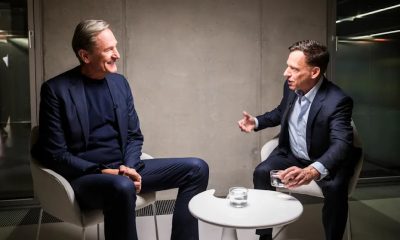
Last November, Peter Robinson, host of the Uncommon Knowledge program at the libertarian Hoover Institution, hosted Peter Thiel under the headline, “Apocalypse Now.”
In the broadcast, subtitled “Peter Thiel on ancient prophecies and modern technology,” the founder of Palantir is introduced as a “leading technology entrepreneur and thinker” and shares his “views on the end times, technology, and societal progress.”
Robinson, who once served as a speechwriter for Ronald Reagan and George H. W. Bush, asks Thiel, in a manner that feels like he is teeing him up, to explain why universities lack this “knowledge” as we head toward the “end times.”
Thiel responds:
“…I’ve put this in a number of other contexts, but my intuition is that there’s been a relative stagnation in many places. The over-specialization, the narrow experts telling you how great they are, it’s hiding a sort of decay where the cancer cell salesmen, the cancer researchers say they’re going to cure cancer in the next five years. And the string [theory] physicists say they’re the smartest physicists and they know everything. But maybe it’s this weird academic power game that’s blocking everybody else. Before you even get to the big question of history, there’s a question about the history of science and technology: Science and technology have progressed a lot. Maybe it’s progressing more slowly. Why did it change? What’s going on there?”
The conversation also turns to rationalism, and Thiel laments that scientists like Bacon no longer emerge, that hyper-specialization and rationalism do not produce “heroic” types. Stagnation, in his view, defines our era. Moreover, this is linked to the apocalypse, to Armageddon, to the “end times”: it might be possible to see signs like the emergence of the Antichrist, not in their literal sense, but in their secondary meanings. Perhaps the Antichrist is not a person but a system; communism, the “United States of Europe,” a one-world government… They could all be signs.¹
Thiel points out that when faced with a binary choice like the Antichrist versus Armageddon, everyone would naturally defend the “one world/one-world government against the Antichrist.” Nevertheless, he implies that both paths are bad and seems to propose, or appears to have proposed, a “third way.” What we see, however, is a rejection of the Enlightenment idea that is fond of hyper-rational masses/crowds:
“(…) I’m much more of the Lord Acton view that absolute power corrupts absolutely. And this would be a power that would be subject to no checks. There’d be nobody on the outside. It would be, in some sense, the biggest crowd, the biggest bubble.
This is probably a place where the Bible is different from enlightened rationality. Enlightened rationality believes in the wisdom of the crowd. The Bible believes in the madness of the crowd. And if you have a one-world state, which is in some sense the biggest crowd of all, it’s all of humanity turned in on itself.”
The host, Robinson, immediately retorts: “The global mob.” Thiel agrees.
Thiel wonders what would happen to, for instance, marginal tax rates in the event of the Antichrist’s appearance as a one-world state and global governance, and he answers his own question: “I think they’d be quite high. It would be something like East Germany with no escape.” He worries that people, frightened by destruction and the apocalypse, will be content with the Antichrist’s deception of peace and security. The promise of peace and security from a one-world state means high taxes.
Osama bin Laden vs. Locke
In fact, Thiel presents us, in his own subtle way, with a theme that repeatedly appears in the history of bourgeois civilization: the rational economic man of Adam Smith (and Karl Marx!) actually signifies the destruction of humanity through indolence, mediocrity, moderation, and lack of ambition. Progress has slowed because we have stopped asking questions about “human nature.” Yet, there is also an “old” tradition that views humans as uncanny, prone to violence, or at least dangerous creatures. Thiel proposes reviving this tradition. The Westphalian order, Hobbes’s preaching of escape from the state of nature where every man is a wolf to every other man; a cowardly life had become preferable to a heroic but meaningless death. The Enlightenment was a “strategic retreat”: to prevent people from killing each other, asking questions about human nature was now forbidden.
Clearly, we are faced with a secondhand Nietzsche (and perhaps Heidegger and Schmitt). The old traditions did not promise a right to life or freedom; man was to aim for virtue instead of happiness. He was drawing a connection between Locke and Hobbes’s escape from nature (the natural) and their praise of the pursuit of happiness, and capitalist accumulation. Locke, Hobbes, and Smith, with all their optimism, believed we would live in the tranquility of the capitalist paradise we built for ourselves.
Yet, despite all this talk of brotherhood, according to Thiel, Western civilization woke up to the 9/11 attacks at the beginning of the 21st century. September 11 was the moment peace was shattered. The non-Western world had not yet transitioned to the Westphalian order; the Enlightenment had reached these places unevenly; the American continent, free of religious wars, was shaken by them, and so on. What could the comfort-accustomed Westerner do against the fanatics from geographies where the afterlife is a blessing, who thirst for martyrdom? Osama bin Laden, however, was aware of the limits that liberal thinkers like Locke ignored:²
“Today, the instinct for self-preservation alone should compel us to look at the world anew, to think strange new thoughts, and thereby to awaken from that very long and profitable period of intellectual slumber and amnesia that we have misleadingly called the Enlightenment.”
Dr. Thiel or: How I learned to stop worrying and love the apocalypse
The idea of embracing the apocalypse is not unique to Thiel; it can also be optimistic or pessimistic. We can say that both Silicon Valley’s techno-optimists and those who argue that the welfare state dulls human nature eagerly await Armageddon.
However, for Thiel, the real apocalypse lies in the naivety of the genteel classes who believe that life is heading toward the good and the beautiful, and that the rabble are, in fact, valuable creatures. He is essentially saying, “If you continue with this mindset, the rabble will rule.” It is likely with this pessimism that he quotes Schmitt:
“In Russia, before the Revolution, the doomed classes romanticized the Russian peasant as the good, brave, and Christian mujik. … The French aristocratic society before the Revolution of 1789 sentimentalized ‘the man who is good by nature’ and the virtues of the masses. … Nobody scented the revolution; it is incredible to see the security and the lack of suspicion with which this privileged group in 1793 spoke of the goodness, the gentleness, and the innocence of the people—a spectacle ridicule et terrible [a ridiculous and terrible spectacle].”
Schmitt’s “insistence on the political” and the rejection of universalism he found in the eschatological “you are either with Christ or against him” dichotomy of medieval Christianity should be counted among the 20th-century sources of Thiel’s love for the apocalypse. If Osama bin Laden is forcing the apocalypse with a Schmittian total enemy-making, then Western civilization must respond in the same tone. Therefore, 9/11 as an invitation to the apocalypse is a turning point for Thiel.
Thiel, who eagerly cites Schmitt—who envisioned an age where the representation of truth replaces truth itself—embraces the prophecy that this artificial world will require a “technical religion,” and that the brief harmony created by this “Babylonian unity” is the penultimate stop before the Apocalypse. The Antichrist, inspired by Schmitt, once again appears with the promise of security and peace and destroys humanity.
But Thiel still believes in a third way. The balance of terror created by technologies that could lead to unlimited destruction also opens a narrow path for humanity, caught between the Apocalypse and the Antichrist:³
“But I would always come back to the apocalyptic scenarios, the Antichrist or Armageddon. And I think there’s a lot in this runaway science technology that pushes us towards something like Armageddon. And then there’s a natural reaction against that, which is we’re going to escape Armageddon by having a single world state that has real power and real teeth. The biblical name for that is the Antichrist. And my Christian intuition is I don’t want the Antichrist, I don’t want Armageddon. I’d like to find this narrow path between the two where we can avoid both. And there are ways, of course, to put it off, to try new things, if possible.”
Thiel’s train of thought is as follows: The West has lost faith in itself. But thanks to this loss of faith, immense commercial and creative forces were unleashed; and because of this same loss of faith, the West has left itself defenseless. The question, then, is this: Is there a way to strengthen the modern West without completely destroying it, to avoid throwing the baby out with the bathwater?
The answers to this are varied. In this series of articles, we will touch upon some of the reactions of property owners to the terror created by the idea of the end times. But Thiel does not hide his admiration for the “freedom” of the American founding fathers. Americans before the U.S. Constitution seem much freer than those after it. He recalls Leo Strauss: “Even the most just society cannot survive without ‘intelligence, i.e., espionage,’” but “espionage is impossible without a suspension of certain rules of natural right.” Thiel seems to approve:
“Instead of the United Nations, with its endless and inconclusive parliamentary debates that resemble Shakespearean tales told by idiots, we should consider Echelon, the secret coordination body of the world’s intelligence services, as the way toward a truly global pax Americana.”
The moment of truth created by Trump and Apokálypsis
When Donald Trump first took the presidential office in 2016, Barack Obama, referring to the apocalypse, said, “It’s not the end of the world…”
According to Thiel, Obama was right in the literal sense of the word. But if we look at its meaning in ancient Greek, apokálypsis (unveiling, revelation), the same could not be said for a second Trump term:
“Apokálypsis is the most peaceful way to decide the war the old guard waged against the internet, which the internet won. My friend and colleague Eric Weinstein calls the guardians of pre-internet secret knowledge the Distributed Idea Suppression Complex (DISC)—the media organisations, bureaucracies, universities and government-funded NGOs that traditionally limited public discourse. In retrospect, the internet had already begun our liberation from the DISC prison in 2019 with the death in custody of the financier and child sex trafficker Jeffrey Epstein. Almost half of Americans polled that year did not trust the official story that Epstein had committed suicide, which showed that the DISC had lost its total control over the narrative.”
Let’s set aside the irony symbolized by the great fiasco Trump, whom Thiel supported, caused his own base in the Epstein case. After conflating a range of issues from the Kennedy assassination to COVID-19 conspiracies, he believed they had finally and irreversibly consigned their own ancien régime to the dustbin of history. There would be no “reactionary restoration” of the “pre-internet past.”
The future required “fresh and unusual ideas.” New ideas could have saved the old regime, which, far from answering our deepest questions, “barely even considered them,” but this is no longer possible. Among these questions were the reasons for the 50-year slowdown in scientific and technological progress in the U.S., rising real estate prices, and the explosion of public debt. Thiel believed they had captured a moment of truth with the apokálypsis created by Trump. Therefore, it was more meaningful to deal with Epstein than with the American founding fathers and their slavery and colonialism. It was more correct to focus on COVID-19 than to cast stones at the year 1619, when the first African slave set foot on the American continent. One doesn’t need to be a genius to understand that what is implied here is the rehabilitation of slavery, colonialism, and the American exceptionalism embodied in manifest destiny. How else can the comfort-accustomed, indolent Westerners deal with the non-Westerners who seem like a sacrificial generation?
The fear of dispossession in humans, especially property-owning humans, and the hatred for bourgeois civilization, which can be summarized as “You unleashed this mob/rabble upon us!”, finds its expression in a roughly Nietzschean-inspired aristocratic rebellion.
Here, cultural fear mixes with biological fear. The Social Darwinist and Malthusian pessimistic omens of apocalypse, which we will lay out in the next part of the series, are resurrected once again.
The Time Traveller, the protagonist of H. G. Wells’s The Time Machine, describes the people he sees in the year 802,701, where he travels with his invention. On the surface, there is the Eloi race, living in apparent joy and carelessness; on the other hand, there are the Morlocks, living underground without seeing the light of day, working in filthy jobs, and at some point in history, turning to cannibalism. It is such a dystopia that the propertied and the propertyless have, at some future moment, become two separate races, but contrary to the initial harmony, they are trapped in a decline where the numerically superior underground race now eats the genteel inhabitants of the surface. The propertied have become so accustomed to comfort that the paradise they live in is actually summoning the apocalypse. Humanity has progressed so much that the human race has biologically regressed.
The Silicon Valley elites, including Thiel, consider these apocalyptic scenarios a warning and are seeking an economic, geographic, and—what amounts to the same thing for them—biological escape for themselves (that is, for those like them, the property owners).
¹ So much so that at one point in the dialogue, Thiel, referring to an old novel by the English Catholic priest Robert Hugh Benson, Lord of the World, which Robinson brings up, says, “The Antichrist is a Jewish socialist senator from Vermont.” Bernie Sanders is the senator from Vermont.
² I must also say that Thiel resorts to various clever tricks to prove our “irrational” nature. Our Silicon Valley philosopher, reminding us that bin Laden became rich with the 20th-century oil boom, puts forward a strange thesis: “Since most of the value of oil is simply in the ground, the ‘labor’ that people add to it by extracting and refining it is proportionally small. And yet, at the same time, economies rise and fall on the price of crude oil, so much so that it constitutes a significant fraction of the world’s wealth.” Extracting oil, transporting it, refining it, using it in energy production, transportation, or financial assets… All of this supposedly requires “proportionally small” labor.
³ Thiel, who is fond of biblical language, is likely alluding to Luke 13:24: “Strive to enter through the narrow door. For many, I tell you, will seek to enter and will not be able.”









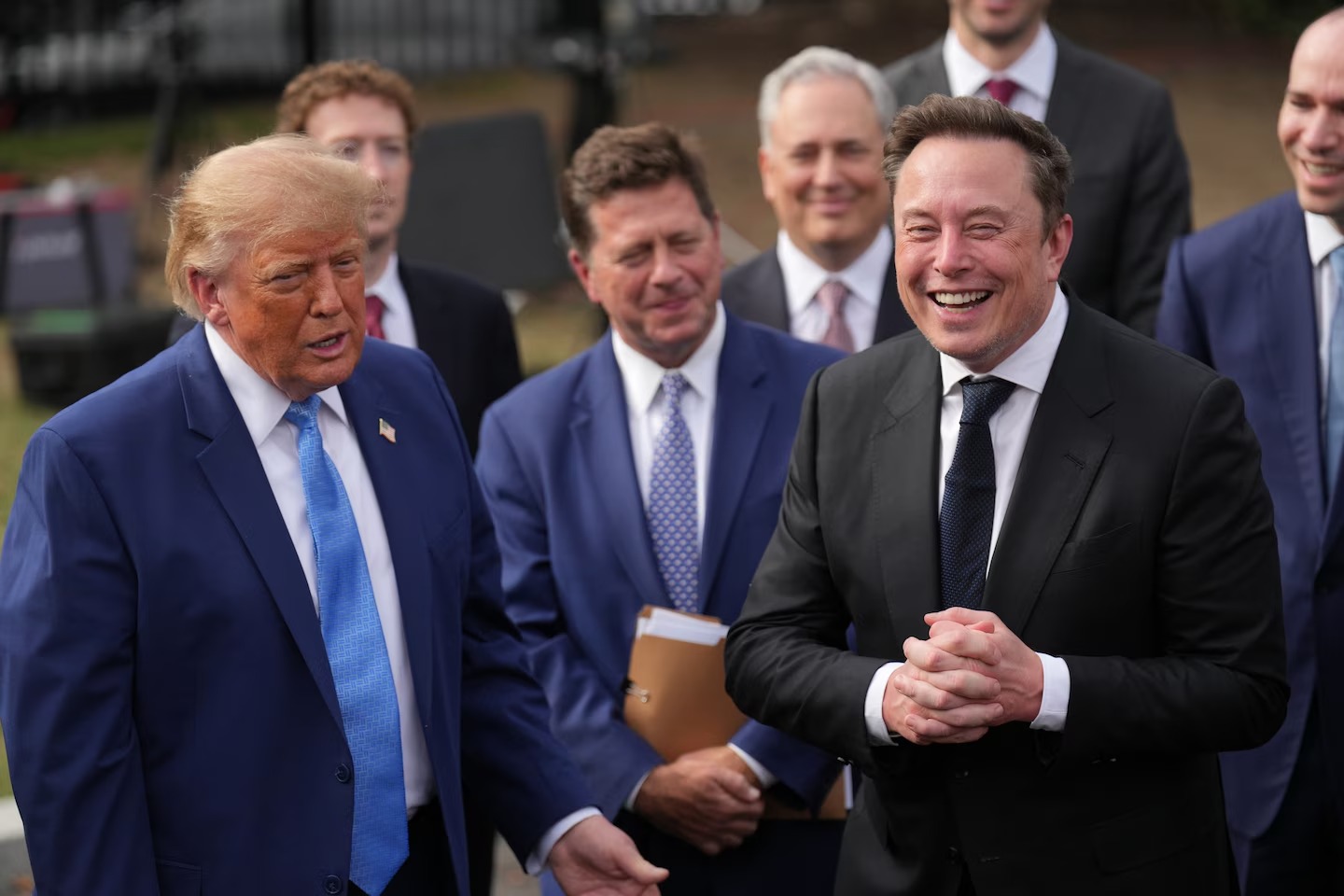
The world’s richest man, Elon Musk, has assumed the co-directorship of a Pentagon initiative focused on the future of warfare, known as “Project Meridian”.
Musk’s new role was announced by US Secretary of Defence Pete Hegseth.
Musk, who has long expressed his conviction that wars will ultimately be fought with autonomous unmanned aerial vehicles, will advise the project as co-director alongside Palmer Luckey, founder of defence start-up Anduril, and former Speaker of the House of Representatives Newt Gingrich.
In a memorandum issued at the Pentagon, Hegseth stated that the group would “examine the battlefields of the future” and “determine which weapons and technologies warfighters must employ to achieve dominance in these environments.”
During his “State of the Force” address at Marine Corps Base Quantico, Hegseth said:
“The best predictors of future conflict do not reside exclusively within the Pentagon. Obvious biases and risks arise when we task ourselves with both framing the questions and answering them.”
Hegseth stated that this initiative would commence immediately and that, following his address, he would convene with Musk, Luckey, and Gingrich at a secure location.
Project Meridian will have 120 days to “ruthlessly map the trajectory of wars, domains, and technologies”, a process that will culminate in the public disclosure of its findings alongside a classified annex.
Hegseth outlined an expansive mandate extending “from beneath the surface of the Earth to beyond the Moon.”
Rather than formulating new military strategies or policies, the panel will seek to identify “the domains we must seize and the capabilities we must master”, focusing on the effort to “discover, develop, and field” the weapons and systems that next-generation American troops may require.
The group is expected to submit a report containing recommendations to him by the end of January.
In 2024, Musk remarked: “Future wars will be entirely about drones and hypersonic missiles.” This was merely one of several similar statements he has made in recent years.
For Musk, whose oversight role at the Department of Government Efficiency (DOGE) ended in turmoil and escalated into a dispute with President Donald Trump over Trump’s spending bill, this appointment marks his formal return to government in an official capacity.
Musk and Trump ultimately reconciled, and Musk attended a meeting on artificial intelligence safety at the White House this week alongside other technology leaders.
Meridian forms part of a broader push announced by Hegseth to restructure the military around autonomous warfare and rapidly advancing technologies.
Hegseth announced the establishment of the Autonomous Warfare Command (AUTOWARCOM), a new four-star combatant command endowed with what he termed “service-like authorities” to scale autonomous and robotic capabilities across the joint force.
The Department of War will also begin phasing in new occupational frameworks across all military branches to establish specialised career tracks for what Hegseth described as “the next generation of autonomous warfighters.”
“We should have conceived an Autonomous Warfare Command a decade ago,” Hegseth said, explaining that Meridian aims to gaze far enough ahead to enable the military to anticipate the next technological shift rather than lag behind.
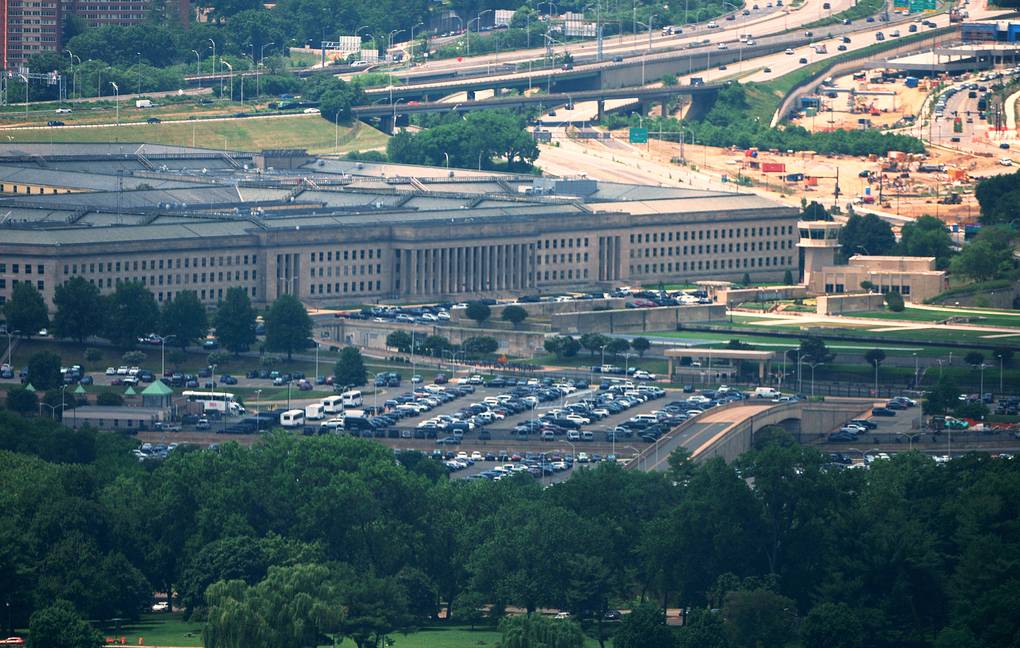
A cyberattack targeting the US Department of War’s personnel database has resulted in the leak of personal information belonging to approximately 3 million people.
Speaking to ABC News, a Pentagon official stated that the system accessed by unauthorised individuals contained the records of 2,760,000 living persons and 294,000 deceased individuals.
The Military Times portal, which first broke the news, had reported the number of affected individuals as approximately 4 million based on two sources. The Pentagon official subsequently conveyed different figures to ABC News.
The leak encompasses Social Security numbers and duty information belonging to military personnel and civilian employees. According to an official notification examined by Military Times, the compromised records may also include names, dates of birth, contact information, sex, race, and military occupational specialties.
The unauthorised access to the information system of the Defense Manpower Data Center (DMDC) lasted for approximately nine months, between October 2025 and 16 July 2026.
ABC News reported that the access in question was obtained by a small number of third-party users. The vulnerability was closed after it was identified.
The DMDC is considered one of the Pentagon’s primary personnel records centres. More than 60 million records belonging to active-duty personnel, reservists, civilian staff, contractors, retirees, veterans, and military family members are stored at the centre.
The Pentagon has not detected any evidence that the leaked data has been misused. Military Times reported that affected individuals were offered identity restoration and credit history monitoring services.
A similar data breach previously occurred on the Federal Bureau of Investigation’s (FBI) recruitment website, FBIJobs.gov. According to information obtained by ABC News from internal communications and sources, the FBI is considering the possibility that data belonging to its entire staff may have been stolen.
The New York Times (NYT) examined a portion of the stolen FBI records. Home addresses, telephone numbers, official email addresses, Social Security numbers, dates of birth, hiring dates, and emergency contact details for relatives were identified within these documents.
The database also contained unit designations, duty roles, and information regarding the supervisors of personnel. Some records revealed assignments within counterintelligence and counternarcotics units, as well as departments examining threats originating from Russia, China, and Iran.
Ciaran Martin, the former head of the UK National Cyber Security Centre, noted that this type of breach could directly affect the FBI’s operational capabilities.
The hacker group known as ShinyHunters had announced that it had seized medical data and security clearance records alongside files belonging to tens of thousands of active and former FBI employees.
Experts evaluating the matter for the NYT warned that this information could be used to track agents, threaten their families, or compile dossiers by foreign intelligence services.
The ShinyHunters group initially threatened to release the data unless the bureau withdrew an advisory it had published concerning the group’s attack methods.
The group later asserted that it had never intended to leak the information and characterised its action as an advertising campaign.
In a report published in May, Reuters noted that the personal data of US military personnel had been used in surveillance and attack preparations.
According to the agency, Washington’s adversaries gained the ability to pinpoint areas where troops were concentrated by exploiting commercially available location data. US lawmakers at the time criticised the Pentagon for failing to adequately protect the personal data of military personnel.

US President Donald Trump’s trade policy and the Washington administration’s push to increase Venezuelan oil imports are prompting Canada to diversify its energy exports.
According to a report by The Wall Street Journal, recent developments are accelerating Canada’s development of new oil and natural gas projects.
Steps taken by the Ottawa administration, which aspires to become an energy superpower, are seen as potentially strengthening the country’s position in global markets.
In Canada, the world’s fourth-largest oil producer and fifth-largest natural gas producer, the energy sector accounts for approximately one-fifth of total exports.
Almost all of the country’s natural gas exports and approximately 90% of its oil exports go to the US.
The newspaper writes that the trade war with Washington and the atmosphere of confrontation entered into with Iran have heightened Canada’s desire to turn to alternative markets outside the US.
Officials plan to increase shipments of oil and liquefied natural gas (LNG) to European and Asian markets.
Accelerating infrastructure investments in line with this target, Canada is also shortening approval processes. The government is prioritising the construction of an oil pipeline extending specifically to the west coast.
According to the newspaper’s estimate, if major pipeline projects are implemented, Canada’s daily oil transport capacity could rise to 6.8 million barrels by 2034.
Routes heading to the west coast will make up approximately 30% of this capacity.
The Canadian administration is simultaneously advancing LNG export projects. According to the report, these investments could allow approximately 55% of Canadian natural gas exports to be directed to markets outside the US by the early or mid-2030s.
While the government expands tax incentives for the oil and natural gas sector, the province of Alberta also plans to overhaul its royalty system.
However, the newspaper notes that implementing the new projects requires heavy investment, and the process depends on the final decisions taken by producers as well as the completion of regulatory approval processes.
The expansion of pipeline and LNG infrastructure could gradually reduce Canada’s dependence on the US market while raising its share in the global energy market.
The Canadian Prime Minister’s demand to reduce reliance on the US market had also come to the fore in July.
According to Carney’s statement, the province of Alberta submitted a plan for a pipeline spanning more than 1,000 kilometres to the west coast of British Columbia.
Targeted for completion by September 2027, the line will reach the Pacific coast by following an existing corridor through the mountainous terrain.
This shift in energy comes at a time of strained relations with the US. Donald Trump said that if Canada obtains associate member status in the European Union, he could halt trade with Europe in certain sectors and impose high tariffs.
As reported by the Associated Press, Trump characterised such a rapprochement as a “potentially hostile act”.
European Commission President Ursula von der Leyen had proposed opening the path for Canada to become the EU’s first associate member. The terms of this associate membership status, which is not defined in EU treaties, are not yet clear and require the approval of member states to enter into force.
Canada, which does not seek full membership, aims for maximum rapprochement with the EU.
Following Trump’s return to the White House, relations between Washington and Ottawa deteriorated. The Trump administration, which repeatedly called on Canada to become the “51st state” of the US, introduced additional tariffs.
In July, the US began imposing 50% tariffs on certain Canadian-origin goods.

We are no longer in 1992, the US has lost its military superiority, Ret. Lt. Col. Davis says

Germany expands North Sea military ports and plans new naval base

Musk appointed co-director of Pentagon future warfare initiative

US waives human rights terms on $320m military aid to Egypt

Putin says Russia did not start war and warns of nuclear risks
-

 Europe5 days ago
European unions urge governments to scrap all Palantir deals
-
 Diplomacy5 days ago
East-West Forum in Istanbul highlights irreversible shift to multipolarity
-
 Europe1 week ago
Emmanuel Todd says West faces collapse amid Ukraine and Iran crises
-

 Europe1 week ago
European intelligence chiefs divide over risk of Russian attack
-
 Diplomacy1 week ago
East-West Forum in Istanbul to debate multipolarity and global order
-
 Middle East1 week ago
Sharaa says 7 October must not shape Israel policy on Syria
-
 America1 week ago
Republican support for Trump’s war with Iran drops sharply in polls
-
 Middle East1 week ago
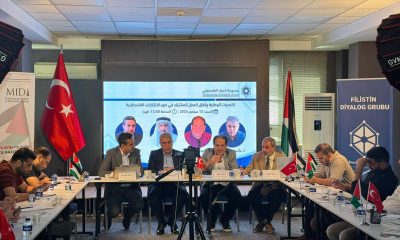
Palestinian factions confront legitimacy crisis at Istanbul talks
