
America
Silicon Valley eschatology — 3: With my mighty hand, I shall set you free

“My longing for the familiar human world was, of course, no match for a simple passion for adventure. I was too much of a homebody to seek out serious dangers or hardships. But I overcame my timidity with the opportunity that fate presented me: to discover not only the depths of the physical universe but also the role that life and mind play among the stars. I was seized not by a desire for adventure, but by a hunger to understand the inner significance of man, or any human-like being in the cosmos. This honest treasure of ours, left behind by this unpretentious modern life and blossoming like spring flowers, spurred me to embark on this strange adventure.”
Olaf Stapledon – Star Maker
“Mine are predictions based on mathematics. I must say that I have reached this judgment without any moral factors. Personally, I am not pleased with this course of events. Even assuming the Empire is poorly governed… the anarchy that will prevail in the wake of its destruction will bring far worse consequences. Indeed, it is that very anarchy that my project aims to combat. The fall of an Empire, gentlemen, is a colossal event, and it is by no means easy to deal with such a thing. A rising bureaucracy, the weakening of social initiative, the ossification of classes, the stifling of scientific curiosity… and a thousand other factors like these will accelerate this collapse.”
Isaac Asimov – Foundation
Mark Zuckerberg first invested in Kauai, the oldest and smallest of Hawaii’s four main islands, in 2014. He purchased 700 acres of land on a quiet stretch of coastline near the small town of Kilauea for approximately $100 million.
For a time, the Meta chief was unable to proceed as he wished due to legal processes arising from the property rights of the native population, but he resolved this issue by finding collaborators. By the spring of 2021, his land had expanded further, with the addition of more than 560 acres of ranch land. Later that year, he added another 110 acres, which included the Kaloko Dam, an earthen dam and reservoir.
Zuckerberg quietly expanded his presence on the island by purchasing a large tract of land. Earlier this year, Zuckerberg purchased 962 acres of prime agricultural land across from his existing property through a Hawaii-based company.
A source who spoke to WIRED estimates the value of this land to be over $65 million. With this previously unreported purchase, Zuckerberg’s land holdings in Kauai will increase from approximately 1,400 acres to over 2,300 acres, making him one of the largest landowners in the state.
So, what is Zuckerberg up to on this massive estate? Local residents say that the construction activity on the land is being conducted in great secrecy. While non-disclosure agreements are not unusual for billionaires’ construction projects, the sheer scale of Zuckerberg’s complex has meant that numerous local workers have been forbidden from sharing what they are working on or for whom.
For example, on one agricultural plot, there are two mansions with a total area the size of a football field, a gym, a tennis court, several guest houses, farm operation buildings, a series of disc-shaped treehouses, an elaborate water system, and a tunnel leading to an underground shelter the size of an NBA basketball court, equipped with blast-resistant doors and an escape hatch.
Recent documents also show plans for a new water pump building, in addition to the two existing pump houses and an 18-foot-tall water tank. Satellite images of the property also indicate dozens of buildings that have not yet appeared in public records. WIRED estimates that, based solely on the number of bedrooms in the planning documents it has seen, the property could comfortably accommodate more than 100 people upon completion.
The enthusiasm of the super-rich for building fortified shelters to escape doomsday is not new. In 2017, LinkedIn co-founder Reid Hoffman told The New Yorker in an interview that more than 50% of Silicon Valley billionaires had purchased some form of “apocalypse insurance,” such as a shelter in the U.S. or abroad, “to escape disaster and collapse.”(1)
For instance, New Zealand, seen by some as the ideal place to await the apocalypse, is filled with the bunkers of the tech-wealthy. There is even an agreement, first disclosed to The New Yorker, between OpenAI CEO Sam Altman and Peter Thiel: in the event of an “apocalyptic event” (like a pandemic!), the pair would fly by jet to one of Thiel’s properties in New Zealand. Thiel, who revealed the matter to reporter Tad Friend, said: “Sam is not exactly a religious person, but he is very culturally Jewish: an optimist but a survivalist, someone who believes that everything can go wrong at any moment and that there is no single place in the world where you can feel completely at home.”
Altman, however, seems much more prepared while waiting for the end times. In the same article, he states:
“Well, I love race cars. I have five, including two McLarens and an old Tesla. I like to fly rental planes all over California. Oh, and I have one weird one: I prep for survival. My problem is that when my friends get drunk, they talk about how the world will end. Five years ago, a lab in the Netherlands modified the H5N1 bird flu virus to make it super contagious. So, the probability of a lethal synthetic virus emerging in the next twenty years is no longer zero. The other most popular scenarios are A.I. attacking us and countries going to nuclear war over scarce resources. I try not to think about it too much. But I have guns, gold, potassium iodide, antibiotics, batteries, gas masks from the Israeli Defense Forces, and a big patch of land in Big Sur I can fly to.”
“Survivalism” is quite common in Silicon Valley and Big Tech circles. For example, about 10 years ago, former Facebook product manager Antonio García Martínez, who lives in San Francisco, bought five acres of woodland on an island in the Pacific Northwest and brought in generators, solar panels, and thousands of rounds of ammunition. According to Martínez, “When society loses a healthy founding myth, it descends into chaos.”
García Martínez, author of the memoir Chaos Monkeys which recounts his years in Silicon Valley, wanted a shelter that was far from cities but not completely isolated: “All these guys think one man can somehow hold out against the roving gangs. No, you’re going to need to form a local militia. You’re going to need a lot of things to get through the apocalypse.”
Moreover, when he started telling his friends in San Francisco’s famous Bay Area about this “little island project,” everyone “came out of the woodwork” and started describing their own preparations. “People who are especially sensitive to the mechanisms of how society works,” Martínez said, “understand that we are skating on very thin cultural ice right now.”
The New Yorker reporter wrote that in private Facebook groups, wealthy survivalists share tips on gas masks, bunkers, and locations sheltered from the effects of climate change. One member, the head of an investment firm, told the reporter, “I keep my helicopter fueled up at all times, and I have an underground bunker with an air-filtration system.” The business owner added: “A lot of my friends do the guns and the motorcycles and the gold coins. It’s not that rare anymore.”(2)
Building a shelter to escape the apocalypse also has metaphorical meanings, and these are actually the ones that first come to mind; we will get to those. But it is still astonishing that the super-rich are literally building shelters for themselves. We also learn from WIRED that media theorist Douglass Rushkoff, in his book Survival of the Richest, describes meeting a group of billionaires who bombarded him with questions about how they could best organize their bunkers to survive the final days of the apocalypse.(3)
The U.S. founding myth and the reinvention of colonialism
The title of the article where we learn about the agreement between the OpenAI CEO and Thiel offers a clue for where to begin: “Sam Altman’s Manifest Destiny.” As is well known, manifest destiny was an ideology that the United States’ eastward expansion to the Pacific and beyond was preordained. The “frontier,” the “frontier spirit,” and the right to civilize and/or destroy were components of this ideology. Texas, California, and New Mexico were annexed with the justification of this ideology; the Panama Canal was opened this way; the Monroe Doctrine and the colonization of Latin America, the Caribbean, and the Pacific islands were made possible by this ideology.
This debate, revived when Donald Trump set his sights on Greenland, has a connection to the Silicon Valley elite’s search for shelters. Joe Lonsdale, a mega-donor to Trump and Peter Thiel’s co-founder at Palantir, argued in an interview with the BBC earlier this year that having frontiers is “very healthy” and that this “frontier mentality” considers new possibilities and creates new things. Lonsdale begins a post on his own blog with lyrics from Bon Jovi’s cowboy song “Wanted Dead or Alive” and says, “America is a frontier country, and for centuries our national greatness has been inextricably linked to the frontier,” continuing:
“The frontier is not just geographic expansion or physical adventure; nor is it just the spirit of experimentation and discovery. The frontier is also dangerous. Every little thing matters, and you can lose everything at any moment. You have to be a little crazy, or believe that fate is on your side, to leave home and go to the New World or the Wild West. But this creates the possibility of greatness. This spirit created and has sustained our country.”
Therefore, “being on the frontier” does not simply point to a geographical situation; it is a spirit, a moral force that runs in the veins of Americans. Lonsdale preaches moving away, both materially and spiritually, from the bureaucratic and stagnant center/core, and venturing into danger.
In this context, he points to Palantir and Silicon Valley as examples. He says they founded Palantir by bringing together the “best” of Silicon Valley to strengthen the defense of the U.S. and its core. But this progress was to be driven primarily by “cowboys,” that is, the inhabitants of the Frontier, innovators, or the “new aristocracy from the periphery.”
Furthermore, a “Silicon Valley” could never exist around Washington D.C., for example, because this region, despite its apparent prosperity, completely lacked the Frontier mentality: in Washington, only “bad ideas, bad bureaucracies, and bad systems” could thrive. It was the opposite of the Frontier, an “anti-Frontier.”
It may seem incredible, but there is another Thiel connection: Ken Howery, an original “PayPal mafia” member and Trump’s nominee for ambassador to Denmark. The two, who are still very close, also founded Founders Fund, one of the industry’s leading venture capital firms. Thiel appears to have donated to a project called “Praxis”: this company belongs to Dryden Brown, who has raised millions of dollars in funding for a project to build a privately funded city in the Mediterranean. Brown traveled to Greenland in 2024 and described the island as “a real frontier that could serve as a sandbox for terraforming.” “Terraforming” is the name given to making an uninhabitable place (or planet) habitable.
We read the rest in a Reuters report:
“As the Trump administration intensifies efforts to buy or seize Greenland from Denmark, some Silicon Valley tech investors are promoting the ice-covered island as a so-called freedom city, a libertarian utopia with minimal corporate regulations.
The idea, said to be in its early stages, is being taken seriously by Ken Howery, whom Trump has appointed as ambassador to Denmark and who is expected to be confirmed by Congress in the coming months. Howery is slated to lead negotiations on the purchase of Greenland. Howery, who was not previously reported to be involved in the idea, once co-founded a venture capital firm with tech billionaire Peter Thiel, a leading proponent of such lightly regulated cities. Howery is also a longtime friend of Elon Musk, one of Trump’s most important advisers.”
Marc Andreessen is part of a consortium of tech investors who want to build a city on pastureland outside of San Francisco. Sources consulted in the Reuters report above suggest that Thiel and Andreessen, leading proponents and financiers of the “startup city” movement, are among those who support the establishment of a settlement in Greenland.
The City as a frontier: Colonialism at home and abroad
The most “successful” example of a charter city is considered to have been built in Honduras. Known as “Prospera ZEDE” (Zone for Employment and Economic Development), the city was designed as a special zone that could create its own legal regulations and have its own court system.
Former Honduran President Juan Orlando Hernández had supported the special economic zones that enabled the establishment of Próspera. Then, in 2013, the country’s constitution was amended, creating gaps in Honduras’s sovereignty: these zones would function as sub-national administrative units operating under a separate legal and tax system with a high degree of autonomy. Unlike traditional local governments, ZEDEs would have independent administrative systems and laws, much like special economic zones.
ZEDEs were proposed by former World Bank chief economist Paul Romer, in a manner befitting the quests of Silicon Valley’s super-rich: “welfare zones” where laws are enacted solely to attract capital and state powers like taxation or policing are not tied to the government.
U.S. President Donald Trump is also a major supporter of these “freedom cities.” As a real estate baron, Trump built structures solely in exchange for tax breaks. The massive tax break he received for the Grand Hyatt he built in New York in 1980 is calculated to be equivalent to $360 million. He took a similar step for an island near New Rochelle, designed to attract millionaires fleeing Hong Kong as it was set to pass to Chinese sovereignty in the 1990s. Following in the deregulatory footsteps of Britain’s Iron Lady, Margaret Thatcher, Trump became enamored with the idea of creating a lawless inner city within cities. The colonialism that opened “outward” in Honduras was also manifesting itself in the metropolis through the finance and real estate markets.
During his first presidential term, Trump announced his intention to create tax-exempt inner-cities with “Opportunity Zones,” effectively seeking to create a kind of tax haven, a sort of “offshore zone” within the United States. The wealthy from all over the world would pour their income from finance or capital into these opportunity zones, regardless of whether they lived in that city, and receive tax deductions.
Indeed, last March, several groups representing “startup cities” had begun drafting legislation for Congress to create “freedom cities” that would be exempt from federal laws in the U.S.
According to plans uncovered by WIRED, the goal of these cities is to create places where anti-aging clinical trials, nuclear reactor startups, and building construction can be carried out without prior approval from agencies like the Food and Drug Administration, the Nuclear Regulatory Commission, and the Environmental Protection Agency.
And Próspera, which we saw as the face of Silicon Valley colonialism in Honduras, now appears in the belly of the beast: the city’s general counsel, Trey Goff, says that he and other Próspera representatives working under an advocacy group called the Freedom Cities Coalition have been in talks with the Trump administration about this idea in recent weeks. According to Goff, the White House is very open to the idea.(4)
Escape from Doomsday: The ‘perforation’ of national sovereignty
Behind the freedom city project and the reinvention of colonialism lies a more “solid” justification: the desire to find virgin lands or platforms where states—or rather, nation-states, which are now considered outdated—and even better, where the common folk have no say in national/popular sovereignty.
Because the apocalypse for the super-rich is taxes, because the nemesis of the tech elite is politics and the ballot box, because the doomsday for Silicon Valley’s arms dealers is free public services, or as Thiel’s manifesto succinctly puts it, “Freedom and democracy are no longer compatible.”
Therefore, what is desired is a place without the politikos and, perhaps meaning the same thing, without the populus. It makes no qualitative difference whether this place is an island in the middle of the sea [seasteading], a free city within nation-states subject to no law (also called a charter city), or a colony to be established in space. In fact, look at the activities of online communities like the “Network State” movement(5), of which Thiel is also a part, which aim to establish a physical city or, in theory, a nation-state outside of traditional forms of governance, and nothing changes.
In his book Crack-Up Capitalism, where he examines the market radicals’ dream of a world without democracy, Quinn Slobodian calls the strategy of neoliberals and the Silicon Valley rich to create zones free from national sovereignty within nation-states the “perforation of national sovereignty.” Slobodian points out that nation-states are not as “tight” as one might think and have a “porous” sovereignty structure resembling the imperial era. Free zones, city-states, liberated neighborhoods for capital, tax havens, enclaves and exclaves, and logistics corridors are sprouting up everywhere. Sovereignty goes hand in hand with a state of non-sovereignty.
Of course, this has an economic background: the welfare state capitalism that set off alarm bells in the late 1960s and early 1970s is considered a sign of the apocalypse. The desire is to get rid of the state’s welfare programs, reduce citizen aid, lower taxes, and privatize public education and health services. Free-market saints like Milton Friedman blame the social state for rampant inflation and unemployment. Hostility towards the “big state” and national sovereignty stems from the capitalist crisis, from the pessimism of “capitalism of finitude.”
Hong Kong stands out as the prototype of a free city. This city is called Friedman’s “dream world.” The absence of elections, the city being run by a narrow business elite, the “hire-and-fire” model in the labor market where small factories could hire workers for a month and then fire them, and the state withdrawing to its “proper” functions, leaving the city’s unsuccessful inhabitants to bear the full cost themselves—these are just some parts of this dream. Labor went where capital went and got what it deserved. Moreover, confirming what we said above, this went hand in hand with praise for colonialism: Hong Kong’s condition was entirely due to British imperialism managing it like a corporation. From the 1950s, London had given Hong Kong the right to determine its own trade and tax policies, which meant that Hong Kong, with its colonial status, would not fall into the welfare state quagmire that Britain had fallen into.
Indeed, Canary Wharf within the City of London, Britain’s financial center that itself operates without being bound by national law, is a typical example of creating Hong Kong-like sovereign areas. The history of this “opportunity zone” holds the story of how the poor were dispossessed and driven from the area for the world’s richest oligarchs, transforming it from working-class docks.(6)
A comfortable life for the rich in space
There is a “pedigree” to this: Thiel, along with Andreessen, invested in Pronomos Capital, a venture capital firm that has launched half a dozen “charter city” projects worldwide. Guess who the founder of Pronomos is: Patri Friedman, the grandson of the famous neoliberal Milton Friedman, who discovered his dream free (capital) city in Hong Kong! There are no coincidences in this world.
But there’s more. Pronomos also invested in Praxis, which announced last October that it had secured $525 million in financing for a new city. Praxis’s investors include Lonsdale and a fund established by OpenAI CEO Sam Altman and his brothers. The picture is taking shape.
Praxis co-founder Dryden Brown tells Reuters that other companies have approached his firm about building a city in Greenland. Brown advocates for building a city on the frozen island because its harsh environment could provide a testing ground for colonizing Mars, one of Musk’s biggest goals.
Brown once wrote on X, using the term Musk uses for settlement on the red planet, “We must build a prototype of Terminus on Earth before we go to Mars. I believe Greenland is the right place, @elonmusk.”
In her article on Silicon Valley’s fantasy of colonizing space, Alina Utrata from Cambridge University argues that while the new tech-rich’s idea is often treated as “innovative,” it actually operates with the same logic of old-style colonialism: the “empty frontier,” territorialization, and dispossession of natives. The author points out that the Silicon Valley project aims not so much to create a “zone of freedom” but to reproduce existing states in areas like cyberspace, seasteads, and network states. In other words, in the case of SpaceX or Blue Origin, we are actually facing a new British East India Company.
For Amazon owner Jeff Bezos, the doomsday scenario for humanity is not an “extinction event,” but an energy crisis where Earth’s limited resources will ultimately constrain capitalist growth. Utrata comments:
“A Malthusian logic underpins his calculations of the limit of the population that can be sustained on Earth, and Bezos has repeatedly stated that civilization will be doomed to a life of ‘rationing and stasis’ unless we expand into the stars, where ‘resources are practically infinite.’ Bezos draws on the cyclical logic of growth of past colonial capitalists, arguing that imperial expansion must be undertaken to support the infinite growth of the home population. The Amazon founder does not think that humans should make the Moon or Mars habitable, but rather that they should build floating structures like the International Space Station orbiting near Earth. These structures could provide a perfect artificial environment in space (‘Maui on its best day, no earthquakes’) and thus allow Earth to be zoned as a national park.”
Thus, the logic of internal, external, and off-world colonization rests on the expectation of doomsday. Natural disasters are part of this apocalypse, but even better is escaping from taxes, resource scarcity, crowds, people of color, and workers… It is an escape not to freedom, but to segregation: we are facing the racial, biological, and geographical reproduction of America’s Jim Crow laws and their “separate but equal” doctrine.
But one more separation remains. As racial, biological, and geographical hierarchies are being rebuilt, it is unthinkable that gender hierarchies would not also be reproduced. We will examine the place of women and the family in the escape from doomsday in the next installment and conclude the series with the ideology of war.
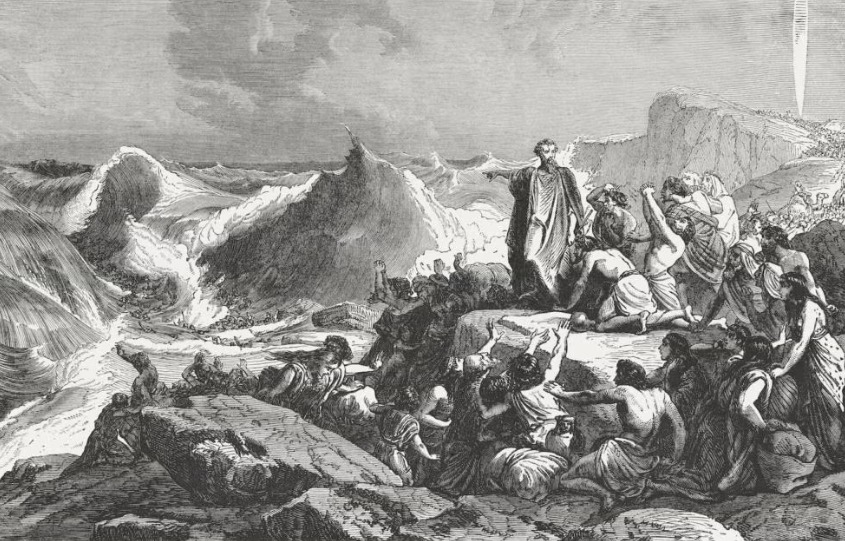
(*) The reference in the title is from Exodus 6:6: “Therefore, say to the Israelites: ‘I am the Lord, and I will bring you out from under the yoke of the Egyptians. I will free you from being slaves to them, and I will redeem you with an outstretched arm and with mighty acts of judgment.’”
(1) In the same report, we learn that Reddit’s founder Steve Huffman had his nearsighted eyes corrected with laser surgery. The reason was not cosmetic; Huffman had the surgery to increase his chances of survival, thinking that being bespectacled or wearing contact lenses would be a disadvantage in a potential apocalypse!
(2) Quinn Slobodian, in his book Crack-Up Capitalism [the Turkish text mistakenly cites Hayek’s Bastards], points out that the libertarians who rediscovered the nation, Christianity, the family, and race were also pioneers of the movement to return to gold as “sound money.”
(3) A venture capitalist who spoke to The New Yorker reporter also emphasized that this doomsday preparation activity is much more common than one might think: “There are a lot of us in the Valley. We get together for these financial-hacking dinners and we talk about people’s backup plans. There are all kinds of plans, from people who are stockpiling Bitcoin and cryptocurrency, to people who are planning on getting second passports if they need them, to people who are buying vacation homes in other countries that could be escape havens. I’ll be honest: I’m stockpiling real estate right now to have a passive income and a shelter I can escape to… I have this sort of weird scenario in my head where it’s like, ‘Oh, my God, if there’s a civil war or a giant earthquake that cleaves off part of California, we want to be ready.’” Former Yahoo executive Marvin Liao was taking archery lessons to be able to protect his wife and daughter in a post-apocalyptic world.
(4) It should be said that geographer Neil Smith’s choice of The New Urban Frontier as the title for his groundbreaking book on gentrification perfectly reflects the spirit of Silicon Valley colonialism. Smith, who called these new living spaces of the neoliberal era the “revanchist city,” argues that gentrification is structured as a politics of revenge against the working class, minorities, the poor, and the homeless. This seems consistent with the American founding fathers’ Wild West or “frontier spirit”: the dispossession, expulsion, and, when possible, “elimination” of the “natives” is the hallmark of the new metropolitan gentrification policies shaped by gentrification practices.
(5) This movement is defined as follows: “At its core, a Network State is a digital-first entity. Unlike traditional states defined by geographical borders, a Network State is formed on the basis of shared ideas, interests, and goals, primarily developed through online platforms. It is a community that starts virtually but has the potential to acquire physical attributes like land and governance structures. These states are not just theoretical constructs; they represent a practical reimagining of how communities can organize and govern themselves in the digital age. In practice, this would entail an online community forming a DAO, or decentralized autonomous organization (sometimes referred to as a chat group with a shared bank account), crowdfunding enough capital to establish a physical presence, and from there becoming a nation-state working towards sovereignty recognition. Anyone can agree that this is simpler said than done in reality, but in today’s chaotic world dominated by geopolitical conflicts, wars, and a growing digital economy, this idea seems more realistic than ever.” The expectation of doomsday once again emerges as the main reason fueling the trend towards online statehood.
(6) So much so that when the transport workers’ union wanted to protest against the low wages of cleaning staff working in Canary Wharf, they were blocked by the high court.











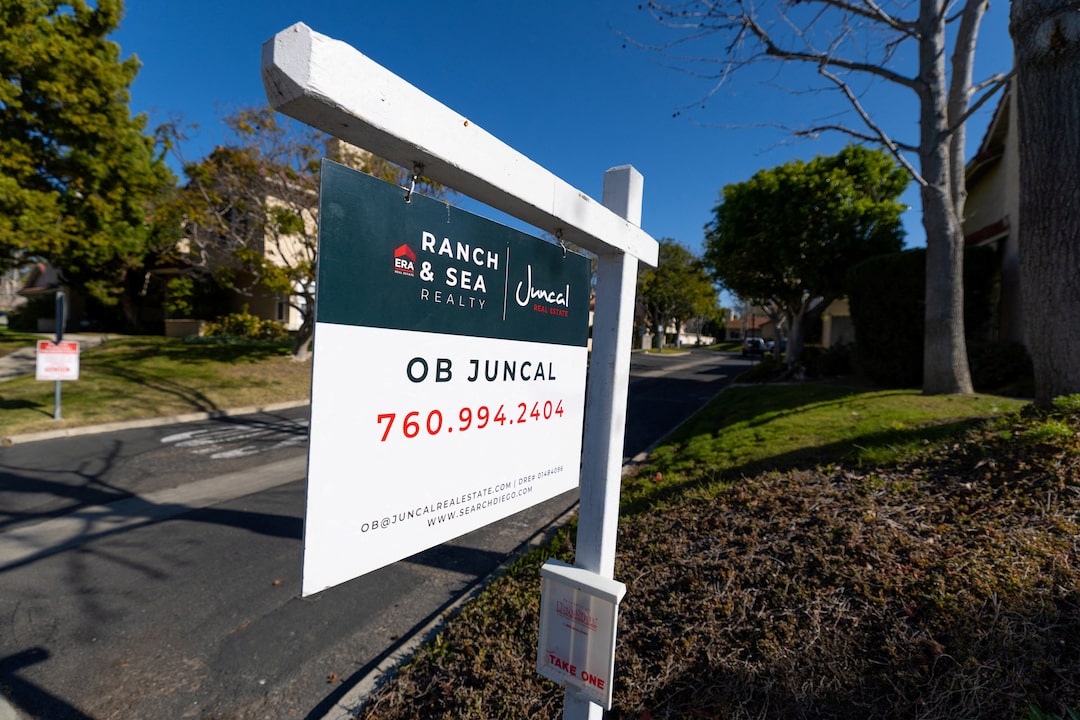
Wealthy buyers in the US are tearing down multimillion-dollar homes shortly after purchasing them for hundreds of millions of dollars.
According to a report by The Wall Street Journal, the trend is driven by a shortage of land in prestigious locations, particularly along coastlines.
For ultra-wealthy buyers, the prime factor has become the land’s location rather than the structure standing on it. After the acquired properties are flattened, newer, more modern homes are built on the cleared lots.
Drawing attention to the shift in the luxury real estate market, the report noted:
“The home itself, formerly the primary driver of an expensive real estate purchase, is now almost beside the point. Buyers are competing first and foremost for well-located land, situated on the ocean or a mountaintop.”
The newspaper cited moves by US billionaire William Lauder as an example. Lauder purchased the oceanfront estate of radio host Rush Limbaugh, who died in March 2023, for $155 million and had it completely demolished in July.
Lauder had previously torn down two homes situated on roughly 1.2 hectares of land along the Palm Beach coast. Having initially planned to construct his own residence on the parcel, Lauder subsequently sold the cleared plot for approximately $200 million.
Jonathan Miller, a real estate appraiser, stated that such transactions are becoming increasingly common as land prices rise.
Amid this momentum, estate agents have also begun marketing luxury homes directly as teardown lots.
Listings use artificial intelligence-generated imagery to showcase how the land would look without the structures on it.
Marketers avoid using the word “demolition” directly, resorting instead to terms such as “adaptive reuse”.
Teardown listings rise across luxury housing market
The trend is not confined to the coast and is spreading to other regions across the US.
Data from property brokerage Redfin reveals that references to demolishing buildings are becoming more frequent in sales listings.
The share of such listings exceeds 15% in the Bunker Hill Village area of Houston, while standing at 6.67% in Pimmit Hills, Virginia.
Dina Goldenteyer, a real estate agent working in Miami, remarked that serial demolitions have become more frequent because buyers no longer appreciate homes older than a decade.
Former retail executives Jamie Dooley and Christine Scott spent $3.7 million in 2020 to demolish a seaside home near Destin, Florida.
Although the couple spent five years building a modern home on the cleared site, they listed the resulting new structure with a demolition condition, citing the fact that no one wanted to buy the property as it stood.
William Paddock, an employee at the environmental consultancy WAP Sustainability, pointed to the environmental damage caused by this construction cycle.
Paddock emphasized that tearing down a home of roughly 1,000 square metres and replacing it with a new building of approximately 2,700 square metres generates a carbon footprint equivalent to the annual emissions of an average 250 American households.
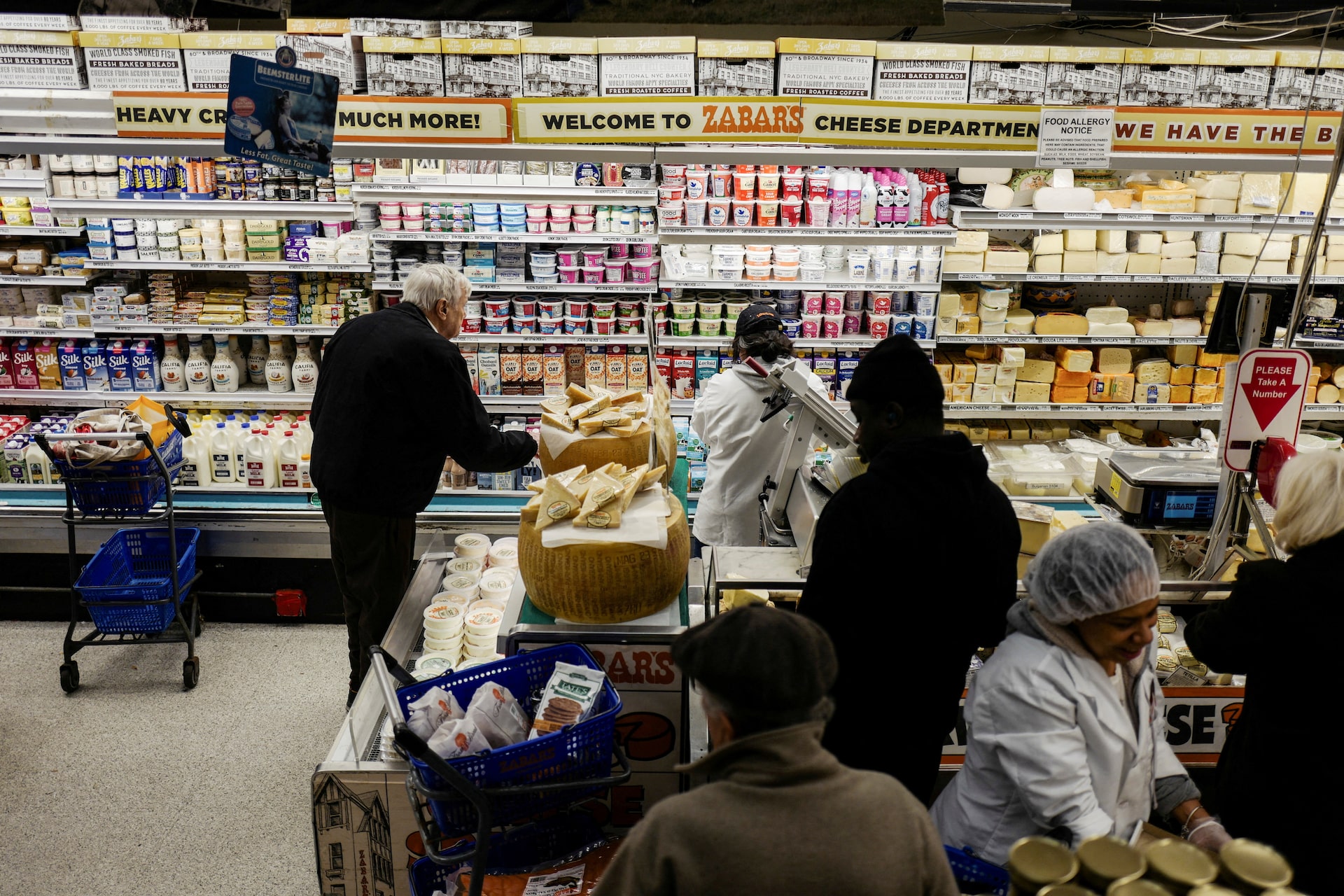
An uptick in September inflation as the US midterm elections approach has pushed the cost-of-living debate back to the centre of the agenda for Democrats seeking to regain control of Congress from Republicans.
Annual inflation stood at 3.7% in September, according to the Consumer Price Index published by the Bureau of Labour Statistics, with energy, petrol, and electricity costs rising on a monthly basis.
Food prices remained flat from August to September, recording a 2.5% increase compared with the same period last year.
Democrats are anchoring their election campaigns to pledges of easing the cost of living, blaming the price increases on President Donald Trump’s tariffs and the war with Iran.
Trump and Republicans, pointing to the numerous left-wing candidates who won primary elections this year, contend that the opposition has become captive to “communists” within the party.
When annual inflation stood at 2.4% in February, the US and Israel launched the Iran war on the final day of that month, and prices continued to climb throughout the conflict.
The recent acceleration has not entirely reversed the retreat from the 40-year peak of 9.1% recorded in June 2022; however, the rate has remained above the Federal Reserve’s 2% target for over five years.
Fed policymakers raised the benchmark interest rate by a quarter of a percentage point last month, citing the battle against stubborn inflation. Officials will convene again next week to consider whether to raise rates or hold them within the 3.75% to 4% target range.
Energy and fuel record sharpest increase since first month of war
In September, energy prices posted their largest monthly jump since March, the first full month of the war with Iran, climbing 20.4% year-on-year. Energy costs had risen 2.1% from July to August, after falling 1.5% from June to July and 5.7% from May to June.
Recent escalations in Iranian attacks on oil tankers in the Strait of Hormuz, alongside more frequent strikes by Ukrainian forces against Russian refineries, have strained global crude oil and refined product markets, driving up US petrol and diesel prices.
Petrol prices also recorded their sharpest monthly increase since the first month of the war, climbing 9.1% from August to September, bringing the annual increase to 35.3%.
American Automobile Association (AAA) data shows the average price of regular petrol across the US stands at $4.26 per gallon; while below the level of roughly $4.48 recorded a month ago, it remains more than $1.20 higher than a year earlier. Average gallon prices exceed $6 in California and $5 in both Washington state and Nevada.
Electricity prices rose 0.2% from August to September, offsetting the 0.2% decline between July and August, and were up 4.4% year-on-year.
Heavy power demand from new data centres is feeding through into local household electricity bills. Trump argued that companies must cover the cost of the electricity required by their data centres themselves.
In a post on Truth Social, Trump claimed that he was requiring large data centres to generate their own power and feed the surplus back into the local grid, suggesting this could bring about “a major drop” in electricity prices.
Used vehicle market posts monthly rise as food costs stabilise
The cost of food at home fell 0.1% month-on-month in September, while dining out increased 0.2%.
Egg prices dropped to $2.27 a dozen, falling roughly 35% compared with September 2025 and remaining well below the 20-year peak of $6.23 recorded in March 2025.
Ground beef prices rose roughly 2.4% compared with September 2025, but at $6.48 a pound, they remained below the 20-year high of $6.98 reached in June.
Chicken held steady at its year-earlier level of $2.06 per pound last month, having fluctuated between $2.01 and $2.09 since November 2024.
Used car and truck prices fell 1.5% compared with September 2025, but rose 0.7% month-on-month in September following 0.4% increases in both July and August.
Heather Long, chief economist at Navy Federal Credit Union, noted that the sector faces severe pressure stemming from a combination of expensive replacement parts and a shortage of skilled labour.
Speaking to The Hill, Long emphasised that every cost pressure across the market is being felt directly at local auto repair shops.
Anthropic, developer of the artificial intelligence model Claude, reported a net loss of $80.7 billion for the first six months of 2026 ending 30 June.
According to a report by The Wall Street Journal citing the company’s draft initial public offering prospectus, this recorded loss nearly doubled the $42 billion loss incurred across the entirety of 2025.
The vast majority of that enormous figure, accounting for $72 billion, stemmed from accounting-driven book-value write-downs.
In contrast, the company saw a sharp surge in revenue, with turnover in the first half of the year climbing to $16.3 billion from $1.1 billion in the same period of the prior year.
During this period, Anthropic spent approximately $9 billion on computing power and infrastructure needs, surpassing in just six months the $7.3 billion spent across the whole of 2025.
The company has commitments to pay roughly $450 billion over the next seven to 10 years under cloud service contracts.
Under these obligations, contracts are planned for $111 billion with Google Cloud, $110 billion with Amazon Web Services, and $31 billion with Microsoft.
Anthropic will also spend up to $86 billion by 2033 and 2034, respectively, to lease Nvidia chips through smaller AI-focused cloud providers Nscale and Lambda.
The company could spend an additional $750 billion in the coming years to expand its computing capacity.
Roughly a third of the draft IPO prospectus was dedicated directly to risk factors.
The document highlighted the possibility that models could cause tangible real-world harm, noting that artificial intelligence could exhibit a “self-preservation” tendency and produce responses resembling “blackmail”.
Anthropic warned that the scale of damage caused by an AI-driven “catastrophic event” could render insuring against such risks impossible.
According to market expectations, Anthropic’s IPO could rank among the largest transactions in history, potentially surpassing SpaceX’s record.
Following the market debut, the company’s market valuation is projected to reach up to $2 trillion.

German officials urge fighter jet alliance with Sweden and Spain

US wealthy demolish multimillion-dollar mansions for land

US and Israel weigh Iran strikes after midterm vote, reports say

Pentagon plans covert spy ring for economic war on China, report says

EU reopens debate on naming envoy for Ukraine talks with Putin
-

 Europe2 weeks ago
Berlin Left Party backs Israel’s right to exist for coalition pact
-
 America2 weeks ago
How will Brazil’s presidential runoff work?
-
 Diplomacy2 weeks ago
The West is preparing for war not with Russia, but with its own people, French analyst Georges Kuzmanovic insists
-

 Russia2 weeks ago
71 EU lawmakers demand closure of Russian Houses in 15 member states
-

 Europe2 weeks ago
MI6 investigates potential leaks after former BND chief is detained
-

 Russia2 weeks ago
US and Russian figures discuss American stake in Nord Stream lines
-

 Russia2 weeks ago
Drone strike shuts down Yandex data centre in Russia’s Ryazan region
-
 America1 week ago
Trump weighs presidential memorandum to cut surging US diesel prices
