
Diplomacy
Trump’s pressure campaign pushes Western allies into China’s embrace

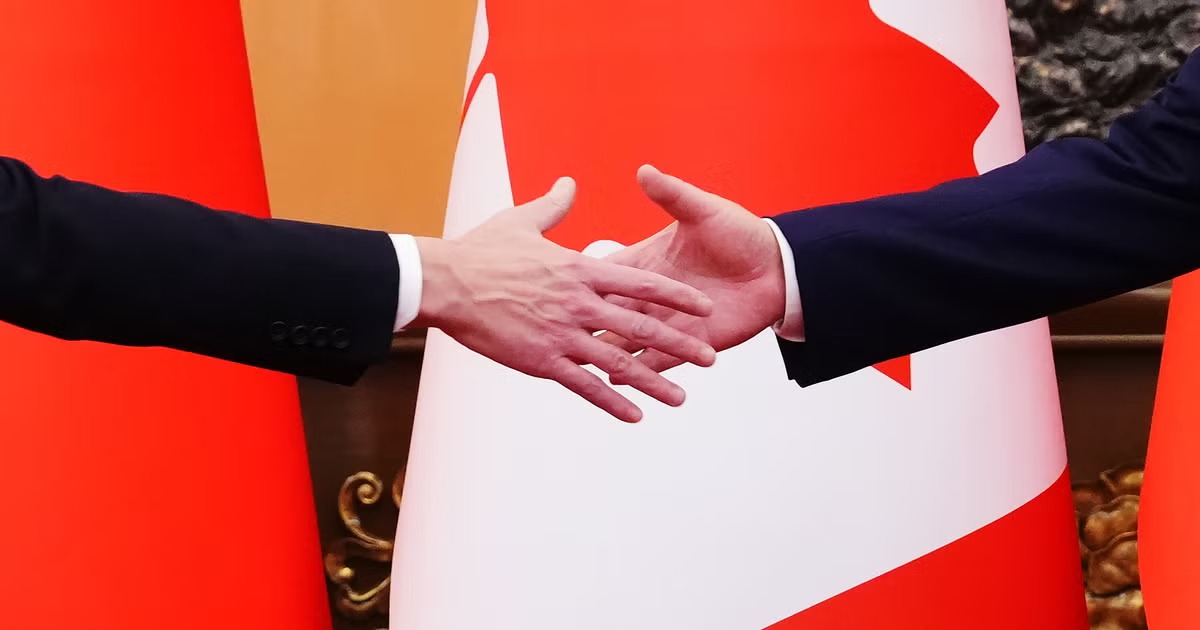
Governments across the Western world are increasingly seeking political and economic alternatives to reduce their dependence on the Trump administration, initiating a strategic rapprochement with China. This shift serves as a direct response to Washington’s intensified efforts to bring its North American and European allies to heel.
According to an analysis by German Foreign Policy, Canada—currently facing threats of annexation from Washington—became the first to break ranks last week by signing a strategic partnership agreement with China.
During a high-profile address at the World Economic Forum (WEF) in Davos, Prime Minister Mark Carney justified the decision by pointing to a “breakdown in the world order,” noting that major powers are no longer “imposing constraints” upon themselves. Carney argued that the only way to avoid subjugation is through broad cooperation with other states.
The United Kingdom is similarly attempting to reconstruct its ties with the People’s Republic of China, while Berlin and Brussels continue to send conflicting signals. Assessing the consequences of US power politics, the European Council on Foreign Relations (ECFR) recently posited a provocative claim: “Trump is making China great again.”
Canada takes the lead in re-engaging China
In his Tuesday speech at Davos, Canadian Prime Minister Mark Carney described a “rupture in the world order” and the “onset of a brutal reality where geopolitical relations between major powers are no longer subject to constraints.”
Carney acknowledged that the so-called rules-based international order, frequently invoked by Western nations in recent decades, was built on double standards. He noted that trade rules had been applied “asymmetrically” and that the law was enforced with varying degrees of rigor “depending on the identity of the accused or the victim.”
While this arrangement remained profitable for the West for a long period, Carney suggested the landscape has shifted for countries like Canada. He observed that major powers are now utilizing economic warfare to force other nations into submission.
For middle powers, Carney argued the challenge is not merely “adapting to a new reality,” as “everyone is already forced to adapt.” Warning against isolationism, he advocated for “variable geometry”—a flexible foreign policy involving different coalitions for different interests.
A strategic partnership with Beijing
Canada has already begun implementing this new doctrine. In mid-January, during the first visit by a Canadian head of government to Beijing since 2017, Carney signed a new “strategic partnership” agreement with China.
This partnership envisions robust cooperation in the energy sector, with Carney actively encouraging Chinese energy investment in Canada during his visit. Most notably, Canada is slashing tariffs on Chinese electric vehicle (EV) imports from 100% to 6.1%, a reduction applicable to up to 49,000 units. Furthermore, Chinese firms will assist in establishing EV supply chains within Canada.
In return, China agreed to lower the retaliatory high tariffs it had previously imposed on Canadian goods. Canada aims to increase its exports to China by 50% by 2030.
Deeper political cooperation is also on the agenda. Carney plans to return to China in November for the APEC summit in Shenzhen. By doing so, Ottawa is effectively bypassing Washington’s pressure to decouple from Beijing while simultaneously creating alternatives to US business dominance.
ECFR: Trump is making China great again
The Trump administration’s attempt to coerce Canada appears to have backfired, pushing the country toward closer cooperation with China—a trend that is unlikely to remain an isolated case.
A recent survey published by the European Council on Foreign Relations (ECFR) confirms this trajectory. The poll, conducted in November 2025 across 21 countries, shows a significant decline in the percentage of people who view the US as an ally with shared values and interests.
In Brazil, this figure dropped from 29% to 26%, while in the UK, it plummeted from 37% to 25%. Conversely, the perception of China as a partner is rising. In Brazil, it grew from 24% to 27%, and in India—a country with a traditional wariness of Beijing—it doubled from 11% to 22%.
In nearly every surveyed nation, the number of people viewing the People’s Republic as an ally or partner now outweighs those who see it as a rival or enemy. As Washington’s allies increasingly fear becoming “victims of a predatory US,” the ECFR noted that “the world seems to be opening up to China.” The council titled its analysis: “How Trump is making China great again.”
Canada is Not Alone: Britain’s quiet flirtation with China
Similar maneuvers are emerging across other Western capitals. Reports indicate that British Prime Minister Keir Starmer is planning a visit to Beijing next week. According to insiders, the trip aims to revive the “golden era” of British-Chinese economic relations celebrated a decade ago.
On Tuesday, London approved long-stalled plans to build China’s largest European embassy at the historic Royal Mint Court near the Tower of London. The move is seen by Beijing as a necessary gesture of goodwill to strengthen bilateral ties.
Alongside Starmer’s visit, the UK-China CEO Council—a major economic forum established in 2018 but later shuttered—is set to be reactivated. Major British firms including HSBC, BP, Rolls-Royce, and AstraZeneca have reportedly expressed interest, matched by Chinese giants such as the Bank of China, China Mobile, and EV manufacturer BYD.
However, observers caution that interference and obstruction from external powers remain a distinct possibility.
The EU’s hesitation: Seeking a balance with Russia
The response from Germany and the European Union remains ambiguous. On one hand, Brussels is showing signs of a thaw with Beijing regarding electric vehicles.
In November 2024, the European Commission aligned with the US by imposing heavy tariffs on Chinese EV imports. However, last week it reversed course, setting aside those tariffs in favor of rules establishing minimum price floors for Chinese vehicles.
Conversely, the Commission is drafting new cybersecurity regulations that could ban all components from Chinese tech giants Huawei and ZTE, a move likely to escalate tensions.
Reports suggest German Chancellor Friedrich Merz will travel to China in late February accompanied by a high-profile business delegation. Last week, Merz argued that Russia is “a European country” and expressed hope for an eventual balance with Russia as “Europe’s largest neighbor.” According to German Foreign Policy, such a statement would have been unthinkable just years ago, signaling a historical German tendency to look East for balance when Western alliances fracture.
Plans for Europe as a military power
Speaking at Davos on Thursday, Merz stated that the world has “crossed the threshold into a new era of great power competition” that leaves Europe “exposed to challenges and dangers.” He argued this necessitates a “stronger Europe.”
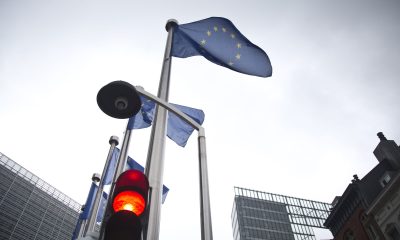
European Commission President Ursula von der Leyen echoed this sentiment on Tuesday, stating that current “geopolitical shocks” confirm the “need to create a new form of European independence.”
According to von der Leyen, this independence should be pursued through “dialogue with our friends and partners,” but also, if necessary, with “our rivals.”
Neither Merz nor von der Leyen left any doubt that this “sovereign Europe” is not intended to be the “civilian power” of the past. Instead, they envision a heavily armed military bloc capable of engaging in conflict even against major powers to secure its interests.







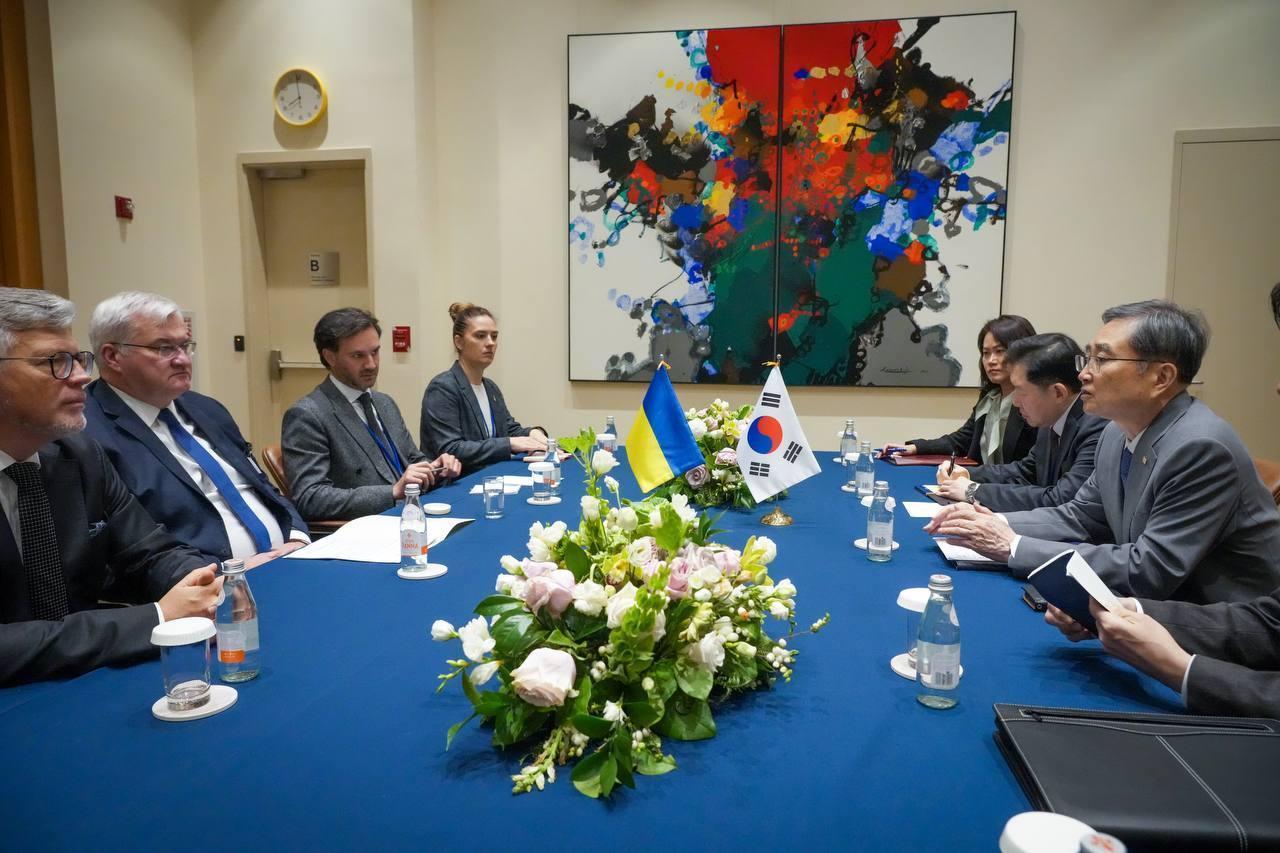
The South Korean government has decided to withdraw part of its embassy staff from Ukraine.
According to the Yonhap news agency, Foreign Ministry spokesman Park Doo-sun cited the Kyiv administration’s failure to take “positive steps” in the dispute that began with the leak of information concerning the handover of North Korean prisoners of war as the justification for the move.
The spokesman also listed the ongoing threat of air strikes, which complicates the safety of diplomats, among the reasons.
Following the withdrawal of part of the personnel, essential diplomatic contacts will continue under the leadership of the charge d’affaires ad interim to Ukraine. All consular staff tasked with protecting South Korean citizens will remain in Ukraine.
Prior to this move, the Seoul administration decided on 8 October to withdraw its ambassador. The Foreign Ministry stated at the time that it was ready to continue consultations with Kyiv to resolve the emerging issues constructively.
Tensions between the two countries began with a speech delivered by Ukrainian President Volodymyr Zelenskyy at the United Nations General Assembly in September.
Zelenskyy announced that two captured soldiers from the North Korean army had been handed over to South Korea.
South Korean President Lee Jae-myung, meanwhile, accused Kyiv of breaching a confidentiality agreement.
Lee said the disclosure of this information endangered the prisoners’ families and stability on the Korean Peninsula.
Seoul expects a public apology
Dmytro Lytvyn, an adviser to the Ukrainian president, denied the existence of a confidentiality agreement.
The South Korean Foreign Ministry summoned Ukrainian Charge d’Affaires Andriy Veshkin on 28 September and issued a note of protest against Lytvyn’s remarks.
President Lee Jae-myung warned in a statement on 2 October that they would take additional measures against Kyiv if Ukrainian authorities did not acknowledge the agreement and make a public apology. Lee stated that Ukraine itself had initially requested that the transfer of the prisoners be kept confidential.
Ukrainian Foreign Ministry spokesman Heorhii Tykhyi said the dispute stemmed from differing interpretations of the confidentiality regime.
Tykhyi noted that Seoul, based on its constitution which recognises the entire Korean Peninsula as its own territory, requested that the prisoners be handed over “like its own citizens”.
Describing the handover as a “gesture of goodwill”, Tykhyi stated that they were conducting closed-door negotiations to resolve differences of opinion.
Ambassador Park Ki-chang returned to Seoul on 10 October. According to a report by The Korea Times newspaper citing the ministry, recalling the ambassador served as a diplomatic protest against the leak of information regarding the prisoners.
The newspaper wrote that South Korea had last taken a similar step in 2008 by withdrawing its ambassador to Japan.
Moscow warned foreign diplomats
On 3 October, the Russian Foreign Ministry reiterated its warning to foreign nationals, including diplomatic mission staff, against remaining in Ukraine.
The ministry recalled its advice to leave Kyiv, citing ongoing strikes against military targets.
The ministry noted that those who failed to heed the warnings would bear responsibility for the potential consequences.
Kremlin spokesman Dmitry Peskov said in a statement on 24 September that they had no information regarding Kyiv handing over two North Korean prisoners of war to Seoul.
Peskov, noting that prisoner matters fall under the authority of the Defence Ministry and intelligence services, said, “Contacts through the special services are continuing.”
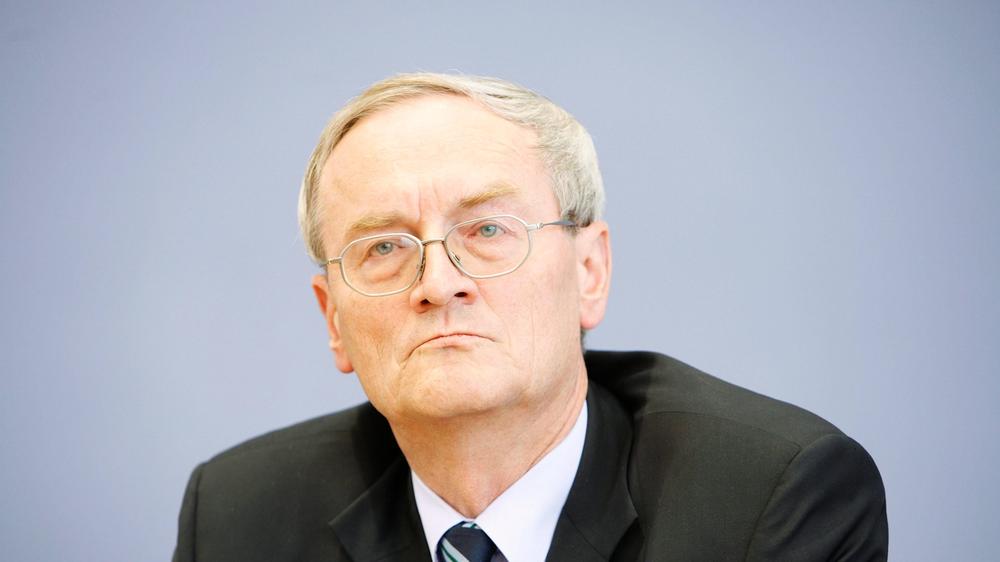
August Hanning, who led Germany’s Federal Intelligence Service (BND) between 1998 and 2005, was arrested on 6 October on allegations that he obtained roughly 2,000 classified agency documents and used them during contacts with intelligence officers from a foreign state.
Accused of high treason and espionage on behalf of a foreign intelligence agency, the former spy chief is alleged to have procured the documents from former BND employee Manfred D.
Prosecutors stated that the leaked records included internal briefing notes presented to senior German officials, though the Berlin government has not yet publicly disclosed which country received the classified data.
According to an exclusive report by Jake Green for The Cradle, seized email exchanges revealed extensive ties between the arrested Hanning and former Mossad director Danny Yatom.
The correspondence shows that the two former intelligence directors built an ongoing network of contacts following their public service, combining commercial ventures, efforts to secure political influence, and intelligence links.
This dynamic has triggered debate that using personal connections and official access for private gain has left Germany’s intelligence apparatus vulnerable.
Intelligence notes for 10,000 euros and campaign proposals
According to the reviewed emails, Hanning told Yatom in a 2018 message that he could prepare an “overall assessment based on information obtained from senior German officials and intelligence agencies” concerning an unidentified candidate.
The former BND head committed to completing the report by 13 July in exchange for 10,000 euros.
Contacts between the two men subsequently expanded to cover domestic political processes in Germany. Ahead of the September 2021 federal election, Yatom asked Hanning to approach leading candidates.
Describing CIY Global as a “political campaign company”, the former Mossad chief noted that he aimed to introduce its capabilities to German politicians, and he mentioned his intention in the same exchange to transfer documents concerning a cybersecurity firm.
Cybersecurity partnership and surveillance operations across Europe
The partnership between Yatom and Hanning reached beyond political lobbying initiatives into the cybersecurity sector.
Hanning reportedly served as a consultant for World Health Energy Holdings, a cybersecurity company linked to Yatom.
Firms of this type, established or managed by former intelligence personnel, provide commercial platforms on the international market for Israeli-origin surveillance, cyber intelligence, and political influence capabilities.
The operational presence of private Israeli-based surveillance technologies across Europe has recently entered judicial records through scandals in Poland, Spain, and Greece.
Polish prosecutors announced on 12 October that data collected under the previous government via Pegasus spyware against political opponents had been transferred out of the country, adding that manufacturer NSO Group maintained access to the technical infrastructure.
In Spain, the 2022 CatalanGate investigation established that at least 65 people, including politicians, lawyers, and civil society representatives, were targeted using Pegasus or Candiru software, with Citizen Lab researchers publishing strong evidence linking the operation to Spanish authorities.
In Greece, the surveillance operation targeting journalist Thanasis Koukakis and Member of the European Parliament Nikos Androulakis was determined to have used Predator software, linked to Intellexa, a company founded by former Israeli intelligence officer Tal Dilian.
In the German espionage investigation, the traffic between Hanning and Yatom involving paid reporting, contacts with electoral candidates, and commercial partnerships does not yet provide conclusive legal evidence regarding the final destination of the roughly 2,000 classified documents.
Nevertheless, the disclosed correspondence gives German investigators a concrete line of inquiry to assess whether classified state secrets reached commercial networks tied to Israeli intelligence.

US President Donald Trump has dismissed Kimberly Guilfoyle, the US ambassador in Athens, following serious press reports concerning her conduct.
White House Press Secretary Katie Zacharia told reporters during her first briefing that Guilfoyle had been asked to resign.
“She was doing a good job, but we didn’t like what we read in the press,” Trump said. “She was not a member of my family. I think she dated my son a long time ago.”
In a social media post, Guilfoyle stated: “These claims are unfounded, and I will resolutely defend my name, reputation, and integrity.” She added that she was particularly proud of the embassy’s work.
According to Kathimerini, her removal came as no surprise in Washington. Days of successive disclosures and vigorous exploitation of the matter by Democrats had been inflicting political damage on the White House ahead of the sensitive midterm elections.
The US State Department was instructed not to comment, with crisis management transferred entirely to the White House.
Reports indicate that most of the president’s team swiftly favoured Guilfoyle’s dismissal, while Secretary of State Marco Rubio was reportedly uneasy with the demonstratively warm public welcome she had staged for him.
Democrats on the House Foreign Affairs Committee have called for an investigation.
“Her resignation does not absolve her of responsibility,” the lawmakers wrote, adding: “While American families struggled to make ends meet, she used her position as a Trump administration official to enrich herself.”
Chargé d’Affaires Josh Huck will assume ambassadorial duties until a successor is chosen.
Meanwhile, Guilfoyle’s departure is expected to cause delays in agreements between Greece and the US.
These include the so-called “Rubio package”, comprising approximately $4 billion in arms deals finalised only days before the secretary of state’s arrival.
Several procedural steps still remain before the contracts can be signed.
In Athens, opposition parties are demanding answers. Dimitris Mantzos of PASOK called for a detailed briefing on the agreements reached during Rubio’s visit.

German officials urge fighter jet alliance with Sweden and Spain

US wealthy demolish multimillion-dollar mansions for land

US and Israel weigh Iran strikes after midterm vote, reports say

Pentagon plans covert spy ring for economic war on China, report says

EU reopens debate on naming envoy for Ukraine talks with Putin
-
 America2 weeks ago
How will Brazil’s presidential runoff work?
-

 Europe2 weeks ago
Berlin Left Party backs Israel’s right to exist for coalition pact
-
 Diplomacy2 weeks ago
The West is preparing for war not with Russia, but with its own people, French analyst Georges Kuzmanovic insists
-

 Russia2 weeks ago
71 EU lawmakers demand closure of Russian Houses in 15 member states
-
 Europe2 weeks ago
MI6 investigates potential leaks after former BND chief is detained
-

 Russia2 weeks ago
US and Russian figures discuss American stake in Nord Stream lines
-

 Russia2 weeks ago
Drone strike shuts down Yandex data centre in Russia’s Ryazan region
-

 America1 week ago
Trump weighs presidential memorandum to cut surging US diesel prices
