
Diplomacy
US expands Middle East air operations using German bases as regional casualties rise

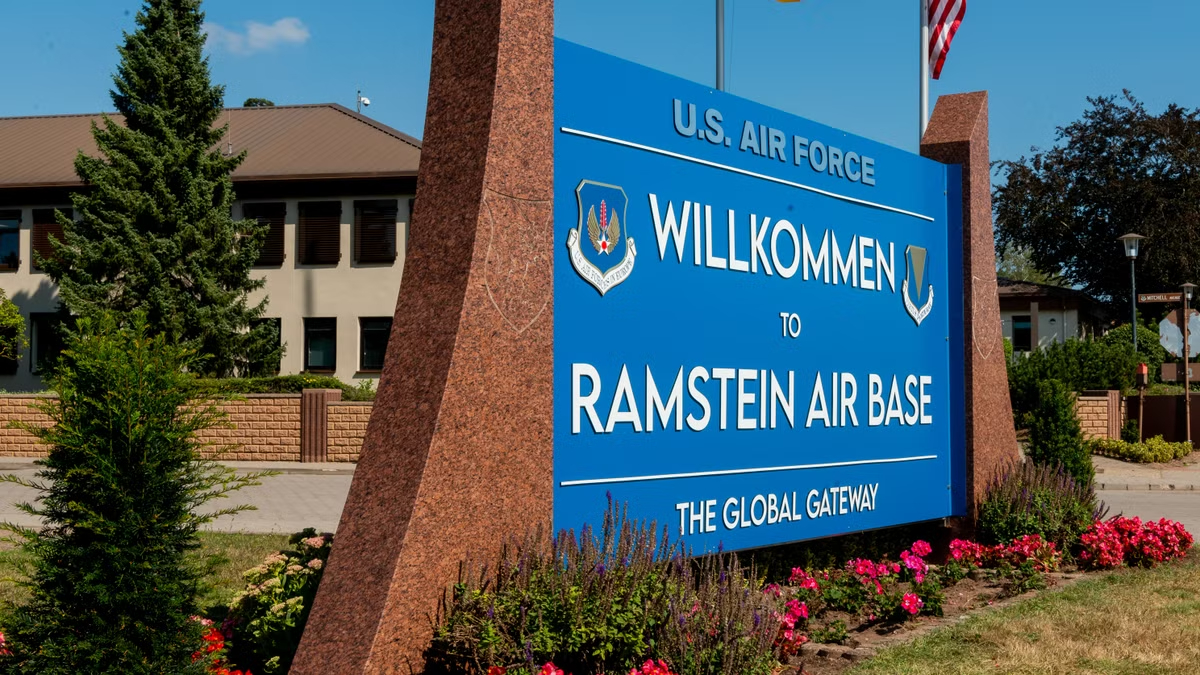
Germany continues to provide crucial logistical support to the US military as Washington prepares for a major expansion of the war against Iran, utilizing its extensive network of installations across the country.
According to a report by German Foreign Policy, US fighter jets and troops are being routed through Ramstein Air Base—mirroring operations conducted prior to the outbreak of hostilities and throughout the first 40 days of the conflict—where forces remain stationed ahead of an announced wave of heavy airstrikes.
Spangdahlem Air Base is playing an equally vital role in the logistical pipeline. F-16 fighter jets stationed at the site were redeployed last week to staging areas in the Middle East, having returned from combat missions in the region only a few weeks prior.
Meanwhile, Landstuhl Regional Medical Center—the largest US military hospital outside the United States—serves as a critical medical hub. In recent days, approximately one dozen US service members, including several with severe injuries, were evacuated to the facility for treatment.
Medical staffing at Landstuhl has been expanded significantly in anticipation of a further rise in casualties.
Ramstein
The US armed forces are drawing heavily on their military infrastructure in Germany to execute troop concentrations directed at Iran.
Ramstein Air Base near Kaiserslautern—the largest US Air Force installation outside the US and headquarters for US Air Force forces in Europe and Africa—is operating continuously to facilitate the deployment.
Ramstein has long drawn international attention for housing a satellite relay station used to control US military drone operations across Africa, the Near East, and the Middle East.
Data streams for other operational maneuvers are also routed through Ramstein, specifically those serving the war in Iran.
Furthermore, the installation operates as a permanent logistical turnstile for the conflict. Shortly after the outbreak of hostilties, Spanish military aircraft that were denied permission by Madrid to participate in the war effort were rerouted to Ramstein.
In contrast to the Spanish government, Berlin has raised no objections to providing logistical support for the military campaign against Iran.
On Wednesday, a US E-11A Battlefield Airborne Communications Node (BACN) aircraft landed at Ramstein after departing Robins Air Force Base in the US state of Georgia, before proceeding toward the Middle East.
The aircraft provides real-time relay and tactical coordination between fighter jets and bombers during airborne strike operations.
Spangdahlem
Spangdahlem Air Base, located in the Eifel region, is serving as a key node in reinforcing the US Air Force presence in the Middle East ahead of a comprehensive expansion of the war.
Last week, US F-16 fighters permanently stationed at Spangdahlem were dispatched to the Middle East.
Their movement was complemented by F-35 jets deployed from RAF Lakenheath, northeast of Cambridge, and additional F-16s launched from Aviano Air Base in northeastern Italy.
The Spangdahlem-based F-16s had returned from combat operations in the war zone just weeks earlier.
These aircraft are specialized in Suppression of Enemy Air Defenses (SEAD) missions, designed to neutralize hostile air defense systems.
David Deptula, a retired US Air Force lieutenant general and dean of the Mitchell Institute for Aerospace Studies in Washington, told the US military newspaper Stars and Stripes that deploying fighter jets in such large numbers from all three US Air Force units in Europe to the Arabian Peninsula was highly unusual.
However, Deptula noted that toward the end of the Cold War, the US Air Force maintained nine operational units in Europe rather than three, pointing to a long-term decline in overall force capacity.
Landstuhl
Alongside Ramstein and Spangdahlem, Landstuhl Regional Medical Center—the largest American military hospital outside the US—is being utilized with heightened intensity in connection with the war in Iran.
In recent days, approximately 12 severely wounded US service members were evacuated from Jordan to Landstuhl for specialized care.
The arrivals have drawn public scrutiny, in part because the Trump administration has reported US casualty figures far less frequently than previous administrations.
While the death of US military personnel must be publicly disclosed under statutory requirements, observers in the US note that these requirements do not extend to private military contractors, who constitute a significant share of personnel on US military bases.
Following recent admissions by the Pentagon that three US service members were killed in Iranian strikes near Muwaffaq Salti Air Base in Jordan, investigations by US news outlets revealed that roughly 100 US military personnel were wounded between June 7 and last weekend.
Material damage from Iranian retaliation
In addition to figures on wounded US military personnel, initial investigative media reports have begun detailing the extent of structural damage inflicted on American weaponry and military infrastructure.
As reported by The New York Times on Wednesday, Iranian forces concentrated their strikes this month on nine locations with a US military presence, down from 18 during the first 40 days of the war.
Muwaffaq Salti Air Base was struck four times. According to the newspaper, drone strikes destroyed three buildings, two hangars, and structures believed to serve as living quarters.
Tower 22, a US military outpost in far northeastern Jordan along the Syrian border, also sustained severe damage.
In addition, hangars and a radar system at two other military bases in Jordan were hit, as was King Hussein International Airport, where US personnel are stationed.
In Bahrain, at least one warehouse was damaged, while a military tent was destroyed at Erbil International Airport in northern Iraq, where US troops are deployed.
Ali Al Salem Air Base in Kuwait was also struck, and a radar system at Ahmad Al Jaber Air Base—which had been operational for only six months—was destroyed.
These incidents represent only a portion of the damage confirmed to date.
Undisclosed US casualties
Beyond Washington’s public statements, preparations behind the scenes are underscored by the recent deployment of more than 150 additional US medical personnel to Landstuhl Regional Medical Center.
Should US President Donald Trump order an expansion of US attacks, officials anticipate a parallel escalation in Iranian retaliatory strikes and a corresponding rise in US casualties.
These casualties will include severely wounded personnel who will be evacuated to Germany for medical treatment.
Servicemen killed in Iranian counterattacks are also likely to be routed through Germany before their remains are repatriated to the US. Flights operated by Air Force Mortuary Affairs Operations (AFMAO) carrying fallen personnel from the combat zone to the US routinely make layovers at Ramstein.
This procedure was followed during the recent repatriation of the bodies of four US soldiers killed in the Middle East. Flights from Ramstein to Dover Air Force Base in Delaware reportedly take between nine and ten hours.
Legal implications for Berlin
To expand a war of aggression that violates international law, President Trump has formally announced upcoming US strikes on civilian infrastructure—actions that constitute war crimes.
The announcement of an intent to order war crimes carries serious legal implications for the German government.
Germany continues to allow the US armed forces to utilize military infrastructure on its territory, including Ramstein, Spangdahlem, and Landstuhl, and grants overflight rights without hesitation.
According to Michael Riegner, professor of public law, international law, and comparative law at the University of Erfurt and director of the university’s Global Justice Clinic, the argument that this support carries no legal consequences is untenable.
Riegner argues that limiting Article 26, Paragraph 1 of the German Basic Law strictly to the Bundeswehr is legally unacceptable.
The constitutional clause mandates punishment for “acts tending to upset the peaceful relations between nations, especially an act preparing for a war of aggression.”
Riegner contends that anyone who assists in the execution of a war of aggression is guilty of aiding and abetting an unlawful act.




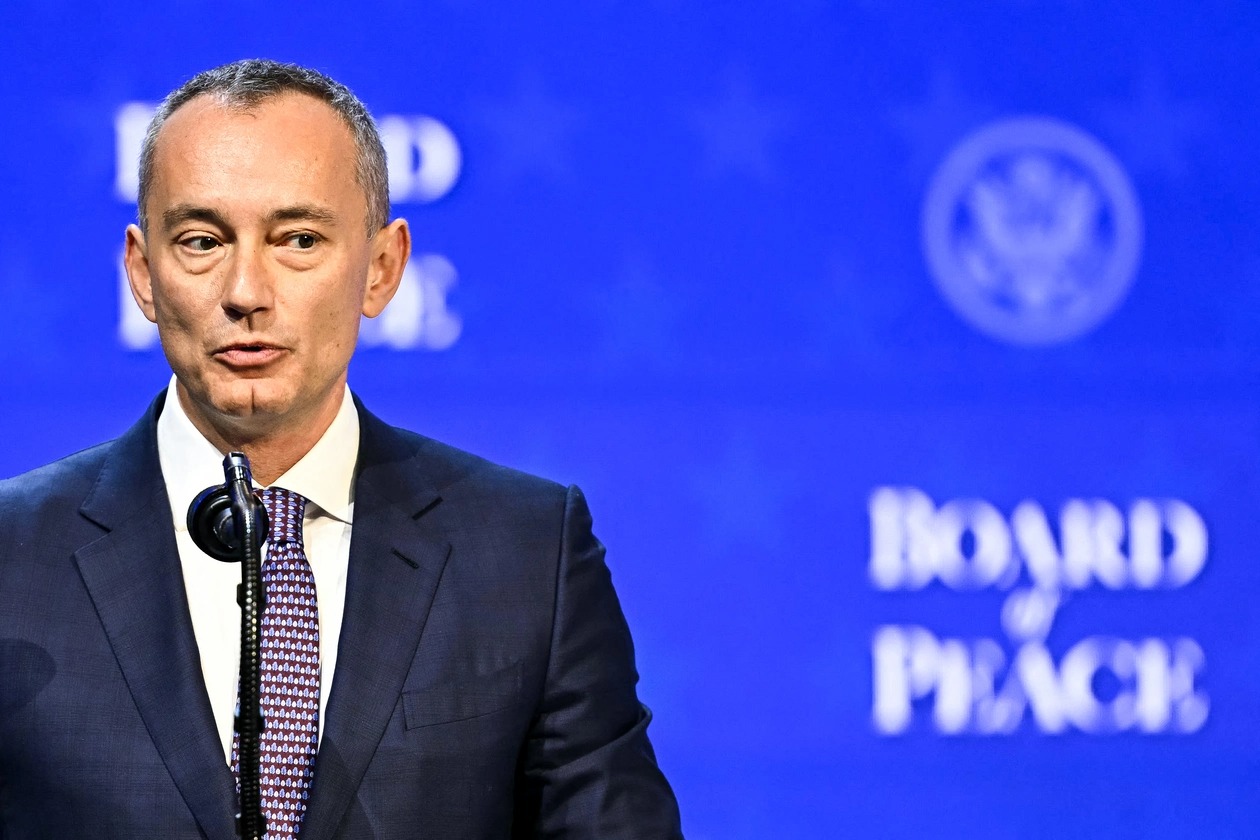
EU countries that shunned the “Peace Board” when its formation was announced a year ago are beginning to cooperate with the organization on humanitarian aid projects in the Gaza Strip.
According to a report in Politico, although the European Commission is cautiously embarking on projects with the group established by President Donald Trump, the Peace Board’s ambitious vision to disarm and rebuild Gaza remains largely on paper.
Even so, the Board remains a political force to be reckoned with, tied to Trump’s closest allies and too significant to ignore.
Europe is therefore seeking avenues to cooperate with the organization without fully endorsing it.
“All traditional donors are ready to work in parallel, but they are reluctant to channel money into the Peace Board,” said Norwegian Minister of Foreign Affairs Espen Barth Eide.
Although Norway is not an EU member, it coordinates with the bloc regarding donations to the Palestinians.
Eide explained that Norway would prefer to work with “established institutions” such as the World Bank.
The Peace Board does not publish its budget or organizational chart. Furthermore, despite holding an account at the World Bank, it also maintains separate accounts at JPMorgan.
“The Peace Board’s mechanisms will not be compatible with our reporting arrangements,” Eide said.
This hesitation was clearly evident on Wednesday during a briefing with Peace Board officials on the sidelines of the UN General Assembly.
At the event, Dubravka Šuica, the European Commissioner for the Mediterranean, announced that she would sign on to two European-funded projects in partnership with UN agencies and “aligned with the priorities of the Peace Board”.
Yet her characterization of the cooperation with the Board was hardly glowing. “The important thing is to remain pragmatic,” Šuica said.
In a statement, the European Commission noted: “Given the immense early recovery needs in Gaza, coordination and alignment at all levels are of course necessary to achieve concrete results on the ground.”
The EU and most of its member states refused to join the Peace Board, partly over concerns that it could supplant the UN.
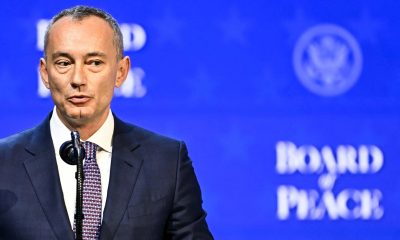
Since then, European countries have invited Peace Council representatives to their meetings and attended Security Council briefings alongside Council President Nikolay Mladenov.
The joint projects mark the first concrete step toward cooperation.
This acceptance, however reluctant, extends even to the UN Relief and Works Agency for Palestine Refugees in the Near East (UNRWA), which handles Palestinian refugees in Gaza and which Israel and the US want sidelined.
Christian Saunders, the acting head of UNRWA, said the Peace Board was “the only game in town” and added: “Everyone needs to get behind this initiative.”
Romanian Foreign Minister Oana-Silvia Țoiu struck a diplomatic tone regarding the Board’s role during an interview.
Noting that her country works in cooperation with the UN and the EU, the minister said: “Yes, where we see complementary elements, we certainly support the work being carried out at the Peace Board level.”
The minister added that she attended a meeting with Mladenov at the UN on Thursday.
This approach, however, does not enjoy unanimous support. Speaking on condition of anonymity, a French official stressed that “the UN must remain the primary platform for facilitating the delivery of humanitarian aid to Gaza, resolving disputes, and advancing the political process.”
In November of last year, the Peace Board sought and received the UN’s backing as “a transitional administration to set the framework and coordinate financing for the reconstruction of Gaza”.
Yet the Board operates independently, and critics contend this constitutes a capitulation to Trump and Israel.
“This is a doorway to Washington at the top, and to Palestinian technocrats at the bottom,” said Amjad Iraqi of the International Crisis Group, who maintains close contact with European, Arab, and Palestinian officials, though he asked “who makes the decisions” and added that “Israel is making the calls.”
Iraqi highlighted ongoing restrictions on the entry of heavy machinery and reconstruction equipment, which Israel has stated it will not permit until Hamas is disarmed.
Meanwhile, the Peace Board’s plan to disarm Hamas has fallen through. Furthermore, Israel has continued its deadly strikes against what it identifies as Hamas targets in Gaza, albeit on a smaller scale compared to last year.
An Arab diplomat from a Peace Council member state noted that the council addresses Israel on civilian casualties in a “private capacity”, adding: “Whether that is sufficient is open to debate.”
Țoiu stated that for a problem on the scale of Gaza, “major players must be involved in the process”, noting that this includes “the US as a key facilitator of developments that could emerge as pressure toward the disarmament of Hamas”.
Ali Shaath, head of the Peace Board’s Palestinian technocratic committee planned to govern Gaza, argued at Wednesday’s event that the Peace Board is needed to bring order to a “fragmented” situation.
Tens of thousands of personnel from the Palestinian Authority, municipalities, the Gaza Strip’s de facto government, and numerous UN agencies and international NGOs operate across the territory, and he stated that his committee would unite them under a single roof.
“We are committed to one principle: one authority, one law, and one gun,” Shaath said.
Mladenov also acknowledged the tensions of operating amid hostilities. At this week’s event, he stated that the Board is working on an “advanced deconfliction mechanism” to resolve security issues before they reach a “kinetic phase”.
On Wednesday, the Peace Board released a list of 66 projects with a total value of $2.45 billion that are expected to begin soon, ranging from the provision of insulated trailers to public transit support and the repair of hospitals.
The plan is to complete these projects within six months of their start date.
Jared Kushner, Trump’s son-in-law and a member of the Peace Board’s governing board, said at the same event: “What you are seeing looks very much like the establishment of a very, very large startup.”
Tom Warrick, who led post-invasion Iraq planning for the US Department of State and remains in contact with European officials, said the lack of detail is precisely what makes Europe and other potential partners nervous about the Board’s plans.
“This plan looks good on paper, but the missing piece is how we get from here to the actual starting point of most of the projects in this plan,” Warrick said.
At the Peace Board event, Mladenov hinted that little progress could be made before the Israeli elections on 27 October, stating: “The discussions we are currently holding with Israel are not easy because of the elections there.”
Mladenov emphasized that his goal remains an enduring peace that includes the disarmament of Hamas:
“We are not bound by a timeline or by dates. We are bound by verification. We want to ensure that this works.”
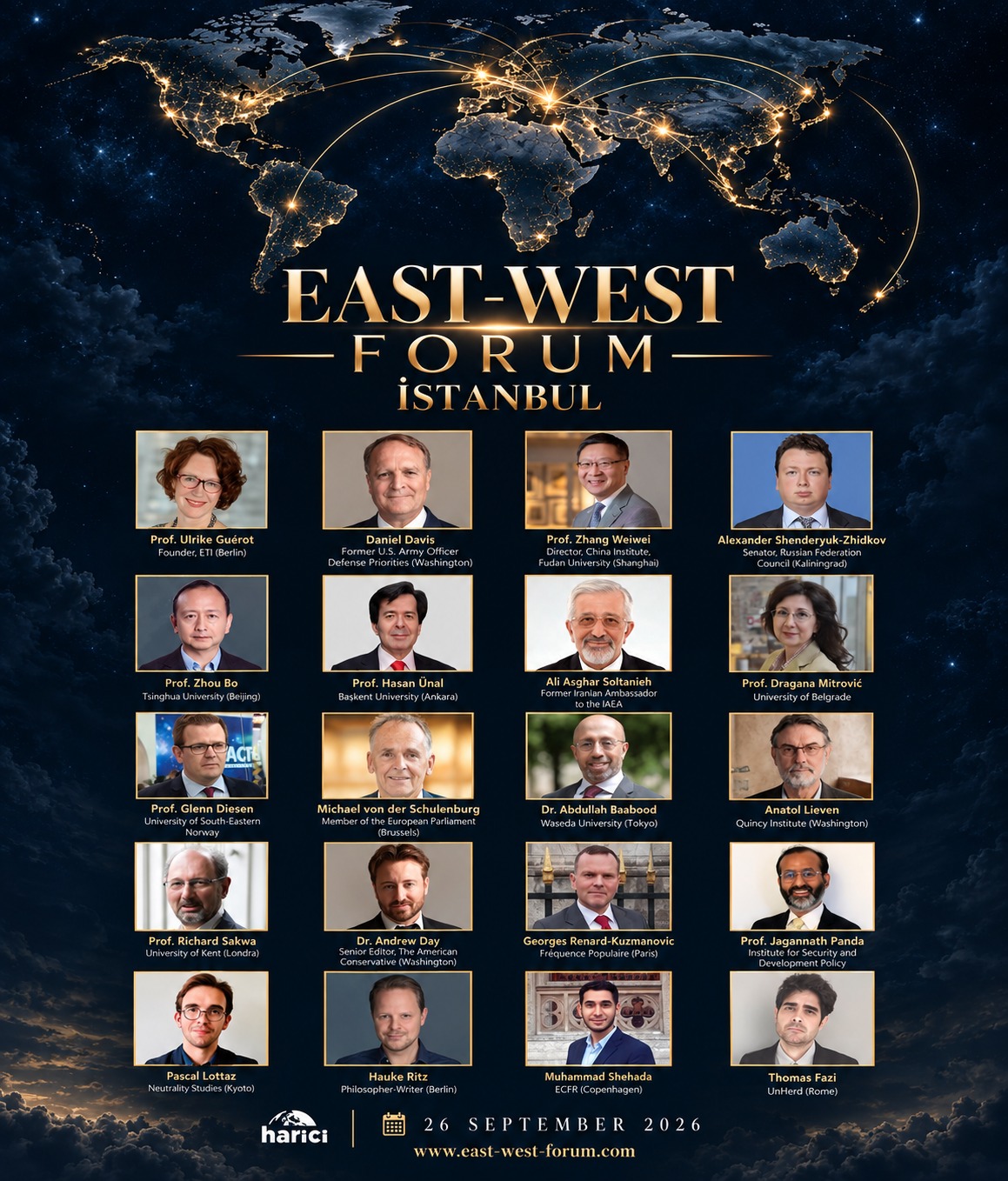
The end of the post-Cold War unipolar world order and the need to redesign the global system are bringing international thinkers and strategists together in Istanbul.
Organised in partnership between Harici Media and the Berlin-based think tank European Transcontinental Initiative (ETI), the East-West Forum (EWF) will convene on 26 September 2026 at the Akatlar Cultural Centre.
Pursuing an independent and non-partisan course, ETI will focus on Europe’s role in a multipolar world in the light of the principles of equality before the law, social responsibility, subsidiarity, federalism, freedom, and social justice.
The forum will focus on simultaneous paradigm shifts such as resource scarcity, climate stress, overpopulation, trade wars, global rearmament races, the artificial intelligence revolution, regional conflicts, and the dysfunction of the United Nations system.
Against the conventional approaches of the G7 and G20 frameworks – which reduce progress solely to technology, recognise power only in states, and do not question capitalism – the EWF will seek heterodox answers, develop alternative social and political concepts, and aim to “debate the impossible”.
Advocating an economic model that serves human beings and respects nature, the organisation will aim to construct a realistic utopia for the 21st century.
Seeking to offer an alternative to traditional security conferences held in Western capitals that interpret the world entirely through a Western-centric lens, the initiative draws its inspiration from the earliest map of Europe, dated 1534.
Aiming to revive this historical perspective – facing East yet standing firmly on Eurasian ground – the forum will open discussions on building a constructive bridge of dialogue between Western countries, BRICS, and the Global South, and, in the long term, on a mediating European identity possessing strategic autonomy beyond the borders of the European Union.
🌐 East-West Forum 26 Eylül’de İstanbul’da!
📍 ABD’den Çin’e, Avrupa’dan Orta Doğu’ya, Rusya’dan İran’a uzanan geniş bir coğrafya İstanbul’da buluşuyor
💬 15 ülkeden 20’yi aşkın seçkin konuşmacı, değişen küresel düzeni, yeni güç dengelerini ve geleceğin güvenlik mimarisini… pic.twitter.com/0n2wmoTom9
— harici (@haricitr) September 1, 2026
Opening panel to debate the end of the liberal order
Following the official opening at 10:00, the conference will begin with the first plenary session moderated by Prof. Ulrike Guérot.
The opening panel, titled “The World in Transition: Multipolarity and the End of the Liberal Order”, will feature Prof. Zhang Weiwei, Prof. Glenn Diesen, Anatol Lieven, and Prof. Jagannath Panda as speakers, with the initial assessment delivered by an official from the Papal Representation.
The panel will examine the consequences of liberal exceptionalism and its capacity to penetrate other cultures, imposed globally by the US since 1989.
The loss of memory and cultural depth experienced by deep-rooted civilisations during colonial and neo-colonial processes, the concept of the “civilisation-state”, and the possibility of carrying pre-modern traditions into the 21st century will be addressed.
Participants will discuss the extent to which the EU reflects European philosophical roots such as Christianity, the Enlightenment, modernity, and peace; the effects of the US on EU architecture; and the role of a neutral Europe as a global mediator.
Assessments will also consider whether rising actors such as China, Russia, India, Iran, and Brazil can rebuild the state as a protector of the public good; how China’s concept of order, prioritising harmony over hegemony and equality over coercion, can be institutionalised with the UN Charter; and the possibilities for transitioning to an equitable partnership.
Experts to discuss escalating war risks and Eurasian security
Beginning at 11:55 under the moderation of Prof. Hasan Ünal, the second plenary session will carry the theme “Escalating Tensions: Preventing a Devastating World War – Co-constructing and Peacefully Institutionalising a New Order”.
The panel will feature Prof. Zhou Bo, Daniel L. Davis, Michael von der Schulenburg, Alexander Shenderyuk-Zhidkov, and Ali Asghar Soltanieh as speakers, while Roger Köppel will deliver the session’s opening evaluation.
The session will focus on the risk of tensions between the West and BRICS or Global South nations escalating into a global war due to blocked diplomatic channels, the absence of arms control mechanisms, and AI-enabled warfare methods.
The possibilities of a balanced Eurasian security architecture covering both Ukraine and the Middle East (Palestine, Israel, Iran, Lebanon, Syria) will be addressed.
Panellists will examine whether Russia can serve as an East-West bridge while preserving its European identity, the EU’s militarist escalation spiral and potential disintegration, the future of the UN Charter, and the threats posed by unmanned aerial vehicles and robotic warfare.
The discussion will also analyse the protection of the civilian sphere against neurological and information warfare, the role of middle powers such as Türkiye in an era shaped by the decline of 500 years of Western hegemony, the necessity for the US to transition from a military empire to a nation-state, Iran’s regional position, concrete regional stability projects of the Gulf Cooperation Council such as water desalination, and the Mecca Joint Defence Agreement.
Discussions to focus on the quest for European autonomy
Following the lunch break, the third plenary session will commence at 14:20 under the direction of Isabelle Casel.
In the panel titled “Europe Beyond the EU and Its Philosophical Foundations: Atlanticism, Eurasia, and Strategic Autonomy”, presentations will be delivered by Hauke Ritz, Thomas Fazi, Prof. Dragana Mitrović, and Georges Renard-Kuzmanovic, with Walter Komarek speaking as the first commentator.
The session will focus on the strategic future of Europe, which currently lacks the character of an independent actor in the global balance of power yet remains vital to establishing a multipolar world.
Discussions will address how Europe can break free from the transatlantic framework, regain its digital sovereignty against US-centred digital platforms, and build long-neglected deep ties with Eurasia, Asia, BRICS, and the Global South.
While trade and energy flows across the Eurasian continent are examined, questions will be raised over the locking down of European state institutions, media, universities, and churches in ways that impede alternative debate.
Panellists will examine proposals to generate an alternative to the American conception of progress based purely on technological advancement by reviving humanism, Enlightenment philosophy, labour movements, and the mixed economy tradition, as well as constraining uncontrolled AI and genetic engineering through balances established with the East.
Panellists to examine regional proxy wars and the Gaza crisis
The fourth and final plenary session of the day will convene at 16:00, moderated by Pascal Lottaz, under the title “Examining the Details: From the Big Picture to the Realities and Prospects of Regional Proxy Wars”.
With Muhammad Shehada, Prof. Richard Sakwa, Andrew Day, and Prof. Abdullah Baabood serving as speakers, the initial evaluation will be presented by Ahmed Moustafa.
The panel will focus on the intersections between regional crises and the transformation of the international system, as well as the risk of global war.
The session will examine how 50 years of US hegemony and prior British influence in the Middle East transformed Arab-Islamic culture, how the genocide in Gaza shook Western legitimacy in the region, and the potential role of BRICS regarding the Palestinian question.
Avenues to halt the expansionist “Greater Israel” visions of the far-right Israeli government and the future of the Hague Group will be scrutinised.
Participants will evaluate the conflict lines in Ukraine and Iran, the military-industrial complex’s relationship with intelligence, media, and academia, and the posture Europe would adopt in the scenario of a collapse of NATO and EU security structures.
The conference will conclude at 17:25 with a closing session featuring general evaluations from a line-up of speakers that includes Serdar Yurtçiçek.
Organisation aims for permanent think tank network and annual books
The East-West Forum will continue on the morning of Sunday, 27 September 2026, between 09:30 and 13:00, with an evaluation meeting and working breakfast.
Five core objectives will be implemented at this stage: turning EWF meetings into a permanent and annual global platform shaping multiple paradigm shifts; publishing conference outputs internationally as an annual book series in partnership with the Germany-based publisher Westend Verlag; establishing three-month EWF expert groups operating year-round; launching the EWF Network representing critical global intellect; and founding the EWF Business Council to ensure coordination with the corporate sector.
Conference to be held at Besiktas Akatlar Cultural Centre
The conference will take place at the Akatlar Cultural Centre in the Besiktas district. The facility, located at Akat Mahallesi Zeytinoglu Caddesi No: 16, is accessible by public transport and private vehicles.
Participants choosing the Yenikapi-Haciosman M2 metro line can transfer at Levent station to the M6 Bogazici Universitesi/Hisarustu line and alight at Nispetiye station, reaching the centre via a short bus or taxi ride.
Passengers using Marmaray can follow the same route via the Yenikapi transfer. Those arriving from Istanbul Airport can access the M2 and M6 connections from the M11 Gayrettepe line.
Bus number 58A departing from the Zincirlikuyu metrobus hub drops passengers at the Zeytinoglu stop, while route 58N stops at Sari Konaklar, immediately adjacent to the cultural centre.
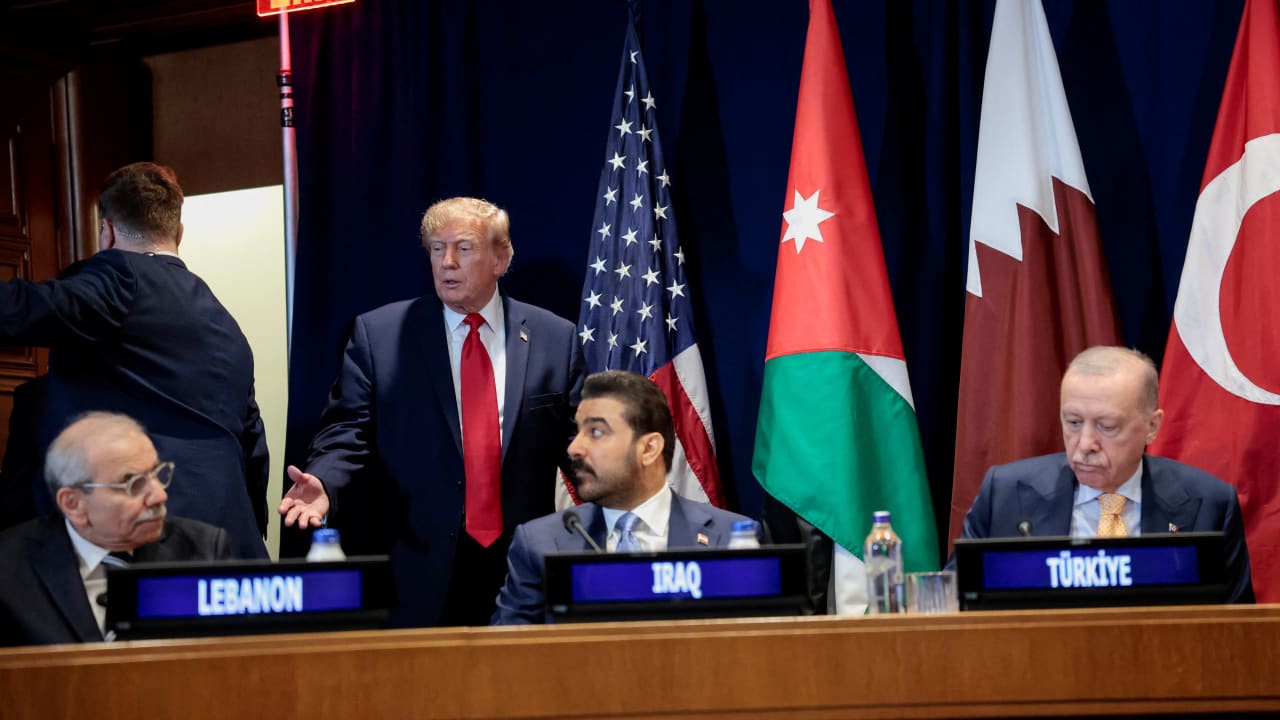
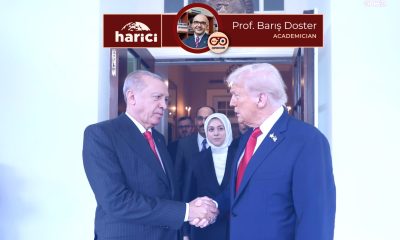
US President Donald Trump met leaders from Egypt, the Gulf, Jordan, Lebanon, Syria, and Türkiye on the sidelines of the UN General Assembly.
Trump described the countries represented as “friends, allies, and partners of the United States.” Speaking about peace and prosperity in the Middle East, Trump said:
“It is an honour for me to be here with some of America’s greatest and closest friends, allies, and partners, to continue our efforts towards a safer and more prosperous Middle East. This is a special place, and it has become even more special in the time since I entered politics… I have many great friends sitting at this table. They are all magnificent people, and we are ensuring that their lives go well.”
Adding that every country around the table was “extraordinary”, Trump thanked them for US investments originating from these nations totalling approximately $21 trillion since he took office in January 2025.
In particular, he spoke of his close relationship with President Recep Tayyip Erdoğan, with whom he has forged a close friendship since his first term in office. Thanking Erdoğan, he described him as a “great man” and a “tough cookie”.
The US president also noted that a recent meeting held between US and Iranian representatives had been productive.
Trump observed humorously that the region was filled with high energy, though he noted this sometimes meant “too high energy.”
Trump said there was “great momentum” towards reaching an agreement with Iran. A few hours before this statement, speaking from the rostrum of the UN General Assembly, he had asserted that the US could either make a deal with Tehran or “destroy” it.
In his address of approximately 35 minutes to world leaders earlier on Tuesday, Trump said: “I have a big decision to make. Will a deal be made with Iran that will allow them to rebuild the country and make it much greater than before, perhaps one of the greatest countries in the Middle East or even the world? Or will I destroy the Islamic Republic, and do it quickly, without ever giving them the chance to kill and destroy people and countries again?”
Stating that the US aims “to completely isolate Iran financially”, Trump added: “I hope they do the right thing quickly before it is too late; you know that one day it will be too late, and we will have no chance left to allow their survival as a nation.”
Trump also addressed Iran’s nuclear programme, stating that preventing Tehran from acquiring a nuclear weapon remains one of the primary objectives of the US campaign.
Trump continued:
“A large part of what we did, perhaps 99%, was to ensure Iran did not obtain a nuclear weapon; those facilities were blown up. We might have to blow up one more, Mount Kazma. We do not see much activity there, but if we do, we will blow it up immediately.”
Asked by Al-Monitor whether there was a consensus on a roadmap forward, the US Ambassador to Türkiye and Special Envoy for Syria and Iraq, Tom Barrack, said: “There is a consensus that we need a roadmap forward; that is the only consensus.”
In a separate development, King Abdullah of Jordan told Al-Monitor that the meeting went “very well”.
Asked by a reporter about the meeting with Iran, Witkoff replied: “I feel very good right now.”
Gulf states are attempting to keep diplomatic channels with Iran open while the conflict continues. On Sunday, UAE presidential adviser Anwar Gargash told Al-Monitor that talks between Washington and Tehran must be accompanied by a parallel regional dialogue.
Gargash said: “We need a new mindset that these kinds of discussions about what kind of region we all want, what kind of stability we pray for, and what core elements of development we need: which are very closely linked to stability: can take place at an Iran-US level, but must also take place at an Iran-Arab level.”
At the UN General Assembly, regional leaders took a sharp line against Israel. King Abdullah II of Jordan highlighted the Palestinian issue during his address at the 81st UN General Assembly in New York, stating that Israel was a “regional threat” acting with “frightening impunity”.
On the opening day of the event, he delivered a passionate speech referencing a “unique moment in history” where “the scale of information and the speed of change are unprecedented.”
The King added: “Every day, a new crisis, a new tragedy, a new emergency arises demanding our attention. Every generation believes that the challenges it faces are unique; perhaps for us, this is true.”
Hussein continued:
“If anyone has any doubt that a crisis in this part of our world will remain confined solely to this region, let them look at the energy and grocery bills of ordinary families from Mumbai to Madrid and Minnesota. The Iran war has demonstrated how quickly instability can disrupt trade, investment, and the lives of people outside the region.”
Recalling that he has warned at the UN for years about the dangers of leaving the Palestinian-Israeli conflict unresolved, the King argued that the international community has chosen to “manage” the conflict rather than confront and resolve it, questioning the value and legitimacy of international law in light of “one of the longest-running occupations in the world.”
The King of Jordan continued:
“If international law can be ignored for decades, then what exactly is the value of this law? And how can we enforce it if we do not even name its violations? In Gaza, the evidence is stark: at least 300 Palestinian children were killed in the first 300 days of the so-called ceasefire.”
The King condemned the Israeli government for “changing the rules”, continuing attacks and the destruction of civilian infrastructure in Gaza, and refusing to withdraw from the war-torn Palestinian territory.
Stating that Israeli actions in the West Bank must be regarded as a policy of forced displacement, Hussein called on the international community to treat Gaza and the West Bank as integral parts of a single whole belonging to the Palestinian people.

Hamburg drill tests Baltic deployment prior to formal defense alert

EU explores cooperation with Trump-backed Peace Board for Gaza aid

Peter Thiel receives Springer award, targets Pope Leo and CCP

Emmanuel Todd says West faces collapse amid Ukraine and Iran crises

EU states weigh stricter asylum rules and third-country return hubs
-
 America2 weeks ago
Milanovic declares global neoliberalism dead, warns of plutocracy
-

 America2 weeks ago
Five minutes to doomsday – 4: American capitalism at the frontiers
-

 Asia2 weeks ago
DeepSeek engineer warns AI will lead to communism or Cyberpunk
-

 America2 weeks ago
Big Tech profits from AI extinction hype, Ken Klippenstein says
-
 Europe2 weeks ago
UK faces £258bn infrastructure gap as commission urges private funds
-
 Middle East2 weeks ago
Iran used Chinese satellite imagery in deadly US base attack: report
-
 Middle East2 weeks ago
Saudi exportable crude stocks risk depletion within a week
-
 Europe2 weeks ago
Wolfgang Streeck links German polycrisis to capitalism and AfD rise
