
America
Who was Charlie Kirk, the conservative firebrand assassinated at Utah Valley University?

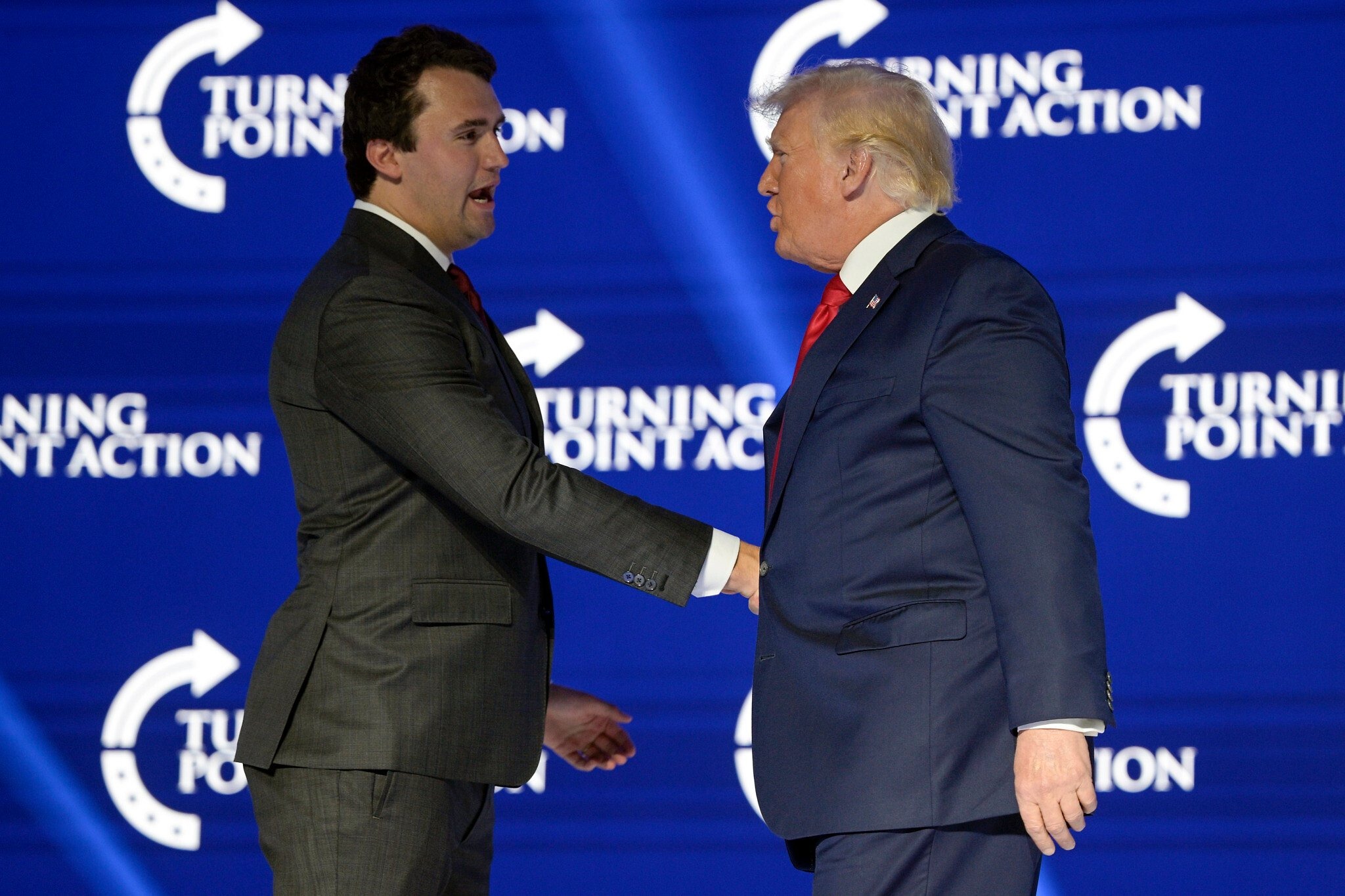
Conservative media commentator and supporter of President Donald Trump, Charlie Kirk, was shot and killed yesterday while speaking at an event at Utah Valley University.
Footage of the shooting, which spread rapidly on social media, shows Kirk being struck by a bullet in the neck.
Kirk died a short time after being taken to the hospital. Later in the evening, law enforcement announced that a suspect had been taken into custody but was subsequently released. Authorities have not yet stated any motive.
Trump announced the death of the 31-year-old Kirk on social media and called for flags to be flown at half-staff nationwide. In a video posted on his Truth Social account, the President said, “For years, radical leftists have been comparing great Americans like Charlie to Nazis and the world’s worst murderers and criminals. This type of rhetoric is directly responsible for the terrorism we are seeing in our country today.”
While Kirk was still in the hospital, JD Vance told his followers on X to “pray,” adding that Kirk was “a truly good man and a young father.”
Israeli Prime Minister Benjamin Netanyahu also posted a tweet stating his “prayers are with Charlie Kirk.” Netanyahu later added, “Charlie Kirk was murdered because he spoke the truth and defended freedom. A courageous friend of Israel, Kirk fought against lies and stood tall to defend Judeo-Christian civilization. I spoke with him just two weeks ago and invited him to Israel. Sadly, that visit will not happen.”
Aleksandr Dugin claimed that “Soros” was behind the shooting. Right-wing Israeli Minister of National Security Itamar Ben-Gvir wrote, “The collaboration between the global left and radical Islam is the greatest danger to humanity today. Charlie Kirk saw this danger and warned against it. But the bullets of a vile assassin struck him down. Thank you, Charlie, for your support for Israel and your fight for a better world.”
Many far-right influencers and Republican officials also alleged that “leftists” carried out the attack. In some extremist groups, members called for civil war and violent revenge. Influencer and conservative Alex Jones declared on his live Infowars broadcast, “This is war, this is war, this is war.”
Stewart Rhodes, founder of the Oath Keepers, whose seditious conspiracy prison sentence was commuted by Trump earlier this year in connection with the January 6, 2021, Capitol riot, announced on Infowars that it was time to reactivate his militia group to provide public security for figures like Kirk.
Rhodes then called on Trump to “do the right thing, the necessary thing” and “invoke the Insurrection Act” following the shooting.
“You must declare that the left in this country is in open rebellion against US law, inciting insurrection, aiding and abetting an invasion, and obstructing the enforcement of federal laws,” Rhodes said.
Elon Musk of X wrote, “The Left is the party of murder,” and then quote-tweeted a post blaming the “leftist mainstream media and figures like Gavin Newsom” for radicalizing people against right-wing figures like Kirk, adding, “Exactly.”
Figures like Andrew Tate began posting “civil war” themed content on social media.
Other prominent political figures from across the ideological spectrum, including Barack Obama, Joe Biden, and Kamala Harris, also condemned the shooting and political violence.
In 2012, at just eighteen years old, Kirk founded Turning Point USA, a right-wing conservative “non-profit organization” focused on young people. A key player in Republican politics and the Make America Great Again (MAGA) movement, Kirk’s influence was noted by New Yorker reporter Antonia Hitchens, who wrote, “As a reporter, I have met countless people who say they owe their political engagement—their commitment to the country—to Turning Point.”
A 2022 New York Times report seems to confirm this impact. While JD Vance began his career as an anti-Trumper, his election as a senator from Ohio in the midterms and his integration into the MAGA movement were facilitated by figures including Palantir founder Peter Thiel and Charlie Kirk, who introduced Vance to Trump advisor Andy Surabian. In his victory speech after winning the senatorship, JD Vance thanked Donald Trump and Donald Trump Jr., as well as Charlie Kirk and Tucker Carlson.
Hitchens points out that in the 2024 election, Kirk’s organization’s affiliate, Turning Point Action, played a major role by going door-to-door in Arizona and other swing states to gather Republican votes. Through its Political Action Committee (PAC), Turning Point also raised significant funds for Trump.
Furthermore, it was reported last fall that Kirk was one of a handful of Trump loyalists tasked with conducting “loyalty tests” for candidates to be appointed to senior positions at the Pentagon and intelligence agencies.
Kirk was also one of the loyalists President Trump appointed to the governing boards of US military academies. Kirk was appointed to the Board of Visitors of the Air Force Academy, a board responsible for reviewing the academy’s curriculum and instruction.
Kirk’s appointment is considered particularly ironic because, after graduating from Wheeling High School in Chicago in 2012, he was rejected by the West Point Military Academy, a rejection that spurred him toward the right-wing movement he now leads. Kirk claimed he was rejected from West Point because a “far less qualified candidate of a different gender and different persuasion” was chosen instead.
According to earlier profiles, Kirk’s father was an architect with his own firm, designing and building “middle-class luxury homes,” while his mother was a trader at the Chicago Mercantile Exchange.
It appears that the 2008 crisis and the subsequent federal government bailout of banks significantly impacted Kirk’s family business and his later development.
Objecting to government intervention in the economy, Kirk began to focus on issues such as Reaganomics, the works of free-market guru Milton Friedman, and gun rights.
By the time Kirk was a senior in high school, the Tea Party was on the rise. In a 2016 study, Stanford sociologist Robb Willer showed that the rise of the Tea Party was directly linked to the “relative ‘racial status’ of whites in the United States,” along with the election of Obama and the economic trends of 2008.
Indeed, before his death, Kirk participated in a Jubilee YouTube channel program titled Can 25 liberal college students beat 1 conservative?, where he attempted to “defeat” “woke” university students and claimed that Black people lived better during the eras of slavery and segregation.
As a high school senior, Kirk began attending meetings and associating with right-wing political activists like 71-year-old Bill Montgomery, who would help Kirk establish Turning Point USA a few months later.
Also during his senior year, Kirk wrote an opinion piece for Breitbart, which led to an interview on Fox News.
Oscillating between white nationalism and Christian nationalism, Kirk and TPUSA declared just a few months after the January 6, 2021, Capitol riot that they would no longer focus on “fiscal responsibility, free markets, and capitalism through non-partisan debate, dialogue, and discussion.” Instead, they defined a new mission for themselves:
“To empower conscious civic and cultural engagement rooted in the spirit of American Exceptionalism and positive action. Turning Point USA guides citizens in developing knowledge, skills, values, and motivation, enabling them to meaningfully participate in their communities to restore traditional American values such as patriotism, respect for life, liberty, family, and fiscal responsibility.”
In its mission statement filed with its 2023 tax declaration, TPUSA Faith defined its goal as “a movement launched to resist secular totalitarianism in America, remove wokeness from the church, inspire the rise of strong churches, and awaken believers to their biblical responsibility to fight for freedom.”
For the year ending June 30, 2023, TPUSA Faith’s expenses totaled over $13 million, and the organization “coordinated” with 2,400 churches and 6,000 pastors, participating in summits and roundtable meetings targeting these congregations and clergy.

An evangelical Christian, Kirk was openly pro-Israel and frequently debated the Gaza invasion with university students and others. Turning Point USA also maintained ties with pro-Israel organizations and regularly featured pro-Israel speakers at its conferences.
Kirk himself had traveled to Israel and praised Trump’s policies toward the country, including the 2018 relocation of the US embassy to Jerusalem.
Describing his visits to Israel as “eye-opening,” Kirk addressed a crowd at a bar in Jerusalem during his second trip, saying, “I am very pro-Israel, I am an evangelical Christian, a conservative, a Trump supporter, a Republican, and I have defended Israel my entire life.”
In his discussions on Israel and other topics, Kirk sometimes faced criticism for “veering into antisemitism.” In October 2023, just days after the Al-Aqsa Flood operation, Kirk sparked controversy by criticizing Jewish philanthropic donations to American universities as “subsidizing their own destruction by supporting institutions that cultivate antisemites and support genocidal murderers.”
Weeks later on his program, The Charlie Kirk Show, he also stated that Jews control “not just the universities, but the non-profits, the movies, Hollywood, everything.”
The following month, after Elon Musk replied “You have said the actual truth” to a user referencing the “Great Replacement” theory, Kirk defended Musk on his show, writing that Jews were beginning to realize that immigrants coming to the US “don’t like them very much.”
On his program, Kirk said, “Jewish communities are promoting against whites the same kind of hatred they claim they want people to stop using against them,” and later argued that “the philosophical basis of anti-whiteness has been largely funded by Jewish donors in the country.”
Kirk’s concerns about the erosion of the status of white Americans were central to his politics. He also leveled harsh criticisms against what he called “Marxism,” efforts to restrict gun rights, and transgender individuals. At the time he was shot, he was answering a question about transgender people.
In April 2024, as pro-Palestinian protests against Israel spread across American campuses, Kirk supported harsh Republican measures and called on them to also confront what he termed “institutional hatred against whites.”
Kirk had stated, “I really like the unity the Republican Party is showing against Jewish hatred. There is no place for it in America. Can we get the same unity on institutional hatred against whites on campus? This is an even more entrenched problem than antisemitism.”
Kirk also frequently defended Israel’s ongoing invasion of Gaza. In July, he shared a segment from his program on X, defending the state of Israel “against allegations of starving Palestinians.”









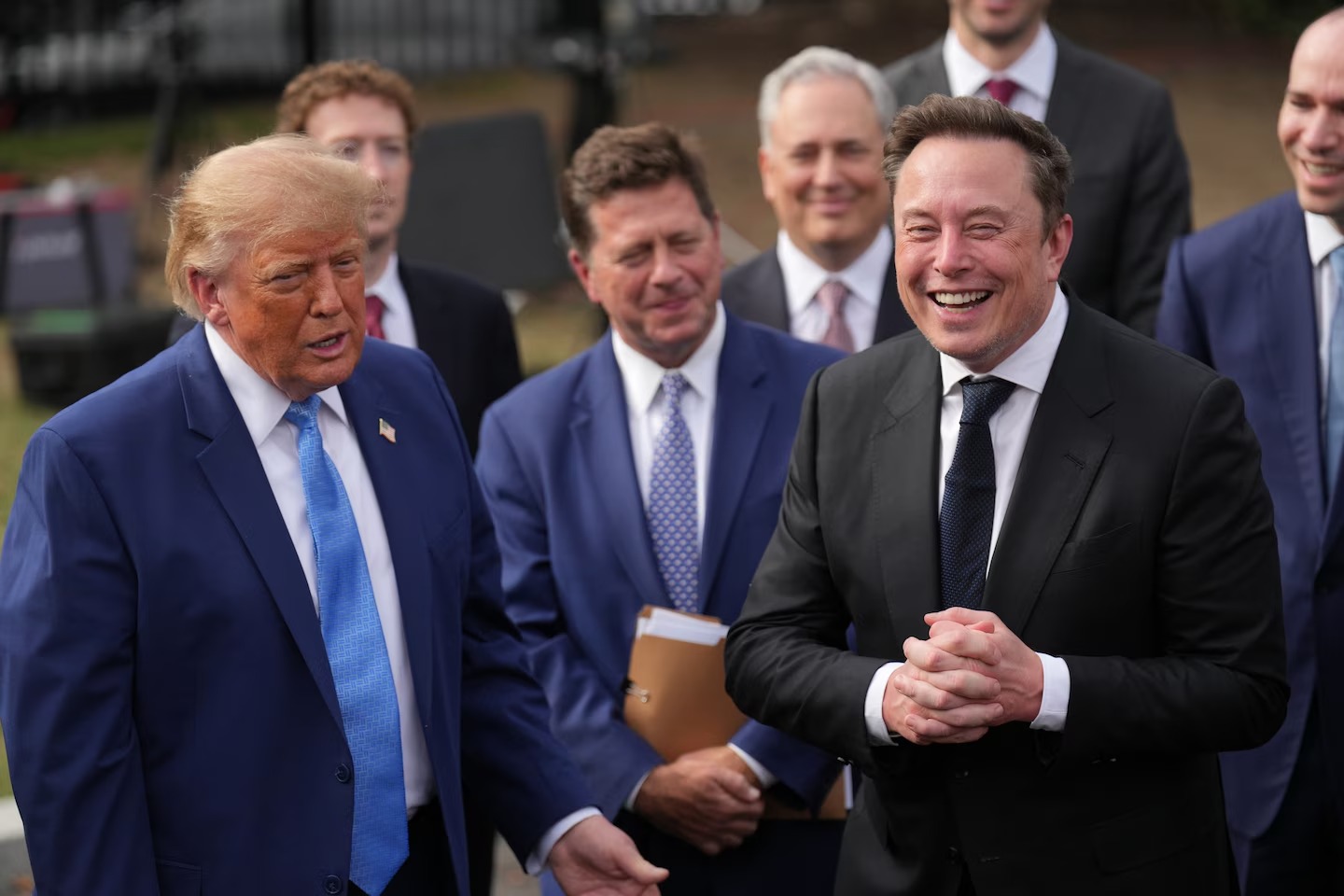
The world’s richest man, Elon Musk, has assumed the co-directorship of a Pentagon initiative focused on the future of warfare, known as “Project Meridian”.
Musk’s new role was announced by US Secretary of Defence Pete Hegseth.
Musk, who has long expressed his conviction that wars will ultimately be fought with autonomous unmanned aerial vehicles, will advise the project as co-director alongside Palmer Luckey, founder of defence start-up Anduril, and former Speaker of the House of Representatives Newt Gingrich.
In a memorandum issued at the Pentagon, Hegseth stated that the group would “examine the battlefields of the future” and “determine which weapons and technologies warfighters must employ to achieve dominance in these environments.”
During his “State of the Force” address at Marine Corps Base Quantico, Hegseth said:
“The best predictors of future conflict do not reside exclusively within the Pentagon. Obvious biases and risks arise when we task ourselves with both framing the questions and answering them.”
Hegseth stated that this initiative would commence immediately and that, following his address, he would convene with Musk, Luckey, and Gingrich at a secure location.
Project Meridian will have 120 days to “ruthlessly map the trajectory of wars, domains, and technologies”, a process that will culminate in the public disclosure of its findings alongside a classified annex.
Hegseth outlined an expansive mandate extending “from beneath the surface of the Earth to beyond the Moon.”
Rather than formulating new military strategies or policies, the panel will seek to identify “the domains we must seize and the capabilities we must master”, focusing on the effort to “discover, develop, and field” the weapons and systems that next-generation American troops may require.
The group is expected to submit a report containing recommendations to him by the end of January.
In 2024, Musk remarked: “Future wars will be entirely about drones and hypersonic missiles.” This was merely one of several similar statements he has made in recent years.
For Musk, whose oversight role at the Department of Government Efficiency (DOGE) ended in turmoil and escalated into a dispute with President Donald Trump over Trump’s spending bill, this appointment marks his formal return to government in an official capacity.
Musk and Trump ultimately reconciled, and Musk attended a meeting on artificial intelligence safety at the White House this week alongside other technology leaders.
Meridian forms part of a broader push announced by Hegseth to restructure the military around autonomous warfare and rapidly advancing technologies.
Hegseth announced the establishment of the Autonomous Warfare Command (AUTOWARCOM), a new four-star combatant command endowed with what he termed “service-like authorities” to scale autonomous and robotic capabilities across the joint force.
The Department of War will also begin phasing in new occupational frameworks across all military branches to establish specialised career tracks for what Hegseth described as “the next generation of autonomous warfighters.”
“We should have conceived an Autonomous Warfare Command a decade ago,” Hegseth said, explaining that Meridian aims to gaze far enough ahead to enable the military to anticipate the next technological shift rather than lag behind.

A cyberattack targeting the US Department of War’s personnel database has resulted in the leak of personal information belonging to approximately 3 million people.
Speaking to ABC News, a Pentagon official stated that the system accessed by unauthorised individuals contained the records of 2,760,000 living persons and 294,000 deceased individuals.
The Military Times portal, which first broke the news, had reported the number of affected individuals as approximately 4 million based on two sources. The Pentagon official subsequently conveyed different figures to ABC News.
The leak encompasses Social Security numbers and duty information belonging to military personnel and civilian employees. According to an official notification examined by Military Times, the compromised records may also include names, dates of birth, contact information, sex, race, and military occupational specialties.
The unauthorised access to the information system of the Defense Manpower Data Center (DMDC) lasted for approximately nine months, between October 2025 and 16 July 2026.
ABC News reported that the access in question was obtained by a small number of third-party users. The vulnerability was closed after it was identified.
The DMDC is considered one of the Pentagon’s primary personnel records centres. More than 60 million records belonging to active-duty personnel, reservists, civilian staff, contractors, retirees, veterans, and military family members are stored at the centre.
The Pentagon has not detected any evidence that the leaked data has been misused. Military Times reported that affected individuals were offered identity restoration and credit history monitoring services.
A similar data breach previously occurred on the Federal Bureau of Investigation’s (FBI) recruitment website, FBIJobs.gov. According to information obtained by ABC News from internal communications and sources, the FBI is considering the possibility that data belonging to its entire staff may have been stolen.
The New York Times (NYT) examined a portion of the stolen FBI records. Home addresses, telephone numbers, official email addresses, Social Security numbers, dates of birth, hiring dates, and emergency contact details for relatives were identified within these documents.
The database also contained unit designations, duty roles, and information regarding the supervisors of personnel. Some records revealed assignments within counterintelligence and counternarcotics units, as well as departments examining threats originating from Russia, China, and Iran.
Ciaran Martin, the former head of the UK National Cyber Security Centre, noted that this type of breach could directly affect the FBI’s operational capabilities.
The hacker group known as ShinyHunters had announced that it had seized medical data and security clearance records alongside files belonging to tens of thousands of active and former FBI employees.
Experts evaluating the matter for the NYT warned that this information could be used to track agents, threaten their families, or compile dossiers by foreign intelligence services.
The ShinyHunters group initially threatened to release the data unless the bureau withdrew an advisory it had published concerning the group’s attack methods.
The group later asserted that it had never intended to leak the information and characterised its action as an advertising campaign.
In a report published in May, Reuters noted that the personal data of US military personnel had been used in surveillance and attack preparations.
According to the agency, Washington’s adversaries gained the ability to pinpoint areas where troops were concentrated by exploiting commercially available location data. US lawmakers at the time criticised the Pentagon for failing to adequately protect the personal data of military personnel.

US President Donald Trump’s trade policy and the Washington administration’s push to increase Venezuelan oil imports are prompting Canada to diversify its energy exports.
According to a report by The Wall Street Journal, recent developments are accelerating Canada’s development of new oil and natural gas projects.
Steps taken by the Ottawa administration, which aspires to become an energy superpower, are seen as potentially strengthening the country’s position in global markets.
In Canada, the world’s fourth-largest oil producer and fifth-largest natural gas producer, the energy sector accounts for approximately one-fifth of total exports.
Almost all of the country’s natural gas exports and approximately 90% of its oil exports go to the US.
The newspaper writes that the trade war with Washington and the atmosphere of confrontation entered into with Iran have heightened Canada’s desire to turn to alternative markets outside the US.
Officials plan to increase shipments of oil and liquefied natural gas (LNG) to European and Asian markets.
Accelerating infrastructure investments in line with this target, Canada is also shortening approval processes. The government is prioritising the construction of an oil pipeline extending specifically to the west coast.
According to the newspaper’s estimate, if major pipeline projects are implemented, Canada’s daily oil transport capacity could rise to 6.8 million barrels by 2034.
Routes heading to the west coast will make up approximately 30% of this capacity.
The Canadian administration is simultaneously advancing LNG export projects. According to the report, these investments could allow approximately 55% of Canadian natural gas exports to be directed to markets outside the US by the early or mid-2030s.
While the government expands tax incentives for the oil and natural gas sector, the province of Alberta also plans to overhaul its royalty system.
However, the newspaper notes that implementing the new projects requires heavy investment, and the process depends on the final decisions taken by producers as well as the completion of regulatory approval processes.
The expansion of pipeline and LNG infrastructure could gradually reduce Canada’s dependence on the US market while raising its share in the global energy market.
The Canadian Prime Minister’s demand to reduce reliance on the US market had also come to the fore in July.
According to Carney’s statement, the province of Alberta submitted a plan for a pipeline spanning more than 1,000 kilometres to the west coast of British Columbia.
Targeted for completion by September 2027, the line will reach the Pacific coast by following an existing corridor through the mountainous terrain.
This shift in energy comes at a time of strained relations with the US. Donald Trump said that if Canada obtains associate member status in the European Union, he could halt trade with Europe in certain sectors and impose high tariffs.
As reported by the Associated Press, Trump characterised such a rapprochement as a “potentially hostile act”.
European Commission President Ursula von der Leyen had proposed opening the path for Canada to become the EU’s first associate member. The terms of this associate membership status, which is not defined in EU treaties, are not yet clear and require the approval of member states to enter into force.
Canada, which does not seek full membership, aims for maximum rapprochement with the EU.
Following Trump’s return to the White House, relations between Washington and Ottawa deteriorated. The Trump administration, which repeatedly called on Canada to become the “51st state” of the US, introduced additional tariffs.
In July, the US began imposing 50% tariffs on certain Canadian-origin goods.

Germany expands North Sea military ports and plans new naval base

Musk appointed co-director of Pentagon future warfare initiative

US waives human rights terms on $320m military aid to Egypt

Putin says Russia did not start war and warns of nuclear risks

European nations unite against US pressure over strategic oil stocks
-

 Europe5 days ago
European unions urge governments to scrap all Palantir deals
-
 Diplomacy5 days ago
East-West Forum in Istanbul highlights irreversible shift to multipolarity
-

 Europe1 week ago
Emmanuel Todd says West faces collapse amid Ukraine and Iran crises
-

 Europe1 week ago
European intelligence chiefs divide over risk of Russian attack
-

 Diplomacy1 week ago
East-West Forum in Istanbul to debate multipolarity and global order
-

 Middle East1 week ago
Sharaa says 7 October must not shape Israel policy on Syria
-
 America1 week ago
Republican support for Trump’s war with Iran drops sharply in polls
-

 Middle East1 week ago
Palestinian factions confront legitimacy crisis at Istanbul talks
