
East Mediterranean
Oil rich Libyan people are on the edge because of economic crisis

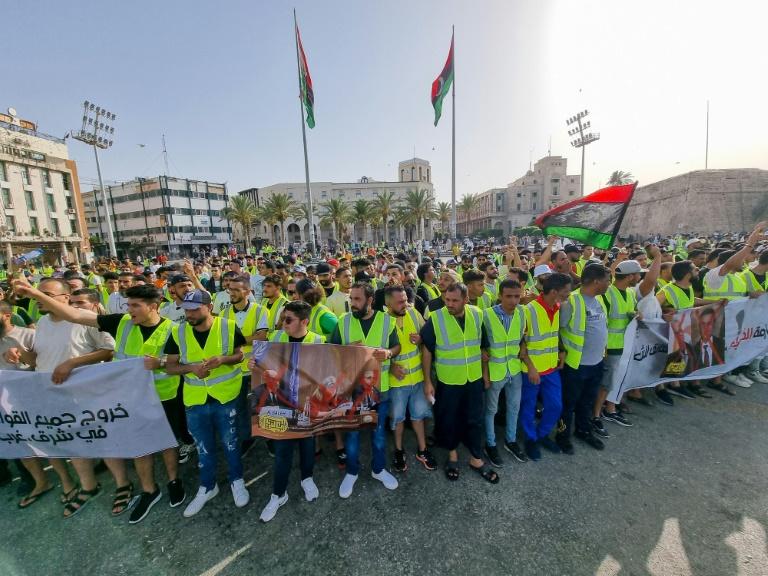
While the Prime Minister of the Government of National Unity Abdülhamid Dibeybe and the Head of the Government of Stability, Fathi Bashagha, elected by the House of Representatives, are fighting for power, Libyans take to the streets due to the long-lasting power cuts, the inadequacy of basic services and rising prices.
Power outages, which lasted more than 15 hours a day and became routine in many parts of Libya, became a more important problem as the summer temperatures increased. In the country where youth unemployment exceeds 50 percent, food prices, especially bread, are constantly increasing. In addition to poor living conditions, the closure of the country’s largest oil fields as political leverage in early April increased the unrest. In the face of this picture, the last straw was that the two political poles based in Tripoli and Benghazi left the table where they sat at the end of June without an agreement for a constitutional framework and roadmap to the elections.
A group organized through social media called for demonstrations and civil disobedience in all cities of Libya on July 1 with the slogan “Youth Revolution”. Protests were held at many points in Benghazi and other eastern and southern cities, especially in the capital Tripoli, demanding that the legislative and executive organs be abolished, a state of emergency be declared and elections be held as soon as possible in the country. A group of activists raided the House of Representatives, setting parts of the building on fire and releasing classified documents they had obtained from the House. The documents revealed that 69 million Libyan dinars ($ 14 million) were spent on members of parliament for personal expenses such as food, drink and oil purchased for personal cars while the public was in the grip of the economic crisis. While the protests may seem spontaneous, this highlights the potential for growing unrest to enhance violence.
Political division
In Libya, where there are two power centers based in Tripoli and Benghazi, political and military wings have been holding reconciliation meetings for two years under the auspices of the United Nations (UN). During the political talks in Geneva, it was decided to hold the presidential and parliamentary elections in the country on December 24th, 2021, but the elections could not be held on the scheduled date. The House of Representatives in Tobruk elected Fathi Bashagha as prime minister on February 10th, when most of the deputies in the west of the country did not attend, on the grounds that the mandate of the current National Unity Government (UBH) expired on December 24th, 2021, and on March 1st, gave a vote of confidence to the Bashagha government. Prime Minister of UBH, Abdulhamid Dibeybe, accused the House of Representatives of deviating from the roadmap determined in the Geneva Agreement, and said that he was at his post and that he would hand over the task only to an elected government.
The last attempt at reconciliation between the two poles was held in June. The negotiations between the Libyan State Supreme Council and the House of Representatives, which were held under the leadership of the UN in Cairo, the capital of Egypt, did not yield any results. There was no consensus in the meetings held in Geneva on 28-30 June with the President of the State Supreme Council Khalid al-Mishri and the TM President Akile Salih and the delegations with them, and Fathi Bashagha, who was elected Prime Minister by Tobruk, also threatened to enter the capital Tripoli by force. Having raised the same threat before, Bashagha has not been able to go to Tripoli and take over the government until today.
Crashed
The internal conflicts that have been going on since 2011, triggered by foreign powers cost Libya $576 billion (according to the UN’s 2020 report), and destroyed Libya’s socioeconomic structure. The closure of oil fields, which account for more than 90 percent of state revenues, for political purposes led the country to spend without being able to save, and the state’s coffers were quickly emptied. The devaluation decision of the Central Bank of Libya, implemented in January 2021, reduced the purchasing power by three and a half times. The depreciation of the Libyan dinar rapidly increased the price of major consumer goods, which were imported, and the cost of fixing the problems in the country increased.
The reduction of oil production as a political trump in Africa’s richest oil country, the fact that the names of Libyan politicians from both wings cannot reach a political consensus and are frequently involved in bribery and corruption scandals create unease among the people struggling with the economic crisis. It is also known that behind the scenes of the current division lies the dispute over who will control the Libyan budget. The point reached today is a complete disaster; UBH in Tripoli controls the Central Bank, that is, state revenues, but has no official budget. The Bashagha government, elected by the House of Representatives, which has the power to issue a budget, has an official budget though no revenue.
It is alleged that UBH, which has not had an official budget since 2019, is trying to meet its cash needs with short-term tactics by liquidating state-owned cash-rich companies. It is difficult to predict the long-term damage of these temporary solutions, which alleviate the cost of the crisis in the short term. Despite its rich natural resources and great manpower potential, Libya is now exhausted by political conflicts, restless and very impoverished compared to 11 years ago.











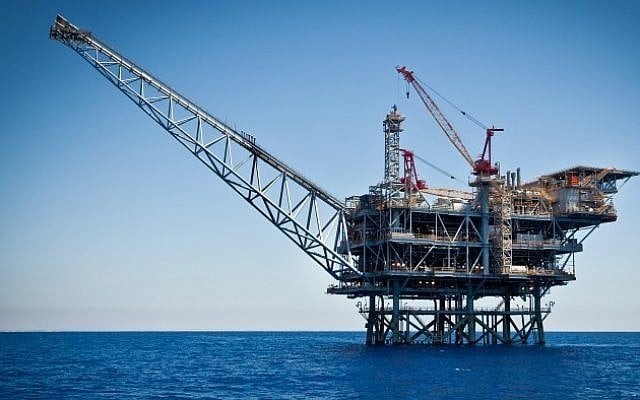
Israeli energy company Energean announced on November 3 that it had signed an agreement to supply natural gas to the Greek Cypriot Administration of Southern Cyprus (GCASC).
With this agreement, the GCASC will become the first European Union country to import gas from Tel Aviv.
Energean, which operates Israel’s Karish, Tanin, and Katlan fields, has signed a memorandum of understanding with the Cyprus-based company Cyfield to supply gas to a power generation plant in the Mari region of Larnaca.
New pipeline proposal from Israel to Cyprus
As part of the agreement, Energean has also proposed the construction of a new pipeline to export natural gas from Israel to the GCASC.
According to the proposal submitted to the Israeli and GCASC governments, Energean will design, build, and operate the subsea pipeline that will directly connect the Karish field to the GCASC.
Eli Cohen, Israel’s Minister of Energy and Infrastructure, commented on the matter, stating, “The sale of gas to Cyprus will strengthen Israel’s diplomatic position in the region and in Europe, contribute to stability and prosperity, and generate billions of shekels in revenue for the state.”
Energean CEO Mathios Rigas stated that the proposal “will reduce Cyprus’s energy isolation with direct access to natural gas from a neighboring source, supporting regional cooperation and the transition to cleaner, sustainable energy.”
Cyfield CEO George Chrysocous also said the collaboration “has the potential to change the energy future of Cyprus.”
Agreement with Egypt awaits approval
In August, the Israeli company NewMed Energy signed a $35 billion deal with Egypt to supply 130 billion cubic meters of gas from the Leviathan field by 2040.
The Leviathan field in the Mediterranean Sea has reserves of approximately 600 billion cubic meters.
Following an initial agreement for 60 billion cubic meters in 2019, the field began production in 2020 and started supplying gas to Egypt.
However, Minister Cohen and Prime Minister Benjamin Netanyahu have not yet approved this $35 billion agreement, stating that they prefer the gas to be sold on the domestic market due to current prices.
US Assistant Secretary of Energy Chris Wright canceled his visit to Israel scheduled for next week after Cohen withheld his approval.
The White House and US-based Chevron, the operator of the Leviathan field, are pressuring Israel to approve the deal.
Israel’s domestic demand concerns
Egypt imports approximately 15% to 20% of its natural gas from Israel.
A portion of this gas is liquefied at facilities in Egypt and shipped to Europe via tankers.
However, a recent increase in Egypt’s domestic consumption has negatively affected exports, leading to a sharp decline in 2025.
Meanwhile, Israel is reluctant to increase exports to Egypt due to its own growing domestic demand.
Israel’s Ministry of Finance issued a warning at the beginning of the year, stating that the country could face a natural gas deficit risk over the next 25 years due to growing domestic energy needs, which could raise electricity prices for households.
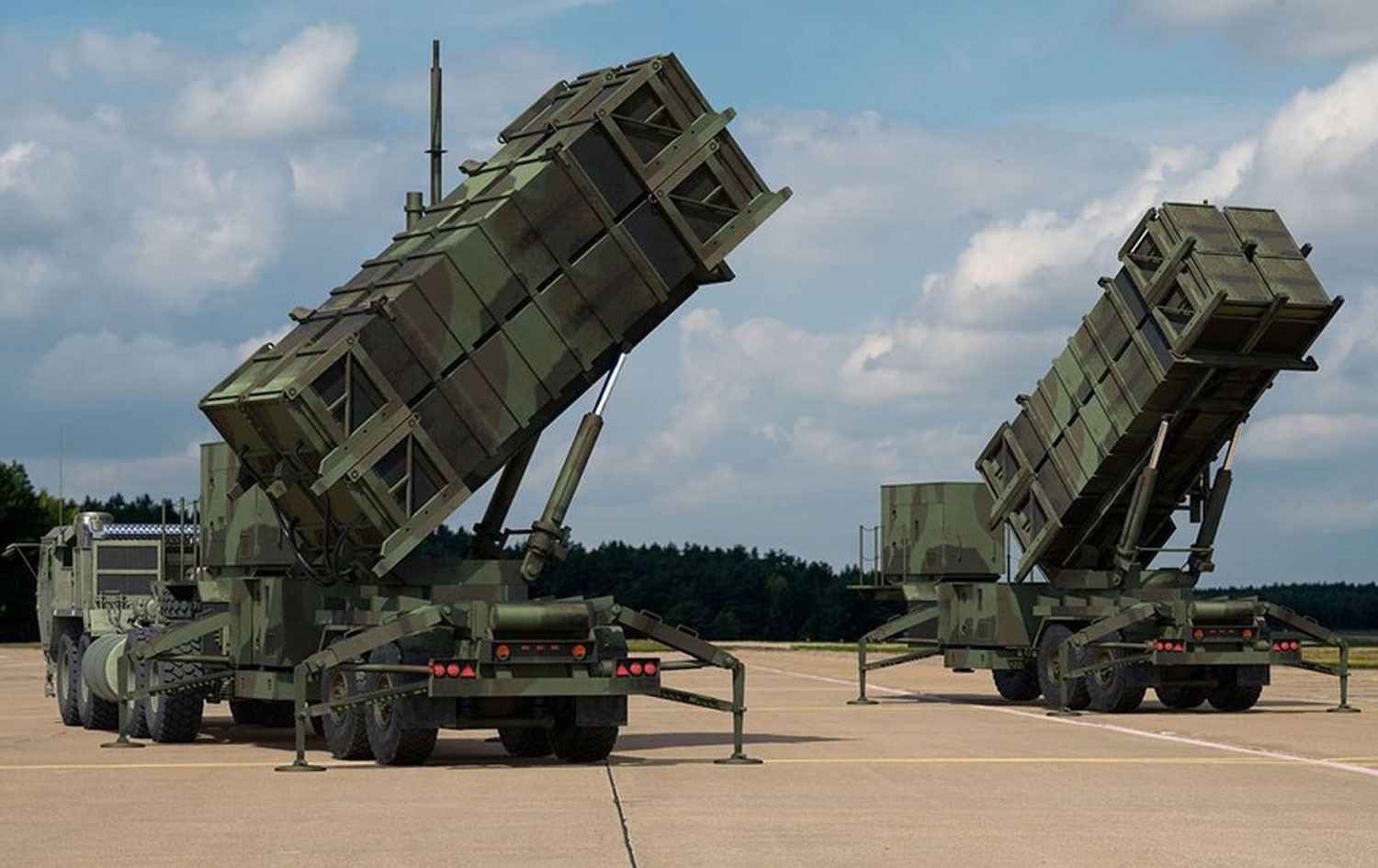
Israel delivered advanced air defense systems known as Barak MX to the Greek Cypriot administration last week. Sources familiar with the matter told Ragip Soylu of Middle East Eye that this was the third shipment to Southern Cyprus since December, amid escalating tensions with Türkiye.
In a video released on Thursday, a truck carrying parts of the Barak MX system was seen passing through the Port of Limassol. This air defense system, capable of neutralizing threats up to a range of 150 kilometers, is manufactured by Israel Aerospace Industries (IAI). The Reporter website reported that the delivery of the Barak MX has been completed and it is expected to become operational within this year.
The delivery follows an article written in July by Shay Gal, a former vice president of IAI. Gal argued that Israel should reconsider its approach to Cyprus and called for making military plans in coordination with Greece and the Greek Cypriot administration to “liberate” the northern part of the island from “Turkish forces”:
“Such an operation would neutralize Türkiye’s reinforcement forces from the mainland, eliminate air defense systems in Northern Cyprus, destroy intelligence and command centers, and ultimately restore the internationally recognized sovereignty of Cyprus by eliminating Turkish forces.”
Türkiye intervened in Cyprus in 1974 following a coup aimed at annexing the island to Greece.
There has been no official statement from Ankara regarding the newly deployed systems. However, with its 3D radars providing advanced surveillance and intelligence capabilities, the Barak MX creates an “air defense shield” with a range of up to 460 kilometers, covering a significant portion of Türkiye’s southern airspace.
In 1997, the Greek Cypriot administration’s attempt to purchase Russian-made S-300 air defense missiles led to a harsh reaction from Ankara, bringing the two sides to the brink of war. The crisis ended with the deployment of the S-300s in Greece.
Turkish defense analyst Arda Mevlütoğlu said of the Barak MX, “This system is much more dangerous than the S-300s ordered in 1997 but never used.” Mevlütoğlu emphasized that given the state of military relations between Israel and Southern Cyprus, this powerful air defense system and its radar will become a central element of Israel’s intelligence network in the Eastern Mediterranean.
According to Mevlütoğlu, thanks to its radar capabilities, the Barak MX can detect not only aerial targets but also howitzer, mortar, and rocket fire up to 100 kilometers away. This means the system poses a serious threat to both Turkish air and land assets in Cyprus and throughout the Eastern Mediterranean.
CHP Deputy Chairman and retired Rear Admiral Yankı Bağcıoğlu described the deployment of the system as a “violation of international law.” Bağcıoğlu stated, “This step will disrupt the fragile balance in the Eastern Mediterranean and Cyprus and will directly threaten Türkiye’s national security.”
Southern Cyprus’s Minister of Defense, Vasilis Palmas, stated on Tuesday that Türkiye continues to occupy the island, asserting that his government has an obligation to develop deterrent capabilities. When asked if the Barak MX was part of a defense agreement with Israel, Palmas responded, “Our decisions regarding armament are entirely within the scope of our sovereignty.”
Palmas added, “Any conflict between Israel and Türkiye does not concern us. Our primary duty is to protect ourselves.”
Turkish security sources, however, indicated that the systems are still in the testing phase at the Paphos Air Base and have not yet been put into active service. The sources added that subsequent Israeli shipments are being closely monitored.
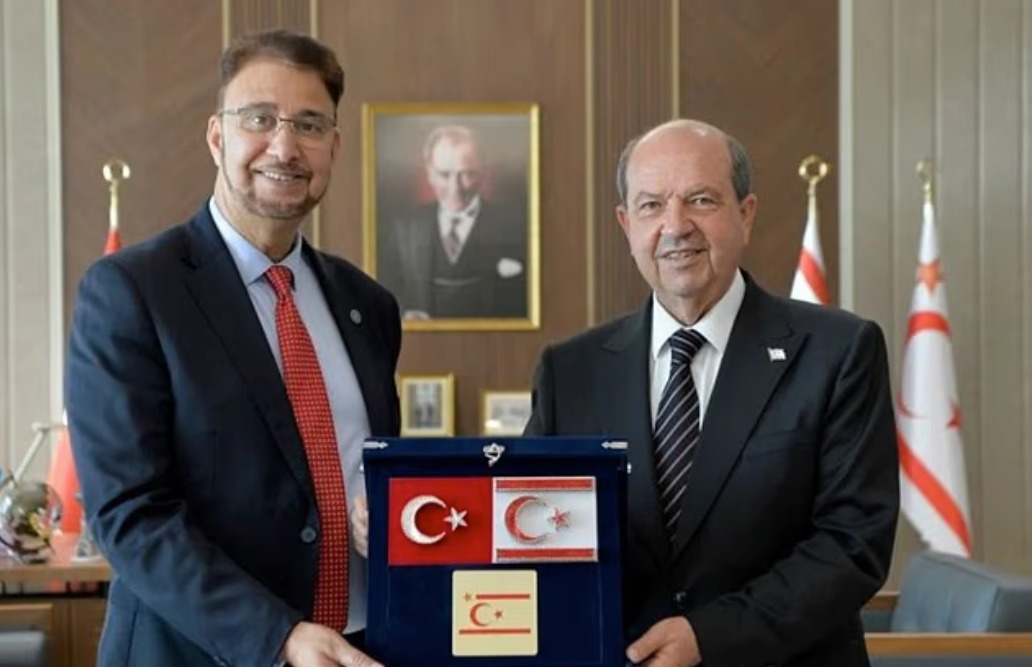
The visit of the United Kingdom’s Trade Envoy to Turkey and Member of the House of Commons, Afzal Khan, to the Turkish Republic of Northern Cyprus (TRNC) via Ercan Airport has stirred political controversy on both islands.
According to a local newspaper, Afzal Khan traveled to Northern Cyprus last week for “a series of official meetings” and met with TRNC leader Ersin Tatar.
As part of his visit, Khan is also set to receive an honorary doctorate from a university today.
The United Kingdom does not recognize the “Turkish Republic of Northern Cyprus” as an independent state.
Khan’s visit was protested by the National Federation of Cypriots in the UK, which represents over 300,000 British citizens of Cypriot origin.
The federation sent a letter to the UK government questioning the envoy’s visit to the “Turkish-occupied” areas of Cyprus and accused Khan, the Member of Parliament for Manchester Gorton, of “violating numerous international agreements.”
Describing the visit as a “clear violation” of international law and the UK’s long-standing policy, the federation demanded Khan’s removal from his post.
The Federation argued that the nature of Khan’s visit to Cyprus also violates the UK’s obligations under the 1944 Chicago Convention. They further asserted that Khan not only sabotaged the UK’s long-standing policy on the Cyprus issue but also the resolution of the Cyprus problem based on a bizonal, bicommunal federation with political equality.
In their bilateral meeting, Tatar told Khan that he wishes to pursue a “two-state solution” policy in Cyprus.
During the meeting on Wednesday, Tatar noted that Cyprus is located in a “very critical region,” adding that “Palestine, Gaza, and Israel are only 100 kilometers away from Cyprus.”
Tatar added that Cyprus has also “experienced many difficulties in the past” but “now, thanks to the presence of the Turkish army, we have been living in peace and security on the island for 51 years.”
Khan, for his part, stated that his friends of Cypriot origin living in Manchester had recommended he visit the island, saying, “That is why I am happy to be here.”
Meanwhile, Conservative MP Dame Priti Patel criticized the Labour MP, stating, “This visit undermines the credibility of the United Kingdom as a guarantor power and a neutral mediator in reconciliation negotiations. It also sends an alarming signal to British citizens of Cypriot origin, many of whom were displaced from the very areas Khan visited.”
Arguing that the Labour Party’s foreign policy “is embarrassing Britain,” the former Home Secretary asserted that this visit is “another example of the diplomatic failures” of a potential Labour government.
Patel called for Khan’s resignation and urged the government to reaffirm the UK’s long-standing position on Cyprus. She also called on them to publicly state whether the Foreign, Commonwealth & Development Office or any other department of His Majesty’s Government had prior knowledge of Khan’s visit and whether any official advice was given before it took place.
The Foreign Office, in a statement to the Cyprus News Agency (CNA), said that the visit was made in Khan’s personal capacity, not as a trade envoy, and that the government was not informed in advance.
A government spokesperson said, “The visit to the north of Cyprus was undertaken in a personal capacity. There is no change in the government’s long-standing position on the so-called ‘Turkish Republic of Northern Cyprus’.”

Big Tech profits from AI extinction hype, Ken Klippenstein says

Israel military weighs legal steps against Gaza documentary makers

Finkelstein says US campus clampdown has surpassed McCarthyism

DeepSeek engineer warns AI will lead to communism or Cyberpunk

Israel pledges full Greek control over Achilles’ Shield source code
-

 Europe2 weeks ago
Germany’s CDU drafts tougher citizenship rules to counter AfD
-
 Diplomacy2 weeks ago
Geoffrey Roberts sees Ukraine war concluding within coming months
-

 Diplomacy2 weeks ago
Pope Francis accused Opus Dei of mafia tactics over Spanish shrine
-
 Diplomacy2 weeks ago
US expands military footprint in Somalia with new Bosaso base
-

 America2 weeks ago
Milei hardens Falklands stance with oil sanctions and defence push
-
 Middle East2 weeks ago
Ben Gvir reveals plan to expel majority of Gaza population
-

 America2 weeks ago
Pentagon launches mass polygraph inquiry over munitions leaks
-
 Asia2 weeks ago
China leads $54bn capital injection into state banks and insurers
