
Europe
EU revives ‘military Schengen’ plan to speed up troop and equipment movement

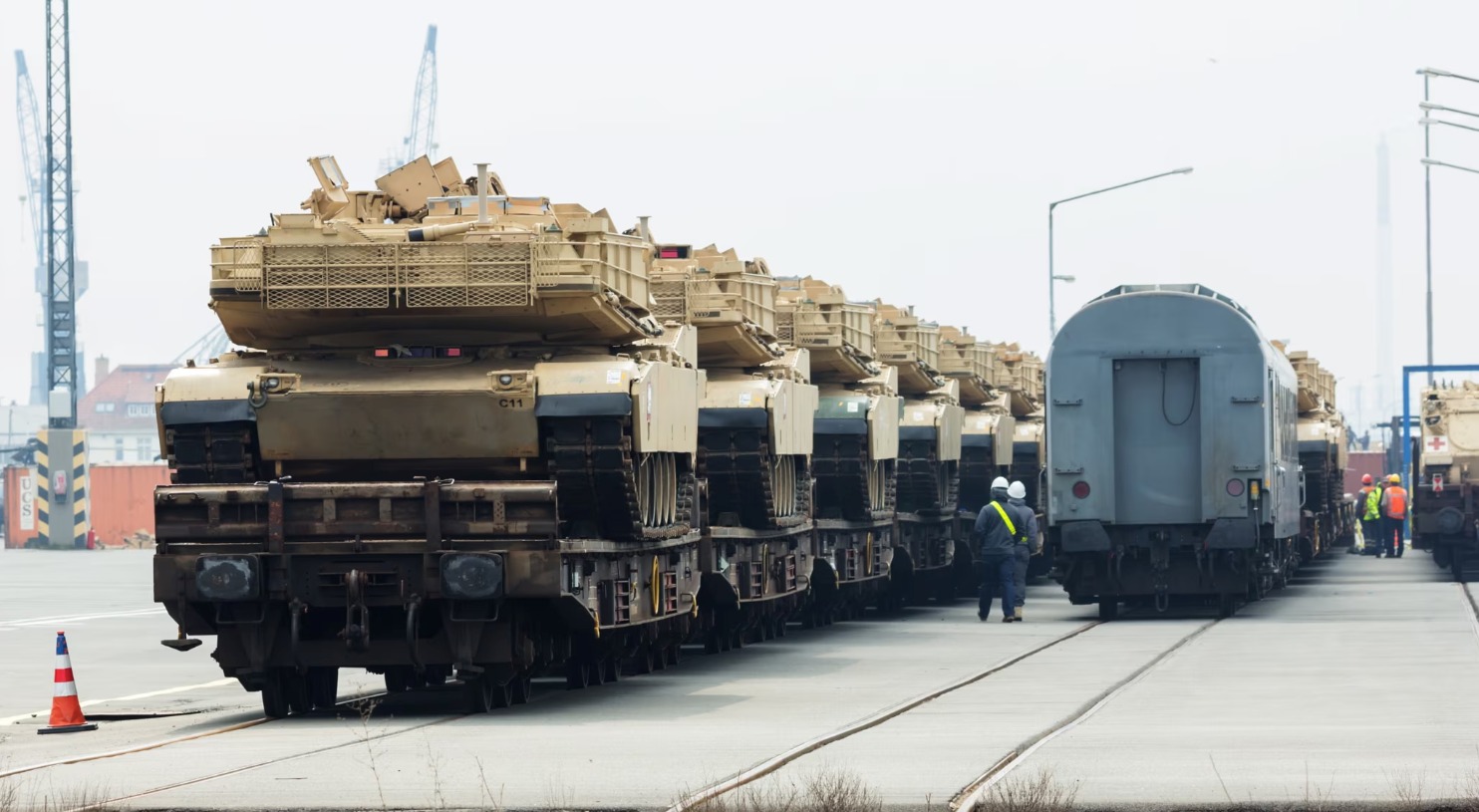
The EU is once again preparing for a “military Schengen.” A “military Schengen” zone within the EU, where weapons and soldiers can move as freely as civilians, has been under discussion for years.
On November 19, the European Commission will present its latest initiative to achieve this goal by the end of the decade.
A preliminary draft seen by RFE/RL outlines two paths to accomplish this: first, spending cash on hundreds of “bottlenecks” across the continent—such as railway lines, ports, and bridges—which are considered crucial for integrating EU candidates Ukraine and Moldova into the EU’s military transport structures.
Second, it involves removing bureaucratic obstacles to ensure that differing national laws and red tape do not hinder the rapid and easy movement of military assets from one EU country to another.
In 2017, the idea of a “military Schengen” became a priority, and the European Commission prepared action plans in 2018, 2022, and 2024, but very little progress has been made.
EU diplomats, speaking to RFE/RL on condition of anonymity, said the minimal progress was not for lack of trying. They noted that the topic often tops the agenda when EU-NATO cooperation is discussed, but neither organization has ever truly embraced it.
NATO has long hoped that the EU would allocate more legislative authority and cash resources for military mobility. The war in Ukraine has further increased the urgency on all defense-related matters.
At the same time, there is frustration in the EU that NATO is too focused on spending money on expensive military equipment and far less on how to transport that equipment and make it available to other alliance members.
NATO’s goal of dedicating 3.5% of gross domestic product (GDP) to military equipment and 1.5% to non-military investments like military mobility by 2035 is a step toward partially resolving this issue.
However, as highlighted in the European Commission document, this matter remains largely under the jurisdiction of individual countries. The document states, “While member states can freely decide whether to allow foreign armed forces to pass through their territory under the scope of national security and defense, the EU must have a military mobility framework that balances military and civilian needs.”
The goal for the European Commission, whose term ends in 2029, is emphasized as “creating an EU-wide Military Mobility Area by the end of 2027 as a first step to gradually achieve a ‘Military Schengen’ in the dimensions of regulation, infrastructure, and capabilities.”
The question is whether the cash will be available this time. The last multiannual EU budget (2021-2027) allocated approximately €1.7 billion ($2 billion) for dual-use civil/military transport infrastructure, focusing on 95 projects in 21 countries. But according to the document, “the demand for EU funds significantly exceeded the available resources, and all calls were oversubscribed.”
Therefore, for the next long-term budget (2028-2034), the European Commission has proposed €17.65 billion for dual-use transport infrastructure, focusing on 500 “key projects” where military equipment needs to be moved more quickly and smoothly.
But there are doubts about whether the plan will work. Notably, member states always dilute the Commission’s initial proposal, preferring to direct EU funds to “vote-winning” sectors like agriculture, fisheries, and other social spending.
Railways are the most heavily funded mode of transport for military mobility, a trend that is likely to continue. Earlier this year, the EU agreed on four priority multimodal military mobility corridors: north, south, east, and central.
The northern corridor, connecting the Netherlands to Germany and Poland and then on to Ukraine, is the most developed.
The Commission’s document highlights the 22-kilometer railway line with a European-standard gauge that opened in September, connecting Western Ukraine with Slovakia and the rest of Central Europe.
The document also states that “preparatory work is underway for the use of the European nominal standard rail gauge on the European Transport Corridors connecting Moldova and Ukraine to EU member states.”
The idea is that the entire EU, including candidate countries, will operate with the same railway gauge in the future.
The European Commission is also willing to allocate funds for other items vital to military mobility, such as large-scale cargo air transport, dual-use ferries, and flatbed wagons for trains to carry heavy military equipment like rockets and tanks.
But the biggest change the EU can make is legislative, to facilitate the movement of soldiers and equipment. It can take up to 45 days to obtain permission for a military transport to pass from one EU country to another.
The target set by Brussels is three days. Surprisingly, the EU’s “harmonized” rules for transporting dangerous goods do not apply to military shipments, which often means that temporary arrangements must be negotiated.
This is set to change, and the European Commission plans to demand even more.
Another proposal is that permission granted for moving military equipment between member states will no longer need to be renewed annually. Permits will remain valid until canceled, and non-EU countries could also be part of this change.
The key to this will be the “European Military Mobility Enhanced Response System (EMERS),” which can be activated within 48 hours upon the proposal of the European Commission or an EU member state.
Once this system is activated during a potential military emergency, cross-border military transport will only require prior notification of the movement. Most standard procedures, except for customs formalities, could be bypassed.
All these proposals will require consensus among EU member states, and in many cases, unanimity will be necessary.






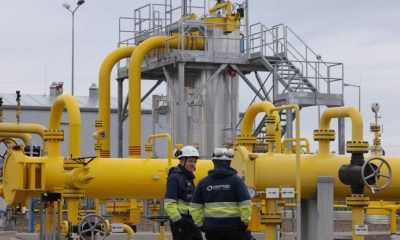

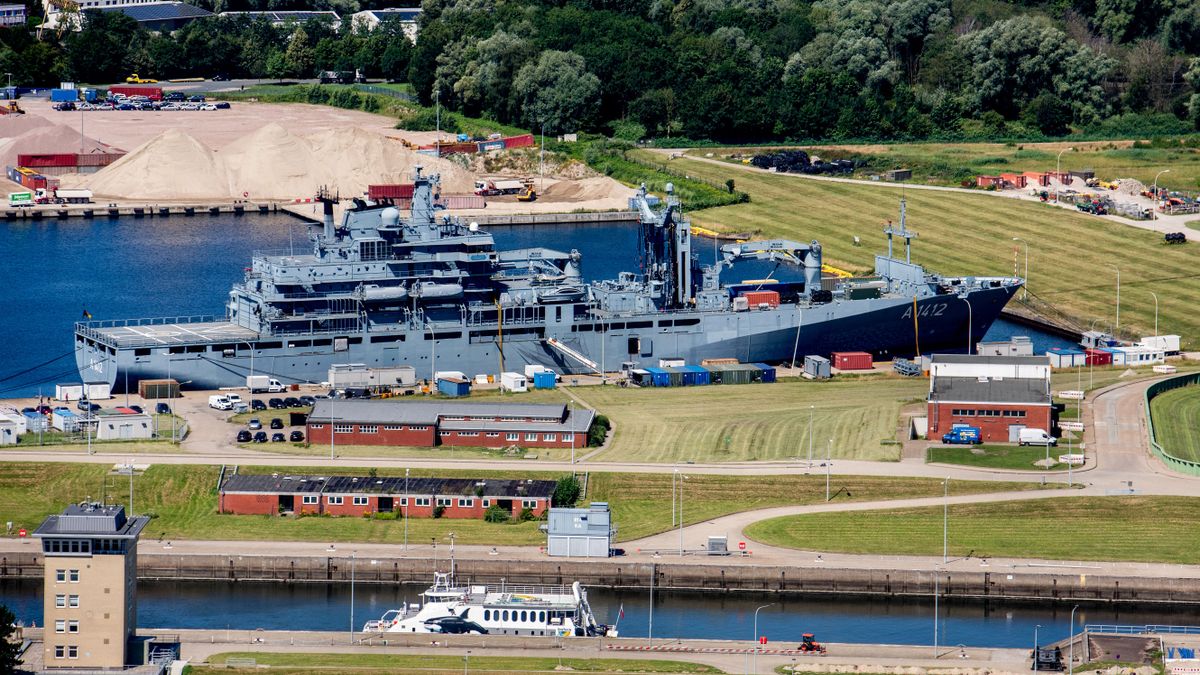
With the transformation of the port of Bremerhaven into a high-capacity military hub and the prospective establishment of a fifth German naval base in Emden, the federal government is accelerating the militarisation of the German coastline.
According to German Foreign Policy, the logistics infrastructure in Bremerhaven will be modernised and expanded to unload massive volumes of weapons and ammunition as quickly as possible and transport them onward to potential battlefields in Eastern Europe.
This is set out in a memorandum of understanding signed this week between the Ministry of Defence and municipal authorities in Bremen.
The federal government is providing up to 1.35 billion euros for this purpose, while the federal state of Bremen is contributing more than 212 million euros.
Bremen has the highest poverty risk and the highest child poverty rate of any federal state in the country.
The allocation of hundreds of millions of euros to expand military logistics rather than tackle poverty is also supported by senators from the Left Party (Die Linke) who sit in the state government.
Modernisation intensifies in Bremerhaven
Bremerhaven, Germany’s second-largest port in maritime freight handling behind Hamburg and ahead of Wilhelmshaven, is regarded as ideal for handling military cargo.
The port possesses significant capacity for offloading not only containers but also vehicles, alongside heavy-lift areas capable of handling even heavy military hardware such as main battle tanks. Moreover, because it can be accessed without passing through locks, access is substantially easier and faster.
Finally, it has good links to roads and particularly to railways, which is vital for the rapid transport of weapons and ammunition in the event of a crisis or war.
The port’s particular suitability as a military transshipment hub also stems from its history: it has been used by US forces since the end of the Second World War.
During the Cold War, it served as the central transshipment port in the Federal Republic of Germany and was expanded accordingly.
After 1990, it lost its significance for the US; however, with the escalation of the conflict in Ukraine, the US presence increased once more.
US activity escalated initially under exercises such as Defender Europe 2020 and subsequently from 2022 onwards in the context of the war in Ukraine.
As early as 2023, experts noted that Bremerhaven was operating as “an arms hub just like in the old days”.
Ports optimised for military logistics
The federal government is currently working to further increase the port’s military logistics capacity.
For instance, harbor basins will reportedly be dredged, and road and rail connections will be expanded.
Container facilities will be modernised and adapted to carry heavier loads.
This applies to both cranes and storage areas, with plans also in place to expand these storage areas into new zones.
A spokesperson for the port operating company Bremenports was quoted as saying: “The efficient transport of military hardware is no longer limited to tanks alone.”
Today, weapons and ammunition are also delivered in containers, which would need to be rapidly unloaded and forwarded in the event of war.
To ensure this, plans are also being made to build a new railway swing bridge at the Kaiserhafen. According to reports, the existing bridge is described as a “bottleneck” that slows down the movement of military equipment unnecessarily.
In addition, the heavy focus on military logistics demands costly security measures.
For example, not only will new fencing and privacy screens be erected, but drone defence systems will also be installed and cybersecurity measures implemented.
Left Party senators back armaments
The federal government is allocating approximately 1.35 billion euros through 2031 to optimise military logistics in Bremerhaven and, in conjunction with this, adapt Bremen Airport more effectively to the needs of the Bundeswehr.
According to the Mayor of Bremen, Andreas Bovenschulte, this represents the largest grant the German government has ever provided for a project in the federal state of Bremen.
The state of Bremen is contributing an additional 212 million euros to the “Bremerhaven 2031 Deployment Hub” project.
While large sums are being funnelled from Bremen’s state budget into war preparations in this manner, approximately 25.9% of the state’s population was classified as at risk of poverty in 2024, with 28.6% of all children living in poverty.
This makes Bremen the federal state with the highest poverty risk and the highest rate of child poverty.
Approval for funding military logistics in Bremerhaven with hundreds of millions of euros from the state budget also came from two Bremen senators belonging to the Left Party.
The Left Party’s Senator for Economic Affairs and Ports, Kristina Vogt, praised the “pragmatism” of “improving our infrastructure, which is already used for civilian purposes, for military ends” rather than constructing new facilities.
North Sea joins Baltic Sea militarisation
With the expansion of the Bremerhaven military hub, the militarisation of Germany’s coasts is progressing.
Until now, the focal point of Germany’s naval infrastructure has been the Baltic Sea coast. This was partly because during the Cold War, the naval activities of the Federal Republic of Germany were directed against the Soviet Union and Warsaw Pact states.
Alongside several training facilities, the German Navy primarily operates three major naval bases here, situated in Eckernfoerde, Kiel, and Rostock-Warnemuende, as well as the Naval Command based in Rostock.
In the North Sea, these are complemented by the naval base in Wilhelmshaven and the Naval Air Command at Nordholz near Cuxhaven.
The Naval Air Command is the third major unit of the German Navy, alongside Flotilla 1 based in Kiel and Flotilla 2 based in Wilhelmshaven.
At present, approximately 16,000 soldiers and 1,800 civilian staff from the Bundeswehr are stationed at the Navy’s main bases and various smaller installations.
As in other branches of the armed forces, the German Navy aims to expand its personnel numbers.
Germany’s fifth naval base to be built
In addition to the four existing naval bases and the Bremerhaven military hub, the federal government plans shortly to announce the construction of a fifth naval base, also located on the North Sea.
According to reports, Emden has been selected as the site for the base. Defence Minister Boris Pistorius and Lower Saxony’s State Minister Olaf Lies are scheduled to outline the next steps regarding a potential new naval base there on Monday.
Emden previously hosted a naval base during the Cold War, but the facility was closed in 1997.
According to reports, one argument in Emden’s favour is that it holds the largest unused area among Lower Saxony’s North Sea ports.
Discussions have been ongoing for some time over how to utilise this disused land reasonably, although these debates previously centred on civilian use.
According to the German Navy’s plans, the new naval base will accommodate seven frigates, ten minesweepers, and ten tugs, alongside a four-digit number of Bundeswehr soldiers and civilian personnel.
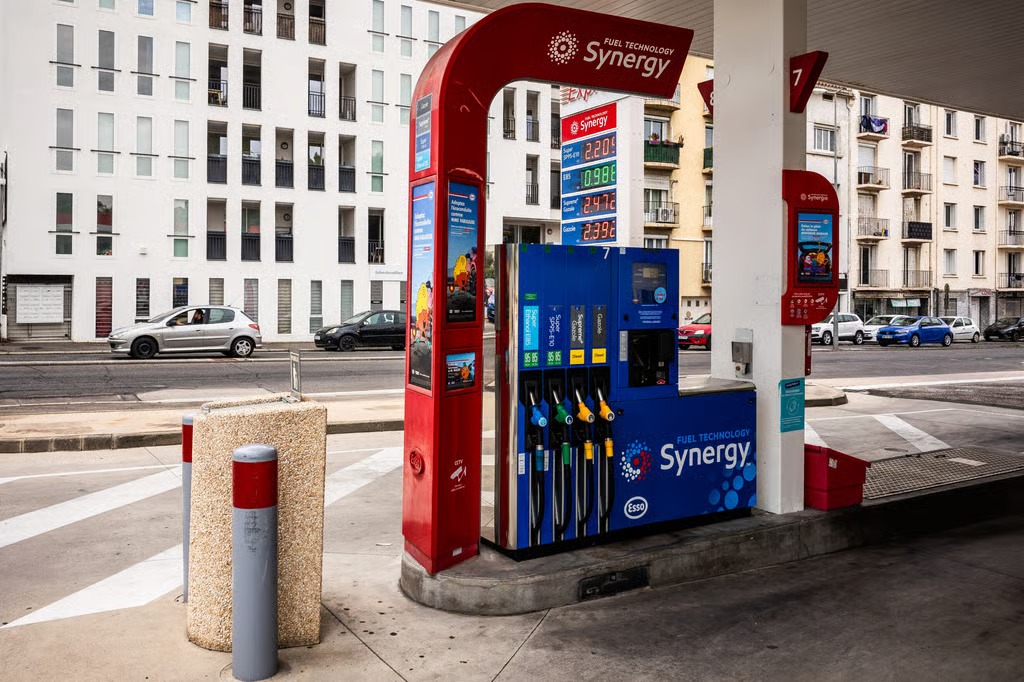
Five European countries have agreed to respond with “one voice” to mounting pressure from the US government to release their oil reserves.
Three European officials told Politico that France, Germany, Britain, Italy, Ireland, and the European Commission participated in talks to determine how to respond to pressure from Washington to draw down their oil reserves or face a ban on US diesel exports.
Two of these sources stated that all of these countries were placed under covert pressure by the US to run down their oil reserves or face a ban on diesel exports from the US.
According to the sources, these countries, together with the EU executive, agreed on three points: responding to the pressure with a “coordinated voice”, ensuring that “any decision on releasing stocks is brought to the IEA [International Energy Agency] level”, and seeking to “de-escalate tension in talks with the US”.
The Paris-based IEA coordinates energy policy among wealthy countries and oversaw the release of oil reserves earlier this year following the closure of the Strait of Hormuz.
One of the sources said the objective was to “de-escalate”:
“Being somewhat firm yet positive in communication… When you are facing a hungry lion, you do not necessarily have to play dirty with it.”
The source added that a wider group of countries, some of which have faced pressure from the Trump administration, would discuss how to react at a meeting scheduled for Friday.
Politico previously reported that US Energy Secretary Chris Wright had demanded the release of oil reserves into the market as an alternative to an export ban on which the EU heavily relies.
As a consequence of the wars in Ukraine and Iran, diesel prices in the US are soaring, placing significant pressure on US President Donald Trump to lower prices ahead of critical midterm elections.
The president is not ruling out an export ban, despite fierce opposition from the US oil industry.
Regarding the export ban, Trump said at an Oval Office event: “I am considering it. I speak to [Energy Secretary] Chris [Wright] and [Interior Secretary] Doug [Burgum] about this often. They think it would help diesel prices, but it could also raise the prices of other products.”

The EU wants to leverage its immense public spending power to bolster European industry through a “Made in Europe” initiative.
Deep divisions remain, however, over what should genuinely count as European-made.
According to a report by Politico, the European Parliament and member state governments are trying to establish their positions on the Industrial Accelerator Act (IAA), which forms part of Brussels’ effort to turn the “Made in Europe” slogan into an industrial strategy.
The initiative aims to use tenders and subsidies to create a guaranteed market for products of European origin.
Yet doing so requires answering politically contentious questions, such as how “European” a product must be to qualify, and how much more governments and consumers should be prepared to pay to buy domestic goods.
Disagreements are playing out not only between Parliament and the Council, but also among national governments and even between political allies from different countries.
Unveiled by the European Commission in March, the IAA seeks to channel public expenditure on green technology, energy-intensive industries, and motor vehicles towards European firms, helping them compete with dominant Chinese exporters.
Six months on, it is becoming increasingly clear how difficult it is to turn that objective into workable legislation.
Opposing sides broadly agree on the need to strengthen Europe’s industrial base, accelerate permitting procedures, and reduce strategic dependencies.
However, sharp divisions persist over how extensively the EU should support European manufacturing and how much flexibility national governments should retain.
Politico has identified five issues that will dominate negotiations through 2027.
The first issue is the debate over what qualifies as “Made in Europe”.
Defining EU origin is the most politically sensitive topic in the talks. With public procurement accounting for 15% of the bloc’s GDP—equivalent to roughly 3 trillion euros a year—the sums at stake are enormous.
If the threshold defining how European a product must be is drawn too narrowly, Brussels risks alienating close trading partners and disrupting supply chains.
Conversely, if drawn too broadly, the “Made in Europe” preference risks becoming meaningless.
Parliament is pressing for stricter anti-circumvention rules and demanding that at least 50% of a product’s value be created within the EU.
This condition would also make it harder for goods or components from third countries to be treated as equivalent to EU-origin items.
Lawmakers also aim to impose tighter conditions, including reciprocity, economic security measures, climate commitments, labour standards, and human rights safeguards.
The Council is more open to treating content from countries covered by the WTO Agreement on Government Procurement or relevant free trade agreements as equivalent to EU-origin content under specified conditions, including certain reciprocity principles.
Yet EU member states are still debating their positions and putting forward various conflicting proposals.
Ireland, which holds the Council presidency, plans to submit a fresh compromise proposal featuring the “Made in Europe” designation by mid-October.
Another issue is Foreign Direct Investment (FDI) screening.
Parliament wants a more comprehensive and stringent system to screen foreign investment in strategic sectors.
Underpinning this demand is the concern that, despite the EU spending billions to develop strategic industries, subsidized or otherwise state-backed foreign investors could acquire the very companies and assets the EU helped build.
Lawmakers want to lower the review threshold from the proposed 100 million euro investment figure to 50 million euros, bring affiliates of foreign investors under the rules, and lower the control threshold that triggers mandatory notification.
They also want to give the Commission a stronger role, granting it the power to block investments in critical raw materials when EU funds are involved.
The Council’s position is narrower: it broadly retains the 100 million euro FDI threshold and the 30% control threshold set out in the Commission’s original proposal, while granting national authorities greater flexibility in managing the approval process.
The two institutions are at odds not only over the scope of screening, but also over the institutional balance of power between Brussels and national capitals.
The third issue centres on the scope of tenders and subsidies.
Both sides want public tenders and state support to drive demand for European-made, low-carbon goods.
However, opinions diverge on how broadly the rules should apply.
This is where political goals collide directly with public purse strings. Requiring governments to purchase European-made goods could spur demand for domestic manufacturers, but it could also force taxpayers to pay more when cheaper imported alternatives are available.
Parliament wants various requirements—such as green, social, or “Made in EU” criteria—to cover up to 90% of state aid or subsidy programmes, compared with 45% in the Council text.
It also proposes tighter social and labour conditions, relocation curbs, and stricter verification and enforcement mechanisms.
The Council favours broader exemptions where suitable products are unavailable, excessively costly, or technically unviable.
This posture reflects governmental concerns over higher public spending or project delays linked to reliance on imported components.
The fourth issue is the divergence over sectoral targets.
Parliament generally seeks higher and more granular European-origin content requirements for batteries, solar panels, wind turbines, electrolysers, nuclear technologies, and electric vehicles.
Electric cars illustrate how complex the “Made in Europe” concept can become in practice.
A vehicle assembled within the EU may contain a battery and raw materials sourced through supply chains spanning the globe.
Parliament plans to raise the required EU-origin share for non-battery vehicle components from the 70% proposed by the Commission to 75%.
Requirements governing battery materials, binders, and strategic raw materials would also be introduced.
The Council’s stance, by contrast, is less prescriptive and allows for a more phased implementation.
The dispute is not over whether strategic sectors should receive support, but whether the IAA should impose binding content targets that could push up costs for manufacturers and consumers.
The fifth and final debate concerns the sectors covered by the Industrial Accelerator Act.
The argument centres on whether the IAA should remain a targeted response to strategic dependencies or become a broader vehicle for EU industrial policy.
Parliament wants to expand the legislation to cover areas such as maritime manufacturing, materials recovery, and certain plastic products used in construction.
It also wants sectors such as fertilizers, rolling stock, robotics, and aerospace considered in future reviews.
The Council text focuses more tightly on sectors already identified, including energy-intensive industries, automotive, net-zero technologies, and critical raw materials.
The debate reflects wider friction over how far the EU should extend “Made in Europe” preferences.
When public procurement and subsidies are deployed in certain strategic sectors to shield domestic manufacturing, other industries gain a strong incentive to argue that they too should benefit.
According to a separate report by Politico, Brussels is prepared to grant candidate countries access to its single market, provided they agree to align with the bloc against “hostile states” and industrial competitors.
Under the draft plan, candidate countries would receive unprecedented “gradual integration” into the single market while their accession bids are assessed, including frictionless trade and access to research programmes.
An assessment of “pre-enlargement” benefits to be offered to candidate nations states: “The single market is the primary driver of economic convergence.”
The draft states:
“Earlier integration will create opportunities for businesses across the Union, strengthen European value chains, and reduce strategic dependencies. The Commission will identify sectors where verified regulatory alignment and enforcement capacity allow for deeper participation in research, innovation, and industrial cooperation, as well as broader market access. Priority should be given to opportunities that advance accession preparations and address shared economic and strategic needs.”
Overseen by Alexandre Adam, top adviser to Ursula von der Leyen and former aide to French President Emmanuel Macron, the review would fundamentally transform the EU’s approach to neighbouring countries.
At present, almost all the economic advantages of closer cooperation remain reserved for member states.
No new country has joined the EU since Croatia’s accession in 2013.
As part of Adam’s package of measures, Ukraine, Moldova, Albania, and Montenegro are set to receive “roadmaps” designed to accelerate their accession process in the coming years.
For other nations, including North Macedonia, Kosovo, Bosnia and Herzegovina, Serbia, and Türkiye, the process continues to drag on amid mounting fears that they could drift away from the EU or draw closer to Russia or China.
Under the Commission’s blueprint, economic benefits extended to candidate countries would depend on their backing of EU foreign policy goals.
Single market access would hinge on candidate states not sharing key technologies with hostile governments and commercial rivals.
The review document notes:
“As industrial and market integration deepens, participation in sensitive sectors must go hand in hand with cooperation on investment screening, export controls, sanctions enforcement, and the protection of sensitive technologies. Access assessments must consider strategic alignment, critical dependencies, and the capacity to manage risks to infrastructure and supply chains. Where these conditions are not met, the scope of participation should be recalibrated under the relevant regulatory framework.”
Areas being considered for closer cooperation include semiconductors, quantum technologies, biotechnology, artificial intelligence, and space.
According to the review, full EU membership must remain the ultimate goal for candidate countries.
“Yet accession takes time: candidate countries must complete a rigorous, merit-based process and deliver comprehensive, enduring reforms,” the report notes. “This period must be fully exploited strategically, both to prepare the Union for a wider membership and to deepen gradual integration in areas of mutual interest.”
The benefits gained, however, will be contingent on countries fulfilling their obligations:
“Where these commitments are not honoured, integration must be reversible. The accession process should be suspended or rolled back where deemed necessary.”

Germany expands North Sea military ports and plans new naval base

Musk appointed co-director of Pentagon future warfare initiative

US waives human rights terms on $320m military aid to Egypt

Putin says Russia did not start war and warns of nuclear risks

European nations unite against US pressure over strategic oil stocks
-

 Europe5 days ago
European unions urge governments to scrap all Palantir deals
-
 Diplomacy5 days ago
East-West Forum in Istanbul highlights irreversible shift to multipolarity
-

 Europe1 week ago
Emmanuel Todd says West faces collapse amid Ukraine and Iran crises
-
 Europe1 week ago
European intelligence chiefs divide over risk of Russian attack
-
 Diplomacy1 week ago
East-West Forum in Istanbul to debate multipolarity and global order
-

 Middle East1 week ago
Sharaa says 7 October must not shape Israel policy on Syria
-

 America1 week ago
Republican support for Trump’s war with Iran drops sharply in polls
-

 Middle East1 week ago
Palestinian factions confront legitimacy crisis at Istanbul talks
