
Middle East
Pentagon faces severe budget crunch as Middle East operational costs drain key military funds

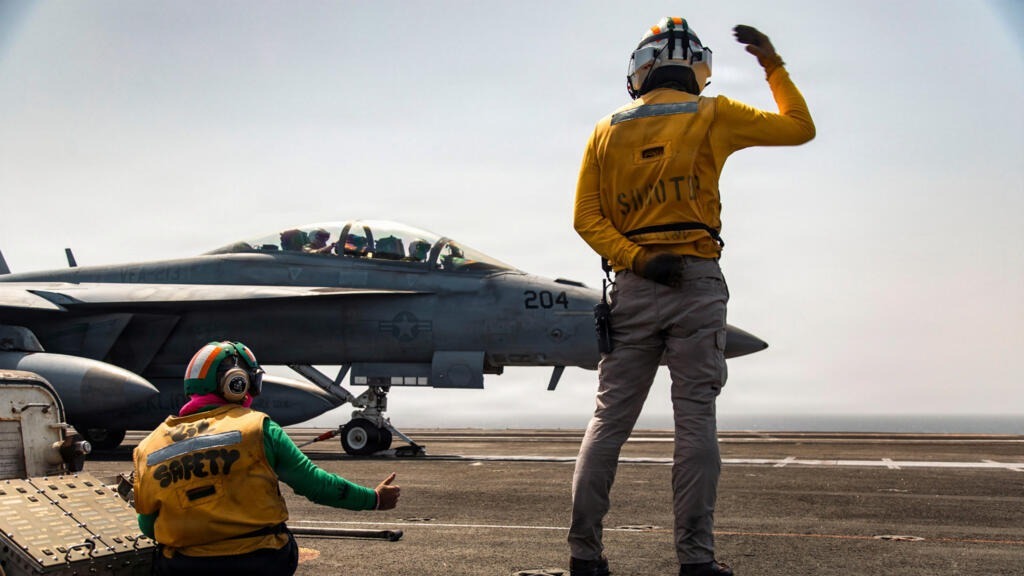
The US Department of Defense is facing a severe budgetary shortfall driven by the escalation of the war with Iran, according to current and former American officials cited by The Washington Post.
Officials noted that funding for several critical areas could be completely exhausted in the coming weeks. Budgets allocated for this year’s operations of the Navy and Air Force, which have deployed warships and aviation assets to the Middle East, are projected to run out by the end of July.
To cover the funding deficit expected before the start of fiscal year 2027 on October 1, the Pentagon is internally redirecting its budgetary resources. Under this approach, military exercises and training sessions designed to maintain troop combat readiness are being scaled back or canceled. Additionally, funds originally allocated for the maintenance and repair of military equipment and facilities are being transferred to operational expenses.
In recent weeks, the Department of Defense requested permission from Congress to shift $4.3 billion—initially allocated for personnel training and weapons procurement—to cover emergency requirements. However, no decision has yet been made regarding this request.
The White House has also requested that Congress allocate $67 billion in emergency supplemental funding to cover military expenditures. Despite this, the House of Representatives plans to begin a one-month recess on Thursday, which will delay any decision on the funding for at least several weeks.
“Everyone needs to look at this situation and shake off the complacency,” said Representative Pat Harrigan, a Republican from North Carolina, commenting on the development.
Pentagon Spokesperson Sean Parnell emphasized the critical importance of defense funding, stating that Defense Secretary Pete Hegseth will do everything necessary to maintain the combat readiness of the armed forces.
Secretary Hegseth and the Chairman of the Joint Chiefs of Staff, General Dan Caine, are scheduled to present the justification for the funding allocation at an upcoming hearing before the Senate Appropriations Committee. Russell Vought, the Director of the White House Office of Management and Budget, is also among those scheduled to testify before the committee.
Vought stated last month that the cost of the war had reached approximately $30 billion. However, this White House calculation did not include the cost of rebuilding and repairing US bases damaged as a result of Iranian attacks in the Middle East.
Current and former officials warn that if Congress fails to act, military leadership will soon be forced to make even deeper compromises.
In closed-door discussions, Pentagon officials are expressing more profound anxieties. They emphasize that supplemental funding is urgently required to replenish munitions stockpiles, which are vital for deterring adversaries such as Russia and China.
The US defense budget for this year stands at approximately $1 trillion. This figure includes $150 billion in one-time funding approved by Congress last year for various priority goals, ranging from designing advanced weapons systems to stimulating the domestic defense industry. Meanwhile, the Donald Trump administration has requested a $1.5 trillion defense budget for 2027.
Internal Pentagon assessments indicate that when accounting for base repairs, the replacement of destroyed aircraft, and the replenishment of munitions stockpiles, the total cost of the Iran war could rise to between $80 billion and $100 billion, according to reporting by NBC. Sources state that the repair costs for US military facilities in Bahrain alone could reach $1 billion.
Senators are expected to question Hegseth on the collapse of the ceasefire, rising war costs, and the American service members who lost their lives in Jordan, Bloomberg reported.


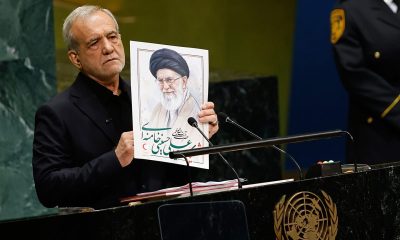






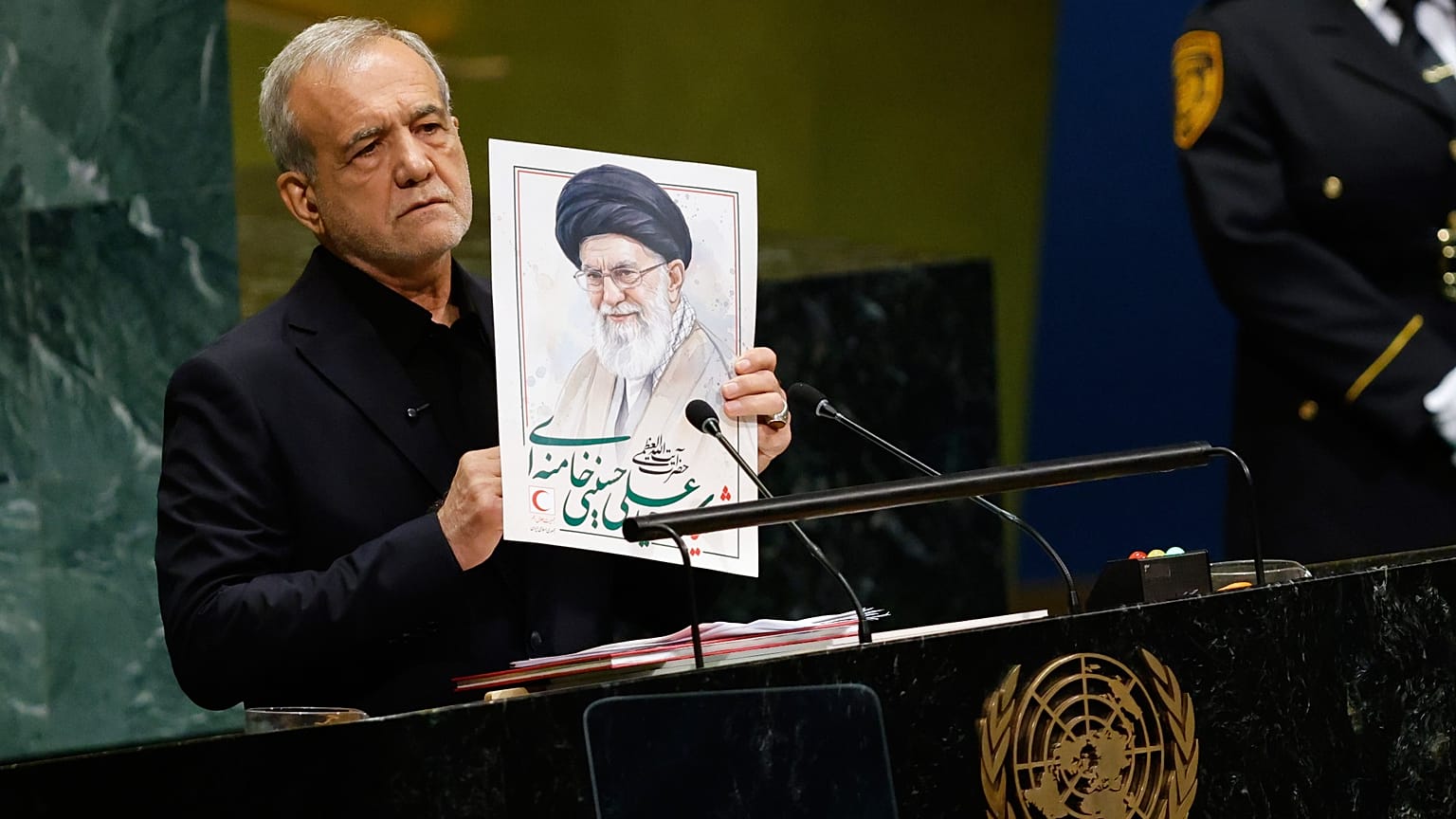
Iranian President Masoud Pezeshkian accused Western governments of applying double standards regarding nuclear weapons and regional security during his address to the United Nations General Assembly.
Stating that silence prevails over Israel’s nuclear arsenal, Pezeshkian said the Tehran administration is subjected to continuous inspections and sanctions.
Emphasising that the atomic bomb and other weapons of mass destruction in the region are under Israeli control, Pezeshkian said: “I repeat: The nuclear bomb is in Israel, the inspectors are in Iran. Israel kills, Iran is subjected to sanctions.”
Recalling that Israel is not a party to the Treaty on the Non-Proliferation of Nuclear Weapons and has shut its doors to international inspectors, the Iranian President noted that billions of dollars in weaponry continue to flow to the Tel Aviv administration regardless.
Displaying photographs from the rostrum of Iranians killed in US and Israeli bombardments, Pezeshkian said: “We are not terrorists, we are victims of terror.”
Stating that Iranian leader Ayatollah Ali Khamenei was killed on the first day of the war, Pezeshkian maintained that Tehran’s senior leadership was targeted without any legal basis or evidence.
President Pezeshkian at 81st UNGA:
I come from Iran, where the US assassinated our Leader
Follow: https://t.co/oa9JV4ikYQ pic.twitter.com/vMIFcTKUkg
— Press TV 🔻 (@PressTV) September 23, 2026
Declaring that the US military bombed the Shajara al-Tayyiba Elementary School in the city of Minab, Pezeshkian brought before the General Assembly the children killed in that attack, as well as the scientists, women, and children who died in a sports hall struck by cluster munitions in the city of Lamerd. Stating that Iran retaliated against the attacks, Pezeshkian noted that Tehran’s forces did not target civilians.
Stating that Iran does not seek regional hegemony and has not launched a war against any neighbour in the past 200 years, Pezeshkian said they developed their military capabilities for deterrence rather than offensive purposes.
Explaining that they built defence systems to show that bombing Iranian cities will not go unanswered, Pezeshkian said: “We say clearly that we will not ask permission from anyone to defend our country.”
Emphasising that the Tehran administration cannot be forced into surrender through the pressure of war, the Iranian President said the door to negotiations remains open, though they will not compromise on their right to defence.
Addressing the peaceful nature of their nuclear programme, Pezeshkian said this technology cannot remain the exclusive privilege of select nations.
Noting that nuclear energy is a vital requirement across fields ranging from medicine to agriculture, and industry to electricity generation, Pezeshkian stressed that they adhere to the principle of “neither nuclear weapons nor deprivation of nuclear knowledge”.
Stating that they do not view nuclear weapons as a security element, Pezeshkian said the issue cannot be resolved by military methods, adding that the solution lies in an agreement that protects the legitimate rights of the Iranian people and provides international guarantees for peaceful activities.
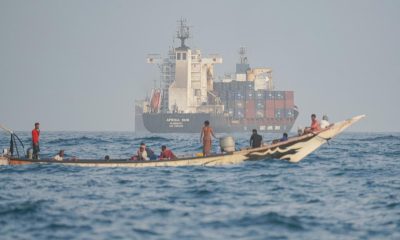
Turning to developments in the Strait of Hormuz, Pezeshkian announced that while Tehran ensures the security of the waterway, it will not remain silent if its own rights of navigation are obstructed.
Accusing Western nations of dispatching weapons to the region through the same corridor while blocking routes to Iranian vessels, Pezeshkian said the permanent deployment of foreign navies in the region will not bring maritime security.
Stating that lasting peace cannot be established in West Asia without a just resolution to the Palestinian issue, Pezeshkian said people displaced from their land and whose homes are bombed are exercising a legitimate right to self-defence, adding: “You cannot call someone a terrorist when they defend themselves.”
Stating that regional problems must be resolved without foreign intervention, Pezeshkian stressed that alliances forged with any foreign power must not be turned into a pretext for war against neighbours.
Adding that economic sanctions have turned into a mass weapon that directly strikes civilians and the poor, Pezeshkian warned that operating international law solely in the interest of the powerful will fuel global instability.
The Iranian President concluded his address to the General Assembly with the words: “Either we establish security together, or we endure insecurity together. Peace that is not for everyone is not peace; justice that does not encompass everyone is not justice.”

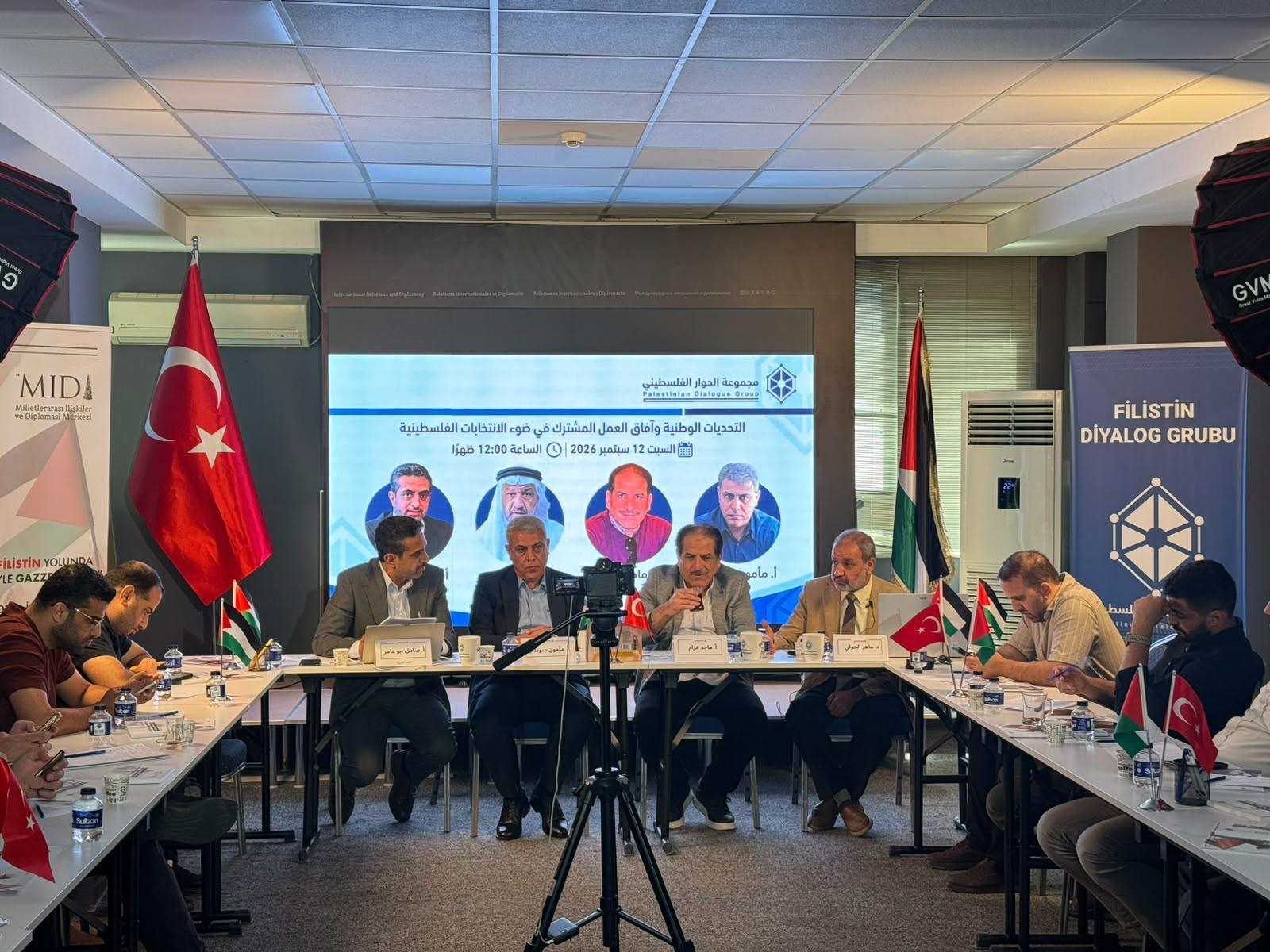
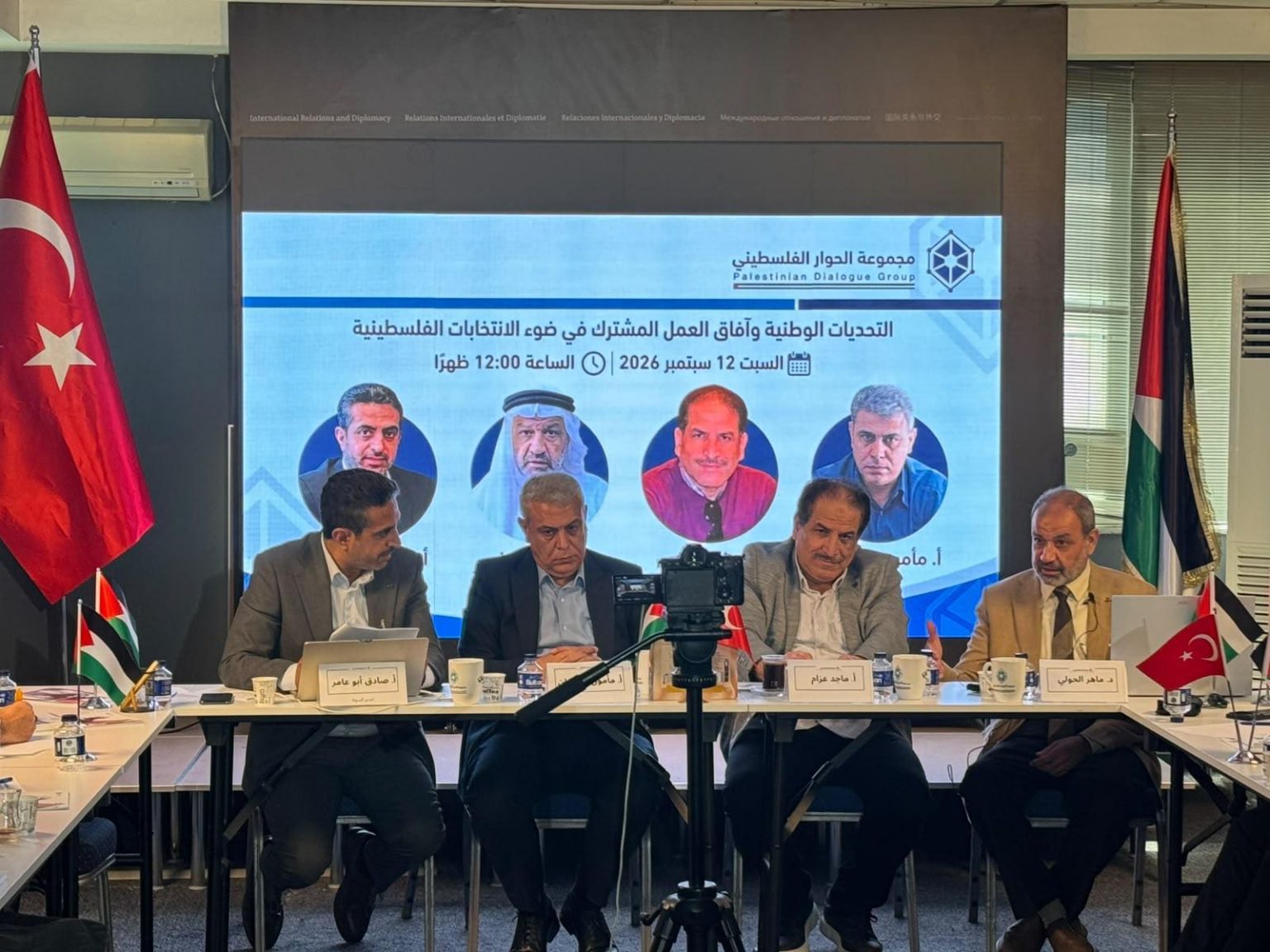
A meeting organised in Istanbul by the Palestinian Dialogue Group has revealed that the election debate points to a crisis far larger than the ballot itself.
Elections are back on the agenda in Palestine. Yet a question looms larger than whether ballot boxes will be set up: can Palestinian politics overcome years of accumulated legitimacy crises?
At the gathering in Istanbul on 12 September, two figures close to Fatah and Hamas, an independent Palestinian researcher, and a journalist came together around the same table. Hosted and moderated by the head of the Palestinian Dialogue Group, Sadiq Abu Amer, the meeting included Mamoun Sweidan, who serves as an adviser at ministerial and gubernatorial rank in the Palestinian Presidency Court; Prof. Dr Maher Hamed Al-Houli, adviser to the head of the Hamas Political Bureau; and independent researcher and journalist Majed Azzam.
For Palestinian observers, one of the most striking aspects of the meeting was the gathering of senior figures from Fatah and Hamas circles in a debate of this scale for the first time.
To summarise the mood of the gathering in two sentences: the cause faces grave peril. Yet there is no magic formula to overcome the hurdles.
28 November: An election or a political turning point?
According to the timetable of the Palestinian Central Elections Commission, elections for the 132-seat Legislative Council are scheduled to take place on 28 November 2026 across the West Bank, East Jerusalem, and the Gaza Strip.
Candidate registrations will run from 26 September to 7 October, followed by the election campaign between 6 and 26 November.
If the polls go ahead, Palestinians will elect a new Legislative Council for the first time since 2006.
However, although the election timetable has been announced, political and on-the-ground conditions remain uncertain.
The new reality emerging in Gaza following the war, whether voting can be conducted in East Jerusalem, the Fatah-Hamas divide, and the future administration of Gaza represent core obstacles facing the vote.
The Central Elections Commission continues its preparations. Contacts are underway in Gaza with civil society organisations, political groups, and local actors, alongside inspections of prospective polling centres.
Yet criticism focuses on the very same point: preparations started late, and the feasibility of the 28 November timetable remains disputed.
It is precisely here that the election debate ceases to be a technical matter.
A legitimacy crisis accumulated over two decades
In Palestine, the problem is not merely when ballot boxes will be placed.
A new Legislative Council has not been elected since 2006. The Fatah-Hamas rift has become entrenched. The renewal of Palestinian political institutions and the transfer of power through the ballot box have failed to materialise.
For this reason, the planned elections are no ordinary vote.
If ballot boxes are re-established after a gap of nearly two decades, the issue will not merely be the selection of new lawmakers. Whether the Palestinian political system can regain legitimacy will also be put to the test.
Yet holding elections will not eliminate division on its own.
The fundamental question is this:
Will Palestinians respect the election outcomes even when the results fall outside their own political calculations?
Sweidan: “We went from a national committee to a Peace Council”
The future of Gaza took centre stage in Mamoun Sweidan’s address.
Sweidan explained that following the war, the idea of creating a “national committee” composed of Palestinians to govern Gaza had been raised.
Stating that this committee needed to be formed within the institutional framework of the Palestinian National Authority, Sweidan noted that the political factions, foremost Fatah and Hamas, could not agree on representation quotas for the body.
The problem, in short, was this: everyone wants a national committee, but no consensus can be reached on who will sit on it and in what proportions.
According to Sweidan, prolonged delays eventually pushed the issue into a different arena.
Instead of a national committee, a dynamic emerged in which an international mechanism assumed a greater role in Gaza’s future.
At this point, Sweidan criticised Hamas.
In his view, the initial concept of a national committee established by Palestinians drifted towards an externally shaped “Peace Council” model.
This question lies at the heart of the debate:
Will Palestinians decide Gaza’s future, or will decision-making mechanisms shift increasingly into the hands of external actors?
Al-Houli: “We must not abandon elections”
Prof. Dr Maher Hamed Al-Houli, adviser to the head of the Hamas Political Bureau, argued that elections must not be abandoned.
Al-Houli noted that the election call should be approached positively. However, he stressed that Palestinians must base their decisions on the broader national interest rather than external pressures.
Recalling the 1996 and 2006 elections, Al-Houli maintained that those polls were fair and transparent.
He stated that both Palestinian factions and the international community must respect the results emerging from the ballot box.
Another topic Al-Houli highlighted was societal participation.
He noted that families, clans, mukhtars, opinion leaders, and reconciliation figures could assume a more active role in the electoral process.
He suggested that these actors should not only guide voters to the polls, but also play a part in resolving disputes between Fatah and Hamas. He added that they could even participate in the elections through independent candidates or electoral lists.
Al-Houli’s approach thus shifted the election discussion to another dimension:
Will a new election merely refresh the old political structure, or will it open the path for new actors to enter politics?
Azzam: “In my view, elections will not take place”
Independent researcher and journalist Majed Azzam took a more distant view of the electoral timetable.
Stating that he was speaking neither pessimistically nor optimistically, but offering a realistic and objective assessment, Azzam said: “In my view, elections will not take place, and I am saddened by this.”
Azzam’s primary objection rests on an assertion broader than the election date itself.
According to him, electoral rhetoric could be a “smoke grenade” concealing an entirely different political process.
Azzam raised the claim that preparations are underway to form the Palestinian National Council through appointment rather than through elections.
If this claim proves true, the direction of the debate changes completely.
The question then ceases to be “When will elections occur?” but rather “If elections do not take place, how will the Palestinian political system be reconstituted?”
Can there be an election without Gaza?
The fate of Palestinian elections cannot be separated from Gaza.
The commission is proceeding with technical preparations. However, the destruction wrought by the war in Gaza, the dispersal of the population, infrastructure breakdowns, and disputes over future governance pose severe challenges to the electoral process.
Alongside this, the question of East Jerusalem remains unresolved.
Consequently, 28 November is not merely a matter of ballot boxes.
Under which political framework Gaza will be governed, how election results will be implemented there, and how relations between the Palestinian Authority and Hamas will be structured are all components of the same equation.
A new generation enters politics
Another critical reality is demographic shift.
Since the 2006 vote, an entire Palestinian generation has reached adulthood. A substantial proportion of these individuals have never cast a ballot in any general election in their lives.
Therefore, if elections take place, a new Legislative Council will not be all that is chosen.
Simultaneously, a new generation of voters will become direct participants in political decision-making for the first time.
For this reason, how youth, independents, and societal actors will be integrated into the political system stands as another major subject within the election debate.
A common goal, divergent roadmaps
It is not possible to say that the Istanbul meeting produced a shared political roadmap.
Sweidan advocates safeguarding Palestinian institutions and national decision-making, arguing that Gaza’s future must be determined within a Palestinian framework. He considers Hamas’s posture to have created fertile ground for external actors to intervene further.
Al-Houli says elections must not be abandoned. In his view, elections should reflect the will of the Palestinian people rather than external pressures, and societal participation must be expanded.
Azzam, by contrast, does not believe elections will be held at all. He suspects that another political restructuring may be underway behind the cover of the election debate.
Where these three approaches converge is far more significant:
The Palestinian cause confronts a profound existential crisis.
The future under debate is not simply that of Hamas or Fatah, but that of the Palestinian political structure as a whole.
Elections are not a magic formula
This remains one of the strongest messages left behind by the Istanbul meeting.
Elections may be vital for renewing legitimacy. Yet they cannot end division on their own.
They may establish a new Legislative Council. Yet they cannot resolve all the problems of the Palestinian political system.
They may bring youth and independents into politics. Yet the factions must accept the outcome of the vote.
For this reason, the significance of 28 November reaches far beyond the ballot box.
If elections are held, a new political space will open before Palestinians.
If they are not held, the question of how to fill the political vacuum will grow even larger.
And perhaps the real question will be this:
Will 28 November mark another milestone in years of ongoing division, or will it herald the beginning of renewed unity in Palestinian politics?
We shall see together.
For now, the only certainty is this: the question of elections in Palestine is no longer merely a question of elections.
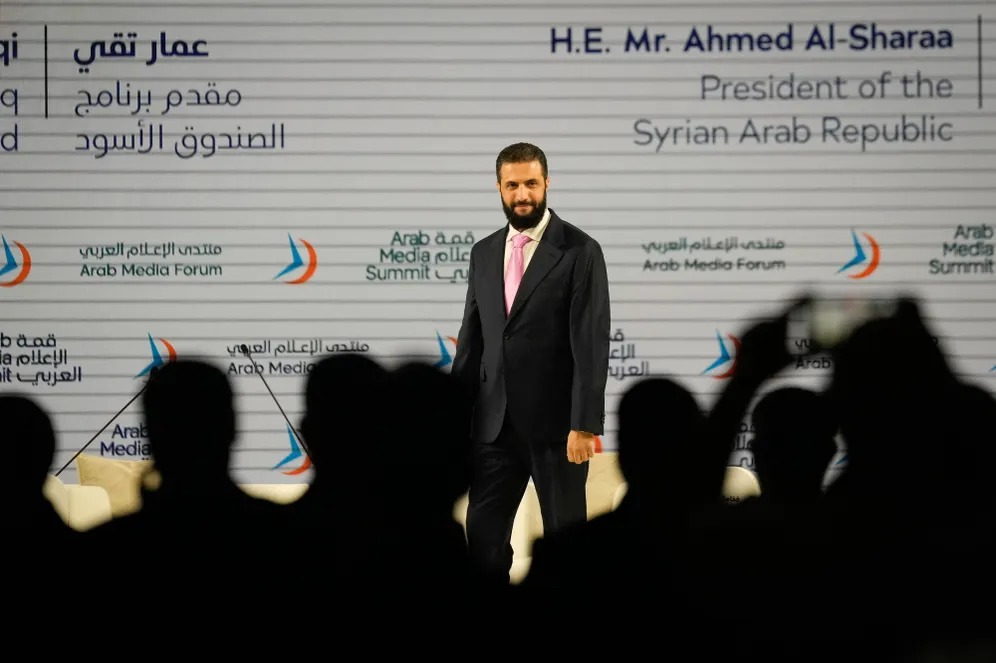
Syria’s interim President, Ahmed al-Sharaa, addressed relations between Israel and Syria, arguing that they could achieve peace through “security arrangements”.
Speaking at an event organised by the Atlantic Council in New York, where he travelled for the UN General Assembly, Sharaa answered a question regarding relations with Israel.
Sharaa stated that the two countries had held direct talks over the past year. He then said that Israel must first withdraw from the areas in southern Syria that it occupied following the fall of the Assad administration.
Sharaa continued:
“Then we can begin negotiations on security arrangements. If these arrangements succeed, we can reach a lasting peace. The Golan Heights is Syrian territory recognised by the United Nations… Therefore, there is no debate on this matter.”
He was then asked whether he understood the concerns of Israelis following the Al-Aqsa Flood operation carried out by Hamas on 7 October 2023, and what kind of message he had for the Israeli people.
In response, Sharaa said, “I understand what happened to some innocent people on 7 October, but at the same time, it is not possible to base all policies on a single event. At the same time, we must also understand what is happening in Gaza; more than 70,000 people have lost their lives there.”
“It is not appropriate for what happened on 7 October to determine policy towards Syria,” added the former HTS leader, saying, “Israel must change its policy because it is creating problems around itself.”
Recalling that they have established very good relations with the US, the United Kingdom, and Lebanon, Sharaa said, “I believe the problem lies with Israel, not Syria,” and asserted that Tel Aviv’s actions do not bring greater security to Israeli citizens.
While acknowledging that Israel has “legitimate security concerns”, Sharaa rejected the notion that these concerns could justify every action taken by Israel. On the other hand, according to Sharaa, a “historic moment that could be beneficial for all parties” is currently taking place.
The former HTS leader recounted that when President Donald Trump told him that the Golan Heights belonged to Israel, he responded:
“Why do you not give New Jersey to the Israelis? The Golan Heights are not yours to give away, but New Jersey is yours.”
Sharaa then elaborated slightly on this joke, saying:
“I think New Jersey is full of Democrats and they do not vote for Trump, so giving it to the Israelis would be good. At least it is your property. Trump has no ownership over the Golan Heights.”
The discussion then turned to Sharaa’s past, particularly his time with Al-Qaeda.
When asked whether he now explicitly renounced his allegiance to this organisation and the ideology behind it, he did not issue a direct renunciation, but claimed that at that time he was “at a different age and the conditions in the region were different”, explaining that his life experiences stemmed from taking part in the struggle against the Assad administration.
Asked specifically about the 11 September attacks, Sharaa immediately emphasised that he “had nothing to do with it”, stating that he was 13 years old at the time and adding, “I had no awareness of these matters at all.”

Hamburg drill tests Baltic deployment prior to formal defense alert

EU explores cooperation with Trump-backed Peace Board for Gaza aid

Peter Thiel receives Springer award, targets Pope Leo and CCP

Emmanuel Todd says West faces collapse amid Ukraine and Iran crises

EU states weigh stricter asylum rules and third-country return hubs
-
 America2 weeks ago
Milanovic declares global neoliberalism dead, warns of plutocracy
-

 America2 weeks ago
Five minutes to doomsday – 4: American capitalism at the frontiers
-

 Asia2 weeks ago
DeepSeek engineer warns AI will lead to communism or Cyberpunk
-

 America2 weeks ago
Big Tech profits from AI extinction hype, Ken Klippenstein says
-

 Europe2 weeks ago
UK faces £258bn infrastructure gap as commission urges private funds
-
 Middle East2 weeks ago
Iran used Chinese satellite imagery in deadly US base attack: report
-
 Middle East2 weeks ago
Saudi exportable crude stocks risk depletion within a week
-

 Europe2 weeks ago
Wolfgang Streeck links German polycrisis to capitalism and AfD rise
