
America
The economic mind of Trumpism – 3: American industry and Elon Musk’s robotic humans


“The dollar’s continued role as the dominant ‘safe’ currency requires the US economy to adapt to what economist Dani Rodrik describes as the inherent contradiction between global integration and national sovereignty. Rodrik states that countries prioritizing greater global integration must relinquish control over their domestic economies, whereas countries preferring to retain local control must limit the extent to which their economies are open to trade and capital flows.
(…)
Because domestic and external economic imbalances must always be aligned in every country. When some countries restrict capital and trade flows to control their external imbalances and maintain favorable domestic conditions, they can impose their own domestic imbalances on trading partners who have less control over their trade and capital accounts. British economist Joan Robinson called these trade policies ‘beggar-thy-neighbor’ and said they would ultimately lead to an increase in global trade conflicts.
(…)
The dollar’s dominance in global trade and finance was long assumed to provide a net benefit for the American economy, but this assumption is increasingly being questioned. While it benefits Wall Street and owners of globally mobile capital, these benefits come at a cost to American manufacturers and farmers.
In a world where some countries actively manage their external imbalances while others do not, the role played by the US dollar as the primary safe currency has made America the main culprit for global economic distortions. Addressing these imbalances requires a fundamental re-evaluation of the rules governing global trade and capital flows.”
These lines were published in the Financial Times under the byline of Michael Pettis. Pettis works as a specialist at the renowned American think tank Carnegie. My reason for starting with such a long quote is to emphasize that the ideas embodied by Stephen Miran and Scott Bessent in the first two parts [of this series] are being discussed much more widely than assumed, even within the “mainstream.” As the article’s title already suggests, according to Pettis, “the US would be better off without the global dollar.”
Advisor Miran and Secretary Bessent call this the rebalancing of global trade/the economy. Have we seen similar examples before?
Some economists believe we have, pointing to the major transformation during the Richard Nixon-Ronald Reagan eras. For example, Yanis Varoufakis, in an article he wrote for Unherd following the “Liberation Day” tariffs, quotes John Connally, who served as Nixon’s Treasury Secretary in 1971. To persuade the President towards the “Nixon shock,” Connally said, “My philosophy, Mr. President, is that all foreigners are waiting there to screw us, and our job is to screw them first,” and underlined that his aim was to trigger a “controlled disintegration” of the world economy.
Varoufakis believes that the Nixon shock was much harsher than the Trump shock, especially for Europeans, and that it achieved its goals much more completely when considered in terms of its long-term consequences. This outcome was: to expand the US trade and budget deficits in order to maintain and extend American hegemony.
At this point, I recall that we wrote about the tight link between national security policy and the economy, even during the “neoliberal” era. Indeed, Varoufakis also quotes the infamous Paul Volcker, one of Nixon’s advisors, who persuaded Connally towards the “shock”:
“It is tempting to view the market as a neutral arbiter. But a number of countries, including the United States, balancing the requirements of a stable international system with the desire to preserve freedom of action for national policies, chose the latter.”
It was time for Western Europe and Japan to accept that their “economic miracles” created after the Second World War were coming to an end. The “controlled disintegration” of the world economy was a legitimate goal for the US.
The infamous Volcker, who became Fed Chairman, shattered the fixed exchange rate regime and sent interest rates skyrocketing in a single move that would go down in history as the “Volcker shock.”
“Therefore, Trump,” says Varoufakis, “is not the first President to seek a controlled disintegration of the world economy through a destructive blow.”
The former Greek finance minister makes an important observation: Deliberately harming US allies to renew and extend US hegemony; being ready to inflict short-term damage on Wall Street to strengthen capital accumulation in the US in the long run… These were not things we were encountering for the first time either. Nixon had done this; before him, President Hoover’s Treasury Secretary Andrew Mellon had done it. “Retreating to leap” was one way to guarantee capital accumulation.
This means that Trump and his team are seeking ways to save American hegemony once again, which began with the Nixon shock and was subsequently secured by the Carter and Reagan administrations. Again, the targets are the devaluation of the dollar, a slight trip-up for Wall Street, and demanding that “foreign capitalists” pay the price.
So what will this world look like if he succeeds? Varoufakis has an answer, which is worth reading even though it’s a long quote:
“Perhaps it is too early to say, but neoliberalism has already been challenged by the techno-feudal faith of neo-reactionaries like Peter Thiel. Cloud capital is replacing financial capital, putting the holy grail of the transhuman condition (the fusion of cloud capital, artificial intelligence, and the biological individual) in place of the market’s divine role. Financialization will soon be under similar pressure. As AI develops, Wall Street will not be able to continue resisting the fusion of cloud capital and finance, as seen in Elon Musk’s ambition to turn X into an “everything app”. Such developments will do to payments what the internet did to fax machines, and will have serious implications for financial stability, including any future role for the Federal Reserve. And instead of the dream of the Global Village, we shall have the Walled Nation. However, the retreat of globalisation does not mean that autarky is possible. The Trump Shock is pushing us towards a bifurcated planet; one part of which consists of vassal states bowing to the Trump Plan, while the other consists of countries allowed to pursue the BRICS experiment on their own trajectory.”
It’s not entirely clear whether the picture Varoufakis paints is optimistic or pessimistic. But the problems of a “rebalancing” focused on the dollar’s value surface with every tariff Trump imposes (and withdraws!).
The White House says it imposes tariffs to bring manufacturing back to the US (reshoring). But does this tool serve the purpose of rebalancing? The answer is most likely no.
For example, tariffs on aluminum and steel, which are basic intermediate inputs for manufacturing, do not seem likely to rebalance the US economy towards more manufacturing.
Companies are expected to absorb some of the tariff costs and pass the rest on to consumers. According to some estimates, the additional cost of just automobile tariffs could mean a price increase of $5,000 to $10,000 per vehicle. Former Treasury Secretary Larry Summers calculates that the overall net effect of the tariffs would cost a family of four approximately $300,000.
Furthermore, the lack of certainty, the inability to see the economic impact of tariffs that are sometimes imposed and sometimes paused, and the failure to combine this entire “reshoring” goal with an appropriate state incentive strategy are leading the American economy towards recession. For example, along with the “Liberation Day” tariffs, Trump and DOGE ended the Manufacturing Extension Partnership (MEP) program, which had supported the American manufacturing sector for decades. MEP was established by Congress in the 1980s, at the height of the US trade war with Japan, to provide advice to small American manufacturers.
MEP provided taxpayer-subsidized consulting services to thousands of businesses in all 50 states, including manufacturers of ovens, printers, tortillas, and dog food.
Moreover, this shock is being felt not only in financial markets but also in the “real” economy. In March, the Purchasing Managers’ Index (PMI) was below 50 (49). According to the Washington Post, manufacturing trade groups say they are inundated with calls from members concerned about canceled orders and slowing growth.
Almost all groups in the manufacturing sector say they are facing higher costs for basic materials or machinery, and several say they have already seen demand “drying up” due to tariff-related uncertainty.
It is a fact that the share of manufacturing in the US economy, as well as the proportion of American workers employed in factories, has hit rock bottom. However, this fact also obscures some other realities: Although the number of workers employed in manufacturing has remained stagnant, manufacturing output continues to increase; in other words, productivity is rising. Developments in automation are progressing in parallel with the general laws of capital accumulation.
Furthermore, although not on the scale of “reindustrialization,” we can track from statistics that there has been a partial manufacturing revival since the 2008 crisis: In the 20 years from 1990 to 2010, the share of the manufacturing sector in employment had fallen from 16 percent to 9 percent. However, this steady decline, which had been ongoing since 1953, slowed considerably from 2010 onwards.
In the 15 years since 2010, manufacturing’s share of total employment has fallen by only one percentage point, from 9 percent to 8 percent. The reason for this is that, excluding the Covid years, the number of manufacturing jobs in the US increased from 2010 to 2022.
For example, some writers like Dan McLaughlin point out that manufacturing has shifted regionally from the Midwest and has actually migrated to the South rather than going abroad; they also point to major developments in automation, which mean that factories can produce more with fewer workers today.
McLaughlin writes:
“Just as previous generations who hated factory jobs romanticized farming, there is a tendency to romanticize manufacturing work. We can acknowledge the real human cost of closed factories and still recognize that not every manufacturing job is equally appealing compared to its alternatives: many blue-collar men would likely prefer driving an Amazon delivery truck or working on a construction site to working in a textile mill. Furthermore, economic populists tend to confuse manufacturing jobs with manufacturing capacity. They say it is dangerous for our national security if we can no longer produce things.”
Moreover, relatively few Americans actually want to work in a factory. According to the Financial Times, recent polls show that 80% of Americans think the country would be better off with more manufacturing jobs, but only 25% think they personally would be better off in such jobs.
On the other hand, tariffs are pushing buyers of custom manufacturing services to rapidly reorganize their supply chains, including turning to American suppliers to build their products.
The “SME” strategy is becoming critical here. US small and medium-sized manufacturers also want to benefit from this period and grow their customer base both domestically and abroad.
The US is home to over 500,000 SMEs specializing in everything from CNC machining and injection molding to sheet metal fabrication, 3D printing, and more.
In recent years, buyers have accelerated reshoring efforts, spurred by COVID-19, federal legislation such as the Infrastructure Investment and Jobs Act and the CHIPS and Science Act, and now the global trade environment.
Xometry, which serves as a “digital marketplace” for custom manufacturing, has been tracking the reshoring trend for over two years through its quarterly “Resurgence of American Manufacturing” surveys conducted with Zogby Strategies.
According to the data, in the first quarter, nearly half (42%) of manufacturing CEOs said they had successfully “reshored” facilities, while 19% stated they planned to do so as a result of tariffs.
It is precisely at this point that the trend of “Silicon Valley-ization” appears to be enveloping the entire economy like an octopus: 70% of manufacturing CEOs are adopting emerging technologies like artificial intelligence to achieve efficiency in planning and operations, with automation closely following.
Most of these companies investing in AI have achieved a significant return on investment, and nearly two-thirds (63%) believe that AI and other technologies will be “transformational” for their operations.
In addition to technology, as America’s industrial core becomes more high-tech, manufacturing CEOs are also investing in “talent.”
On the other hand, a survey by the National Federation of Independent Business (NFIB) reveals that in March, even before Trump declared the “Liberation Day” tariffs, small business optimism experienced its sharpest drop since 2020; it should, of course, be noted that Republicans were more optimistic than Democrats.
The new tech brokers, whom Varoufakis calls “techno-feudals,” are using the Trump administration as a tool to transform the economy with artificial intelligence, automation, and digitalization.
“President Trump is a successful businessman who has spent decades building productive and successful companies. He knows that the real bosses are the American taxpayers and will continue to demand the high level of dedication and excellence that the American people deserve from all government employees.”
White House spokesperson Anna Kelly says this. The same Trump, as the “CEO of the US,” says regarding personnel cuts in the federal government, “everyone is replaceable.”
Billionaire Musk, Trump’s biggest supporter, says, “You can’t change the world on 40 hours a week.” When asked, “How much do you need?” he doesn’t hesitate: “It varies by person, but about 80 [hours] consistently, sometimes over 100. The pain level increases exponentially above 80.”
If you work 7 days a week, that amounts to 14 hours a day. What Musk and Trump mean by “bringing production back to the US” seems to be like the “factory system” of the 19th century, where English workers were worked to death.
The “transhuman” robot fantasy points not to a system where production is done by humanoid robots, but one where humans are made robotic.












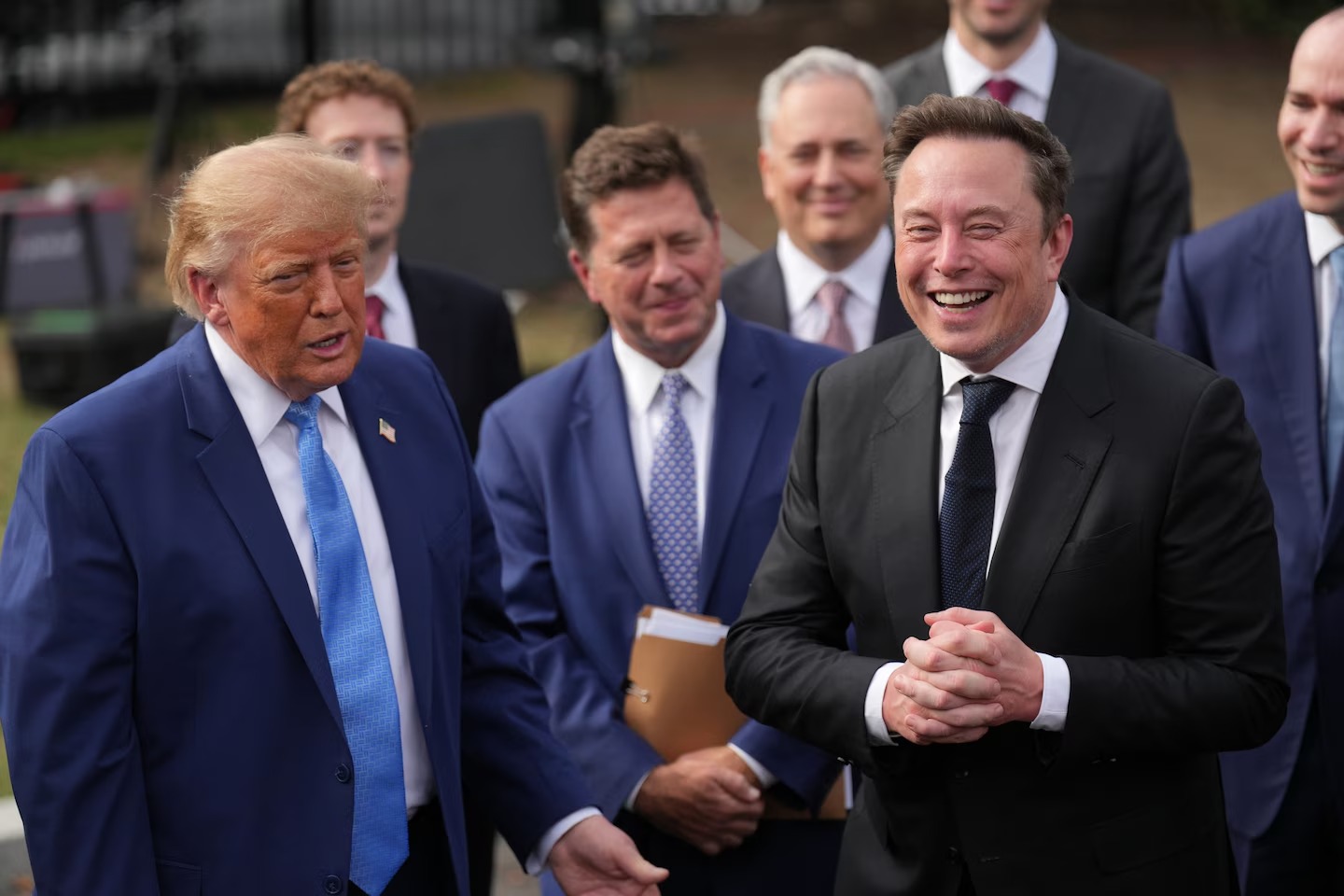
The world’s richest man, Elon Musk, has assumed the co-directorship of a Pentagon initiative focused on the future of warfare, known as “Project Meridian”.
Musk’s new role was announced by US Secretary of Defence Pete Hegseth.
Musk, who has long expressed his conviction that wars will ultimately be fought with autonomous unmanned aerial vehicles, will advise the project as co-director alongside Palmer Luckey, founder of defence start-up Anduril, and former Speaker of the House of Representatives Newt Gingrich.
In a memorandum issued at the Pentagon, Hegseth stated that the group would “examine the battlefields of the future” and “determine which weapons and technologies warfighters must employ to achieve dominance in these environments.”
During his “State of the Force” address at Marine Corps Base Quantico, Hegseth said:
“The best predictors of future conflict do not reside exclusively within the Pentagon. Obvious biases and risks arise when we task ourselves with both framing the questions and answering them.”
Hegseth stated that this initiative would commence immediately and that, following his address, he would convene with Musk, Luckey, and Gingrich at a secure location.
Project Meridian will have 120 days to “ruthlessly map the trajectory of wars, domains, and technologies”, a process that will culminate in the public disclosure of its findings alongside a classified annex.
Hegseth outlined an expansive mandate extending “from beneath the surface of the Earth to beyond the Moon.”
Rather than formulating new military strategies or policies, the panel will seek to identify “the domains we must seize and the capabilities we must master”, focusing on the effort to “discover, develop, and field” the weapons and systems that next-generation American troops may require.
The group is expected to submit a report containing recommendations to him by the end of January.
In 2024, Musk remarked: “Future wars will be entirely about drones and hypersonic missiles.” This was merely one of several similar statements he has made in recent years.
For Musk, whose oversight role at the Department of Government Efficiency (DOGE) ended in turmoil and escalated into a dispute with President Donald Trump over Trump’s spending bill, this appointment marks his formal return to government in an official capacity.
Musk and Trump ultimately reconciled, and Musk attended a meeting on artificial intelligence safety at the White House this week alongside other technology leaders.
Meridian forms part of a broader push announced by Hegseth to restructure the military around autonomous warfare and rapidly advancing technologies.
Hegseth announced the establishment of the Autonomous Warfare Command (AUTOWARCOM), a new four-star combatant command endowed with what he termed “service-like authorities” to scale autonomous and robotic capabilities across the joint force.
The Department of War will also begin phasing in new occupational frameworks across all military branches to establish specialised career tracks for what Hegseth described as “the next generation of autonomous warfighters.”
“We should have conceived an Autonomous Warfare Command a decade ago,” Hegseth said, explaining that Meridian aims to gaze far enough ahead to enable the military to anticipate the next technological shift rather than lag behind.

A cyberattack targeting the US Department of War’s personnel database has resulted in the leak of personal information belonging to approximately 3 million people.
Speaking to ABC News, a Pentagon official stated that the system accessed by unauthorised individuals contained the records of 2,760,000 living persons and 294,000 deceased individuals.
The Military Times portal, which first broke the news, had reported the number of affected individuals as approximately 4 million based on two sources. The Pentagon official subsequently conveyed different figures to ABC News.
The leak encompasses Social Security numbers and duty information belonging to military personnel and civilian employees. According to an official notification examined by Military Times, the compromised records may also include names, dates of birth, contact information, sex, race, and military occupational specialties.
The unauthorised access to the information system of the Defense Manpower Data Center (DMDC) lasted for approximately nine months, between October 2025 and 16 July 2026.
ABC News reported that the access in question was obtained by a small number of third-party users. The vulnerability was closed after it was identified.
The DMDC is considered one of the Pentagon’s primary personnel records centres. More than 60 million records belonging to active-duty personnel, reservists, civilian staff, contractors, retirees, veterans, and military family members are stored at the centre.
The Pentagon has not detected any evidence that the leaked data has been misused. Military Times reported that affected individuals were offered identity restoration and credit history monitoring services.
A similar data breach previously occurred on the Federal Bureau of Investigation’s (FBI) recruitment website, FBIJobs.gov. According to information obtained by ABC News from internal communications and sources, the FBI is considering the possibility that data belonging to its entire staff may have been stolen.
The New York Times (NYT) examined a portion of the stolen FBI records. Home addresses, telephone numbers, official email addresses, Social Security numbers, dates of birth, hiring dates, and emergency contact details for relatives were identified within these documents.
The database also contained unit designations, duty roles, and information regarding the supervisors of personnel. Some records revealed assignments within counterintelligence and counternarcotics units, as well as departments examining threats originating from Russia, China, and Iran.
Ciaran Martin, the former head of the UK National Cyber Security Centre, noted that this type of breach could directly affect the FBI’s operational capabilities.
The hacker group known as ShinyHunters had announced that it had seized medical data and security clearance records alongside files belonging to tens of thousands of active and former FBI employees.
Experts evaluating the matter for the NYT warned that this information could be used to track agents, threaten their families, or compile dossiers by foreign intelligence services.
The ShinyHunters group initially threatened to release the data unless the bureau withdrew an advisory it had published concerning the group’s attack methods.
The group later asserted that it had never intended to leak the information and characterised its action as an advertising campaign.
In a report published in May, Reuters noted that the personal data of US military personnel had been used in surveillance and attack preparations.
According to the agency, Washington’s adversaries gained the ability to pinpoint areas where troops were concentrated by exploiting commercially available location data. US lawmakers at the time criticised the Pentagon for failing to adequately protect the personal data of military personnel.

US President Donald Trump’s trade policy and the Washington administration’s push to increase Venezuelan oil imports are prompting Canada to diversify its energy exports.
According to a report by The Wall Street Journal, recent developments are accelerating Canada’s development of new oil and natural gas projects.
Steps taken by the Ottawa administration, which aspires to become an energy superpower, are seen as potentially strengthening the country’s position in global markets.
In Canada, the world’s fourth-largest oil producer and fifth-largest natural gas producer, the energy sector accounts for approximately one-fifth of total exports.
Almost all of the country’s natural gas exports and approximately 90% of its oil exports go to the US.
The newspaper writes that the trade war with Washington and the atmosphere of confrontation entered into with Iran have heightened Canada’s desire to turn to alternative markets outside the US.
Officials plan to increase shipments of oil and liquefied natural gas (LNG) to European and Asian markets.
Accelerating infrastructure investments in line with this target, Canada is also shortening approval processes. The government is prioritising the construction of an oil pipeline extending specifically to the west coast.
According to the newspaper’s estimate, if major pipeline projects are implemented, Canada’s daily oil transport capacity could rise to 6.8 million barrels by 2034.
Routes heading to the west coast will make up approximately 30% of this capacity.
The Canadian administration is simultaneously advancing LNG export projects. According to the report, these investments could allow approximately 55% of Canadian natural gas exports to be directed to markets outside the US by the early or mid-2030s.
While the government expands tax incentives for the oil and natural gas sector, the province of Alberta also plans to overhaul its royalty system.
However, the newspaper notes that implementing the new projects requires heavy investment, and the process depends on the final decisions taken by producers as well as the completion of regulatory approval processes.
The expansion of pipeline and LNG infrastructure could gradually reduce Canada’s dependence on the US market while raising its share in the global energy market.
The Canadian Prime Minister’s demand to reduce reliance on the US market had also come to the fore in July.
According to Carney’s statement, the province of Alberta submitted a plan for a pipeline spanning more than 1,000 kilometres to the west coast of British Columbia.
Targeted for completion by September 2027, the line will reach the Pacific coast by following an existing corridor through the mountainous terrain.
This shift in energy comes at a time of strained relations with the US. Donald Trump said that if Canada obtains associate member status in the European Union, he could halt trade with Europe in certain sectors and impose high tariffs.
As reported by the Associated Press, Trump characterised such a rapprochement as a “potentially hostile act”.
European Commission President Ursula von der Leyen had proposed opening the path for Canada to become the EU’s first associate member. The terms of this associate membership status, which is not defined in EU treaties, are not yet clear and require the approval of member states to enter into force.
Canada, which does not seek full membership, aims for maximum rapprochement with the EU.
Following Trump’s return to the White House, relations between Washington and Ottawa deteriorated. The Trump administration, which repeatedly called on Canada to become the “51st state” of the US, introduced additional tariffs.
In July, the US began imposing 50% tariffs on certain Canadian-origin goods.

Germany expands North Sea military ports and plans new naval base

Musk appointed co-director of Pentagon future warfare initiative

US waives human rights terms on $320m military aid to Egypt

Putin says Russia did not start war and warns of nuclear risks

European nations unite against US pressure over strategic oil stocks
-

 Europe4 days ago
European unions urge governments to scrap all Palantir deals
-

 Diplomacy4 days ago
East-West Forum in Istanbul highlights irreversible shift to multipolarity
-

 Europe1 week ago
Emmanuel Todd says West faces collapse amid Ukraine and Iran crises
-

 Europe1 week ago
European intelligence chiefs divide over risk of Russian attack
-

 Diplomacy1 week ago
East-West Forum in Istanbul to debate multipolarity and global order
-

 Middle East1 week ago
Sharaa says 7 October must not shape Israel policy on Syria
-
 America1 week ago
Republican support for Trump’s war with Iran drops sharply in polls
-

 Middle East1 week ago
Palestinian factions confront legitimacy crisis at Istanbul talks
