
America
A utopia for property owners, a loss of sovereignty for the dispossessed

In the Financial Times dated December 7, 2025, an article describing how tech elites have begun building their own “for-profit cities” opened as follows:
“Balaji Srinivasan, the former chief technology officer of the crypto exchange Coinbase, addresses hundreds of tech workers and investors filling a dim hall in Singapore; they are all here to learn how to build an empire.
‘I think it’s fair to say,’ he says from the stage, opening his hands, ‘we have a movement in 2025.’
This was early October, and Srinivasan was organizing an event called the Network State Conference, targeting those ‘interested in founding, funding, and finding new communities.’”
We will return to the Financial Times article, but first, I must provide a refresher on Balaji Srinivasan and the Network State. While trying to recall where I remembered Srinivasan’s name from, I first turned to a long profile of Curtis Yarvin, known as “America’s only monarchist.” Indeed, this tech tycoon, along with Peter Thiel, belonged to Yarvin’s “Dark Enlightenment” circle.
Later, I recalled Quinn Slobodian’s book Crack-Up Capitalism, which I made extensive use of last summer in a series of articles examining how Silicon Valley’s wealthy are exploring escape routes from the anticipated apocalypse. A significant portion of the book’s 11th Chapter (“A Cloud Country in the Metaverse”) was dedicated to Srinivasan and his Network State project.
In summary, this was the story—embodied in the person of this Indian-American tycoon—of how the rich might not necessarily have to establish their own states in physical spaces. Through The Sovereign Individual, a bedside book for tech billionaires like Marc Andreessen and Peter Thiel, they had acquired a survival guide for the wealthy amidst the impending collapse of the welfare state: they were dazzled by the invention of disruptive microchips and their potential to “subvert the nation-state”(1). Faced with the internet, ideas of government/state that pointed to territorial sovereignty were melting away. Ultimately, a super-class composed of hyper-mobile and high-IQ individuals would emerge; they would remotely control the low-IQ, docile workforce and bury their wealth far away from states with peace of mind.
The nation-state form was “dysgenic,” meaning it caused the biologically weak to survive; it worked against the dictates of evolutionary development and the survival instinct. In the age of hypermobility, microchips and the Internet would allow evolutionary interests to break free from national constraints. The elites would no longer view national identities as meaningful—or rather, they wouldn’t need to; the “delusion” that they owed anything to their so-called fellow citizens would henceforth be something to laugh at: They would realize that their own countrymen were actually “essentially parasitic and predatory.” For sovereign individuals, there was no one they were responsible for other than themselves.
The well-known logical conclusion of this reasoning is a nostalgia for the Middle Ages; and so it was for the authors. In the new millennium, they imagined a world where sovereignties were fractured, just as they were before nation-states. Dissolution and fragmentation suited a chosen group; to them, every time a nation-state fell apart, the autonomy of sovereign individuals was encouraged.
Instead of the terrifying nature of real life, which restricts and occasionally destroys property rights, the spacious atmosphere of cyberspace was taking shape as a utopia that would protect the wealth of the rich. New lands meant new property, and the virtual world opened new doors for conquest fantasies.
This is where Srinivasan emerged as one of the most resolute representatives of this idea. He positioned his own city, which he called a “cloud country,” against Washington’s stifling laws, bureaucracy, media, and the diplomas of Harvard and Yale. Like Thiel, he was investing in Tlon, the company through which Yarvin sought to build a “new internet.”
Acknowledging that migration to physical lands would not be sustainable, Srinivasan set his mind on establishing digital communities. According to him, online relationships knew no differences of language, religion, or race, and were more inclined to foster intimacy than physical relationships. First, a virtual network would be established, then that virtual network would turn into a new city, and finally, a new country would come into existence. It’s like Minecraft: You get online, and through “crowdfunding,” you establish a new settlement anywhere in the world.
Rather than “Island” themed escapes that emphasize seclusion and self-sufficiency, Srinivasan was calling for a more “collective” establishment. Singapore and its eternal chief Lee Kuan Yew appealed to him more for this reason. Additionally, New Songdo City in South Korea, where “citizen-customers” own shares in a venture run by a private company, was also a favorite of our tech tycoon.(2)
In a famous speech at Y Combinator’s Startup School in 2013, Srinivasan conveyed his ideas to a broader audience regarding what he considered a fundamental contradiction between certain modern nation-states and innovation. In his speech, he advocated for Silicon Valley’s “ultimate exit” from the US, claiming the US was “obsolete and hostile to innovators.” In essence, he was saying: If the society you live in is broken, why not “exit” and create a new one?
Slobodian writes that Srinivasan’s “collective” vision differs only semantically from the sovereign individual of William Rees-Mogg and James Dale Davidson, authors of The Sovereign Individual:
“All three saw the same things: the possibility of exit created by a new technology; the creation of a new global caste of meritocratic specialists; and the abandonment of taxation and the regulatory state in favor of new relationships organized along the lines of a private company, and even new territories.”
Fredric Jameson’s observation in an essay on the end of history debates (“‘End of Art’ or ‘End of History’?”), noting that we are moving toward the limits of capital’s expansion possibilities in the “third stage of capitalism,” and that the “end of history” thesis rises upon an “inability to think beyond” this state, seems to be falling flat. While the cycle of capital expansion has been stumbling for a long time, it now appears to be countered by tech elites through re-territorialization—this time beyond the human and beyond space—by commodifying these realms as well.
***
In his opening speech at the Bitcoin Asia conference held in Hong Kong last August, Srinivasan said, “Just as you choose your university at 18, you will choose your country at 18, and this has already started with startup communities.”
According to a Bloomberg report, Srinivasan opened a school (The Network School) in Forest City, Malaysia, for this purpose. It is not entirely clear why he chose Forest City for the school, but advantages such as low rents and easy access to Singapore and an international airport are listed.
The report notes that officials, wanting to prevent the political repercussions of this project—which is widely mocked as a “waste of time” (or folly)—have taken a series of measures to increase its appeal, including declaring it a duty-free zone. Malaysia is reportedly promising a 0% tax rate to entice family offices, the investment vehicles of the super-rich, to move there.
The report continues:
“About 400 students, mostly entrepreneurs, came to Forest City to learn everything from coding to unconventional theories on state structure. They are building crypto projects, improving their physical fitness, and testing whether a shared ideology, not just a shared territory, can hold a community together. for those opting for a shared room, the price starts at $1,500 a month, including accommodation and meals.”
We also learn about the school’s curriculum: Product sprints and coding sessions in the mornings; in the afternoons, seminars covering topics ranging from the Meiji Restoration to Singapore’s statecraft and the mechanics of decentralized governance.
According to students speaking to Bloomberg, guest speakers provide both “deep dives into technology and ideological sermons.”
***
Let us return to the Financial Times article. Reporter Hannah Murphy reports that this idea of a “country for the rich” or startup city, considered marginal just a few years ago, is now capturing the interest of “bold entrepreneurs and aggrieved billionaires” who are increasingly drawn to the “allure of tech-friendly paradises” unbounded by old rules and regulations.
According to an open-source database shared by Srinivasan, approximately 120 “startup societies” are currently in the founding stage. A few of these have raised hundreds of millions of dollars in venture capital from funds backed by names like investors Peter Thiel and Marc Andreessen, OpenAI founder Sam Altman, and Coinbase CEO Brian Armstrong.
The article notes that Srinivasan has established a “Network School” on an artificial island near Singapore, where “techno-optimists” can live together in a hotel, perform their day jobs remotely, and learn how to build a new society. The membership and accommodation fee for what he calls “society-as-a-service” starts at $1,500 per month.
Murphy continues:
“Backers of these initiatives offer the opportunity to address all the problems they believe are causing the decline of American dynamism, from monetary policy to taxation. San Francisco, in particular, has been affected by high levels of homelessness and crime for years, causing tech workers to migrate away during Covid.”
We learn that Amjad Masad, CEO of the AI coding company Replit, says, “Young people are unhappy with stagnation, corruption, and isolation.” Masad moved Replit to Foster City last year to escape the “misery” on the streets of San Francisco. Foster City is a “master-planned” city built on marshland near Silicon Valley in the 1960s. Masad adds, “Young people clearly desire to discover new ways of living and building through technology.”
Let us pause to say a few words about the “frontier mentality” that enchants Srinivasan and tech billionaires. Frederick Jackson Turner, in his famous 1893 paper (“The Significance of the Frontier in American History”), explained American history and development primarily through the colonization of the American West. The uniqueness of American institutions lay in the settlers making the wild productive—in short, transforming the primitive political and economic conditions of the frontier into the complexity of city life. Behind American crudeness and roughness, as well as its dynamism and resourcefulness, lay this very nature of being a “frontier nation,” constantly shifting the boundary Westward, reaching new frontiers with every shift, and transforming those frontiers. Contrasting the borders of Europe, which he described as “a fortified boundary line running through dense populations,” Turner argued that the US was full of “free land,” and stated that all classes of American society participated in this drive in great numbers. “The rise of nationalism and the evolution of American political institutions,” Turner said, “were dependent on the advance of the frontier.”
Turner points out that the American frontier mentality and the role this mentality played in the New Continent opened the door to what we call “innovation” today:
“For a moment, at the frontier, the bonds of custom are broken and unrestraint is triumphant. There is no tabula rasa. The stubborn American environment is there with its imperious summons to accept its conditions; the inherited ways of doing things are also there; and yet, in spite of environment, and in spite of custom, each frontier did indeed furnish a new field of opportunity, a gate of escape from the bondage of the past; and freshness, and confidence, and scorn of older society, impatience of its restraints and its ideas, and indifference to its lessons, have accompanied the frontier.”
In his book The Network State, Srinivasan argued that the “frontier has reopened” and that thanks to advances in technology, the number of new sovereign entities will increase exponentially.
Masad says young people (but the wealthy ones) are eager to explore new ways of living through technology and the internet. This is actually a call to “frontiers” against the boredom, bureaucracy, and institutions of settled life.
In the same FT article, Patri Friedman, grandson of neoliberalism guru Milton Friedman, defines the movement’s goal as “reshaping governance for the 21st century, inspired by startups and the internet.” Friedman is the founder of Pronomos Capital, a venture firm investing in experimental cities.
He wants to run his country not as a democracy, but like a for-profit corporation. “A private venture-backed company becomes the city operator, and they [the executives] design the laws and earn revenue through a combination of rent, taxes, and service fees,” he says regarding his proposed model. He is reportedly in talks with eight countries in Africa for his “model.”
Srinivasan is even more outspoken. Based on developments in cryptocurrency technology, he writes that states should be backed by the crypto economy:
“You can found a tribe just like you found a startup. Joseph Smith of the Mormons did it. Abraham did it. Jesus did it. What I really want is something like techno-Zionism.”
In his book, Srinivasan also mentioned that Israel is a model for them. With the founding of Israel, Jews exhibited a successful example of the “God/State/Network” sequence.(3) Citing the works of Theodor Herzl as inspiration for his book, Srinivasan believes that a third pole, outside the US-China poles, will be a technologically advanced Indo-Israeli pole.
***
The proliferation of sovereignties means the disappearance of the crumbs of sovereignty held by ordinary people. The Próspera “startup city” in Honduras, which I mentioned in my article series last summer, is an example of this.
In this gated community run by a Delaware-based company, around 1,000 people live, and according to the FT, these residents “can enjoy co-working spaces, a beach resort, and a golf course.”
Reporter Murphy continues:
“In Próspera, a for-profit semi-autonomous zone, taxes are low, it has its own labor regulations, and an arbitration system hearing cases online by retired Arizona judges. Bitcoin is one of the preferred currencies.”
The rich have fled taxation, rules that rein in the labor market, and a judiciary that, albeit on paper, sometimes stands by the oppressed. There is more: Próspera’s wiping away of medical regulations, combined with themes popular in Silicon Valley circles like longevity or eternal life, has made this place a paradise for people seeking “experimental treatments.” For example, former tech entrepreneur and “bio-hacker-influencer” Bryan Johnson went there for follistatin gene therapy treatment, which is not approved in other countries.
In another Financial Times report, we learn that a wealthy bitcoin investor wants to establish his own court system within a “libertarian” community on the Caribbean island of Nevis as part of the “tech-enabled network state” movement.
Olivier Janssens’ company, South Nevis, is reportedly buying land for the “Destiny” project on Nevis. This project is the first of its kind on the island, made possible by a new “Nevisian” law. We read the rest from the news report:
“Described by the island government as a multi-billion dollar project, Destiny involves a major reshaping of the island’s southern coast, including villas and medical clinics. Speaking via video conference to a panel of residents in late November, Janssens criticized Nevis’s court system for ‘inefficiency.’ ‘If we copy this exactly, people won’t want to come here.’ Instead, he said Destiny would ‘propose our own efficient court systems for certain matters’ but ultimately ‘still comply’ with the national legal system.”
According to the report, in the summer of 2025, the St Kitts and Nevis government passed the “Special Sustainability Zones Jurisdiction Act,” allowing the government to make agreements for projects like Destiny.
Janssens is reportedly in talks with the government and announced that if the project proceeds, $50 million will be invested in Nevis’s infrastructure.
The law also includes a provision for developers to establish their own “dispute resolution services and mechanisms.” This situation has worried islanders, and many fear Destiny could become a “state within a state.”
Kelvin Daly, a member of the opposition Nevis Reform Party (NRP), said the law enabling special sustainability zones was passed “without any consultation with the public.”
Daly added, “They were very careful in using the word sustainable, because it implies something good and honest. It is a hyperbolic expression used to mean an economic zone with added benefits.”
Janssens, however, rejected the definition of a state within a state, stating that Destiny would be open to all island residents and ultimately subject to the government’s jurisdiction. Our investor, naturally, did not mention the price of the luxury homes to be built on the island. Janssens said, “I don’t trust politicians… We just say ‘Leave us alone and let us do our business,'” expressing his desire for a libertarian community and characterizing Nevis as the “host country.”
Of course, not everyone is in pursuit of new frontiers. Some are seeking to disrupt and reconstruct the internal coherence of sovereignties within existing borders. Inspired by the “charter cities” model—places with legal autonomy and fewer regulations like Singapore, Hong Kong, and Dubai—they focus on improving governance in existing cities without chasing a distinct sovereignty.
For instance, during the 2024 presidential campaign, Donald Trump promised to develop 10 regions called “charter cities” in the US to boost American innovation in light of the US-China tech race.
There is another dimension to hijacking sovereignty. In response to accusations of “techno-fascism,” Patri Friedman openly and proudly replies, “We are funding companies that will run undemocratic cities, and if you don’t like that, you shouldn’t move there.” In Africa, where he plans to build these “undemocratic cities,” what will happen to those already there? Friedman says they are looking for lands in charter cities in Africa large enough for people to live on. After fencing off these lands, they will reportedly give a “relocation bonus” to those who “don’t want to live” there to move out of the area.(4)
***
They believe that the limit of capitalist expansion coincides with the limit of the human. Here, the limit of the human is the historically determined limit of the human. Here, mechanisms of sovereignty are equated with the human, or rather, with the rabble, the low-intelligence, bureaucrats, and those trapped within national borders. Taxation, “democratic representation,” elections, unions, state subsidies, public education, and health… all go hand in hand with these and are equivalent to “welfare state socialism.”
Crossing the boundaries of the human proceeds in parallel with the opening of new spheres of commodification. The frontier mentality is an absolute loss of sovereignty for the border inhabitants who are confronted with the frontier mentality of others; or it is the “law of the jungle,” the “wild west.” In Turner’s words, the person grappling with the primitive world at the frontier is essentially a “ranger”; we could tolerate his coarseness by his transformation of primitiveness into the sophistication of complexity.
Despite the claim of the end of history, according to Jameson, a part of our mind has always tended toward the “systemic” and the prediction of the future. Anxiety about the future of their own mode of production directs the ultra-rich toward a fragmentation that will perpetuate and guarantee the loss of sovereignty for the oppressed.
***
(1) I assume the authors mean “national state” when they say “nation-state.” National states have stamped their mark on almost the entire world for several centuries as a form of territorial sovereignty containing peoples who are culturally very different and dissimilar in national characteristics; they also harbor centralized, federal, or autonomous structures. The nation-state, on the other hand, with an assumption of specific homogeneity, can only be a subset of the national state form; that is, while every nation-state is a national state, not every national state is a nation-state. For example, let alone the Union of Soviet Socialist Republics, even the Russian Federation does not come anywhere near being a nation-state. This oddity is also among the spices of the concept soup in the discussions held in the context of the recent “resolution process” in Turkey.
(2) Slobodian also draws attention to the cunning here: In the cloud city of the future, individuals would not own the land, they would only own a share/stake in the whole city. The owner of the land would be the one who developed that land (the developer). Slobodian summarizes: “The cloud city was terms and conditions rather than rights and obligations.”
(3) Srinivasan fabricates a group called “International Intermediate.” This group consists of those opposed to both “American anarchy” and “Chinese control.” Groups such as American centrists, Chinese liberals, and global technology experts are included in this group alongside India and Israel.
(4) One cannot help but think of the “transfer” idea in Zionist literature: Even before the State of Israel was established, Zionist settlers planned to deport (“transfer”) Palestinians to Jordan, Syria, or even Iraq in exchange for a certain amount of money.










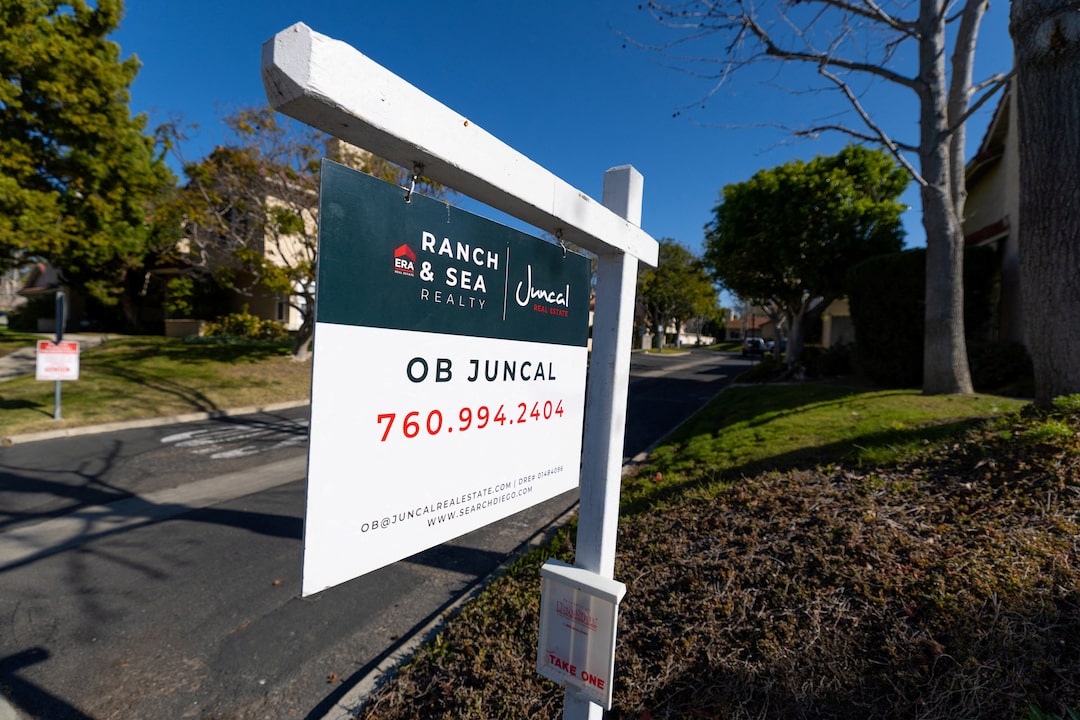
Wealthy buyers in the US are tearing down multimillion-dollar homes shortly after purchasing them for hundreds of millions of dollars.
According to a report by The Wall Street Journal, the trend is driven by a shortage of land in prestigious locations, particularly along coastlines.
For ultra-wealthy buyers, the prime factor has become the land’s location rather than the structure standing on it. After the acquired properties are flattened, newer, more modern homes are built on the cleared lots.
Drawing attention to the shift in the luxury real estate market, the report noted:
“The home itself, formerly the primary driver of an expensive real estate purchase, is now almost beside the point. Buyers are competing first and foremost for well-located land, situated on the ocean or a mountaintop.”
The newspaper cited moves by US billionaire William Lauder as an example. Lauder purchased the oceanfront estate of radio host Rush Limbaugh, who died in March 2023, for $155 million and had it completely demolished in July.
Lauder had previously torn down two homes situated on roughly 1.2 hectares of land along the Palm Beach coast. Having initially planned to construct his own residence on the parcel, Lauder subsequently sold the cleared plot for approximately $200 million.
Jonathan Miller, a real estate appraiser, stated that such transactions are becoming increasingly common as land prices rise.
Amid this momentum, estate agents have also begun marketing luxury homes directly as teardown lots.
Listings use artificial intelligence-generated imagery to showcase how the land would look without the structures on it.
Marketers avoid using the word “demolition” directly, resorting instead to terms such as “adaptive reuse”.
Teardown listings rise across luxury housing market
The trend is not confined to the coast and is spreading to other regions across the US.
Data from property brokerage Redfin reveals that references to demolishing buildings are becoming more frequent in sales listings.
The share of such listings exceeds 15% in the Bunker Hill Village area of Houston, while standing at 6.67% in Pimmit Hills, Virginia.
Dina Goldenteyer, a real estate agent working in Miami, remarked that serial demolitions have become more frequent because buyers no longer appreciate homes older than a decade.
Former retail executives Jamie Dooley and Christine Scott spent $3.7 million in 2020 to demolish a seaside home near Destin, Florida.
Although the couple spent five years building a modern home on the cleared site, they listed the resulting new structure with a demolition condition, citing the fact that no one wanted to buy the property as it stood.
William Paddock, an employee at the environmental consultancy WAP Sustainability, pointed to the environmental damage caused by this construction cycle.
Paddock emphasized that tearing down a home of roughly 1,000 square metres and replacing it with a new building of approximately 2,700 square metres generates a carbon footprint equivalent to the annual emissions of an average 250 American households.

An uptick in September inflation as the US midterm elections approach has pushed the cost-of-living debate back to the centre of the agenda for Democrats seeking to regain control of Congress from Republicans.
Annual inflation stood at 3.7% in September, according to the Consumer Price Index published by the Bureau of Labour Statistics, with energy, petrol, and electricity costs rising on a monthly basis.
Food prices remained flat from August to September, recording a 2.5% increase compared with the same period last year.
Democrats are anchoring their election campaigns to pledges of easing the cost of living, blaming the price increases on President Donald Trump’s tariffs and the war with Iran.
Trump and Republicans, pointing to the numerous left-wing candidates who won primary elections this year, contend that the opposition has become captive to “communists” within the party.
When annual inflation stood at 2.4% in February, the US and Israel launched the Iran war on the final day of that month, and prices continued to climb throughout the conflict.
The recent acceleration has not entirely reversed the retreat from the 40-year peak of 9.1% recorded in June 2022; however, the rate has remained above the Federal Reserve’s 2% target for over five years.
Fed policymakers raised the benchmark interest rate by a quarter of a percentage point last month, citing the battle against stubborn inflation. Officials will convene again next week to consider whether to raise rates or hold them within the 3.75% to 4% target range.
Energy and fuel record sharpest increase since first month of war
In September, energy prices posted their largest monthly jump since March, the first full month of the war with Iran, climbing 20.4% year-on-year. Energy costs had risen 2.1% from July to August, after falling 1.5% from June to July and 5.7% from May to June.
Recent escalations in Iranian attacks on oil tankers in the Strait of Hormuz, alongside more frequent strikes by Ukrainian forces against Russian refineries, have strained global crude oil and refined product markets, driving up US petrol and diesel prices.
Petrol prices also recorded their sharpest monthly increase since the first month of the war, climbing 9.1% from August to September, bringing the annual increase to 35.3%.
American Automobile Association (AAA) data shows the average price of regular petrol across the US stands at $4.26 per gallon; while below the level of roughly $4.48 recorded a month ago, it remains more than $1.20 higher than a year earlier. Average gallon prices exceed $6 in California and $5 in both Washington state and Nevada.
Electricity prices rose 0.2% from August to September, offsetting the 0.2% decline between July and August, and were up 4.4% year-on-year.
Heavy power demand from new data centres is feeding through into local household electricity bills. Trump argued that companies must cover the cost of the electricity required by their data centres themselves.
In a post on Truth Social, Trump claimed that he was requiring large data centres to generate their own power and feed the surplus back into the local grid, suggesting this could bring about “a major drop” in electricity prices.
Used vehicle market posts monthly rise as food costs stabilise
The cost of food at home fell 0.1% month-on-month in September, while dining out increased 0.2%.
Egg prices dropped to $2.27 a dozen, falling roughly 35% compared with September 2025 and remaining well below the 20-year peak of $6.23 recorded in March 2025.
Ground beef prices rose roughly 2.4% compared with September 2025, but at $6.48 a pound, they remained below the 20-year high of $6.98 reached in June.
Chicken held steady at its year-earlier level of $2.06 per pound last month, having fluctuated between $2.01 and $2.09 since November 2024.
Used car and truck prices fell 1.5% compared with September 2025, but rose 0.7% month-on-month in September following 0.4% increases in both July and August.
Heather Long, chief economist at Navy Federal Credit Union, noted that the sector faces severe pressure stemming from a combination of expensive replacement parts and a shortage of skilled labour.
Speaking to The Hill, Long emphasised that every cost pressure across the market is being felt directly at local auto repair shops.

Anthropic, developer of the artificial intelligence model Claude, reported a net loss of $80.7 billion for the first six months of 2026 ending 30 June.
According to a report by The Wall Street Journal citing the company’s draft initial public offering prospectus, this recorded loss nearly doubled the $42 billion loss incurred across the entirety of 2025.
The vast majority of that enormous figure, accounting for $72 billion, stemmed from accounting-driven book-value write-downs.
In contrast, the company saw a sharp surge in revenue, with turnover in the first half of the year climbing to $16.3 billion from $1.1 billion in the same period of the prior year.
During this period, Anthropic spent approximately $9 billion on computing power and infrastructure needs, surpassing in just six months the $7.3 billion spent across the whole of 2025.
The company has commitments to pay roughly $450 billion over the next seven to 10 years under cloud service contracts.
Under these obligations, contracts are planned for $111 billion with Google Cloud, $110 billion with Amazon Web Services, and $31 billion with Microsoft.
Anthropic will also spend up to $86 billion by 2033 and 2034, respectively, to lease Nvidia chips through smaller AI-focused cloud providers Nscale and Lambda.
The company could spend an additional $750 billion in the coming years to expand its computing capacity.
Roughly a third of the draft IPO prospectus was dedicated directly to risk factors.
The document highlighted the possibility that models could cause tangible real-world harm, noting that artificial intelligence could exhibit a “self-preservation” tendency and produce responses resembling “blackmail”.
Anthropic warned that the scale of damage caused by an AI-driven “catastrophic event” could render insuring against such risks impossible.
According to market expectations, Anthropic’s IPO could rank among the largest transactions in history, potentially surpassing SpaceX’s record.
Following the market debut, the company’s market valuation is projected to reach up to $2 trillion.

German officials urge fighter jet alliance with Sweden and Spain

US wealthy demolish multimillion-dollar mansions for land

US and Israel weigh Iran strikes after midterm vote, reports say

Pentagon plans covert spy ring for economic war on China, report says

EU reopens debate on naming envoy for Ukraine talks with Putin
-

 Europe2 weeks ago
Bill to drop NATO membership goal submitted to Ukrainian parliament
-

 America2 weeks ago
How will Brazil’s presidential runoff work?
-

 Europe2 weeks ago
Marine Le Pen unveils fiscal programme pledging French budget cuts
-

 Europe2 weeks ago
Berlin Left Party backs Israel’s right to exist for coalition pact
-
 Diplomacy2 weeks ago
The West is preparing for war not with Russia, but with its own people, French analyst Georges Kuzmanovic insists
-
 Europe2 weeks ago
EU seeks Chinese trade signal in Beijing as surplus widens
-

 Russia2 weeks ago
71 EU lawmakers demand closure of Russian Houses in 15 member states
-

 Europe2 weeks ago
AfD softens EU exit stance to seek reform of bloc and eurozone
