
America
BYD sales surge in Europe as Tesla faces ongoing struggles


Chinese automaker BYD saw its vehicle sales increase by 58% in the first three months of the year, presenting a stark contrast to the ongoing decline in demand for Tesla’s electric vehicles across Europe.
The Shenzhen-based group announced on Tuesday that it delivered 986,098 passenger vehicles in the first quarter. Of these, 416,388 were pure electric vehicles, marking a 39% increase. Enjoying a strong start to the year, BYD’s annual sales surpassed $100 billion for the first time, boosted by a resurgence in demand for hybrid vehicles within its domestic market.
Meanwhile, analysts have issued warnings that Tesla’s first-quarter deliveries, anticipated this week, are likely to show a decline exceeding 10%. This prediction comes as sales in France and other key European markets continued to fall in March, even following a significant model update.
Norway offered a glimmer of hope. The new Model Y, launched in the first week of March, reclaimed its position as the country’s best-selling car after experiencing two months of sharp decline. Vehicle registrations in Norway recovered substantially following a 48% drop in February, decreasing by only 1% to 2,211 vehicles in March.
Tesla began delivering the upgraded Model Y, its most popular model, in China at the end of February and rolled it out across Europe starting in early March. Despite this, official data released on Tuesday revealed that new car sales in France plummeted by 37% year-on-year in March, down to 3,157 vehicles. Similarly, sales in Sweden experienced a significant drop of 64%, falling to just 911 units.
Tesla sales have faced a considerable downturn in Europe since the start of the year. According to the Financial Times, analysts remain divided on the primary cause, debating whether the slump stems mainly from public reaction to CEO Elon Musk’s pronounced involvement in regional politics or from an aging product lineup.
Even before the release of March’s sales figures, analysts were already revising down their forecasts for Tesla’s first-quarter deliveries, which are typically announced around the second day of April.
Last week, Deutsche Bank reduced its forecast by approximately 50,000 vehicles, bringing the estimate down to 345,000 units. This figure represents an 11% decrease compared to the same period last year. In contrast, RBC Capital Markets anticipates deliveries reaching 364,000 units.
In a note, Deutsche Bank analyst Edison Yu remarked, “Beyond the numbers, we feel that there has been some brand damage in Western Europe and pockets of the US or Canada due to Elon Musk’s political activities, which is hurting demand.”
Tesla vehicles and dealerships have reportedly become targets of protests in both the US and Europe. This follows Musk’s unprecedented engagement in European political discourse and perceptions of his significant influence within the White House sphere.
Many believe Tesla is well-positioned among automakers to navigate potential tariff conflicts initiated by Donald Trump, largely due to its substantial manufacturing presence in America. Nevertheless, the company remains exposed to risks, as it sources a portion of its vehicle components from international suppliers outside the US.
The company recently issued a warning, suggesting that Trump’s proposed tariffs could potentially trigger retaliatory tariffs against the US. Such a scenario could increase the cost of manufacturing vehicles within America, impacting Tesla’s operations.



In the debate surrounding the dangers posed by artificial intelligence, almost everyone is attempting to market a product.
While the mainstream media portrays artificial intelligence as an imminent mass extinction event, US President Donald Trump frames the issue within the context of a new Cold War with China, arguing that the US cannot afford to slow down.
In his analysis, journalist Ken Klippenstein emphasizes that Silicon Valley elites profit directly from this intense attention.
A new generation of the tech class is occupying the public mind with various doomsday scenarios, ranging from bioterrorism to machines taking over the world.
While this dynamic transforms artificial intelligence into a “national security” issue, it elevates the technology to the level of nuclear weapons and removes it from public oversight.
The intelligence community thinks the A.I. apocalypse narrative is BShttps://t.co/DpyAIXx4ob
— Ken Klippenstein (@kenklippenstein) September 15, 2026
Although not immune to the tendency to exaggerate threats, reports from US intelligence agencies paint a picture far removed from the hysterical tone in the media.
The US intelligence community assesses that artificial intelligence merely magnifies risks that already exist.
Sensational headlines run by legacy media are fueled by social media figures who spread claims of human extinction to millions of followers. In this way, fears themed around “existential risk” or “doomsday” take root in the public imagination.
On the other side of the coin are those who oppose disaster narratives while pursuing their own commercial interests.
Prominent figures in this camp include Yann LeCun, former chief AI scientist at Meta, and Andrew Ng, co-founder of Google Brain and head of AI Fund.
In October 2023, LeCun accused OpenAI chief Sam Altman, Google DeepMind chief Demis Hassabis, and Anthropic chief Dario Amodei of running a “massive lobbying effort” designed to tilt the regulatory landscape in their own favor.
LeCun warned that if these fear politics succeed, artificial intelligence will be monopolized by a small number of corporations.
Ng, for his part, described the claim that artificial intelligence would destroy humanity as “mind-bogglingly stupid”, arguing that large corporations are stoking extinction fears to avoid competing with open-source models.
Although these criticisms carry truth regarding corporate aims, the conflicting interests of both sides remain striking.
LeCun and Ng advocate open-source artificial intelligence models, whereas Anthropic and OpenAI favor proprietary models that keep their source code secret and lease access to users.
While major players producing proprietary models possess the capacity to comply with prospective federal licensing rules, open-source enterprises stand to be damaged by such statutory mandates. The common ground shared by doom-mongers and deregulation advocates is their lack of concern for the actual risks artificial intelligence generates.
The US intelligence community provides a more measured framework regarding tangible dangers.
In the Annual Threat Assessment, which catalogues China’s military strength, Russian influence operations, and drug cartels, the threats posed by artificial intelligence are summarized in just three items:
“It is essential to ensure that the use of machines and AI remains under human control.”
“These applications also carry risks that require careful human engineering to properly mitigate the risk of AI autonomy before they are widely deployed.”
“Emerging technologies such as AI and quantum computing are expected to have significant implications for national security.”
The official assessment by the 18 agencies comprising US intelligence on the perils of artificial intelligence remains limited to these statements. The reports contain no determinations concerning superintelligence, the annihilation of humanity, or an uprising of machines.
The US Department of Homeland Security Threat Assessment notes that artificial intelligence merely introduces fresh layers of complexity to existing threats. The department outlines five primary issues:
Disinformation, fabricated video or audio recordings (deepfakes), and election interference;
Cyber operations and financial crime;
The exploitation of this technology by violent extremists, alongside radicalization;
The proliferation of chemical and biological knowledge;
The circumvention of AI security controls and the poisoning of training data.
All of these risks were familiar prior to the emergence of artificial intelligence. AI-enabled disinformation permits legacy propaganda methods to be deployed with greater speed and intensity.
Cyber operations, financial crime, and elements of radicalization have likewise ranked as familiar subjects for many years.
Concerns regarding biological and chemical threats date back to the Bill Clinton administration, while the fifth item stems entirely from humans tampering with AI security controls.
The Global Catastrophic Risks Assessment report by the Pentagon-funded RAND Corporation think tank defines artificial intelligence as an “entropy source”.
The report states:
“AI can be thought of as adding entropy and chaos to thorny problems humans face. Chaos does not require the development of superintelligent or supercapable AI; it is possible with current and near-term AI capabilities.”
Another research study conducted within RAND identifies genetically engineered pathogens, geoengineering, and nuclear war as three plausible pathways to human extinction.
However, numerous physical and operational constraints prevent artificial intelligence from triggering these catastrophes.
In a follow-up report investigating whether large language models facilitate the planning of a mass biological attack, RAND Corp. researchers identified no statistically significant difference between plans formulated with AI assistance and those produced independently.
The US National Academy of Sciences similarly notes that the primary barrier to bioterrorism is not an absence of access to information.
The decisive bottleneck lies in DNA synthesis screening, hands-on laboratory skill, culturing, formulation, and aerosolization: procedures that all demand human intervention, carry high costs, and remain prone to failure.
Having no commercial product to release or corporate shares to protect, official analysts record with balanced language that artificial intelligence does nothing beyond compounding the scale and velocity of current problems.
Observing that all factions resort to exaggerated rhetoric to capture attention, Klippenstein points out that in the debate over whether a chatbot will transform into a god, the major actors turn a profit while foisting the cost onto the public.
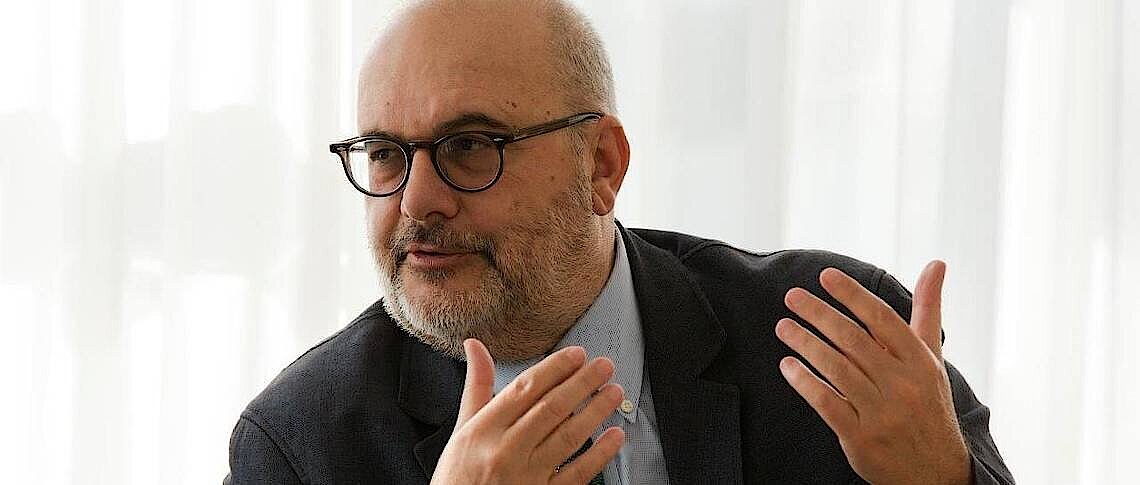
Branko Milanovic, who served as a lead economist in the World Bank Research Department for nearly two decades and currently holds posts as a research professor at the Graduate Center of the City University of New York and a visiting professor at the London School of Economics, gave an interview to Jorge Fontevecchia, co-founder of the Argentine newspaper Perfil.
Milanovic, the author of “The Great Global Transformation”, noted that the era of neoliberal globalisation has ended, giving way to a new order that is liberal internally but mercantilist externally.
Assessing the upheavals in global politics and economics during a visit to Buenos Aires, Milanovic stated that leaders such as Donald Trump, Xi Jinping, and Vladimir Putin came to power by harnessing societal backlashes that were already present.
Emphasising that the primary conflict in the contemporary world lies between monetary power and political authority, the veteran economist warned that if capital owners prevail, humanity could face a scenario reminiscent of the Roman Republic, where the masses were placated solely with bread and circuses while oligarchs mobilised the populace against one another.
When Fontevecchia observed that the title of his latest book evokes economic historian Karl Polanyi’s classic 1944 work, Milanovic explained the societal reaction against the excessive expansion of market relations:
“The title of my book does not recall Polanyi by accident. I have read Polanyi’s work three times, and my most recent reading took place about a year before I began writing my own book. Developments witnessed on a global scale showed me this connection clearly. Polanyi addressed the Industrial Revolution in England, the commercialisation of human relations that were not previously part of market logic, and society’s protective counter-response to this state of affairs. Neoliberal globalisation operated through a very similar process; it spread the market mechanism across the entire globe, including China, India, and Africa. At this juncture, we are at the end of an era. Societal resistance is mounting against this hyper-commercialisation. This does not mean we will return to a different system, but it clearly demonstrates that political balances have transformed and globalisation is retreating, at least on ideological terrain.”
Addressing the long-term rhythm of economic fluctuations, Fontevecchia recalled Nikolai Kondratiev’s cycle theories and asked about the historical placement of the current rupture.
Milanovic pointed out that an ideological cycle has reached its conclusion, rather than standard economic fluctuations:
“I am not speaking of conventional cycles in the classical sense where the economy expands and then enters a slump. The issue I mean is the completion of the era in which domestic as well as foreign policy was shaped ideologically under the guidance of neoliberalism. This model meant price flexibility, tax cuts, and deregulation domestically. Internationally, it rested on the free movement of capital, goods, technology, and to a certain degree, labour. Today, what is preserved is domestic-level freedom; on the international plane, we are transitioning to a new mercantilist phase. This is the primary reason I chose ‘National Mercantilist Liberalism’ as the subtitle for my book.”
Milanovic stated that with the rise of Asia, the gap in income, technology, and productivity that opened in favour of the West two hundred years ago as a result of the Industrial Revolution has begun to close.
Evaluating the new balance of power centred on China and the US, the economist stated:
“My book essentially centres on the axis between China and the US. China has transformed into an immense economic powerhouse that accounts for 23% of global gross domestic product in purchasing power parity terms, and 17% at market exchange rates. In the early nineties, no one foresaw that Beijing would grow to this extent. In the 1980s, Washington wanted to establish close relations with China, which it viewed as a counterweight to the Soviet Union and as a market promising immense profits economically. Indeed, a narrative was put into circulation suggesting that as a middle class developed in the country, the regime would automatically evolve into a democracy, as seen in the examples of South Korea or Taiwan. Personally, I do not believe people truly believed this, but at least they said so. Over the past decade, China has acquired the identity of a formidable global competitor. The shift of manufacturing to Asia and the saturation of markets with Chinese goods shook the middle class in wealthy nations. This phenomenon triggered deep political convulsions first in the US, and now in Germany.”
Responding to Fontevecchia’s question as to why global trade still revolves around the US dollar and why international financial institutions remain under Western control even though China has become the world’s largest manufacturer, Milanovic pointed to historical lags:
“Financial and military power still rests predominantly in the hands of the US. While the American military has bases in eighty countries, China has only a single base in Djibouti. When we look at history, a long time lag elapses between a country taking the lead in production and becoming a financial centre. The US surpassed the British economy around 1880 or 1890; yet London retained its status as the centre until the end of the interwar period. New York’s definitive primacy was certified only after 1944. Consequently, even if China is the power producing the most industrial goods, expecting finance to shift instantly to Shanghai or Hong Kong is unrealistic. Furthermore, the yuan does not possess the character of a currency with full freedom of capital movements. Roughly 90% of global transactions are still conducted in dollars. Even so, countries continue their search to diversify reserves and achieve independence from the dollar by deploying crypto assets or local currencies.”
Addressing the current state of the famous elephant curve depicting global income distribution, Milanovic recounted the delayed political repercussions of the 1988 to 2008 trajectory:
“That chart became almost like a band’s hit song that audiences constantly demand. Data between 1988 and 2008 documented that the top 1% of the global population and the Asian middle classes centred in China achieved massive income gains, whereas the middle class and workers in the West stagnated. There is a time lag between economic reality and its political consequences. Indeed, the bill for that era was reflected at the ballot box in 2016 with the Brexit vote and Donald Trump winning his first election. Today, however, the shape of the curve has transformed. Following the 2008 financial collapse, income growth for the top 1% in the West lost its former momentum; it took five years for American elites to recoup their losses. On the other hand, China climbed from the middle tiers of global income distribution towards the upper brackets.”
Milanovic confirmed the parallel between the shrinking income disparity among citizens worldwide and the rise of anti-establishment movements in wealthy countries:
“When we examine the two-hundred-year record from 1820 to 2023, the only era in which global income inequality declined continuously is the period of neoliberal globalisation from the 1990s to the present. The achievement of high growth rates by countries such as China, India, Vietnam, and Indonesia, which house nearly half the world’s population, narrowed the disparity on a global scale. However, global inequality lacks a direct political counterpart; there is no single world government to hold accountable. By contrast, the gap between rich and poor widened within the US, within the United Kingdom, or within China itself. It is precisely this polarization at the national level that people react to politically and that alters their voting preferences. Even if the world attaining a fairer income distribution is welcomed in theory, it does not suffice to offset the political destruction wrought by inequality within national borders.”
Sharing his projections for the coming quarter-century, Milanovic stated that assuming Asian countries grow two percentage points faster than members of the Organisation for Economic Co-operation and Development, an interesting demographic balance will emerge:
“My calculations show clearly. A generation from now, roughly as many wealthy Chinese as wealthy Americans will feature among the world’s affluent class. The weight of Asians in the top 10% or 20% will increase while the presence of Westerners will diminish. This development will create a serious loss of self-confidence for the Western world, because for the past two centuries Westerners sat uncontested at the top of the prosperity pyramid. When we look at the Eurasian landmass, we can anticipate that while Western Europe on the Atlantic coast and China on the Pacific coast grow wealthier, the belt comprising Russia and Central Asia in between will remain a sparsely populated and relatively low-income corridor.”
Evaluating the decline of Western countries in the Programme for International Student Assessment results and the success of East Asia, Milanovic said that screen addiction, pandemic lockdowns, and the weakening of critical thinking faculties played a role in the loss of educational quality.
Milanovic stated that the substitution of mental effort by advancing artificial intelligence tools could worsen this picture further.
Explaining the dynamics of the national mercantilist liberalism regime that replaced neoliberalism, Milanovic outlined how classical liberal ideals were abandoned:
“In classical liberalism, harmony existed between domestic policy and foreign trade. State intervention was kept to a minimum, incentives were provided through low taxes, and the profit motive was deemed valid both domestically and across borders. Foreigners and citizens were subject to similar treatment on the economic plane. In the current model, market freedom is preserved only within the country; in foreign relations, we are returning to the zero-sum mercantilist policies of the interwar period. Even if the ratio of trade volume to national income does not drop immediately, coercive measures such as investment bans, technology transfer barriers, and barring foreign firms from stock exchanges are direct products of this new mindset. The protectionist approaches of German economist Friedrich List are back on stage. Countries are now erecting walls on the grounds of protecting their industries. Regional free trade blocs like Mercosur for South America may endure, but the global market is fragmenting entirely. The approach the West terms ‘friendshoring’ essentially represents the logic of ‘we will not invest in China, but we will go to our ally Vietnam’.”
Pointing out that this dual structure contains serious theoretical incoherence, Milanovic continued:
“Behind neoliberalism lay decades of intellectual preparation by figures such as the Mont Pelerin Society, Hayek, and Mises. Today, no coherent doctrine exists. There is no systematic theoretical framework explaining Trump’s tariffs or Europe’s restrictions directed at China. We are inside an ambiguous fog. We are traversing an interim period governed by pragmatic, day-to-day decisions where market rules operate domestically while protectionism is imposed externally.”
Commenting on the position of Argentine President Javier Milei, Milanovic highlighted the contradiction between free-market radicalism and Trump-style protectionism:
“Milei stands beyond even the line of Margaret Thatcher and Ronald Reagan. Libertarianism is the most extreme form of neoliberalism. Nevertheless, similarities exist between Milei and Trump in terms of transforming politics. We are witnessing an era worldwide where traditional parties and classical ideologies are dissolving. Communism has vanished, and what social democracy represents has become ambiguous. What remains are anti-immigrant movements lacking a defined philosophical backbone. As I understand it, Milei symbolises the tendency to strip politics of its traditional forms. Trump likewise maintains no classical ties to his party; his Republican identity amounts to a mere formal cover.”
Examining the crisis of centre-left movements considered the architects of the neoliberal era, Milanovic explained that social democracy had lost its base:
“In the West, leaders such as Tony Blair, Bill Clinton, and Gerhard Schroeder turned social democracy into part of the neoliberal project. Clinton cut social welfare, Blair followed the same path, and Schroeder transformed employment contracts in Germany to the detriment of workers. Overwhelmed by income disparity, declining social transfers, and mounting precarity, working classes seeking actors to defend their interests turned to right-wing populist movements. Even if your income remains the same on paper, you become unsettled if you do not feel your future is secure. The left’s inability to offer a tangible alternative to this discontented populace paved the way for Marine Le Pen in France or the far right in Germany to gain strength. In Argentina, a similar exhaustion underpins poor strata turning at the ballot box to Milei’s party instead of the traditional Peronist movement.”
Pinpointing the 2008 global financial crisis as the origin of the rupture, Milanovic expressed how the system lost its legitimacy:
“The year 2008 created a major awakening in society. Millions lost their jobs; banks foreclosed on the homes of hundreds of thousands of families in the US and Spain. While the giant financial institutions that plunged the system into crisis were bailed out with public funds, ordinary citizens unable to pay mortgage debts were abandoned to their fate. This experience showed everyone whose interests the rules served. The final step of the political transformation was taken when Trump challenged the Republican Party elites in 2015. I recall he was openly mocked in the US media. While other candidates carried pages of tax calculations and technical briefs, Trump took the stage without briefing binders. When journalists asked what he would say, he replied: ‘The American working class is falling behind every day, coastal elites are taking their money, and China is benefiting from this; that is what I will tell people.’ Ultimately, he defeated first his party’s establishment figures and then Hillary Clinton to march to power.”
Stating that he discusses the infiltration of economic relations into daily life and the moral erosion caused by consumer culture in the final chapter of his book, Milanovic drew upon philosophical concepts:
“Every sphere of our lives has become commercialised. Tasks previously resolved within the family, from cooking at home to caring for the elderly, children, and pets, have turned into commercial sectors. People have begun measuring every action through the logic of monetary return. This feeds an insatiable greed. Plato defined this state as ‘pleonexia’, an irrational lust for gain that knows no bounds. Karl Marx termed this ‘abstract hedonism’. Abstract hedonism is the drive to possess even things you cannot consume or enjoy, purely for the sake of ownership. Corporations constantly want to sell people more, producing an endless dissatisfaction at the individual level.”
Responding to Fontevecchia’s question regarding the vision of classical economists, Milanovic recalled that Adam Smith valued the balance of power as much as the free market:
“Smith was not a blind champion of the market as commonly assumed; he vehemently opposed large monopolies and entities such as the East India Company using the state for their own interests. In ‘The Wealth of Nations’, he states that free trade would close the technological and military distance between nations, and that mutual fear would ensure global peace once the parties became equal. Smith thought commerce would establish peace by producing a balanced distribution of military power. Today, trade competition has transformed directly into an instrument of supremacy and coercion.”
Emphasising that end-of-history theses have lost validity, Milanovic stated that the current national mercantilist regime is also not permanent:
“In my lifetime I have witnessed the unraveling of two major ideological systems. The first was the dissolution of the Soviet system, and the second is the exhaustion of neoliberal globalisation that we are experiencing today. Francis Fukuyama’s end of history concept, formulated with reference to Hegel, does not reflect reality. The current mercantilist phase may last perhaps twenty, perhaps forty years. Thereafter, central planning models directed by artificial intelligence or other political structures we do not yet know may emerge. As power balances shift, humanity will search for new institutional patterns.”
Finding it analytically deficient to group Trump, Xi, and Putin together under a single label, Milanovic noted that all three leaders drew strength from resentment over elites accumulating excessive power:
“Uniting these three leaders solely under the autocrat label is to oversimplify the issue. Their common ground is the ability to use the unease generated by the neoliberal era as a stepping stone to power. In China, during the era of Hu Jintao, wealthy capitalists began infiltrating Communist Party mechanisms and decision-making processes directly. When Xi Jinping assumed leadership, he broke this influence by relying on the bureaucracy. The Chinese model permits becoming wealthy, but draws a strict line against attempts to buy political power. In Russia, Putin ended the oligarchic domination of the Boris Yeltsin era, tying the distribution of wealth directly to the supervision of security agencies and the state apparatus. Trump similarly converted grievances against American globalist elites into political power.”
Evaluating Perfil’s observation that tech billionaires like Elon Musk and Peter Thiel aspire to assume financial, political, and institutional roles, Milanovic concluded:
“Capital circles desire power to be concentrated directly in their own hands. They believe all societal problems can be resolved through technological or economic instruments. Yet distributing minimum stipends for mere survival to vast unemployed masses does not provide a solution; people seek meaning and purpose in their lives. If these plutocrats overcome the state apparatus and establish direct dominance, the world will be dragged into the conditions of the late Roman Republic. Masses of whom 30% are unemployed, minimally fed, connected to the internet, but possessing no productive purpose in life will be driven into the streets with promises of bread and circuses during power struggles waged by one oligarch against another. The primary existential struggle in today’s world is playing out between politics claiming to represent the public will and wealth owners who believe they can buy everything.”

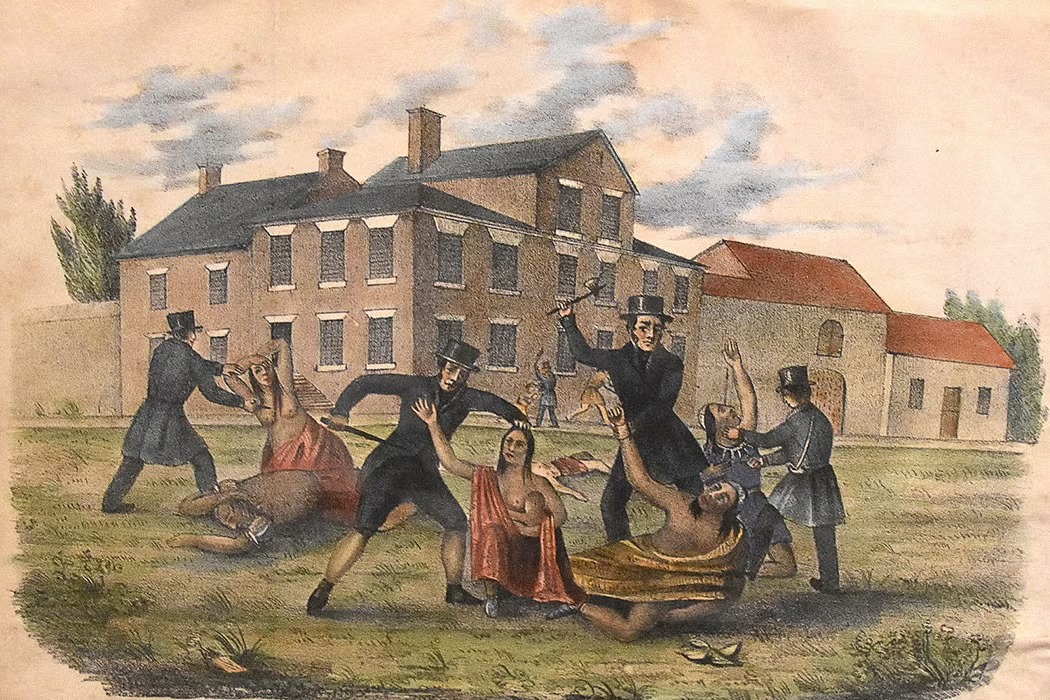
Legend has it that in the winter of 1811, Andrew Jackson, not yet US president, was escorting a coffle of enslaved people along the Natchez Trace, an ancient Native American trail winding alongside the Mississippi River, when he was intercepted by federal agent Silas Dinsmore.
Though not yet president, he was already a prominent figure across the Western borderlands: Tennessee’s first representative elected to Congress and to the state Supreme Court; commander of the Tennessee militia; a man of immense fortune amassed as a lawyer, merchant, horse breeder, and planter; and the vigilant guardian of vast profits reaped from slavery, the slave trade, and the violent expulsion of Indigenous peoples from their ancestral lands. Indeed, according to some accounts, Jackson remains the only president to have personally driven slave convoys (coffles).
Federal officials like Dinsmore were deployed across the region under the 1807 Intrusion Act to prevent squatters and settlers from encroaching upon Western public lands. The American Founding Fathers had rebelled in 1763 against King George III’s Royal Proclamation, which barred white settlers from crossing beyond the Ohio River; yet those very same founders now sought, through analogous federal legislation, to halt the westward deluge of unruly, defiant, and armed settlers.
A few years earlier, Congress had outlawed the transatlantic slave trade. The purpose of Dinsmore’s checkpoint was to verify that the human “chattel” transported along this route were “genuine slaves”, either imported prior to 1808 or born within the United States.
Accounts of what transpired next diverge sharply. In one version, when the federal agent demands his papers, Jackson points to the US Constitution, retorting, “Here they are.” In another version, the future president draws his pistols and declares, “These are my passports!” Whatever the literal truth, Andrew Jackson, the slave trader, proclaimed that no federal statute or official had the authority to shackle his “commercial” enterprises or meddle with his property rights. He subsequently launched a ferocious campaign to have Dinsmore dismissed, punctuated by explicit threats against the federal agent’s life. In one of his fiery protest letters to the federal government, he demanded: “Lord, has it come to this? Are we freemen or are we slaves? Is this real, or is it a dream?” In the end, he had his way. Dinsmore was ultimately relieved of his post. In his defence, Dinsmore observed that “gentlemen from the Western Country” of Jackson’s stripe believed themselves bound by no law whatsoever. In their eyes, a federal agent merely demanding documentation verifying the ownership of enslaved people was itself a form of “slavery”.
Legend has it that in the winter of 1811, Andrew Jackson, not yet US president, was escorting a coffle of enslaved people along the Natchez Trace, an ancient Native American trail winding alongside the Mississippi River, when he was intercepted by federal agent Silas Dinsmore.
Though not yet president, he was already a prominent figure across the Western borderlands: Tennessee’s first representative elected to Congress and to the state Supreme Court; commander of the Tennessee militia; a man of immense fortune amassed as a lawyer, merchant, horse breeder, and planter; and the vigilant guardian of vast profits reaped from slavery, the slave trade, and the violent expulsion of Indigenous peoples from their ancestral lands. Indeed, according to some accounts, Jackson remains the only president to have personally driven slave convoys (coffles).
Federal officials like Dinsmore were deployed across the region under the 1807 Intrusion Act to prevent squatters and settlers from encroaching upon Western public lands. The American Founding Fathers had rebelled in 1763 against King George III’s Royal Proclamation, which barred white settlers from crossing beyond the Ohio River; yet those very same founders now sought, through analogous federal legislation, to halt the westward deluge of unruly, defiant, and armed settlers.
A few years earlier, Congress had outlawed the transatlantic slave trade. The purpose of Dinsmore’s checkpoint was to verify that the human “chattel” transported along this route were “genuine slaves”, either imported prior to 1808 or born within the United States.
Accounts of what transpired next diverge sharply. In one version, when the federal agent demands his papers, Jackson points to the US Constitution, retorting, “Here they are.” In another version, the future president draws his pistols and declares, “These are my passports!” Whatever the literal truth, Andrew Jackson, the slave trader, proclaimed that no federal statute or official had the authority to shackle his “commercial” enterprises or meddle with his property rights. He subsequently launched a ferocious campaign to have Dinsmore dismissed, punctuated by explicit threats against the federal agent’s life. In one of his fiery protest letters to the federal government, he demanded: “Lord, has it come to this? Are we freemen or are we slaves? Is this real, or is it a dream?” In the end, he had his way. Dinsmore was ultimately relieved of his post. In his defence, Dinsmore observed that “gentlemen from the Western Country” of Jackson’s stripe believed themselves bound by no law whatsoever. In their eyes, a federal agent merely demanding documentation verifying the ownership of enslaved people was itself a form of “slavery”.
I have previously written on the American “frontier mentality” and how it was theorized by Frederick Jackson Turner at the close of the nineteenth century. Here, a clarification is perhaps warranted: one must distinguish between the word border, which signifies fixed state boundaries, and the term frontier, which, drawing an analogy from our own history, denotes a more fluid zone akin to the uc or serhat [the marchlands or shifting imperial periphery]. While a border in American history denotes a determinate, immutable, and demarcating boundary line, the frontier invoked by Jackson as a marcher domain signifies, by turns, a distinct way of life or cultural realm, the westward expansionist rush, and, in another sense, a safety valve engineered to avert domestic civil strife.(1) In this sense, the frontier corresponds to a mental construct, both material and fantastical, through which white American settlers forged their conception of liberty. Freedom, democracy, civilization, and innovation are continually hailed as products of this frontier mentality. Here, colonial expansionism and the internal cohesion of society are conceived in tandem.
At least in the Jacksonian universe. The Jacksonian era, which saw Jackson elected president after overthrowing the coalition of the Founding Fathers, is an epoch that Donald Trump frequently praises and draws inspiration from. Reflecting American boundlessness rather than mere American exceptionalism, this period coincided, not accidentally, with racial terrors, the populism of the white “common man”, and relentless financialization and speculation. Sociologist Daniel Bell points out that this sense of boundlessness engendered a certain “lightness” within the American national character, fostering the illusion that this nation had freed itself not only from the weight of history, but even from the constraints of nature, life, and death itself. American settlers were not merely moving west and south; they were actively incited to do so. Dispossessing Indigenous populations, confiscating Mexican territory, and annexing numerous new states to the United States were viewed, on the one hand, as preventive measures against domestic “social explosion”; yet, on the other hand, they inevitably expanded the non-white population within the country. The appalling violence along the frontier simultaneously gave rise to liberty, ethnic cleansing, master-race democracy, and racialized dread of non-white peoples. The Indian Wars not only secured fresh land for white settlers, but also injected into these “virgin” territories real estate speculations and financial chicanery far beyond the capacity of the ordinary white man to withstand.
The blood-soaked frontier of capitalist accumulation
Capital comes into the world dripping from head to toe with blood and dirt; it accumulates; cyclical bottlenecks impede its accumulation; it stalls, and then it lurches forward to push the frontier further out. This leap forward manifests at times as technological advancement, and at others as the violent conquest of new markets and human populations.
American capitalism, having set its sights first on the whole of North America, then across the entire American continent, soon after across the Pacific, and eventually over the whole planet, pairs the myth of boundlessness with an intrinsic drive toward domestic and external expansion. In an essay examining area studies and geography, the Marxist geographer Neil Smith observes that the United States conceptualizes the world as flat. From Woodrow Wilson’s reimagining of the Monroe Doctrine on a global scale to the globalization agendas of the Clinton and Bush eras, US rulers have consistently envisioned the globe as a frictionless space through which American capital can circulate unhindered, liberated from geographic boundaries and physical barriers. Consequently, the border must perpetually function as an open frontier; it must forever be thrust outward. “In such a world,” Smith asks, “what could possibly be the utility of deep geographic knowledge?” According to Smith, the widespread geographic illiteracy observed among Americans constitutes, above all else, “a highly rational expression of a specific imperial ambition.”
For this reason, the “closing of the frontier” is synonymous with doomsday for the Jackson-Wilson lineage. I wish to emphasize once more the spiritual significance underpinning the frontier idea: the white man’s lust for dominion across the Americas and the wider world cannot brook containment at home either. Jackson’s refusal to present identification to a federal agent effectively foreshadowed the conflict of the American Civil War. Northern Yankees seeking to emancipate the cotton-picking slaves of Southern planters were perceived as assaulting liberty, property, and the patriarchal family. The Anglo-Saxon and Teutonic spirit of liberty, supposedly lost in Europe before its rediscovery by the Hitlerites, had supposedly been reclaimed in America. Structural impediments such as entrenched bureaucracy and feudalism were absent in the New World. The Aryan spirit of independence, having emerged from the German forests and crossed the Atlantic, was revitalizing this boundless continent. Now, the Northerners were stripping away private property, subjecting the South to military occupation, and swelling the federal state under the pretext of aiding former slaves.
Doubtless, the contours of today’s battle between Trump, the forces coalescing around him, and their adversaries bear the unmistakable imprint of this border conflict. The closing of the frontier, both abroad and at home, inevitably necessitated a domestic and external social reorganization. The New Deal order, reviled today by Trumpists, neoconservatives, libertarians, and Silicon Valley prophets alike, rested fundamentally on the premise that the frontier had closed. It is true that the New Deal was riddled with internal contradictions. Franklin Delano Roosevelt made constant concessions to Southern Democrats, while labour protections were never granted constitutional status. Moreover, the international expansion of the New Deal was rendered possible solely through warfare; the American New Deal incorporated on the world stage the internationalization of American capital, seeking to ensure that it encountered no frontiers across the globe.
Yet the metaphors wielded by the warring factions endure intact. The closing of the frontier demanded an internally oriented, relatively “social” state. This domestic compact was hemmed in by the structural limits of capital and the boundaries erected by socialism and democracy. The neoliberal and neoconservative sorties of the 1970s represented a concerted counter-offensive against these very boundaries.
The apocalyptic representation of the American economy
The Economist argues that American capitalism has taken an “apocalyptic turn”. According to the publication, apocalyptic thinking has emerged as the single most potent driving force within contemporary American capitalism.
Elon Musk, for instance, seeks to establish a colony on Mars through SpaceX in order to safeguard against “existential threats to humanity”. Musk is hardly alone. This apocalyptic gloom is nurtured by the familiar liberal premise that terrestrial resources are intrinsically finite, compounded by the eschatological debates swirling around the civilizational threats posed by artificial intelligence.
“Today’s American business landscape,” writes The Economist, “is classified not by industry, but by eschatology. The spectres of war and geopolitics loom as large over corporate boardrooms as the perils of AI.” The magazine recalls that last year, Palantir CEO Alex Karp authored a book arguing that the future of the West hinges on high-tech defence firms like his own. Palmer Luckey, founder of Palantir’s sister company Anduril, another defence technology firm, routinely airs his conviction that China will attempt an invasion of Taiwan. According to The Economist, virtually every corporation trading in critical minerals now spins a compelling narrative explaining why its proprietary assets would become agonizingly scarce in the event of such a conflagration.
This bleak disposition is rapidly spreading across the financial sector. Much of Wall Street is reported to be in a “fatalistic mood”. Capital withdrawals by investors from previously obscure private credit funds have recently undermined confidence across private markets as a whole, the magazine notes, observing:
“The roster of financial innovations that central bankers warn pose ‘systemic’ risks to the economy is so vast that it is astonishing the edifice has not buckled under the sheer weight of its own dread. Cryptocurrency, one such vehicle, is inherently an apocalyptic enterprise; it purports to offer insulation against state interference and against the inflation generated by ‘Uncle Sam’s’ profligate spending, most notably in defence.”
Last year, the most widely read volume on Wall Street was reportedly titled “1929”. For the current year, a plausible candidate might well be “1873”, suggests The Economist. Investors increasingly characterize equity markets by drawing parallels with historical catastrophes. A Deutsche Bank strategist recently asked: “Will 1999 morph into 2000, or into 1987? Or will the clock simply reset to 1996?” The Economist considers a replay of the 2008 scenario equally plausible.
The publication contends that this millennial economy is structurally “paranoid”. “Historically,” it notes, “the appearance of comets presaged the end of the world.” Today, however, web trackers monitor the private jets of the super-rich, driven by the suspicion that, should cataclysm strike, the elite will flee to fortified redoubts.
The American economy is sustained in an unsustainable manner by the expenditures of the super-rich, while the vast majority subsists under conditions of increasing precarity. At least, this is the diagnosis offered by the economists cited by The Economist, who emphasize the emergence of a “K-shaped” economy.
The Governor of Utah warns that if the US loses the AI race to China, the country is finished. Musk, in a dispute with Sam Altman over OpenAI’s governance structure, wrote: “Excuse me, but the fate of human civilization is at stake.” Why, then, if the outlook is so catastrophic, do American equities remain so richly priced? According to the magazine, firms are raising capital in direct proportion to the severity of their doomsday narratives, scrambling to secure funds ahead of the impending market crash that many anticipate.
The Economist lays the underlying logic bare: “America is an experiment in terrifying oneself into prosperity…. There is no sales pitch to investors more compelling than asserting that your venture will bring about the end of the world as we know it.”
Yet the most provocative insight is reserved for the conclusion. An economy that pairs widespread corporate distrust with “an escalating elite millennialism is an economy primed to detonate.” And it adds: perhaps the lurking historical precedent is not 2008, 1999, 1973, or even 1873, but 1789.
The closing of the frontier and the quest for new frontiers
The neoliberal and neoconservative response to the closing of the frontier, constantly scouring the horizon for new accumulation frontiers, has ultimately targeted artificial intelligence. The emergent paradigm that Giulia Dal Maso designates “longevity capitalism” transforms human life itself into an “asset class”. Dal Maso writes:
“Life expectancy, and the uncertainty surrounding it, is no longer perceived as a self-evident, universal absolute. What follows examines how (extended) life has been captured; how the volatility surrounding longevity has become a new accumulation frontier, a terrain where capital extracts value from the indeterminacy of biological time. The term ‘longevity capitalism’ is advanced to theorize this formation: a biopolitical and financial regime through which capital subsumes the temporality of life into its own circulation.”
Biological duration has ceased to be a mere metaphor for capital accumulation; it has become its actual operational medium. Under longevity capitalism, the reproduction of labour power shifts fundamentally: “what capital has learned to colonize and feed upon is biological time itself, namely the indeterminate duration of the living body.”
The obsession of tech magnates such as Bezos, Altman, Musk, and Thiel with “longevity”, along with their aggressive capitalization of longevity startups, signals both the commodification of new frontiers and novel strategies for breaching systemic barriers. This quest is by no means confined to cryonics or anti-aging therapies: island utopias, charter cities, special economic zones, and offshore tax havens are part of the same architecture. According to Dal Maso, the political horizon of these elites is transparent: no death, no taxes, no democracy.
Here we encounter precisely what Melinda Cooper terms “patrimonial capitalism”. In my previous article, I touched upon Joseph Schumpeter’s gloomy prognostications regarding the fate of capitalism. For Schumpeter, the rise of the joint-stock corporation, the “democratization” of corporate ownership via public stock listings, and the structural divorce of administrative management from legal ownership sounded the death knell of capitalism, initiating an irreversible decline: an epoch in which the means of production were socialized was inevitable. Socialism would, regrettably, triumph. Schumpeter posited that capitalism harboured a tendency not to deepen its inherent contradictions, but rather to mitigate them. Rather than polarize, capitalism tended toward equalization. In the process, capitalism’s signature dynamic, “creative destruction”, was being eliminated.
Cooper reminds us that Schumpeter’s “ideal” capitalism was an organizational model in which capital accumulated through the vehicle of the dynastic family enterprise. Schumpeter traced the dark horizon of capitalism directly to the disintegration of the bourgeois family. The founding of a family was the primary psychological engine underpinning the impulse to innovate:
“Only a subject thinking across generational horizons was capable of executing the heroic leap of faith demanded by genuine innovation. The authentic entrepreneur was willing to sacrifice immediate personal consumption precisely because he was animated by the desire to establish an enduring fortune for his progeny.”
In sum, the “heroic entrepreneur” was, by definition, “simultaneously a prospective founder of dynastic wealth.”(2)
Today’s crop of tech billionaires appears to have rediscovered the allure of what Cooper identifies in Schumpeter as “reactionary futurism”. According to Cooper, the monetary and regulatory environment of the new millennium, combined with the structural erosion of New Deal securities statutes, has fatally compromised the governance architecture of publicly traded corporations. There now exists a new corporate elite composed of private equity investors and entrepreneurial founders who exercise unchecked managerial authority over the firms they control. Figures like Elon Musk and Peter Thiel have ascended precisely upon this material foundation. The “mythic aura of the founder-entrepreneur” is weaponized through these personalities. Thiel, for example, contends that founder-dominated enterprises resemble “feudal monarchies”, contrasting them favourably with allegedly more “modern”, publicly listed corporations characterized by dispersed shareholder structures and managerial bureaucracies. In Thiel’s view, founder-entrepreneurs can act decisively, command feudal loyalty, and execute multi-decade visions. Conversely, “impersonal bureaucracies staffed by credentialed managers” remain fixated on short-term quarterly metrics demanded by public equity markets. Cooper writes:
“Thiel’s corporate philosophy exalts the founder as a primordial patriarch, an antinomian figure who razes existing codes to establish new ones, gazing toward a distant technological horizon while resurrecting archaic social hierarchies. In his imaginative universe, founders may be cast as orphaned sons, fratricidal brothers, or patricidal heirs; yet it is precisely through these transgressive acts that they emerge as architects of new dynastic bloodlines and familial fortunes.”
Thus, we witness the corporate roots of the structural tension dividing the Silicon Valley vanguard from the “professional-managerial class” (PMC), an administrative stratum that ballooned under neoliberalism and serves as the primary constituency for contemporary “woke” institutional culture. Silicon Valley-backed Trumpism regards the dismantling of the New Deal administrative state and the eradication of the managerial corporate apparatus, which it decries as the breeding ground of “wokeness”, as one and the same objective.
The contradictions of the long downturn
What happens when the frontier is closed, or when the channels to reopen it are blocked? The fundamental divergence between Jackson and Trump lies in the fact that Jackson symbolized an expanding American capitalism, whereas Trump embodies a defensive entrenchment strategy for an empire in decline. While Trump’s predatory posture toward Greenland, Mexico, and Canada mimics the westward-charging settler ethos, too much water has passed under the bridge. Excepting transitory speculative booms, American capitalism has been caught in structural stagnation since 1973. The frontier appears closed; yet a powerful fraction of capital refuses to submit to this closure, seeking instead to batter the gates down.
This zero-sum dynamic is reigniting debates over the “return” of the state. How do boundless accumulation and state expansion coexist? First, as Quinn Slobodian demonstrates in Globalists, the libertarian, neoliberal, and ordoliberal imaginary has never been preoccupied with an unfettered market so much as with a minimal state secured by an overarching international legal framework. Second, prolonged economic stagnation highlights a configuration that vindicates Dylan Riley and Robert Brenner’s widely debated theorization of “political capitalism”: as capital becomes increasingly reliant on political intervention to underwrite its profitability, the capacity of wage workers to organize mass resistance and articulate a “common cause” is steadily degraded. According to Riley and Brenner, within this structural matrix, the “unskilled” segment of the working class, particularly those possessing the “advantage” of being native-born or white, retreats into its “primary” identities, attempting to capture income redistribution in its favour through an aggressive assault on social expenditures. Conversely, the credentialed segment of the working class, employed overwhelmingly within low-margin service sectors, seeks to preserve and expand the welfare state. “At the mass level, therefore,” the authors conclude, “the material basis of political conflict in the US is fundamentally a struggle waged between these two distinct segments of the working class over the allocation of social spending.”
Hence, credentialed, university-educated professionals form the electoral backbone of the Democratic Party. Anchored in state-subsidized private and non-profit sectors, particularly healthcare and education, these workers organize their politics around state-mediated “trickle-down” redistribution.(3) The policy platforms championed today by Daron Acemoglu and Joseph Stiglitz as “working-class liberalism” or “progressive capitalism” represent the programmatic articulation of this stratum’s class interests. Demands for the regulatory containment of artificial intelligence likewise reflect the acute status anxieties of this white-collar constituency. While AI occupies a central position in Silicon Valley’s quest for a new frontier, it reverberates with distinct apocalyptic overtones for the PMC.
The rightward drift of the precarious, largely white working class is, according to the authors, “best understood as an expression of transparent material interests.” In the absence of viable structural alternatives, this constituency falls back on its primary identities to defend its precarious position within the labour market and protect the value of its modest assets. It embraces a populist strain of supply-side economics, launching a fierce assault on social spending, which it perceives, not entirely without reason, as a redistributive machinery that diverts resources away from itself toward other segments of the working class.
This systematic attack on social spending sits at the very core of right-wing working-class politics, according to Riley and Brenner. The authors acknowledge that this posture appears contradictory on its face. “Yet,” they add, “when no viable political mechanism exists to shift aggregate income from capital to labour, underwriting capitalist profitability constitutes a rational, second-best strategy in the short run.” This calculus forms a central pillar of the broad and durable working-class support enjoyed by supply-side economic policy and its structural assault on the welfare state.(4)
***
The libertarian economist and Nobel laureate James M. Buchanan framed the vital function of the frontier in distinct terms: the frontier offered the institutional option of “exit”. Left to operate without bureaucratic state intervention, the market would function in precisely the same manner as the frontier: it would provide an escape hatch from coercive social relations and the tutelage of the nanny state. The frontier was the very incarnation of liberty.
The imperative of exit or escape constitutes one of the defining motifs of Silicon Valley eschatology. The obsession with pushing beyond frontiers is merely its outward manifestation: whether framed in geographical terms (including the colonization of space or Mars) or through the diversification of speculative assets, the strategy of exit resolves into fleeing the apocalypse or transforming the apocalypse itself into an exceptionally lucrative investment opportunity. The speculative bubble currently enveloping AI indicates that capital allocation is oriented not toward contemporary demand, but toward financing speculative escape trajectories for the future. Capital expansion proceeds detached from authentic social utility, guided strictly by expected returns. Investment is wholly uncoupled from tangible demand; forward-looking speculation has emerged as the primary motor of the capitalist psyche, sustained by blind guesses.
In the concluding installment, we turn our focus to scenarios of systemic collapse. Visions that read like science fiction or speculative fantasy will be scrutinized as structural pillars of contemporary capitalist eschatology.
(1) The safety-valve doctrine embedded within the American frontier mentality historically encompassed the systematic sexual violation of Indigenous women. This dynamic offers a harrowing illustration of how structural violence was biologicalized to reproduce racialized and gendered hierarchies. In The End of the Myth, Greg Grandin observes that women across every class, caste, and skin colour were subjected to pervasive sexual violence, with enslaved Black women bearing the brunt of this brutality. The passage is long, but essential for grasping the perverse internal logic of this mindset:
_”During the decades leading to the Civil War, as abolitionists began to describe slavery as a moral evil that was degrading republican values, proslavery ideologues responded by defining the institution as a ‘positive good’ that helped elevate republican virtue. Enslaved people were commodities, bought and sold in the market. But having many slaves, southern cavaliers said, allowed proslavery advocates to rise above the market’s crassness and develop more refined, chivalric qualities. Rape was an instrument of that refinement. Enslaved women, proslavery ideologues said, were ‘safety valves’ that helped siphon white male lust away from white women, allowing southerners to present their section as genteel and mannered. Writing to the Jamestown Journal in New York to complain about an abolitionist editorial that described the regime of sexual terror that southern, enslaved women were forced to endure, Samuel Rutherford, a slave trader from Knoxville, Georgia, conceded the accuracy of the editorial but said that sexual access to enslaved women functioned as a ‘safety-valve to the virtues of our white women, which are so much higher in the scale of virtue than your northern women.’’”
(2) Cooper advances crucial insights regarding this structural transformation. Her analysis warrants citation at length:
“At its peak, shareholder value ideology promised a more democratic form of capitalism and a wider distribution of financial wealth. The twenty-first century presents a very different picture. Accelerating since the 2008 global financial crisis, privately held, founder- or family-controlled firms have assumed a new prominence in American financial markets. Aided by alternative avenues of private financing, tech startups have deferred public listings for as long as possible, achieving multi-billion-dollar valuations without undertaking an IPO. When they do eventually list, they devise elaborate governance mechanisms to insulate insider control behind a veneer of public ownership. Today, some of the most capitalized tech corporations rely on dual-class share structures and bespoke voting arrangements that empower the corporate founder to override the majority of public shareholders on all significant matters. The resurgence of founder control is largely attributable to the dramatic expansion of private credit markets, an unintended consequence of post-crisis banking regulations. Private funds such as venture capital and private equity have assumed an increasingly central role in channelling direct funding to startups seeking to evade the regulatory oversight of public equity markets. Projecting their own structural preferences for asymmetric authority, private funds have actively indulged autocratic tendencies among entrepreneurial founders, presiding over the emergence of a new executive caste distinguished both by extraordinary corporate power and staggering private fortunes. Alongside private fund managers, tech founders dominated the billionaire rankings throughout the 2010s and early 2020s, a period when consecutive waves of quantitative easing by the Federal Reserve drove asset valuations to historic highs. This unprecedented windfall was funnelled directly into family offices: kinship-based wealth preservation structures that have themselves evolved into aggressive investors within private asset markets. The institutional relations binding the actors of this private equity ecosystem are deeply intertwined: successful founders and retired fund partners invariably entrust their wealth to family offices, which in turn deploy substantial capital back into private equity vehicles, venture rounds, and founder-dominated corporations. These dynamics exemplify a pronounced drift toward ‘patrimonial’ capitalism, where the boundaries separating dynastic wealth preservation from the structural requirements of entrepreneurial innovation are systematically dissolved.” Hence, the dynamics of hyper-financialization and the anti-establishment posturing of the post-neoliberal era operate in profound structural alignment.
(3) Riley and Brenner highlight that the expansive apparatus of non-profit entities, philanthropic foundations, and charitable trusts constitutes another primary employment reservoir for credentialed professionals, noting that aggregate employment within this sector now exceeds that of domestic manufacturing. In their estimation, these institutional complexes are structurally committed to advancing technocratic remedies for systemic crises, most notably racial disparities.
(4) The authors observe that more privileged segments of the working class that have succeeded in acquiring private property naturally constitute a receptive audience for conservative economic proposals hostile to wage increases and redistributive taxation.

Big Tech profits from AI extinction hype, Ken Klippenstein says

Israel military weighs legal steps against Gaza documentary makers

Finkelstein says US campus clampdown has surpassed McCarthyism

DeepSeek engineer warns AI will lead to communism or Cyberpunk

Israel pledges full Greek control over Achilles’ Shield source code
-

 Europe2 weeks ago
Germany’s CDU drafts tougher citizenship rules to counter AfD
-
 Diplomacy2 weeks ago
Geoffrey Roberts sees Ukraine war concluding within coming months
-

 Diplomacy2 weeks ago
Pope Francis accused Opus Dei of mafia tactics over Spanish shrine
-

 Diplomacy2 weeks ago
US expands military footprint in Somalia with new Bosaso base
-

 America2 weeks ago
Milei hardens Falklands stance with oil sanctions and defence push
-

 Middle East2 weeks ago
Ben Gvir reveals plan to expel majority of Gaza population
-

 Asia2 weeks ago
China leads $54bn capital injection into state banks and insurers
-

 America2 weeks ago
Pentagon launches mass polygraph inquiry over munitions leaks
