
America
Coup d’état plan in Venezuela orchestrated with the US support

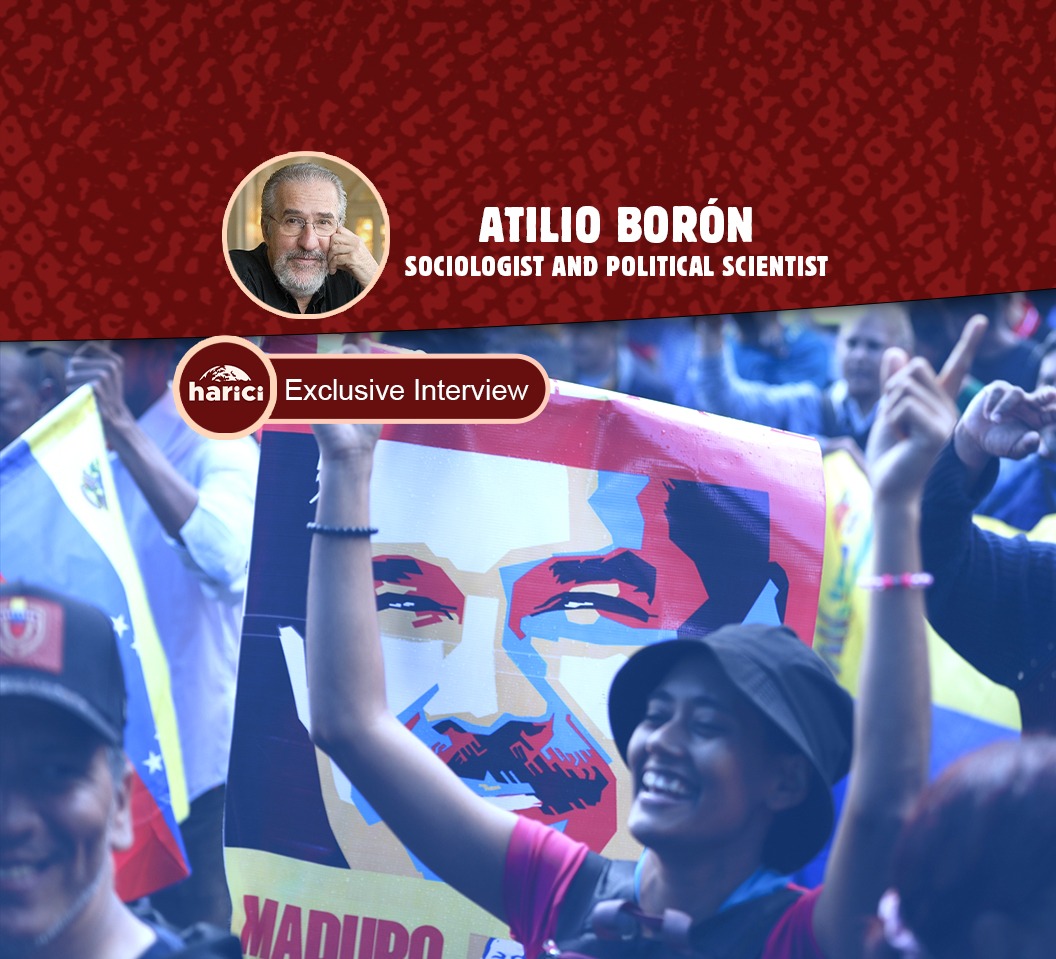
Atilio Boron is an Argentine sociologist, political scientist, professor and writer. PhD in Political Science from Harvard University, who closely follows the political and geopolitical realities of Latin America and the world. On July 29, one day after the presidential elections were held in Venezuela, I met with Boron, in the lobby of the Gran Meliá hotel in Caracas, where part of the more than 1,000 international and national observers were staying. The electoral observers were invited by different institutions of the Venezuelan State to participate in the democratic event of the year in the Caribbean country.
By the time I conducted the interview, on Monday afternoon, a good part of the streets of the Venezuelan capital were filled with demonstrators, most of them protesting peacefully, demonstrating their disapproval of the result of the electoral elections on the 28th of July, when the majority of Venezuelans who exercised their right to vote elected the current president Nicolás Maduro for a new term (2025-2031).
However, in parallel, a group of masked people moving in blocks of several dozen motorcycles began to violently take control of the city. Literally, Caracas began to burn and other cities in the country joined the protests, which had stopped being democratic and peaceful and turned into a civic Coup d’état with mercenaries paid by the Venezuelan and international extremist right.
In this context of growing tension and uncertainty, we interviewed the Argentine intellectual, who was also in Caracas as an international observer of the Venezuela election process. Days later I met again with Atilio Boron to complete the interview that was initially truncated. These are some of his impressions about what is happening in Venezuela today, a country under siege and at war, according to our interviewee.
Please, could you give us a balance of what happened in Venezuela the day after the re-election of Nicolás Maduro?
The balance I can give you is that the Carter Center, a renowned American institute, has been in Venezuela for more than two weeks, carrying out an evaluation of the Venezuelan electoral system. The Carter Center has said that the Venezuelan electoral process has the necessary conditions of reliability, transparency and honesty, and that they have not detected anything that has caught their attention, that is, they have not found any flaw in the system that, as of there, allows the popular will to be distorted or twisted. This is what this expert institute in electoral processes has declared about the presidential elections in Venezuela.
On the other hand, we have seen how, in front of more than 1,000 national and international observers – and after a demonstration of unquestionable force of the majority will of the Venezuelan population that achieved the re-election of President Nicolás Maduro with more than 6 million votes – violent and undemocratic sectors of the Venezuelan opposition are plotting an attempted coup d’état, something they have been announcing for some time.
The most fascist and retrograde expression of the Venezuelan opposition, led by María Corina Machado and company, has not only instigated, provoked, promoted, but has financed violent groups that live outside the law to generate chaos on the streets. They take advantage of the other part of the population that – after years of US blockade and suffocation – has suffered and endured needs of all kinds. This part of the population, whose electoral choice was not Nicolás Maduro, is exercising its legal and legitimate right to protest, and for the most part it is doing so peacefully.
However, the leaders of the opposition that came in second place in this electoral race, that is, that is called to be the majority opposition force to the Chavista government, launched a coup plan to ignore the Venezuelan electoral authority, the National Electoral Council (CNE), and to ignore the popular will. Are these the political actors who claim to be the democratic opposition to the government? It is nonsense to think that they really want the best for the Venezuelan people. They have always played at destabilization and unconstitutionally overthrowing the Chavista governments, once again they have demonstrated it, their plan is different.
In conclusion, an international operation was mounted to ignore the victory of Nicolás Maduro. I have been in the profession for almost half a century and I would dare to say that I have never seen such a coordinated and systematic effort by the right and the international extreme right, supported by the hegemonic media in Latin America and the world. But no one has been able to prove fraud, because there has been no fraud. The Venezuelan opposition obtained a non-negligible proportion of votes, 5 million votes is an important number, but it is located in the historical statistics of votes, both those obtained by Chavismo and by the opposition, represented by 9 presidential candidates who faced each other Nicolás Maduro, although the most prominent opposition figure was Edmundo González, of the Venezuelan extreme right.
Do you consider that what we are seeing in the streets is spontaneous?
Not at all, it is absolutely planned, as I said it is a coup plan, orchestrated and with US support, as is usually the custom and as history has painfully demonstrated in Latin America and other regions of the world. Edmundo González, the buffoon candidate, and María Corina Machado had claimed fraud long before the presidential elections were held in Venezuela. They prepared the ground to make an indisputable fact questionable: the strength of democracy in Venezuela and the anti-fraud protection of the Venezuelan electoral system.
As I said, the Carter Center, which we cannot say is a Chavista institute, has also said that the Venezuelan electoral process is one of the most complete and secure in the world. There is no way for the results to be manipulated in favor of one candidate or another, since it has countless security locks. Well, but the opposition continued to support that idea, the idea of fraud, to reach this moment with arguments – most of them unfounded – that could light up the streets and give the image they were looking for, Venezuela in flames rejecting Nicolás Maduro. The objective is to erase from the mind the legacy of Chávez, of the Bolivarian Revolution and hand the country over to imperial and corporate interests.
Do you think Western sanctions have had an impact on these socio-economic problems?
I say that the opposition has spread mostly unfounded arguments, because in Venezuela there are real economic and social problems, low salaries, lack of certain goods and services in an important part of Venezuelan society. In this regard, I believe that President Nicolás Maduro was wrong when he said that this was a fight between good and evil. I believe that the Venezuelan president should have called, or summoned, spoken to that sector that negatively affects him in Venezuelan society, but it is a democratic sector and has suffered the effects of the United States economic sanctions. If this sector does not feel included, or feels attacked by the current government, it may take an attitude of not wanting to dialogue and this can have many consequences such as, for example, the increase in Venezuelan migration to other countries and regions of the world, as has already happened.
However, I want to reaffirm that what María Corina Machado, Juan Guaidó, Leopoldo López and other Venezuelan opposition figures have done, calling for military intervention and increasing economic sanctions against their own country, in the United States or in any other country of the world, the world would have very serious criminal consequences.
Regarding Venezuelan immigration, it is known that an uncertain number of several million Venezuelans had to migrate to many parts of the world. How have the country’s socio economic problems affected support for Maduro?
I think migration in Venezuela is a drama. Whether there are three, four or five, no matter how many millions have emigrated, is a drama because people do not want to leave their countries. There are other places where there may be less attachment, but Venezuelans have an enormous attachment to their country and their way of life and, therefore, all those people who are abroad are suffering just as their families are.
Let’s imagine that outside of Venezuela there is the minimum number, 3 million Venezuelans, there are 3 million families with people abroad and that obviously must have affected the electoral result, especially if they have not known how to transfer or communicate that the well-being they are experiencing Venezuela is going to continue. And I believe that one of the opposition’s desires has been precisely to try to stop this economic well-being that had already brought back 150,000 people in the Return to the Homeland Mission, a public policy that was responsible for the return of emigrants.
In a short horizon, 150,000 people have returned to Venezuela, a significant number, and it is given in the moment of economic recovery that the country was experiencing. I assume that, if this growth continues, some speak of figures of 7% of the GDP, I believe that the probability that more Venezuelans will return is very high and there also the Maduro Government will have to show that those who expelled that enormous number of Venezuelans were the US government with their sanctions and that those who returned them, the Venezuelans, to the country have been the Bolivarian government, because if they are not able to make that understood as well, I believe that this vote can become a rebound effect.
Do you think that if the opposition came to power, it would expel the Chavistas from the State, in line with Western and pro-Western demands?
I believe that the arrival of the opposition to power would be a catastrophe, because the Venezuelan opposition does not defend liberal principles, they do not respect those who do not think like them, they have a patrimonial conception of Power and State, they believe that Power belongs only to them and I think that they would govern as owners of a farm.
And that is what also makes many leaders say that the opposition cannot win unless it assumes its democratic principles, because it is going to set everyone on fire. That is why even people like Javier Milei have said be careful, be careful because what María Corina Machado implies is crazy, not only for Venezuela, but it is crazy for the entire region.
If it turns out that the opposition won the elections, well, everyone would have to accept it. But of course, since it is not the case that on top of that a person who promises revenge, fire and ashes, on top of that, does not want to recognize the winning result of Nicolás Maduro, these are all elements outside the slightest logic of common sense.
Is Maduro still a popular leader for the Venezuelan people?
Nicolás Maduro is in communion with those 6 million people who voted for him last Sunday, July 28. There is credibility, there is a people absolutely in communion, even those who may have voted for Nicolás Maduro without agreeing with the policy. I think that when they voted for him, they trusted that he was better than the opposition and, therefore, they gave him a vote of confidence.
If this is added to the people who have already recovered levels of proximity, trust, and sympathy, such as those that Commander Chávez had at some point, I believe that it is also a positive element so that in the coming years a new direction that really makes this claim of a new Venezuela very anchored in the 21st century true.








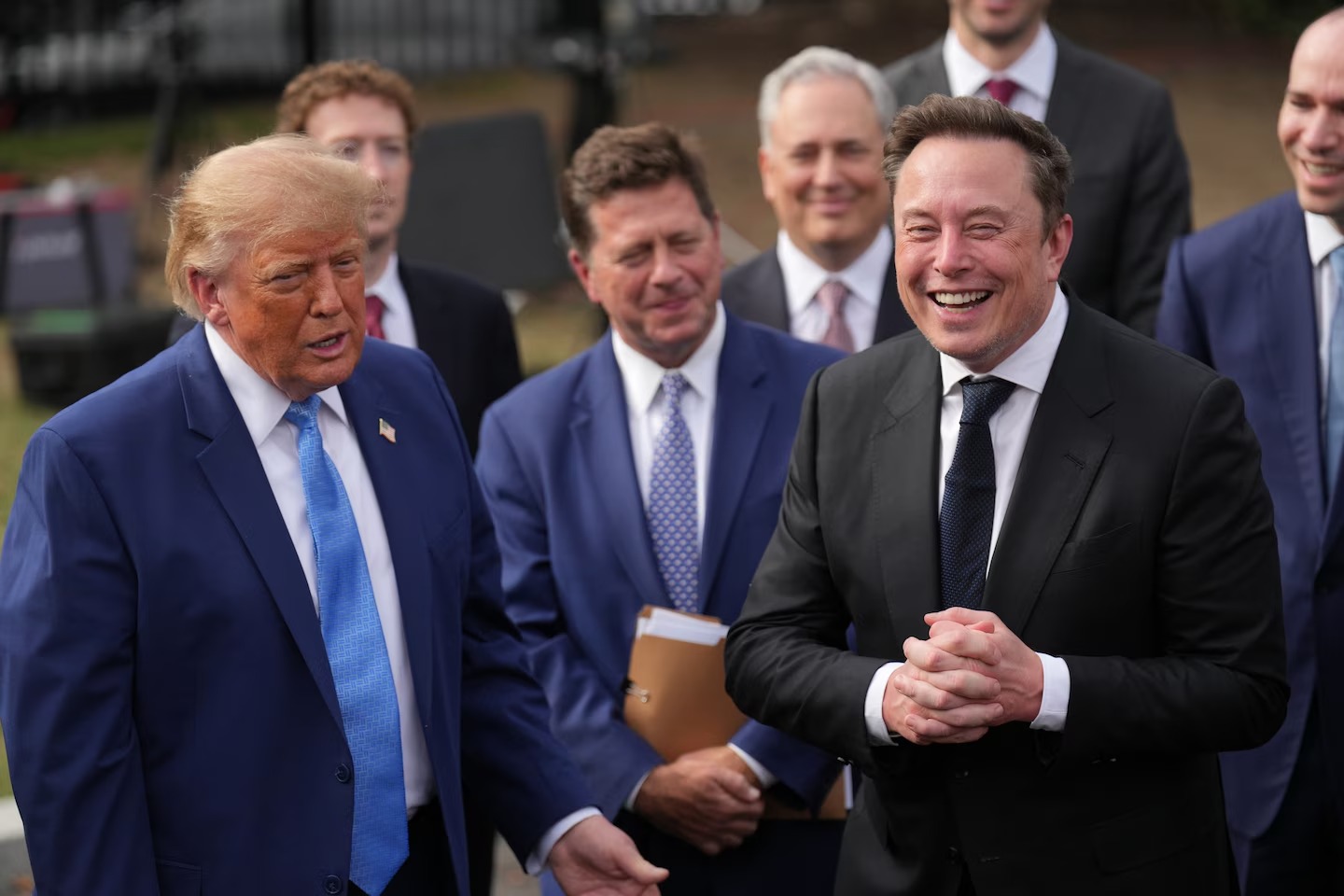
The world’s richest man, Elon Musk, has assumed the co-directorship of a Pentagon initiative focused on the future of warfare, known as “Project Meridian”.
Musk’s new role was announced by US Secretary of Defence Pete Hegseth.
Musk, who has long expressed his conviction that wars will ultimately be fought with autonomous unmanned aerial vehicles, will advise the project as co-director alongside Palmer Luckey, founder of defence start-up Anduril, and former Speaker of the House of Representatives Newt Gingrich.
In a memorandum issued at the Pentagon, Hegseth stated that the group would “examine the battlefields of the future” and “determine which weapons and technologies warfighters must employ to achieve dominance in these environments.”
During his “State of the Force” address at Marine Corps Base Quantico, Hegseth said:
“The best predictors of future conflict do not reside exclusively within the Pentagon. Obvious biases and risks arise when we task ourselves with both framing the questions and answering them.”
Hegseth stated that this initiative would commence immediately and that, following his address, he would convene with Musk, Luckey, and Gingrich at a secure location.
Project Meridian will have 120 days to “ruthlessly map the trajectory of wars, domains, and technologies”, a process that will culminate in the public disclosure of its findings alongside a classified annex.
Hegseth outlined an expansive mandate extending “from beneath the surface of the Earth to beyond the Moon.”
Rather than formulating new military strategies or policies, the panel will seek to identify “the domains we must seize and the capabilities we must master”, focusing on the effort to “discover, develop, and field” the weapons and systems that next-generation American troops may require.
The group is expected to submit a report containing recommendations to him by the end of January.
In 2024, Musk remarked: “Future wars will be entirely about drones and hypersonic missiles.” This was merely one of several similar statements he has made in recent years.
For Musk, whose oversight role at the Department of Government Efficiency (DOGE) ended in turmoil and escalated into a dispute with President Donald Trump over Trump’s spending bill, this appointment marks his formal return to government in an official capacity.
Musk and Trump ultimately reconciled, and Musk attended a meeting on artificial intelligence safety at the White House this week alongside other technology leaders.
Meridian forms part of a broader push announced by Hegseth to restructure the military around autonomous warfare and rapidly advancing technologies.
Hegseth announced the establishment of the Autonomous Warfare Command (AUTOWARCOM), a new four-star combatant command endowed with what he termed “service-like authorities” to scale autonomous and robotic capabilities across the joint force.
The Department of War will also begin phasing in new occupational frameworks across all military branches to establish specialised career tracks for what Hegseth described as “the next generation of autonomous warfighters.”
“We should have conceived an Autonomous Warfare Command a decade ago,” Hegseth said, explaining that Meridian aims to gaze far enough ahead to enable the military to anticipate the next technological shift rather than lag behind.
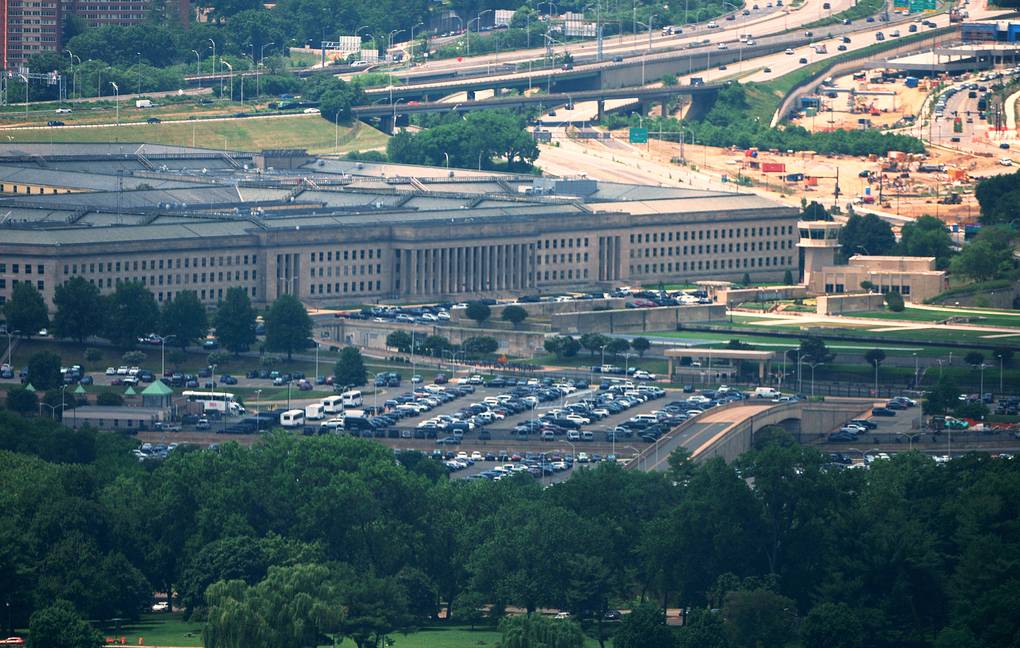
A cyberattack targeting the US Department of War’s personnel database has resulted in the leak of personal information belonging to approximately 3 million people.
Speaking to ABC News, a Pentagon official stated that the system accessed by unauthorised individuals contained the records of 2,760,000 living persons and 294,000 deceased individuals.
The Military Times portal, which first broke the news, had reported the number of affected individuals as approximately 4 million based on two sources. The Pentagon official subsequently conveyed different figures to ABC News.
The leak encompasses Social Security numbers and duty information belonging to military personnel and civilian employees. According to an official notification examined by Military Times, the compromised records may also include names, dates of birth, contact information, sex, race, and military occupational specialties.
The unauthorised access to the information system of the Defense Manpower Data Center (DMDC) lasted for approximately nine months, between October 2025 and 16 July 2026.
ABC News reported that the access in question was obtained by a small number of third-party users. The vulnerability was closed after it was identified.
The DMDC is considered one of the Pentagon’s primary personnel records centres. More than 60 million records belonging to active-duty personnel, reservists, civilian staff, contractors, retirees, veterans, and military family members are stored at the centre.
The Pentagon has not detected any evidence that the leaked data has been misused. Military Times reported that affected individuals were offered identity restoration and credit history monitoring services.
A similar data breach previously occurred on the Federal Bureau of Investigation’s (FBI) recruitment website, FBIJobs.gov. According to information obtained by ABC News from internal communications and sources, the FBI is considering the possibility that data belonging to its entire staff may have been stolen.
The New York Times (NYT) examined a portion of the stolen FBI records. Home addresses, telephone numbers, official email addresses, Social Security numbers, dates of birth, hiring dates, and emergency contact details for relatives were identified within these documents.
The database also contained unit designations, duty roles, and information regarding the supervisors of personnel. Some records revealed assignments within counterintelligence and counternarcotics units, as well as departments examining threats originating from Russia, China, and Iran.
Ciaran Martin, the former head of the UK National Cyber Security Centre, noted that this type of breach could directly affect the FBI’s operational capabilities.
The hacker group known as ShinyHunters had announced that it had seized medical data and security clearance records alongside files belonging to tens of thousands of active and former FBI employees.
Experts evaluating the matter for the NYT warned that this information could be used to track agents, threaten their families, or compile dossiers by foreign intelligence services.
The ShinyHunters group initially threatened to release the data unless the bureau withdrew an advisory it had published concerning the group’s attack methods.
The group later asserted that it had never intended to leak the information and characterised its action as an advertising campaign.
In a report published in May, Reuters noted that the personal data of US military personnel had been used in surveillance and attack preparations.
According to the agency, Washington’s adversaries gained the ability to pinpoint areas where troops were concentrated by exploiting commercially available location data. US lawmakers at the time criticised the Pentagon for failing to adequately protect the personal data of military personnel.

US President Donald Trump’s trade policy and the Washington administration’s push to increase Venezuelan oil imports are prompting Canada to diversify its energy exports.
According to a report by The Wall Street Journal, recent developments are accelerating Canada’s development of new oil and natural gas projects.
Steps taken by the Ottawa administration, which aspires to become an energy superpower, are seen as potentially strengthening the country’s position in global markets.
In Canada, the world’s fourth-largest oil producer and fifth-largest natural gas producer, the energy sector accounts for approximately one-fifth of total exports.
Almost all of the country’s natural gas exports and approximately 90% of its oil exports go to the US.
The newspaper writes that the trade war with Washington and the atmosphere of confrontation entered into with Iran have heightened Canada’s desire to turn to alternative markets outside the US.
Officials plan to increase shipments of oil and liquefied natural gas (LNG) to European and Asian markets.
Accelerating infrastructure investments in line with this target, Canada is also shortening approval processes. The government is prioritising the construction of an oil pipeline extending specifically to the west coast.
According to the newspaper’s estimate, if major pipeline projects are implemented, Canada’s daily oil transport capacity could rise to 6.8 million barrels by 2034.
Routes heading to the west coast will make up approximately 30% of this capacity.
The Canadian administration is simultaneously advancing LNG export projects. According to the report, these investments could allow approximately 55% of Canadian natural gas exports to be directed to markets outside the US by the early or mid-2030s.
While the government expands tax incentives for the oil and natural gas sector, the province of Alberta also plans to overhaul its royalty system.
However, the newspaper notes that implementing the new projects requires heavy investment, and the process depends on the final decisions taken by producers as well as the completion of regulatory approval processes.
The expansion of pipeline and LNG infrastructure could gradually reduce Canada’s dependence on the US market while raising its share in the global energy market.
The Canadian Prime Minister’s demand to reduce reliance on the US market had also come to the fore in July.
According to Carney’s statement, the province of Alberta submitted a plan for a pipeline spanning more than 1,000 kilometres to the west coast of British Columbia.
Targeted for completion by September 2027, the line will reach the Pacific coast by following an existing corridor through the mountainous terrain.
This shift in energy comes at a time of strained relations with the US. Donald Trump said that if Canada obtains associate member status in the European Union, he could halt trade with Europe in certain sectors and impose high tariffs.
As reported by the Associated Press, Trump characterised such a rapprochement as a “potentially hostile act”.
European Commission President Ursula von der Leyen had proposed opening the path for Canada to become the EU’s first associate member. The terms of this associate membership status, which is not defined in EU treaties, are not yet clear and require the approval of member states to enter into force.
Canada, which does not seek full membership, aims for maximum rapprochement with the EU.
Following Trump’s return to the White House, relations between Washington and Ottawa deteriorated. The Trump administration, which repeatedly called on Canada to become the “51st state” of the US, introduced additional tariffs.
In July, the US began imposing 50% tariffs on certain Canadian-origin goods.

Germany expands North Sea military ports and plans new naval base

Musk appointed co-director of Pentagon future warfare initiative

US waives human rights terms on $320m military aid to Egypt

Putin says Russia did not start war and warns of nuclear risks

European nations unite against US pressure over strategic oil stocks
-

 Europe5 days ago
European unions urge governments to scrap all Palantir deals
-
 Diplomacy5 days ago
East-West Forum in Istanbul highlights irreversible shift to multipolarity
-
 Europe1 week ago
Emmanuel Todd says West faces collapse amid Ukraine and Iran crises
-
 Europe1 week ago
European intelligence chiefs divide over risk of Russian attack
-
 Diplomacy1 week ago
East-West Forum in Istanbul to debate multipolarity and global order
-
 Middle East1 week ago
Sharaa says 7 October must not shape Israel policy on Syria
-
 America1 week ago
Republican support for Trump’s war with Iran drops sharply in polls
-
 Middle East1 week ago
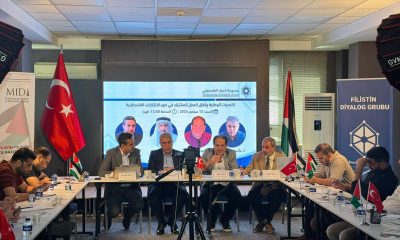
Palestinian factions confront legitimacy crisis at Istanbul talks
